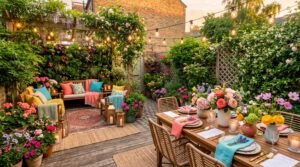
Outdoor living spaces for small backyards start with a tape measure, not a shopping list. This guide gives you seven practical setups — a bistro corner, a living wall, a floating deck, a gravel garden, a lit patio, a container garden and a pergola lounge — each with the measurements and materials to build it, so a compact yard can feel like a retreat by the end of a weekend. If your backyard is small, that is an advantage: every square metre has a job, and nothing is wasted on space you never use.
Table of Contents
Why Small Backyards Are Perfect for Outdoor Living
There’s a myth that needs busting right away: small backyards are actually easier to design than large ones. You don’t need to fill endless empty space or worry about a yard looking barren. Instead, every square foot can be intentional and beautiful. Before you buy anything, measure the yard and sketch it to scale on graph paper, marking where the sun falls at midday and again at 5 pm. A 3 × 4 m yard can hold a bistro set, a container group and a path — but not all three plus a full dining table. Choosing two of the seven setups in this guide, and doing them well, beats squeezing in all seven.
Think of a small backyard the way you’d think of a studio apartment. A skilled designer doesn’t lament the square footage — they use smart furniture, layered lighting, and vertical space to make it feel both functional and stylish. The same principles apply here. These outdoor living spaces for small backyards work the same way: each one earns its footprint by doing two jobs at once — seating that is also storage, a wall that is also a garden, a deck that is also a path.
The other advantage? Cost. Creating a cozy, well-designed outdoor living area in a compact yard costs a fraction of what you’d spend on a large property. You’re working with less ground to cover, fewer materials, and more focused decision-making. That only holds if you buy for the space you have: a full six-seater dining set in a 3 m yard is money spent on furniture you will trip over every evening.
1. The Cozy Bistro Corner — A Classic Outdoor Living Setup
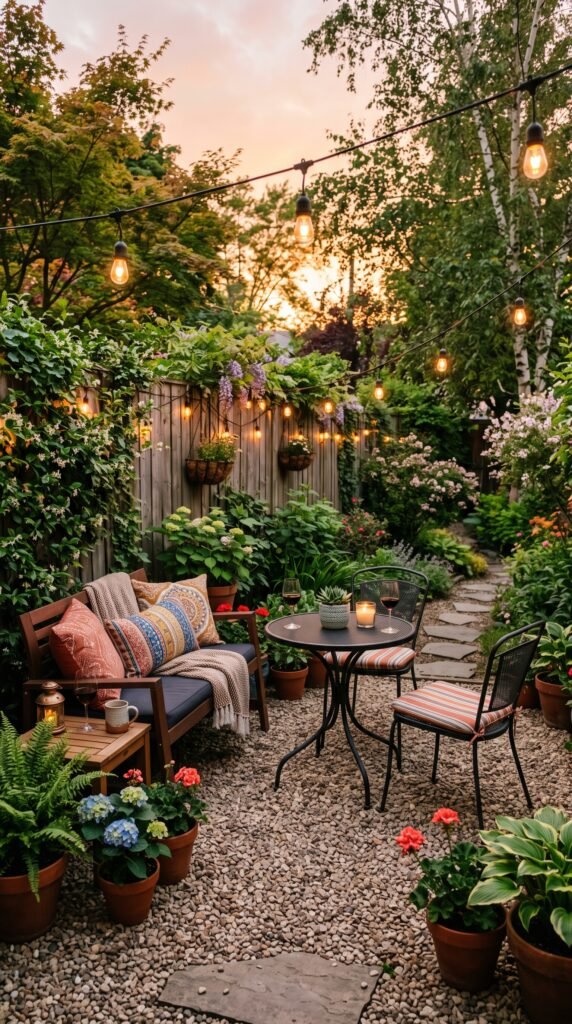
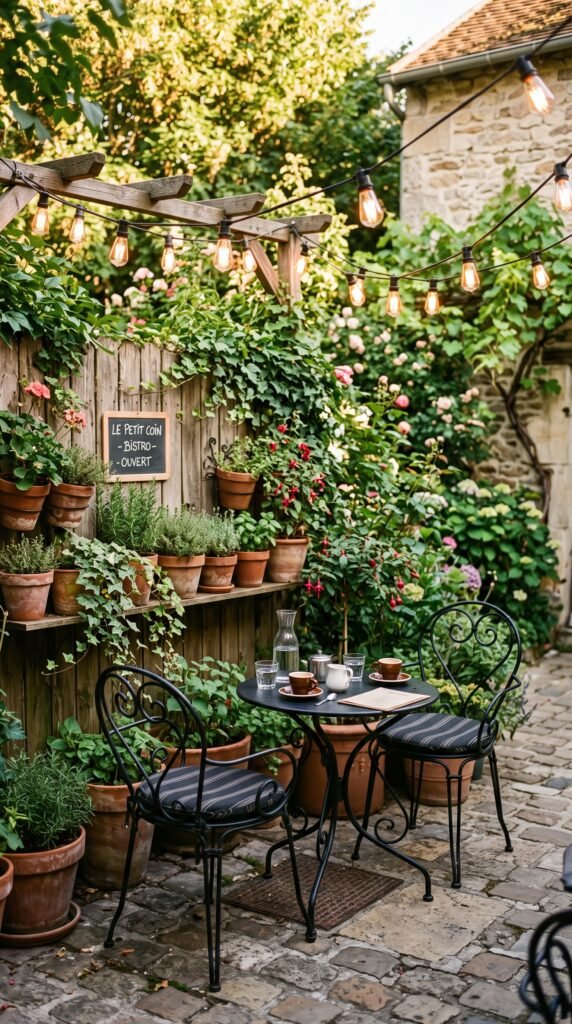
If there’s one outdoor living arrangement that works in virtually any small backyard, it’s the bistro corner. All you need is a small, round table with two chairs — and suddenly you’ve got a dedicated spot for morning coffee, evening wine, or a quiet moment with a book. The beauty of this setup is its scale: it doesn’t demand much space, but it delivers a complete experience. Leave at least 75 cm behind each chair so you can pull it out without stepping onto a bed, and keep the table within a few steps of the back door — if it is a long walk, you will not use it on a weekday morning.
The bistro corner works because it’s honest about scale. Rather than trying to cram a full dining set into a space that can’t support it, you lean into the intimacy and create something that feels deliberately charming rather than cramped. It’s a space for morning coffee, evening wine, and unhurried conversation.
How to pull it off: Choose a 24- to 28-inch round table in wrought iron or powder-coated steel — materials that weather well and look elegant. Pair it with two folding chairs that you can tuck away when not in use. Position the set in a corner or against a wall to maximize your usable yard space — the corner placement creates a natural boundary that makes the area feel intentional rather than leftover. Add a small outdoor rug (4×6 feet is perfect) underneath to define the zone, and consider a compact umbrella for shade. Site the corner where it catches the evening sun if you eat outside, and keep a path at least 60 cm wide clear to the back door.
The corner placement is intentional, too. Tucking this setup into a corner of the yard creates a defined “room” within the outdoor space without requiring any permanent structures.
For more small-space projects you can finish in a weekend, see our small garden makeover ideas you can actually do this weekend.
2. The Vertical Garden Wall — Outdoor Living That Goes Up, Not Out
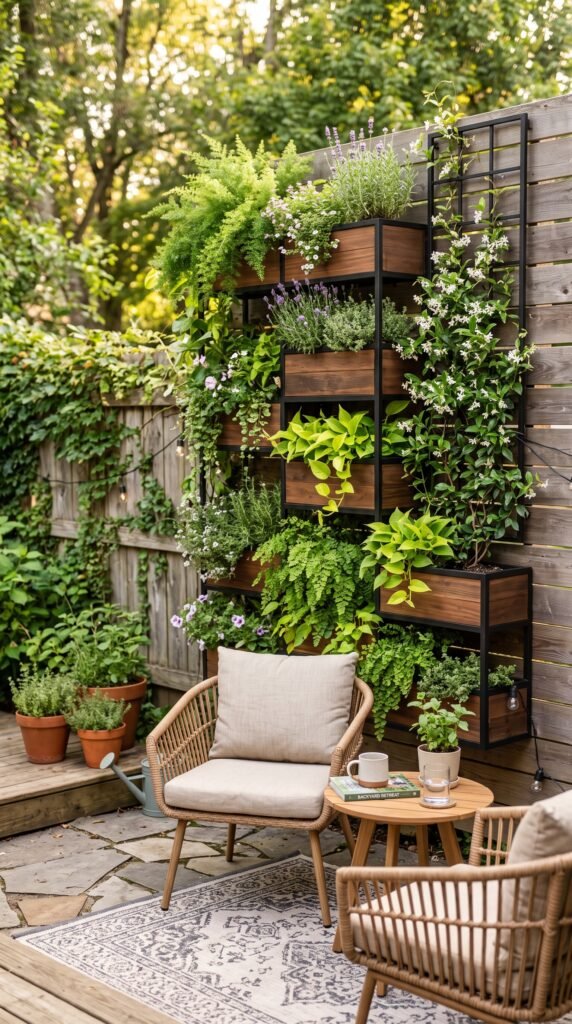
When floor space is limited, the smartest move in outdoor living design is to go vertical. A garden wall transforms a plain fence or exterior wall into a lush, living feature that adds color, texture, and life to your backyard without taking up a single square foot of ground space. A 1.8 × 1.2 m trellis panel fixed about 5 cm off the wall gives air flow behind the plants and room for stems to thicken as they grow.
Vertical gardens also do something remarkable for the psychology of a small space. By drawing the eye upward, they make the area feel taller and more expansive. They also act as natural privacy screens, which is especially valuable in urban backyards surrounded by neighboring windows.
How to pull it off: The simplest approach is a cedar or metal trellis mounted against a fence or exterior wall, planted with fast-growing climbers like clematis, jasmine, or climbing hydrangea. For a more structured look, modular wall planter systems let you arrange pots in geometric patterns. If you want something low-maintenance, consider a mix of succulents and air plants in mounted terracotta or metal containers.
Vertical planting is a practical answer to a small yard because it uses wall space you already own. A trellis, a few wall-mounted planters and a drip line turn a blank fence into the garden’s main feature, and the plants cool the wall behind them on hot afternoons. That is the whole point of this setup: the garden grows up, not out, so the ground stays free for seating and paths.
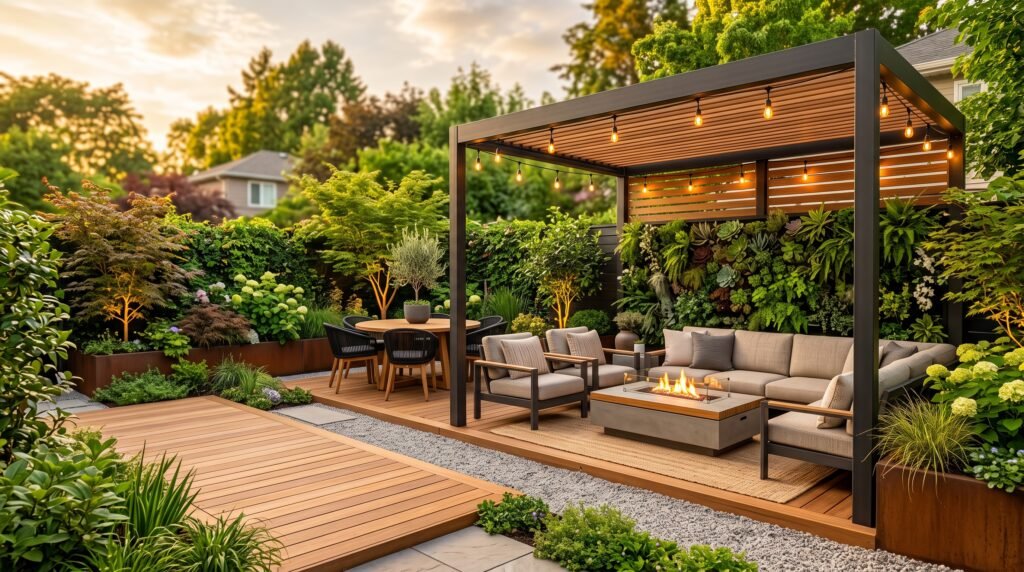
3. The Floating Deck Nook — Elevated Outdoor Living on a Budget
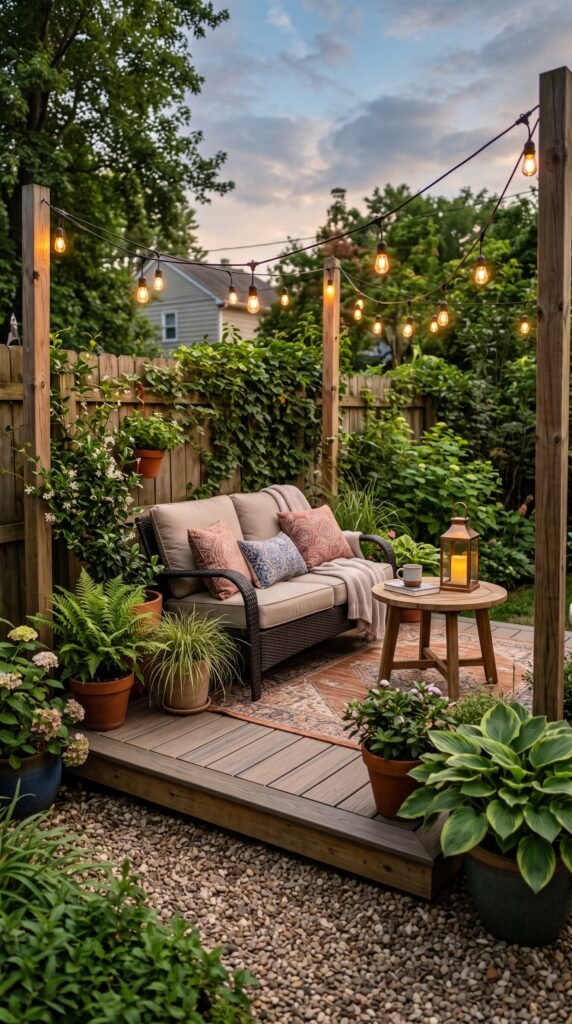
A floating deck sits on concrete blocks or pads at ground level rather than on deep footings, which is why it is a popular weekend project. A 2.4 × 3 m deck (8 × 10 ft) fits a bistro set and two chairs with room to walk around them. Rules still vary by location, so check your local building department before you build — some areas require a permit even for a low deck, and most have rules about how close a structure can sit to a boundary.
The psychological effect of a deck platform is underrated. It separates the outdoor living area from the rest of the yard, giving the space a sense of purpose and permanence. Guests step onto the deck and they know they’ve entered a distinct zone.
How to pull it off: Composite decking boards cost more than pressure-treated timber up front, but they do not need annual staining and they resist rot and splinters. For a small deck the difference is a handful of boards, so compare the price per board before you commit. If you use pallets, check each one for the HT stamp (heat-treated) and avoid any marked MB (chemically treated). For a 10×10 floating deck, most DIYers can complete the project over a weekend with basic tools. Keep the furniture scale appropriate — a loveseat or small sectional, one or two side tables, and a compact fire pit or lantern grouping. Add an outdoor rug to anchor the arrangement and soften the look.
For more deck inspiration, see our guide to the best pool deck ideas to transform your backyard, which covers layouts and materials that work at a small scale too.
4. The Zen Gravel Garden — Minimal Outdoor Living With Maximum Impact
Not every small backyard needs grass, and not every outdoor living space needs to be lush and layered. The zen gravel garden proves that simplicity can be just as striking — and in a small space, the clean lines and minimal palette of this approach can make a compact yard feel serene and intentional rather than cramped and cluttered.
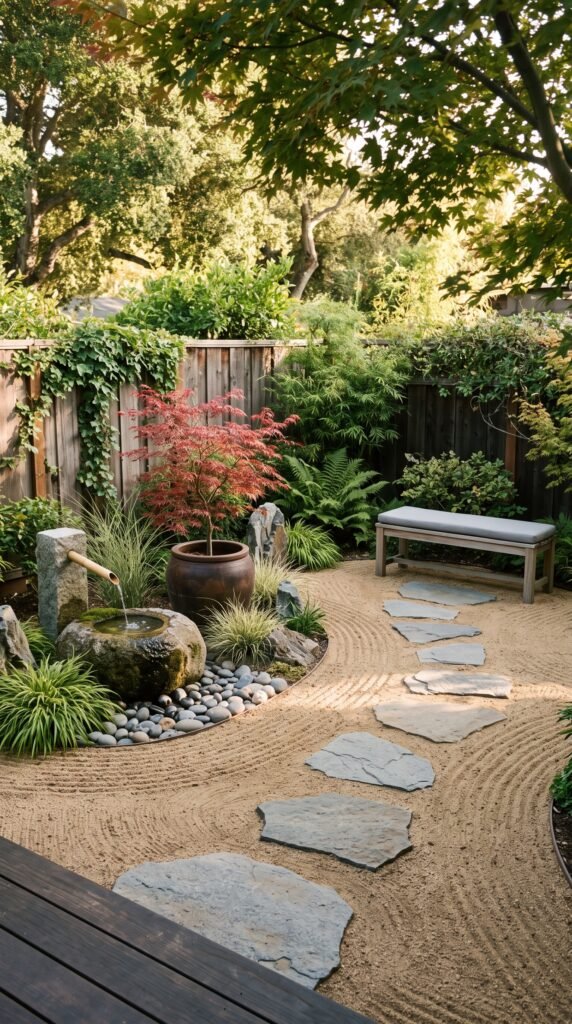
Gravel gardens originated in Japanese garden design, where the careful placement of stone, raked gravel, and a few sculptural plants creates a space that feels meditative and spacious despite its physical limitations. The same concept translates beautifully to modern Western backyards.
How to pull it off: Start with a weed barrier fabric, then lay two to three inches of decomposed granite or pea gravel in your chosen color. Keep the gravel depth consistent throughout, and use larger stones or boulders as visual anchors. Add drought-tolerant plants in clusters rather than rows — lavender, sedum, and ornamental grasses thrive in gravel gardens and need minimal watering once established. A 25 kg bag of gravel covers about 0.6 sq m at a 5 cm depth, so measure your area first and buy one bag more than the maths says, because edges always need topping up.
Gravel gardens suit dry, sunny corners because the plants that thrive in them — lavender, sedum and ornamental grasses — need little water once established. The Royal Horticultural Society’s guide to gravel gardens lists lavender, verbena, santolina and phlomis as ideal choices, and notes that a gravel garden needs far less watering than a lawn.
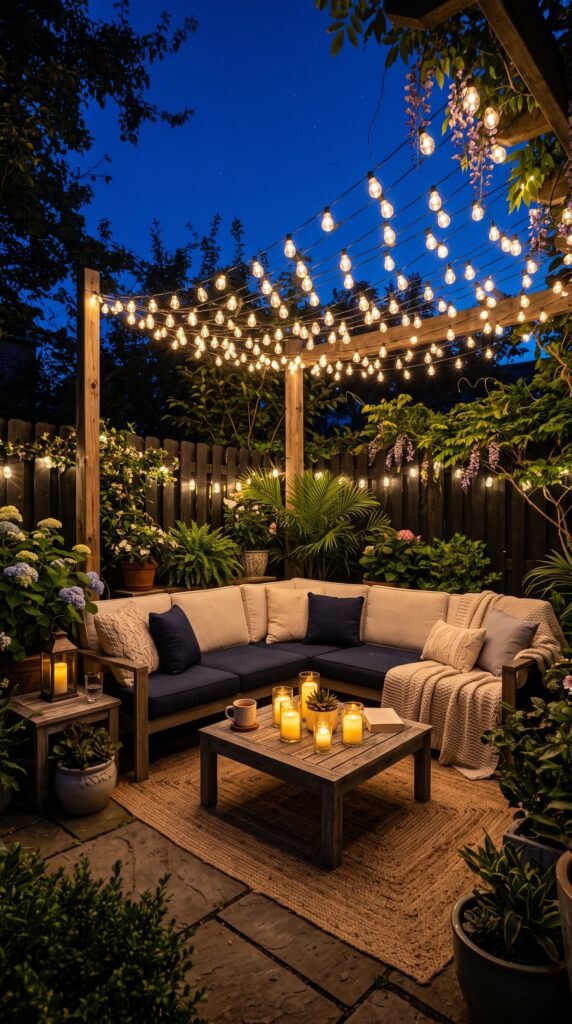
5. The String Light Canopy — Outdoor Living That Shines After Dark
Daytime design is one thing, but the best outdoor living spaces look just as good — often better — after the sun goes down. A string light canopy is the single most effective way to transform a small backyard at night, and it works over virtually any surface: a deck, a patio, a gravel area, or even bare grass.
The magic of a string light canopy is that it creates an overhead plane where there wasn’t one before. Suddenly, your outdoor living area has a ceiling — a soft, glowing one that makes the space feel enclosed and intimate without actually boxing it in.
How to pull it off: Run strings of warm-white (2700K) Edison-style bulbs between anchor points at around eight to ten feet of height. Anchor points can be existing structures (a fence post, the eave of your house, a pergola beam) or freestanding wooden posts set in weighted planters. Use S-hooks or cup hooks for easy removal. For a small yard, three to five strands running in parallel lines create a full canopy effect. Pair with flameless LED candles on your table and a few solar-powered lanterns at ground level for a layered, three-dimensional lighting effect. For more lighting inspiration, see our Best Modern Outdoor Lighting Ideas.
For more ways to make a patio feel expensive without spending much, see our backyard patio ideas that look expensive but aren’t.
6. The Container Garden Patio — Flexible Outdoor Living for Renters and Movers
One of the most liberating things about container gardening is that your entire outdoor living garden goes with you if you move. For renters, for people in transitional living situations, or for anyone who simply wants maximum flexibility, a container garden patio is the ideal outdoor living solution.
The container approach also lets you solve a problem that plagues many small backyards: terrible soil. If your yard is rocky, compacted clay, or filled with roots, raised and container gardening sidesteps the problem entirely. You control the soil, the drainage, and the placement.
How to pull it off: The key to a container garden patio that looks designed rather than haphazard is grouping. Arrange containers in clusters of three to five, varying the heights with plant stands or upturned pots used as risers. Stick to a cohesive color palette for your containers — all terracotta, all white, or all matte black reads as intentional. Mix thriller plants (tall, dramatic focal points like cannas or tall grasses), filler plants (mid-height bushy plants like petunias or coleus), and spiller plants (trailing varieties like sweet potato vine or trailing verbena) in each large container.
A useful formula for container planting is ‘thriller, filler, spiller’: one tall plant for height in the centre or back, medium plants to fill the middle, and trailing plants that spill over the edge. Stick to one thriller per pot and keep the total to three plants per container, so nothing gets crowded out by midsummer.
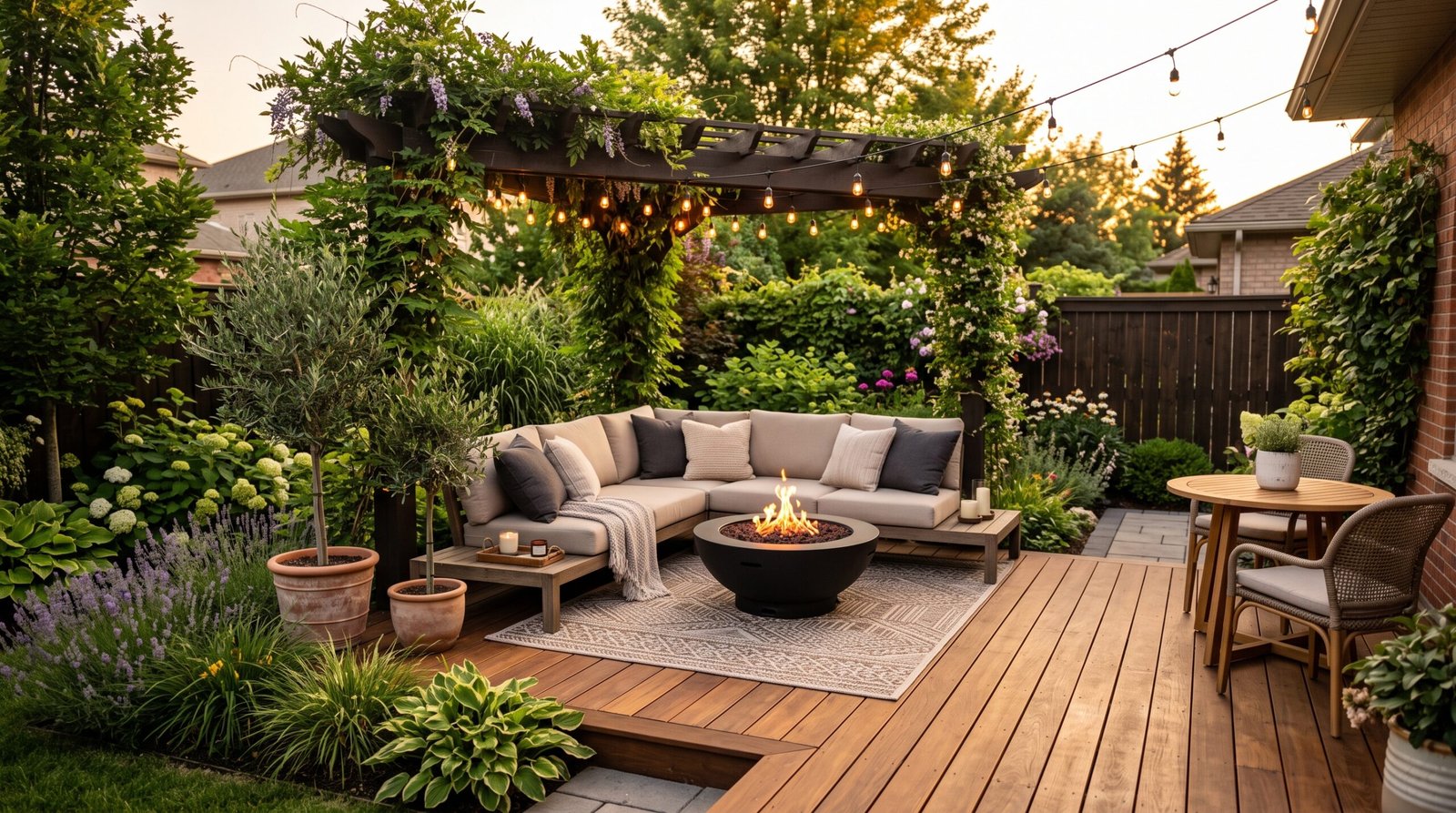
7. The Pergola Retreat — The Ultimate Outdoor Living Upgrade for Small Spaces
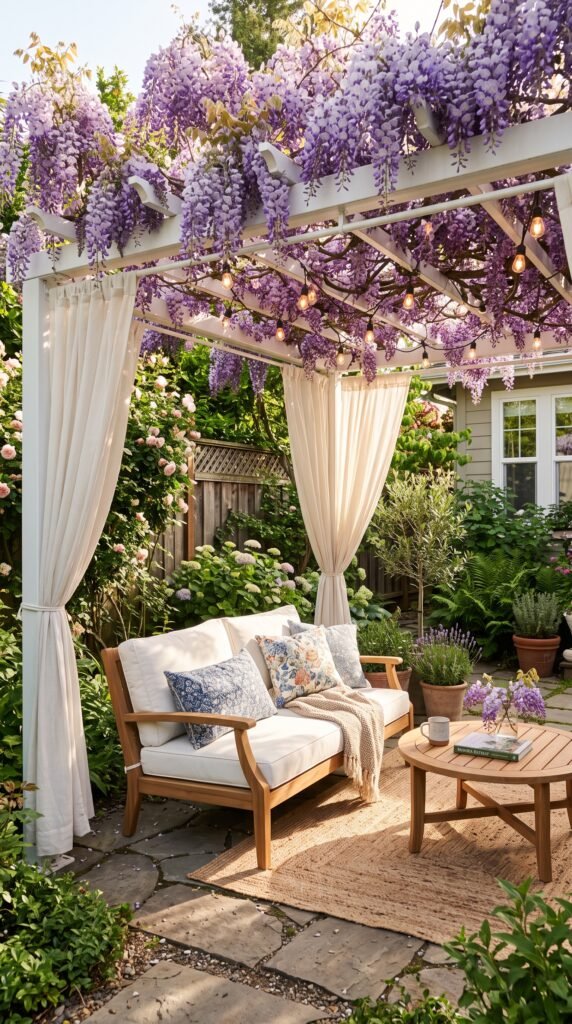
If you’re ready to make a longer-term investment in your outdoor living space, a pergola is the single upgrade with the highest return — in terms of both functionality and visual impact. A pergola creates architectural structure in a yard that would otherwise feel undefined, provides a natural anchor for climbing plants, and gives you a framework for hanging lights, fabric shade panels, and outdoor curtains. A 3 × 3 m pergola shades a bistro set; a 3 × 3.6 m one fits a small lounge set with room to walk around it.
The misconception is that pergolas require a large yard. In reality, a 10×10 or 10×12 pergola footprint is perfectly suited to a small backyard and can define the entire outdoor living area without overwhelming it.
How to pull it off: Freestanding aluminum pergolas have become an excellent option in recent years — they’re rust-proof, low-maintenance, and available in powder-coated finishes that mimic the look of painted wood. For a more natural aesthetic, cedar or Douglas fir pergola kits are widely available and can be assembled in a weekend. Plant fast-growing climbers like wisteria, climbing roses, or passionflower at the base of each post and within two to three seasons you’ll have a fully canopied, living structure.
Drape outdoor curtain panels on two sides to control sun exposure and add privacy. Layer in a ceiling fan rated for outdoor use to extend comfortable time under the pergola into the warmer months. A small bistro set or loveseat arrangement underneath completes the picture.
The combination of overhead structure, green plants, and soft furnishings creates an outdoor living room that genuinely rivals interior spaces for comfort and atmosphere.
Mistakes to Avoid in a Small Backyard
Buying furniture before measuring is the most expensive mistake in a small yard. A full dining set, a deep lounge sofa or an oversized fire table can eat the whole space and leave no room to walk around it. Measure the yard first, then buy furniture that leaves at least 60 cm of clear walking space on every side you need to pass. In these outdoor living spaces for small backyards, a piece that is 10 cm too wide is a piece you will trip over every evening.
Ignoring drainage is the mistake you only discover in the first heavy rain. A deck, a gravel bed or a patio that sits flat against the house can send water toward the wall instead of away from it. Keep a slight fall away from the house — about 1 cm per metre is enough — and leave a gap between any structure and the wall so air can move and the wall can dry.
Over-lighting is the third mistake: a dozen bright bulbs turn a cosy patio into a car park. Use warm 2700K light, aim it down at the seating and the path, and leave the rest of the yard dark. Two or three well-placed strings beat ten harsh ones, and a dimmer or a timer means the lights are only on when you are outside.
Bringing It All Together — Your Outdoor Living Transformation Starts Small
The best outdoor living spaces don’t happen all at once. They evolve through a series of small, intentional choices — a bistro set here, a string of lights there, a container garden that grows with the seasons. These outdoor living spaces for small backyards work because each one earns its footprint: measure first, choose two setups that fit your yard and your routine, and build them well. Start with the one you’ll use every day, and let the rest follow.
Pick one of the seven setups above that resonates with your yard’s existing shape, your lifestyle, and your budget. Start there. Build from that anchor point. You’ll be surprised how quickly a compact backyard transforms into a space you genuinely want to spend time in — a true outdoor living room that works as hard as any room inside your home.
Frequently Asked Questions About Outdoor Living Spaces for Small Backyards
Can I create outdoor living spaces for small backyards on a budget?
Yes — most of these outdoor living spaces for small backyards start with the cheapest steps: a bistro set, a trellis and a few containers. A gravel bed and a string of lights cost little, and the two bigger builds — a floating deck and a pergola — can wait until next season. Buy the furniture last, once you know how the space is actually used.
What size should a floating deck be for a small backyard?
A 2.4 × 3 m deck (8 × 10 ft) fits a bistro set and two chairs with room to walk around them. If the yard is under 4 m wide, keep the deck to one side and leave the rest as a path and planting, so the yard does not feel like one big platform.
Do I need a permit for a floating deck or a pergola?
It depends on where you live. A floating deck sits on blocks or pads rather than deep footings, and many areas allow low decks without a permit — but some still require one, and most have rules about how close a structure can sit to a boundary. Check your local building department before you build, and do the same for a pergola, which is a permanent structure in most places.
What plants work best in a gravel garden?
Lavender, sedum, ornamental grasses, verbena, santolina and phlomis all thrive in free-draining gravel and need little water once established. The Royal Horticultural Society’s guide to gravel gardens lists these as ideal choices. Plant in clusters rather than rows, and water new plants through their first dry summer.
How do I light a small backyard without overdoing it?
Use warm 2700K light, aim it down at seating and paths, and leave the rest dark. One string of lights plus a lantern or two is enough for most small yards. Put the lights on a timer so they switch off when you go inside, and keep the brightest bulb out of the direct line of sight from the chairs.