
If you have ever walked into a room you furnished with care and still wondered why your room feels off, you are not imagining it. The sofa fits, the paint color works, and nothing is obviously wrong — yet the room feels unfinished, like something is missing that you cannot name.
In most cases, the problem is not the paint. It is height, scale, and light. A room feels settled when the eye has somewhere to travel from the floor to the ceiling, when the furniture relates to the size of the room, and when light comes from more than one place. This guide explains why your room feels off and gives you seven fixes you can test in an afternoon, starting with the one that matters most.
Table of Contents
- The 10-second test that shows why your room feels off
- Fix 1: Fill the top third of the room
- Fix 2: Hang art at eye level
- Fix 3: Size the rug to the furniture
- Fix 4: Layer light at three heights
- Fix 5: Add one tall plant
- Fix 6: Group decor instead of spreading it thin
- Fix 7: Edit before you buy
- Five mistakes that make a room feel off
- The bottom line
- Frequently asked questions
The 10-second test that shows why your room feels off
Stand in the doorway of the room and look straight ahead, the way a guest would. Now divide the wall in front of you into three horizontal bands: floor to knee height, knee height to eye level, and eye level to the ceiling. In a room that feels settled, each band has something in it. In a room that feels off, the top band is usually empty.
That empty top third is the fastest way to explain why your room feels off. Furniture fills the bottom of a room. Art and shelves usually fill the middle. Nothing fills the top, so the eye stops at the same height everywhere and the ceiling feels disconnected from the rest of the room. Once you see it, you cannot unsee it — and it is also the easiest thing to fix.
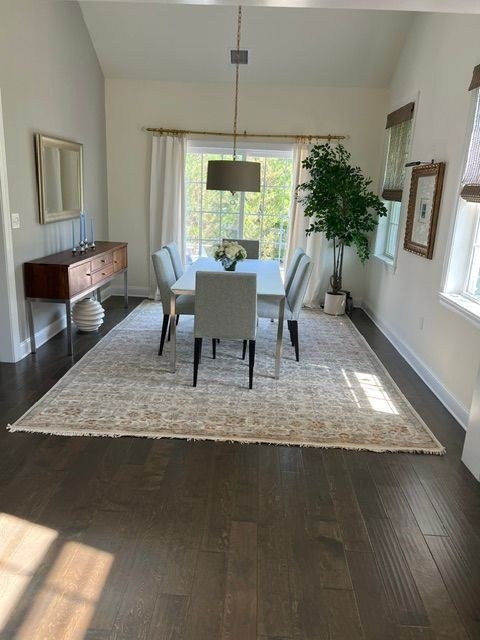
Run the same test in every room. Dining rooms usually pass it, because cabinets, pendant lights, and tall windows fill the vertical space. Living rooms and bedrooms usually fail it, because sofas, beds, and dressers all sit low. That is why a room can have good furniture and still feel unfinished.
Fix 1: Fill the top third of the room
Start with one tall element. In a room with a standard 8-foot ceiling, it should reach at least two-thirds of the way from the floor to the ceiling — roughly 5 to 6 feet tall. A tall plant, a floor lamp, a leaning floor mirror, or a bookcase all do the job. Place it where the room feels emptiest, usually a corner or the end of a sofa, not in the middle of a wall that already has art.
Height does not have to mean one big object. A stack of two or three items can work: a side table 24 to 28 inches tall, a lamp on top of it, and a tall plant beside it build the same vertical line in stages. What matters is that the eye can travel upward in steps instead of hitting a flat line at the top of the sofa. That flat line is a big part of why your room feels off.
If your ceilings are 9 or 10 feet, the same idea applies — the tall element just needs to be taller. Aim for a plant or bookcase that reaches 6 to 7 feet, and hang curtains close to the ceiling so the window reads taller, too.
Fix 2: Hang art at eye level
Art hung too high is one of the most common reasons a wall feels wrong. The fix is simple: hang a single piece so its center sits 57 to 60 inches from the floor, which is eye level for most adults standing in the room. Over a sofa, the bottom edge of the frame should sit 6 to 8 inches above the back of the sofa — not a foot above it.
For a pair of frames or a small grouping, measure the center of the whole arrangement, not each frame. A grouping hung as one unit reads as a single piece and fills the wall the way one large piece would.
One more check: step back and look at the art from the doorway. If you have to tilt your head up to see it, it is too high. Lower it until the center is at your eye level, and the wall will feel connected to the furniture below it.
Fix 3: Size the rug to the furniture
A rug that is too small makes even good furniture look like it is floating — and it is another reason why your room feels off. The rule is to size the rug to the furniture, not to the room. In a living room, the front legs of the sofa and chairs should sit on the rug. For a standard three-seat sofa, that usually means an 8-by-10-foot rug; a larger seating group needs a 9-by-12-foot rug.
In a bedroom, the rug should extend at least 18 inches beyond each side of the bed so your feet land on it when you get up. In a dining room, the rug should be large enough that the chairs stay on it when they are pulled out — add at least 24 inches on every side of the table.
If a new rug is not in the budget, try moving the rug you have so the front legs of the largest piece of furniture sit on it. Even a small shift can make the seating group feel anchored instead of scattered.
Fix 4: Layer light at three heights
A single ceiling light flattens a room. It lights the ceiling, leaves the corners dark, and makes everything below it look the same — which is often why your room feels off at night even though it looks fine during the day. Rooms feel warmer when light comes from three heights: a ceiling or pendant light, a table or floor lamp at eye level, and a low source such as a small lamp on a shelf. You do not need all three on at once — the point is that the room has options.
Match the color of the light, too. Bulbs labeled warm white, usually 2700K to 3000K, give the soft light most living rooms and bedrooms need. Daylight bulbs, usually 5000K, look blue-white by comparison and can make a cozy room feel like an office. The U.S. Department of Energy guide to color-tunable LED products explains that dim-to-warm LEDs are usually designed for 2700–3000K at full output and drop toward 1800K, the color of candlelight, as they dim — which is why a dimmer switch changes the mood of a room so much.
If you rent, or you do not want to change fixtures, start with lamps. A floor lamp in a dark corner and a table lamp on a side table cost less than a new fixture and do more for the room. For budget-friendly ways to add those layers, see these bedroom lighting ideas under $40.
Fix 5: Add one tall plant
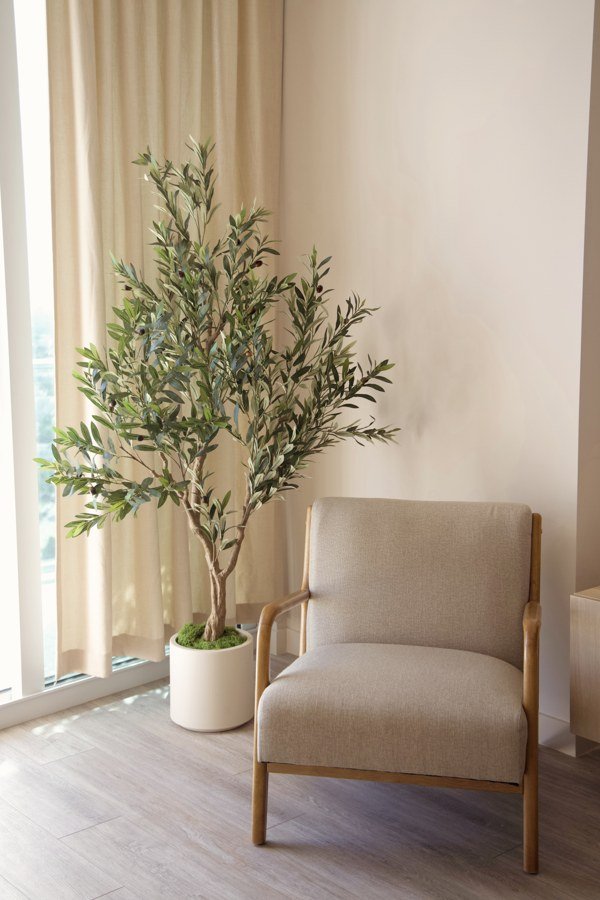
A tall plant does two jobs at once: it fills the empty top third of the room, and it adds a shape that no piece of furniture has. Choose one plant that is 5 to 6 feet tall for a standard 8-foot ceiling, and leave 12 to 18 inches between the top of the plant and the ceiling so it does not look cramped. One tall plant beats three small ones on a windowsill, because small plants sit at the same low height as everything else.
If you do not get much natural light, choose the plant for the light you have, not the light you wish you had. The Clemson Cooperative Extension guide to indoor plant light requirements lists snake plants, pothos, and cast-iron plants among plants that grow in low light of around 100 foot-candles, and notes that few homes have enough natural light for high-light plants.
If real plants are not practical for you, a faux tree can fill the same space. Look for a realistic trunk, branches that vary in direction instead of fanning out in a perfect V, and a pot that is heavy enough to keep the tree upright. Dust it when you dust the furniture, because a dusty faux plant is easy to spot.
Fix 6: Group decor instead of spreading it thin
A room with one small object on every surface feels cluttered and empty at the same time, which is why your room feels off even when it looks tidy. Group objects instead. Three items of different heights on a shelf — a tall vase, a medium book stack, a small bowl — read as one arrangement. One object alone on the same shelf reads as something you forgot to put away.
Use odd numbers. Groups of three or five look organized without looking staged, because the eye can find a center and a balance point. Vary the heights inside each group by at least a few inches so the top of the group is not a flat line.
Leave empty space on purpose. A shelf that is two-thirds full looks styled; a shelf that is completely full looks crowded. Take one thing off each surface, live with it for a day, and only put it back if the surface looks worse without it.

Fix 7: Edit before you buy
Before you buy anything new, remove one thing from the room. Take out the extra chair, the third cushion, or the decor you stopped noticing months ago. Most rooms that feel off are not missing something — they have one thing too many, and removing it is what lets the rest of the room breathe.
Then test before you spend. Move the floor lamp to the empty corner for a week. Shift the rug so the sofa’s front legs sit on it. Hang the art lower. If the room feels better, you have found why your room feels off — and you know exactly what to buy if you still need something. That is why it pays to fix height before you buy anything else.
When you do buy, buy height first. A tall plant or a floor lamp solves the problem this post is about; a new cushion does not. Spend the money where the room is empty, not where it is already full.
Five mistakes that make a room feel off
If you have tried the fixes and the room still feels wrong, check for these five mistakes. They are the quiet reasons why your room feels off even when the big pieces are right, and most of them come down to decorating mistakes that kill cozy home ideas.
- Pushing all furniture against the walls. It leaves a dead space in the middle of the room and makes the room feel like a waiting area. Pull the sofa even 4 to 6 inches off the wall and the room will feel more intentional.
- Matching everything. A sofa, chair, and rug in the same color and the same height flatten the room. Mix heights and textures instead: a smooth leather chair next to a soft fabric sofa, or a rough wood table under a smooth lamp.
- Hanging curtains at the window frame. Curtains hung just above the frame cut the window short. Hang the rod 4 to 6 inches above the frame, or close to the ceiling, and let the curtains reach the floor.
- Using one small rug. A rug that only fits under the coffee table makes the seating look scattered. Size it to the furniture, not to the table.
- Lighting only from above. One ceiling light leaves corners dark and faces in shadow. Add a lamp at eye level and the room will feel warmer at night.
The bottom line
A room feels off when the eye has nowhere to go above the furniture. Fill the top third, hang art at eye level, size the rug to the furniture, layer light at three heights, and add one tall plant. Work through the seven fixes above, starting with the 10-second test, and most rooms feel finished without new paint or new furniture. Once you know what to look for, why your room feels off stops being a mystery — and fixing it takes an afternoon, not a renovation.
Frequently asked questions
Why does my room feel off even though I like my furniture?
Furniture is only part of the room. A room can have pieces you love and still feel off if the top third of the walls is empty, the rug is too small, or the only light comes from the ceiling. That is why your room feels off even with fresh paint — paint changes color, not height, scale, or light. Start with the 10-second test above: if the top band of the wall is empty, fill it first.
Should I repaint if my room feels off?
Not first. Repainting changes the color of the walls, but it does not add height, fix the scale of the rug, or layer the light. Try the seven fixes in this guide first. If the room still feels wrong after that, then the paint color may be part of the problem — but in most rooms, it is not.
How tall should a plant be in a living room?
For a standard 8-foot ceiling, choose a plant that is 5 to 6 feet tall and leave 12 to 18 inches between the top of the plant and the ceiling. Anything shorter sits at the same height as the furniture and does not fill the empty space above it. If your ceilings are 9 or 10 feet, look for a plant that is 6 to 7 feet tall.
What height should I hang pictures in a living room?
Hang a single picture so its center is 57 to 60 inches from the floor. Over a sofa, leave 6 to 8 inches between the bottom of the frame and the top of the sofa back. For a group of frames, measure the center of the whole arrangement, not each frame on its own.
Can a room feel off because of lighting alone?
Yes. A single ceiling light flattens a room and leaves the corners dark, which is one of the most common reasons a room feels unfinished at night. Add a lamp at eye level — a floor lamp or a table lamp — and use warm-white bulbs, usually 2700K to 3000K. If the room feels better with the lamps on, lighting was the problem.