
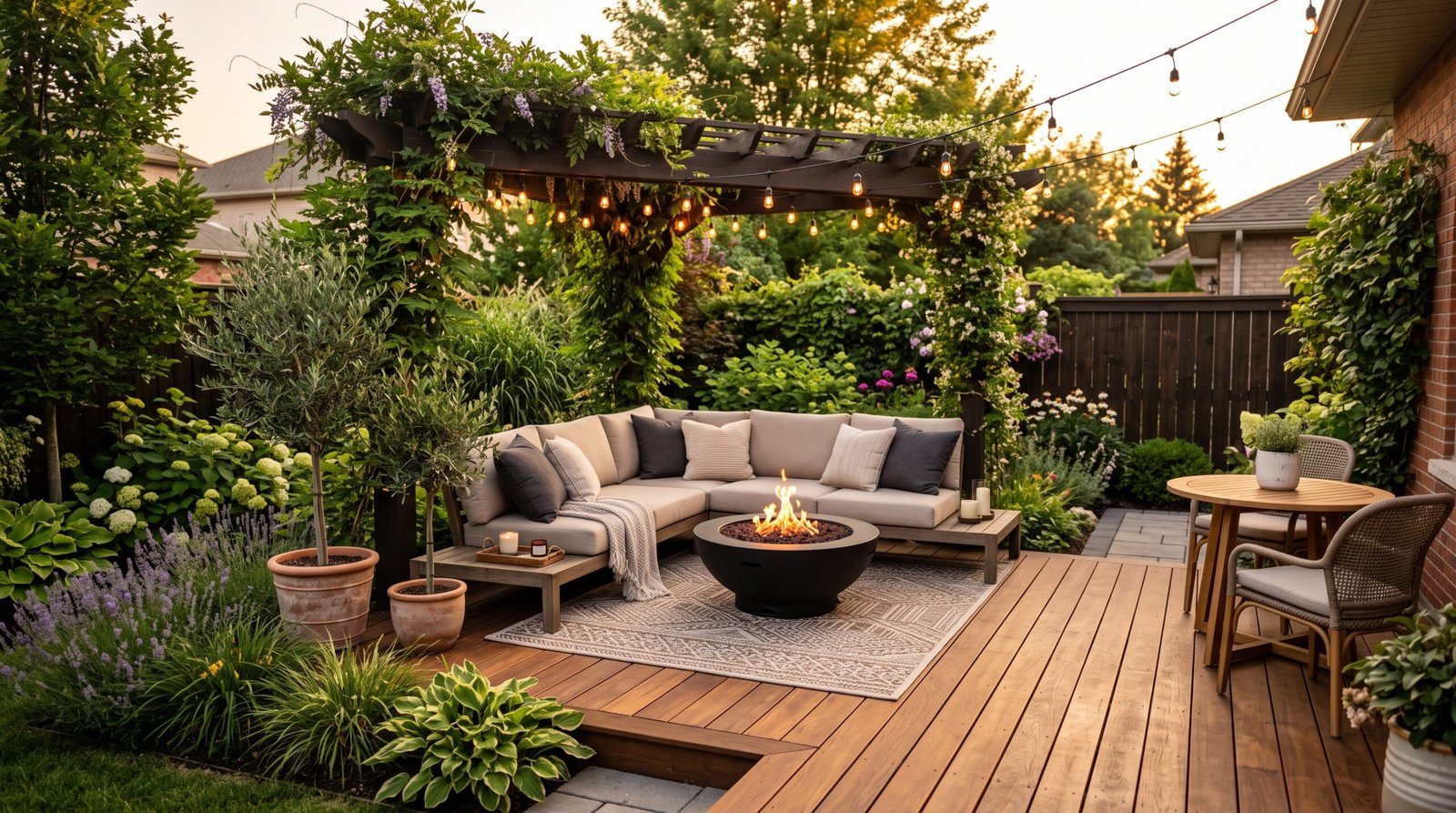
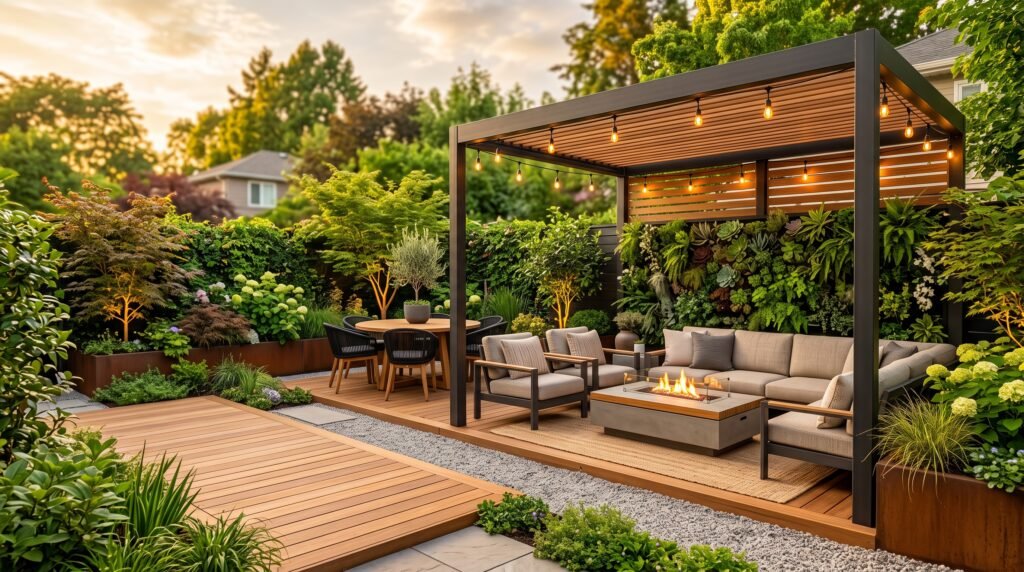
Transforming your outdoor living area doesn’t require acres of land or a massive budget — even the smallest backyard can become a stunning retreat with the right ideas and a little creativity. If you’ve been staring at your compact yard wondering what to do with it, you’re in the right place. This guide walks you through seven genuinely beautiful, functional outdoor living setups that work brilliantly in tight spaces, and explains exactly how to pull each one off.
Why Small Backyards Are Perfect for Outdoor Living
There’s a myth that needs busting right away: small backyards are actually easier to design than large ones. With less square footage, every design decision carries more weight, which tends to push you toward intentional, curated choices rather than sprawling randomness. The result is often a more cohesive, intimate outdoor living space that feels like a true extension of your home.
Think of a small backyard the way you’d think of a studio apartment. A skilled designer doesn’t lament the square footage — they use smart furniture, layered lighting, and vertical space to make it feel both functional and stylish. The same principles apply here.
The other advantage? Cost. Creating a cozy, well-designed outdoor living area in a compact yard costs a fraction of what you’d spend on a large property. You’re working with less ground to cover, fewer materials, and more focused decision-making.
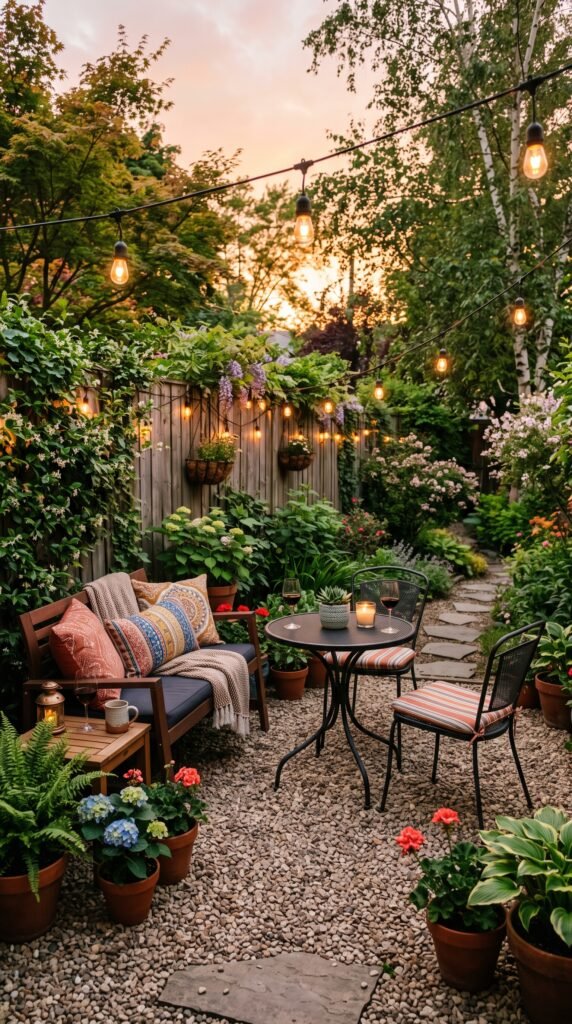
1. The Cozy Bistro Corner — A Classic Outdoor Living Setup
If there’s one outdoor living arrangement that works in virtually any small backyard, it’s the bistro corner. This setup borrows heavily from Parisian café culture: a small round table, two chairs, a string of warm Edison bulbs overhead, and a handful of potted plants to frame the scene.
The bistro corner works because it’s honest about scale. Rather than trying to cram a full dining set into a space that can’t support it, you lean into the intimacy and create something that feels deliberately charming rather than cramped. It’s a space for morning coffee, evening wine, and unhurried conversation.
How to pull it off: Choose a 24- to 28-inch round table in wrought iron or powder-coated steel — materials that weather well and don’t visually overwhelm the space. Pair it with folding bistro chairs that can be tucked away when not in use. String lights should run at approximately eight feet of height to create that canopy effect. Add three to five terracotta pots with trailing plants or herbs for a lived-in feel.
The corner placement is intentional, too. Tucking this setup into a corner of the yard creates a defined “room” within the outdoor space without requiring any permanent structures.
Best Modern Outdoor Lighting Ideas
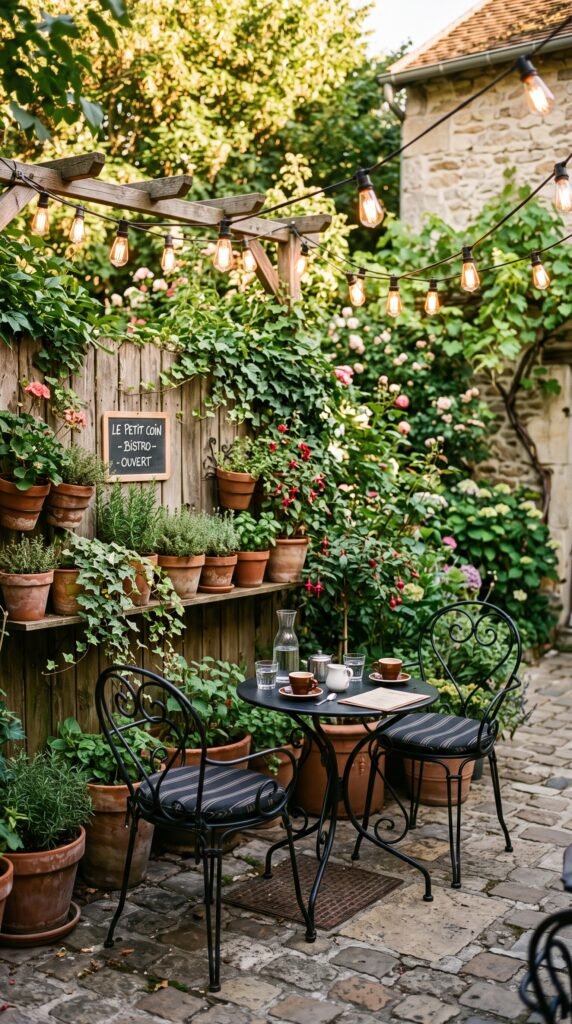
2. The Vertical Garden Wall — Outdoor Living That Goes Up, Not Out
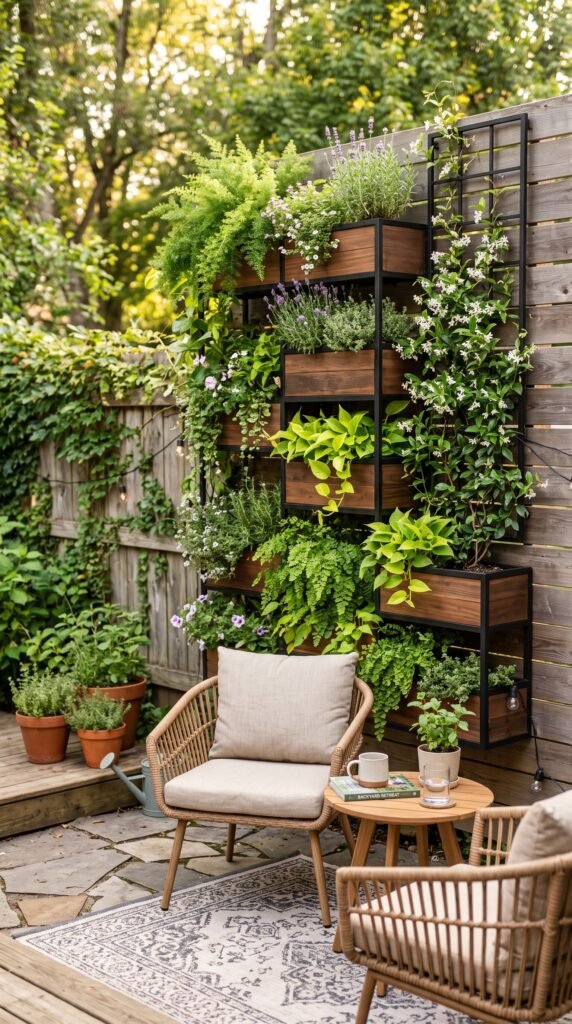
When floor space is limited, the smartest move in outdoor living design is to go vertical. A garden wall — whether it’s a modular planter system, a trellis covered in climbing vines, or a series of mounted pots — adds greenery, texture, privacy, and visual height without consuming a single square foot of your usable yard.
Vertical gardens also do something remarkable for the psychology of a small space. By drawing the eye upward, they make the area feel taller and more expansive. They also act as natural privacy screens, which is especially valuable in urban backyards surrounded by neighboring windows.
How to pull it off: The simplest approach is a cedar or metal trellis mounted against a fence or exterior wall, planted with fast-growing climbers like clematis, jasmine, or climbing hydrangea. For a more structured look, modular wall planter systems let you arrange pots in geometric patterns. If you want something low-maintenance, consider a mix of succulents and air plants in mounted terracotta or metal containers.
According to research published by the American Society of Landscape Architects, vertical plantings in residential outdoor spaces consistently rank among the top design trends for urban and suburban homeowners — and for good reason. They deliver maximum visual impact with minimal footprint.
3. The Floating Deck Nook — Elevated Outdoor Living on a Budget
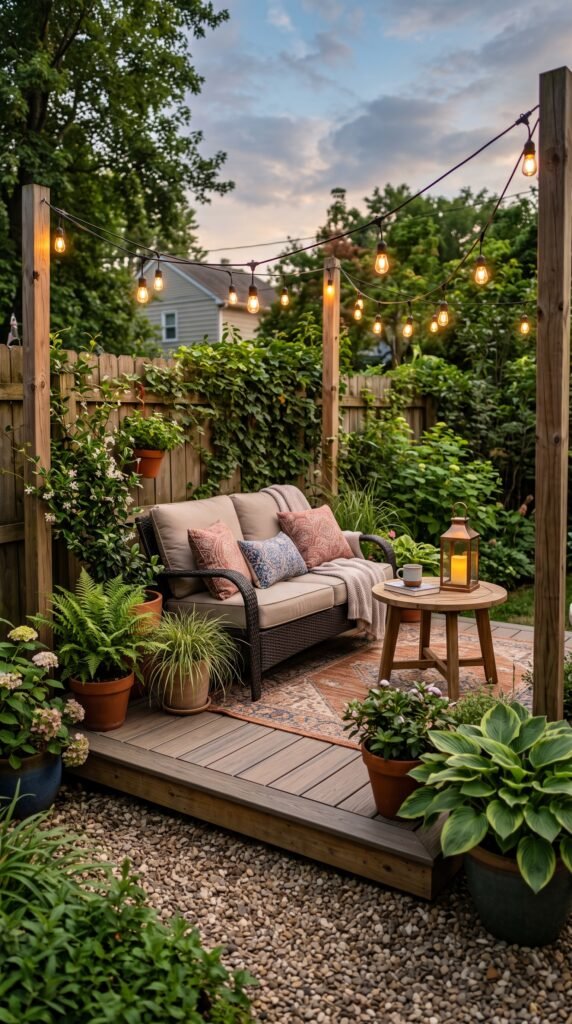
A floating deck — one that sits directly on the ground without requiring footings or permits in most municipalities — is one of the most transformative upgrades you can make to a small backyard outdoor living space. Even a 10×10 or 12×12 platform deck instantly defines the area, signals that this is a “room,” and creates a clean, level surface for furniture that would otherwise sit unevenly on sloped or patchy grass.
The psychological effect of a deck platform is underrated. It separates the outdoor living area from the rest of the yard, giving the space a sense of purpose and permanence. Guests step onto the deck and they know they’ve entered a distinct zone.
How to pull it off: Composite decking materials have become remarkably affordable and far outperform pressure-treated wood in terms of longevity and maintenance. For a 10×10 floating deck, most DIYers can complete the project over a weekend with basic tools. Keep the furniture scale appropriate — a loveseat or small sectional, one or two side tables, and a compact fire pit or lantern grouping. Add an outdoor rug to anchor the arrangement and soften the look.
how to build a floating deck on a budget
4. The Zen Gravel Garden — Minimal Outdoor Living With Maximum Impact
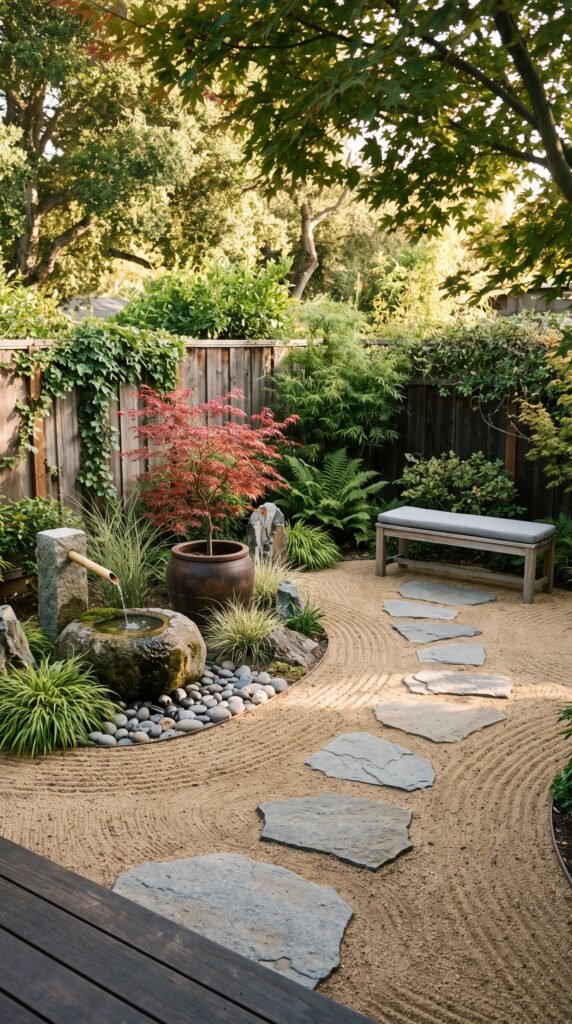
Not every small backyard needs grass, and not every outdoor living space needs to be lush and layered. The zen gravel garden proves that simplicity can be just as striking — and in a small space, the clean lines and minimal palette of this approach can make a compact yard feel serene and intentional rather than cramped and cluttered.
Gravel gardens originated in Japanese garden design, where the careful placement of stone, raked gravel, and a few sculptural plants creates a space that feels meditative and spacious despite its physical limitations. The same concept translates beautifully to modern Western backyards.
How to pull it off: Start with a weed barrier fabric, then lay two to three inches of decomposed granite or pea gravel in your chosen color — warm buff tones work well in sun-drenched yards, while gray or charcoal gravel reads as more contemporary. Place two or three large stepping stones to create a path. Add a low bench, a stone lantern or water feature, and one or two architectural plants like ornamental grasses, a Japanese maple, or a single sculptural agave.
The Royal Horticultural Society notes that gravel gardens are among the most drought-tolerant and low-maintenance landscape choices available to homeowners — a practical bonus on top of the aesthetic payoff.
5. The String Light Canopy — Outdoor Living That Shines After Dark
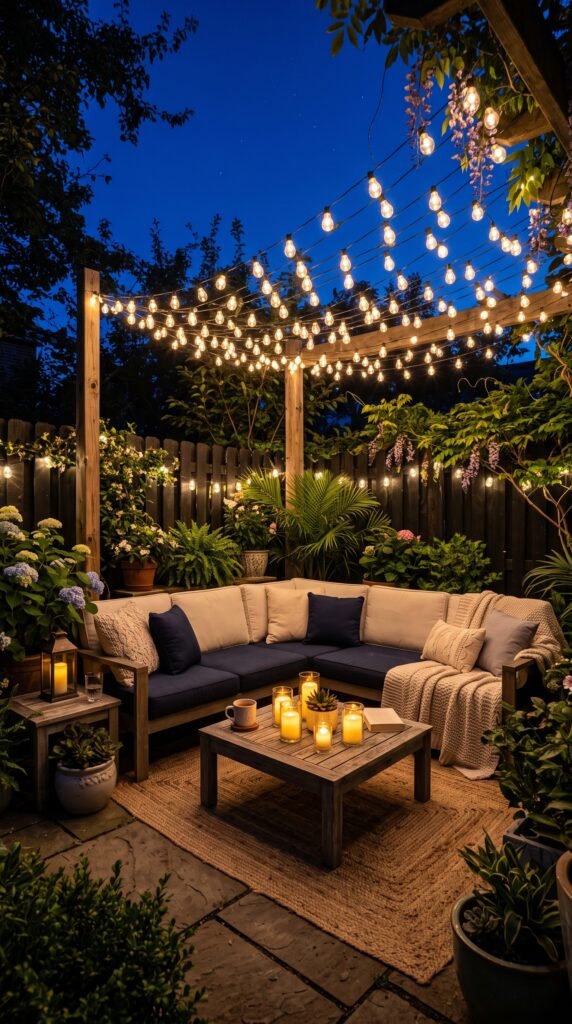
Daytime design is one thing, but the best outdoor living spaces look just as good — often better — after the sun goes down. A string light canopy is the single most effective way to transform a small backyard at night, and it works over virtually any surface: a deck, a patio, a gravel area, or even bare grass.
The magic of a string light canopy is that it creates an overhead plane where there wasn’t one before. Suddenly, your outdoor living area has a ceiling — a soft, glowing one that makes the space feel enclosed and intimate without actually boxing it in.
How to pull it off: Run strings of warm-white (2700K) Edison-style bulbs between anchor points at around eight to ten feet of height. Anchor points can be existing structures (a fence post, the eave of your house, a pergola beam) or freestanding wooden posts set in weighted planters. Use S-hooks or cup hooks for easy removal. For a small yard, three to five strands running in parallel lines create a full canopy effect. Pair with flameless LED candles on your table and a few solar-powered lanterns at ground level for a layered, three-dimensional lighting effect.
best outdoor string lights for patios and backyards
6. The Container Garden Patio — Flexible Outdoor Living for Renters and Movers
One of the most liberating things about container gardening is that your entire outdoor living garden goes with you if you move. For renters, for people in transitional living situations, or for anyone who simply wants maximum flexibility, a container garden patio is the ideal outdoor living solution.
The container approach also lets you solve a problem that plagues many small backyards: terrible soil. If your yard is rocky, compacted clay, or filled with roots, raised and container gardening sidesteps the problem entirely. You control the soil, the drainage, and the placement.
How to pull it off: The key to a container garden patio that looks designed rather than haphazard is grouping. Arrange containers in clusters of three to five, varying the heights with plant stands or upturned pots used as risers. Stick to a cohesive color palette for your containers — all terracotta, all white, or all matte black reads as intentional. Mix thriller plants (tall, dramatic focal points like cannas or tall grasses), filler plants (mid-height bushy plants like petunias or coleus), and spiller plants (trailing varieties like sweet potato vine or trailing verbena) in each large container.
According to Better Homes & Gardens, the thriller-filler-spiller formula is the most reliable method for creating container arrangements that look professionally designed — and it’s easy enough for a complete beginner to execute on the first try.
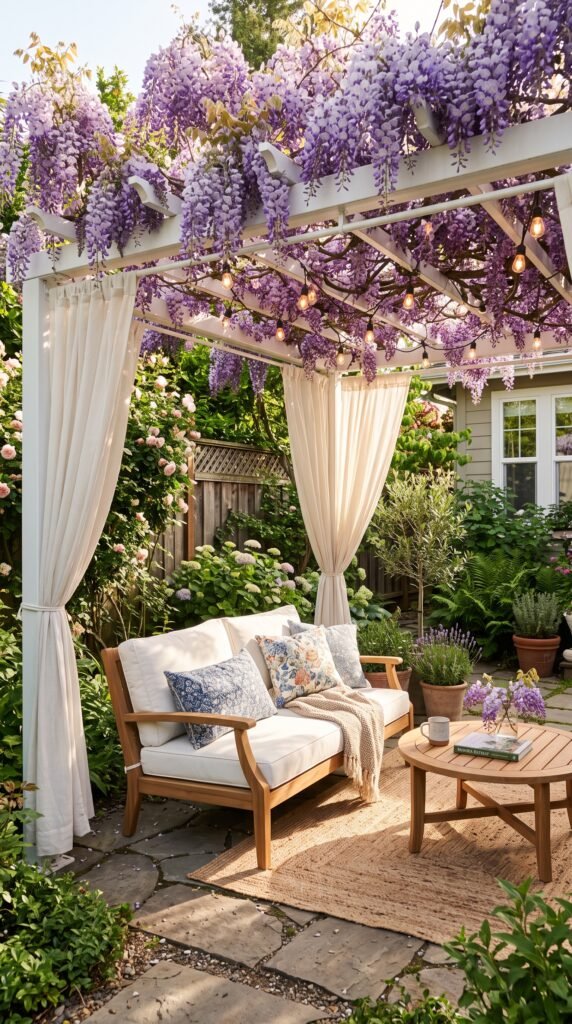
7. The Pergola Retreat — The Ultimate Outdoor Living Upgrade for Small Spaces
If you’re ready to make a longer-term investment in your outdoor living space, a pergola is the single upgrade with the highest return — in terms of both functionality and visual impact. A pergola creates architectural structure in a yard that would otherwise feel undefined, provides a natural anchor for climbing plants, and gives you a framework for hanging lights, fabric shade panels, and outdoor curtains.
The misconception is that pergolas require a large yard. In reality, a 10×10 or 10×12 pergola footprint is perfectly suited to a small backyard and can define the entire outdoor living area without overwhelming it.
How to pull it off: Freestanding aluminum pergolas have become an excellent option in recent years — they’re rust-proof, low-maintenance, and available in powder-coated finishes that mimic the look of painted wood. For a more natural aesthetic, cedar or Douglas fir pergola kits are widely available and can be assembled in a weekend. Plant fast-growing climbers like wisteria, climbing roses, or passionflower at the base of each post and within two to three seasons you’ll have a fully canopied, living structure.
Drape outdoor curtain panels on two sides to control sun exposure and add privacy. Layer in a ceiling fan rated for outdoor use to extend comfortable time under the pergola into the warmer months. A small bistro set or loveseat arrangement underneath completes the picture.
The combination of overhead structure, green plants, and soft furnishings creates an outdoor living room that genuinely rivals interior spaces for comfort and atmosphere.
Bringing It All Together — Your Outdoor Living Transformation Starts Small
The best outdoor living spaces don’t happen all at once. They evolve through a series of small, intentional decisions — a piece of furniture chosen for scale, a string of lights that shifts the mood entirely, a container of herbs that adds both beauty and fragrance. What matters most is starting.
Pick one of the seven setups above that resonates with your yard’s existing shape, your lifestyle, and your budget. Start there. Build from that anchor point. You’ll be surprised how quickly a compact backyard transforms into a space you genuinely want to spend time in — a true outdoor living room that works as hard as any room inside your home.