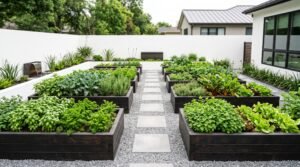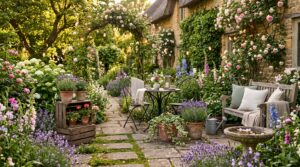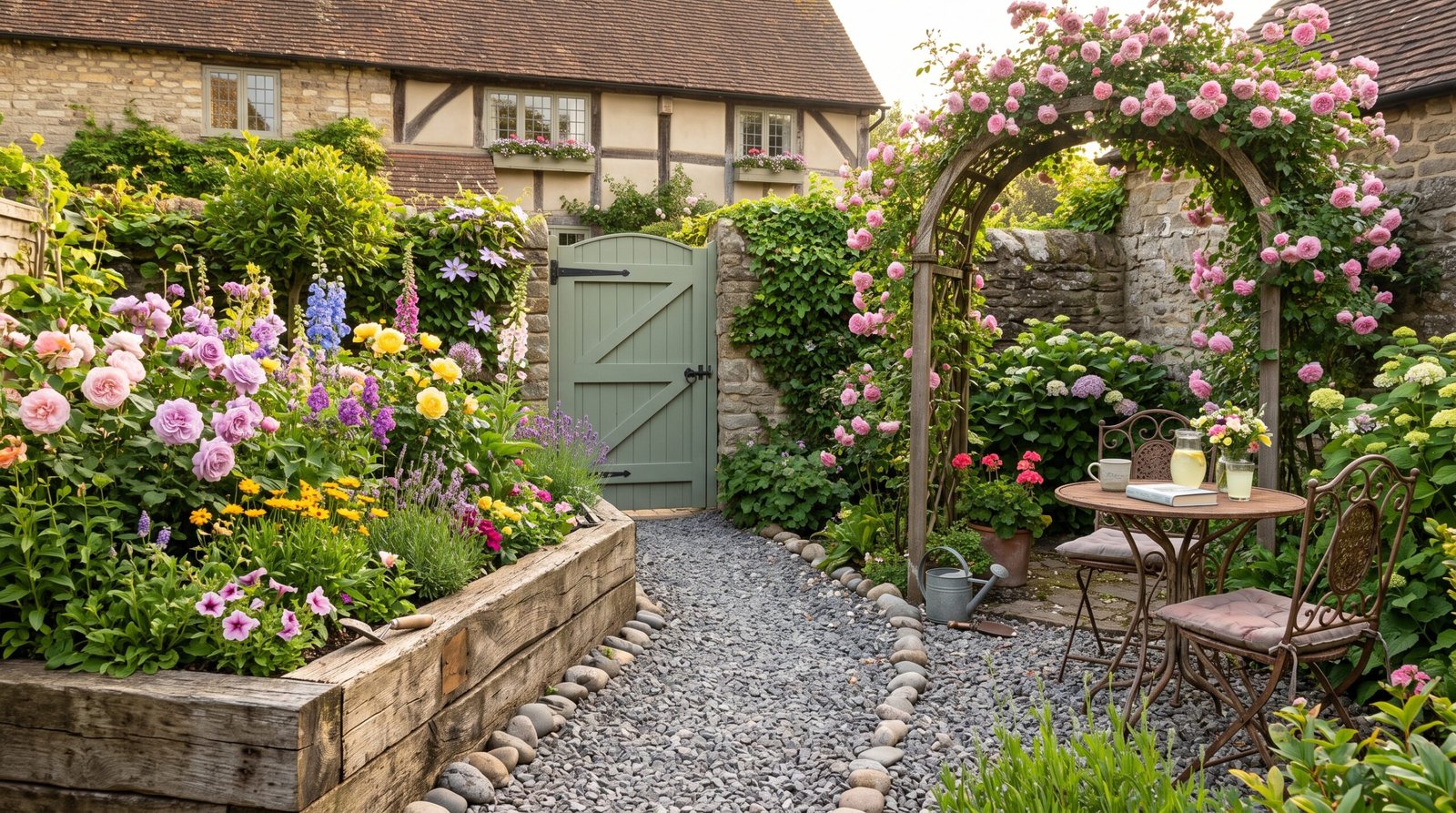
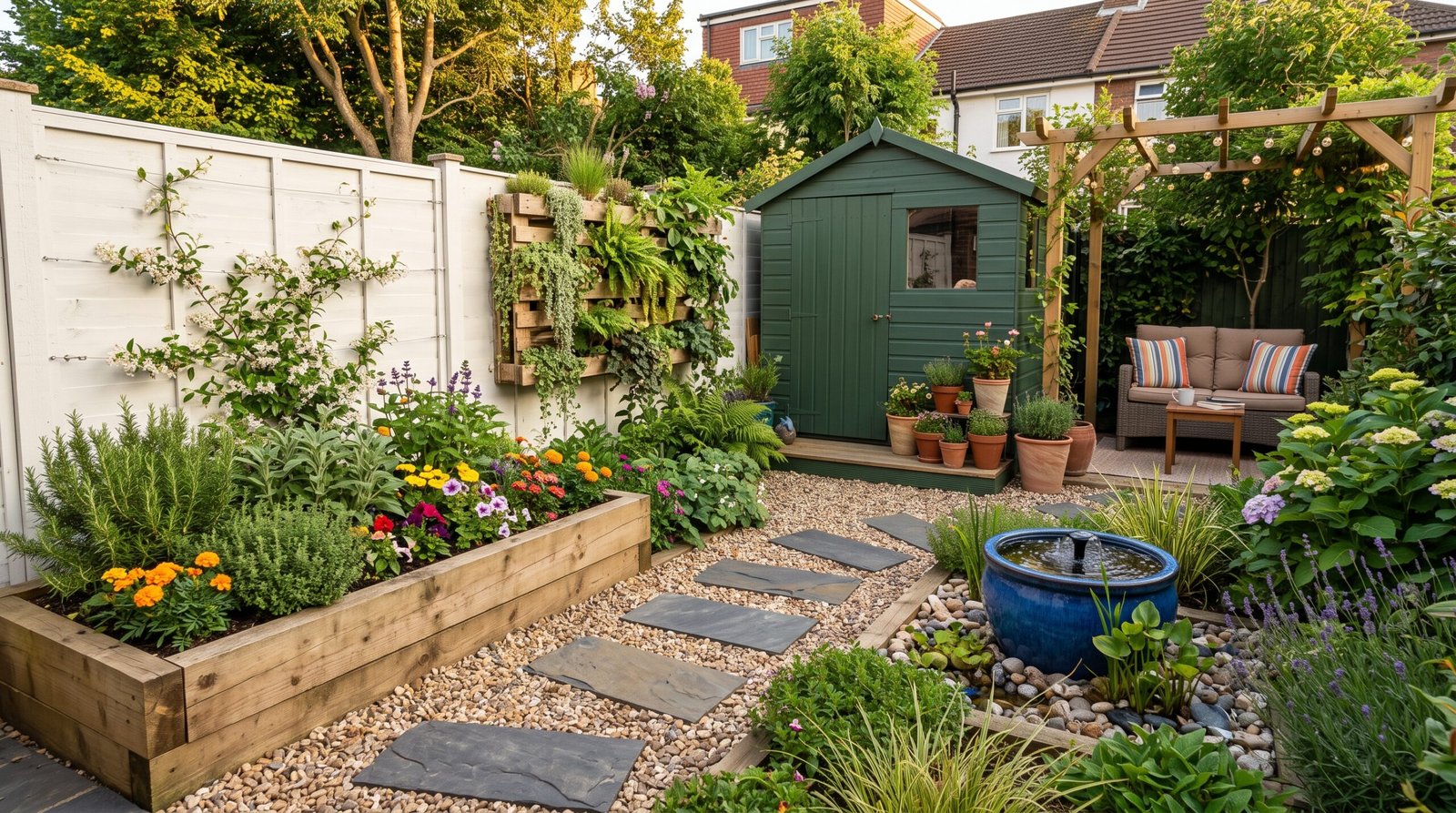
If your small garden feels more like a dumping ground than a place to relax, these small garden makeover ideas will help you change that in a single weekend. This guide walks you through the whole process, from planning to finishing touches, so you can transform your outdoor space without the overwhelm, the endless trips to the garden centre, or the feeling that you have started a project you cannot finish.
And here’s the truth: a small garden doesn’t need a huge budget or weeks of work to look dramatically better. It needs a clear plan, a bit of ruthless editing, and the right sequence of jobs. The small garden makeover ideas below are ordered the way you should actually do them — plan first, clear second, build third — so you don’t end up planting into a space you later need to dig up again. Two days, a few focused jobs, and your garden will be a place you actually want to spend time in.
In this guide:
- 7 Small Garden Makeover Ideas for a Weekend
- 1. Plan Before You Lift a Shovel
- 2. Clear and Edit Ruthlessly
- 3. Build the Structure First
- 4. Plant in Layers
- 5. Style with Containers and Height
- 6. Light It for the Evening
- 7. Lock It in with Low Maintenance
- Common Mistakes That Derail Small Garden Makeover Ideas
- The Best Tools for a Weekend Garden Makeover
- Frequently Asked Questions
7 Small Garden Makeover Ideas for a Weekend
Work through these seven small garden makeover ideas in order, over Saturday and Sunday. Saturday is for planning, clearing, building and planting. Sunday is for styling, lighting and the finishing touches that make the garden feel finished rather than half-done. Each idea builds on the one before it, so resist the urge to start with the fun part — a garden that is planned and cleared first always looks better than one that was planted in a hurry.
1. Plan Before You Lift a Shovel
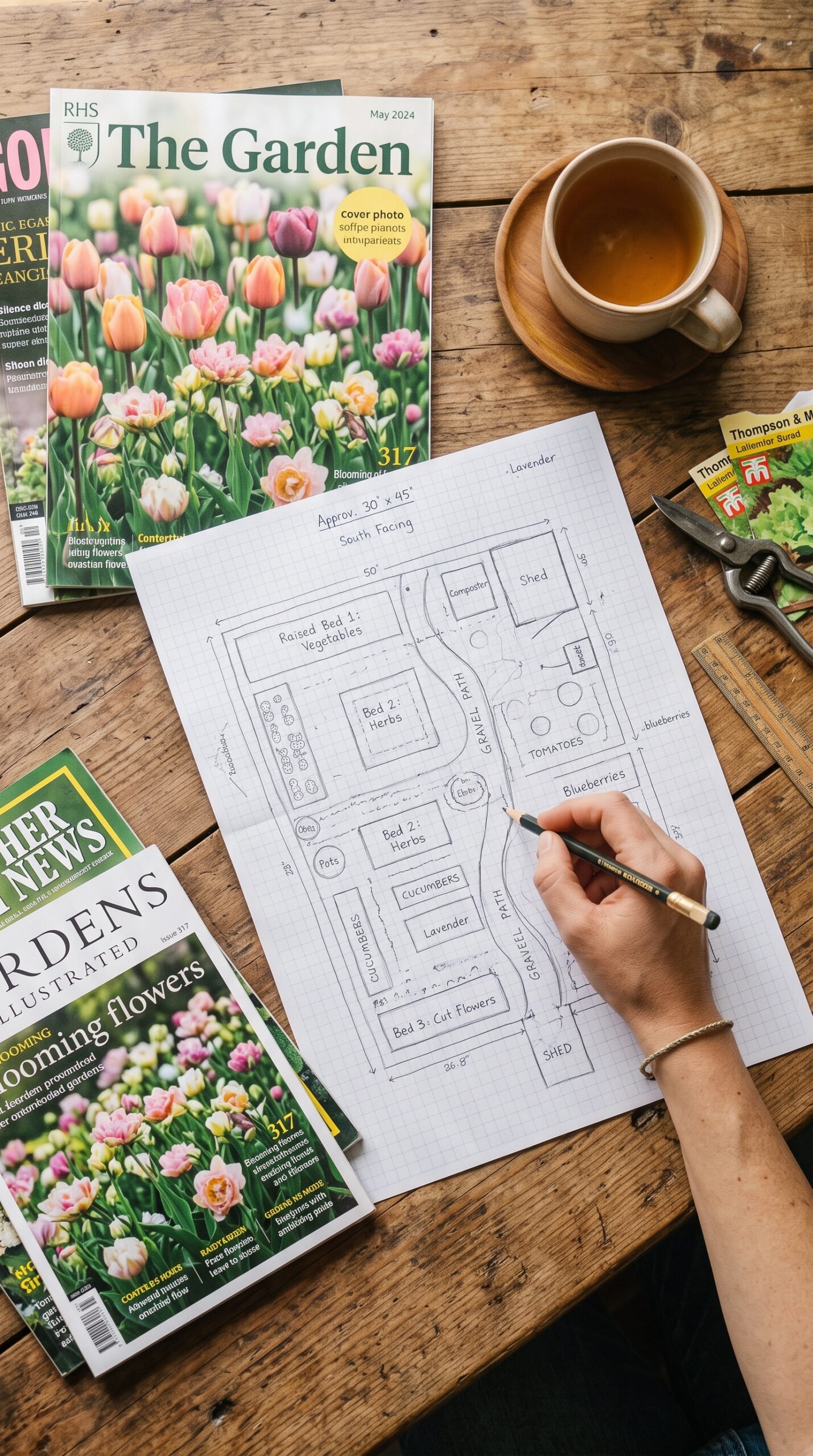
Planning is the step most people skip, and it’s also the reason most weekend makeovers fail. Before you buy a single plant, take 30 minutes to walk your garden and work out what it actually gets: which areas get the most sun, where water pools after rain, and which corners are always in shade. That 30-minute audit decides what will grow where, and it stops you buying sun-loving plants for a shady corner.
Ask yourself a few key questions. Which areas get the most sun? Where does water collect? What do you actually want to use the space for? A seating area, a cutting patch, a play space, or a mix of all three? The answer shapes everything else.
Once you’ve answered those, sketch a rough layout — it doesn’t need to be pretty, it needs to be clear. Mark the sunny and shady spots, the existing trees and structures you want to keep, and where you want seating. One useful technique is to use string and stakes to map out zones before committing to any digging. It costs almost nothing, takes twenty minutes, and lets you stand in the garden and see whether a bed is actually wide enough to walk around before you build it.
Consider vertical space from the start. Small garden makeover ideas that use trellises, wall planters, and climbing plants effectively can double your growing area without taking up any ground space. Also think about your soil. Compacted, nutrient-poor soil is the silent killer of small garden transformations. If your beds have been neglected, budget time on day one for soil improvement — add compost, break up compaction, and check drainage.
The Royal Horticultural Society has an excellent guide on planning a small garden that covers scale, proportion, and plant selection in detail.
2. Clear and Edit Ruthlessly
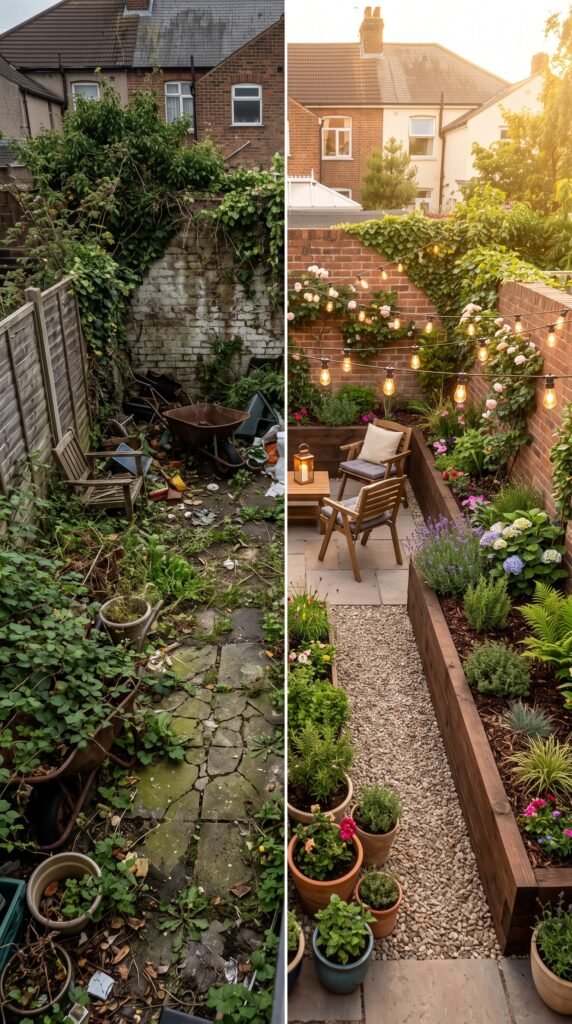
Start Saturday morning with a full clearout. Remove weeds, dead plants, broken pots, and anything that’s been sitting in the corner for months. Be honest about what stays: if a plant hasn’t thrived in two seasons, it is not going to start now. If a piece of furniture is rotting, it goes. This is the least glamorous of these small garden makeover ideas, and it makes the biggest visual difference — most small gardens look better after clearing alone.
Dig out established perennial weeds — couch grass, bindweed, dandelions with deep roots — rather than just snapping off the tops. Mulch will not stop them if the roots are still there, so this is the job to do properly now. Clear the ground back to bare soil in the beds you plan to replant, and sweep paths and patios so you can see what you are actually working with.
Sort what you remove into three piles: compost, green waste, and rubbish. That stops the clearout from becoming a new pile in the corner. By lunchtime on Saturday, you should have an empty, legible garden — and a much clearer sense of how much space you actually have.
3. Build the Structure First
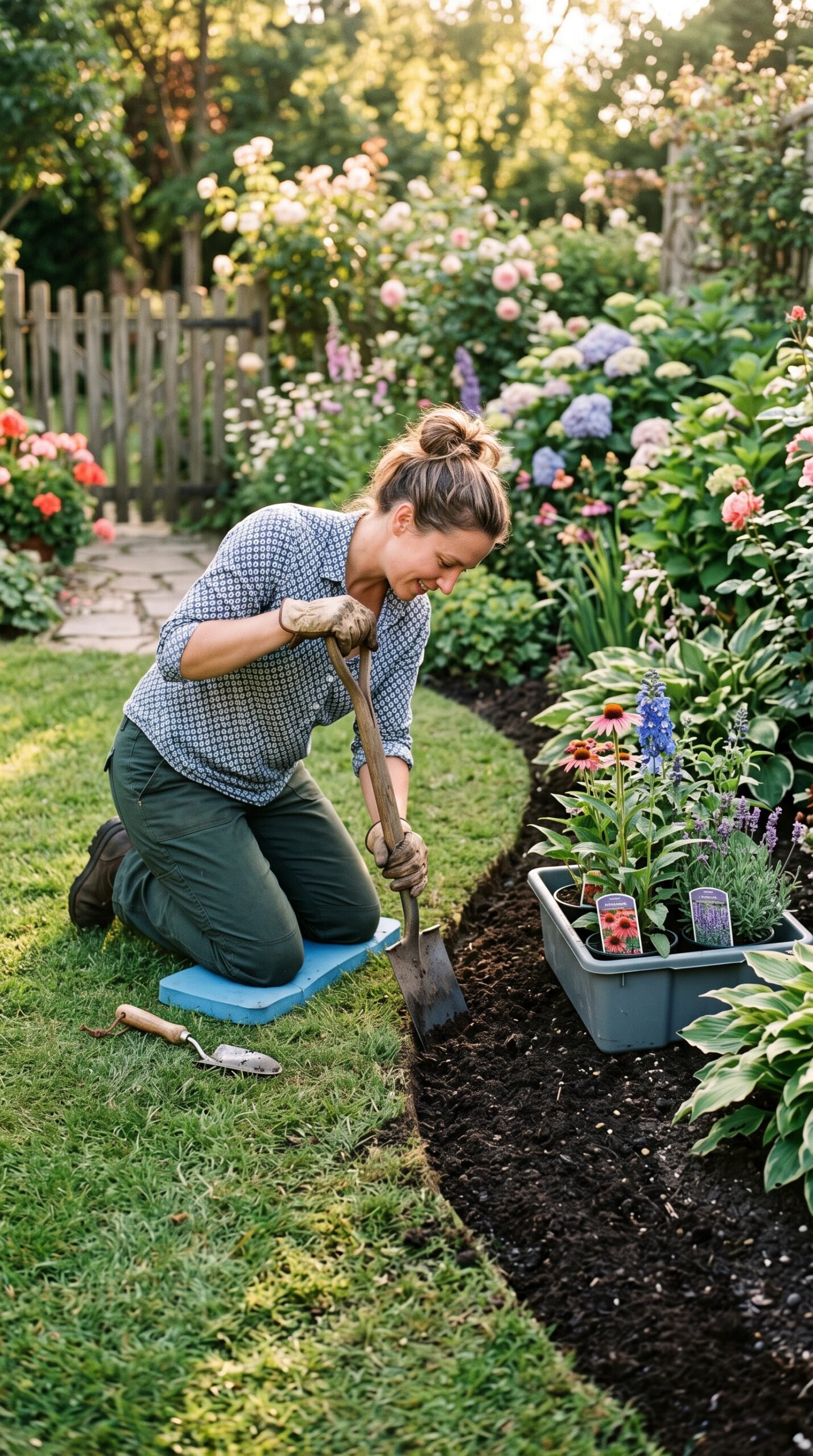
Once the space is clear, move to any structural work before you plant anything. This means laying new edging, building raised beds if the soil is poor, creating pathways with stepping stones, or simply defining the borders between lawn, beds and seating. Structure is what makes a small garden feel designed rather than accidental — it is the bones everything else hangs on.
Clean edging is the cheapest structural win. A sharp, defined edge between lawn and bed, cut with a half-moon edger or a spade, instantly makes the whole garden look cared for. Raised beds are worth building if your soil is poor or waterlogged — a simple timber frame, 20–30 cm high, filled with a mix of topsoil and compost, gives you a workable bed in an afternoon.
If you’re painting a fence or wall, choose a colour that works with your plants rather than competing with them. A dark green or soft charcoal fence makes foliage stand out and can make boundaries recede. Paint first, plant second: you do not want to splash paint on new plants, and a freshly painted fence makes the planting look better the moment it goes in.
4. Plant in Layers
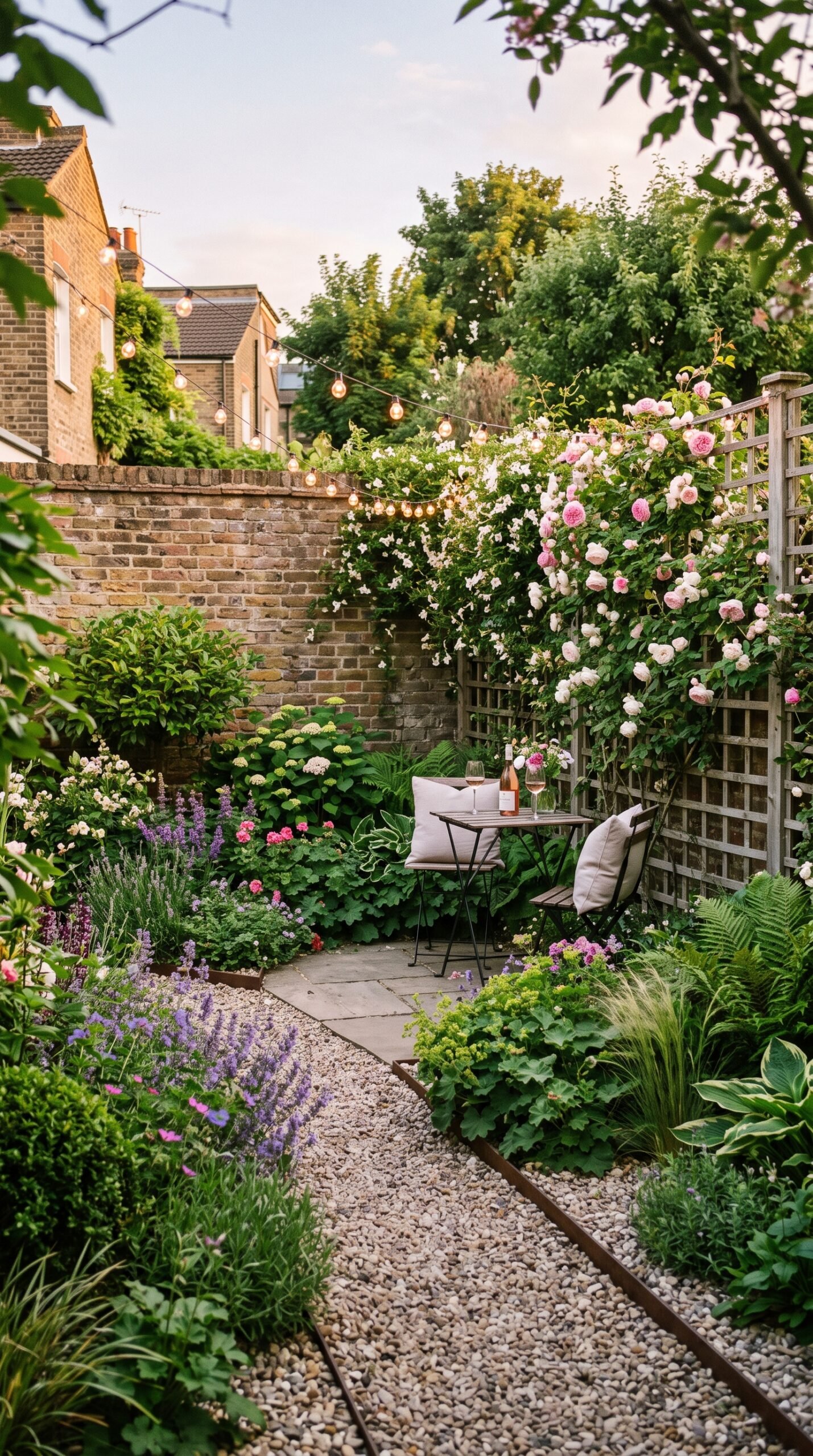
By Saturday mid-afternoon, you should be ready to begin planting. Start with your largest plants first — shrubs, small trees, and structural perennials — then work down to smaller plants and ground cover. This is the step where your planning sketch earns its keep.
Layer by height: tall plants at the back of a bed or against a fence, medium plants in the middle, and low plants at the front and along the edges. That simple order is what makes a bed look full rather than flat, and it stops tall plants shading out everything behind them. Always check the mature spread on the plant label before you buy — a shrub that looks neat in a pot can outgrow a small bed in two years, and moving it later undoes the weekend’s work.
For plant combination ideas that work beautifully in confined spaces, the BBC Gardeners’ World plant selector is a useful tool for checking which plants suit your light and soil. Water everything thoroughly at the end of day one and add a layer of mulch — the right depth is covered in idea 7 below.
5. Style with Containers and Height
Sunday is about refinement. Start by assessing what you planted on day one, then fill gaps with container plants, which give you instant flexibility. Group containers in odd numbers — threes and fives look more natural than pairs — and vary the heights: a tall pot on a stand, a medium pot on the ground, and a low bowl beside it. That variation is what makes a corner look styled rather than just filled.
Containers are also your test ground. Not sure a plant will like a spot? Grow it in a pot there for a season first. And they let you change the look through the year without digging: swap a spring pot of tulips for summer herbs, then for autumn colour. Use the same material or colour family across your pots — terracotta, glazed ceramic, or galvanised metal — so the collection reads as one scheme, not a jumble.
Add your finishing details in the afternoon: outdoor cushions, a small table for a morning coffee, and a few decorative touches that make the garden feel used rather than staged. For styling that costs little and still looks considered, see Cheap Vintage Garden Decor Ideas That Look Expensive. And if you are setting the garden up to be enjoyed with other people, 25 Creative Small Garden Party Ideas Guests Will Love has practical ways to make a small space work for guests.
6. Light It for the Evening
String lights strung along a fence or overhead between two posts transform a garden after sunset. They turn a space you only use in the day into somewhere you sit in the evening, which effectively doubles how much you use it. Hang them about 2.1 metres high at their lowest point so people can walk underneath without ducking, and keep the run taut enough that the lights do not sag onto heads or plants.
Solar lights are the simplest option for these small garden makeover ideas: no cables, no electrician, and they charge during the day. Put the solar panel where it gets real sun, not in the shade of the fence, or the lights will fade early. Warm white light looks better in a garden than cool white — it makes brick, timber and foliage glow rather than look washed out. For more lighting ideas, see Best Modern Outdoor Lighting Ideas That Make Your Garden Feel Magical in 2026.
7. Lock It in with Low Maintenance
The best weekend transformation is one that stays looking good with minimal effort. Choose plants with a long season of interest. Ornamental grasses, evergreen shrubs, and long-flowering perennials keep the garden looking alive long after the initial excitement fades, and they ask for far less feeding and replanting than bedding plants that peak for a few weeks.
Mulch deeply and refresh it annually. Spread bark mulch or compost 5–7.5 cm deep for weed suppression — that is the Royal Horticultural Society’s recommendation for biodegradable mulch — and up to 10 cm where holding moisture is the main job. Keep mulch 5–10 cm clear of stems and trunks so it doesn’t cause rot. And remember the rule from idea 2: established perennial weeds must be dug out first, because mulch will not stop them.
Install drip irrigation or self-watering containers if you travel regularly or struggle to water consistently. A simple soaker hose on a timer does the job for beds, and it wastes far less water than a sprinkler. Keep a simple maintenance schedule. Once a fortnight, spend twenty minutes weeding, deadheading, and checking for pests. That small, regular habit is what separates a garden that still looks good in September from one that peaked in July. For a broader take on garden design that lasts, see 15 Best Modern Garden Ideas to Effortlessly Transform Your Outdoor Space.
With these small garden makeover ideas, your outdoor space, no matter how modest, deserves to be somewhere you actually enjoy spending time. With the right plan, the right tools, and a single weekend of focused work, you can create a garden that will bring you joy for months — and years — to come.
Common Mistakes That Derail Small Garden Makeover Ideas
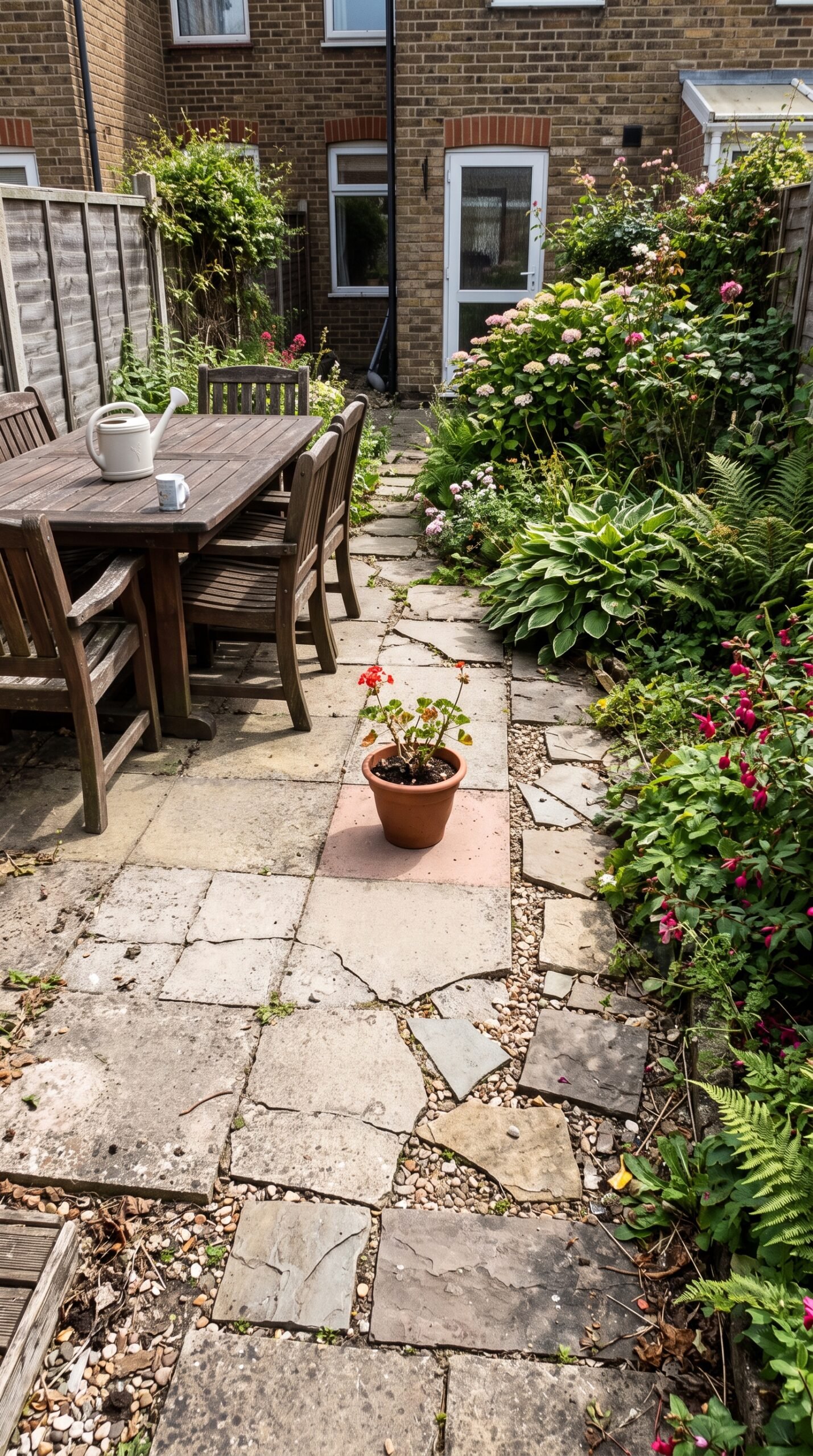
Even experienced gardeners make avoidable errors when working quickly over a weekend on small garden makeover ideas. Watch for these six:
Choosing plants that are too large for the space. This is the most expensive mistake. A plant that outgrows its spot in a year has to be moved or removed, which wastes the money and the planting. Always check the mature size on the label, not the size in the pot.
Buying furniture that’s out of scale. Oversized outdoor furniture makes a small garden feel cramped and leaves no room to move. Choose pieces that fit your space, not your wish list — a bistro set will serve a small garden better than a six-seat dining set.
Ignoring vertical surfaces. Leaving fences, walls, and boundaries bare wastes the most valuable real estate in a small garden. Climbers, wall planters and trellis turn a boundary into a feature.
Planting everything at the same height. Flat, uniform planting looks dull and makes a garden feel smaller. Layer heights, as in idea 4, and the garden gains depth.
Skipping the edging. Clean, defined edges between lawn, paths and beds make the whole garden look cared for. It is a thirty-minute job with an outsized effect.
Overcomplicating the design. With small garden makeover ideas, simplicity wins. One clear focal point, a simple colour palette, and a few well-chosen materials will look better than a garden that tries to do everything at once.
The Best Tools for a Weekend Garden Makeover
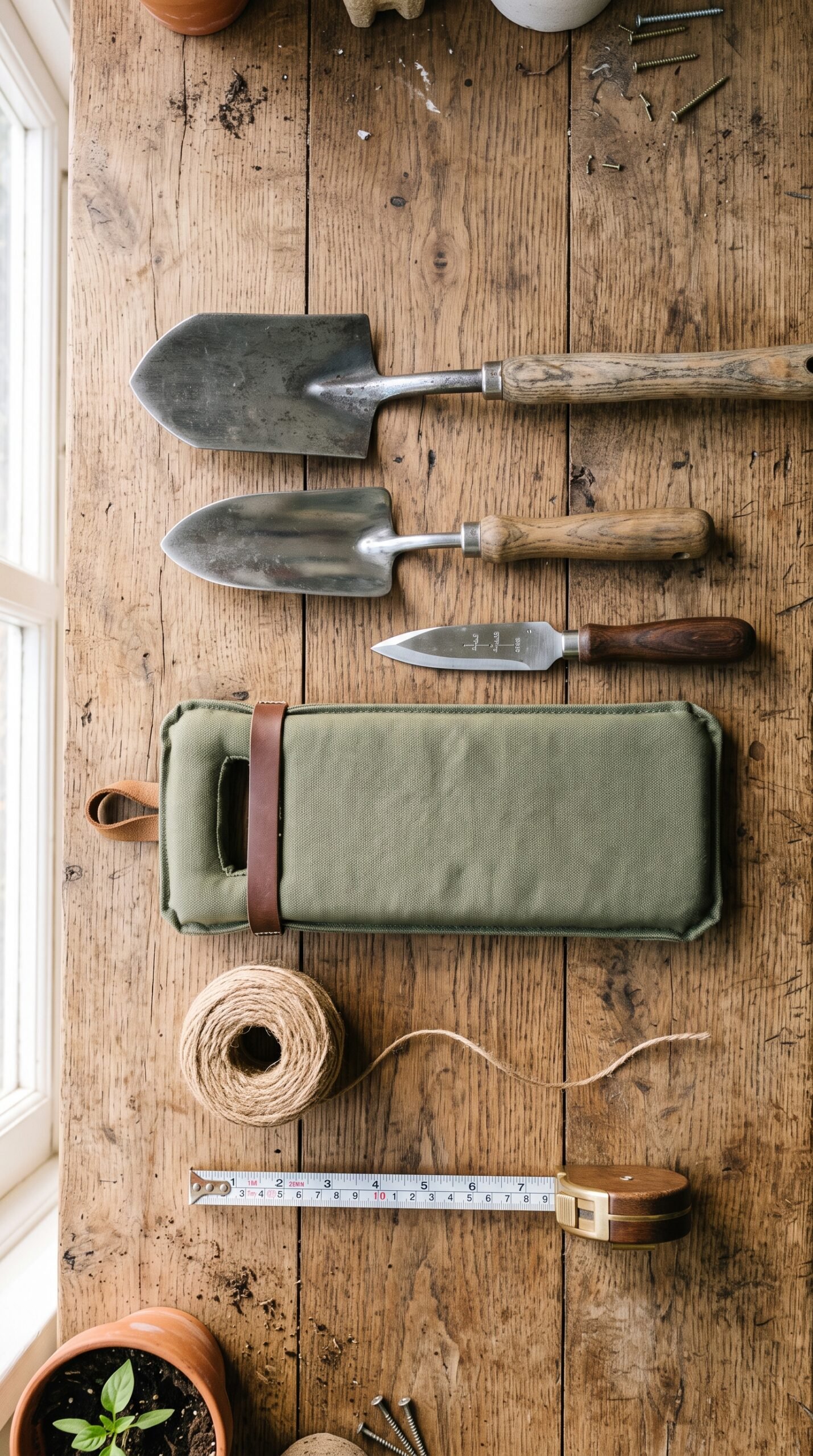
Having the right tools doesn’t mean having the most tools. For these small garden makeover ideas, you need a tight kit you can carry in one trip, not a shed full of equipment. Borrow or hire anything you will only use once.
Digging and Planting Tools
A good border spade is your most important investment. Unlike a standard digging spade, a border spade is smaller and lighter — ideal for working in tight spaces between plants. A hand trowel, a fork, a kneeling pad and a pair of gloves round out the planting kit. A quality kneeling pad is non-negotiable for a full weekend of work: your knees will thank you, and it makes the slower jobs bearable.
Cutting and Shaping Tools
A pair of bypass pruners handles the majority of cutting tasks: trimming perennials, shaping shrubs, and deadheading flowers. Long-handled edging shears are worth having if your garden has any lawn areas — they give you the clean edge lines that make such a difference to the overall look. Keep pruners clean and sharp; a blunt cut tears stems and invites disease.
Measuring and Layout Tools
A 5-metre tape measure, a ball of garden twine, and a handful of wooden stakes are essential for marking out your zones accurately. Without them, you are guessing at sizes that will have to be corrected later. Also useful: a spirit level for raised beds and a wheelbarrow for moving soil and waste.
Watering Equipment
A long-spouted watering can is ideal for new plantings where you need gentle, targeted watering. A hose with an adjustable nozzle helps for bigger areas — but be careful not to overwater newly planted areas, which are vulnerable to waterlogging. Water slowly and deeply, early in the morning, so the water reaches the roots rather than evaporating.
Which? Magazine’s garden tool reviews provide independent testing of popular tools, which can be useful when choosing between similar-priced options.
Frequently Asked Questions
Can you really make over a small garden in one weekend?
Yes, for a small garden, if you plan first. A realistic weekend is these seven small garden makeover ideas: plan and clear on Saturday morning, build and plant on Saturday afternoon, style and light on Sunday. It works because the scope is small and the sequence is right. What a weekend will not do is fix a garden with serious drainage or structural problems — those need more time and, sometimes, a professional.
How deep should mulch be?
Spread bark mulch or compost 5–7.5 cm deep for weed suppression — the Royal Horticultural Society’s recommendation for biodegradable mulch — and up to 10 cm where holding moisture is the main job. Keep mulch 5–10 cm clear of stems and trunks so it doesn’t cause rot, and dig out established perennial weeds first, because mulch will not stop them.
What plants work best in a small garden?
Plants that stay close to their mature size on the label, and that offer a long season of interest: evergreen shrubs for structure, ornamental grasses for movement, long-flowering perennials for colour, and climbers for height without using ground space. Check the mature spread before you buy, and match the plant to the sun and soil in that spot — a plant in the wrong place will struggle however well you look after it.
How do I make a small garden feel bigger?
Use height and layers, not more stuff. Tall plants at the back and low plants at the front create depth, climbers and wall planters use vertical space, and a clear path that curves or leads the eye gives the garden a sense of distance. Clean edging and an uncluttered layout help too — a garden with clear zones feels larger than one packed edge to edge.
How do I keep the makeover looking good?
Keep it low maintenance from the start: mulch at the right depth, water with drip irrigation or self-watering containers if you travel, and spend twenty minutes once a fortnight weeding, deadheading and checking for pests. Choose plants with a long season of interest so the garden does not peak for a few weeks and then fade.