How to Choose the Best Pool Deck Ideas for Your Home
The best pool deck ideas turn a backyard into a true outdoor retreat, and the right deck is one of the best investments you can make around a pool. Whether you are planning a complete backyard makeover or looking for a way to define the space around the pool, a thoughtful deck design can dramatically change how your home looks, functions and feels.
This guide cuts through all of that noise. You will find myth-busting facts, real expert guidance, and practical advice that helps you choose a pool deck material, layout, and style that genuinely fits your climate, lifestyle, and budget.
Table of Contents
Common Myths About Pool Deck Ideas That Are Holding You Back
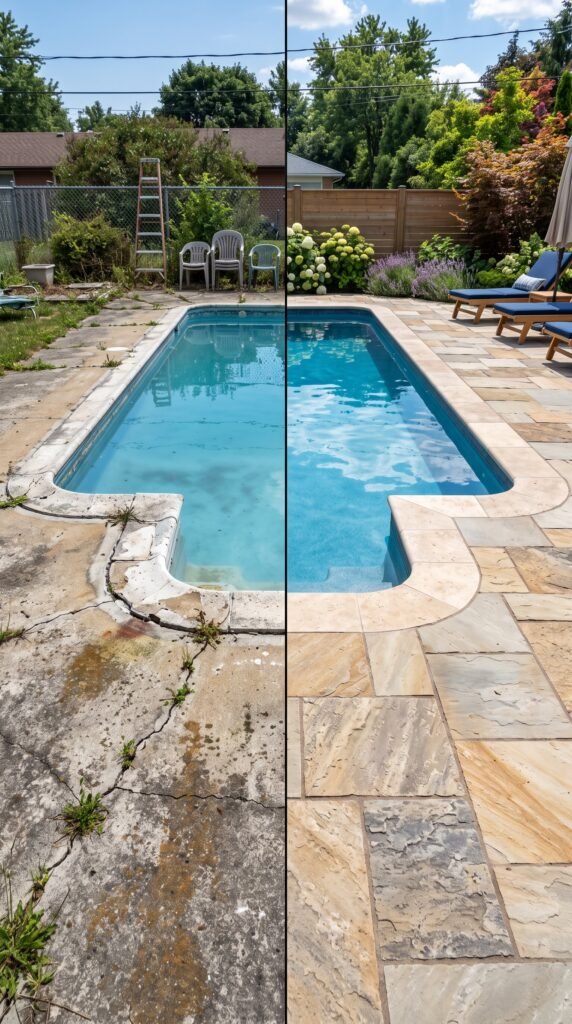
One of the most persistent myths in the pool design world is that concrete is always the cheapest and most practical choice. While concrete is certainly affordable upfront, the long-term picture is far more complicated. Unsealed or poorly finished concrete absorbs heat aggressively, making it nearly unbearable to walk on barefoot during summer afternoons in warmer climates.
Another widely repeated myth is that wood decking is too high-maintenance to be worth considering. This belief is rooted in older thinking from an era before composite and pressure-treated lumber technology matured. Modern composite decking, for example, can mimic the look of natural wood with a fraction of the maintenance burden, resisting rot, fading, and insect damage for decades.
The third myth worth addressing early is that all pool deck ideas are created equal regardless of climate. This could not be further from the truth. A material that performs brilliantly in the dry heat of Arizona may crack, warp, or become dangerously slippery in the humidity and freeze-thaw cycles of the Midwest or Northeast.
Finally, many homeowners believe that a larger deck automatically means a better deck. Size without thoughtful design just gives you more surface area to manage without improving how you actually use the space. Proportionality, traffic flow, shade planning, and zoning for different activities matter far more than sheer square footage.
Best Pool Deck Ideas That Last: The Real Facts Behind Them
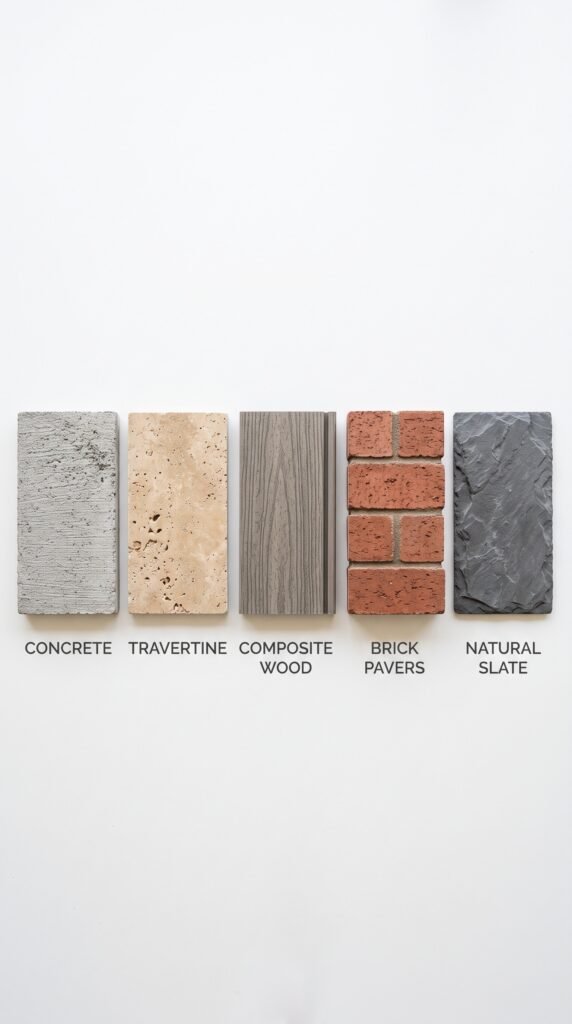
Understanding the actual performance data behind common decking materials will save you from costly mistakes. Here is what the evidence actually shows.
Concrete remains the most widely used pool decking material in North America, and for good reason — it is versatile, widely available, and relatively affordable at installation. According to HomeGuide, a properly finished and sealed concrete slab lasts 30 to 50 years with appropriate maintenance. The critical variable is finish: broom-finished, exposed aggregate, or stamped concrete all dramatically change slip resistance, heat absorption, and visual character.
Natural stone, particularly travertine and bluestone, has surged in popularity among higher-end installations. Travertine is especially prized because its natural porous surface and light color reflect heat rather than absorbing it, keeping the surface comfortable underfoot even on peak summer days. That heat performance is the main reason it commands a premium price.
Composite decking has transformed the wood deck conversation entirely. Products engineered from recycled wood fiber and polymers hold up against moisture, UV exposure, and heavy foot traffic in ways that raw timber simply cannot. Many manufacturers now offer 25-year warranties on fade and stain resistance, which speaks to how seriously the industry has advanced.
Brick pavers offer a timeless aesthetic and a practical advantage that poured concrete does not: individual units can be replaced without disturbing the rest of the surface. This makes long-term maintenance simpler and less expensive when damage does occur.
Porcelain tile has become increasingly popular for contemporary pool deck designs. Large-format porcelain pavers with a textured surface finish provide excellent slip resistance when wet, are nearly impervious to staining, and create a sleek modern look that photographs beautifully.
backyard patio ideas that look expensive
The right material for the best pool deck ideas will ultimately come down to four intersecting factors: your climate, your budget, how the pool is used, and how much upkeep you are willing to commit to. Get those four right and the remaining details become minor.
Expert Tips for the Best Pool Deck Ideas That Work in the Real World
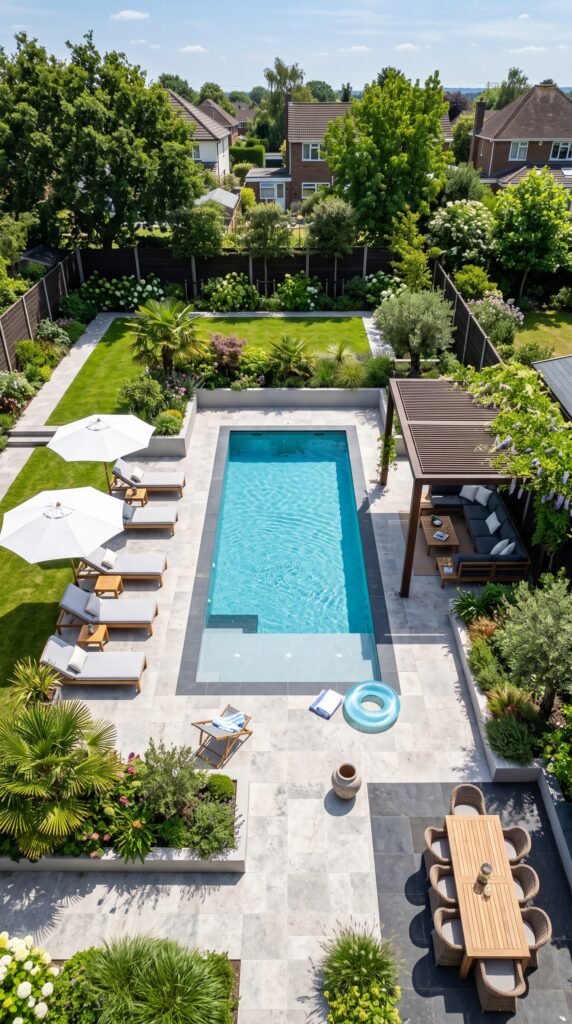
Getting the layout right is just as important as getting the material right. Here are the expert-backed principles that professional landscape architects and pool designers apply when developing pool deck ideas for residential projects.
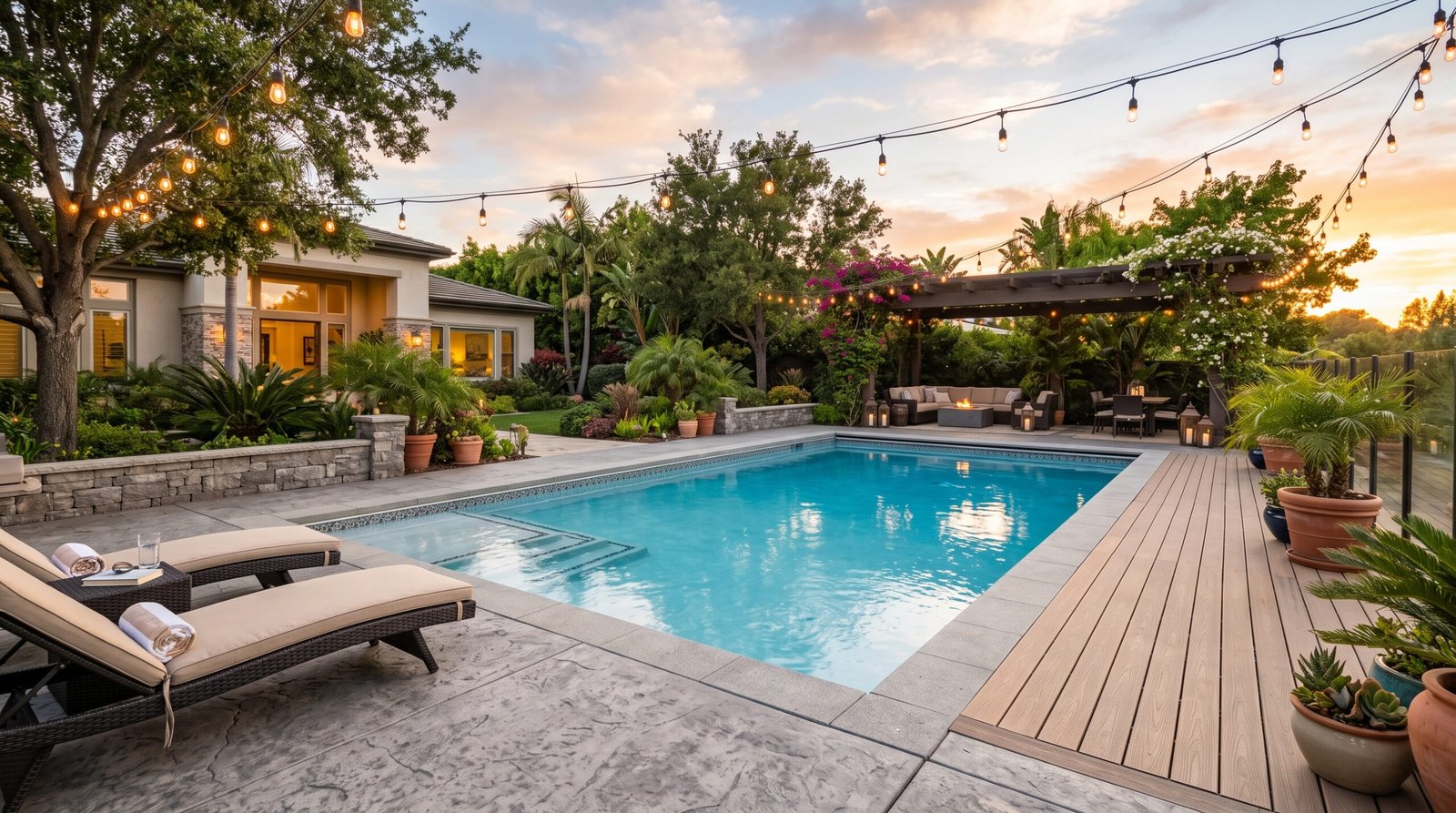
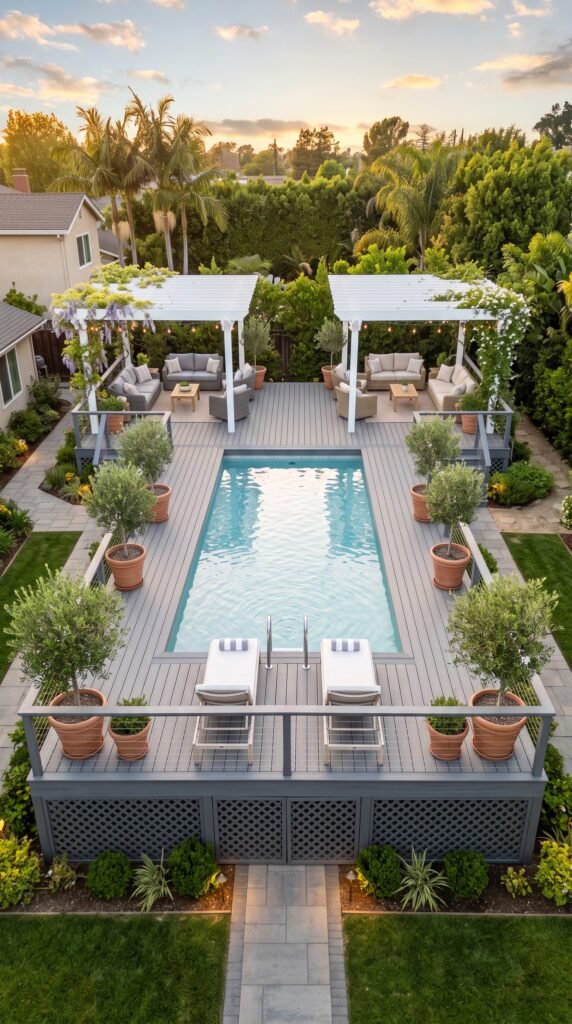
Zone your deck with intention. A well-designed pool deck typically divides naturally into at least three zones: an active sun-lounging area with direct sun exposure, a shaded retreat area under a pergola or shade sail, and a transitional zone that connects the pool to the home’s interior via a clear path. When you plan these zones from the beginning rather than retrofitting them later, the space feels cohesive and genuinely functional rather than cluttered.
Design for slip safety from the ground up. The American National Standards Institute sets guidelines for wet surface slip resistance, and any material you choose should meet or exceed those standards. A Dynamic Coefficient of Friction (DCOF) of 0.42 or higher is generally considered safe for wet applications. Always ask your contractor or supplier for the specific DCOF rating of any material you are considering.
Account for your local freeze-thaw cycle. If your climate experiences hard winters, the expansion and contraction of frozen moisture inside porous materials can cause cracking, heaving, and surface degradation over time. Dense, low-absorption materials like porcelain tile, sealed concrete, and certain natural stones handle freeze-thaw stress better than softer, more porous options.
Mind the slope. Every pool deck should be graded to drain water away from both the pool and your home’s foundation. A slope of approximately one-eighth to one-quarter inch per foot is the industry standard. Poor drainage is one of the leading causes of premature pool deck deterioration, and it also creates standing water hazards.
Think about barefoot comfort. Color plays a significant practical role here. Darker surfaces — charcoal pavers, dark stained concrete — absorb substantially more solar energy than lighter alternatives. In direct summer sun, a dark concrete surface can reach 140 to 160°F, which is painful and potentially dangerous underfoot. Choosing lighter tones or materials with natural reflective properties is not merely an aesthetic preference; it is a safety and comfort decision.
Plan for furniture placement early. One of the most common pool deck design regrets is realizing after installation that there is not enough flat, stable surface for outdoor furniture without it sitting awkwardly across different elevation zones or surface joints. A good rule of thumb is to plan for at least 6 to 8 feet of clear deck surface on each side of the pool where seating will be placed.
Consider surrounding landscaping as part of the deck design. Trees that drop leaves, seeds, or fruit near the pool create extra maintenance burden. Raised planting beds built into the deck perimeter, however, can add natural beauty, privacy screening, and shade without the debris problem — particularly when planted with ornamental grasses, lavender, or agave varieties.
Exploring Popular Pool Deck Ideas by Style and Material
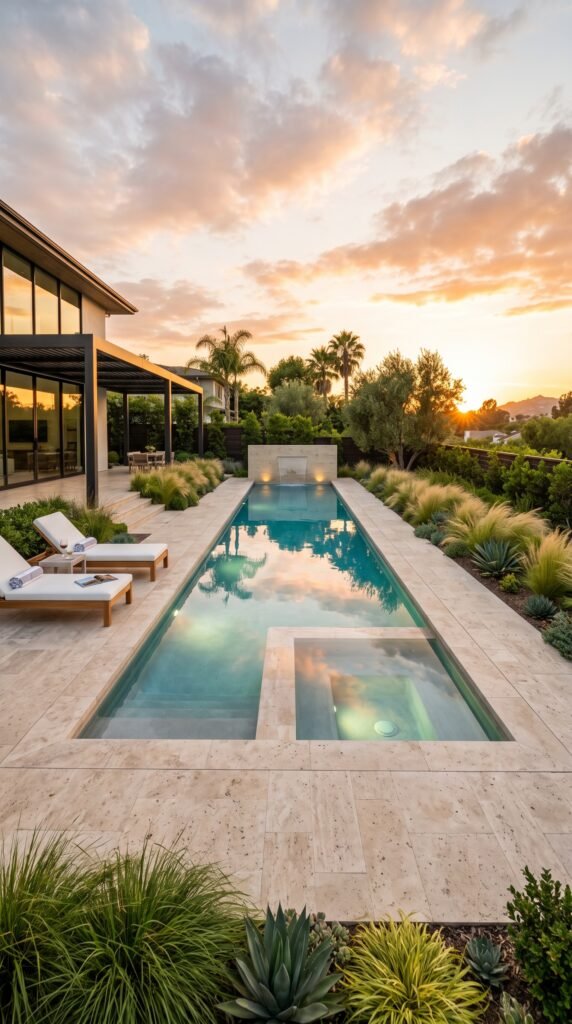
With the foundational knowledge in place, it is worth walking through the best pool deck ideas by design style so you can identify which direction aligns with your home and personal taste.
Modern Minimalist Pool Decks lean heavily on large-format porcelain pavers in neutral tones — whites, warm grays, and sand tones. The emphasis is on clean lines, minimal grout joints, and a monolithic look that blends seamlessly with contemporary architecture. Integrated lighting strips along the coping or deck edge add a high-end finish that photographs exceptionally well.
Mediterranean and Tuscan-Inspired Decks favor warm earthy tones and natural materials. Travertine, tumbled limestone, and terracotta-toned concrete pavers all work beautifully here. Terracotta planters, wrought iron accents, and lush Mediterranean plantings like rosemary, bougainvillea, and olive trees complete the aesthetic. This style is especially well-suited to Spanish or Italian-influenced home architecture.
Tropical Resort-Style Decks prioritize natural materials and lush greenery. Ipe wood or composite decking with a wood-grain finish creates a warm, organic feel, surrounded by banana palms, bird of paradise plants, and large-leafed tropical ground covers. A swim-up bar or outdoor kitchen built into the deck perimeter elevates this style from attractive to genuinely resort-like.
Rustic Farmhouse Decks favor weathered wood tones, natural stone accents, and a relaxed, unpretentious character. Wide composite planks in weathered gray or driftwood tones, combined with natural boulders and wildflower plantings, create a space that feels casual and welcoming rather than formal or showcase-oriented.
Classic Traditional Decks often feature brick pavers or stamped concrete with a stone or brick pattern. This style has broad curb appeal and ages gracefully, which is why it remains one of the most consistently popular pool deck ideas among homeowners who prioritize resale value alongside personal enjoyment.
Budgeting Honestly for the Best Pool Deck Ideas
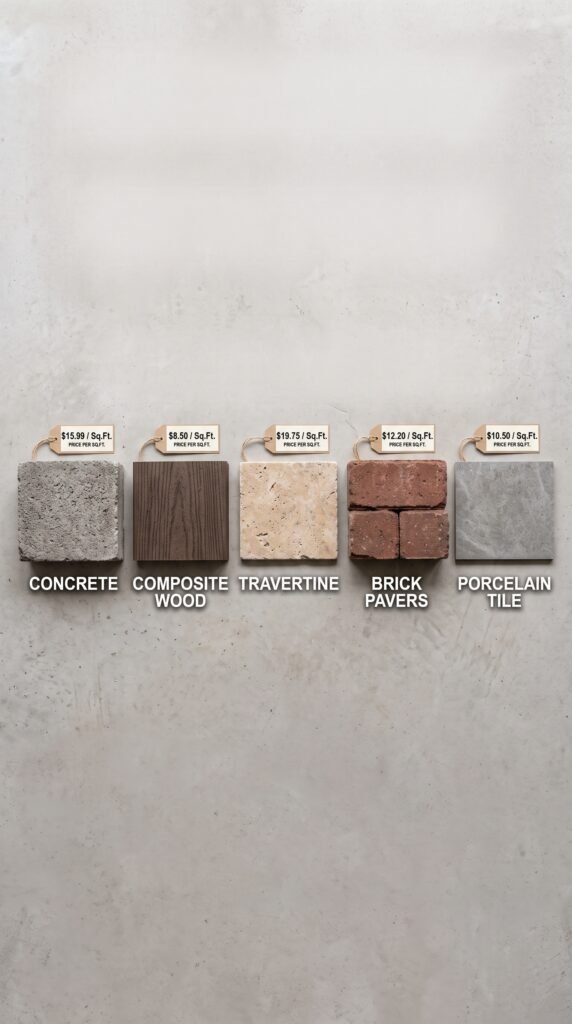
Budget reality is where many pool deck projects go sideways, and that usually happens because homeowners are comparing installation cost alone without accounting for the full 10-to-20-year cost of ownership.
Here is a realistic cost breakdown based on industry averages as of 2026, measured per square foot installed:
Concrete (basic broom finish) typically runs between $6 and $13 per square foot. Stamped or decorative concrete ranges from $12 to $20. Composite decking for a raised deck, including framing and substructure, runs $25 to $54 per square foot. Brick or concrete pavers typically fall between $12 and $25. Natural travertine generally runs $13 to $30 per square foot installed. Porcelain tile for outdoor applications tends to run $12 to $35 per square foot.
The price tags on the sample image above are illustrative samples, not installed prices. These numbers can shift significantly based on your region, the complexity of the layout, and current material costs in your local market. Always gather at least three contractor quotes for any project of this scale.
The hidden costs that most budgets fail to account for include base preparation (grading, compacting, and sometimes excavating the subsurface), drainage improvements, permits (required in most municipalities for pool decks over a certain square footage), and ongoing sealing or maintenance products over time.
Investing slightly more in a higher-quality material upfront frequently results in lower total cost of ownership over a decade because you avoid the resealing, repair, and replacement cycles that lower-cost materials require.
Making Your Final Decision on the Best Pool Deck Ideas for Your Home
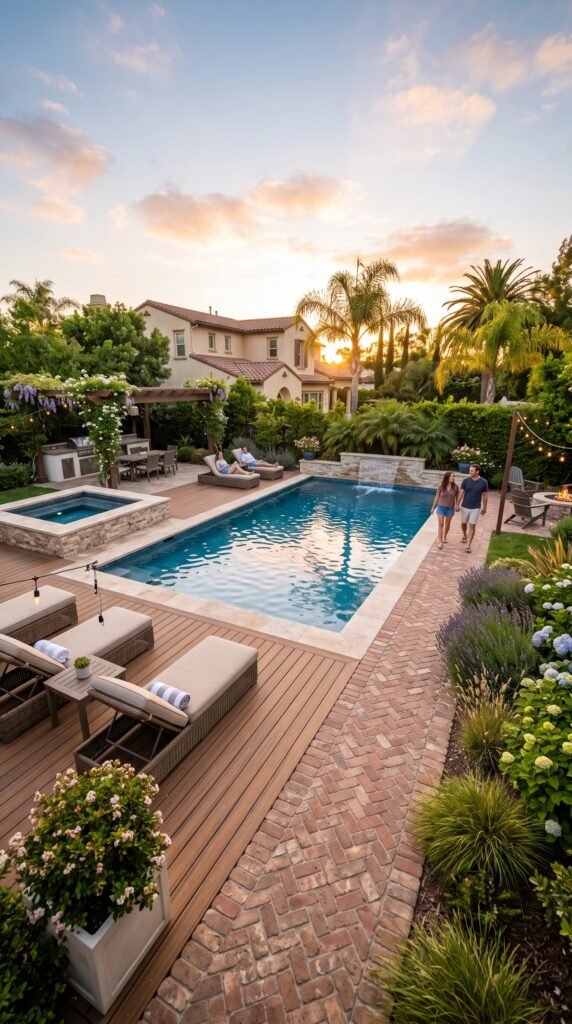
The best pool deck ideas are ultimately the ones that serve the way you and your family actually live, not the ones that look most impressive in a magazine spread.
If you have young children, slip resistance, surface temperature, and durability under heavy active use should outweigh purely aesthetic considerations. If you entertain frequently, traffic flow, furniture zoning, and the visual impression made on guests become more central. If low maintenance is your priority, composite decking and porcelain pavers consistently deliver the lowest hands-on maintenance burden over time.
Start by identifying your three non-negotiables — the features or qualities you absolutely cannot compromise on — and use those as your filter when evaluating materials and layouts. From there, work with a licensed landscape architect or pool deck contractor who can evaluate your specific soil conditions, climate data, and home architecture before making final material recommendations.
The best pool deck ideas do not come from a single source of inspiration. They come from the intersection of a well-chosen material, a functional layout, and thoughtful design details. Keep returning to the numbers and functions that matter most to your home: slip resistance, cost, maintenance, and climate suitability.
Take your time with this decision. A well-chosen and well-installed pool deck can realistically last 30 years or more — making the care you invest in the planning phase one of the highest-return activities in your entire home improvement journey.
Above-Ground Pool Deck Styles That Transform Your Yard
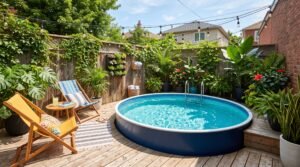
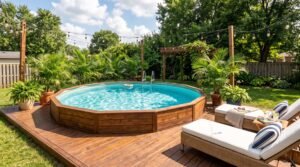
Above-ground pools suit four main deck layouts, and the right one depends on how you use the pool. A full wraparound deck circles the whole pool and feels most like an inground setup. A partial platform covers one side, usually where the ladder sits, and is the simplest weekend build. A multi-level deck steps down from the house to the pool, while a freestanding deck stands on its own posts, separate from the pool itself.
Two details make the biggest visual difference. Fascia boards fitted around the deck edge hide the pool wall, so the pool reads as a built-in feature rather than a freestanding tub. And a freestanding deck, one that never bolts to the pool itself, also protects your warranty, because many pool manufacturers void cover if a structure is attached to the wall.
As a rough guide, a DIY partial platform typically runs $1,000 to $2,500, while a full wraparound deck in composite can run $8,000 to $20,000 for a large, premium build. Angi puts the 2026 national average for an above-ground pool deck at $5,000, with most projects falling between $3,000 and $12,000. Before you build, check local permit rules: in many areas a deck 30 inches or more above the ground needs a permit.
Concrete Pool Decks That Stay Cool Underfoot
Concrete is the most heat-sensitive deck choice, so treat heat management as a design decision, not an afterthought. The finish matters most. Broom-finished concrete is the common default and performs reasonably well. Exposed aggregate adds texture that breaks up heat. Stamped concrete looks decorative but can run hot in dark tones. Spray-applied cool-deck coatings such as Kool Deck are made for hot climates, and the manufacturer, Mortex, reports surfaces up to 30°F cooler than standard concrete.
Colour is physics. Dark charcoal or slate concrete in full sun can reach 140 to 160°F, while white, cream, tan and pale grey reflect far more solar radiation. Research from Lawrence Berkeley National Laboratory’s Heat Island Group links lighter surfaces with higher solar reflectance. If you love a dark tone, keep it in shaded zones, under a pergola or along planting beds.
Plan shade into the layout, since even partial shade drops surface temperatures sharply, and finish with a reflective or insulating coating, reapplied every 2 to 4 years. Avoid the five classic mistakes: choosing dark colours for looks without testing them barefoot; forgetting slip resistance; sloping the deck badly; pouring without expansion joints every 8 to 10 feet; and applying a dark-tinted sealer over a light base. Two tools earn their keep: an infrared thermometer to check real surface temperatures, and polyurethane sealant for the joints.
On slip resistance, two numbers circulate and they measure different things. The modern benchmark is the ANSI A326.3 dynamic coefficient of friction (DCOF) threshold of 0.42 for wet surfaces. The older figure of 0.60 is a static coefficient of friction (COF) from earlier guidance. For a wet, barefoot pool deck, use the 0.42 DCOF threshold as your guide and choose a textured finish to help meet it.
How to Build a Deck Around an Above-Ground Pool
If you are building the deck yourself, start by measuring the pool and marking the layout. Allow at least 4 feet of deck around the pool, and 6 to 8 feet on the side where you want loungers. Check permit rules before you dig, as requirements vary by area.
The build runs in five stages. First, dig post holes to below the frost line and set the posts. Next, fit doubled 2×10 beams, which can span up to 10 feet. Then install joists at 12 or 16 inches on centre using galvanised hardware. Lay the decking with 1/8-inch gaps between boards, and leave a 1-inch gap between the decking and the pool’s top rail so the pool can move slightly without binding. Finally, build the stairs on at least three stringers, wide enough for safe, comfortable access.
Finish with a guard rail at least 36 inches high on any deck more than 30 inches above the ground, with balusters spaced no more than 4 inches apart, add lighting, and seal wood decking once it has dried out. And avoid the mistakes that cause most rebuilds: never attach the deck to the pool wall, do not skimp on posts or hardware, and let concrete footings cure for 48 hours before loading them.
Styling Your Pool Deck in Three Layers
A finished deck comes together in three layers: the surface, the furnishings and the atmosphere. Get the surface right first, then place furniture for how you actually swim and sit, then add light and shade for the evenings.
Renters can get the same effect without building anything: modular deck tiles lay straight over an existing surface and lift away when you move. Storage can double as seating, a deck box works well as a bench, and a pergola kit plus solar deck lights will carry the space from afternoon into the evening.
What a Pool Deck Adds to Your Home’s Value
A pool deck is one of the most visible outdoor improvements you can make, and buyers notice it first. It frames the pool, adds usable living space and signals that the pool has been looked after. How much value it adds depends on the quality of the build, how well it is maintained and what buyers in your area expect, so treat it as a lifestyle upgrade first and a resale feature second.
As a rough guide to project costs, an above-ground pool setup typically runs $1,500 to $5,000, an inground pool $44,000 to $87,000, and a patio $2,000 to $8,000. Those are whole-project figures, which is why they look different from the per-square-foot material rates earlier in this guide: per-square-foot figures cover materials and installation, while project totals also include structure, permits, drainage and finishing. Compare like with like, and always budget for permits, drainage and finishing on top of the headline material rate.
The most common question is whether a deck is worth adding to an above-ground pool. For most owners the answer is yes: it makes the pool safer to enter, easier to maintain and far more pleasant to use, and that is the value that shows up every summer, whether or not you ever sell.
Frequently Asked Questions About the Best Pool Deck Ideas
What is the cheapest pool deck material?
Basic broom-finish concrete is usually the cheapest installed option, at $6 to $13 per square foot in 2026. Pavers are the next step up at $12 to $25, while composite and travertine cost more upfront but can last longer with less maintenance.
Do I need a permit for a pool deck?
Often, yes. In many areas a deck 30 inches or more above the ground needs a permit, and above-ground pool decks usually need one too. Check with your local building department before you buy materials, because rules, setbacks and fence requirements vary by area.
What is the best pool deck material for hot sun?
Light-coloured concrete, travertine and light composite boards stay coolest underfoot. Dark charcoal or slate concrete in full sun can reach 140 to 160°F, so in a hot, sunny garden choose a pale finish and plan shade over the main seating area.
How wide should a pool deck be?
Allow at least 4 feet of deck around the pool, and 6 to 8 feet on the side where you want loungers. Less than that feels cramped and makes maintenance harder, while a full wraparound deck gives the most usable space around an above-ground pool.