
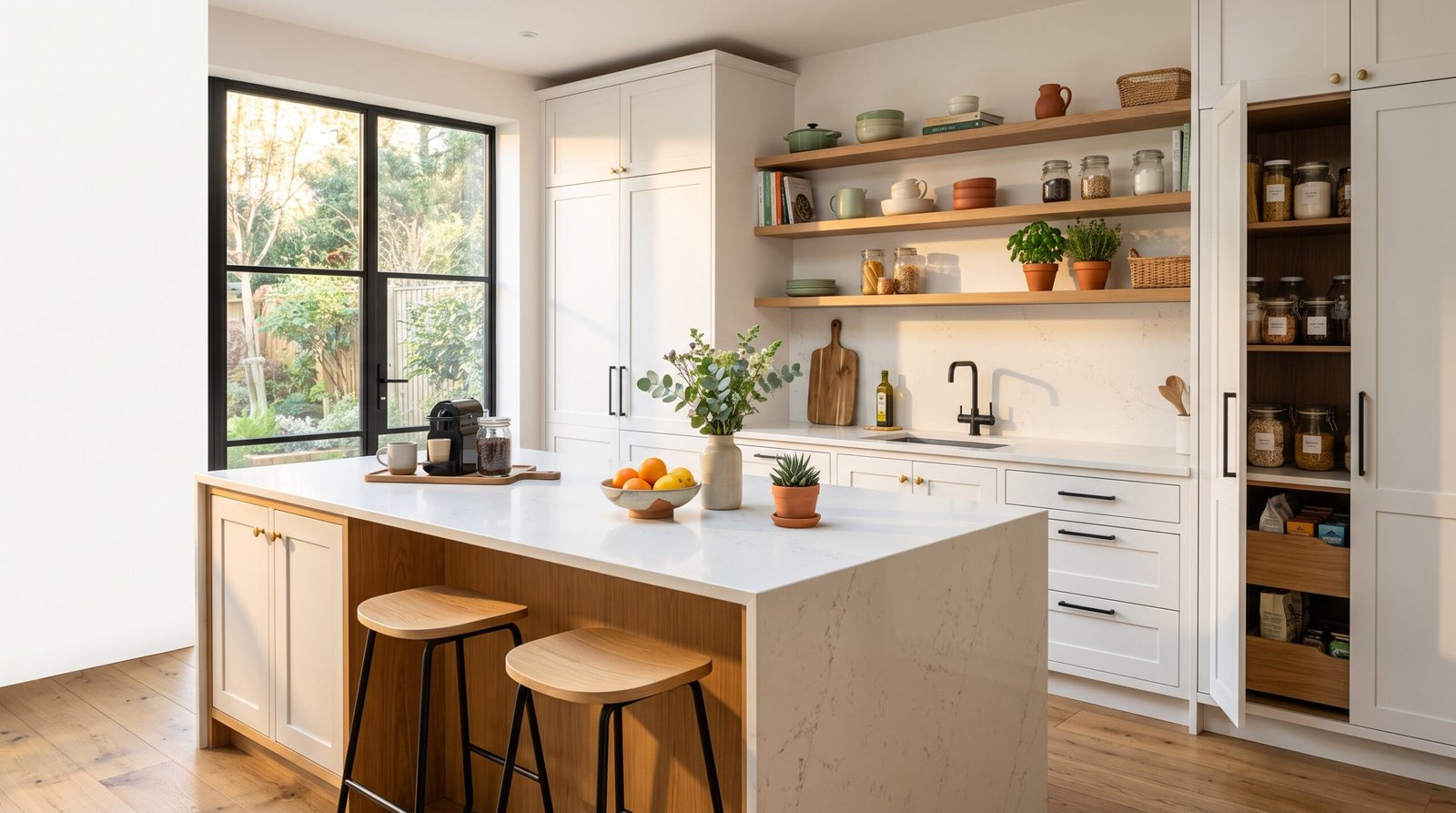
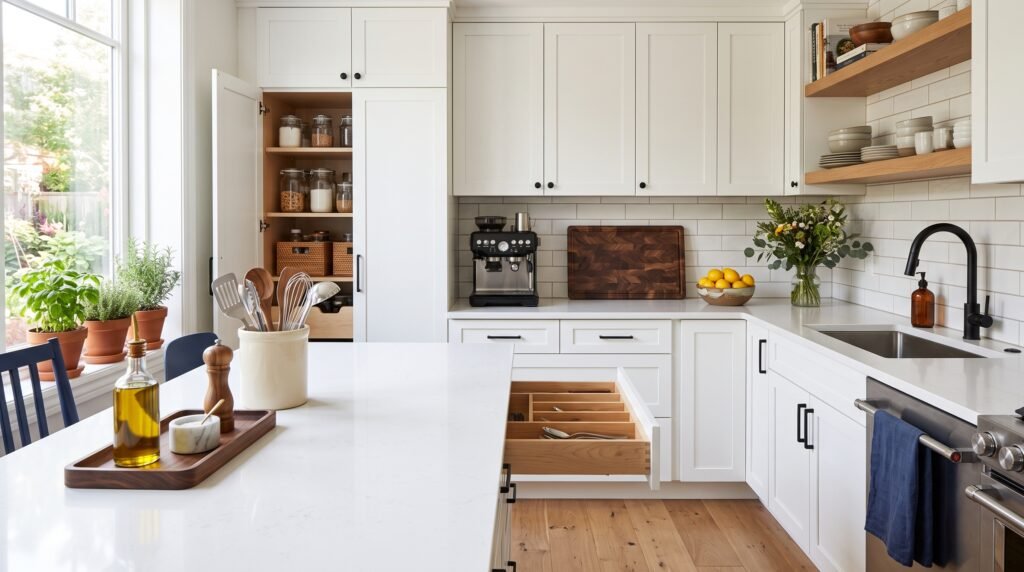
Your kitchen counter is one of the hardest-working surfaces in your entire home — and somehow, it becomes a magnet for everything that doesn’t have a place. Mail. Random batteries. A candle you bought six months ago and never lit. That bread knife that’s too big for the drawer. Sound familiar?
The clutter doesn’t happen because you’re disorganized. It happens because most kitchens aren’t set up to fight it. The good news? You can fix it. For good. And this guide walks you through every step.
📋 Table of Contents
- Why Your Kitchen Counter Keeps Getting Cluttered
- The Real Cost of a Cluttered Kitchen Counter
- Step One: The Full Clear-Off Method
- Step Two: Define Your Counter Zones
- Step Three: Use Vertical Space and Smart Storage
- Step Four: Build a Daily Reset Habit
- Step Five: Stop the Clutter Before It Starts
- How to Keep Your Kitchen Counter Clear Long-Term
Why Your Kitchen Counter Keeps Getting Cluttered
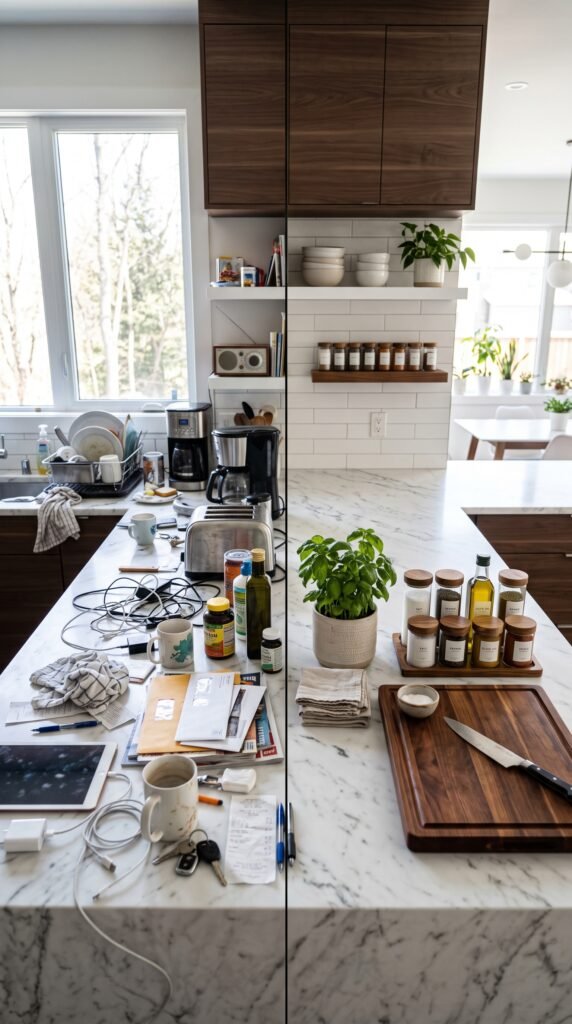
Here’s the thing — a cluttered kitchen counter isn’t a willpower problem. It’s a systems problem. And once you understand that, fixing it becomes a lot less overwhelming.
Most surfaces attract what organizers call “landing zone chaos.” Basically, your counter is the first flat surface someone sees when they walk in from a doorway, put down groceries, or grab something on the way out. Without a defined purpose for each zone on your counter, everything just… lands there. And stays.
Picture this: you come home from work, hands full, and you set your keys, a receipt, and your phone on the corner of the counter. The next morning you move them to grab the coffee maker. Within a week, that corner has become its own little ecosystem of things that don’t belong anywhere else.
That’s not laziness. That’s just a lack of structure.
The fix isn’t more willpower. It’s designing the counter so clutter has nowhere comfortable to sit.
The Real Cost of a Cluttered Kitchen Counter
Before jumping into solutions, it’s worth sitting with this for a second.
A messy kitchen counter costs more than just aesthetics. Research from the Princeton Neuroscience Institute has shown that visual clutter competes for attention in the brain, making it harder to focus and increasing stress levels. That means every time you walk into your kitchen, a pile of stuff on the counter is quietly draining your mental energy.
There’s also the time cost. Most people waste 20 to 30 minutes a week just moving things around the counter to cook, then putting them back (or not). Over a year, that adds up to more than a full day lost to counter chaos.
And practically speaking, a cluttered counter makes cooking harder. Less prep space means more frustration, more mess, and fewer home-cooked meals. Studies from the Journal of Environment and Behavior found that people in cluttered kitchens were more likely to choose unhealthy snacks and felt less in control of their choices overall.
So yeah. The counter matters more than most people think.

Step One: The Full Clear-Off Method
Don’t organize around the clutter. Start fresh.
The single most effective first step to fixing a kitchen counter for good is removing everything from it. Every. Single. Thing. Put it all on the dining table or the floor. Wipe down the counter completely. Then stand back and look at the bare surface.
Most people do this and feel an immediate sense of relief. That feeling is the goal.
Now, before you put anything back, ask yourself three questions for each item:
Do you use this at least three times a week? Does it need to live on the counter, or does it just live there by default? Would putting it somewhere else make your kitchen work better?
Anything that doesn’t clear all three questions goes somewhere else. That’s the rule. It sounds harsh, but it’s the reason this method actually works when “tidying up” doesn’t.
Small Kitchen Organization Ideas on a Tight Budget
Common things that should NOT live on your kitchen counter: decorative items you never touch, appliances you use less than once a week (yes, that includes the juicer), paperwork, chargers and cables, vitamins and medication (a dedicated drawer or shelf works better), and random tools from other rooms.
What should stay? The coffee maker if you use it daily. A knife block if it saves you cabinet trips. A small fruit bowl if you actually eat fruit that often. Your dish soap and sponge if there’s no better spot. That’s about it for most people.
Less is genuinely more here. A kitchen counter with breathing room functions better, looks better, and stays cleaner longer.
Step Two: Define Your Counter Zones
Once the counter is clear, you get to design it with intention. This is where most guides skip something important.
Zoning isn’t just about where stuff goes. It’s about workflow. Your kitchen counter should support the way you actually cook, not some idealized version of how you think you should cook.
Think about your counter in sections: prep zone, beverage zone, and staging zone.
The prep zone is your prime real estate. It’s the open space closest to your stove and sink. Nothing should live there permanently. This is where you chop, assemble, mix, and plate. Keep it clear every single day, even if that means nothing else gets its own spot.
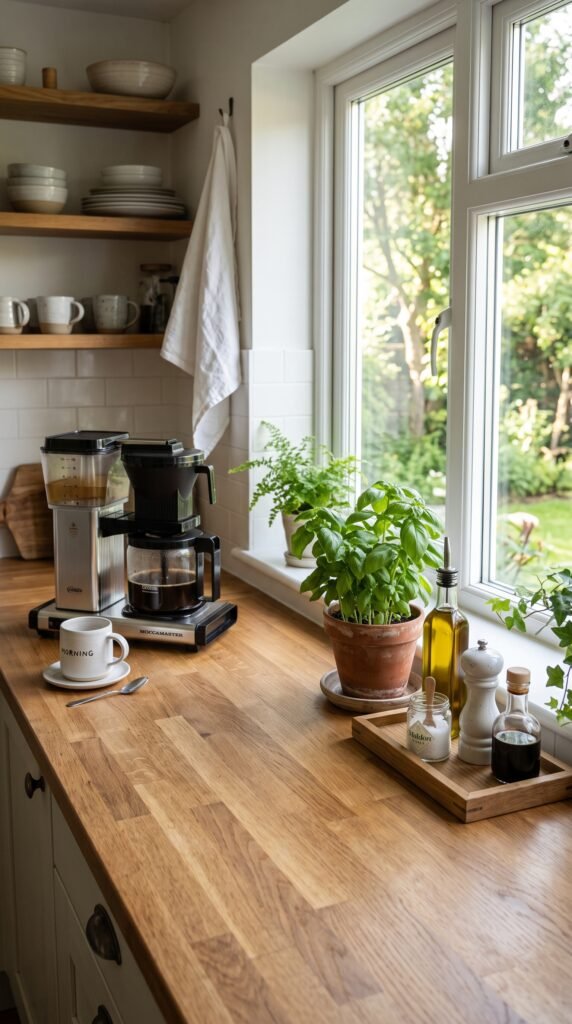
The beverage zone is wherever your coffee maker, kettle, or toaster lives. Group those items together at one end of the counter. Add a small tray or mat underneath them. Why? Because a tray creates a visual boundary. Anything that doesn’t fit on or near the tray doesn’t belong in that zone. It’s a surprisingly effective psychological trick.
9 Clever Kitchen Design Ideas That Double Your Storage Space
The staging zone is for things that are actively in transition: a cutting board airing out, a dish cooling before it goes in the fridge, groceries being put away. This zone should never be a permanent home for anything.
Picture this: someone who cooks dinner most nights has two zones locked down and a clear prep area. Their counter doesn’t accumulate clutter because every item on the counter has a defined reason for being there. When something lands without a reason, it’s obvious. It gets moved.
That clarity is the goal.
Step Three: Use Vertical Space and Smart Storage
Here’s something most people forget entirely — the counter isn’t the only usable surface in that area.
Walls, cabinet doors, and the space above the counter are all fair game. And using them strategically can take a serious amount of pressure off your kitchen counter surface.
A wall-mounted magnetic knife strip eliminates the knife block. That frees up a significant chunk of counter space in most kitchens. A small mounted shelf or pegboard above the counter can hold oils, spices, and utensils in a way that keeps them accessible without occupying prep space.
Over-cabinet-door organizers work well for things like cutting boards, pot lids, and foil or wrap boxes. These are items that typically end up on the counter because there’s nowhere logical to store them otherwise.
Think upward. Think outward. The counter doesn’t have to carry the full load.
The Ultimate Guide to Kitchen Remodel Ideas for Every Style and Budget
According to The Container Store’s organization research, most kitchens use less than 50% of their available vertical storage space. Which means most people have more room than they realize. It’s just not where they think to look.
Step Four: Build a Daily Reset Habit
The hard truth: even a perfectly organized kitchen counter will get cluttered again without a daily habit to reset it.
This isn’t about spending an hour organizing every evening. It takes about two minutes. Seriously.
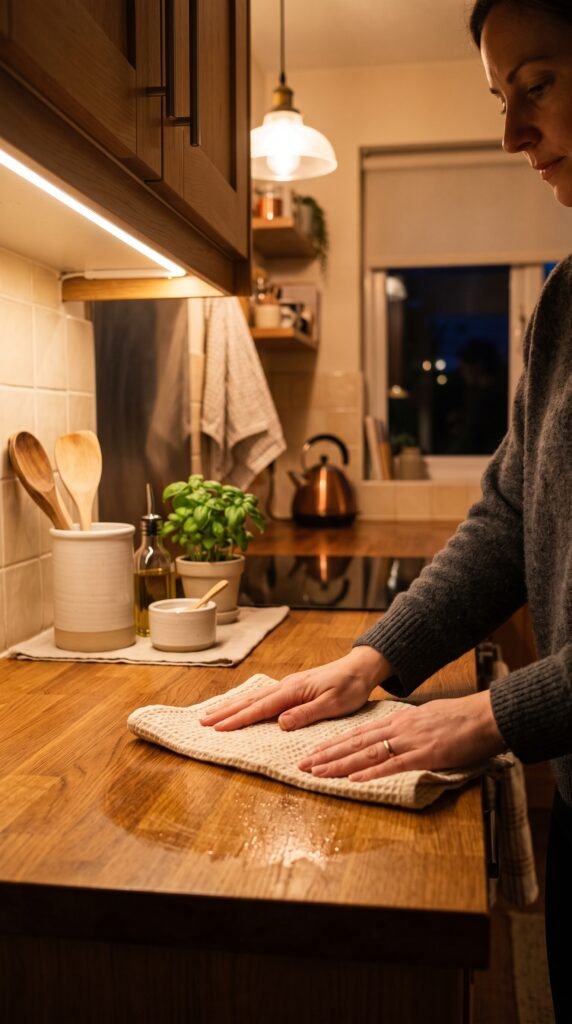
Before bed, or right after dinner, do a single sweep. Return everything that doesn’t belong. Wipe the surface. Done. That’s the whole habit.
The reason this works long-term is because two minutes of prevention beats an hour of reorganization every weekend. And once you’ve gone through the effort of clearing and zoning the counter, maintaining it is dramatically easier than starting from scratch.
Fair warning: the first few weeks feel effortful. Then it becomes automatic. Then you feel genuinely uncomfortable when the counter gets messy, and you fix it without thinking.
That’s when you know the habit has stuck.
Step Five: Stop the Clutter Before It Starts
Fixing the counter is one thing. Keeping it fixed is another.
The biggest reason counters re-clutter is that there’s no system for catching items before they land. So build one.
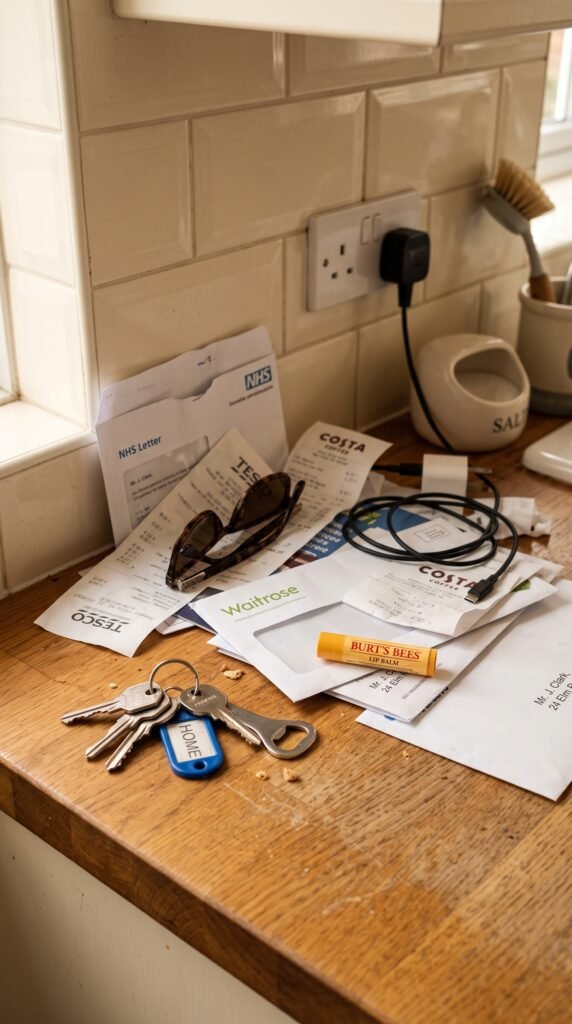
Put a small basket or catch-all tray near your kitchen entrance for things like keys, sunglasses, and small items that people dump on the counter out of habit. Redirect the landing zone. If it has a home nearby, it won’t end up on your prep surface.
Create a mail and paperwork station somewhere outside the kitchen entirely. A wall-mounted folder, a basket on a hallway shelf, or even a dedicated drawer elsewhere in the home. Mail on the kitchen counter is one of the top culprits for counter clutter, according to professional organizers cited by Better Homes and Gardens. It lands there because there’s nowhere else obvious for it to go. Give it somewhere else.
And revisit your counter zones every few months. Life changes. Habits change. What you use daily in January might not be the same in July. A quick seasonal check keeps the system working instead of slowly breaking down.
How to Keep Your Kitchen Counter Clear Long-Term
Sustaining a clean kitchen counter comes down to one mindset shift: every item that lives on the counter should earn its spot.
Not because it’s convenient. Not because it doesn’t have anywhere else to go. Because it genuinely belongs there, serves your daily routine, and doesn’t have a better home elsewhere.
That standard sounds strict but it’s actually freeing. When you apply it consistently, decisions become easy. Should this blender live on the counter? You use it twice a month, so no. Should the coffee grinder? You use it every morning, so yes. Simple.
The other long-term key is avoiding what organizers call “surface creep” — the slow accumulation of one item at a time that seems harmless until you look up three weeks later and the counter is buried again. The daily reset habit is your best defense against this. Two minutes. Every day.
A clutter-free kitchen counter isn’t about having a perfect home. It’s about building a kitchen that works for you instead of against you. Get the system right, build the habit, and the results take care of themselves.