Affiliate Disclosure: This post contains affiliate links. If you purchase through one of my links, I may earn a small commission at no extra cost to you. I only recommend products I genuinely believe in and would use in my own home.
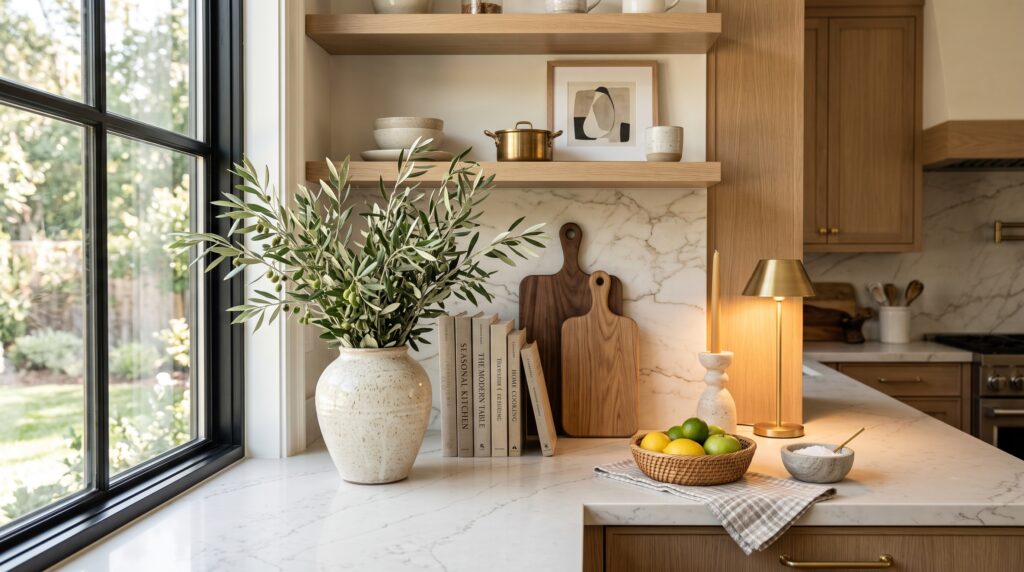
If you’ve ever stared at the corner of your kitchen counter and thought, “I have no idea what to do with that,” you’re not alone. Kitchen ideas for small spaces almost always skip right over the corners — and that’s a mistake, because those awkward little triangles of counter space are actually some of the highest-potential styling real estate in your kitchen.
I’ve spent more time than I care to admit rearranging my own kitchen corner, testing what actually looks intentional versus what just looks like stuff piled up. What I learned is that a styled corner doesn’t require a lot of money or a lot of space — it requires knowing which type of decor creates visual interest, which adds function, and how to layer both together without it looking like a craft store exploded.
Here are seven ideas that genuinely work, why each one works, and what to watch out for with each approach.
1. Anchor Everything with a Wooden Tray
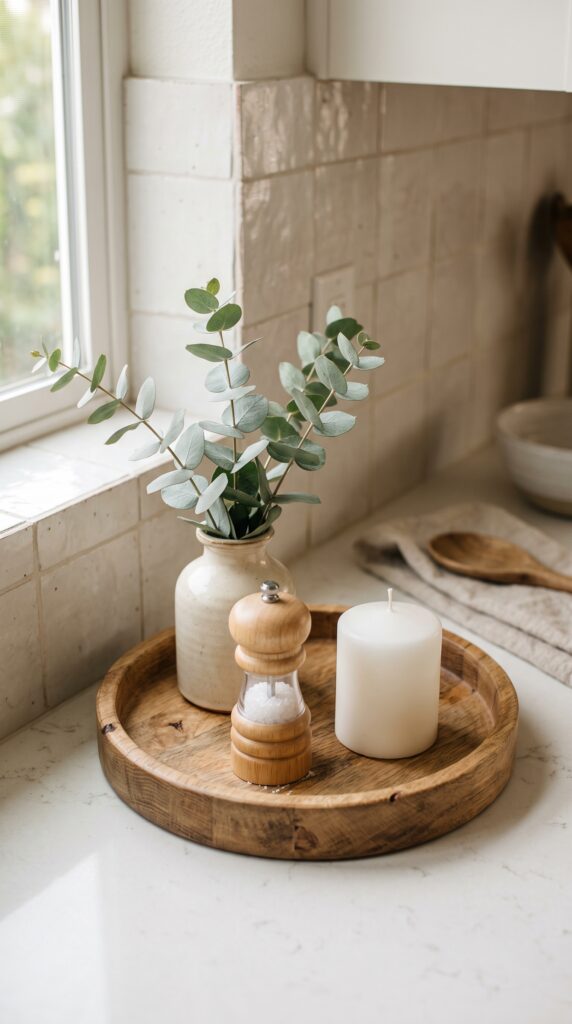
Here’s the thing about kitchen corners: without a defined boundary, even nice decor can look like clutter. A tray fixes that instantly. It creates a visual container that tells your eye, “this is intentional” — even if all you’ve done is move three items from scattered to grouped.
The styling principle that makes this work is layering from tallest to shortest. Place your tallest item — a small vase or candle — at the back of the tray, your medium items in the middle, and something flat or low (like a mini cutting board standing upright) at the very front. This creates depth in a space that might only be twelve inches wide.
I also recommend mixing textures within the tray rather than matching everything. Wood, ceramic, and glass together feel collected and warm. All-matching sets tend to look more like a store display than a real home.
The limitation here is size — a tray that’s too large will eat your entire corner. Look for something in the 10–14 inch range. A Wooden Decorative Tray in a natural wood finish is versatile enough to work with almost any kitchen color palette and gives you that grounding element every styled corner needs.
My Top Picks
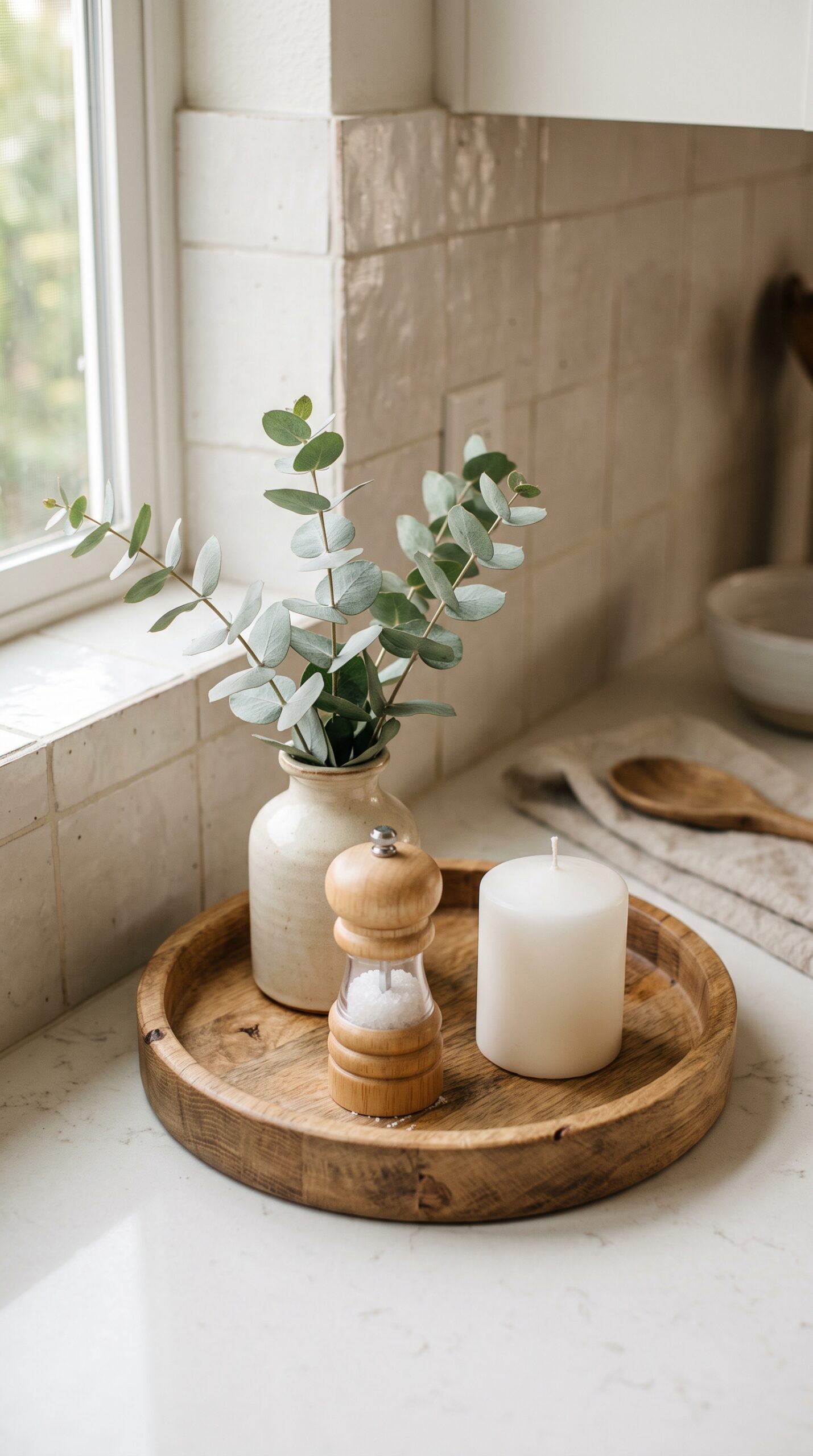
Wooden Decorative Tray
Shop on Amazon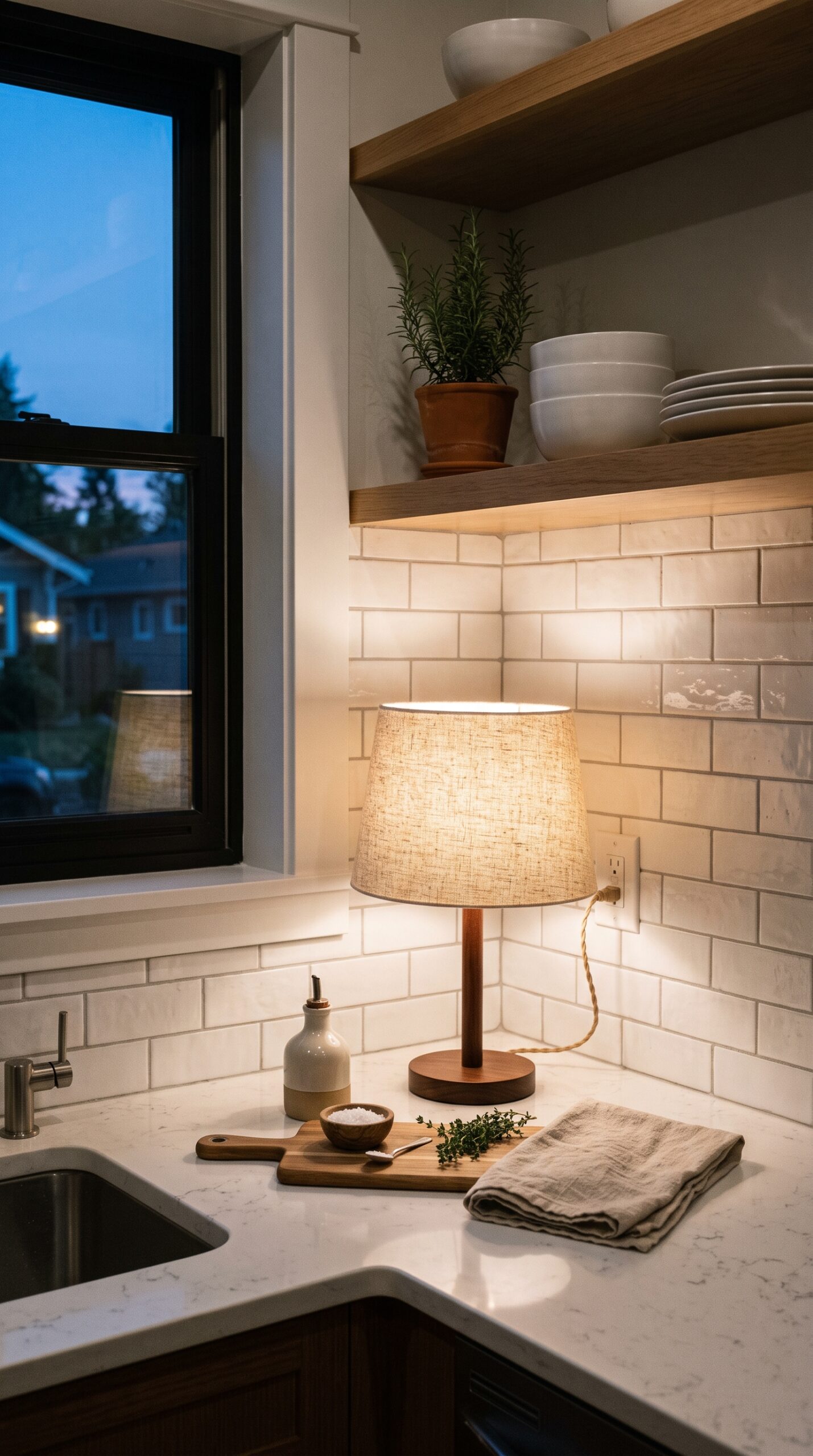
Small Table Lamp
Shop on Amazon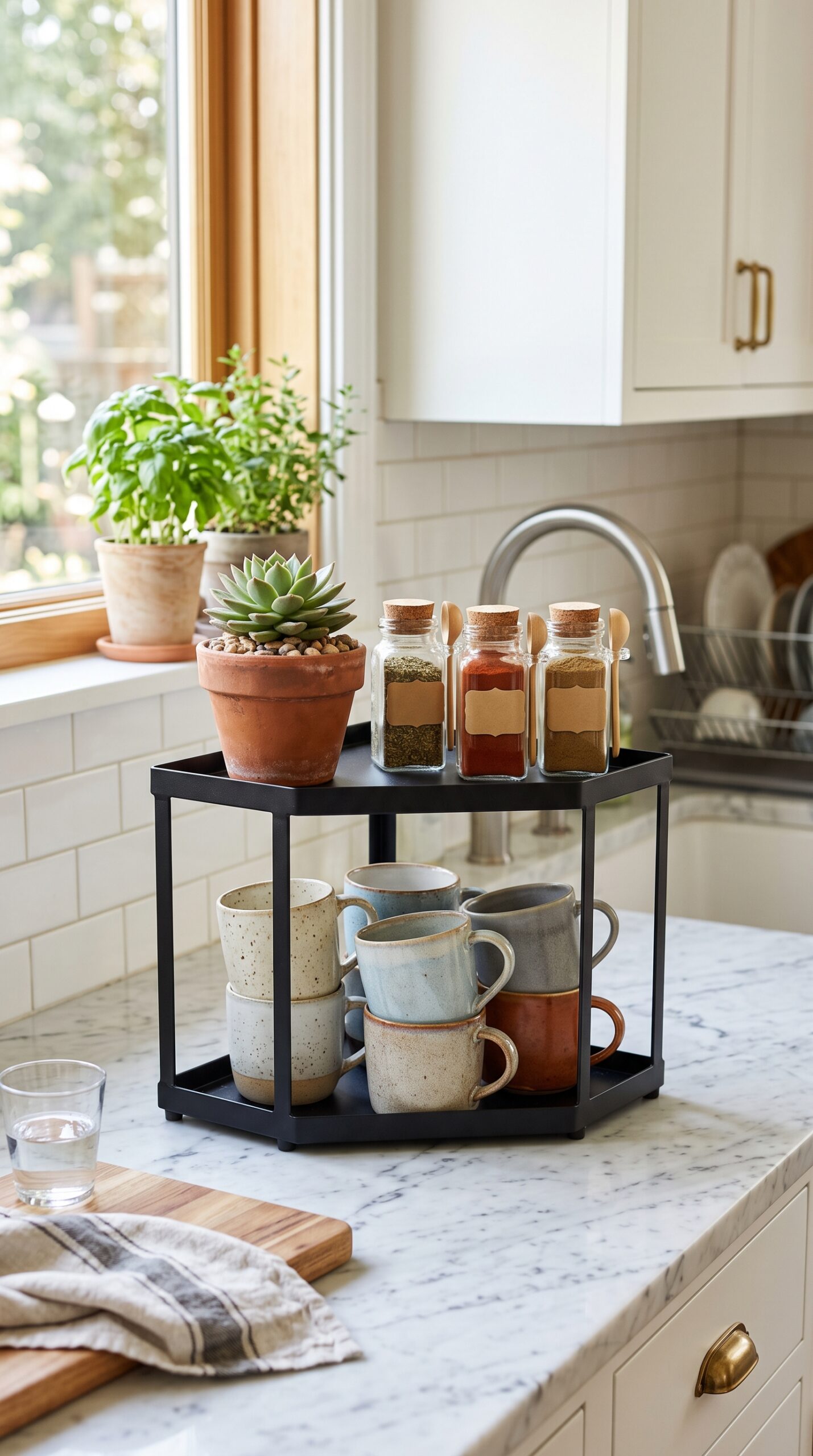
Two-Tier Corner Stand
Shop on Amazon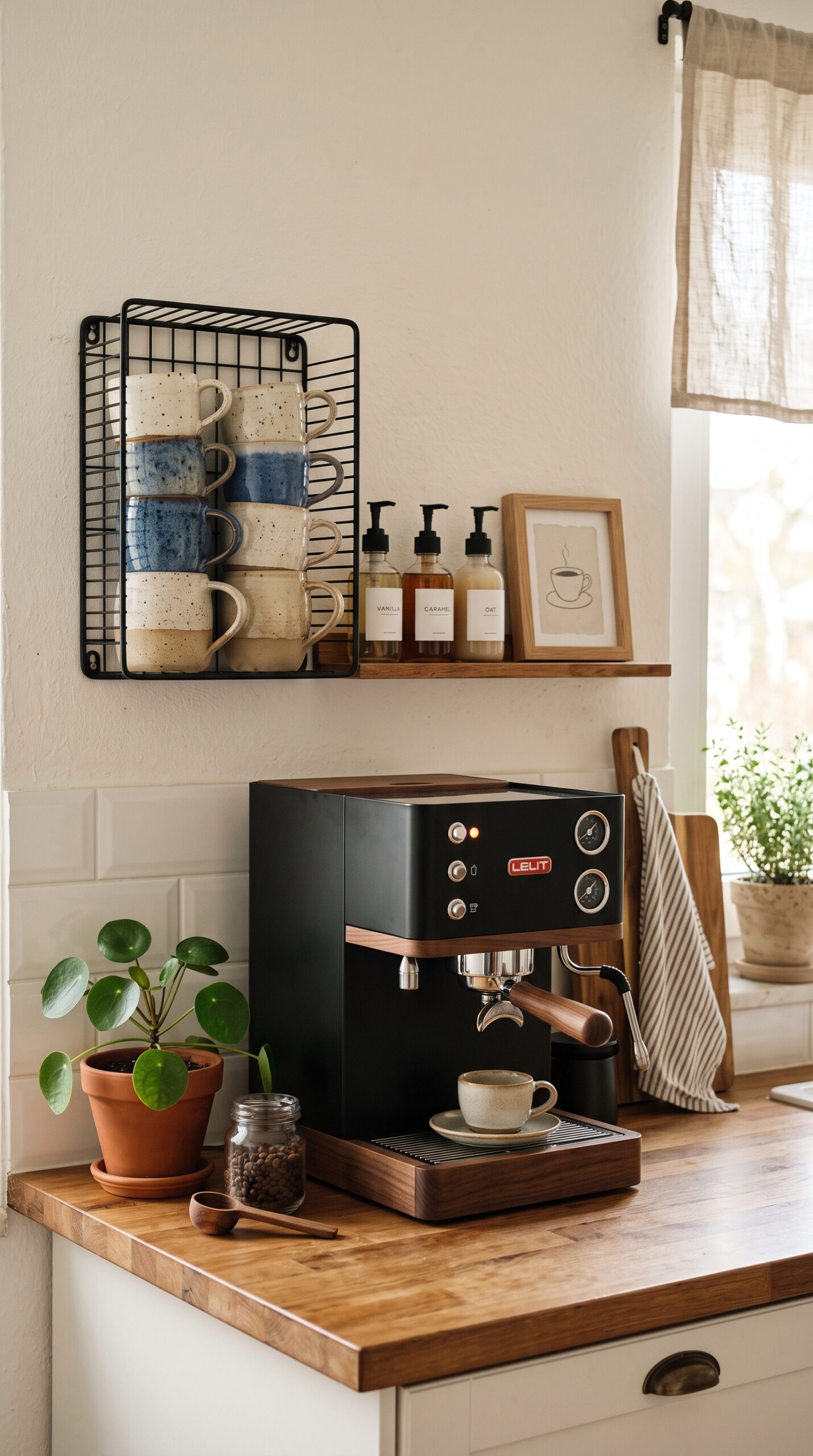
Wall Mounted Mug Holder Rack (Coffee Corner Organizer)
Check Deal on Amazon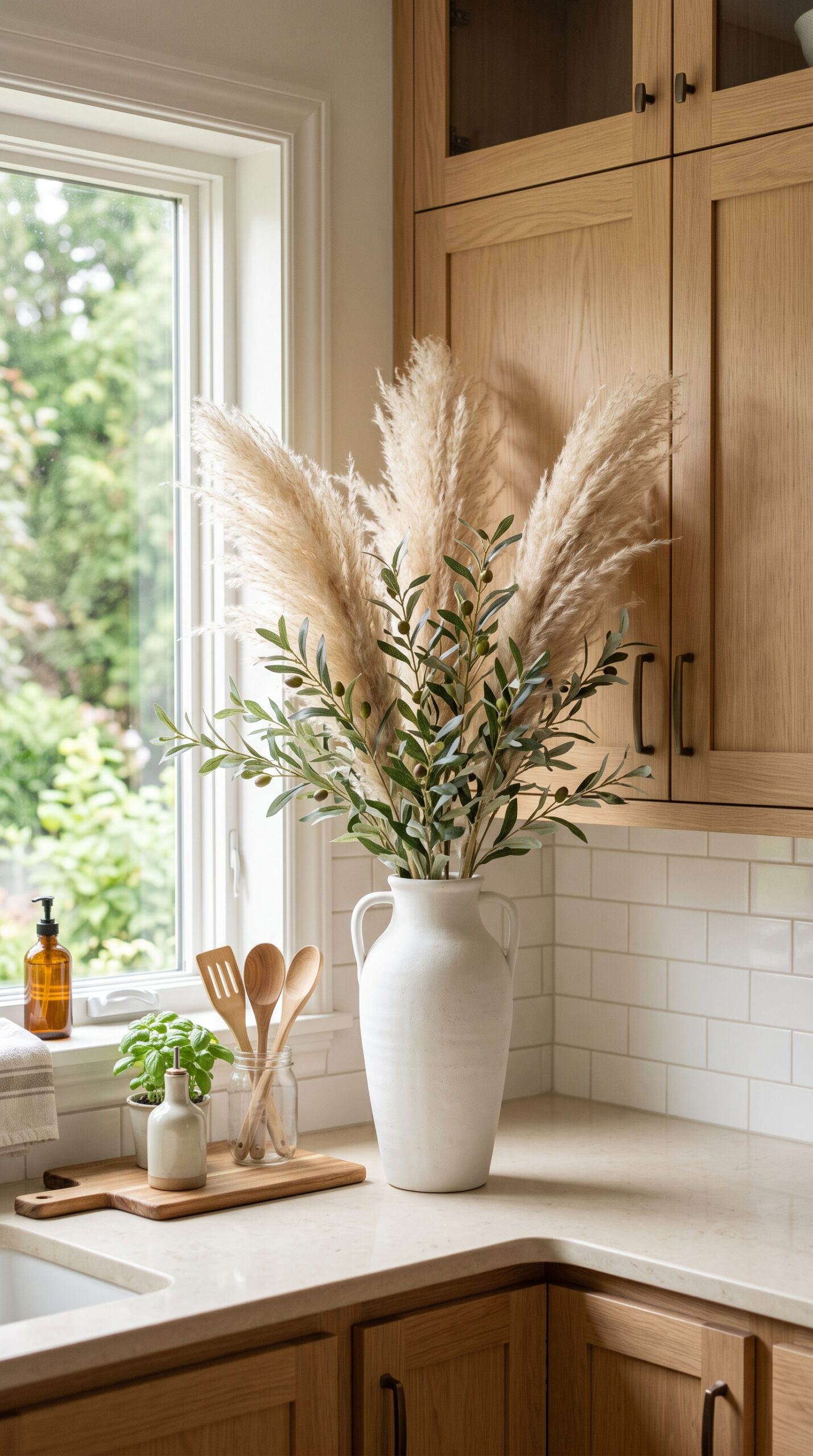
Tall Decorative Vase
Shop on Amazon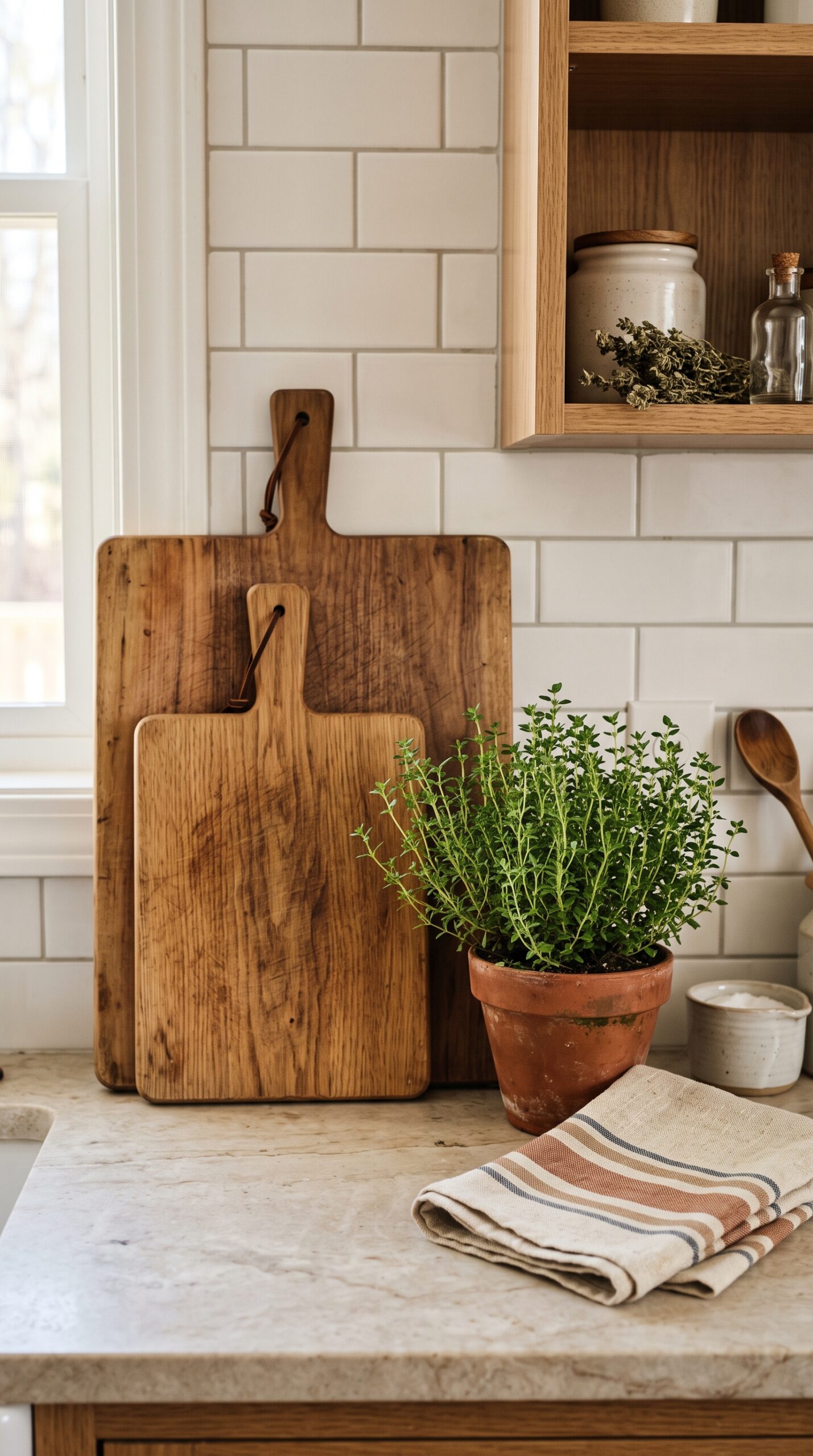
Wood Cutting Board
Shop on Amazon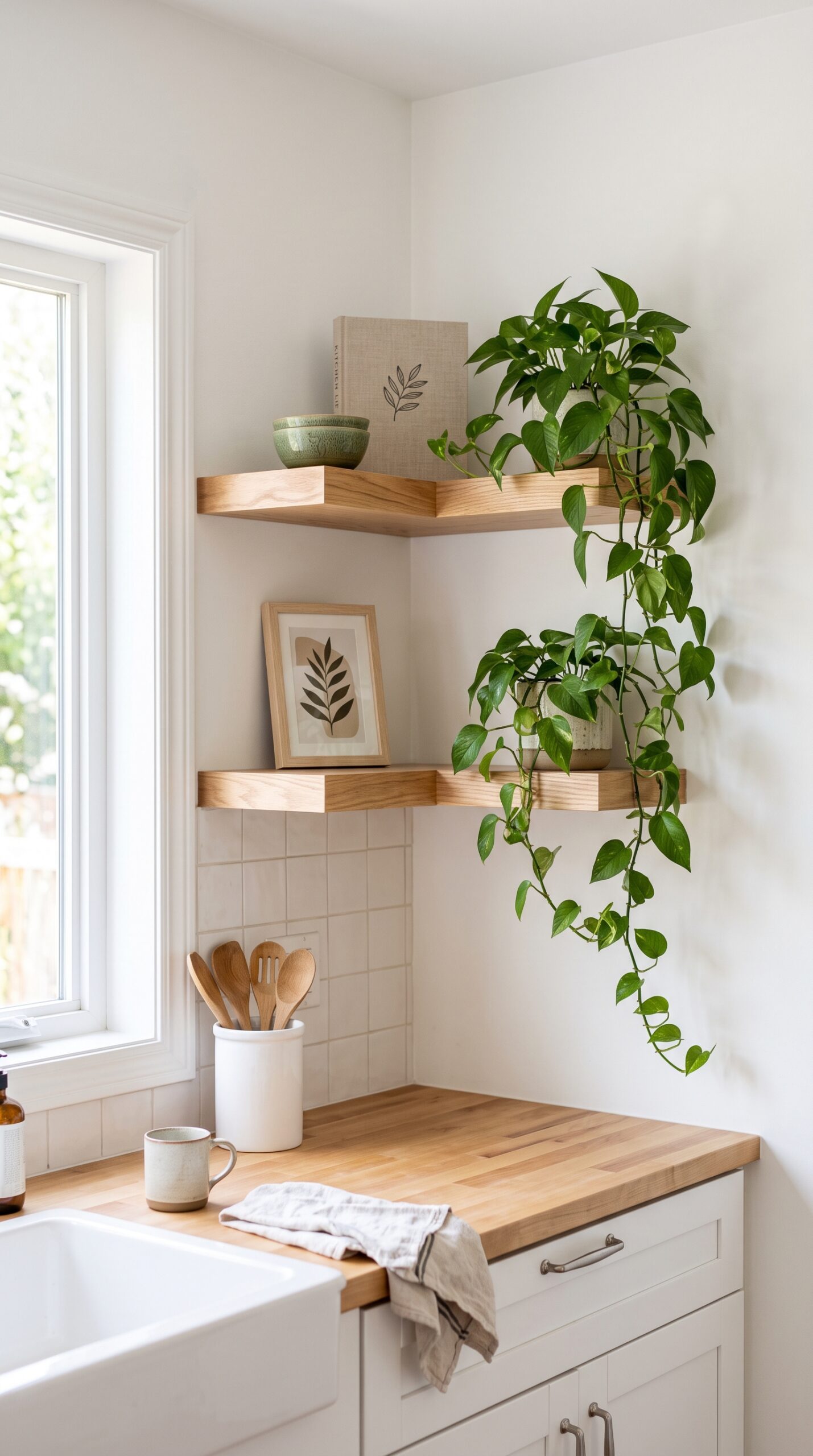
Floating Corner Shelves
Shop on Amazon2. Add a Small Lamp (Yes, in the Kitchen)
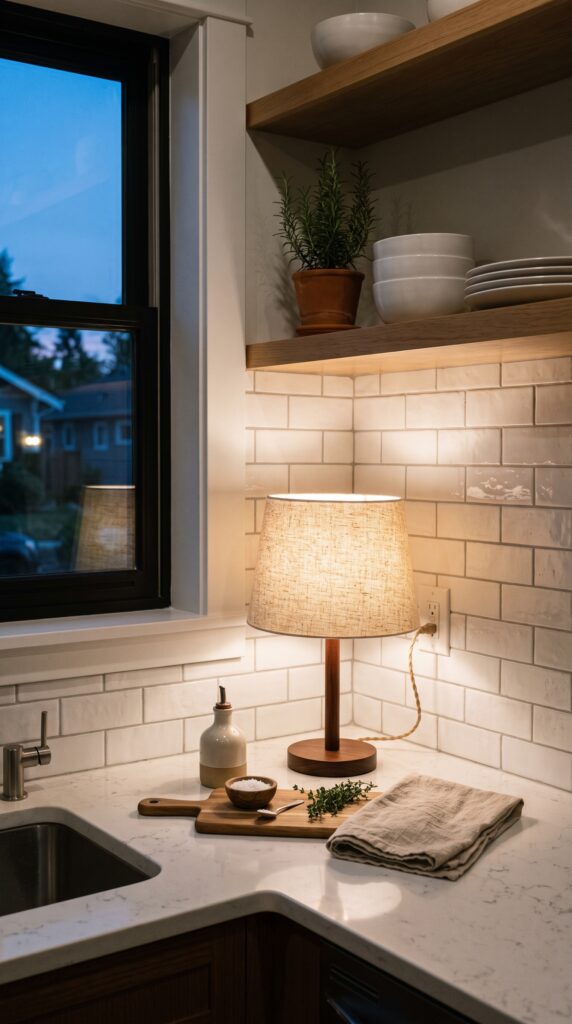
This one surprises people, but a small lamp on the kitchen counter is one of the easiest ways to make your space feel less institutional and more like a home. Overhead lighting in kitchens is almost always harsh and flat. A small counter lamp adds a warm secondary light layer that completely changes the mood of the room — especially in the evening.
From a practical standpoint, a lamp also adds height to a corner without adding bulk. It draws the eye upward in a way that makes the room feel taller, which is genuinely valuable in kitchen ideas for small spaces where every visual trick counts.
The style I’d recommend for most kitchens is a ceramic base with a linen or fabric shade. It reads as soft and homey rather than office-like. Avoid anything with a glossy plastic base — it tends to cheapen the whole corner. Keep the base small (under 8 inches tall) so it doesn’t visually overwhelm the space.
If you’re not sure where to start, a Small Table Lamp with a neutral shade works in both modern and farmhouse kitchens without clashing.
3. Go Vertical with a Two-Tier Corner Stand
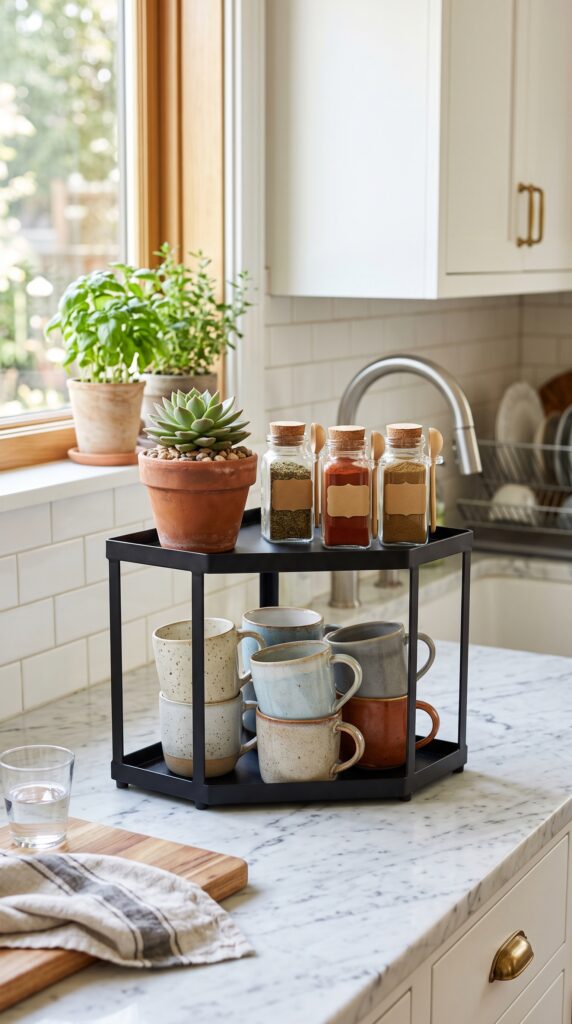
When counter space is tight — which it always is in small kitchens — going vertical is the smartest move you can make. A two-tier stand essentially doubles the surface area of your corner by stacking rather than spreading.
What I love about this approach is that it solves a real problem while looking styled. You can use the lower tier for functional everyday items like a coffee mug or spice jar, and reserve the upper tier for something decorative — a mini succulent, a small candle, or a ceramic dish. The mix of function and decoration is what keeps it from looking purely utilitarian.
One thing to be careful about: don’t overload both tiers. A cluttered two-tier stand is more visually overwhelming than a flat counter. The rule I use is no more than two or three items per tier, with breathing room between them.
A Two-Tier Corner Stand in black metal or natural wood is sturdy enough to hold actual kitchen items while looking polished.
best small kitchen organization ideas
4. Build a Dedicated Coffee Corner
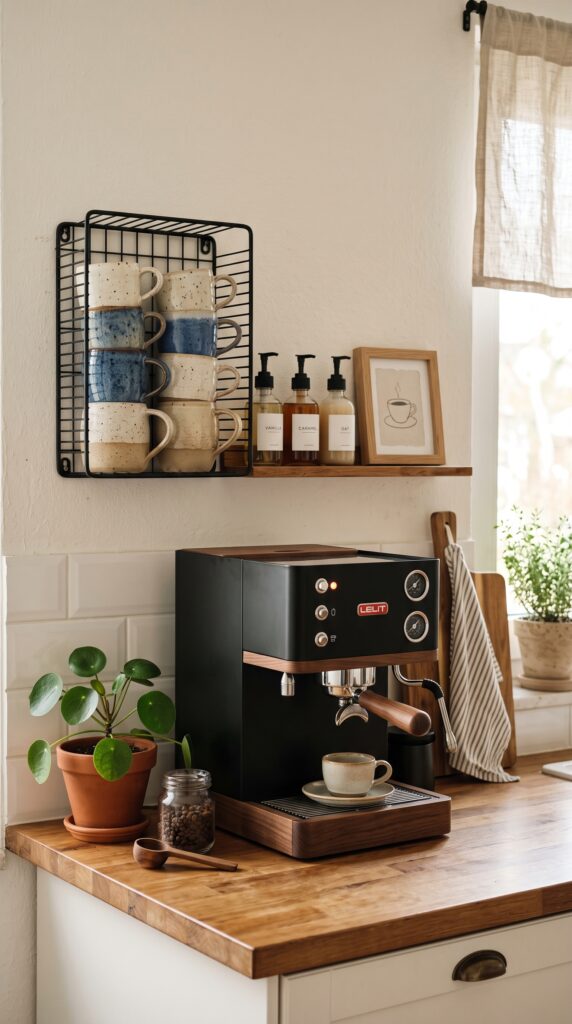
If your coffee machine already lives in a corner, you’re halfway there. The mistake most people make is leaving the machine alone on the counter with nothing around it — it ends up looking like a piece of equipment rather than a feature of the room.
Building a proper coffee corner means treating the machine as the anchor and layering around it intentionally. Stack two or three mugs nearby (either on the counter or on a wall rack above). Add a small bottle of syrup or a jar of coffee beans. Then add one purely decorative element — a tiny framed print, a small plant, or a candle — to signal that this corner was styled on purpose.
The wall space above a coffee corner is often completely ignored, and that’s wasted opportunity. A Wall Mounted Mug Holder Rack (Coffee Corner Organizer) gets your mugs up off the counter while adding a visual element above the machine, which makes the whole corner feel taller and more designed.
As a general principle, this kind of dedicated “station” approach is one of the most effective kitchen ideas for small spaces because it gives purpose to every inch of a zone rather than letting things drift.
5. Add a Tall Vase to Anchor the Height
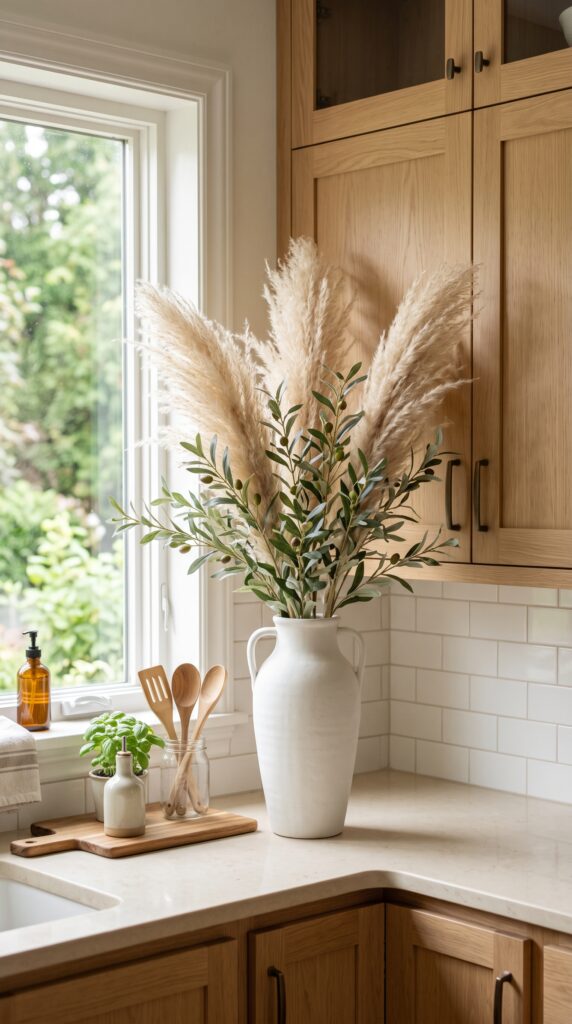
Empty corners tend to look flat because everything on the counter is roughly the same height. A tall vase breaks that visual monotony immediately by pulling the eye upward and creating contrast against the lower items around it.
For kitchens, I always recommend faux stems over real ones — not because real plants aren’t lovely, but because kitchens are humid and greasy environments that tend to shorten the life of fresh cut flowers significantly. Faux olive branches, dried pampas grass, or eucalyptus stems hold their shape and look beautiful for years without maintenance.
The key is choosing a vase with enough visual weight for a corner. Something slim and barely-there will look lost. You want a vase with presence — a thicker body, an interesting texture, or a distinctive shape. A Tall Decorative Vase in matte white or terracotta works particularly well in neutral kitchens and adds warmth without competing with the rest of your decor.
According to interior design principles covered by Architectural Digest, varying heights in a vignette is one of the most reliable ways to create visual balance — and a kitchen corner is essentially a small vignette.
6. Lean Cutting Boards for an Effortless Styled Look
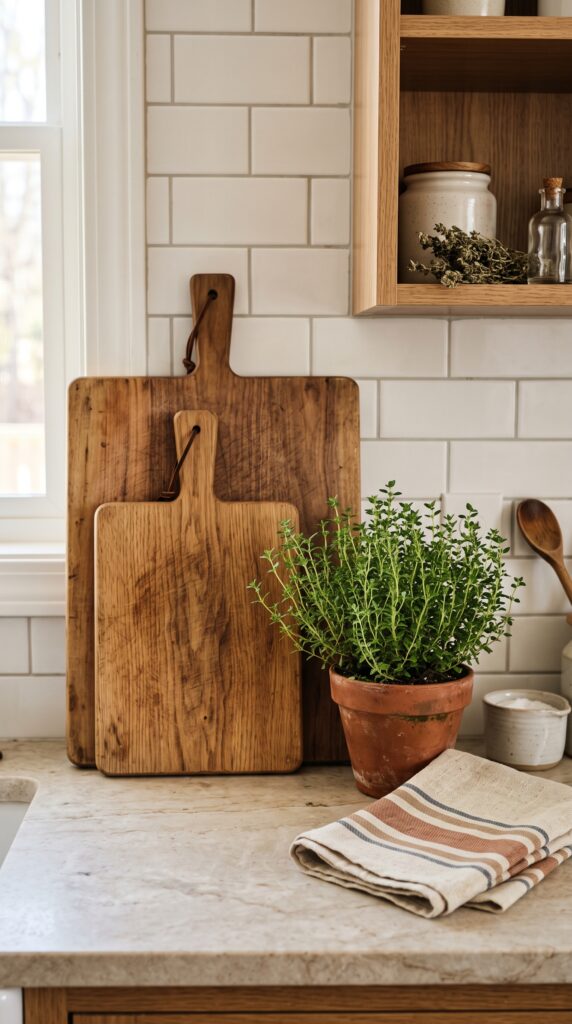
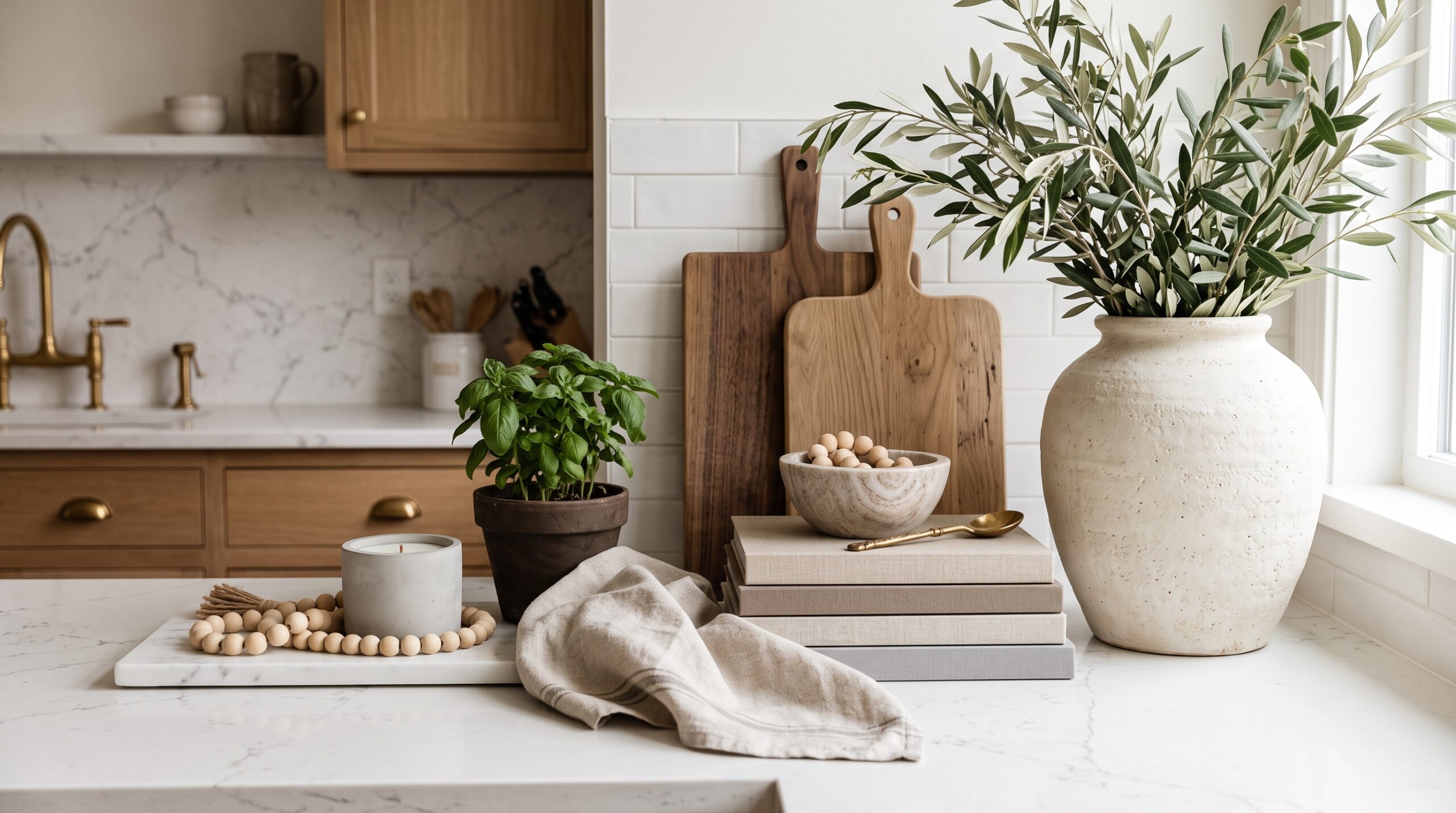
This might be my personal favorite trick because it costs almost nothing extra if you already own wooden cutting boards. Leaning two or three boards of different sizes against the backsplash in a corner creates instant warmth, texture, and layering — and it looks completely intentional with almost zero effort.
The size variation is important. Two boards that are nearly identical in size will just look like you forgot to put one away. What you want is one large board, one medium, and ideally a smaller round one to vary the shapes. Angle them slightly rather than standing them flush against the wall — that slight overlap creates depth.
Pair the boards with a small plant or herb pot and a folded linen kitchen towel draped nearby, and you have a genuinely styled vignette that also happens to be functional. A Wood Cutting Board with a good grain and a natural finish photographs beautifully and reads as premium in a way that plastic never does.
The Food52 blog notes that leaning boards have become one of the most pinned kitchen styling tricks for good reason — they’re accessible, functional, and genuinely warm up a space.
7. Install Floating Corner Shelves to Free Up Counter Space
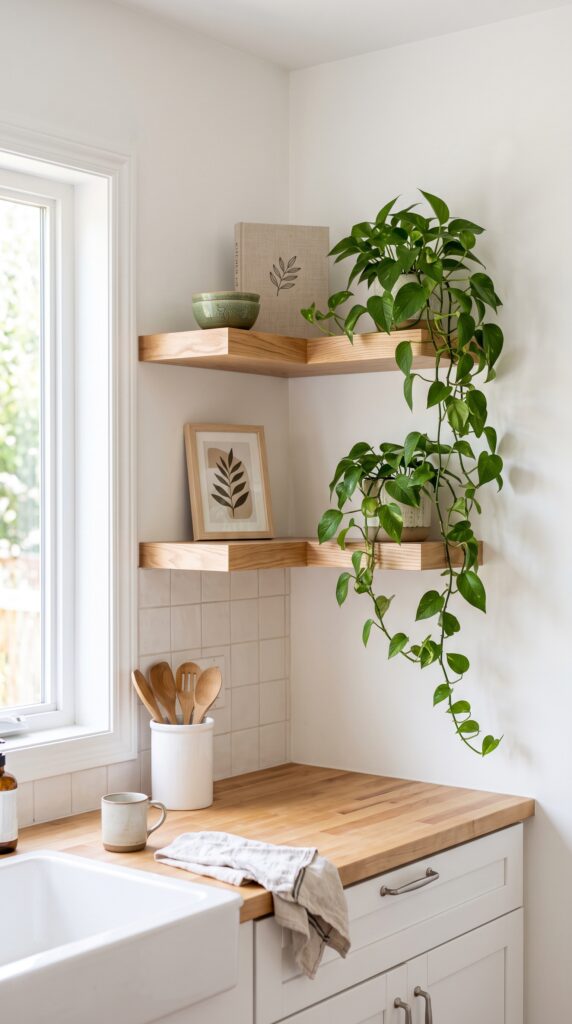
Sometimes the real problem isn’t how to decorate your corner — it’s that your counter is too crowded to decorate at all. If that’s where you are, the answer isn’t a smaller tray. The answer is to move some of that visual weight upward.
Floating corner shelves are one of the highest-impact kitchen ideas for small spaces because they add display and storage area without using any floor or counter space. They also make kitchens feel more custom and intentional — a bare wall above a counter looks unfinished, while a shelf styled with a few objects looks designed.
The key to styling shelves without making them look cluttered is the rule of odd numbers and negative space. Group items in threes, leave gaps between groupings, and resist the urge to fill every inch. A cookbook, a small trailing plant, and a ceramic bowl is a complete shelf — you don’t need more than that.
Floating Corner Shelves in a wood finish blend naturally into most kitchens and don’t require a contractor to install — most come with all the hardware you need for a weekend project.
For more inspiration on making small kitchens feel larger, HGTV’s small kitchen design guide is worth bookmarking.
Putting It All Together
The common thread in all seven of these ideas is that they treat your kitchen corner as a curated vignette rather than leftover space. Kitchen ideas for small spaces work best when every zone has a purpose — and a well-styled corner can actually shift how the entire kitchen feels, even if nothing else changes.
You don’t need to do all seven things at once. Start with one anchor piece — a tray, a vase, or a two-tier stand — and build from there. Add height, add texture, and leave a little breathing room. The difference between a styled corner and a cluttered one is almost always just restraint.