A small bedroom does not have to feel cramped, cluttered or uninspiring. With the right small bedroom must-haves — warm layered lighting, textured bedding, storage that disappears and a few considered decorative touches — even the tightest room can feel like a calm, curated retreat. The secret is not a big budget or a full renovation; it is choosing pieces that do the most work per square foot.
This guide covers nine small bedroom must-haves, in the order that makes the biggest difference: light first, then the bed, then storage, then the finishing touches. Each one includes measurements, materials and mistakes to watch for, so you can apply it in a real room — rented or owned — without guessing.
In This Guide
- Why Small Bedrooms Actually Have an Advantage
- 1. Warm, Layered Lighting
- 2. A Textured Bed in Soft, Neutral Tones
- 3. Under-Bed Storage That Disappears
- 4. Baskets and Bins for Everyday Clutter
- 5. A Full-Length Mirror Opposite a Window
- 6. A Nightstand — or a Slim Alternative
- 7. A Tray to Keep the Nightstand Calm
- 8. Faux Greenery That Needs No Upkeep
- 9. A Small, Cohesive Grouping of Wall Art
- Mistakes to Avoid in a Small Bedroom
- Pulling It All Together
- Frequently Asked Questions
Why Small Bedrooms Actually Have an Advantage
Smaller spaces force you to be intentional, and that intentionality is exactly what makes a room feel designed rather than thrown together. When every item has a purpose and a place, the result is a bedroom that feels cohesive, calm and visually satisfying. That is why the small bedroom must-haves below were chosen for what they do, not just how they look.
The goal with any small bedroom is to balance three things: light, function and visual softness. Get those three right, and the space will feel larger than it is — not because of a trick, but because nothing is fighting for attention. Keep the colour palette to three tones at most, leave at least 60 cm of clear floor beside the bed for getting in and out comfortably, and let one piece in each area do the work instead of three.
1. Warm, Layered Lighting
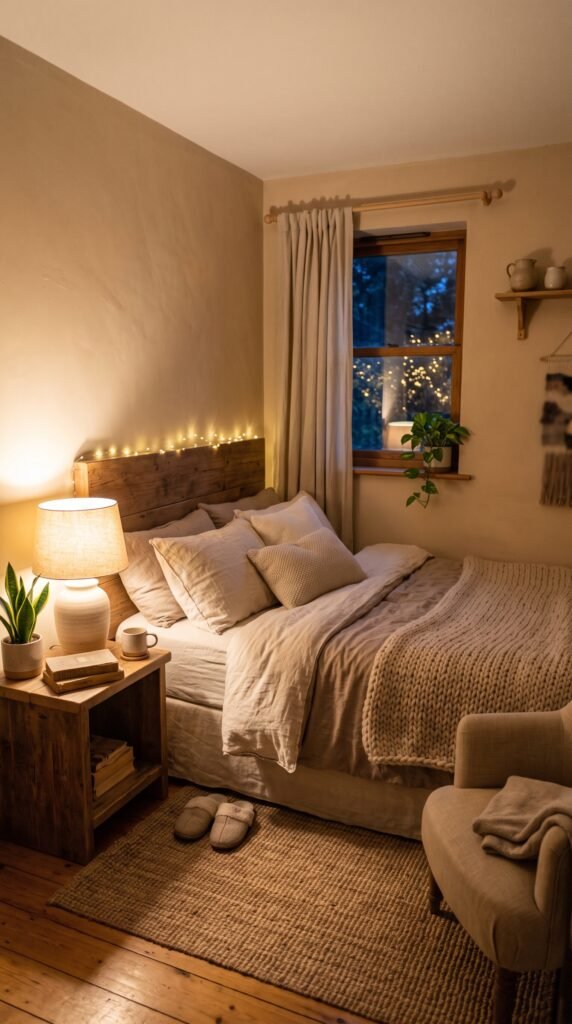
Lighting is the first of the small bedroom must-haves to get right, and it makes the most immediate difference. A single overhead ceiling light — especially a cool-toned one — flattens a small room and makes it feel clinical rather than cosy. The fix is layered lighting: a combination of ambient, task and accent sources you can adjust through the day.
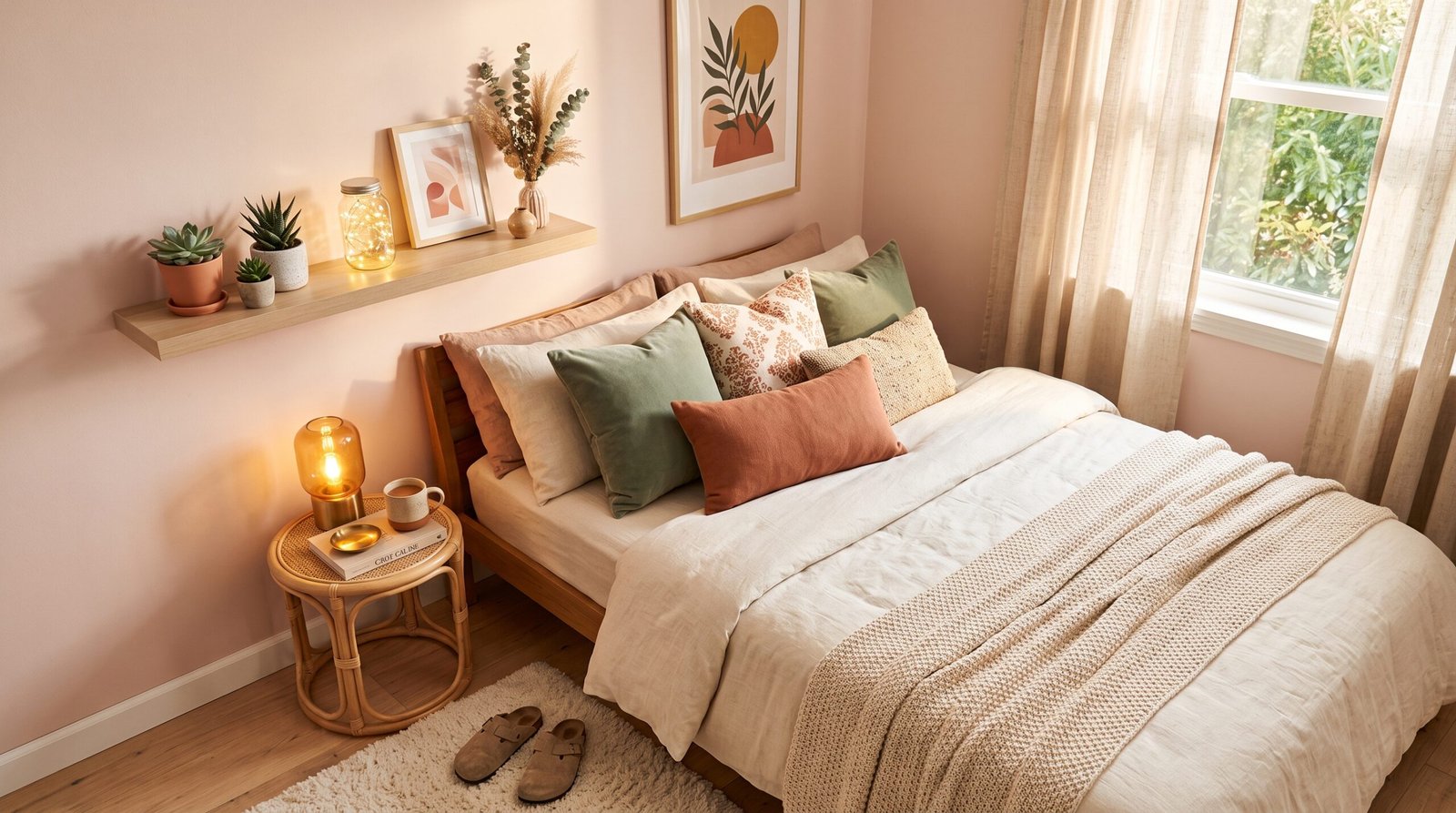
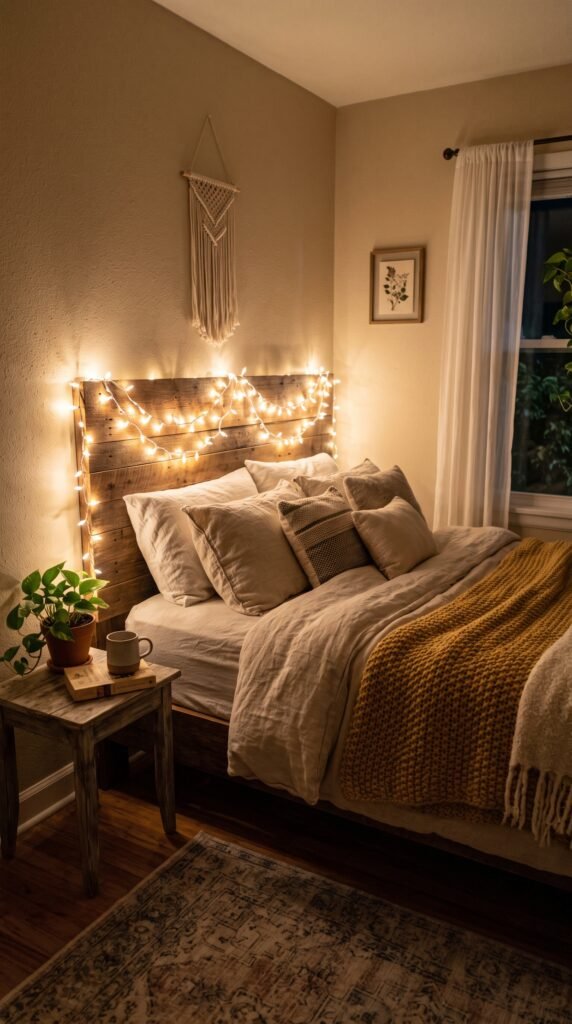
Start with the bulb. Look for warm white bulbs labelled 2700K–3000K on the packaging; that range reads as soft and golden rather than blue-white. Then add a bedside lamp for reading, so you are not relying on the ceiling light in the evening. Finally, add one accent layer: warm fairy lights draped along the headboard or around a window frame. They draw the eye upward and along the walls, which makes the room feel taller and wider, and they cost very little to run.
Three practical steps: first, replace any cool-white bulbs with warm white 2700K–3000K; second, put the bedside lamp on the side you read on, with the shade at about eye level when you are sitting up in bed; third, fix fairy lights with small clear adhesive clips so the cable is tidy and the lights sit evenly. Avoid running lights behind curtains or bedding, and keep the transformer plug accessible so you can switch them off easily. If your budget is tight, start with lighting before anything else — it changes the room for the least money. These bedroom lighting ideas under $40 show how to layer light without a large spend.
2. A Textured Bed in Soft, Neutral Tones
Your bed occupies most of a small bedroom’s floor space, which means it does most of the visual work. A poorly made or visually chaotic bed drags the whole room down; a well-styled bed can make the space look pulled together even if nothing else has changed. This is one of the small bedroom must-haves that pays off every single day, because you see it first thing in the morning and last thing at night.
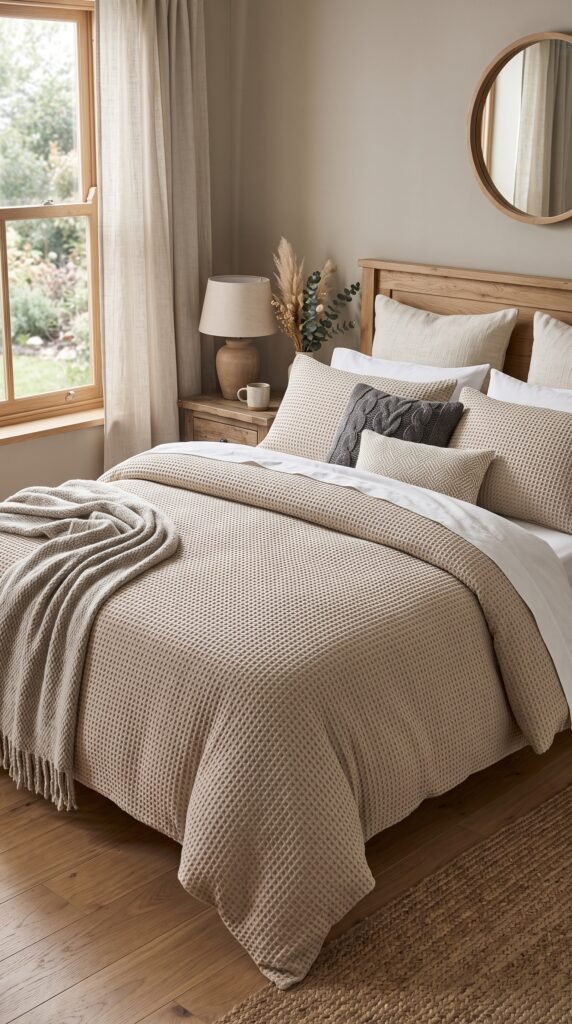
Texture is your best friend here. A flat, smooth duvet cover can look fine, but a textured one — a waffle knit, a linen-look cotton or a light matelassé — looks intentional. Choose neutral tones such as cream, oat or warm grey, which reflect light softly and keep the room feeling open rather than heavy. Layer the bed in thirds: duvet as the base, two or three pillows stacked at the headboard, and a folded throw across the foot of the bed. The formula takes under two minutes to recreate each morning, which matters when any mess in a small room reads loudly.
When choosing bedding, check that the duvet cover is machine washable and that the fabric suits how warm you sleep — cotton and linen-look weaves breathe better than heavy synthetics. Keep the palette of the whole bed within two or three tones so the largest surface in the room stays calm. For more ideas on a restful setup, see these cozy bedroom ideas for better sleep.
3. Under-Bed Storage That Disappears
Clutter is the enemy of a small bedroom, not because clutter is inherently bad, but because in a compact space visual noise accumulates faster and becomes harder to ignore. The solution is not to own less; it is to store smarter. The space under the bed is one of the most underused areas in a small bedroom, and reclaiming it is one of the most practical small bedroom must-haves there is.
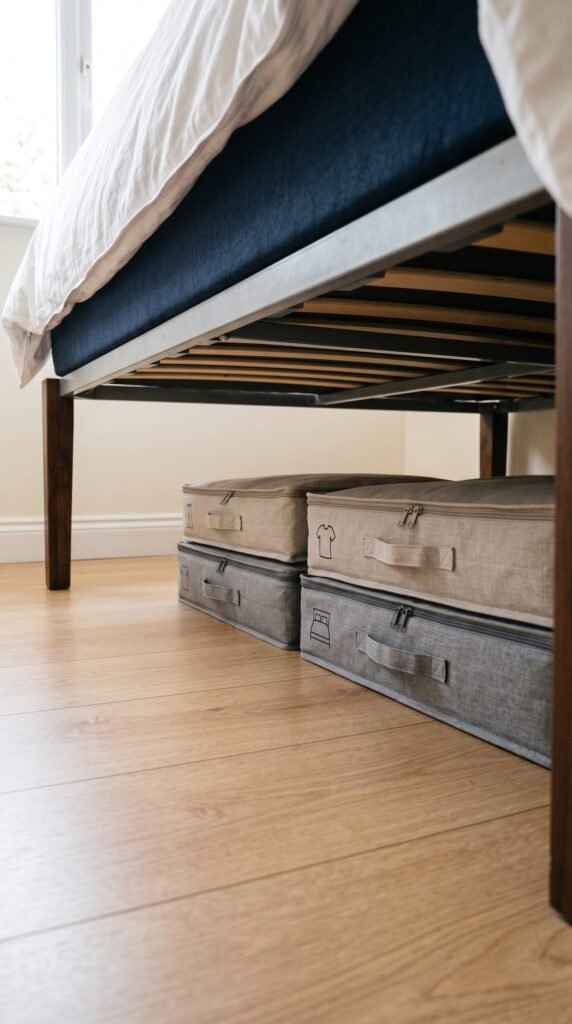
Before buying anything, measure the clearance under your bed frame. Most frames leave 15–25 cm; low divans leave less, and some leave none at all. Look for flat, zip-top fabric containers around 15 cm high so they slide in and out easily, keep contents dust-free, and do not look industrial if they are partly visible. Use them for seasonal clothing, spare linen or shoes — one category per container — and label the end you can see, so you are not pulling out every box to find one thing.
The mistake to avoid is overfilling: a container that bulges will not slide, and it pushes the bed skirt or frame out of line. Leave a finger’s width of space at the top. If your bed sits directly on the floor, skip this idea and use the basket approach below instead.
4. Baskets and Bins for Everyday Clutter
Decorative storage baskets handle the above-ground version of the same problem as under-bed boxes. Placed on open shelves, in corners or beside a dresser, they corral loose items — charging cables, books, skincare products — without requiring more furniture. Because they are woven or textured, they add warmth to the room rather than making it feel more cluttered. It is one of the simplest small bedroom must-haves to add, because baskets need no installation and cost very little.
Choose baskets in natural tones such as seagrass, rattan or cotton rope to keep the palette cohesive, and keep to two or three visible baskets at most — more than that starts to look like storage rather than styling. Give each basket one job: one for cables and chargers, one for books, one for laundry. If you want a fuller plan for fitting storage into a small bedroom, these small bedroom storage ideas that work without a renovation walk through the options room by room.
5. A Full-Length Mirror Opposite a Window
You have probably heard that mirrors make a room look bigger, and it is true — but only when placed correctly. A mirror that faces a blank wall does very little. A mirror positioned to reflect natural light, an open doorway or a styled corner of the room doubles the visual depth of the space in a way that is hard to replicate with any other single piece. That is what makes a well-placed mirror one of the smartest small bedroom must-haves in a room with one good window.
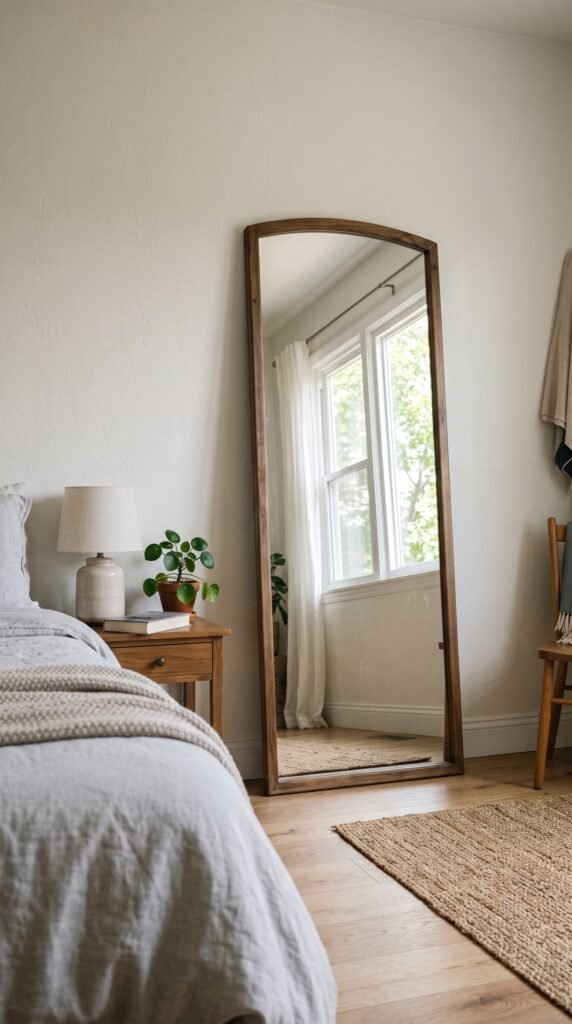
A full-length mirror leaned against the wall is both functional and flexible. It lets you check a whole outfit, it needs no drilling — useful in a rented home — and it adds a modern, effortless look. Choose a mirror at least 120 cm tall and 40 cm wide so it is genuinely useful, and place it across from the window where possible, or beside the window angled slightly toward the room. Lean it at a slight angle with the base a few centimetres from the wall, and secure it with furniture straps or an anti-tip fitting, especially if children or pets use the room.
6. A Nightstand — or a Slim Alternative
When there is no room for a traditional nightstand, a bedside shelf or caddy is a surprisingly functional workaround. These slim clip-on or freestanding shelves attach to the side of the bed frame or slip between the mattress and the base, giving you a surface for a phone, a water glass and a book without claiming any floor space. Look for a shelf around 25–30 cm wide: wide enough for a glass and a phone, slim enough to stay out of the way.
If you do have room for a small nightstand, a 35–45 cm wide one is usually enough in a small bedroom; anything wider eats into the walkway beside the bed. Keep the top to three things at most — a lamp, a glass of water and one book — and give everything else a home inside a drawer or on a shelf. A nightstand that holds only what you need at night is one of the quietest small bedroom must-haves, and one of the easiest to get wrong by overfilling.
7. A Tray to Keep the Nightstand Calm
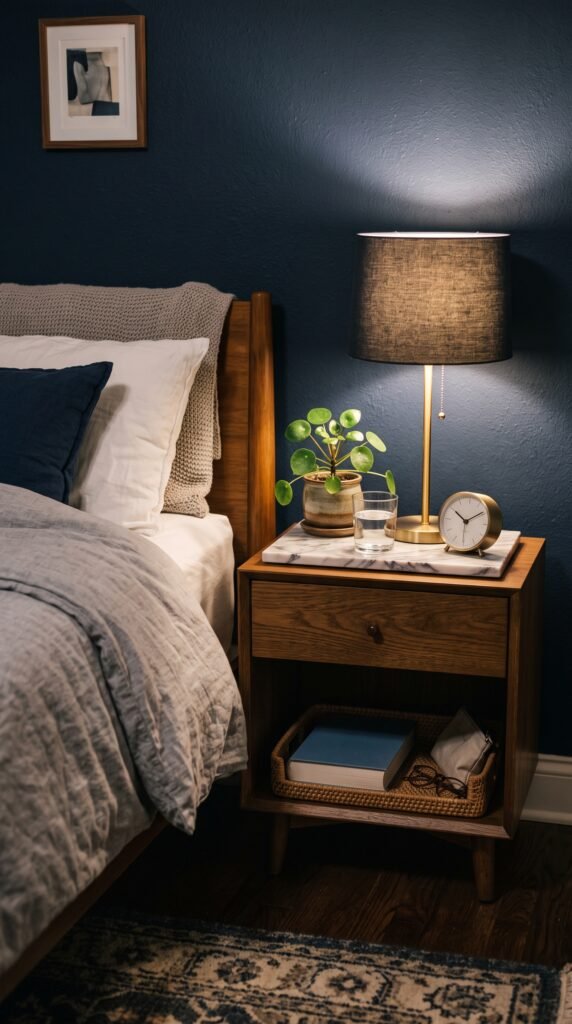
A tray is one of the smallest small bedroom must-haves, and it has an outsized effect. Styling a nightstand or shelf with a tray instantly elevates the look: it corrals small items — a candle, a lip balm, a small plant — and visually contains them so they read as a group rather than random clutter. Marble, ceramic or light wood all work; choose a tray around 30 × 20 cm so it fits a small surface without crowding it.
The rule is simple: if it does not fit on the tray, it does not live on the nightstand. That single limit keeps the surface clear night after night, and it makes tidying a ten-second job instead of a chore.
8. Faux Greenery That Needs No Upkeep
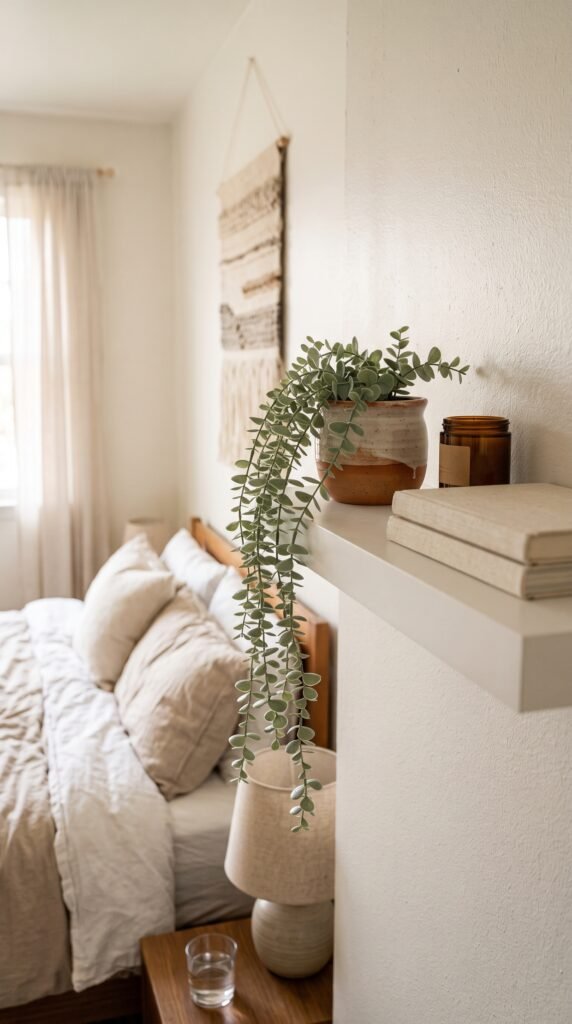
Plants bring life and visual warmth to any room, but in a small bedroom the maintenance matters. If a plant is not thriving, it becomes visual noise rather than a styling asset. Faux plants solve this entirely: they look lush all year without watering, repotting or particular light. Look for varieties with natural movement and variation in the leaves — eucalyptus, pothos and trailing ivy tend to look the most realistic — rather than stiff, overly symmetrical options.
One medium plant on a shelf and one small trailing plant is enough for a small bedroom; more fills the limited surfaces. Choose matte leaves over glossy plastic ones, vary the heights, and dust the leaves once a month so they do not go grey. Pot them in simple ceramic or woven pots that match the room’s palette, and keep them off the bedside surface so the nightstand stays clear. It is one of the lowest-effort small bedroom must-haves: one plant, one pot, no upkeep.
9. A Small, Cohesive Grouping of Wall Art
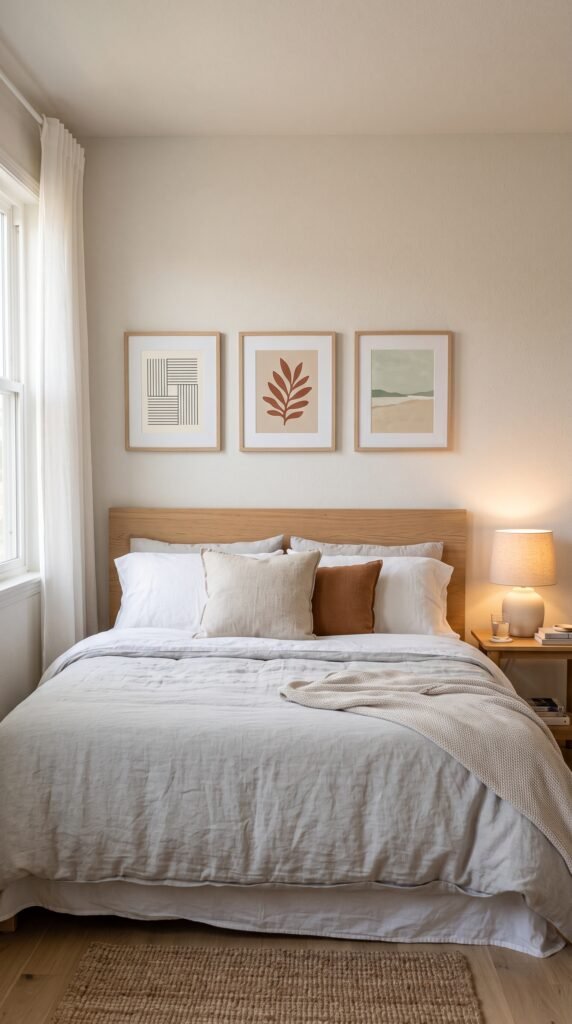
Wall space is often the most underused design opportunity in a small bedroom. Bare walls make a room feel unfinished, but an overcrowded gallery wall can feel chaotic in a tight space. The middle ground is a small, intentional grouping of minimal wall art prints — two or three framed pieces in coordinating styles hung above the bed or beside a dresser. Abstract line art, botanical prints and simple typography all work well because they add visual interest without competing with the rest of the room.
Hang the centre of the grouping at about 145–150 cm from the floor — roughly eye level — or 15–20 cm above the headboard if it sits over the bed. Keep the frames consistent in style and slim in profile, and keep the colours within the two or three tones already in the room. That consistency is what makes a small grouping look deliberate instead of random. For more ways to make a small room work harder, these 7 tiny bedroom ideas that maximise space and style are a useful next read.
Mistakes to Avoid in a Small Bedroom
Most small bedrooms are not ruined by one bad choice, but by several small ones. The most common is buying before measuring: a nightstand, mirror or basket that is a few centimetres too wide can block a walkway or a wardrobe door. Measure the space first, then buy to the measurement — not the other way round.
Other mistakes to avoid: relying on a single cool-white overhead light; filling every surface with small decorative objects instead of choosing two or three; hanging heavy, dark curtains that swallow the window; and mixing four or five patterns in a room where one or two would be enough. If a piece does not earn its place by being useful or genuinely loved, it is a candidate for the next clear-out.
Pulling It All Together
The difference between a small bedroom that feels cramped and one that feels cosy comes down to intentional layering. Lighting that warms the space, bedding with texture and depth, storage that keeps surfaces clear, a mirror that bounces light and adds dimension, and small decorative touches that reflect your personal style — together, these small bedroom must-haves create a room that feels curated, calm and completely livable.
You do not need to implement everything at once. Start with the piece that addresses your biggest pain point — whether that is lighting, clutter or a flat-looking bed — and build from there. Small bedrooms respond quickly to change, and even a single thoughtful addition can shift the entire feel of the room. If better sleep is part of the goal, the Sleep Foundation’s guide to creating a bedroom environment for good sleep explains how a cool, quiet, dark room supports rest — the same calm conditions this kind of styling aims for.
Frequently Asked Questions
What are the small bedroom must-haves I should start with?
The nine small bedroom must-haves in this guide are: warm layered lighting, a textured bed in soft neutrals, under-bed storage, baskets for everyday clutter, a full-length mirror opposite a window, a nightstand or slim alternative, a tray, faux greenery and a small grouping of wall art. Start with lighting and storage — they make the biggest difference first.
How can I make a small bedroom look bigger?
Use light, warm colours, place a full-length mirror opposite or beside a window, keep the floor as visible as possible, and stick to one palette of two or three tones. Low-profile furniture and clear surfaces matter more than any single decorative piece.
What colours work best in a small bedroom?
Warm whites, cream, oat and soft grey work best because they reflect light softly and keep the room feeling open. Add personality through one accent material, such as matte black hardware or light oak, rather than through a bold wall colour.
How do I add storage to a small bedroom without new furniture?
Use flat containers under the bed, baskets on shelves and in corners, and hooks on the back of the door. One basket per category keeps things findable, and labelling the under-bed containers saves you pulling every box out.
Do fairy lights really help in a small bedroom?
Yes, as an accent layer rather than the main light. Warm white fairy lights (2700K–3000K) along a headboard or window frame add a soft glow and draw the eye upward, which makes the room feel taller. They are one of the cheapest small bedroom must-haves to try first. Keep the cables tidy with small clear clips and always pair them with a proper bedside lamp for reading.