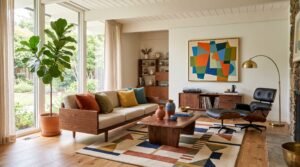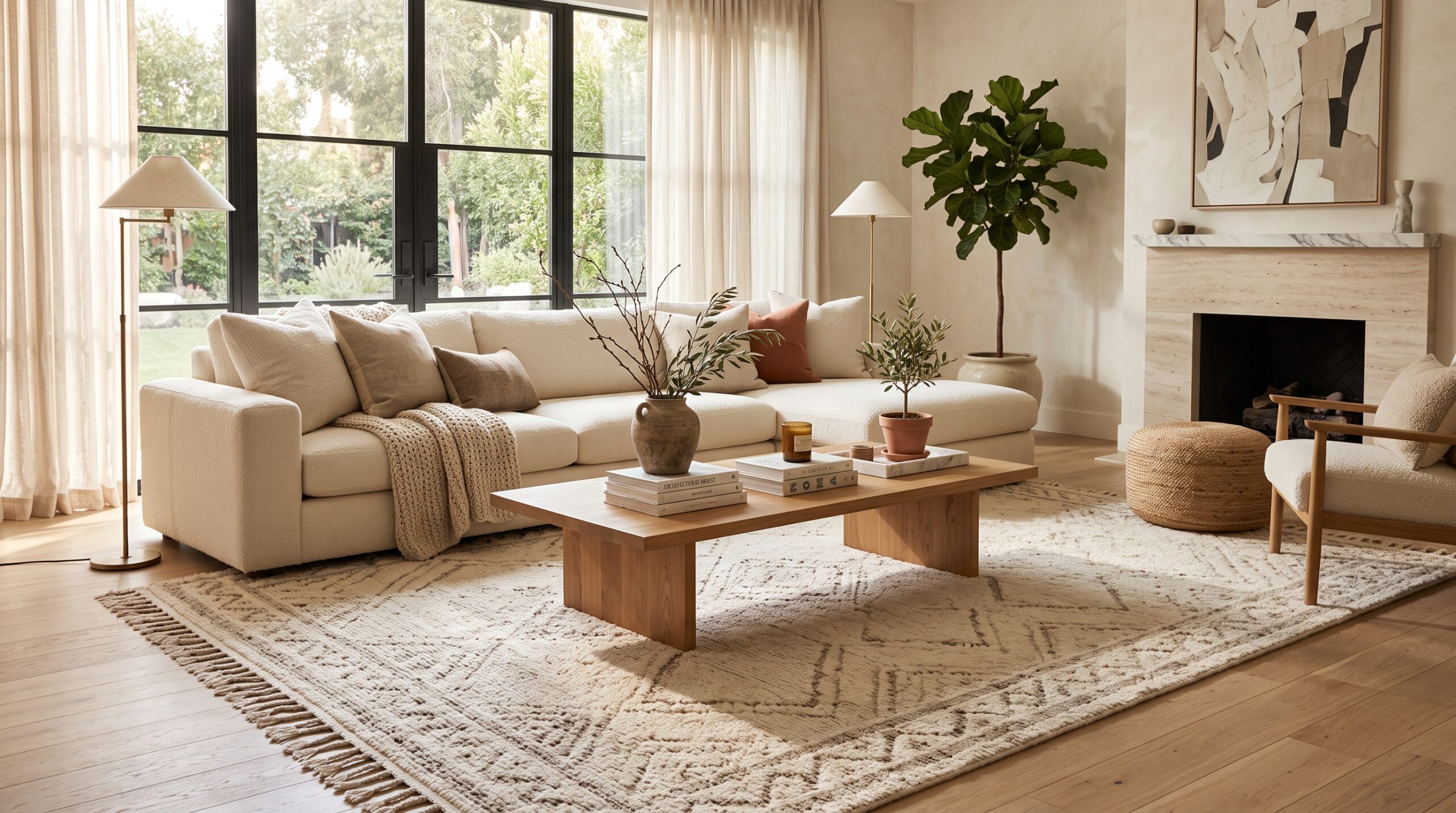
Choosing a living room rug is one of the fastest ways to change how a room feels. The right rug softens hard floors, pulls the seating together and adds colour and texture in a single step. It also sets the scale of the room: a rug that is too small makes the seating look scattered, while one that is too large can swallow the floor.
This guide covers seven practical ideas, exact sizes, materials and placement rules, so you can choose the right living room rug for your sofa, your floor and the way you use the room.
Contents
- Why a rug matters
- 1. Neutral and textured
- 2. Size up
- 3. Plush shag
- 4. Washable
- 5. Natural jute
- 6. Patterned or vintage-style
- 7. Layering two rugs
- Rug size guide
- How to choose in five steps
- Mistakes to avoid
- Frequently asked questions
Why a Living Room Rug Matters
A rug does three jobs at once. It defines the seating area, it adds warmth underfoot on wood, tile or laminate floors, and it reduces echo in rooms with hard surfaces. Without one, a sofa, chairs and a coffee table can look like separate pieces that happen to share a room.
Start with the job the rug has to do. A family room needs a hard-wearing, easy-to-clean surface. A formal sitting room can take a softer, higher-pile rug. A rented flat may need a rug that protects the floor and can move with you. Once the job is clear, the style choices become much easier, and the same thinking applies to other simple living room decor changes that make a big cosy impact.
1. A Neutral, Textured Living Room Rug
A neutral rug in cream, warm grey, beige or soft taupe is the most flexible choice. It works with plain and patterned sofas, and it lets cushions, throws and art carry the colour. Texture is what stops a neutral rug from looking flat: look for a woven, looped or high-low pile, or a subtle border in a slightly darker tone.
Choose a mid-tone rather than bright white if the room gets daily use. Cream and pale grey show footprints and spills quickly, while a warm greige or oatmeal tone hides everyday marks better and still keeps the room light.
- Good for: rooms where you change cushions or art with the seasons.
- Watch out for: very pale rugs in homes with pets or small children.
2. Size Up: Let the Living Room Rug Define the Space
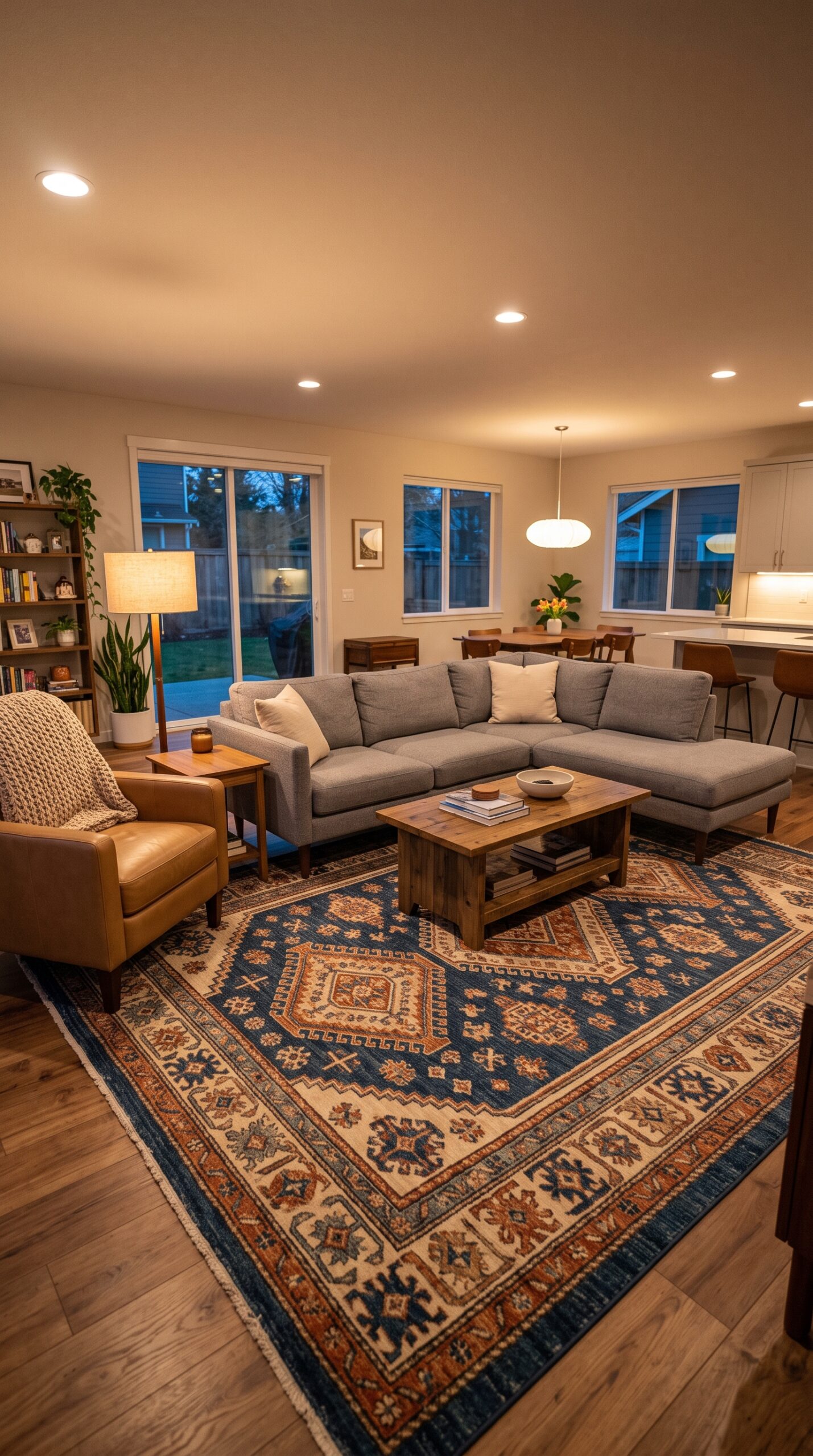
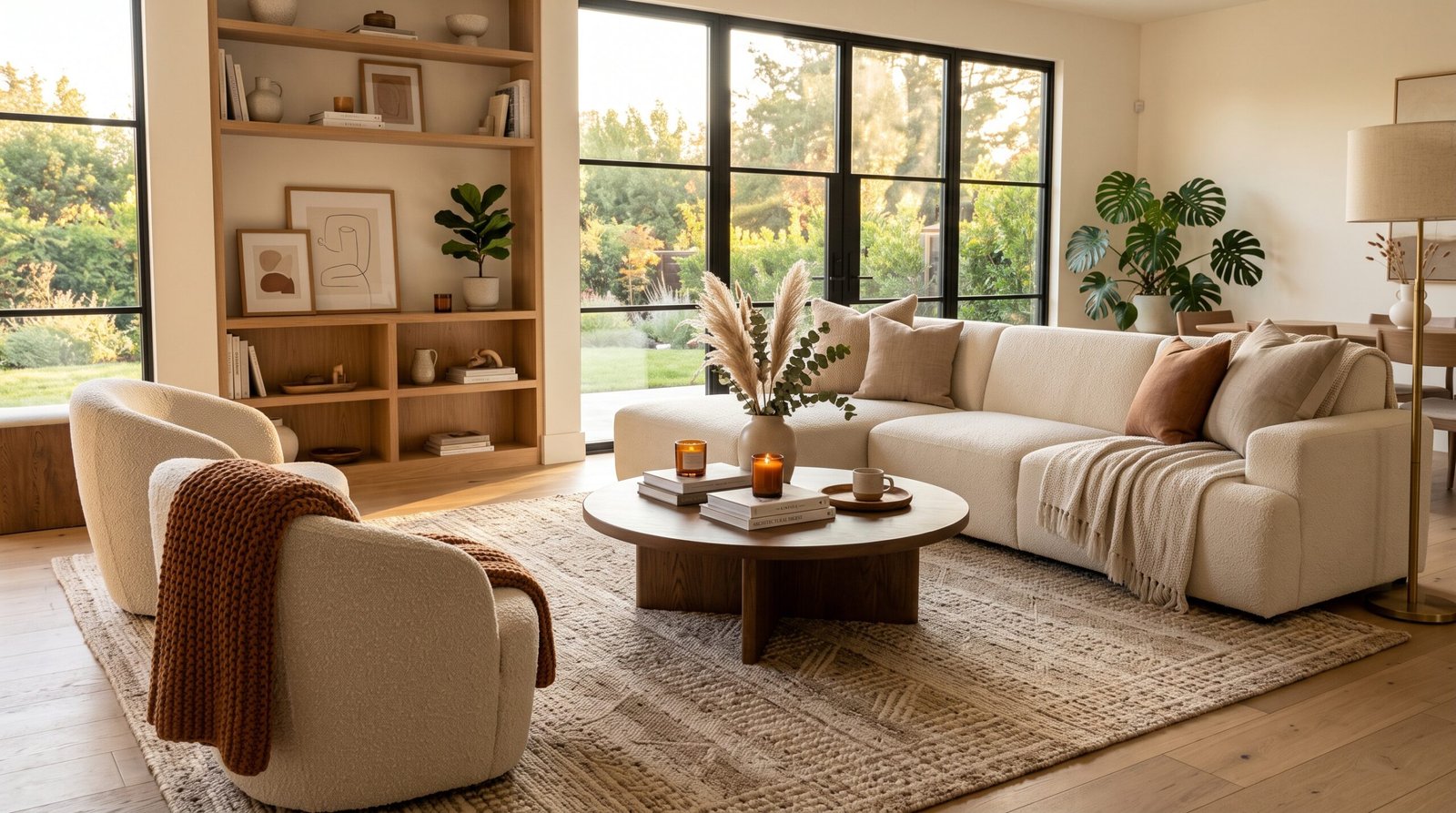
The most common rug mistake is buying too small. As a rule, the front legs of the sofa and armchairs should sit on the rug, with at least 15 to 20 cm (6 to 8 inches) of rug extending beyond the sides of the seating. In an open-plan room, the rug also marks where the living area ends and the dining or kitchen area begins.
Before ordering, mark the outline on the floor with painter’s tape and live with it for a day. Walk around it, open doors and drawers, and check that chair legs do not catch the edge. This simple test prevents the most common sizing error, and it is especially useful in compact rooms, where the right small living room decor ideas for cramped spaces depend on getting the proportions right.
- Good for: open-plan rooms and large sofas.
- Watch out for: a rug that touches skirting boards on all sides; leave a border of bare floor so the room can breathe.
3. A Plush Shag Living Room Rug
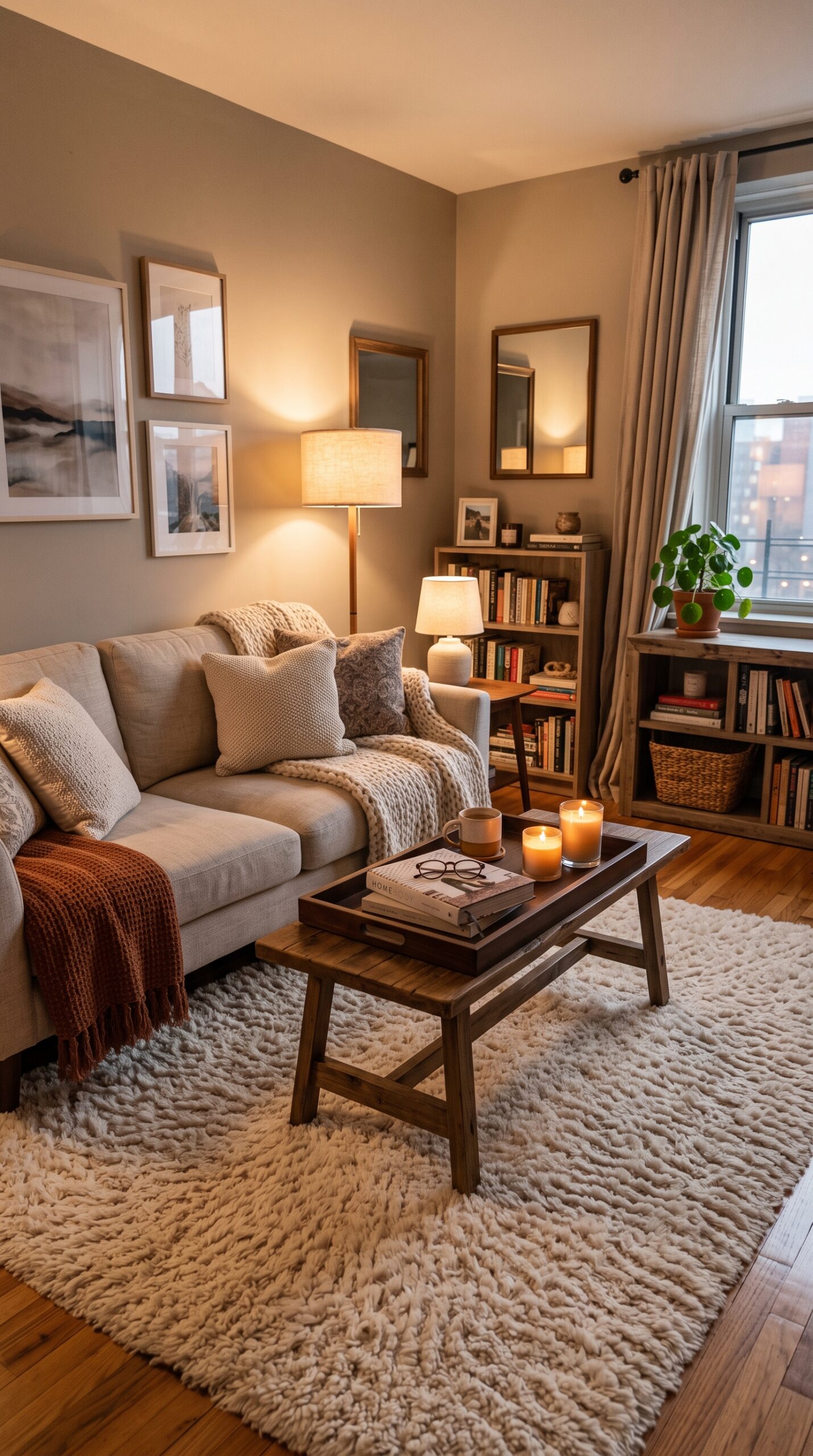
A shag or deep-pile rug adds instant comfort. The long fibres feel soft under bare feet, and the texture makes a room look cosy even when the furniture is simple. Shag rugs suit quiet sitting areas best, where people read, watch television or sit on the floor.
Deep pile has practical limits. It traps dust and crumbs, it is hard to move a vacuum cleaner across, and chair legs sink into it. Choose a low- or medium-pile version for a dining area or a room with a desk, and keep the deep pile for the seating zone only. Shake it outside when you can, and vacuum it regularly on a low-suction setting.
- Good for: bedrooms that open into a sitting area, and rooms where you sit on the floor.
- Watch out for: dining chairs, office chairs and high-traffic doorways.
4. A Washable Living Room Rug
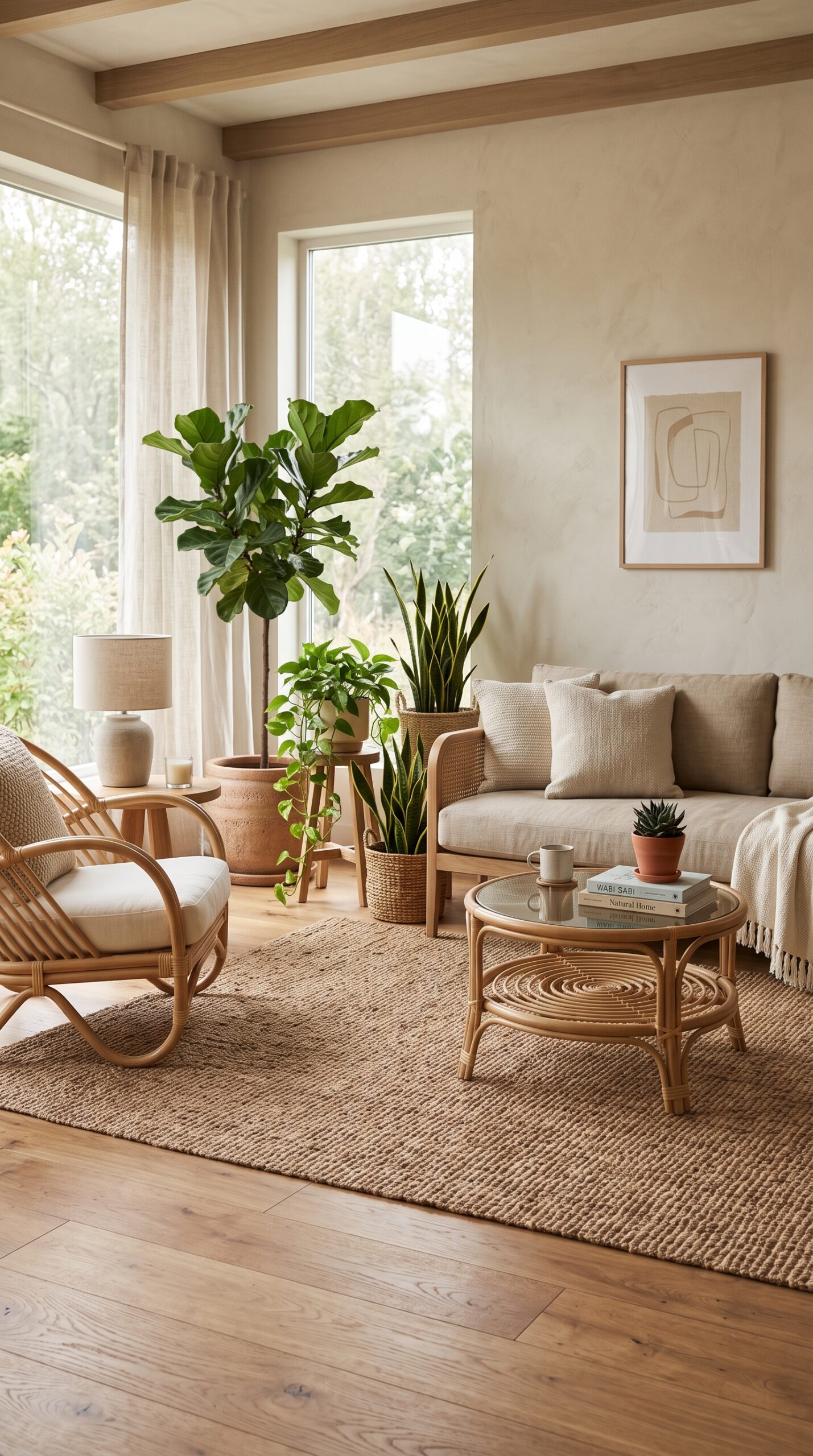
Washable rugs are made to be cleaned at home, either in a washing machine or by hand, depending on the size and the care label. They suit homes with children, pets or anyone who wants a pale rug without the worry. Look for a non-slip backing, or plan to use a rug pad underneath so the rug stays in place.
Check the care label before you buy, not after a spill. Some washable rugs only fit in a large-capacity machine, and a 240 x 300 cm rug may be too heavy to wash at home. For large sizes, a flat-weave rug that can be spot-cleaned may be the more practical choice. Always follow the maker’s washing instructions; heat and the wrong detergent can shrink the fibres or damage the backing.
- Good for: family rooms, homes with pets, and light-coloured rugs.
- Watch out for: sizes that will not fit your washing machine.
5. A Natural Jute Living Room Rug
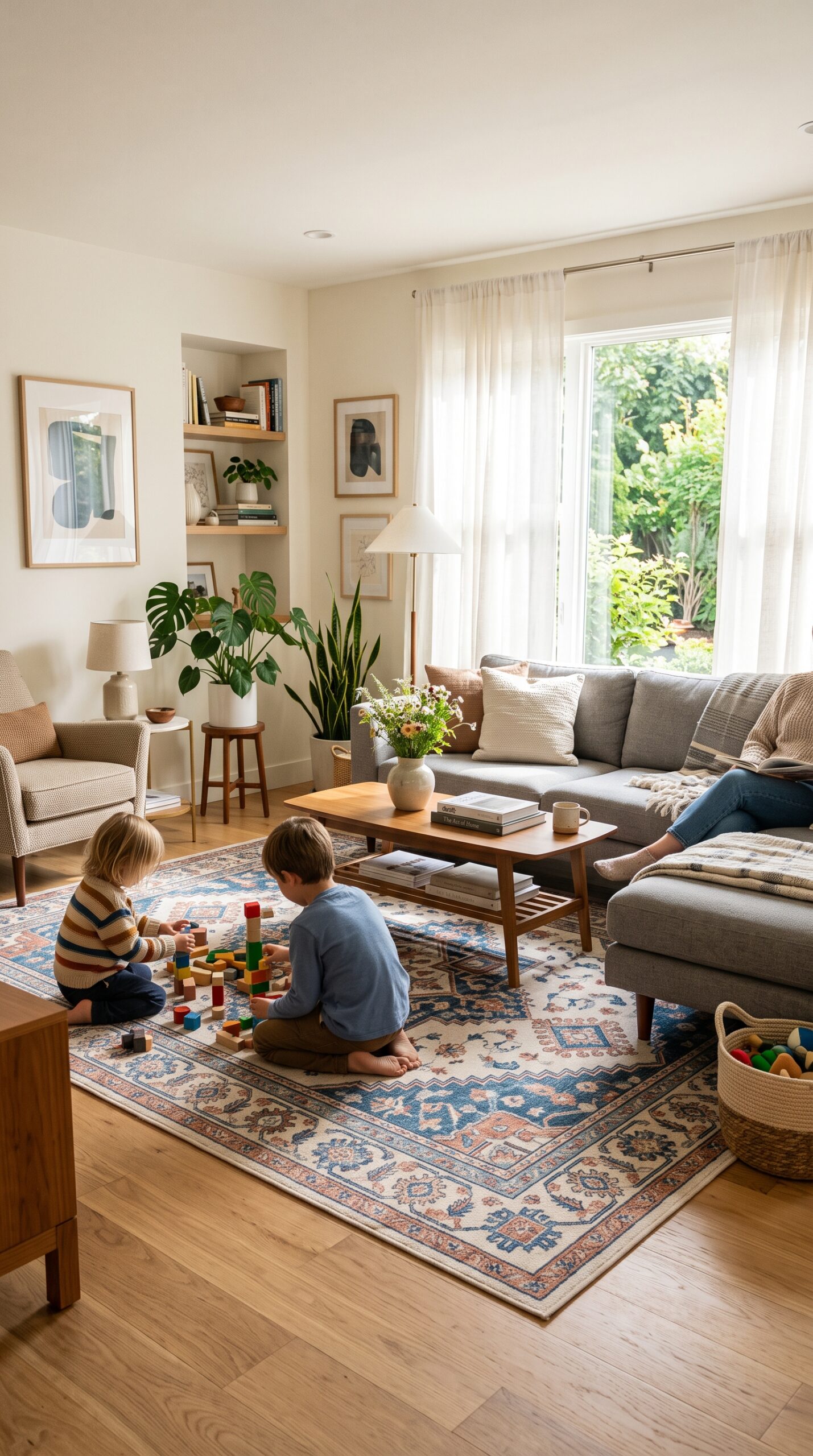
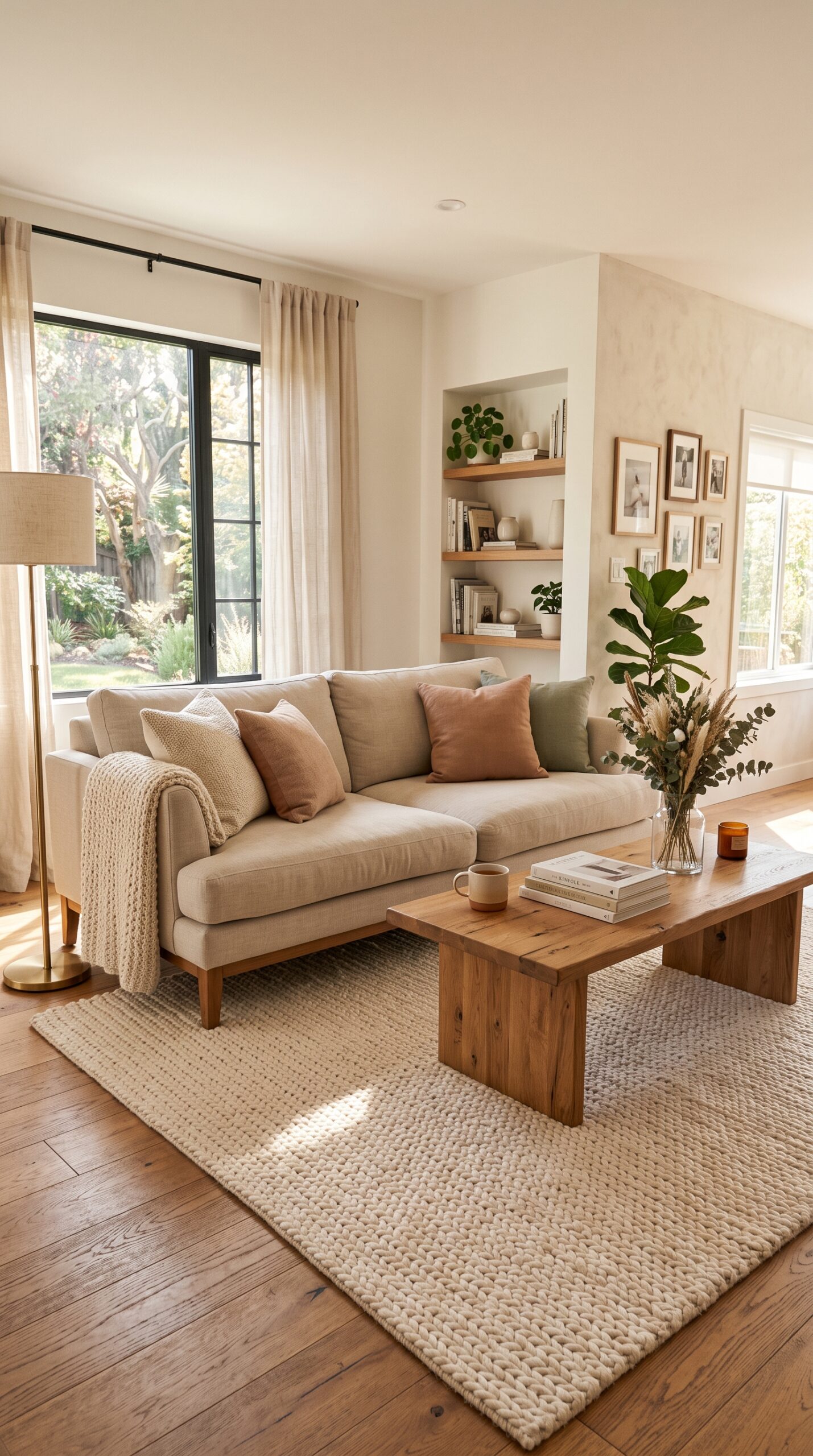
Jute is a natural plant fibre with a warm, golden tone and a woven texture that works well in coastal, bohemian and relaxed modern rooms. It adds warmth without pattern, and it pairs well with wood, linen and leather. Sisal and seagrass give a similar look; jute is the softest of the three underfoot, while sisal is firmer and more hard-wearing.
Natural fibre rugs need dry conditions. They absorb moisture, so they are a poor choice for a damp room or a space where drinks are often spilled. Blot spills at once with a dry cloth, vacuum regularly, and use a rug pad to stop the rug sliding on hard floors. Jute also sheds fine fibres at first; that usually settles after a few weeks of vacuuming.
- Good for: relaxed, natural-style rooms with wooden furniture.
- Watch out for: damp rooms, food spills and bare feet that dislike a rough texture.
6. A Patterned or Vintage-Style Living Room Rug
A patterned rug can be the room’s main feature. Traditional Persian-style patterns, faded vintage designs and bold geometric prints all work, provided the rest of the room stays calm. If the rug is busy, keep the sofa plain and limit the cushions to one or two colours taken from the rug.
Pattern also hides marks well, which makes it a good choice for a busy room. A low pile is easier to clean and to move furniture across than a deep pile, and a border in a darker colour helps the rug look tidy for longer. If you already have patterned curtains or a patterned sofa, choose a rug with a simpler, smaller-scale pattern so the room does not feel crowded.
- Good for: plain sofas and rooms that need a clear focal point.
- Watch out for: combining a bold rug with bold curtains and a bold sofa in the same room.
7. Layering: Two Rugs, One Living Room Rug Look
Layering means placing a smaller rug on top of a larger one. Start with a large, plain base rug in jute or a flat weave, then add a smaller patterned or softer rug on top, turned at a slight angle or centred on the seating. The base rug gives you the correct size; the top rug gives you the colour and softness.
Keep the two rugs different in texture and scale. A thin flat-weave base under a plush top rug works well; two thick rugs on top of each other create a trip hazard and make doors hard to open. Use a rug pad under the base rug, and check that the top rug does not slide. Layering is a useful way to try a bold pattern without committing the whole floor to it, and it fits neatly into dream apartment living room decor ideas where a small space needs more than one texture.
- Good for: trying a bold pattern, or softening a hard-wearing natural fibre rug.
- Watch out for: thick layers near doors, and top rugs that slide on a smooth base.
Living Room Rug Size Guide
Before you buy a living room rug, measure the seating area, not the whole room. The table below gives a starting point for the most common arrangements. For more detail, compare Architectural Digest’s guide to choosing the right size rug with This Old House’s rug-sizing guide; both use the same front-legs-on-the-rug rule.
| Seating arrangement | Rug size to try first | Why it works |
|---|---|---|
| Two-seat sofa in a compact room | 160 x 230 cm (about 5 x 8 ft) | Front legs sit on the rug, with floor showing at the sides |
| Three-seat sofa | 200 x 290 cm (about 8 x 10 ft) | All front legs sit on the rug; chairs partly on it |
| Three-seat sofa and two chairs | 240 x 300 cm (about 9 x 12 ft) | The whole seating group sits on the rug |
| Open-plan living and dining area | 240 x 300 cm (about 9 x 12 ft) or larger | Defines the living zone without crowding the dining area |
How to Choose in Five Steps
- Measure the seating area and mark the rug outline on the floor with painter’s tape.
- Decide the job first: washable for a family room, soft pile for a quiet sitting area, hard-wearing flat weave for a doorway or dining area.
- Choose the material: wool for warmth and durability, cotton for a light washable rug, jute or sisal for texture in a dry room, synthetic fibres for easy cleaning.
- Match the colour to the room. Take a cushion or a paint sample with you, and check the rug in daylight as well as in the evening, because artificial light changes how colours look.
- Check the practical details before you buy: the care label, the backing, whether a rug pad is needed, and whether the rug will fit through your front door and in your washing machine if it is washable.
Mistakes to Avoid
- Choosing a living room rug that is too small. If only the coffee table fits on it, the rug is too small.
- Skipping the rug pad. A rug without a pad slides on hard floors, wrinkles and wears out faster.
- Matching the rug exactly to the sofa. A rug in the same colour and tone as the sofa makes the room look flat; choose a rug a shade lighter or darker, or in a different texture.
- Putting a deep-pile rug under a dining table, where crumbs collect and chairs sink.
- Buying before measuring the doorways, lift and staircase, especially for a large rolled rug.
Frequently Asked Questions
What size living room rug should I buy?
For a three-seat sofa, start with 200 x 290 cm (about 8 x 10 ft), so the front legs of the sofa and chairs sit on the rug. For a two-seat sofa in a compact room, 160 x 230 cm (about 5 x 8 ft) is a good starting point. Mark the size on the floor with tape before you order.
Should the rug go under the sofa?
Yes, at least the front legs of the sofa should sit on the rug. That connects the furniture and stops the rug looking like a separate island in the middle of the floor. In a large room, the whole seating group can sit on one large rug.
What is the best material for a living room rug?
Wool is warm, durable and naturally resists dirt, which makes it a good choice for most living rooms. Cotton is lighter and often washable, jute adds texture in dry rooms, and synthetic fibres are practical where easy cleaning matters most. Choose the material for how the room is used, not only for how it looks.
How do I stop a rug sliding on a wooden floor?
Use a rug pad cut slightly smaller than the rug, or a non-slip backing. Check the pad regularly, because pads wear out and can leave marks on some floor finishes. Heavy furniture on the rug also helps keep it in place.
Can I layer two rugs in a living room?
Yes. Place a large, plain base rug first, then add a smaller patterned or softer rug on top. Keep the textures different, use a rug pad underneath, and make sure the top rug does not slide or lift near a doorway.
The best living room rug is the one that fits your seating, suits how you use the room and can be cleaned without a struggle. Measure first, choose the material for the job, and let the rug make the room feel finished.