Affiliate Disclosure: This post contains affiliate links. If you purchase through one of my links, I may earn a small commission at no extra cost to you. I only recommend products I genuinely believe in and would use in my own home.
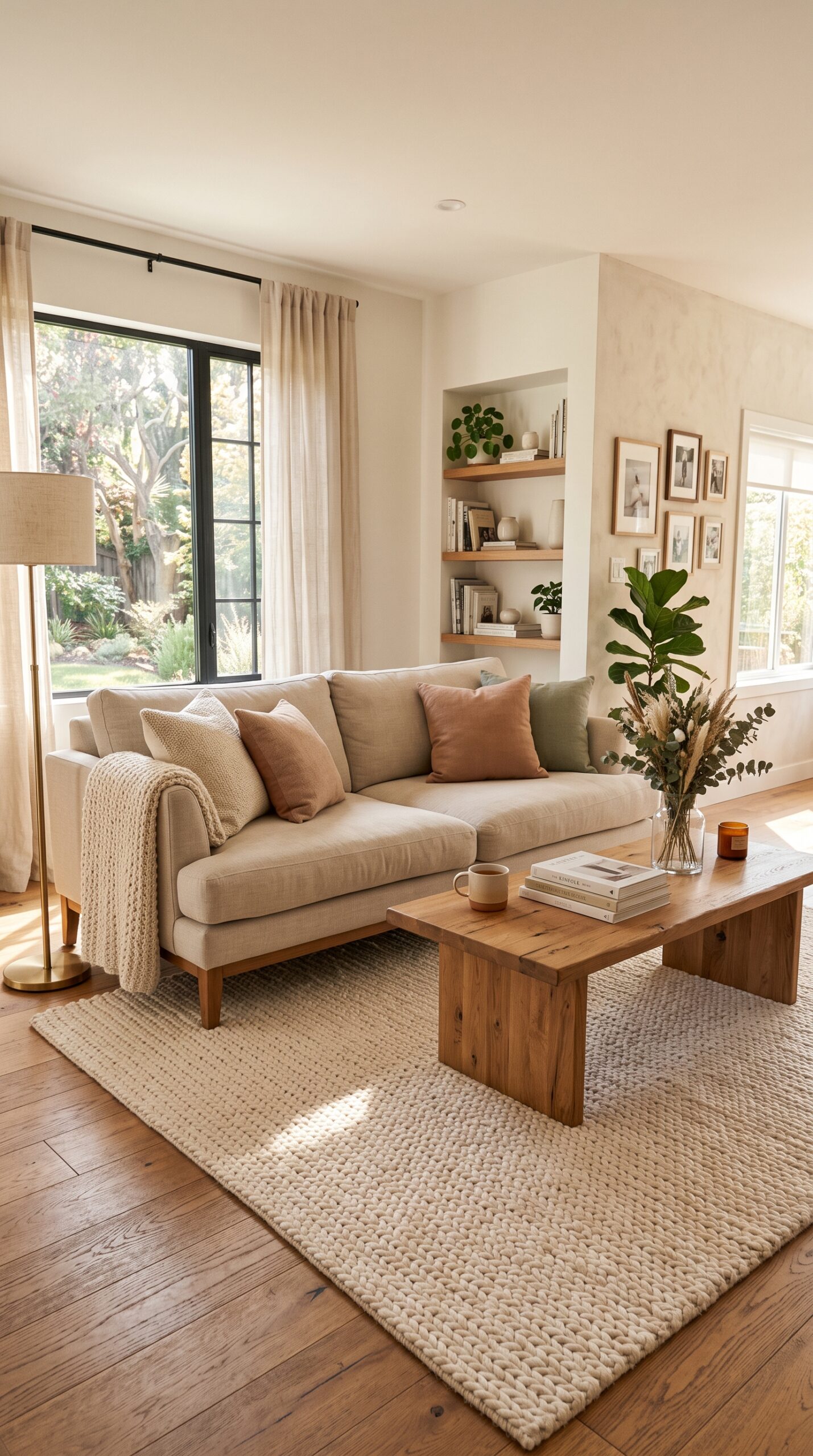
A cozy living room doesn’t happen by accident — and after rearranging my own space more times than I care to admit, I can tell you that the single biggest game-changer was always the rug. Not the sofa, not the throw pillows, not even the lighting. The rug. It’s the layer that pulls everything together, grounds the furniture, and tells the room what it’s supposed to feel like.
Choosing the wrong one, though, is an expensive mistake. Too small and the space feels disjointed. Too busy and it competes with everything else. Too flat and it loses that warmth you were going for in the first place. I’ve made all of these errors, so you don’t have to.
This guide walks you through seven specific rug ideas — with real advice on size, texture, material, and placement — so you can make a confident decision for your space.
Why the Right Rug Is the Foundation of a Cozy Living Room
Before we get into specific ideas, it helps to understand what a rug is actually doing for your room. Designers call it “anchoring” — the rug visually holds the furniture together so the seating area reads as one intentional zone rather than a collection of random pieces.
In a cozy living room, the rug also does something more tactile: it softens the acoustics, adds warmth underfoot, and signals to your brain that this is a place to slow down. Hard floors are beautiful, but they’re cold and echo-y. A well-chosen rug fixes both problems instantly.
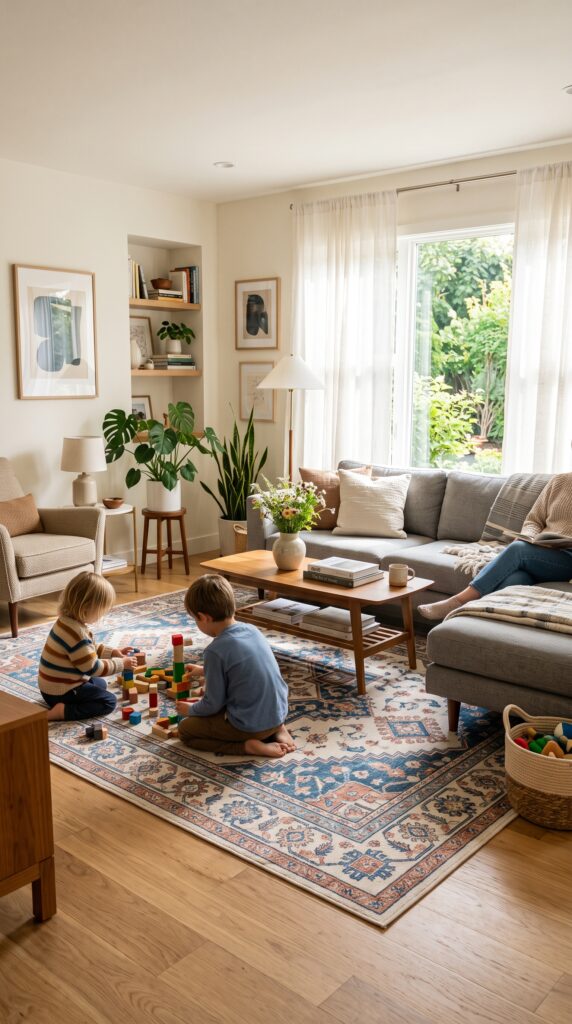
The rule of thumb most interior stylists swear by is this: always size up. Most people buy a rug that’s too small. For a standard living room, you typically want at least a 8×10 or 9×12, with the front legs of every major seating piece sitting on the rug. If the rug floats in the middle with no furniture touching it, it’s too small — and the room will feel it.
For further guidance on sizing and room ratios, the team at Architectural Digest has a thorough rug size guide worth bookmarking.
My Top Picks
1. Neutral Textured Rug — Timeless, Versatile, and Endlessly Livable
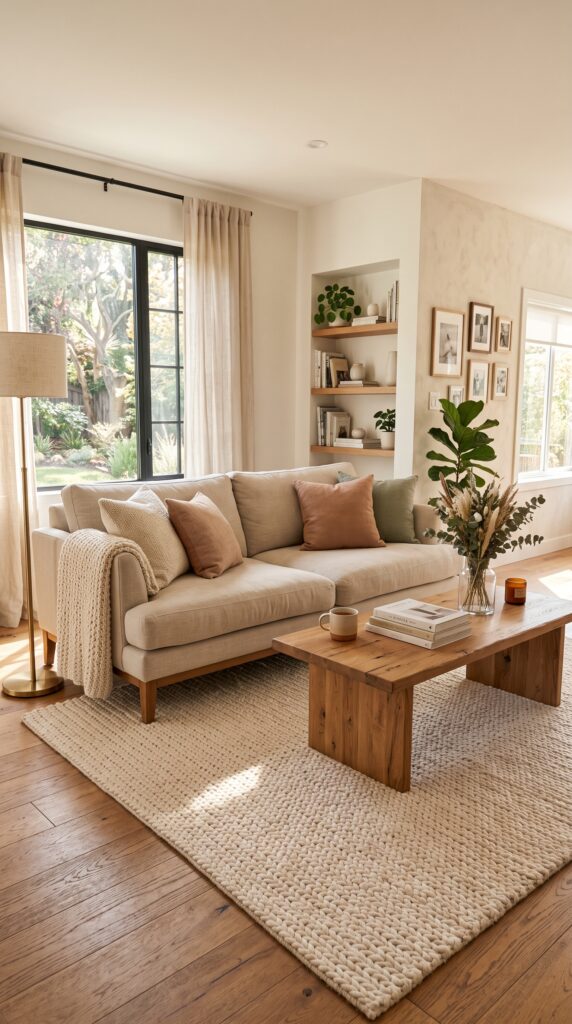
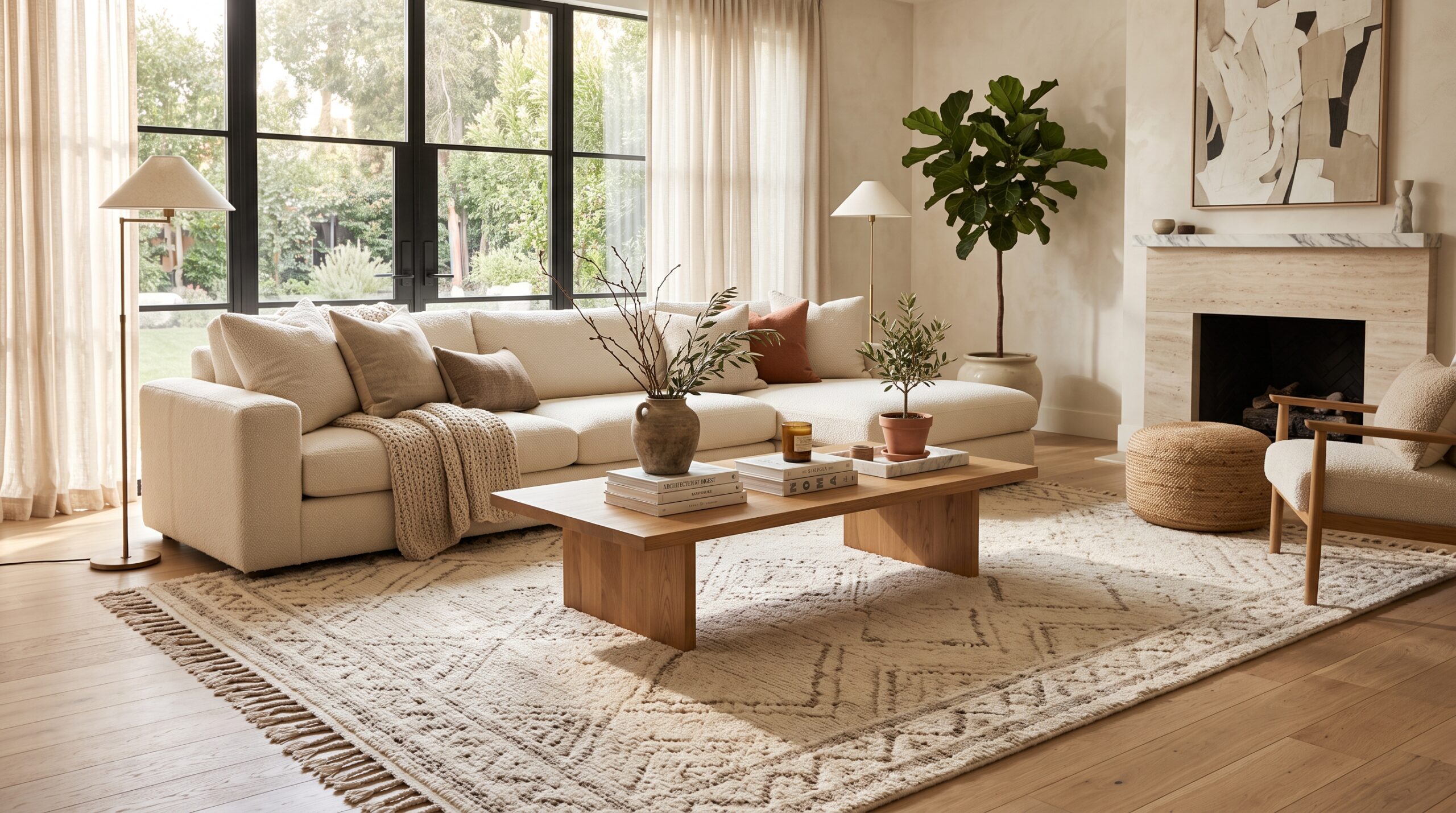
If you’re starting from scratch or redecorating a room where you’re not entirely sure of the final direction yet, a neutral textured rug is the smartest first move you can make. Beige, cream, oatmeal, warm white — these tones don’t fight with anything. They let your sofa, your art, and your accessories do the talking.
What I love about textured neutrals specifically (think ribbed weaves, boucle-style loops, or subtle geometric relief) is that they read as interesting up close without drawing attention at a distance. The room stays calm and cohesive. It’s the difference between a rug that competes and a rug that completes.
One honest limitation: lighter neutrals do show footprints and pet hair more readily than darker tones. If you have a dog or young kids, you’ll want to factor in a regular vacuum routine — or consider one of the washable options I mention below.
For a well-reviewed option in this category, I’ve been recommending the Neutral Textured Rug to friends who want that elevated, put-together look without committing to a bold pattern. It layers beautifully under warm-toned furniture and holds its texture well over time.
2. Sizing Up for Open-Plan and Larger Living Spaces
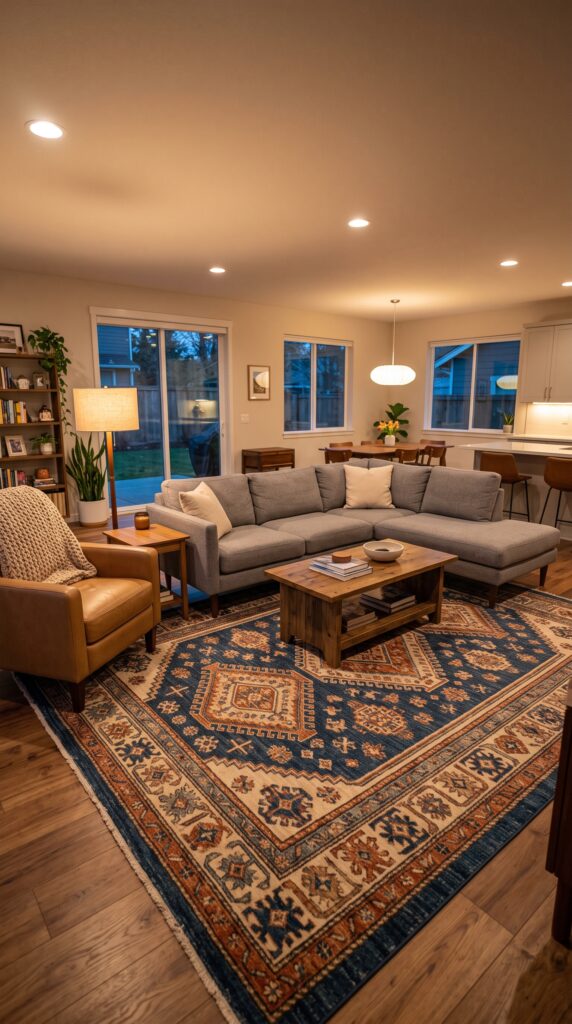
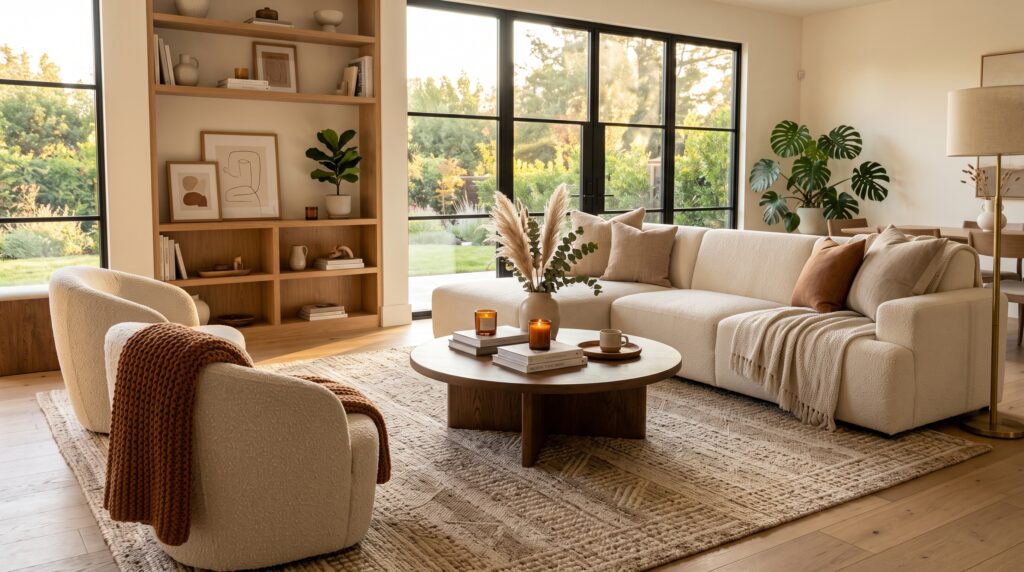
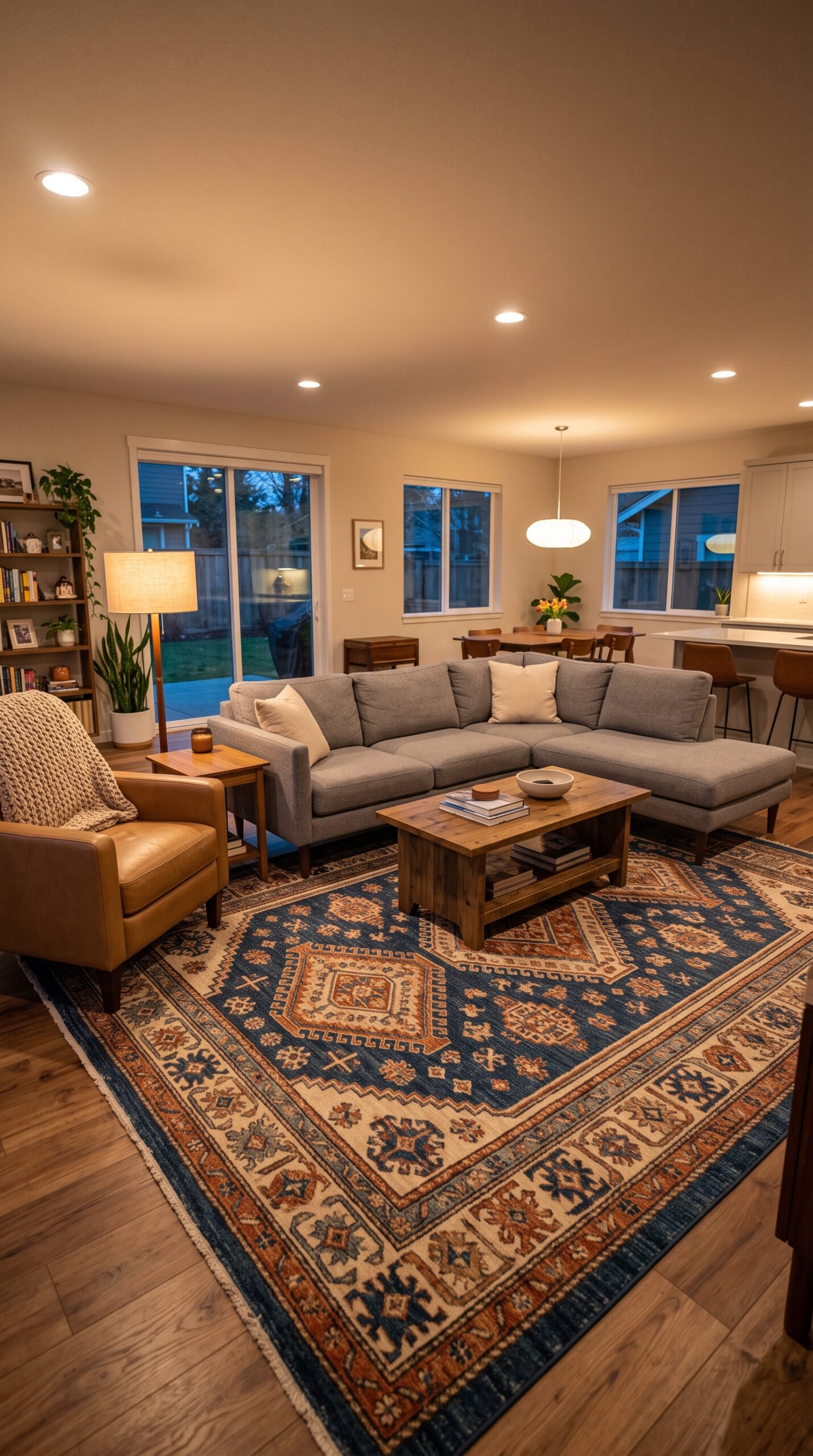
Open-plan living spaces are tricky. Without walls to define where the living area ends and the dining area begins, it’s easy for the room to feel like one long, undifferentiated stretch. A large area rug solves this by creating a visual boundary — a room within a room.
This is one of those principles that sounds obvious but is hard to appreciate until you see it in person. I once moved into a rental with a huge open layout that felt cavernous no matter what I did with furniture. The moment I put down a proper large-format rug and pulled the sofa and armchairs onto it, the space clicked. It finally felt like a living room instead of a showroom floor.
For sizing an open-plan space, you want the rug to extend at least 18 inches beyond the edge of your coffee table on all sides. That ensures the seating group sits fully within the rug’s zone and the boundary reads clearly from across the room.
The Large Area Rug is a great option here — it comes in sizes large enough to anchor a sectional, and the construction is dense enough to lay flat without a rug pad fighting it.
3. Plush Shag Rug — For the Living Room That Wants to Feel Like a Hug
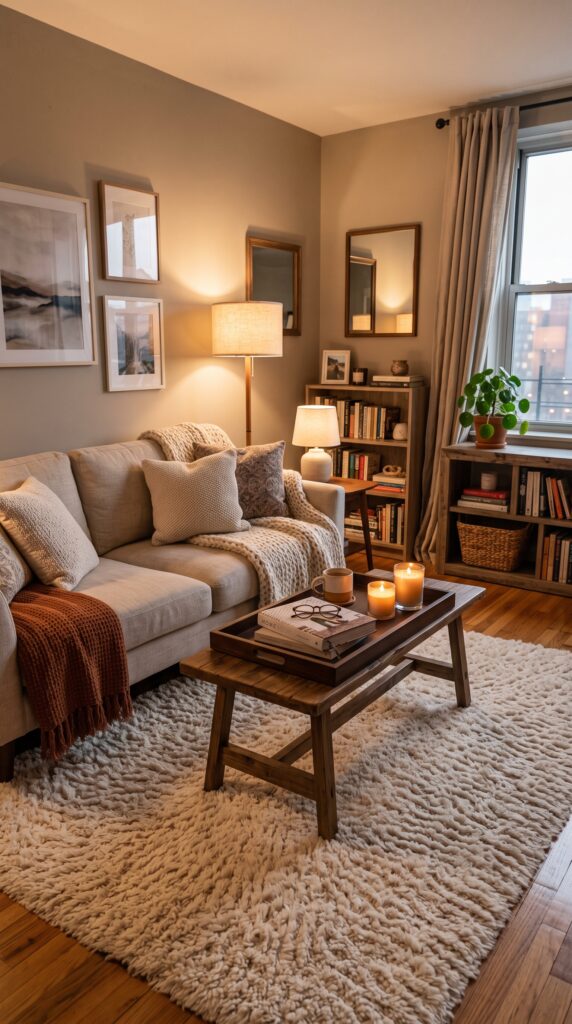
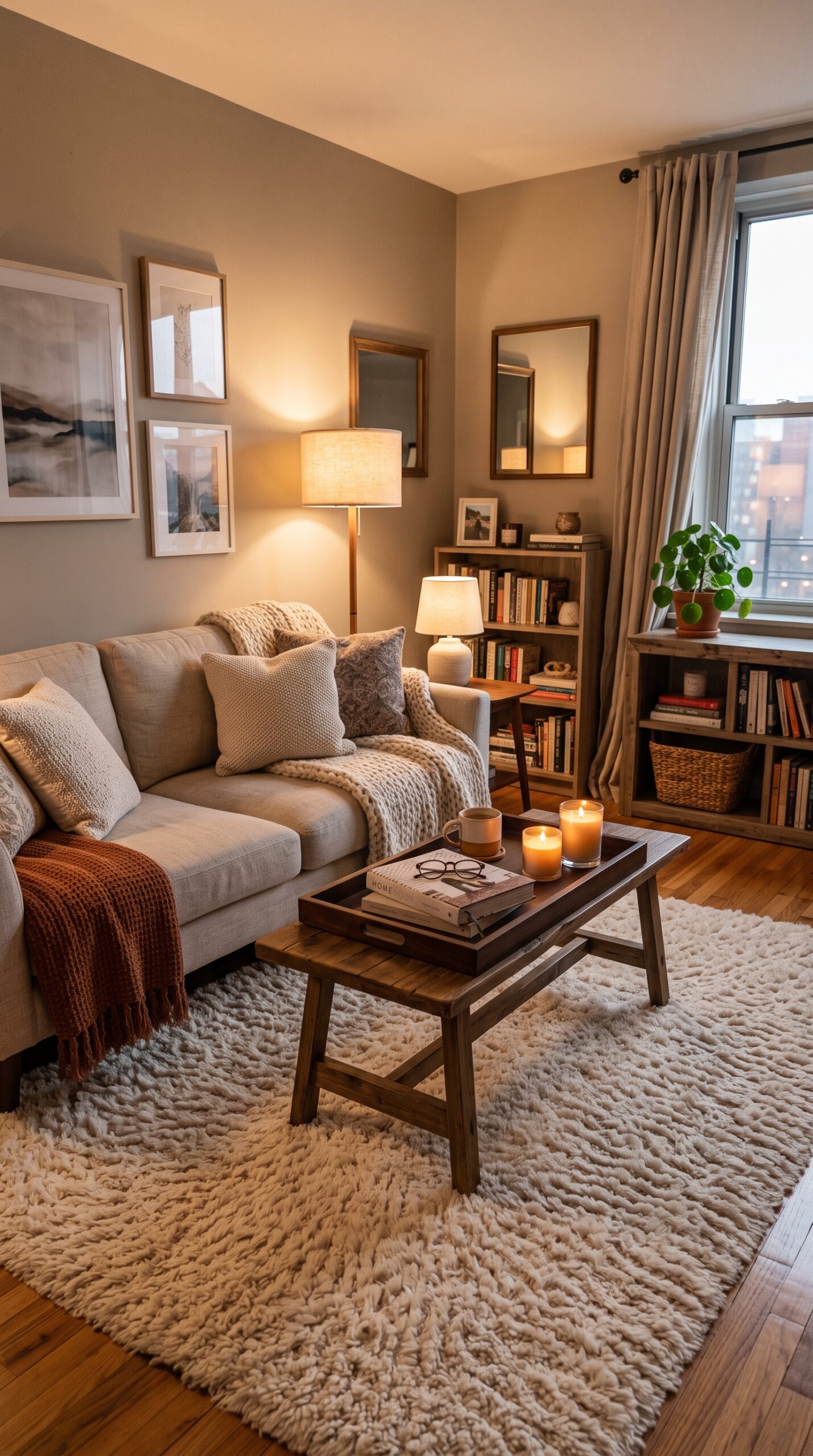
If the goal is pure, unapologetic coziness, nothing competes with a plush shag rug. The pile height — that thick, cushiony depth — changes the entire feeling of a room. Suddenly your living room floor becomes somewhere you actually want to sit.
I’ll be direct: shag rugs aren’t the most practical choice for high-traffic areas or homes with a lot of food and drinks happening on the floor. The long fibers trap crumbs and debris more than a low-pile rug would. But for a dedicated living room where you’re mostly lounging, reading, or watching films in the evening, they’re genuinely wonderful.
In smaller apartments especially, a shag rug has an almost acoustic effect — it absorbs sound and makes the space feel quieter and more private. That matters more than people realize when you’re living in a building with thin walls.
The Plush Shag Rug is the one I’d point anyone toward who wants that sink-your-toes-in softness. The pile is consistent across the whole surface and it doesn’t shed excessively, which is a common complaint with cheaper shag options.
According to The Spruce’s guide to rug pile heights, high-pile rugs above 1 inch work best in low-traffic zones — which is exactly the use case here.
4. Washable Rugs — The Practical Choice That Doesn’t Sacrifice Style
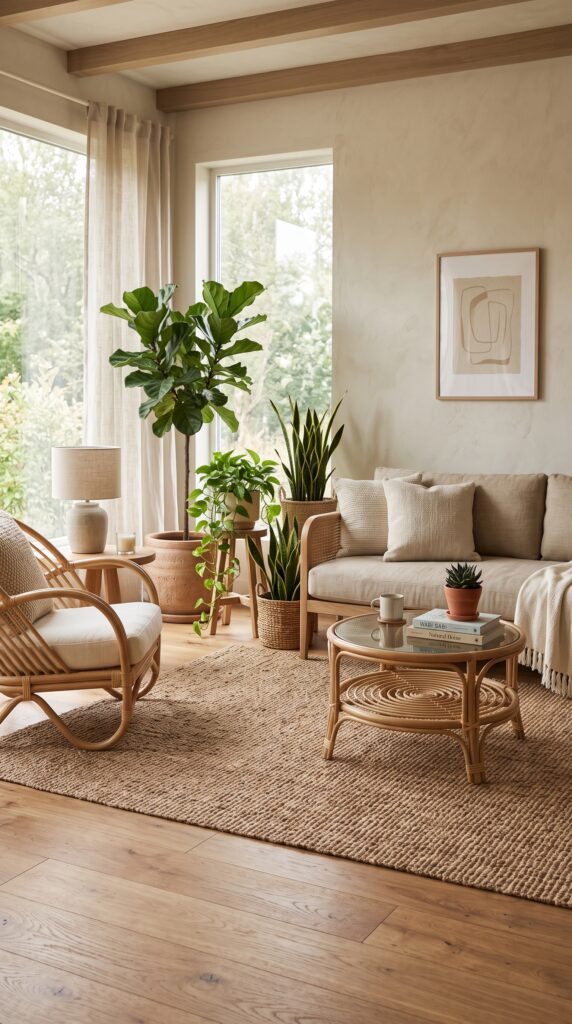
For a long time, washable rugs had a reputation for looking cheap. That’s no longer true. The category has improved dramatically, and you can now find washable options that look genuinely stylish — not like something from a discount bin.
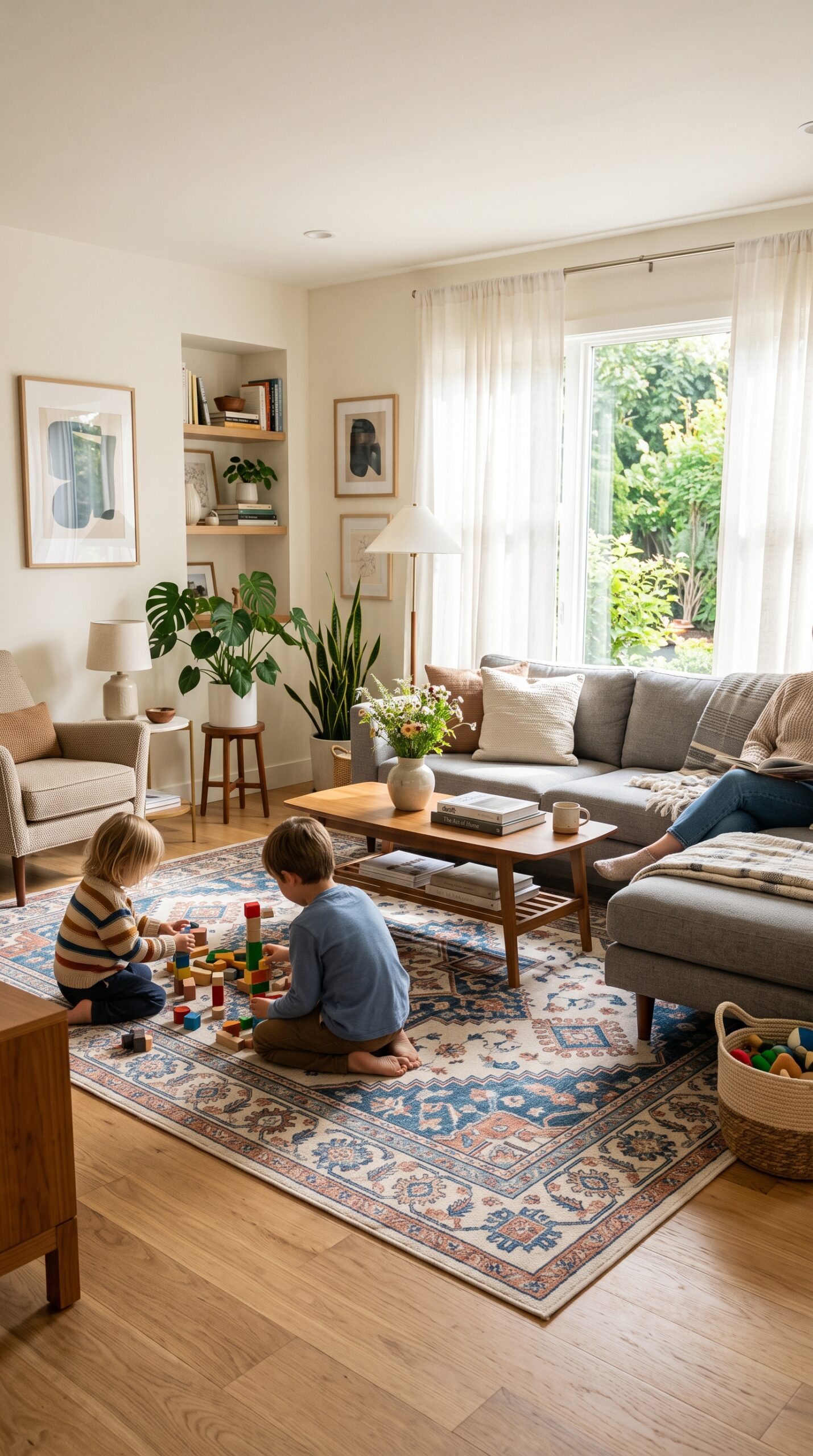
If you have kids, pets, or simply live the kind of life where spills happen (which is most of us), a washable rug isn’t a compromise. It’s a smart decision. Being able to throw your rug in the washing machine and have it come out fresh is a quality-of-life upgrade that I genuinely didn’t appreciate until I owned one.
The practical reality of a non-washable rug in a busy home is that it gradually accumulates pet dander, dust, the occasional coffee splash, and general life residue. You can spot-clean, but over time the rug ages faster than it should. A washable rug sidesteps all of that.
The Washable Area Rug is a standout pick — it holds its shape and color after machine washing, lies flat without curling edges, and comes in patterns that look intentional rather than default.
5. Jute and Natural Fiber Rugs — Warmth Without Visual Weight
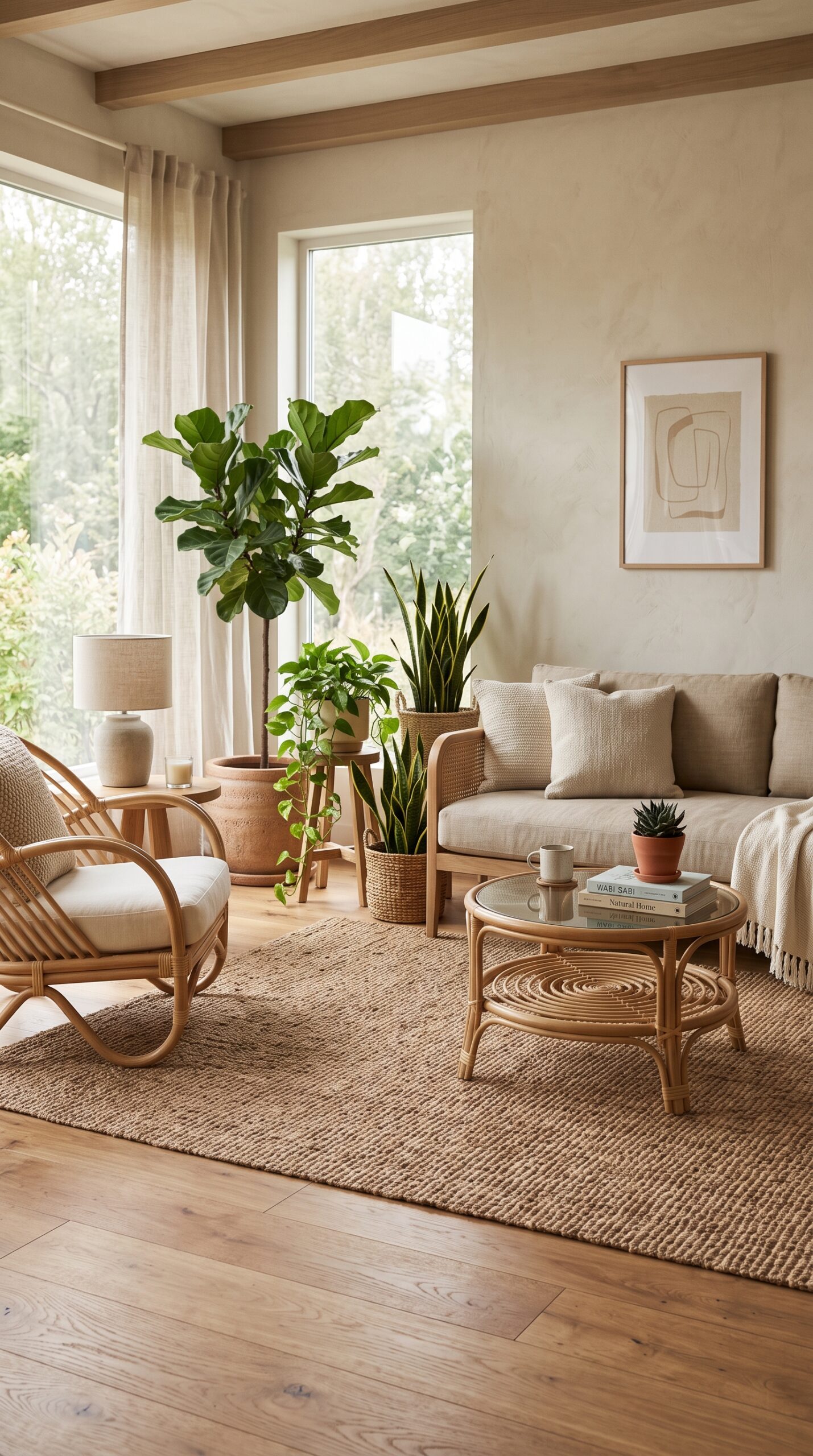
Jute rugs occupy a specific and useful design niche. They add warmth and organic texture to a space without adding visual weight. Where a patterned rug makes a statement, a jute rug whispers. It says: this room is grounded, natural, and considered.
They work particularly well in coastal, Scandi, or organic-modern interiors — anywhere you’re layering natural materials like wood, linen, rattan, or stone. In those contexts, jute feels completely at home. It also pairs well under a sheepskin or smaller accent rug if you want to build a layered look.
The one honest caveat with natural fiber rugs: they’re not ideal for damp environments and they can feel slightly rough underfoot compared to synthetic or wool options. If you like to sit on the floor, you may want to layer a softer throw on top. But as a base layer that anchors furniture and adds texture? They’re excellent.
The Jute Natural Fiber Rug is a solid option — the weave is tight enough to feel durable without being stiff, and the natural color variation in the fibers gives it an artisan quality that cheaper jute rugs don’t have.
How to Choose the Right Rug for Your Specific Room
Beyond the specific styles above, there are a few universal principles worth keeping in mind as you shop.
Prioritize size before style. A beautiful rug that’s too small will make your room look worse, not better. Measure your seating area first, then shop for that size specifically.
Consider your existing colors before adding pattern. If your sofa, curtains, or walls already have a lot going on, a solid or subtly textured rug will add cohesion. If your room is very neutral, a rug with pattern or color can bring it to life.
Think about how the room actually gets used. A formal sitting room that rarely sees foot traffic can handle a delicate or high-maintenance rug. A main living space where people eat, kids play, and pets roam needs something more forgiving.
Layer if you want depth. Placing a smaller, softer rug on top of a larger jute or sisal base is a designer trick that adds dimension without the cost of one large statement rug. It also lets you switch out the top layer seasonally without replacing the whole foundation.
cozy living room decor ideas on a budget
Final Thoughts on Building a Cozy Living Room From the Floor Up
The rug is always where I tell people to start when they’re trying to transform a living room — not the sofa, not the paint color, not the accessories. Get the foundation right and everything else becomes easier to make decisions about.
A cozy living room isn’t about spending a lot of money. It’s about choosing materials that feel good, sizing correctly, and picking a style that genuinely suits how you live — not just what looks good in someone else’s photo. Take your time with this decision, and it will pay off every single day you walk through that door.