You rearranged the furniture twice, picked up a new throw pillow from the clearance bin, and somehow the room still feels like a hotel suite that nobody quite moved into. Nothing is technically broken about it — the furniture fits, the walls are not bare — but it does not feel like yours. That gap between ‘fine’ and ‘cozy and intentional’ is one of the most frustrating places to be in when you are looking for small apartment aesthetic ideas that work in a real, lived-in home.
These small apartment aesthetic ideas work because they start with how you actually live in the room, not with a shopping list. Below are nine ideas you can use in a studio or one-bedroom apartment, with the measurements, materials, and mistakes to avoid for each one.
In this guide
- Why Most Small Apartment Aesthetic Ideas Fall Short
- 1. Layer Your Lighting Before Anything Else
- 2. Use Texture to Do the Work Color Can’t
- 3. Create Intentional Groupings, Not Just Collections
- 4. Add a Focal Wall Without Committing to Paint
- 5. Keep the Floor Clear with Smarter Storage
- 6. Embrace Warm Neutrals Over Pure White
- 7. Use Mirrors and Height to Open Up the Room
- 8. Define Zones So One Room Does Three Jobs
- 9. Curate, Edit, and Rotate What You Display
- Pulling It All Together
- Frequently Asked Questions
Why Most Small Apartment Aesthetic Ideas Fall Short
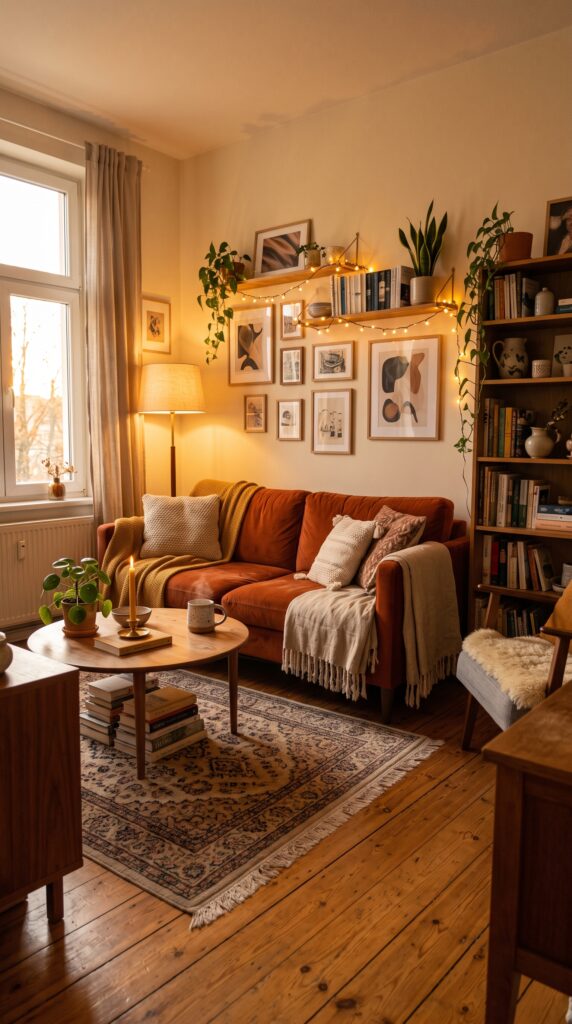
The advice you will find on most decorating sites boils down to ‘use mirrors to make it feel bigger’ and ‘add some plants.’ Neither is wrong, but neither is a plan. A mirror hung at the wrong height just doubles the clutter, and a plant on a crowded shelf is one more thing to dust. Good advice tells you where to put the mirror, how high to hang it, and what to put next to it.
The real issue is that most guides are optimizing for the photograph, not for the feeling of being in the room. They show you a styled corner, not a system you can use when you get home with a bag of things you actually need to store. What follows is different: nine small apartment aesthetic ideas, each one with a clear place to start, a measurement or material to choose, and a mistake to avoid. Start with one idea, live with it for a week, and add the next only if the first one is working.
1. Layer Your Lighting Before Anything Else
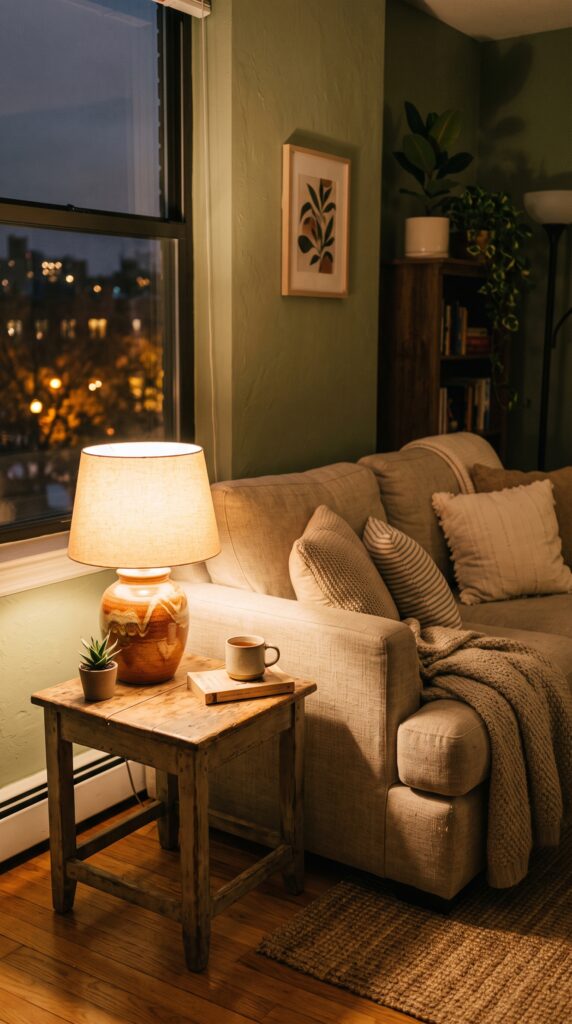
The single biggest reason small apartments feel cold or clinical has nothing to do with square footage — it’s the lighting. Most rental apartments come with one overhead fixture per room, and that lone ceiling light creates what you might call the “waiting room effect.” It floods the space with flat, even light that’s perfectly functional and completely charmless.
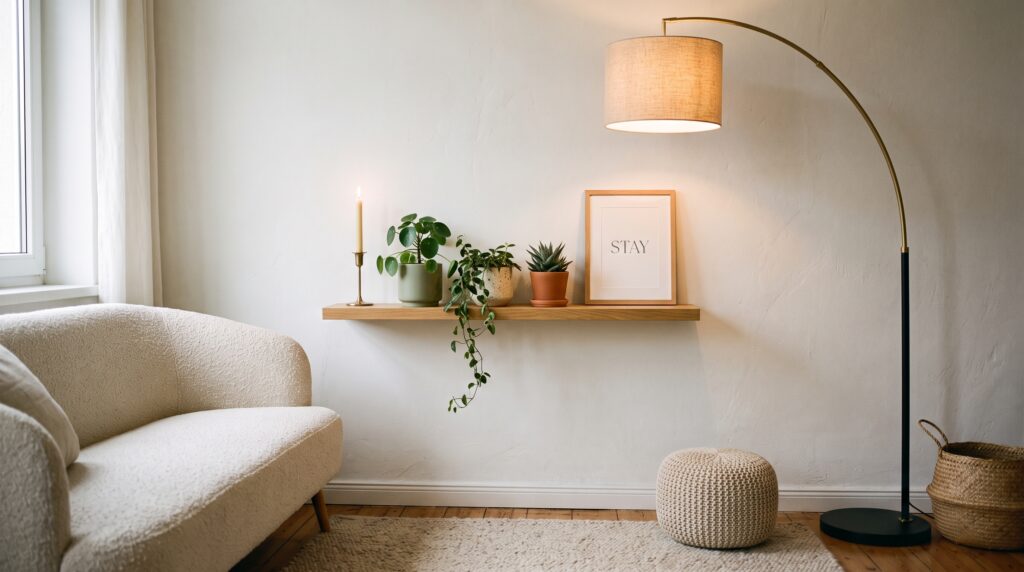
The fix is layering: one source at eye level when standing (a floor lamp), one at eye level when seated (a table lamp), and one low and warm (a candle or a small accent light). Together, they create pools of light that define different areas of a room. Choose warm white bulbs, around 2700K to 3000K, for living areas — that is the range the Lumens guide to color temperature describes for living rooms — and save cooler, daylight bulbs for a desk or a closet where you need to see detail.
The most common mistake is buying the lamp but keeping the overhead light blazing at full brightness. In a rental, you can use a plug-in dimmer switch that fits over the existing light switch without rewiring, or simply leave the overhead off most evenings and let the layered lamps carry the room.
A table lamp with a warm-toned ceramic base and a fabric shade does double duty here — it contributes to the look and provides the most practical kind of light, the kind you actually use in the evening. The way the light falls through a woven linen shade is particularly beautiful in small spaces, where every detail gets noticed. Choose a shade that is wider than the lamp base by a few inches so the proportions look settled, not top-heavy.
If you want flexibility without running cords across the floor, a cordless option is worth considering. A battery-powered lamp can be repositioned easily, which means it works on a side table during the day and on a desk or vanity in the evening. The trade-off is that it will need charging, so think about whether you will actually remember to plug it in before you buy. For a small apartment, the freedom to move it around is often worth the extra step. For bedroom-specific layered lighting, see Bedroom Lighting Ideas Under $40.
2. Use Texture to Do the Work Color Can’t
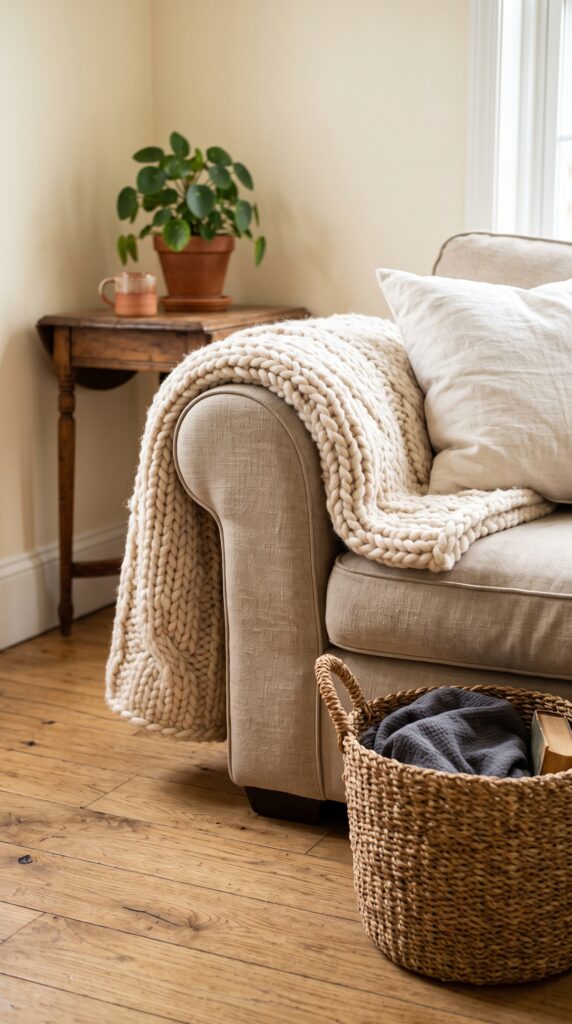
Color gets all the credit in decorating conversations, but texture is what actually creates the physical feeling of a room. It is the difference between a space that looks good in a photo and one that feels good to sit in. A room with smooth, rough, soft, and structured surfaces layered together feels rich and intentional, even if the color palette is simple. That is why texture is one of the most reliable small apartment aesthetic ideas for a rental: you can change it without painting or drilling.
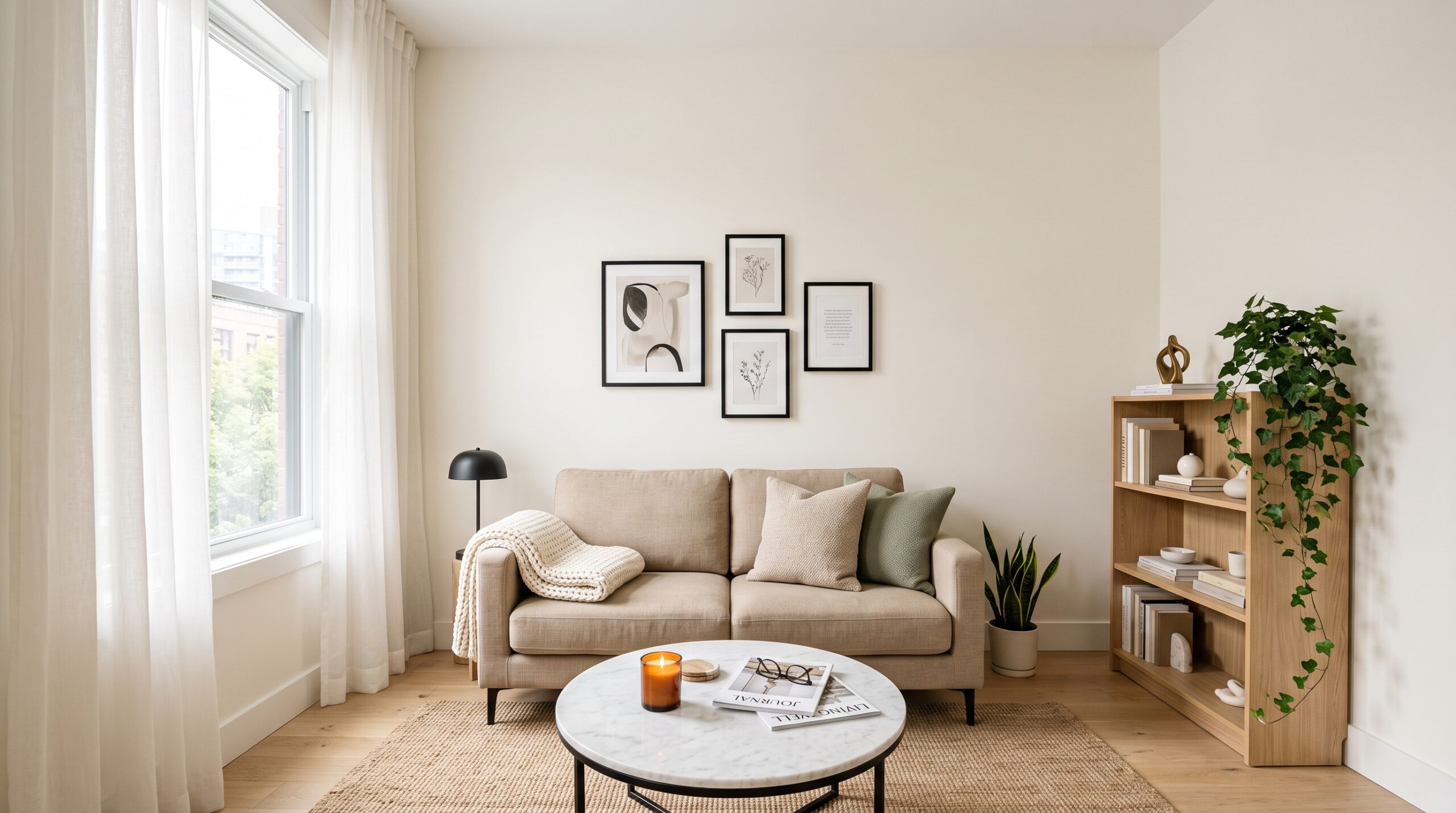
The easiest way to add texture in a small space is through fabric. A chunky knit throw draped over the arm of a sofa, a velvet cushion on a chair, or a woven basket on the floor — these are all ways to introduce texture without committing to a major change. Aim for three to five different textures in one room — knit, wood, linen, metal, ceramic — and repeat at least one of them in two places so the room feels connected, not random.
Beyond fabric, think about natural materials: wood, rattan, seagrass, and ceramic all introduce organic texture that makes a room feel lived-in rather than staged. Avoid glossy plastic and shiny faux leather in a small room: they reflect the overhead light and make the space feel harder. Matte, natural finishes absorb light and read as warmer.
3. Create Intentional Groupings, Not Just Collections
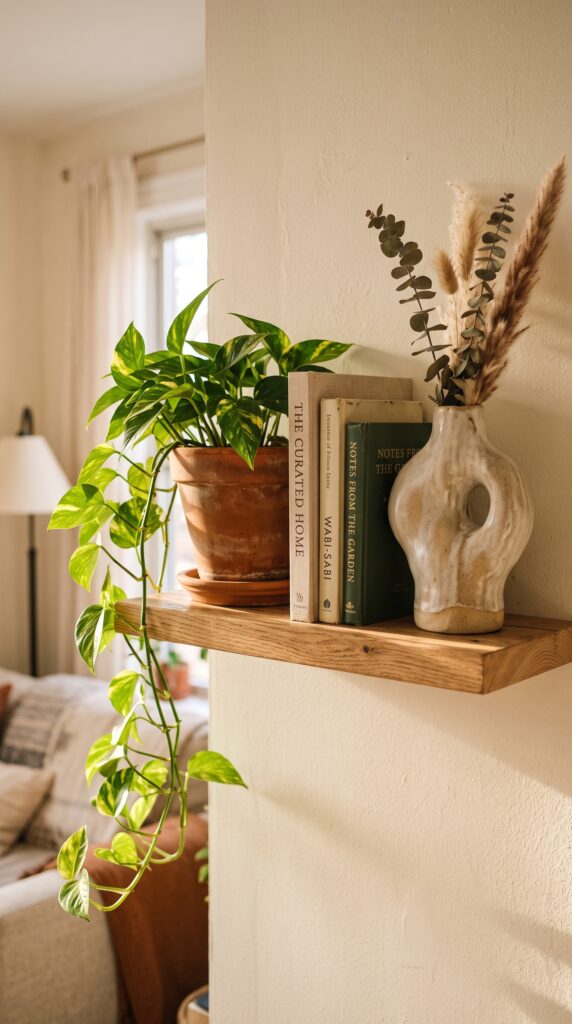
A cluttered surface and a curated vignette can contain the exact same number of objects — the difference is intention. A vignette is a small, deliberate arrangement of objects that tells a story or creates a focal point. Start with a tray, a board, or a stack of books as a base — anything that gives the group a clear edge. Then add three or five objects, not two or four: odd numbers look intentional, even numbers look like a pair that lost its match. Leave at least a few inches of empty space around the group so it reads as one vignette, not as clutter that happens to be near each other.
Small sculptural objects work especially well in tight spaces because they add visual interest without taking up much space. A ceramic vase, a stone paperweight, or a small abstract sculpture can anchor a shelf or side table. The key is choosing objects with different heights — a tall vase next to a low bowl creates a sense of movement, while objects that are all the same height can feel flat and monotonous. Vary the height by at least 3 to 4 inches between the tallest and shortest piece.
For a room-by-room example, see this small apartment bedroom transformation, which shows how the same grouping idea works on a bedside table and a dresser.
4. Add a Focal Wall Without Committing to Paint
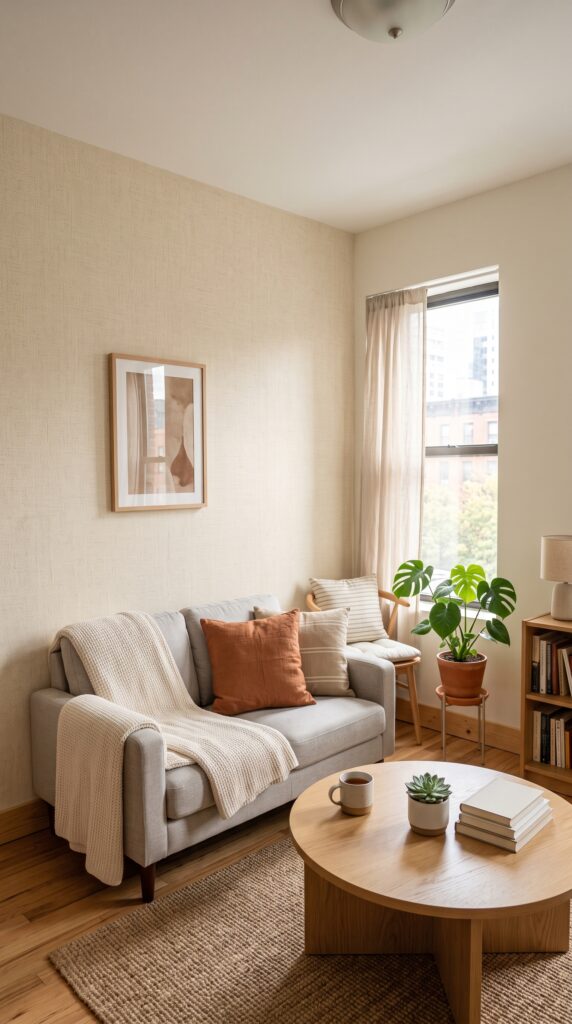
One of the fastest ways to make a small apartment feel designed rather than defaulted into is to give one wall a job. A focal wall works because it gives your eye somewhere to land. Without one, every wall competes, and the room feels busy even when it is tidy. A focal wall is one of the simplest small apartment aesthetic ideas to try in a rental, because it changes one wall, not the whole room.
Peel-and-stick wallpaper with a linen or textile texture adds depth to a flat wall without the visual weight of a bold pattern. It is also renter-friendly — you can remove it when you move out without damaging the wall underneath. Measure the wall first: most peel-and-stick rolls cover about 28 square feet, so a 10-by-8-foot wall needs about three rolls, plus one extra for pattern matching and mistakes. Start at the center, not a corner, so the pattern stays symmetrical, and use a plastic smoother or an old credit card to push out air bubbles as you go. If you are not sure about committing to a full wall, start with a smaller section, like the wall behind your bed or desk.
The key is restraint: one wall, not all four. Let the texture do its work without overwhelming a small space. A single accent wall in a warm, textured finish can completely change the feeling of a room — it draws the eye in and creates a sense of depth that makes the space feel larger than it is.
5. Keep the Floor Clear with Smarter Storage
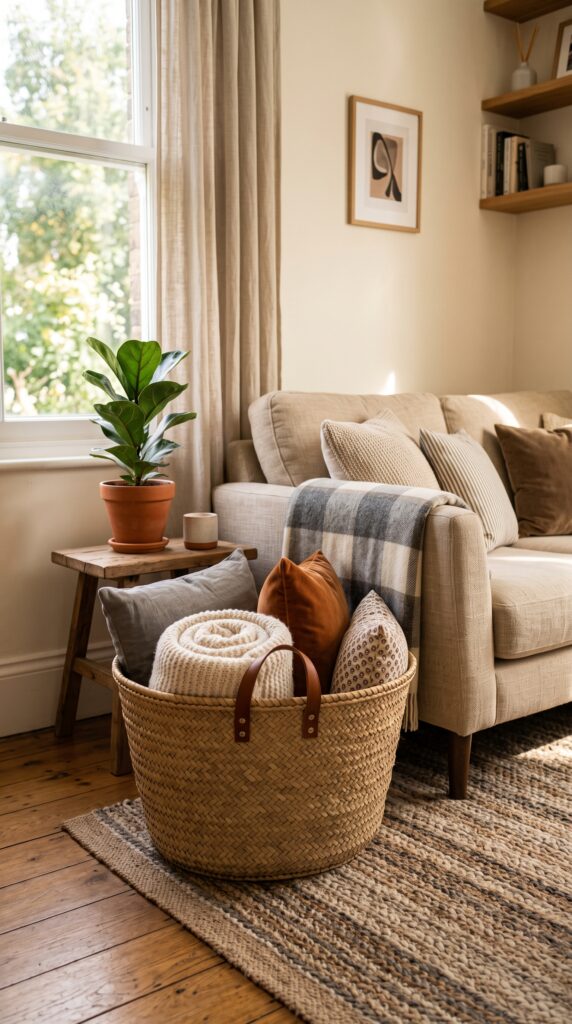
Visual clutter on the floor is one of the quickest ways to make a small apartment feel cramped and chaotic. The solution isn’t to own less — it’s to store things in a way that looks intentional rather than just managed.
Floor baskets are one of the most practical tools in a small apartment because they hide the messy reality of everyday life while still looking intentional. A large woven seagrass floor basket can hold extra blankets, magazines, or even shoes — things that would otherwise end up scattered across the floor. Choose a basket about 16 to 20 inches wide for a living room corner, and no taller than the seat of your sofa, so it stays below eye level when you are sitting.
Think of every storage piece as doing two jobs: a storage ottoman holds blankets and gives you a footrest; a bench with a lift-up seat holds shoes and gives you a place to sit while you put them on. Before you buy storage, measure the gap it has to fill — a basket that is an inch too wide for the space under a console table is a basket you will trip over. Write the width, depth, and height of the space on your phone before you shop, and buy to the measurement, not to the look.
6. Embrace Warm Neutrals Over Pure White
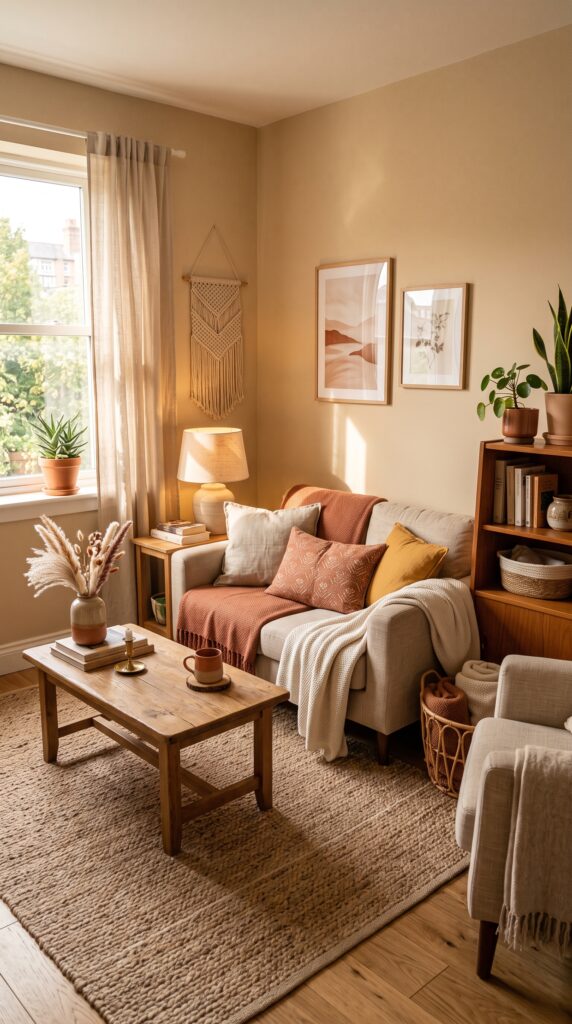
Pure white sounds like the safe, bright choice for a small apartment — but in practice, it tends to make small spaces feel stark and unfinished. The walls look cold, the furniture looks disconnected, and the room never quite feels like a home. Warm neutrals, on the other hand, create a sense of depth and coziness without sacrificing light. Think of a warm white, a soft cream, a pale greige, or a gentle taupe — colors that have a hint of yellow or pink in them rather than blue. Warm neutrals are a core part of small apartment aesthetic ideas because they add depth without making the room dark.
This does not require repainting. You can shift the overall temperature of a room through textiles, wood tones, and warm metals. A cream throw, a wooden tray, and a brass lamp can warm up a room without a single drop of paint. Warm hues make a room feel smaller but more intimate, which is exactly what you want in a small apartment. The goal is not to make the room feel bigger, it is to make it feel like a place you actually want to spend time in.
7. Use Mirrors and Height to Open Up the Room
Hang one large mirror, at least 24 by 36 inches, opposite a window, with its center about 57 inches from the floor — roughly eye level. It will bounce daylight across the room and make the wall behind you feel farther away. One large mirror works better than several small ones, which read as clutter. Hang curtains the same way: mount the rod 4 to 6 inches above the window frame and let the panels fall to the floor, with the total width about one and a half to two times the window width, so the window looks wider when the curtains are open.
Use the wall height you already have, too. A tall, narrow shelf — about 72 inches high and 12 inches deep — gives you storage without taking floor space, and it draws the eye up, which makes the ceiling feel higher. Keep everyday items at waist height and use the top shelf for display only. The mistake to avoid is hanging a mirror opposite clutter: it doubles the mess. Place it opposite a window, a plant, or a piece of art instead. The small living room ideas from Architectural Digest show the same mirror and curtain tricks in real rooms.
8. Define Zones So One Room Does Three Jobs
In a studio or an open-plan apartment, one room often has to be a living room, an office, and a dining room at once. Define each zone with a rug: the rug should be large enough that the front legs of the sofa and chairs sit on it — an 8-by-10-foot rug for a main seating area, or a 5-by-7-foot rug for a small corner. If a rug is too small, the furniture looks like it is floating. A low, open bookshelf can work as a divider, too, as long as you leave a walkway 30 to 36 inches wide. That is why defining zones is one of the most practical small apartment aesthetic ideas for a studio.
Give each zone one main activity, and repeat one color or texture across all of them so the room still feels like one home, not three rooms pushed together. Keep the desk near a window if you can, and keep the sleeping area the darkest, quietest corner. These small apartment aesthetic ideas work best when each zone has a clear job — and when you can see, at a glance, where one zone ends and the next begins.
9. Curate, Edit, and Rotate What You Display
The most personal small apartment aesthetic ideas are also the cheapest, because editing costs nothing. Choose three to five pieces that mean something to you — a photo, a souvenir, something you made — and give each one a clear place. Store the rest, and rotate your display every few months, so the room changes without you buying anything new. A shelf that is about 70 percent full reads calmer than one packed to the edge, because the empty space is part of the design.
The mistake is displaying everything at once, in case you might want it later. If you have not used or loved a piece in a year, store it or let it go. Try the one-in, one-out rule: every time something new comes in, something old goes out. That is how a small apartment stays intentional, instead of slowly filling up again. This last of the nine small apartment aesthetic ideas is the one that keeps the other eight working.
Pulling It All Together
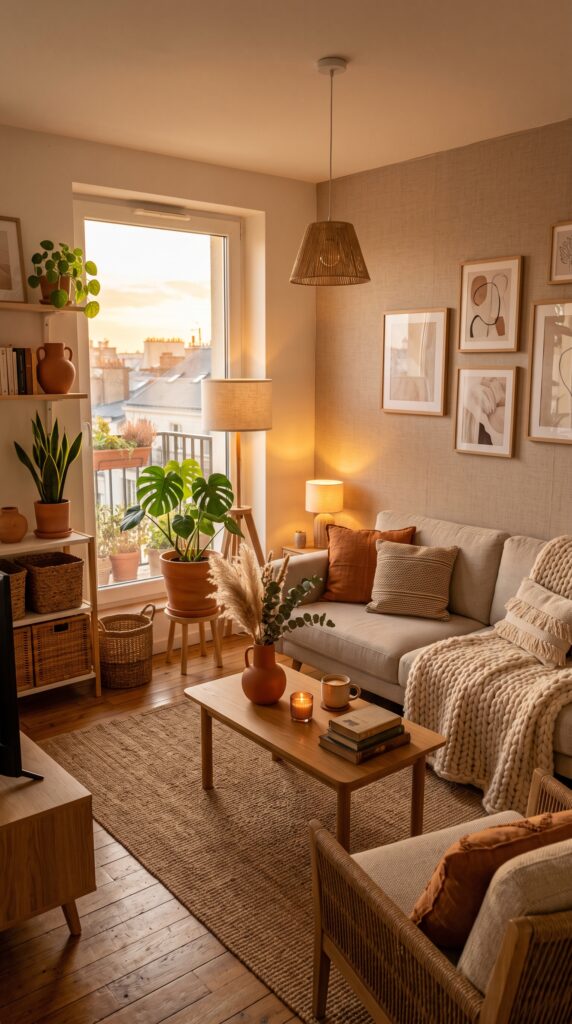
A cozy, intentional small apartment aesthetic is not about spending more or owning more. It is about using what you have with more care and intention. Every piece in your home should have a reason for being there — not just because it fills a space, but because it contributes to the feeling you want to create when you walk through the door. That is the test for every one of these small apartment aesthetic ideas: if a piece does not earn its place, it goes.
Start with the lighting. Of all the small apartment aesthetic ideas in this guide, that single change will do more for the feel of your apartment than any piece of furniture you could buy. Then, choose one texture to add — a throw, a cushion, a woven basket. From there, build slowly, adding one idea at a time until the room feels like you. You do not need to do everything at once. In fact, it is better if you do not — the best small apartments evolve over time, as you learn what works for you and what doesn’t.
The result is not a room that looks good in photos — it is a room that makes you feel something when you walk into it. A room where you can relax after a long day, where you can have a friend over for coffee without apologizing for the mess, where you can actually live. That is what a small apartment aesthetic should be: not a style to copy, but a feeling to create. If the living room is where you want to start, these apartment living room decor ideas build on the same principles.
Frequently Asked Questions
How can I make a small apartment feel cozy without buying a lot of new furniture?
Start with lighting and texture, which cost the least and change the feel the most. Turn off the overhead light in the evening, use two or three warm lamps instead, and add one soft throw and one cushion in a warm neutral. Rearrange what you already own into odd-numbered groupings of three or five, and remove one thing from every surface before you add anything new.
What color makes a small apartment feel cozy?
Warm neutrals — a warm white, soft cream, pale greige, or gentle taupe with a hint of yellow or pink, rather than blue. Pure white can read as stark in a small room, while warm neutrals add depth without making the room dark. You can add that warmth through textiles, wood tones, and warm metals, without repainting.
How do I make a small apartment look intentional, not cluttered?
Give every group a clear edge — a tray, a board, or a stack of books — use three or five objects, not two or four, and leave empty space around each group. Keep the floor clear, store everyday items in baskets or a storage ottoman, and let one wall or one vignette be the focal point, not every surface at once. That is how small apartment aesthetic ideas stay intentional, instead of turning into clutter.
Can I use peel-and-stick wallpaper in a rental?
Yes, in most rentals, because it is designed to be removed without damaging the wall underneath. Measure first — most rolls cover about 28 square feet — start at the center of the wall, not a corner, and keep to one accent wall. Check your lease first, and test a small piece in a hidden spot if you are unsure.
What is the best lighting for a small apartment?
Layer three sources: one at standing eye level, one at seated eye level, and one low and warm. Use warm white bulbs around 2700K to 3000K in living areas, and keep the overhead light off or dimmed in the evening. That layered light is what makes small apartment aesthetic ideas feel cozy, rather than just bright.