

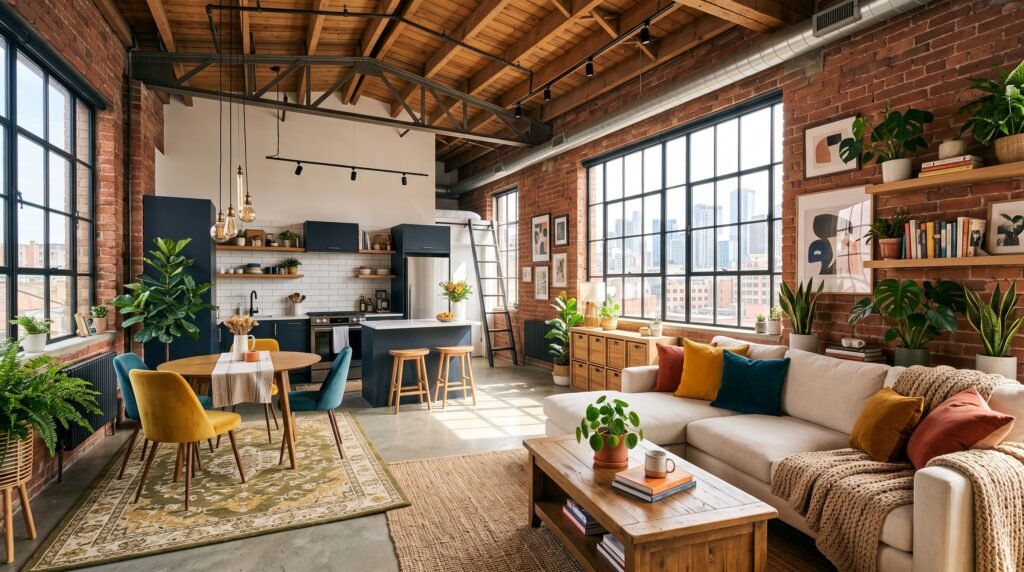
If you’ve just signed a lease on a loft apartment — or you’re seriously thinking about it — you’re probably equal parts excited and overwhelmed. That mix of exposed brick, soaring ceilings, and open floor plans looks incredible in photos. Living in one is a different story.
This guide covers everything you actually need to know before you move in, get settled, and start making the space feel like home.
📋 Table of Contents
What Exactly Is a Loft Apartment?
A loft apartment is, at its core, a large open-plan living space — typically converted from an industrial or commercial building. Think old warehouses, factories, printing houses, mill buildings. The defining features are high ceilings (often 10 to 16 feet), large windows, exposed structural elements like beams and ductwork, and very few interior walls.
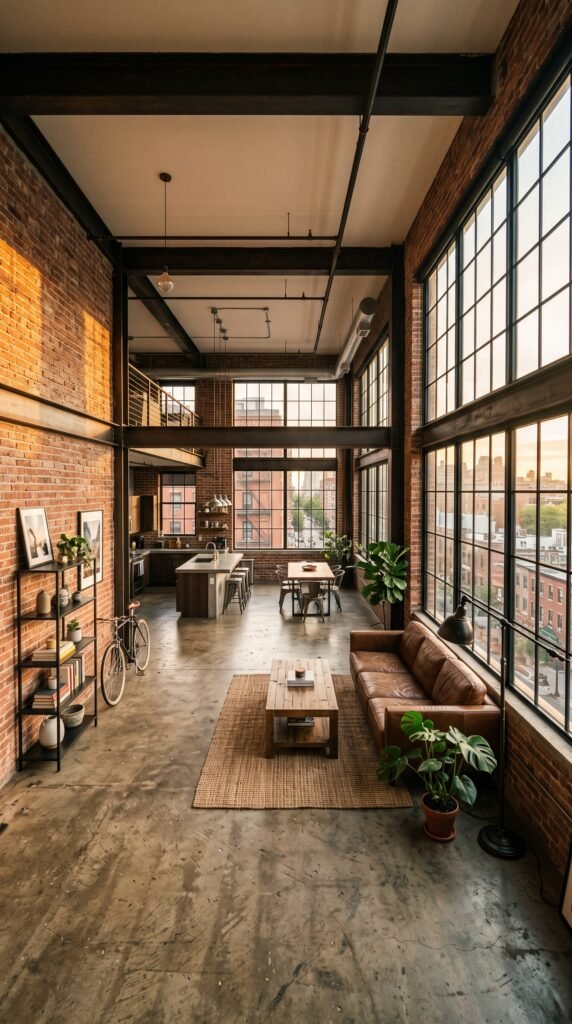
There are two main types worth knowing about. A hard loft is a genuine conversion from an industrial space — original materials, authentic character, all the quirks that come with it. A soft loft is new construction built to look like the real thing, usually with better insulation and more predictable layouts.
Both have their appeal. But they also have very different challenges.
Here’s the thing — most people who move into a loft for the first time focus entirely on the aesthetic. The concrete floors, the raw ceiling pipes, the character. Then week two hits and they realize they have nowhere to put their clothes, the heating bill is shocking, and their neighbors can hear everything they’re doing.
So let’s actually talk about what it’s like to live in one.
The Honest Pros of Loft Apartment Life
Start with the good stuff, because there genuinely is a lot of it.
Space and light are the big ones. A loft apartment almost always delivers more square footage per dollar than a conventional apartment in the same neighborhood. And those oversized windows? They change how you feel in a space on a level that’s hard to fully explain until you’ve experienced it. Natural light throughout the day does something real for your energy and mood.
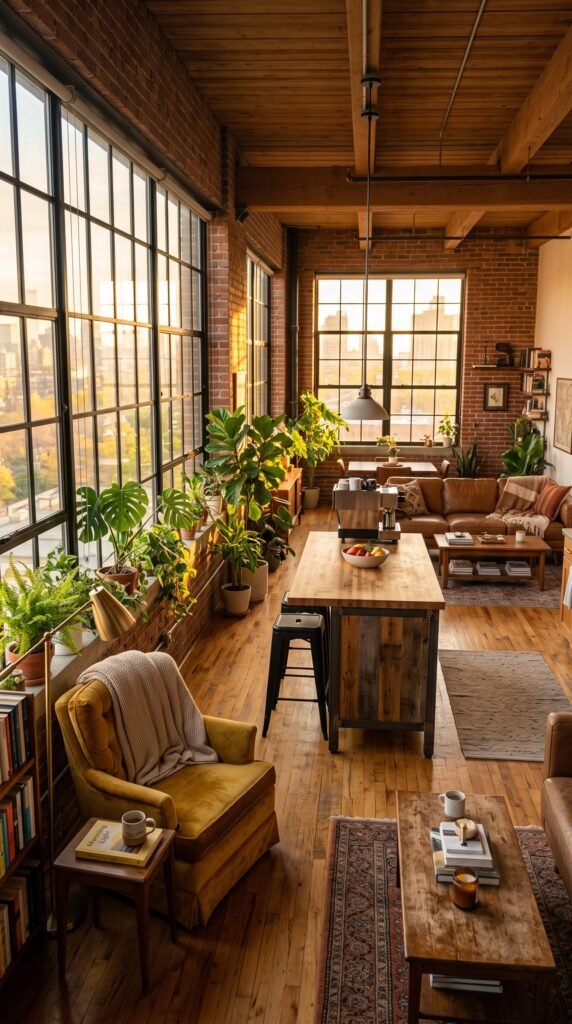
Flexibility. No walls means you get to decide what goes where. Most conventional apartments force a layout on you. A loft apartment hands you a blank canvas. Want your bed facing the windows? Done. Kitchen island that doubles as a workspace? You can pull that off. The open floor plan rewards creative thinking.
Character. Original brick, worn hardwood, concrete, steel — these are materials that take decades to develop personality. New construction can’t fake that. When a loft apartment has genuine original details, it creates a living environment that feels truly singular.
Most people also find that a loft apartment changes how they use space socially. The open plan makes hosting feel natural. Conversations flow between kitchen and living area without anyone getting cut off.
The Real Challenges Nobody Warns You About
Now for the part that gets glossed over in real estate listings.
Temperature control is genuinely hard. Picture this: it’s January, the pipes are rattling, and you’re standing in the middle of 900 square feet of open space that has 14-foot ceilings. Heat rises. In a conventional apartment with lower ceilings, your heating system doesn’t have to work nearly as hard. In a loft apartment, you may find cold pockets near the floor and an almost uncomfortably warm zone near your lofted sleeping area. This isn’t theoretical — it’s one of the most common complaints from first-time loft dwellers.
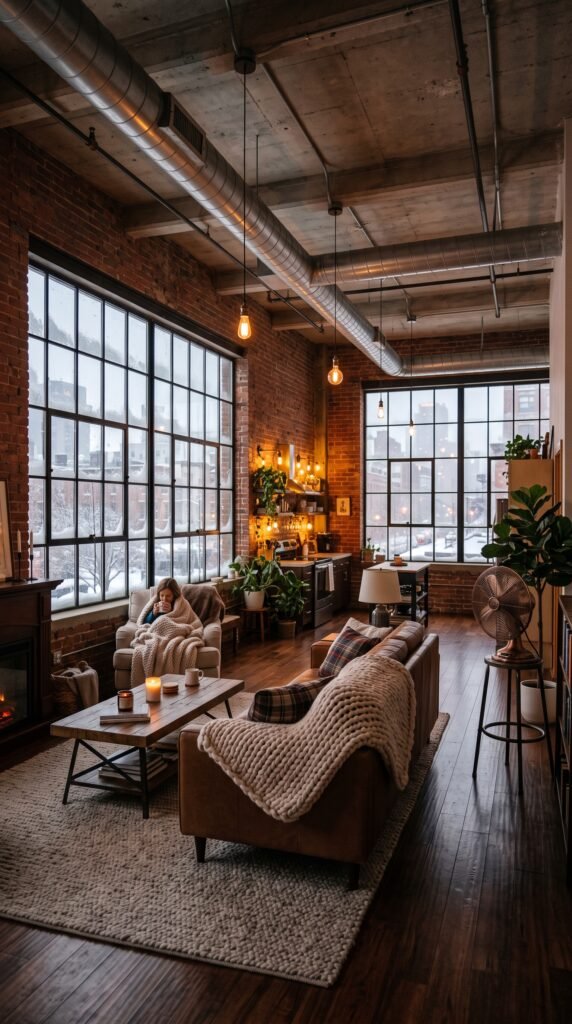
Ceiling fans are not optional in a loft. They’re a tool for pushing that warm air back down. Get one, or two, before your first winter.
Sound is a real issue. Open floor plans and hard surfaces (concrete, brick, hardwood) are a recipe for echo. Every phone call, TV show, argument, and music session bounces. If you live with a partner or a roommate, sound management becomes a daily consideration. Area rugs, upholstered furniture, bookshelves full of books, heavy curtains — these are all doing acoustic work, not just decorative work.
Privacy doesn’t exist by default. In a traditional apartment, rooms give you natural separation. In a loft apartment, you create that separation yourself. If you work from home, or you need a space to decompress alone, you’ll need to think deliberately about how to carve out zones.
Storage is almost always lacking. Industrial buildings weren’t designed with closets in mind. You’ll likely have one, maybe two, and they won’t be large. Budget for storage solutions early. This isn’t a nice-to-have — it’s something that will affect your daily quality of life within the first month.
best storage furniture for small spaces
How to Design a Loft Apartment That Actually Works
This is where most beginner guides go vague. Let’s be specific.
Zone your space visually, not physically. Use rugs to define areas. A large area rug under your sofa and coffee table signals “living room.” A different rug under your dining table signals “dining room.” It sounds simple, and it is — but it works. The visual cue creates a psychological sense of separation even with no walls present.
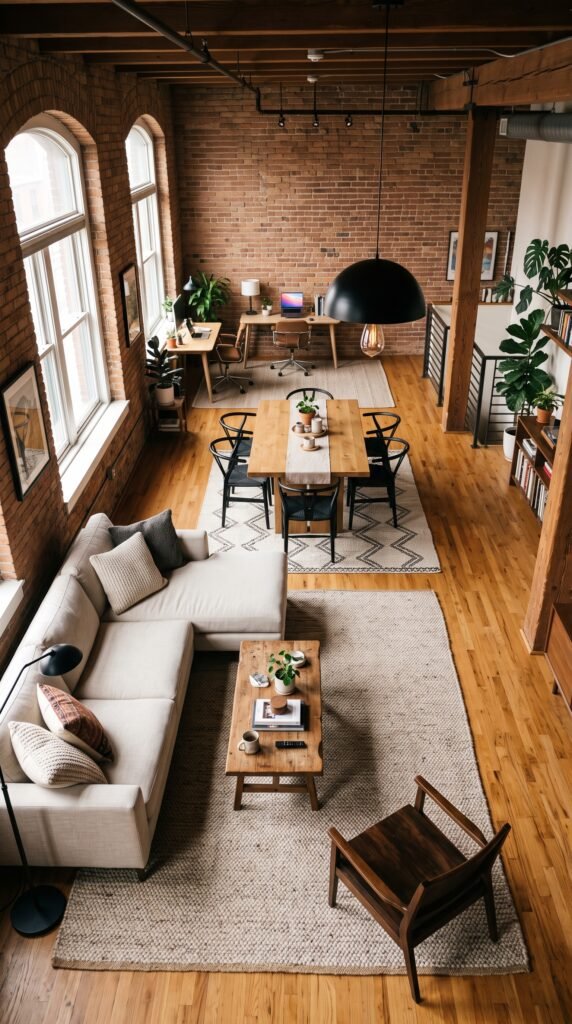
Go vertical. Your walls are tall. Use them. Floor-to-ceiling bookshelves, tall wardrobe units, wall-mounted storage — all of this takes advantage of the vertical space that a loft apartment offers and keeps your floor clear. Open floor plans feel cramped fast when too much stuff is sitting at ground level.
Lighting layers matter more than anywhere else. In a conventional apartment, ceiling fixtures are enough most of the time. In a loft, a single overhead fixture in a 12-foot ceiling is going to leave the bottom half of your space feeling dim and disconnected. Think in three layers: ambient (overhead), task (desk lamps, under-cabinet strips), and accent (floor lamps, wall sconces). Layer them and use dimmers where you can.
Acoustic panels are worth considering. They’ve come a long way design-wise and don’t look clinical anymore. A few well-placed panels on your biggest hard wall can drop the echo noticeably. Alternatively, a large fabric wall hanging accomplishes some of the same effect with more visual personality.
For the sleeping area, think about enclosure. Many loft apartments have a raised loft-style sleeping area, which helps. If yours is open-plan, a canopy bed or a half-wall of bookshelves can create a sense of enclosure that makes sleep feel genuinely restful rather than exposed.
Loft Apartment FAQ
Is a loft apartment good for someone who works from home?
It can be, but you have to design for it. The absence of a dedicated home office room means sound, visual distraction, and the mental blurring of work and rest are all real challenges. That said, a well-placed desk in a defined zone — separated by a bookshelf or a change in flooring material — can create a functional workspace. It takes intention.
Are loft apartments expensive to heat and cool?
Generally, yes. High ceilings and large windows (especially in older industrial conversions) mean more surface area for heat to escape in winter and enter in summer. Before signing a lease, ask about the building’s insulation, window type (single-pane vs. double-pane), and who covers utilities. A loft apartment with low rent and high utility costs can end up being more expensive than a conventional apartment.
Can you get good privacy in a loft apartment?
With some creative design work, yes. Room dividers, curtain systems on ceiling-mounted tracks, tall bookshelves, and strategic furniture placement all contribute to a sense of privacy. It’s not as effortless as having actual walls, but it’s absolutely achievable.
What should you look for when touring a loft apartment?
Check the windows — do they open? Is there visible condensation or drafts around the frames? Look at the floors — original hardwood or concrete will show wear, but also check for uneven surfaces. Ask about the heating system and how old it is. Look up at the ductwork and pipes: are they clean and well-maintained? And listen. Stand in the space for a few minutes. What do you hear from neighbors, street traffic, the building itself?
Is a loft apartment right for a couple?
It can be great, or it can be a test of compatibility. The open floor plan means you’re almost always in the same shared space. If you and your partner have similar schedules and habits, that’s fine. If one person works nights and one works days, or one needs silence and the other doesn’t, the lack of walls becomes a genuine friction point. Be honest about that before you commit.
Do loft apartments allow pets?
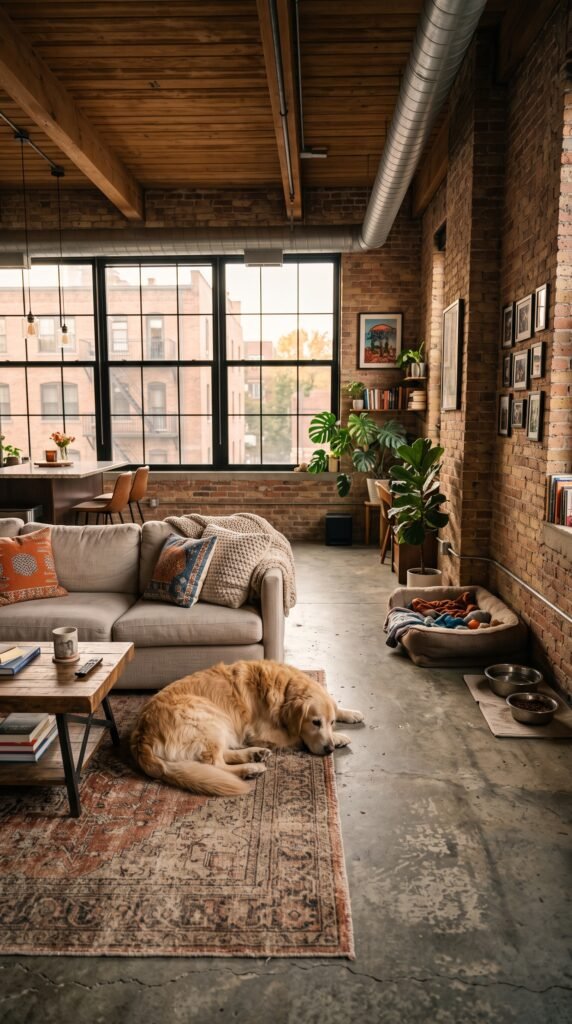
That varies entirely by building and landlord. Many do, especially in larger urban lofts with concrete floors that are easy to clean. The open floor plan is actually a plus for pets — more room to move around. Ask specifically, and check the lease for weight or breed restrictions.
Key Things to Sort Out Before Moving In
Before your moving truck arrives at a loft apartment, there are a few things worth handling in advance.
Work out your furniture layout on paper (or with an app like Magicplan) before you buy or move anything. Loft spaces with irregular shapes and load-bearing columns can make standard furniture layouts awkward. Knowing your dimensions cold will save you from expensive mistakes.
Research the building’s history if it’s a genuine industrial conversion. Some older buildings in certain regions may have environmental considerations like lead paint or asbestos in materials that were sealed during conversion. A quick question to the property manager about what testing and remediation was done isn’t paranoid — it’s reasonable.
According to the U.S. Department of Energy, air sealing and proper insulation can reduce heating and cooling costs by 10 to 20 percent. In an older loft apartment with known drafts, even adding door sweeps and window film is worth doing early.
The National Apartment Association also points out that understanding your lease terms around modifications is a step most renters skip — and regret later. If you’re planning to mount things, hang curtain rails from ceiling tracks, or make any changes to the space, confirm in writing that your landlord allows it.
And finally, connect with the building community early. Loft apartment buildings, especially converted ones, often have active tenant communities. Other residents are your best source of building-specific knowledge: which radiator valves stick, what the parking situation actually looks like on weekends, who to call when something breaks.
The aesthetic is what draws you in. But it’s the practical knowledge that keeps you happy once you’re there.