How to Design a Concrete Pool Deck That Stays Cool Underfoot
If you’ve been searching for 10 concrete pool deck ideas that feel sleek modern and cool underfoot, you already know that the wrong surface can turn a beautiful backyard oasis into a barefoot nightmare by mid-July. Concrete is one of the most popular pool deck materials in the world, but not all concrete is created equal — and the difference between a deck that scorches your feet and one that stays comfortable at noon in August often comes down to a handful of smart design decisions made before the first pour.
This guide walks you through everything: the step-by-step planning process, the most common mistakes homeowners make, the best tools and finishes to use, and real design ideas you can steal for your own backyard.
Step-by-Step Guide to Planning Your Concrete Pool Deck
Step 1 — Define Your Goals Before You Design
Before you pick a color or texture, get clear on what you actually need from your deck. Are you hosting barefoot kids all summer? Do you live in a climate where surface temps regularly hit triple digits? Are you prioritizing aesthetics, safety, or budget?
The 10 concrete pool deck ideas that feel sleek modern and cool underfoot all start with one shared principle: heat management is a design decision, not an afterthought. Your choices about color, finish, and coating will determine whether your deck radiates heat or deflects it.
Make a short list of your priorities — cooling performance, visual style, slip resistance, and maintenance tolerance — and rank them. That ranking will guide every decision that follows.
Step 2 — Choose the Right Concrete Finish
The finish you choose is the single biggest factor in how hot your deck gets. Here’s what the research shows:
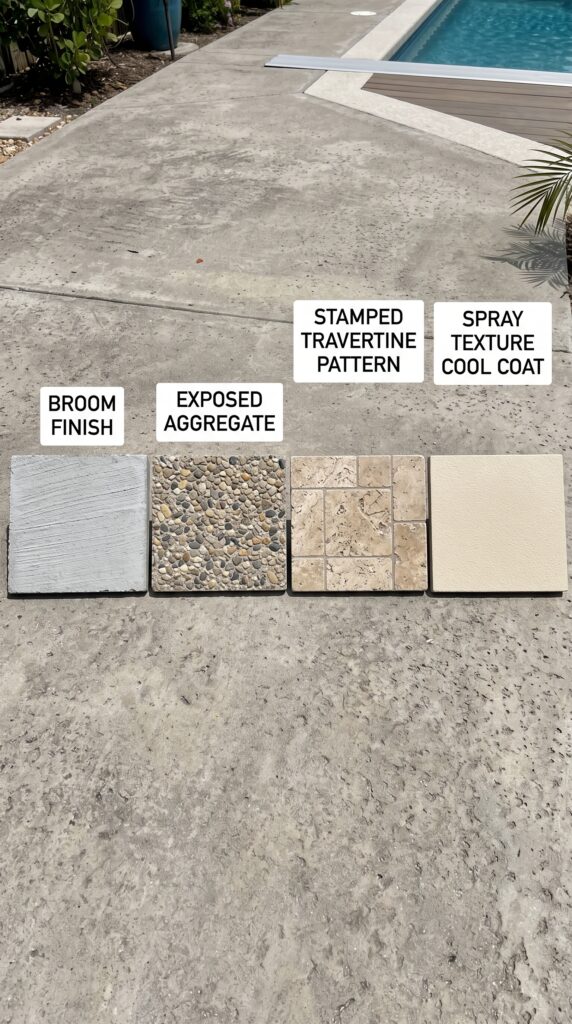
Broom-finished concrete is the most common pool deck surface, and it performs reasonably well thermally because its textured surface creates micro-shadows that slightly reduce radiant heat absorption. It’s also slip-resistant, which matters around water.
Exposed aggregate finishes embed small stones or pebbles into the surface, which creates natural texture and helps break up heat retention. Lighter aggregates — quartz, river pebbles, or white granite chips — reflect more sunlight than darker stones.
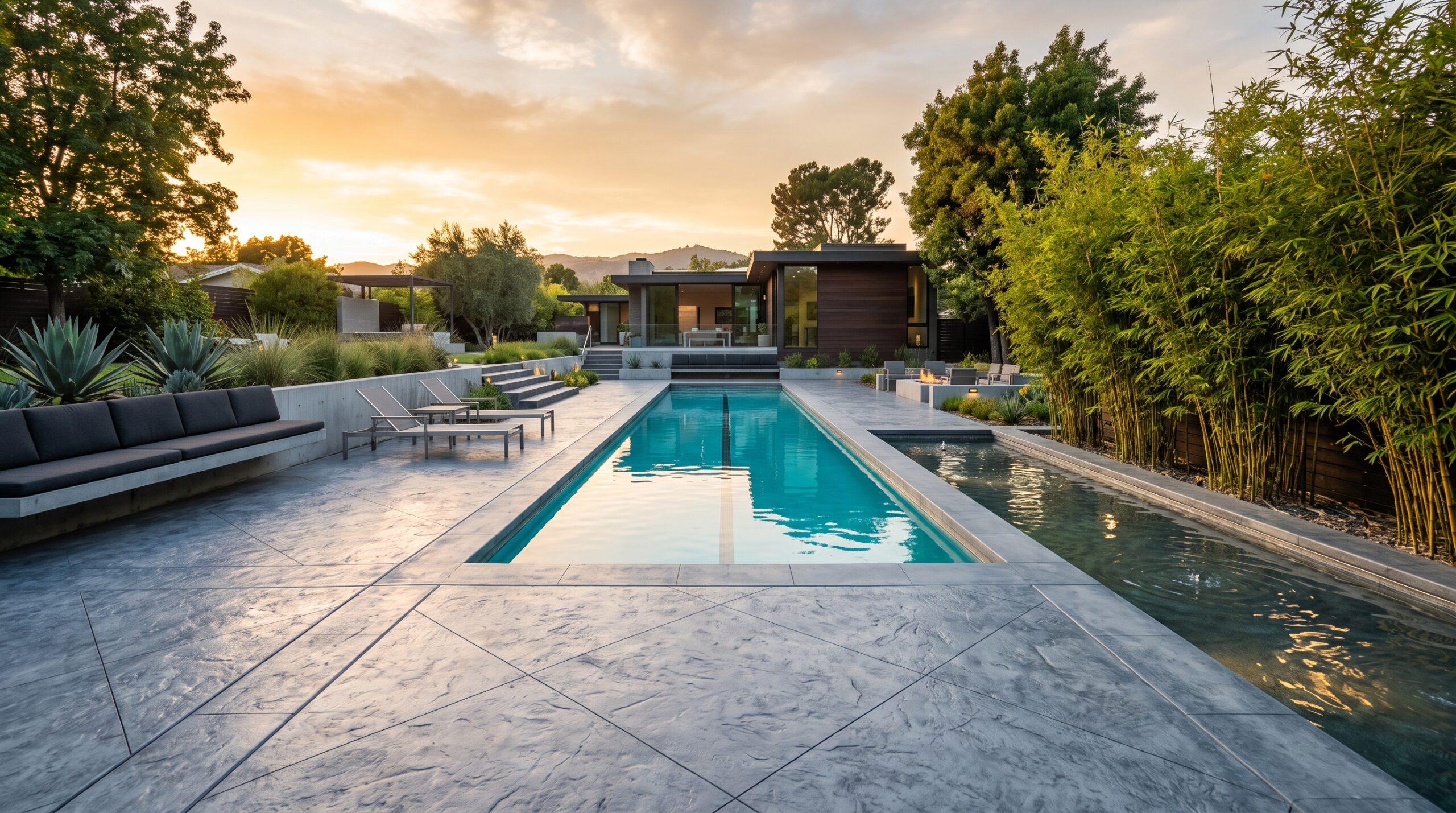
Stamped concrete is popular for its decorative appeal and can mimic slate, travertine, or wood. The thermal performance depends heavily on the color used. Lighter stamps stay significantly cooler than dark ones.
Spray texture or cool-deck coatings are purpose-built for hot climates. Products like Kool Deck (a trademarked acrylic overlay) were specifically engineered to reflect solar radiation and have been tested to stay up to 30°F cooler than standard gray concrete under direct sun, according to data from Mortex Products, the manufacturer.
Step 3 — Pick a Color That Works With Physics, Not Against It
Color is where most homeowners make their biggest thermal mistake. Dark charcoal or slate-toned concrete looks stunning in design magazines, but in full summer sun it can reach surface temperatures of 140°F to 160°F — far beyond comfortable for bare skin.
Light colors reflect a much higher percentage of solar radiation. White, cream, tan, and pale gray are your friends here. According to Lawrence Berkeley National Laboratory’s Heat Island Group, lighter-colored surfaces have a higher solar reflectance index (SRI), meaning they absorb less heat and re-emit less thermal energy.
If you love the look of a darker tone, consider using it only in shaded zones — under pergolas, along fence lines, or in areas that get less direct afternoon sun — and keeping the main sun-exposed deck surface light.
Step 4 — Plan Your Deck Layout for Natural Shade
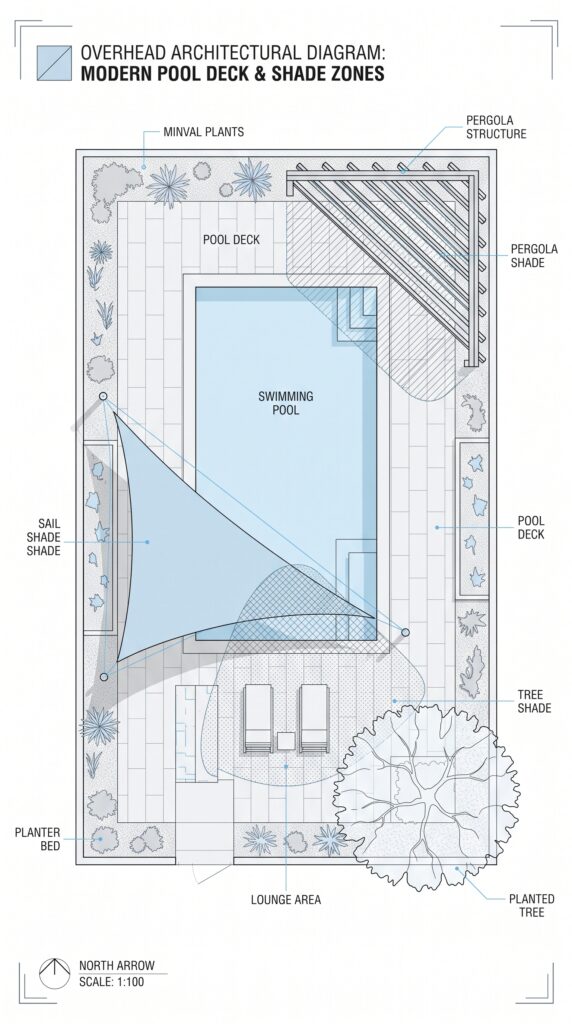
The design of your deck’s geometry matters as much as the material. Orient any overhead shade structures — pergolas, sail shades, or planted trellises — so they shadow the areas where people stand or walk most: entry points to the pool, lounging zones, and the path between the house and the water.
Even partial shade coverage dramatically reduces surface temperature. A section of deck under 60% shade cloth can be 20–30°F cooler than an identical section in full sun.
how to design a backyard shade structure for a pool area
Step 5 — Add a Reflective or Insulating Coating
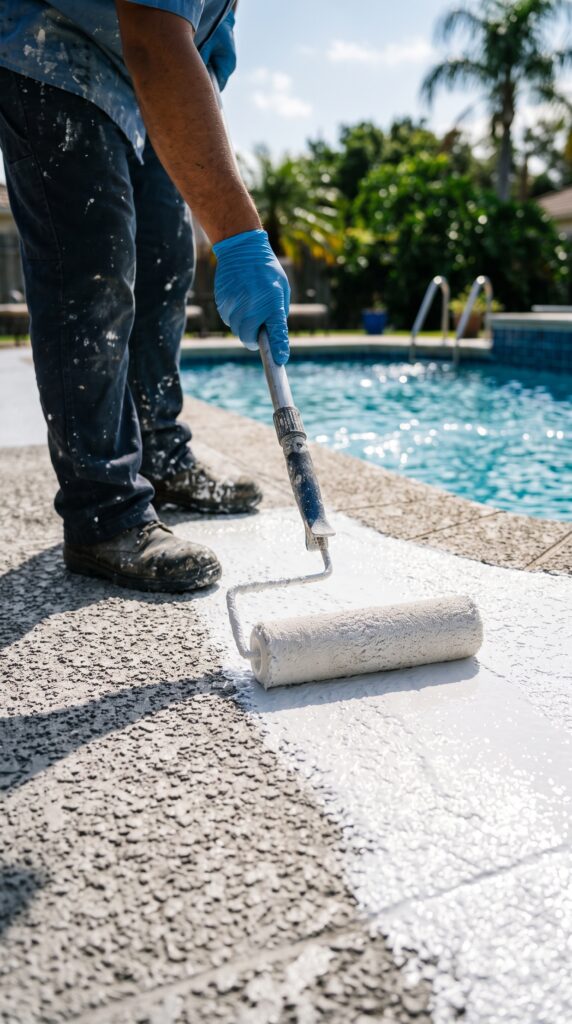
Once your base concrete is poured and cured, a topcoat is your best opportunity to upgrade thermal performance without starting over. There are several categories worth knowing:
Cool-deck coatings (acrylic or cementitious) are the most proven option. They create a slightly insulating layer that limits how much heat transfers from the surface to your feet.
Epoxy coatings with reflective additives provide durability along with heat management. These are especially popular in commercial pool settings.
Sealers with UV-reflective pigments are lighter-duty but easy to apply and can reduce surface temps meaningfully when used with a light base color.
For any coating, reapplication every 2–4 years is typically recommended to maintain performance, especially in harsh UV environments.
The Most Common Mistakes Homeowners Make With Concrete Pool Decks
These are the errors that show up again and again — and they’re almost always fixable if you catch them early.
Mistake 1 — Going Dark for Aesthetics Without Testing
It bears repeating: dark concrete in full sun is a pain multiplier. If your heart is set on a moody charcoal deck, at minimum test a sample panel during peak sun hours before committing. Many homeowners who do this test switch to a lighter tone immediately.
Mistake 2 — Skipping the Slip-Resistance Conversation
Wet concrete can be dangerously slick. Many people focus so heavily on heat performance that they forget to specify adequate texture. A broom finish with a coarse drag, exposed aggregate, or an anti-slip additive in the topcoat are all effective ways to maintain traction without sacrificing aesthetics.
External guidance from the American National Standards Institute (ANSI) recommends a minimum coefficient of friction of 0.60 for wet walking surfaces in commercial settings — a useful benchmark for residential design too.
Mistake 3 — Not Sloping the Deck Properly
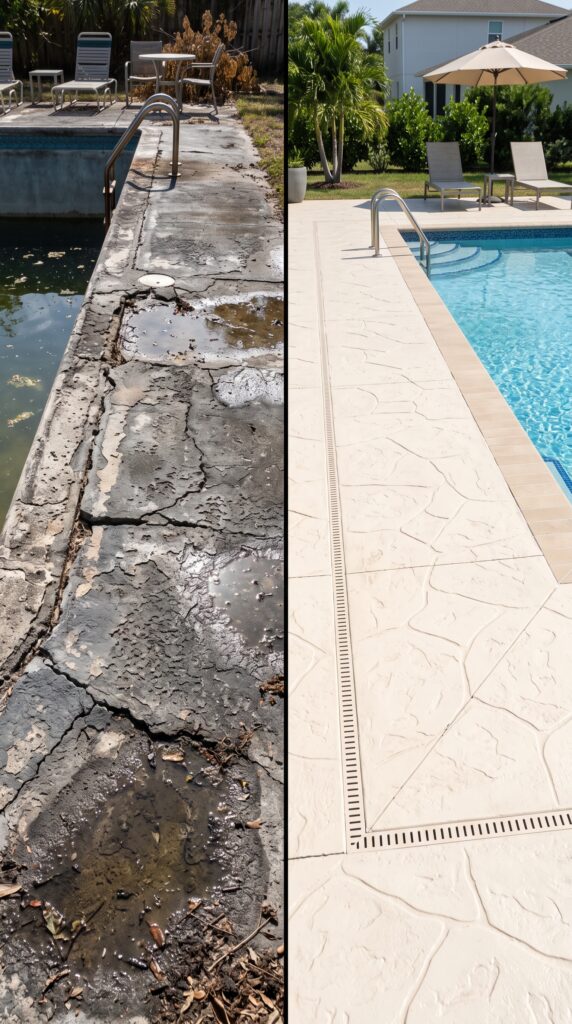
Water that pools on the deck surface stays cooler but creates a slip hazard and can cause long-term concrete damage through freeze-thaw cycles. The standard recommendation is a minimum slope of 1/8 inch per foot away from the pool edge and toward drainage channels. This keeps the surface dry faster and reduces algae and mildew buildup.
Mistake 4 — Pouring Without Expansion Joints
Concrete expands and contracts with temperature changes. Without properly placed expansion joints, your deck will crack — usually within the first few seasons. Control joints should be cut or tooled every 8 to 10 feet in both directions, following standard guidelines from the Portland Cement Association.
Mistake 5 — Applying a Dark Sealer Over a Light Concrete Base
Some sealers — especially solvent-based ones — have an amber or dark tint that can significantly darken a light concrete surface. Always test your sealer on a small inconspicuous area first, and choose water-based sealers with a clear or matte finish when you want to preserve a light, heat-reflective base color.
Best Tools and Products for a Cool, Sleek Concrete Pool Deck
Getting the outcome you want with 10 concrete pool deck ideas that feel sleek modern and cool underfoot means having the right tools at each stage. Here’s what professionals actually use.
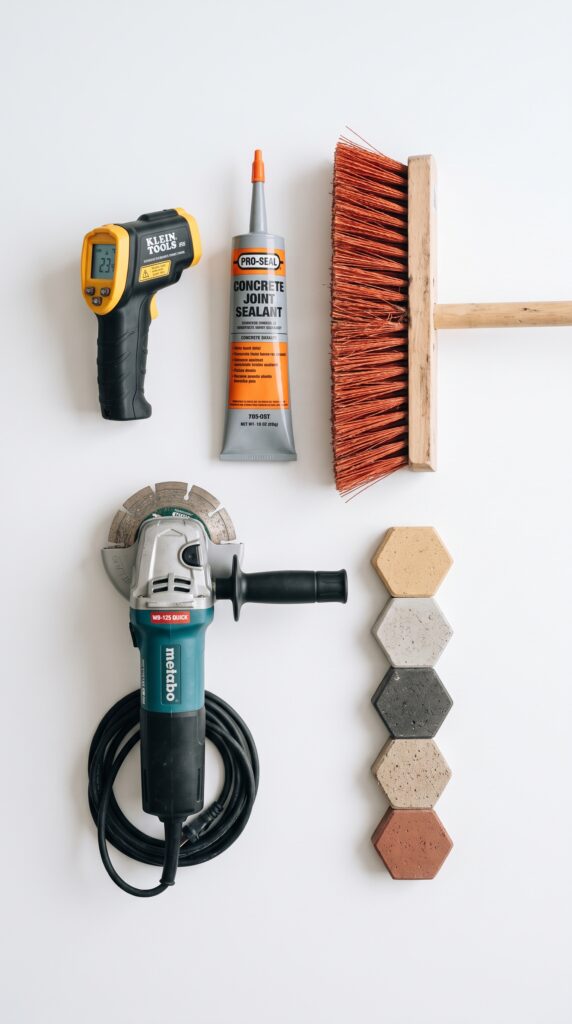
For surface preparation: A concrete grinder or scarifier creates the profile needed for coatings to bond properly. Rental units are widely available, and skipping this step is one of the most common reasons cool-deck coatings fail prematurely.
For texture and finish: A magnesium float followed by a stiff-bristle broom creates the classic broom finish. For exposed aggregate, a surface retarder spray is applied to the fresh concrete, then the top layer is washed away after initial set to expose the aggregate below.
For temperature testing: An infrared thermometer (often called a temp gun) lets you measure actual surface temperatures in real time. This is an underrated diagnostic tool — use it to compare shaded versus unshaded zones, different finish types, and different times of day. Models from brands like Fluke or Klein Tools provide accurate readings from a safe distance.
For crack repair and joint filling: A self-leveling polyurethane joint sealant maintains flexibility as the concrete moves seasonally. Rigid fillers crack again quickly.
For ongoing maintenance: A pH-neutral concrete cleaner used monthly prevents efflorescence, mildew buildup, and coating degradation. Avoid acid-based cleaners on coated surfaces unless specifically recommended by the coating manufacturer.
Wrapping Up — Design Smart, Stay Cool
The truth about 10 concrete pool deck ideas that feel sleek modern and cool underfoot is that none of them work by accident. Every detail — color choice, finish type, coating selection, drainage slope, shade placement — is a variable you can control before a single bag of concrete is mixed.
Start with heat management as your primary constraint. Choose light colors. Finish with texture. Add a cool-deck coating if you’re in a hot climate. Build in shade where it counts most. And before anything else goes down, make sure your expansion joints and drainage plan are solid, because a beautiful deck that cracks or floods is neither cool nor modern.
The best concrete pool decks look effortless because someone made thoughtful decisions during the planning phase. Take your time with steps 1 through 5, avoid the common mistakes outlined above, and use the right tools for each stage — and your deck will still be turning heads (and keeping bare feet comfortable) a decade from now.