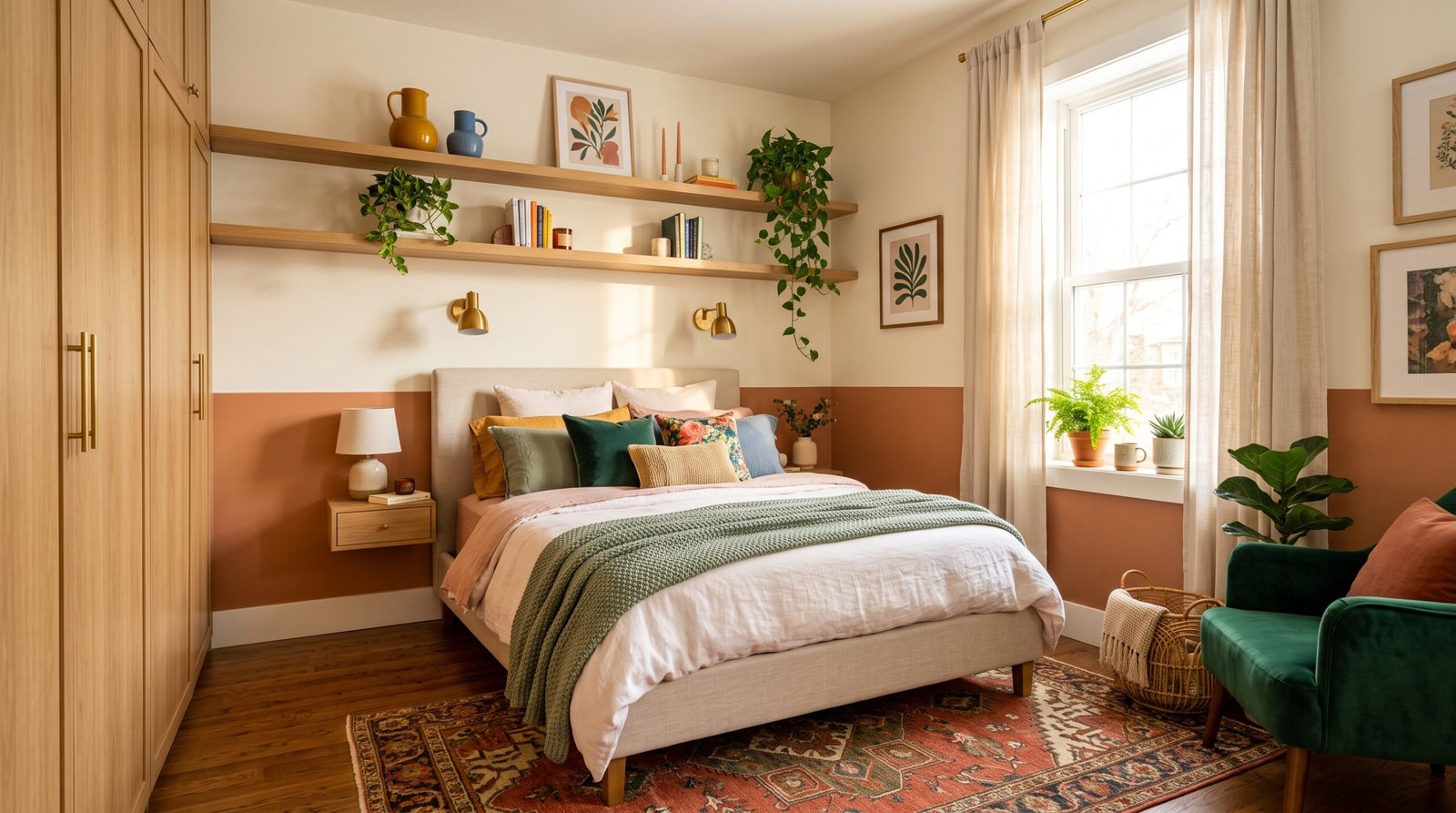
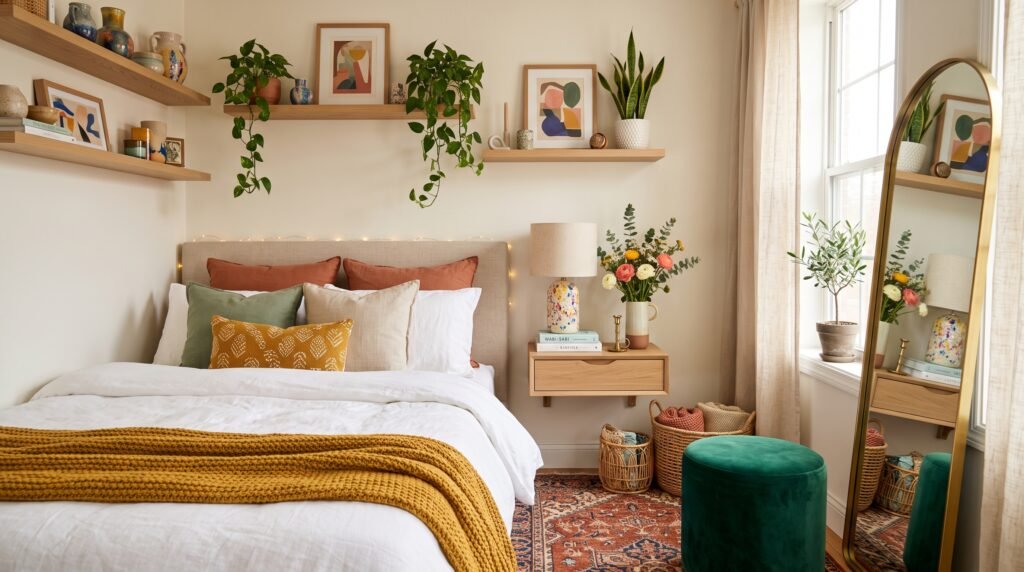
These tiny bedroom ideas are for anyone whose bedroom feels cramped before anything is even in it. A small room can still feel calm, organized and stylish — the trick is to make every piece earn its place, from the color on the walls to the space under the bed. Below are seven practical ideas, each with the measurements and steps you need to try it.
In this guide:
- Use Light Colors to Open Up the Room
- Go Vertical with Your Storage Strategy
- Choose Furniture That Earns Its Place Twice
- Use Mirrors to Visually Double the Space
- Replace a Bulky Desk with a Wall-Mounted Option
- Keep It Minimal and Give the Room Room to Breathe
- Unlock the Storage Potential Under Your Bed
- Final Thoughts
- Frequently Asked Questions About Tiny Bedroom Ideas
1. Use Light Colors to Open Up the Room
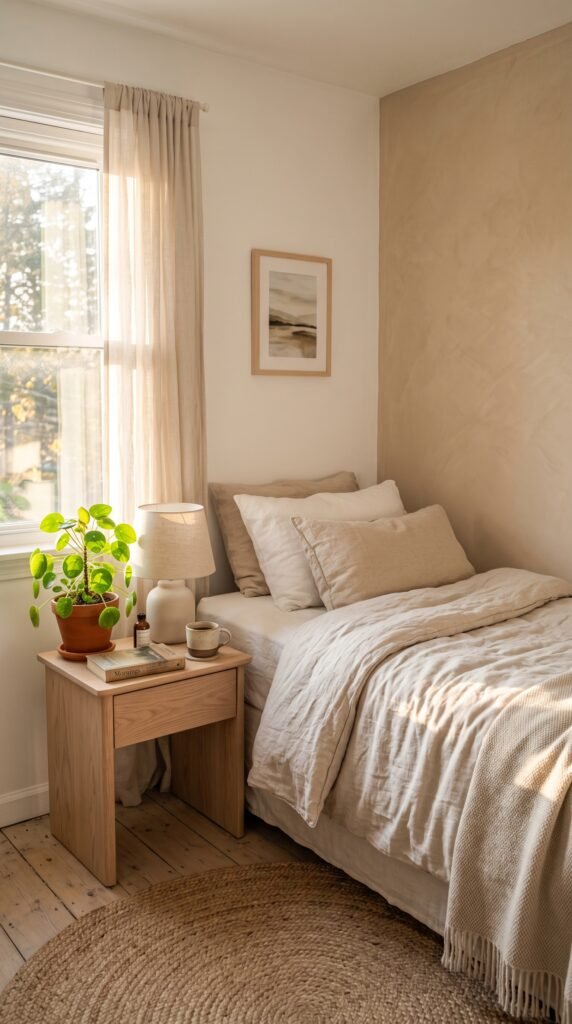
Color is one of the most powerful tools you have in a small bedroom, and it costs very little to use well. Light shades — think soft white, warm ivory, muted greige or dusty blush — reflect natural light rather than absorbing it. That reflection is what creates the visual “breathing room” your eye needs to feel like the space is larger than it actually is.
The key is consistency. A single accent wall in a contrasting dark color might seem like a stylish idea, but in a tiny room it can visually cut the space in half. Instead, keep your walls in the same light family and bring in depth through texture — a chunky knit throw, a woven rug, linen curtains that pool slightly at the floor. These elements add visual interest without shrinking the room.
This is one of the simplest tiny bedroom ideas to try first. Paint a test patch at least 60 cm square on the wall opposite the window and look at it in the morning and again in the evening, because the same white can look warm at noon and gray at dusk.
Keep the ceiling white, or a shade lighter than the walls, and repeat the wall color in the bedding, a rug or the curtains, so the room reads as one calm space instead of a collection of separate pieces. If you love moody, deeper tones, keep them on smaller surfaces such as a headboard, a lampshade or a picture frame, where they add depth without closing the room in.
2. Go Vertical with Your Storage Strategy
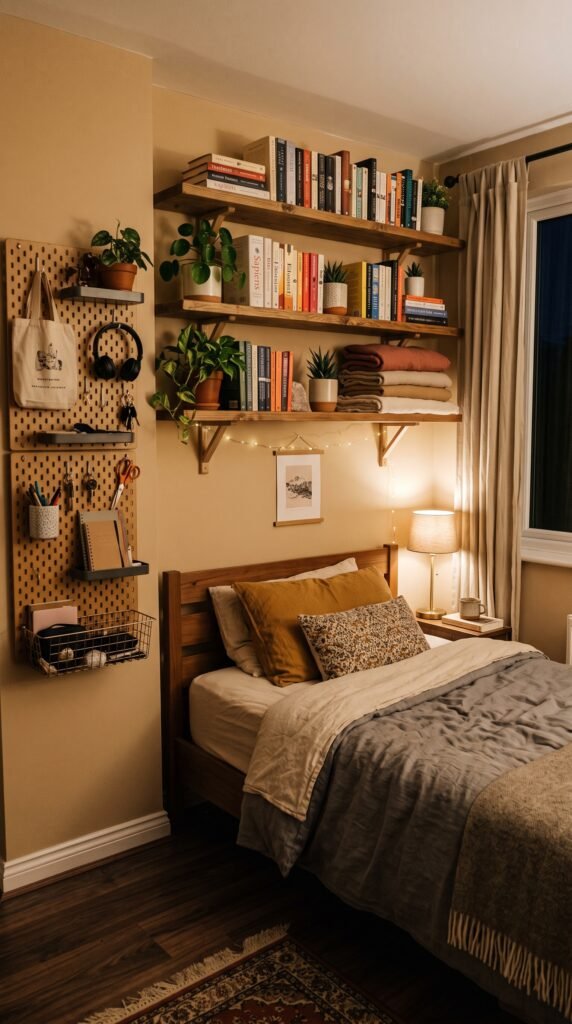
Most people think about floor space when they think about storage — but in a tiny bedroom, the walls above eye level are your most underused asset. Every inch of vertical space, from your baseboard to your ceiling, can be working for you.
Floating shelves installed above your headboard or desk keep your floor clear while giving you a dedicated home for books, small plants, and everyday items. A tall, narrow wardrobe will always outperform a short, wide dresser in a small room because it draws the eye upward and uses less of the floor. Pegboards and wall-mounted organizers are especially useful near entryways or behind doors, where you’d otherwise lose that space completely.
Done well, this is one of the most practical tiny bedroom ideas for storage. Hang everyday items between shoulder and eye level, roughly 120–150 cm from the floor, and leave at least 30 cm between the bottom shelf and the desk or headboard below it. Choose shelves 20–25 cm deep for books and folded clothes — deeper shelves waste space and invite clutter. Fix them into wall studs, or use fixings rated for the weight you plan to load, and test each shelf with a firm downward pull before you fill it. The mistake to avoid is filling every wall: leave one stretch of wall completely bare so the eye still has somewhere to rest.
3. Choose Furniture That Earns Its Place Twice
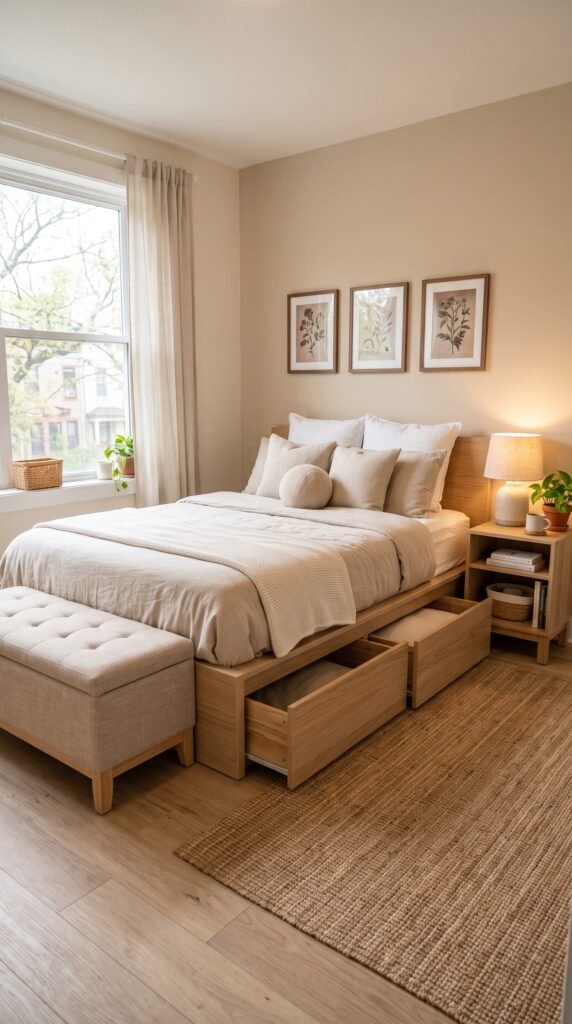
In a small bedroom, the standard rule is simple: if a piece of furniture only does one job, it probably doesn’t belong. Every item should be pulling double duty.
A bed frame with built-in drawers beneath it replaces an entire dresser. An upholstered storage bench at the foot of your bed can organise your seasonal clothing, extra blankets and board games while still giving you a spot to sit. Before you buy, measure twice: the drawer needs its full depth plus 60 cm of clear floor in front of it to open properly, and any piece with doors needs its swing arc kept clear of the bed and the wardrobe.
Multi-functional furniture is at the heart of most tiny bedroom ideas, and it does not have to look utilitarian or stripped-down. A storage bench in a soft fabric, an ottoman with a hidden compartment or a slim desk that folds away can look like ordinary, beautiful furniture while quietly doing two jobs. The aim is a room that works harder without looking like it is trying. Best bedroom ideas to fix a boring space fast: this guide pairs well with the storage-first approach here, especially if your room feels dull as well as small.
4. Use Mirrors to Visually Double the Space
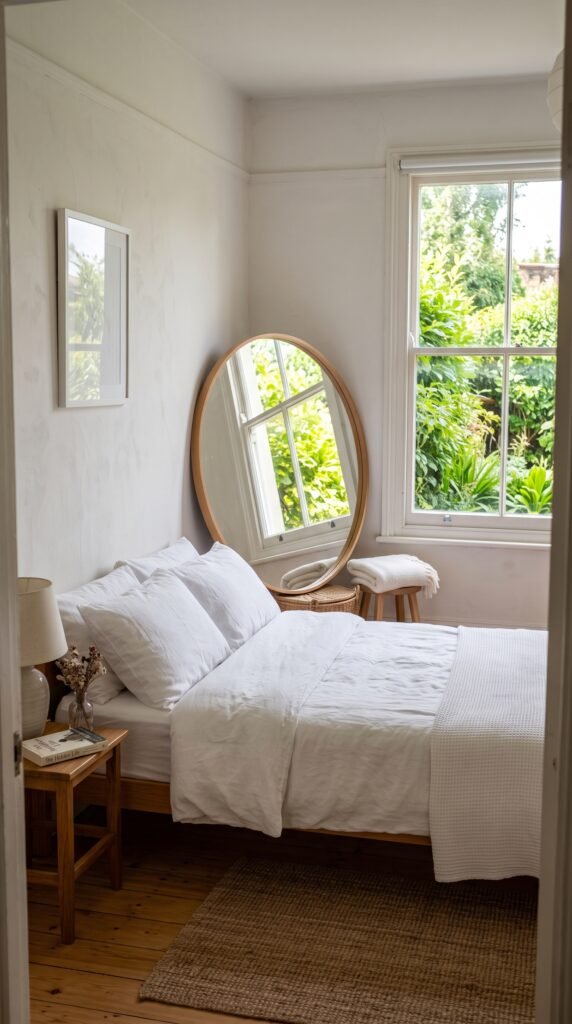
A well-placed mirror might be the single most effective visual trick available to a small bedroom. Mirrors bounce light around a room, making it feel larger and brighter. A large mirror can instantly create a sense of depth, while a small mirror placed in the right spot can bring in a little extra light. It is also one of the cheapest tiny bedroom ideas: a single large mirror costs less than a new piece of furniture and changes the room at once.
The size and placement matter more than the style. A large mirror — leaning against a wall, mounted above a dresser, or used as a full closet door — will do far more work than a small decorative one. You want the reflection to capture the brightest and most open part of the room, which is almost always the window or the doorway.
A quality mirror doesn’t have to be expensive to be effective. What it does need is the right scale for the wall and a placement that captures light. Even a frameless, simple design will expand your room dramatically if it’s large enough and facing the right direction. IKEA’s bedroom range shows compact rooms using mirrors, storage beds and light colors to feel bigger — a useful place to compare mirror sizes before you buy.
Place a mirror opposite a window or beside it, so it borrows daylight and the view outside rather than reflecting a blank wall. Used this way, it brightens a dark corner and makes the room feel as if it has a second window. Angle it slightly and check the reflection from the bed before you fix it in place — a mirror that reflects clutter only doubles the mess.
5. Replace a Bulky Desk with a Wall-Mounted Option
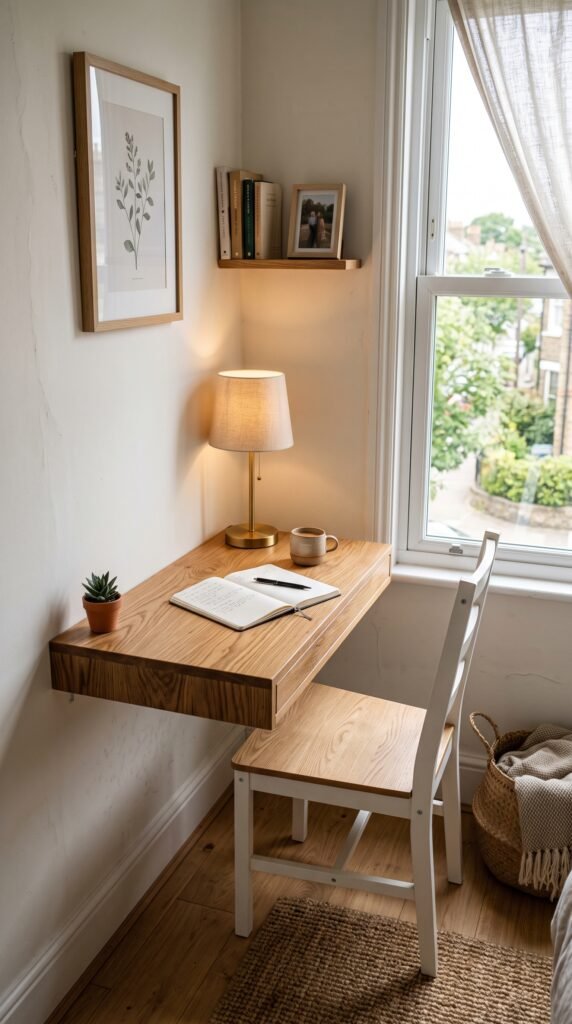
If you work from home or need a study space in your bedroom, a traditional desk is likely stealing more room than you realize. Before you shop, measure the spot: a usable writing surface is about 100–120 cm wide and 45–60 cm deep, with 60 cm of clear floor in front of the chair. If those numbers do not fit, the desk — not the room — is the problem, and a wall-mounted surface is the better choice.
A wall-mounted or floating desk solves this cleanly. It attaches directly to the wall, so the floor beneath it stays completely open. You can install it in a corner, beside a window, or even at the foot of the bed if your layout allows. Pair it with a slim chair or a backless stool that slides completely underneath when you’re done working, and the entire workspace essentially disappears.
A well-chosen Floating Desk gives you a proper, functional workspace without committing a permanent chunk of floor to it. This is especially valuable in studio apartments or single-room setups where the bedroom has to serve multiple functions throughout the day.
Wall-mounted desks work because they keep the floor visible. The eye reads a clear floor as open space, so the room feels larger even though its footprint has not changed. Keep the desktop clear when you are not working — a clear surface is what sells the effect — and fix the desk into studs, or with fixings rated for the weight of your laptop, books and a lamp.
6. Keep It Minimal and Give the Room Room to Breathe
There’s a temptation in small spaces to fill every corner — as if leaving space empty is wasting it. The opposite is true. Empty space in a bedroom doesn’t feel vacant; it feels calm. It gives your eye somewhere to rest, and it makes the pieces you do have feel intentional and considered.
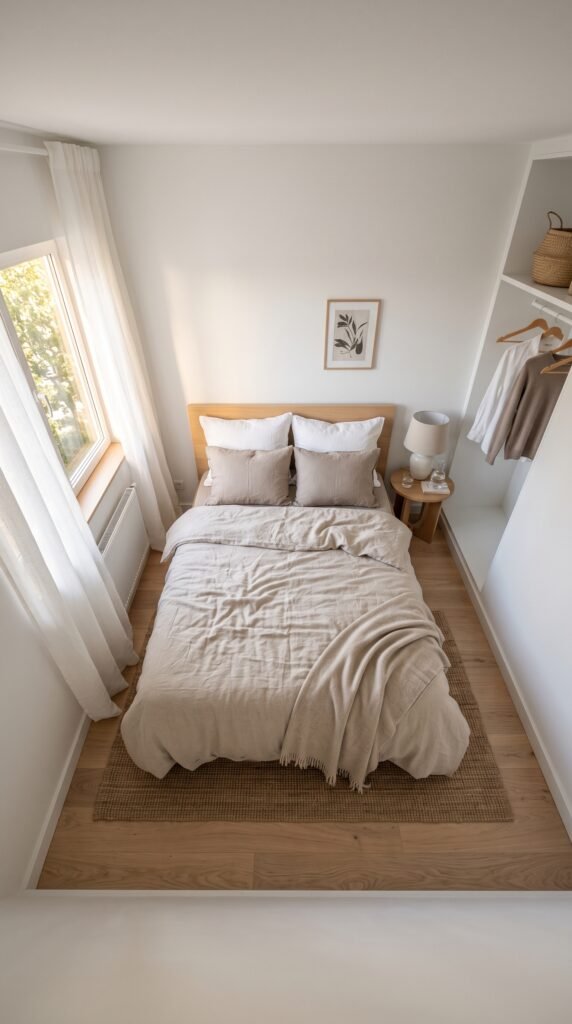
Start with only the essentials: a bed, one side table, one light source, and your primary storage. Then resist adding everything at once — carefully choosing a few key pieces lets the room feel open and intentional rather than sparse. That is the point of these tiny bedroom ideas: change one thing, see what it does, and only then change the next.
When you do add pieces, choose designs with clean lines and a consistent finish. A low bed, one small side table and a single lamp are a good starting point: furniture that keeps the room calm without leaving it feeling bare.
Bedroom Lighting Ideas Under $40 shows how small, cheap lighting changes can warm up a minimal room without adding clutter.
7. Unlock the Storage Potential Under Your Bed
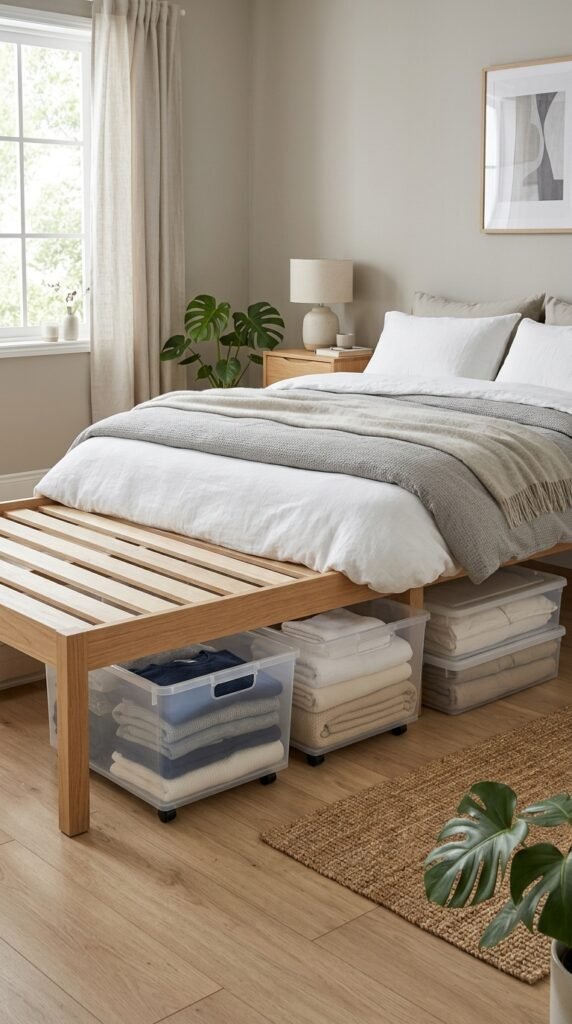
The space beneath your bed is the most commonly wasted storage in a small bedroom. Measure it before you buy anything: the clearance height, the width between the bed legs and the depth from the front edge. Those three numbers decide which bins and bags will fit — a bin taller than the clearance is useless, however good it looks in the shop.
Flat rolling bins are ideal for off-season clothing, extra bedding, or shoes you do not wear daily. Vacuum storage bags compress bulky items like duvets and jumpers, which helps when wardrobe space is limited. If you are choosing a new bed frame, look for one with integrated drawers — they slide out cleanly and keep everything organized without needing extra bins.
The right under-bed storage makes it easy to keep this area neat and accessible rather than a catch-all for clutter. The goal is for everything under there to have a purpose and a designated spot, so you can get to it quickly when you need it. Keep a simple rule: if you have not used something in a year, it does not belong under the bed.
Under-bed storage works best for items you use seasonally rather than daily — winter duvets, holiday clothes, spare bedding. Things you reach for weekly belong in the wardrobe or a drawer, where you can get to them without pulling everything out.
Final Thoughts
A tiny bedroom isn’t a limitation — it’s an invitation to be more deliberate about every choice you make. When you use color thoughtfully, claim your vertical wall space, choose furniture that works twice as hard, and eliminate what doesn’t belong, even the smallest room can feel like a retreat rather than an afterthought. These tiny bedroom ideas all point the same way: less, but better chosen.
Start with one change, see how it shifts the feel of the space, and build from there. Small improvements stack up quickly, and you’ll be surprised how different a room feels when every element is earning its place. If better sleep matters as much as more space, these 9 cozy bedroom ideas for better sleep and deep relaxation show how storage, light and a calm routine work together.
Frequently Asked Questions About Tiny Bedroom Ideas
How can I make a tiny bedroom feel bigger without spending much?
Start with the free changes: paint the walls a light, warm white, keep the floor visible by lifting furniture off it where you can, and hang a large mirror opposite the window. Then add one storage change, such as under-bed bins or a shelf, before buying anything decorative. These tiny bedroom ideas cost little because they change what the eye sees, not the size of the room.
What is the best storage for a tiny bedroom?
The best storage is the storage you already own: the space under the bed, the wall above the headboard and the inside of the wardrobe door. Measure each space first, then buy bins, hooks and shelves to fit those measurements. Deep, labeled bins under the bed suit seasonal items, while shallow shelves at eye level suit the things you use every day.
Should I choose a double bed or a single bed for a tiny bedroom?
Choose the smallest bed you can sleep well in. A standard UK double bed is 135 cm wide and a small double is 120 cm wide, so the smaller size frees 15 cm — enough for a slim bedside table in some rooms. This single choice is one of the most effective tiny bedroom ideas for freeing floor space. Mark the bed outline on the floor with masking tape before you decide, and leave at least 60 cm of clear floor on the side you get out of bed.
Can I put a desk in a tiny bedroom?
Yes, if you keep it small and wall-mounted. A floating desk about 100–120 cm wide and 45–60 cm deep gives you a proper workspace without taking floor space, and a stool that slides underneath keeps the area clear when you are not working. A floating desk is one of the most practical tiny bedroom ideas for a room that has to double as an office. Fix it into wall studs, or with fixings rated for the weight of your laptop and books.
How do I keep a tiny bedroom tidy?
Give everything a fixed home and keep the number of homes small: one place for clothes, one for bedding, one for books and one for everything else. A five-minute tidy each evening — bed made, floor clear, surfaces cleared — stops clutter building up, and a one-in, one-out rule keeps the amount of stuff in the room from growing. Of all the tiny bedroom ideas in this guide, keeping the room tidy is the one that costs nothing.