
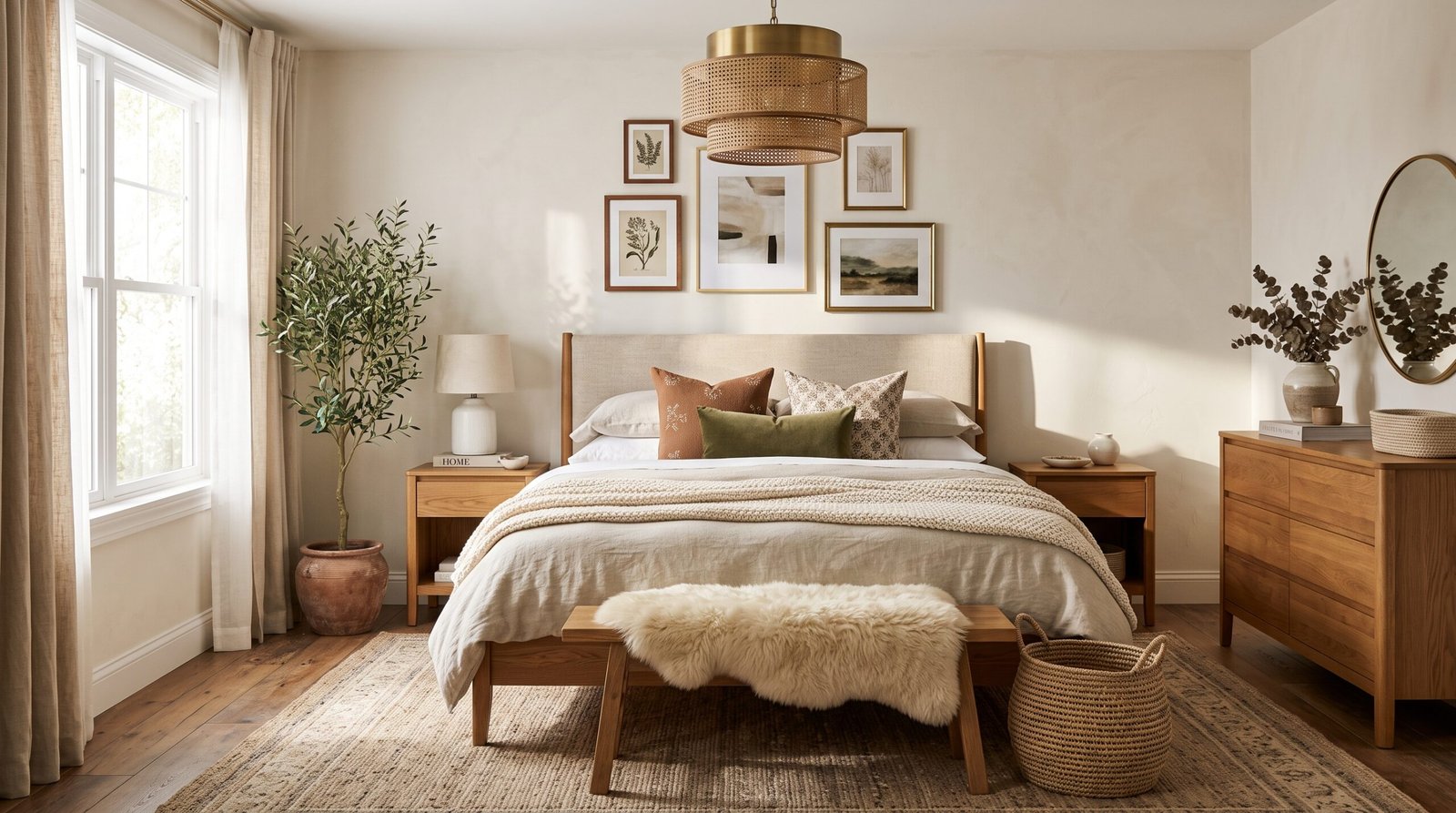
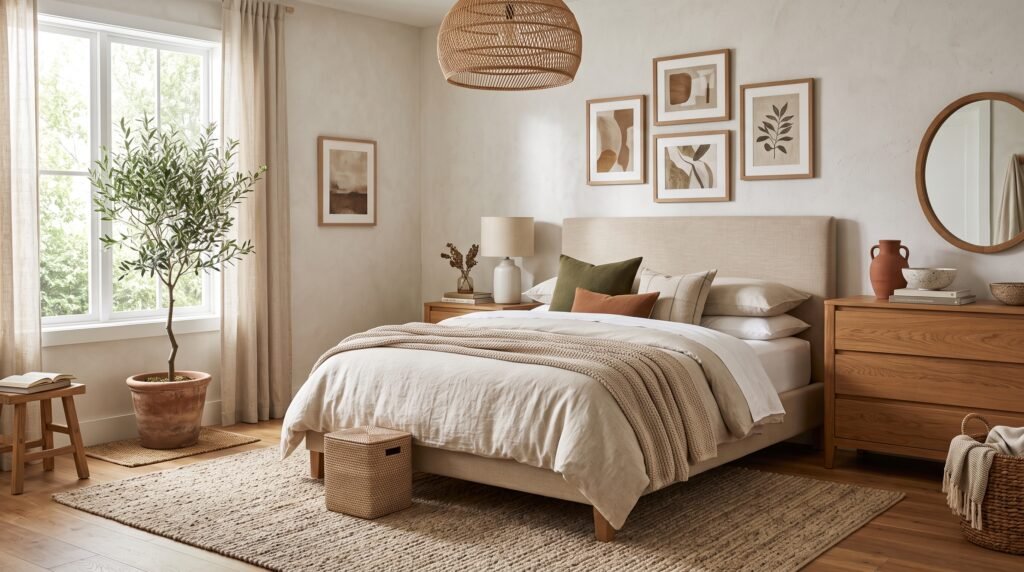
If you’ve been staring at the same four walls for months and craving fresh bedroom ideas, you’re not alone — millions of people wake up every day in a room that simply doesn’t feel like theirs anymore.
That dull, flat feeling isn’t just aesthetic. Research from the Sleep Foundation suggests that your bedroom environment directly affects your sleep quality and even your mood when you first open your eyes in the morning. A room that feels uninspiring can subtly lower your energy before the day even starts.
The good news? You don’t need a full renovation, a designer budget, or weeks of construction noise. Small, intentional changes — layered together thoughtfully — can completely transform how a room looks and feels.
Why Your Bedroom Stopped Feeling Special
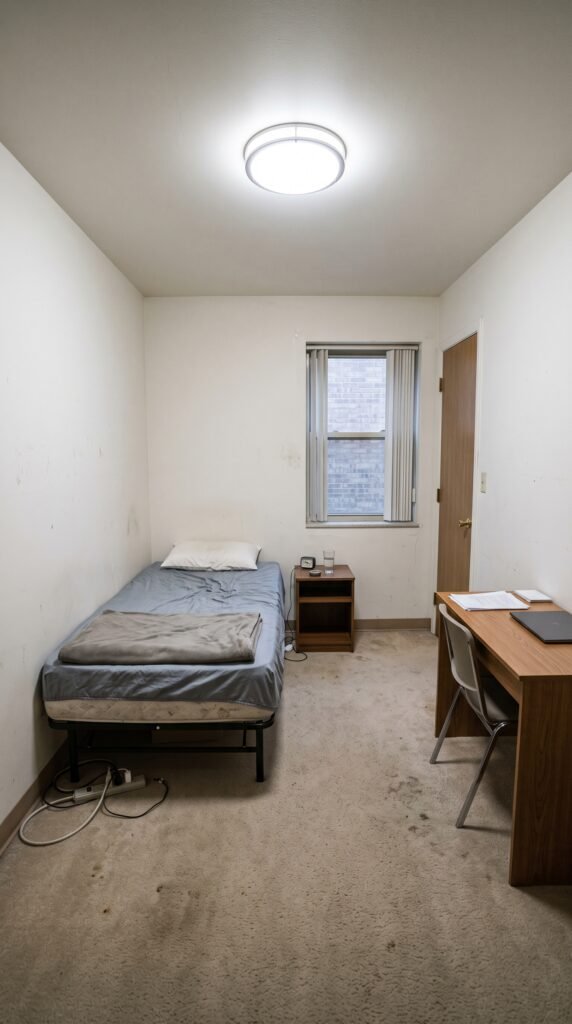
There’s a story most people share. You moved into a place, threw a bed in the room, promised yourself you’d “fix it up later,” and then later never arrived. Months passed. A year passed. The room became background noise — functional but forgettable.
This is actually one of the most common design traps. Bedrooms get deprioritized because they’re private. Nobody else sees them (most of the time), so they become the last space to receive attention and investment.
But here’s the thing: you see your bedroom every single day. You start your morning there. You end your evening there. The cumulative effect of spending hours in a space that feels flat and lifeless adds up in ways you might not even consciously notice.
The bedroom should be the most personal room in your home — and that’s exactly what makes bedroom ideas so powerful when you finally decide to act on them.
The “Accumulation Problem” Most People Miss
Most boring bedrooms aren’t boring because of one big missing element. They’re boring because nothing in the room is doing its job with intention.
The mattress was picked for comfort, not for how the bed would look made up each morning. The curtains were picked because they blocked light, not because they added warmth. The lamp came from a clearance section because it was cheap and worked.
Each individual decision made practical sense at the time. But taken together, the room ended up without a point of view, without a visual story, and without any sense of personality.
Understanding this is the first step. Once you see the room as a collection of choices rather than a fixed reality, you start seeing it as changeable — and that’s where creative bedroom ideas begin.
The Quickest Wins: Bedroom Ideas That Work Immediately
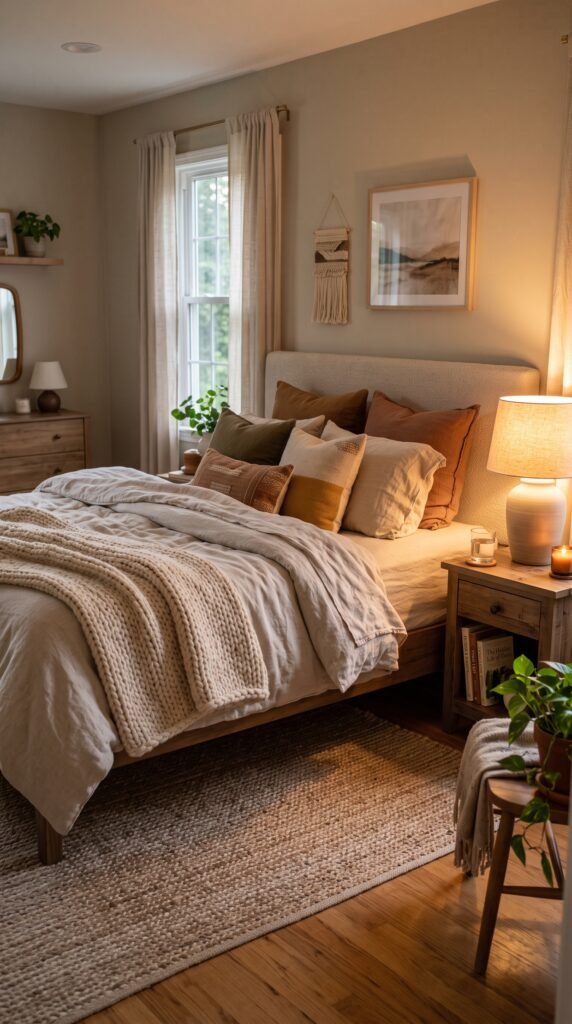
Some transformations take months. Others take an afternoon. Here are the bedroom ideas that deliver the most immediate visual impact without touching a single wall or piece of furniture.
Bedding Is Your Single Most Powerful Tool
If there’s one place to spend your budget first, it’s your bedding. The bed is the largest visual element in almost every bedroom, which means whatever is on top of it sets the entire tone of the space.
Swap a flat, utilitarian comforter for a linen duvet with natural texture. Add at least two decorative pillows in complementary tones. Drape a chunky throw blanket across the foot of the bed in a contrasting color or material.
This single change — done well — can make a room feel like it belongs in a boutique hotel. According to interior designers interviewed by Architectural Digest, bedding layers are the number one secret to making a bedroom look intentional and expensive without a major investment.
Lighting Changes Everything (Seriously, Everything)
Overhead lighting is the enemy of a cozy bedroom. A single ceiling fixture casting flat light downward eliminates all shadow, texture, and warmth from a room in one swoop.
Introduce at least two secondary light sources — a bedside lamp on each nightstand, a floor lamp in a corner, or a string of warm Edison bulbs draped behind the headboard. The goal is to create pools of warm light rather than uniform brightness.
Swap any cool-white or daylight bulbs for warm-white options (2700K–3000K). This change alone, costing just a few dollars per bulb, visually warms an entire room without changing a single piece of furniture or fabric.
Plants Bring Rooms to Life
Adding even one or two plants to a bedroom introduces organic texture, a sense of living movement, and — according to NASA’s Clean Air Study — minor but real improvements to indoor air quality.
You don’t need a green thumb. A pothos on a shelf, a snake plant in the corner, or a trailing philodendron on a nightstand all require minimal care and provide maximum visual impact. The greenery also naturally draws the eye and adds a layer of depth that purely inanimate objects can’t replicate.
Bigger Bedroom Ideas That Redefine the Whole Space
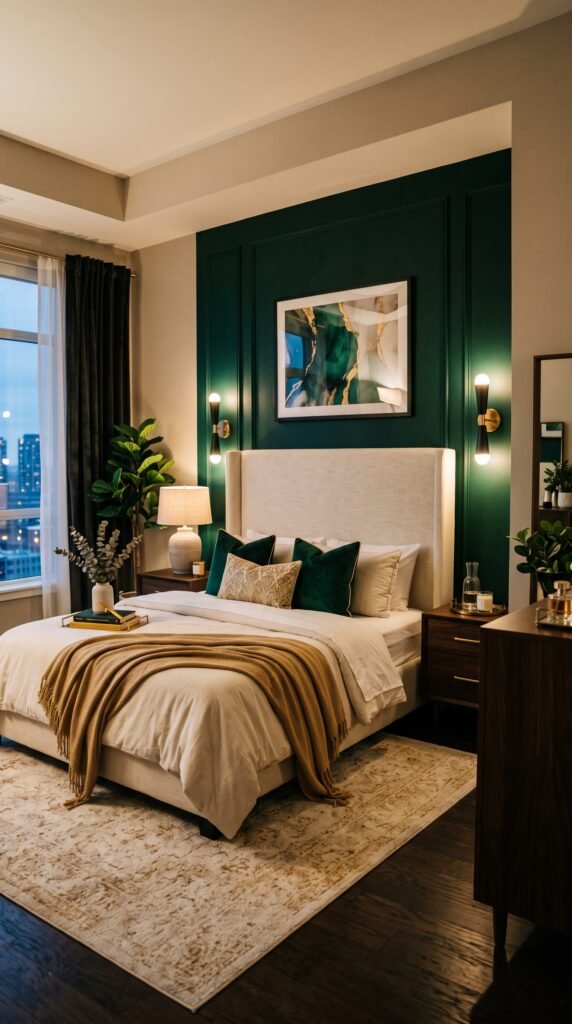
Once you’ve made the quick wins, you might find yourself hungry for more. These bedroom ideas require slightly more planning — but they transform not just how a room looks, but how it feels to be inside it.
Create a Focal Point With an Accent Wall
Blank walls in a bedroom feel institutional. One strong accent wall — even if it’s just a different paint color — gives the eye somewhere to land and creates a sense of depth.
You don’t have to go dramatic. A deep sage green, a soft terracotta, or even a warm greige (gray-beige) behind the headboard creates contrast without overwhelming the room.
If paint feels like a big commitment, removable wallpaper has become genuinely excellent in recent years. You can apply a bold pattern or textured design to a single wall, live with it, and remove it without damage when you’re ready to change things up.
Struggling to Decorate Your Bedroom Walls? Here’s How to Fix It
Rethink Your Furniture Arrangement
This one costs nothing. Absolutely nothing. And yet rearranging bedroom furniture is one of the most powerful bedroom ideas on this list because it changes the spatial logic of the entire room.
Most people put the bed against the longest wall, which often means it’s pushed against the wall with the most visual weight — and the rest of the room feels unbalanced. Try floating the bed in the center of the room with space on both sides. Try placing it on a different wall entirely to create a new sightline as you walk through the door.
The goal is to make the bed feel like a destination in the room, not just the largest thing that was placed wherever it fit.
Add a Rug to Anchor the Space
Bare floors in a bedroom — even beautiful hardwood floors — can feel cold and disconnected. A well-sized rug placed under the bed (extending 18–24 inches on each side) anchors the bed as a design centerpiece and introduces texture, warmth, and color at the same time.
Size is everything here. The single most common rug mistake in bedrooms is choosing one that’s too small. A rug that only peeks out from under the bed frame does nothing for the room. Go larger than you think you need.
Styling Details That Separate Good Bedrooms From Great Ones
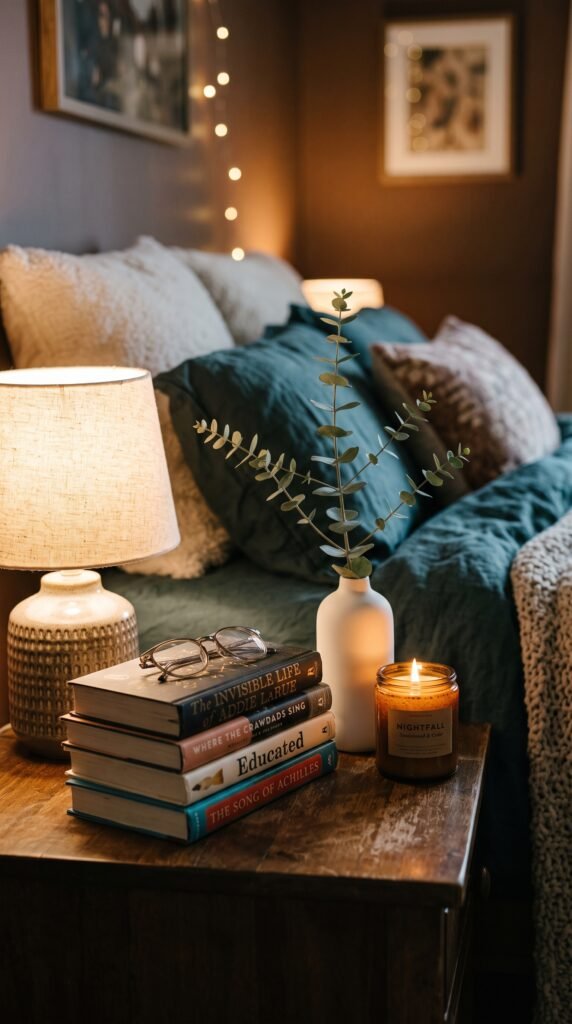
The difference between a bedroom that looks “nice” and one that makes guests say “wow” almost always lives in the details. These small-scale bedroom ideas are the finishing touches that make a room feel truly styled.
Build a Nightstand Vignette
Your nightstand is prime real estate. Instead of letting it become a dumping ground for phone chargers and water glasses, treat it as a mini display.
A small lamp, one or two books with interesting spines facing outward, a single stem in a simple vessel, and a candle is all it takes. Keep it to three or four items maximum. The negative space around the objects is part of the display.
Layer Textiles Beyond the Bed
Texture is what makes a room feel rich and layered versus flat and sparse. Beyond the bedding, look for opportunities to add textile interest in other areas of the room.
A curtain upgrade — from basic blinds to floor-length linen curtains that pool slightly on the floor — instantly adds drama and height to a room. A cushion on a reading chair. A soft throw over a bench at the foot of the bed. Each addition contributes to a sense of abundance and care.
best curtain styles for a cozy bedroom
Use Mirrors Strategically
Mirrors are a perennial bedroom idea because they work — every single time, without fail. A large mirror on one wall doubles the perceived size of the room, amplifies light, and adds a decorative element that’s both functional and beautiful.
Lean a full-length mirror against a wall rather than hanging it if you prefer a more casual, lifestyle-editorial feel. Or cluster three smaller mirrors at varying heights for an eclectic gallery effect.
Bedroom Ideas for Small Spaces
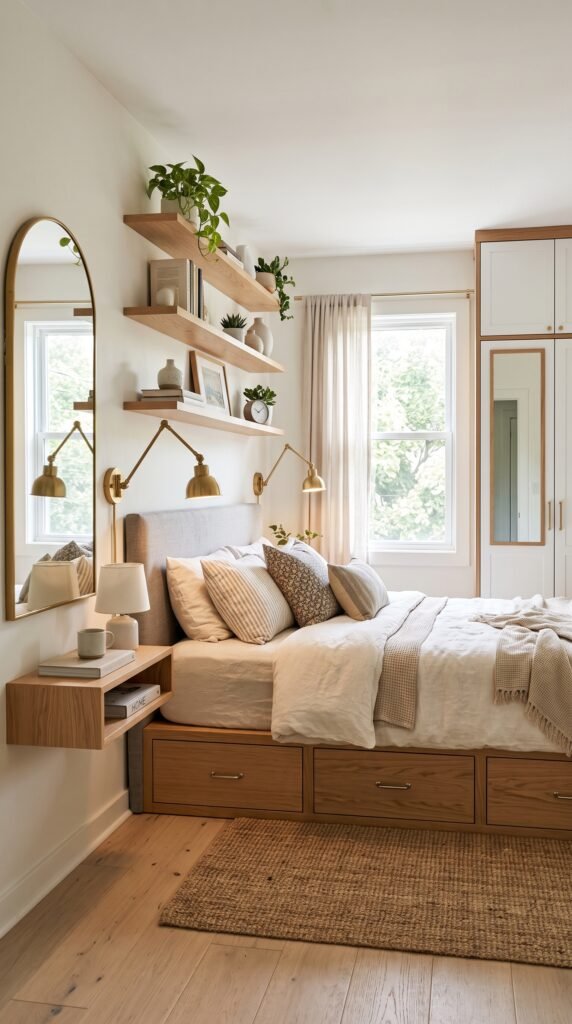
Small bedrooms present their own unique challenge — every bedroom idea has to work twice as hard. But small spaces also have a built-in advantage: intimacy. When done well, a small bedroom can feel like the coziest room in a home.
Go Vertical
When floor space is limited, wall space becomes your best friend. Mount shelves high on the walls to draw the eye upward and create storage that doesn’t eat into the room’s footprint.
Replace bedside tables with wall-mounted sconces and floating shelves. Use vertical space for books, plants, and decorative objects. The perception of height in a room communicates spaciousness even when square footage is limited.
Choose Furniture That Does Double Duty
Every piece of furniture in a small bedroom should earn its keep. A bed frame with built-in storage drawers eliminates the need for a separate dresser. An ottoman at the foot of the bed provides seating, storage, and a visual anchor point.
The goal is to reduce visual clutter while maximizing actual functionality — which, incidentally, also makes the room easier to keep tidy, which itself makes the space feel larger and calmer.
Keep the Color Palette Cohesive
In small rooms, visual noise reads as chaos and makes spaces feel cramped. Sticking to a cohesive palette of two or three colors — especially if those colors are light and neutral — creates a sense of flow and openness.
This doesn’t mean the room needs to be boring. Texture, pattern, and material variation within a cohesive palette can create tremendous visual interest. Think: all creams and warm whites, but in linen, cotton, wood, ceramic, and rattan.
Making It Last: Bedroom Ideas You’ll Still Love Next Year
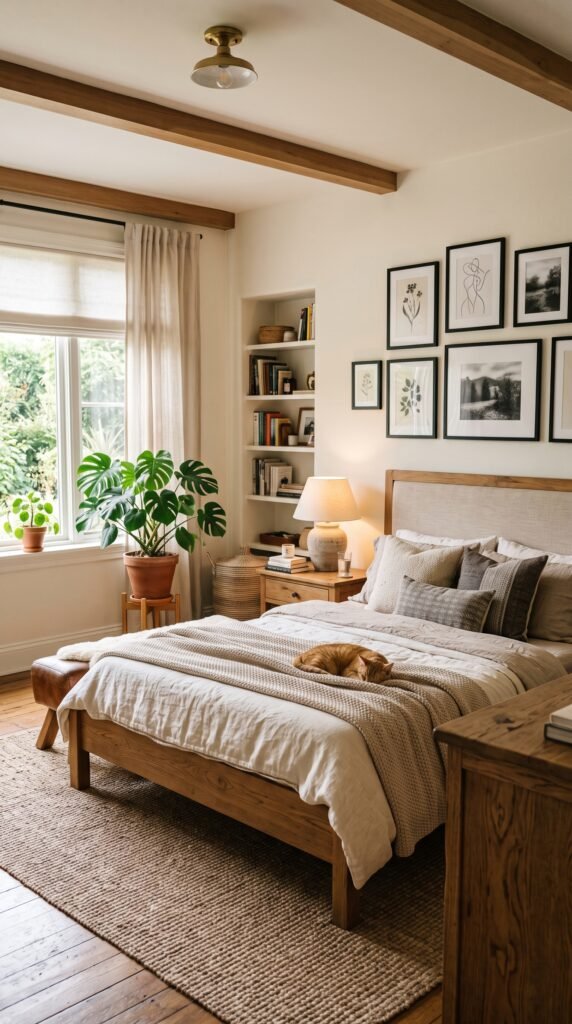
The most important principle behind lasting bedroom ideas is choosing what reflects you, not what’s trending.
Trends in interior design are fast-moving. What’s everywhere on social media one year can feel dated two years later. The bedrooms that hold up over time — the ones that feel special every single morning — are built around personal meaning, quality materials, and genuine comfort rather than viral moments.
Buy Less, Choose Better
The instinct when refreshing a space is often to buy a lot of things quickly to see immediate results. The bedrooms that look best, however, are usually the ones where the owner bought fewer things but chose each one deliberately.
One quality ceramic lamp beats three mismatched ones. One beautifully made quilt outlasts and outlooks six budget comforters. The principle of “buy less, choose better” is both financially smarter over time and aesthetically superior in almost every case.
Personalize With Meaningful Objects
The final, most important of all bedroom ideas: make the room yours. Hang a piece of art that actually moves you. Display a book that changed your thinking. Keep a photograph of a place that matters.
A bedroom styled entirely from a mood board can look beautiful but feel empty. The objects that carry personal meaning are the ones that make a room feel inhabited, loved, and alive — and that feeling is ultimately what transforms any room from a place where you sleep into a place where you truly rest.