
Affiliate Disclosure: This post may contain affiliate links. If you purchase through these links, I may earn a small commission at no extra cost to you. I only recommend products I genuinely believe in and would use in my own home.
Shared kids bedroom ideas are something I’ve spent a lot of time thinking about — partly because I’ve lived it. When my two kids started sharing a room, the first few weeks were a mix of excited giggles and territorial arguments over shelf space. What I quickly learned is that a shared bedroom only works when the room itself is designed to support two different little people, not just crammed with two of everything and hoped for the best.
Why Shared Bedrooms Fail (And How to Fix That Before You Start)
Most shared kids’ bedrooms don’t fail because of the size of the room. They fail because of the lack of planning. When two kids share a space without any clear system — for sleeping, for storing things, for having a corner that feels like theirs — the room becomes a battleground.
The good news is that most of the fixes are surprisingly affordable and don’t require a full renovation. A few smart furniture choices, some intentional zone-setting, and a bit of personalization go a long way. I’ll walk you through exactly what worked for us, and what I’d do differently if I were starting over today.
My Top Picks
Bunk Bed with Storage
A great pick. A quality with Storage that adds style and function to your space.
Shop on Amazon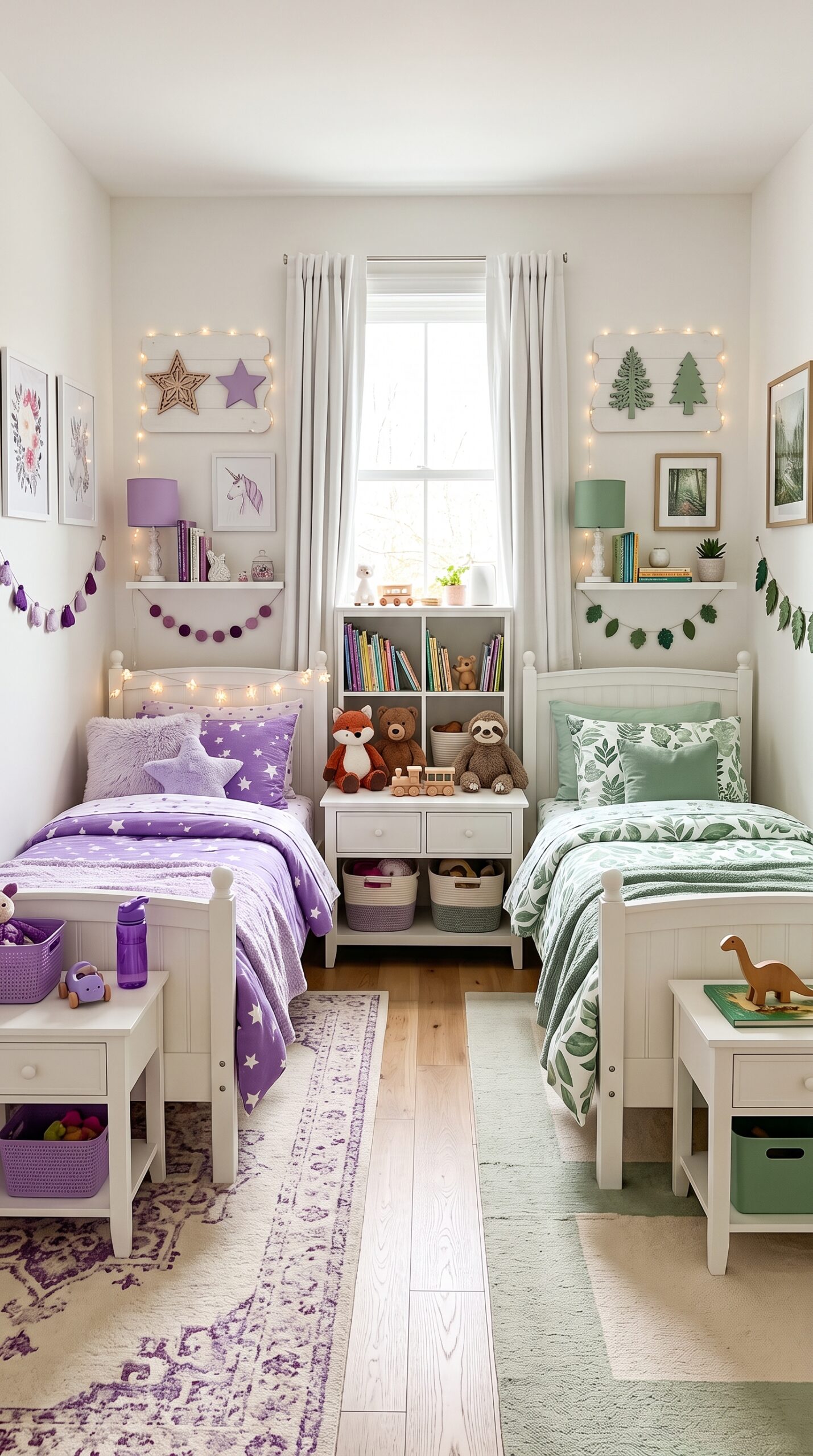
Kids Name Wall Sign
A great pick. A quality Wall Sign that adds style and function to your space.
Shop on Amazon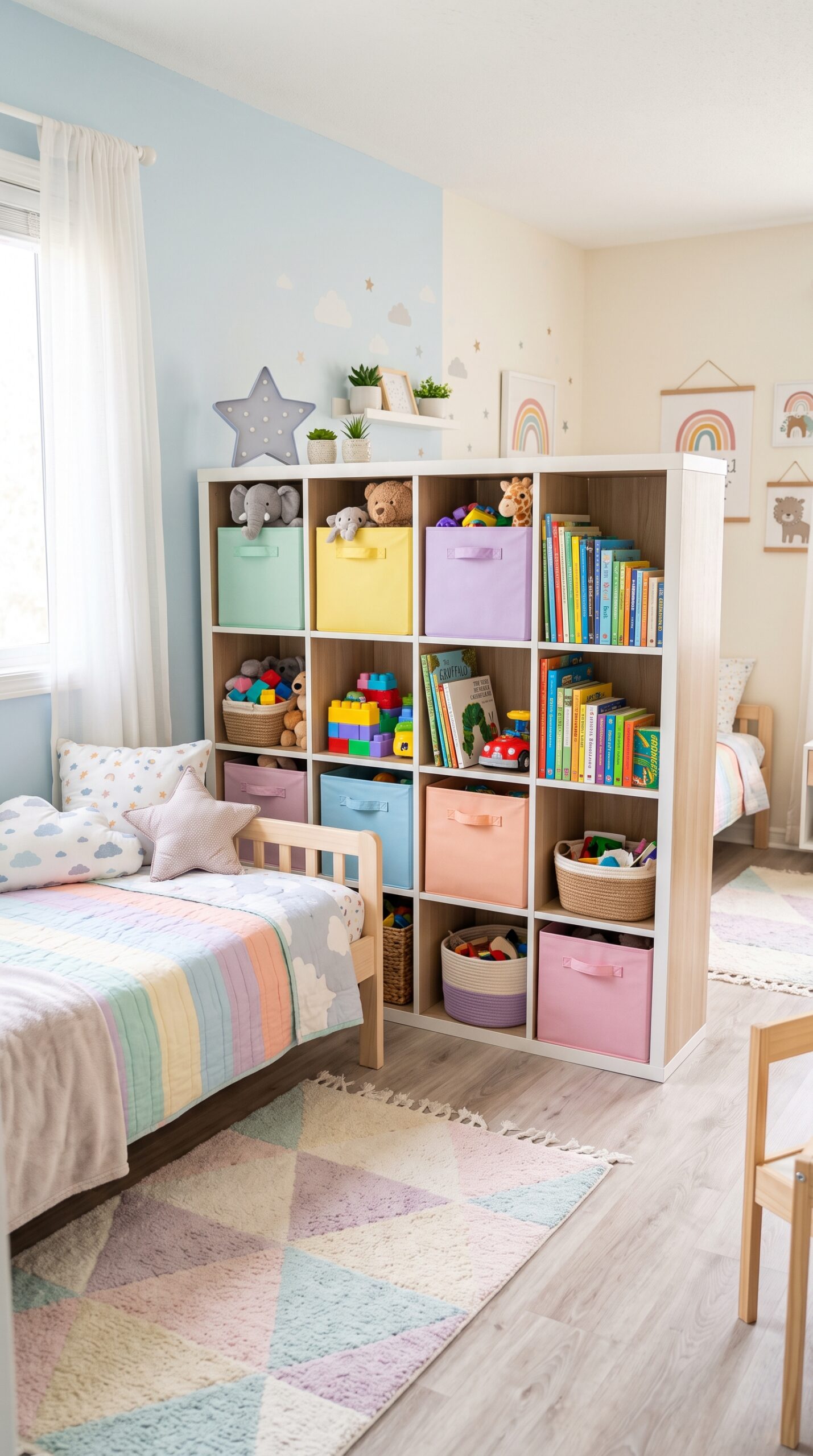
Cube Storage Organizer
A great pick. A quality Storage Organizer that adds style and function to your space.
Shop on Amazon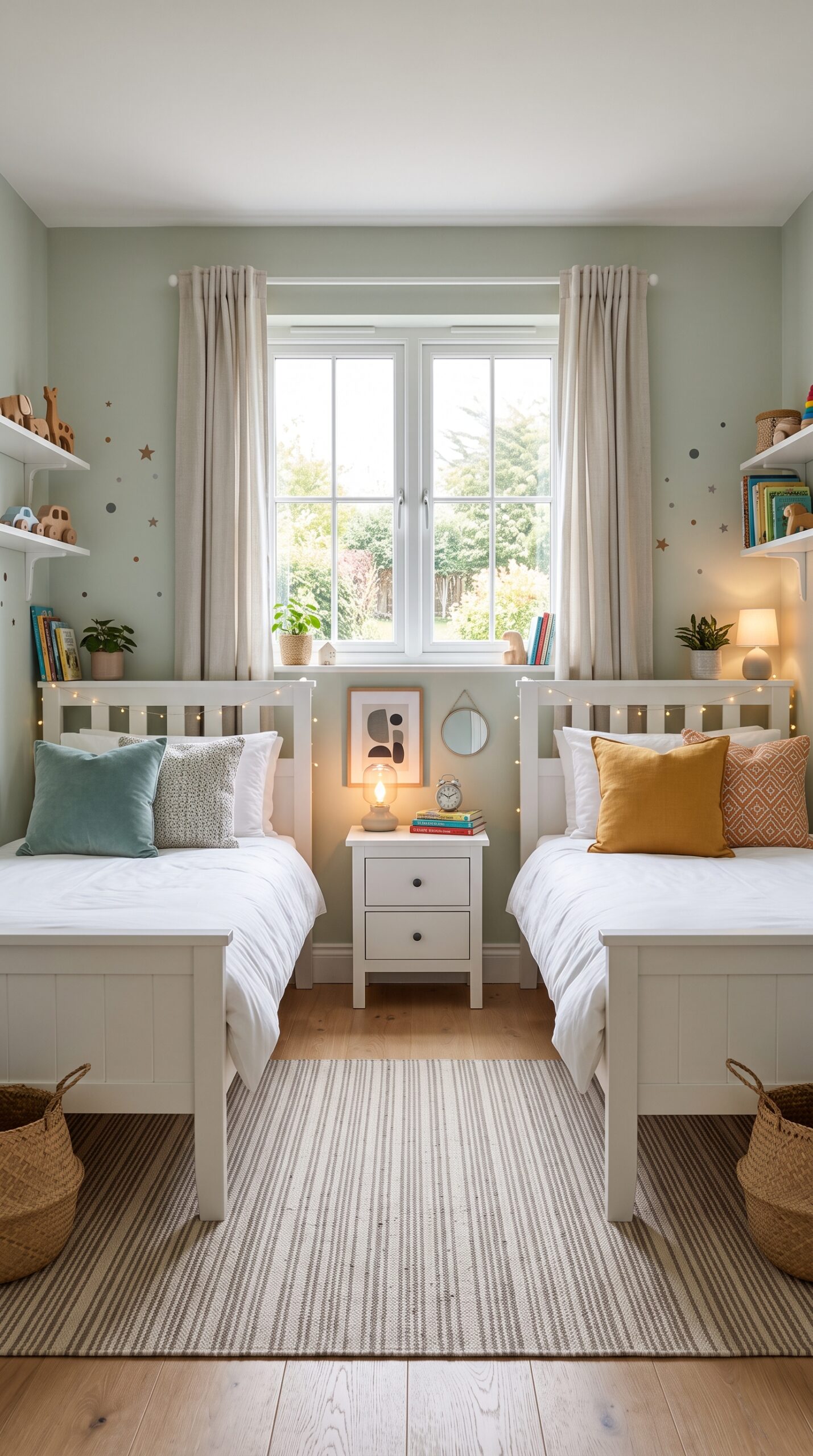
Twin Bed Frame
A great pick. A quality Bed Frame that adds style and function to your space.
Shop on Amazon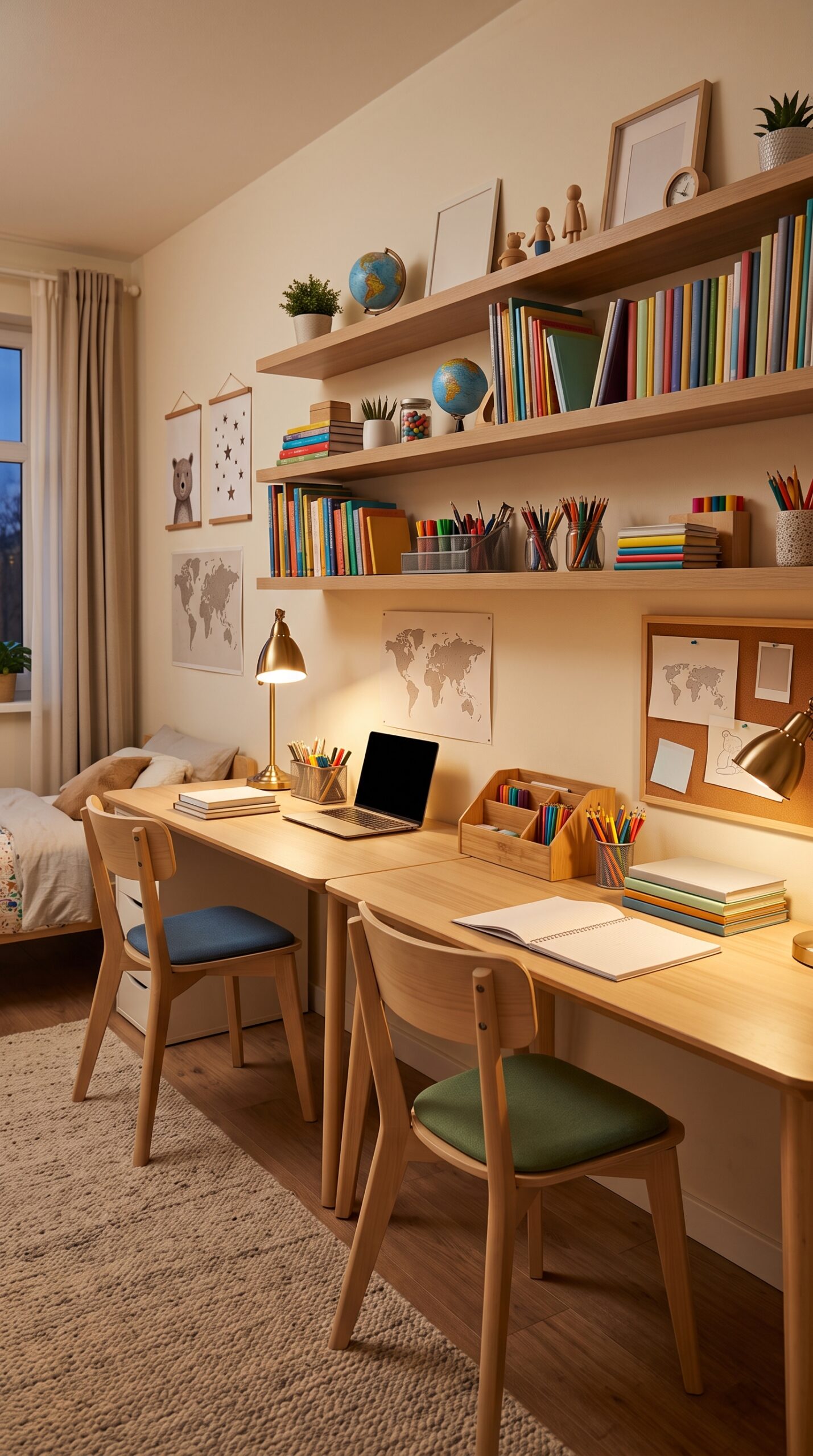
Kids Study Desk
A great pick. A quality Study Desk that adds style and function to your space.
Shop on Amazon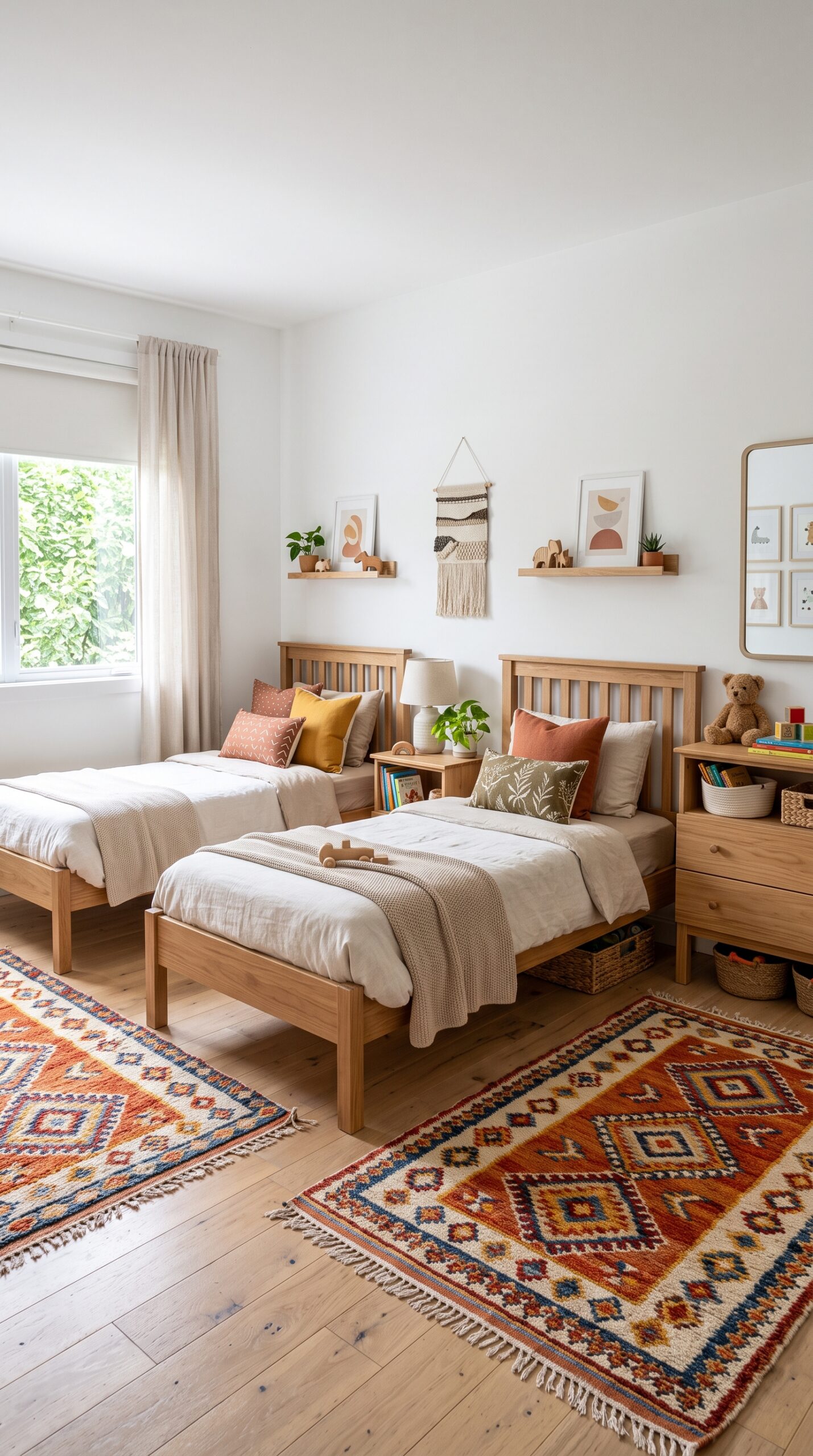
Kids Bedroom Rug
A great pick. A quality Bedroom Rug that adds style and function to your space.
Shop on Amazon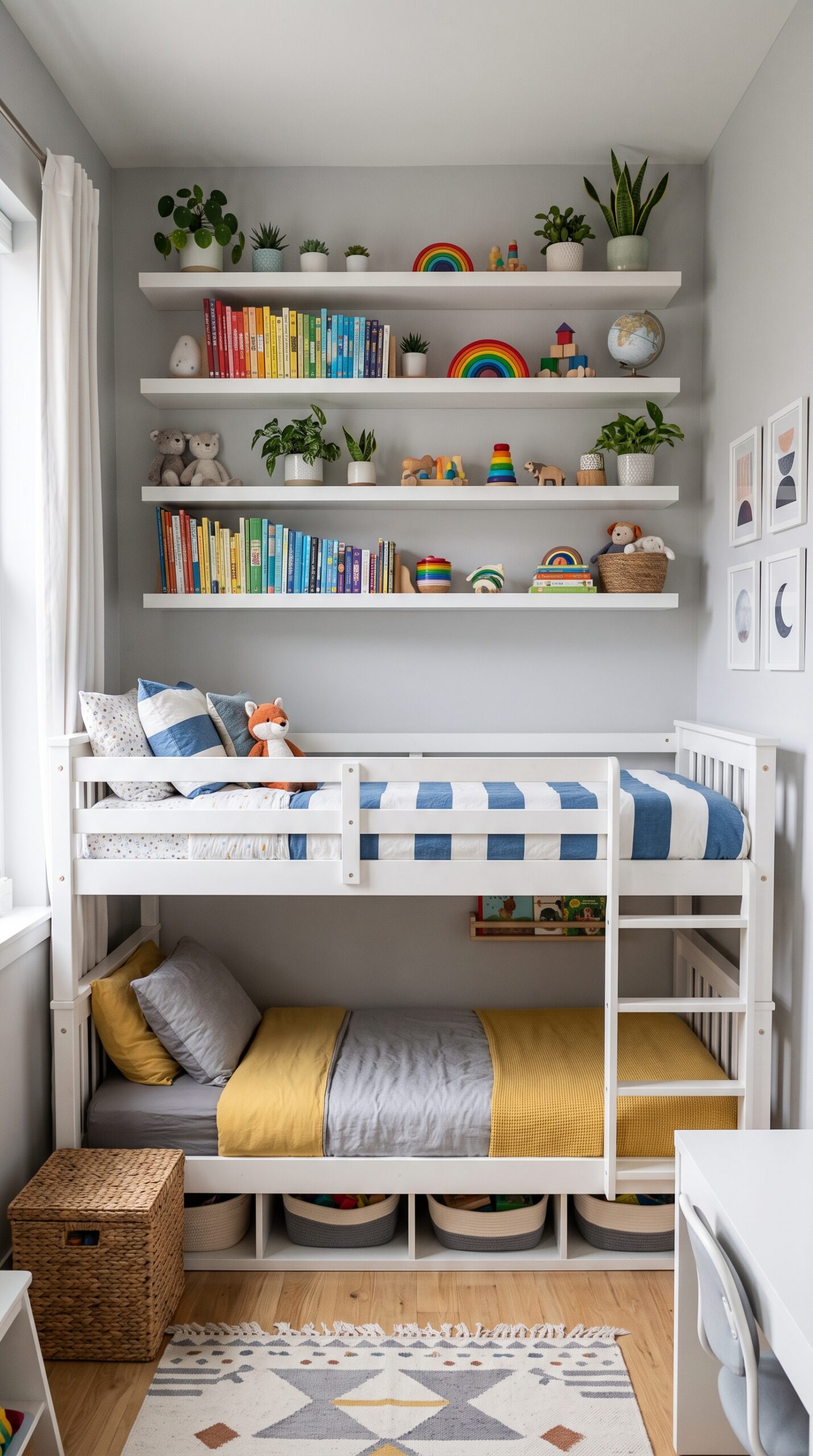
Floating Wall Shelves
A great pick. A quality Wall Shelves that adds style and function to your space.
Shop on AmazonBunk Beds Are the Single Best Investment You Can Make
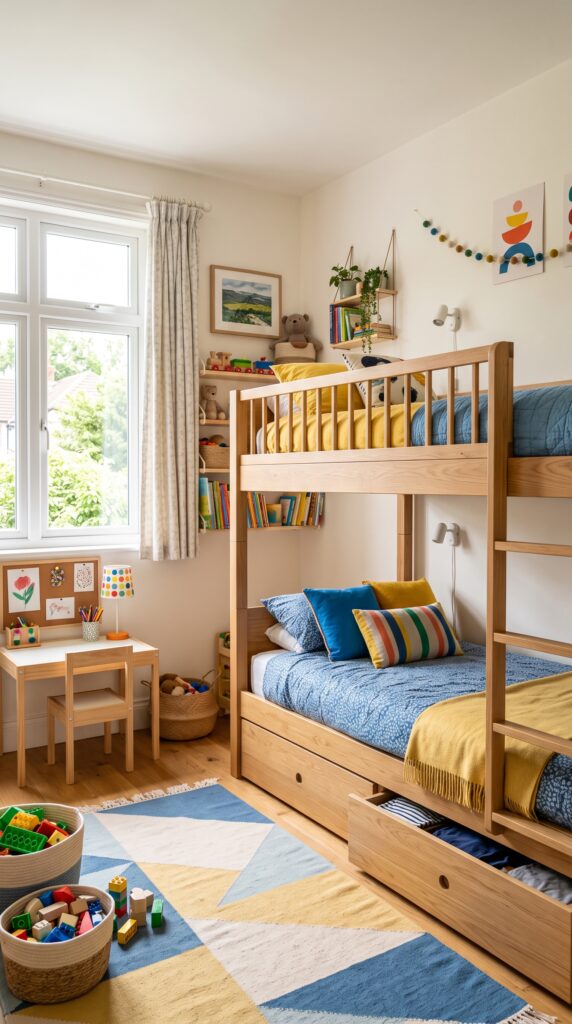
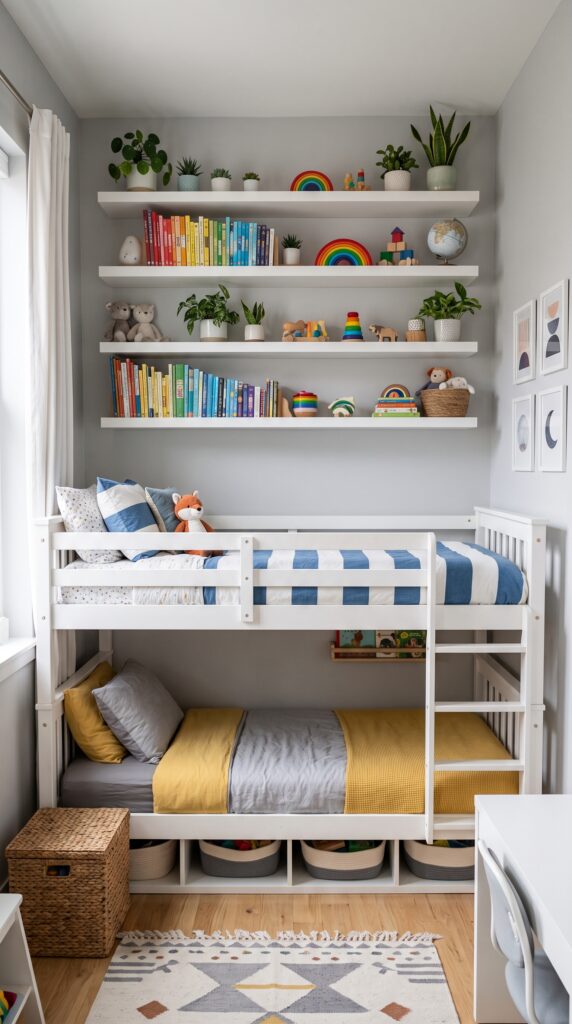
I resisted bunk beds for longer than I should have. They felt like a safety risk, a phase, something we’d regret. But when we finally made the switch, it genuinely transformed how usable the room felt.
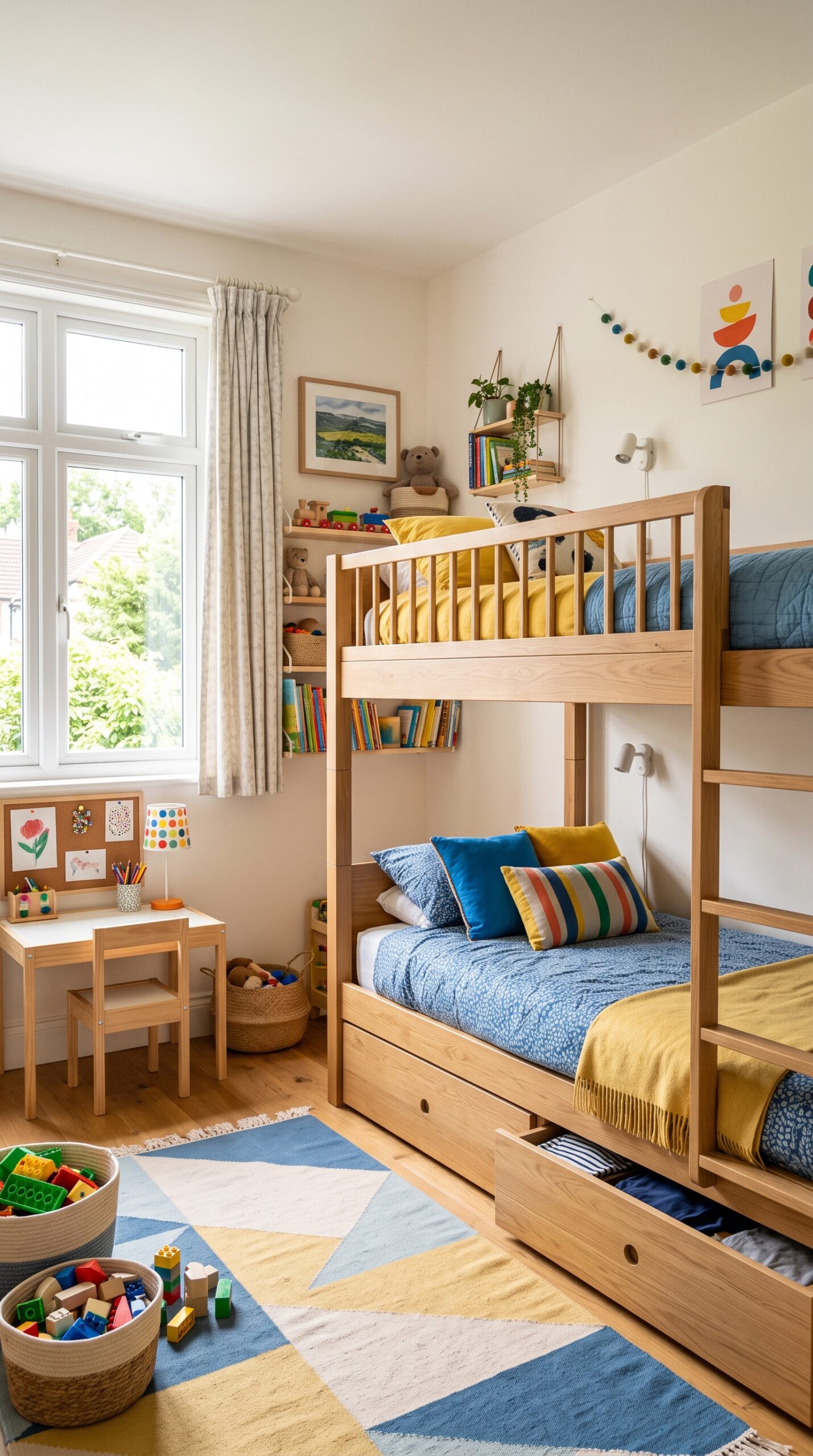
By stacking the sleeping area vertically, you free up a surprising amount of floor space — space that can become a play area, a reading nook, or a study corner. The kids also loved the novelty of it. My older one claimed the top bunk immediately, and my younger one decorated the bottom like a little cave with fairy lights and a curtain.
The key is choosing a bunk bed that works hard. Ones with built-in storage drawers underneath pull double duty — you get sleeping space and toy storage in a single footprint. Add individual clip-on or wall-mounted reading lights for each child so they can wind down independently without bothering each other. And let each kid pick their own bedding. That small act of ownership makes a real difference in how they feel about the shared space.
If you’re looking for a sturdy option with good storage built in, Bunk Bed with Storage is worth considering — it’s solid, the drawers are genuinely useful, and it doesn’t look like a piece of furniture you’re tolerating temporarily.
Create Defined Zones So Each Child Has a Space That Feels Theirs
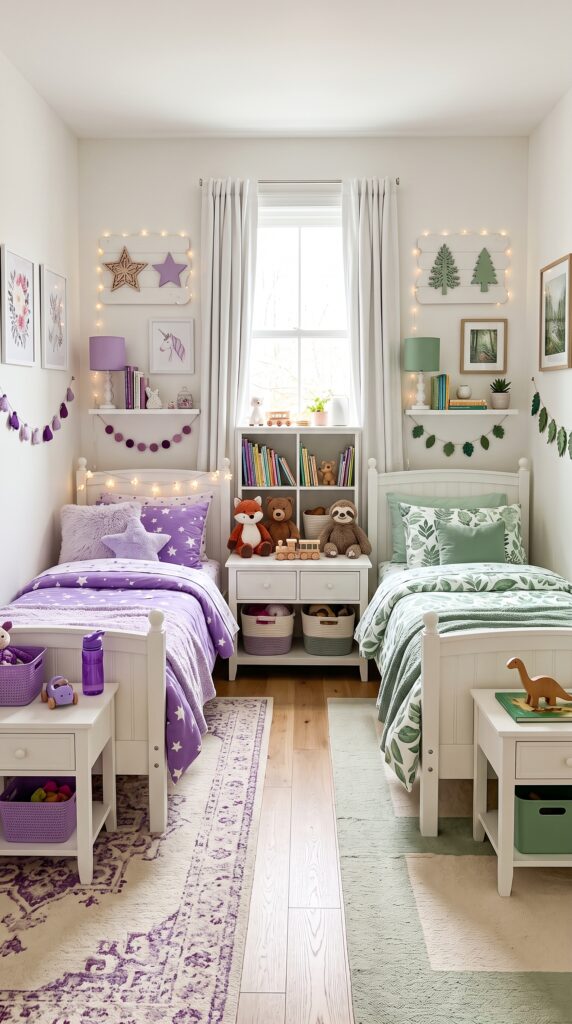
One of the biggest mistakes I see in shared bedroom setups is treating the room as one uniform space. Kids — especially siblings close in age — need to feel like they have a corner of the world that belongs to them. Without that, every shared surface becomes contested territory.
You don’t need to build a wall (tempting as that sometimes sounds). Instead, use visual cues to define each child’s zone. Different wall colors on each side of the room work beautifully, even if it’s just an accent panel or peel-and-stick wallpaper. Let each child choose a few decorative elements for their side — a favorite poster, a specific lamp, a shelf arrangement that reflects their personality.
Personalized name signs are a surprisingly effective tool for this. They’re inexpensive, they look intentional, and they give each kid a clear sense of ownership over their area. Kids Name Wall Sign is a simple addition that packs a real emotional punch for a child who’s learning to share space.
Once zones are established, arguments about whose side is whose tend to reduce significantly. It’s not a magic fix, but it creates a shared understanding that both kids actually respect.
how to organize a small kids bedroom
Smart Storage Is What Keeps the Room Livable Long-Term
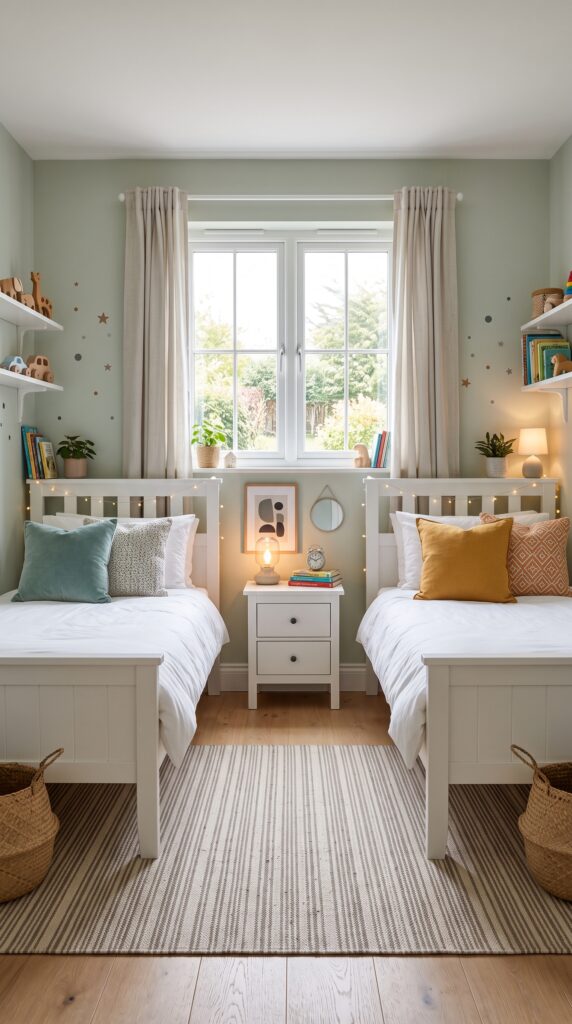
Here’s something nobody tells you before you set up a shared kids’ room: the mess multiplies faster than you’d expect. Two kids, two sets of toys, two wardrobes, two collections of random things they refuse to throw away — it adds up fast.
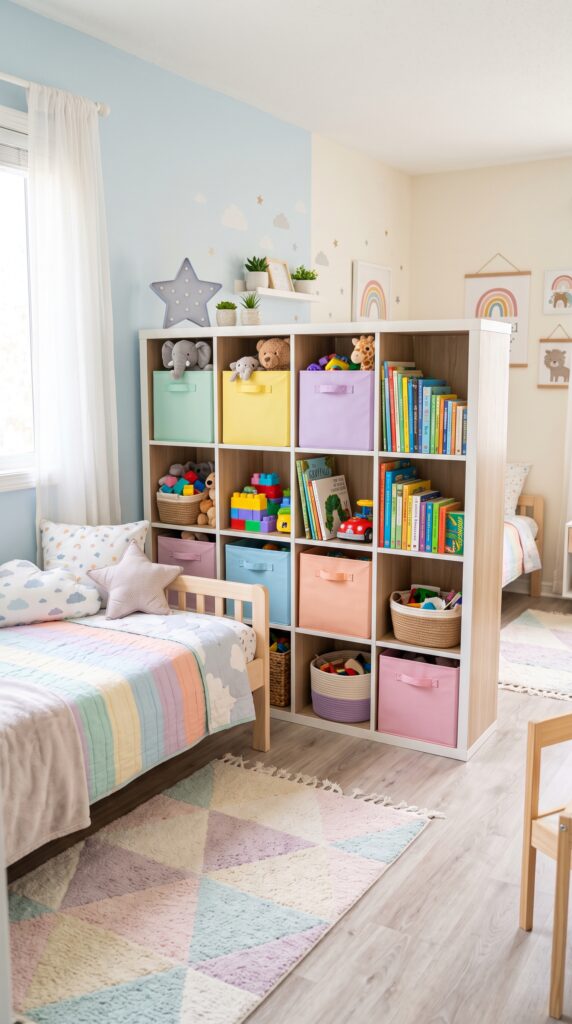
Storage has to be built into the room design, not treated as an afterthought. The approaches that have worked best for us are under-bed storage bins for seasonal items and extra bedding, cube shelving units that can be divided between siblings, and wall-mounted solutions that keep the floor clear.
Cube storage is particularly versatile because you can use fabric bins to colour-code each child’s belongings within the same unit. One kid gets the left column, the other gets the right — simple and fair. Cube Storage Organizer is a solid, affordable option that holds up well to the kind of daily use kids put it through. We’ve had ours for over two years and it still looks good.
For a tidy look that doesn’t eat into floor space, floating wall shelves are underrated. They keep books and smaller toys accessible without adding bulk to the room. Floating Wall Shelves work well for this — easy to install and they look much more intentional than a freestanding bookcase crammed into a corner.
A Symmetrical Layout Creates Calm Without Being Boring
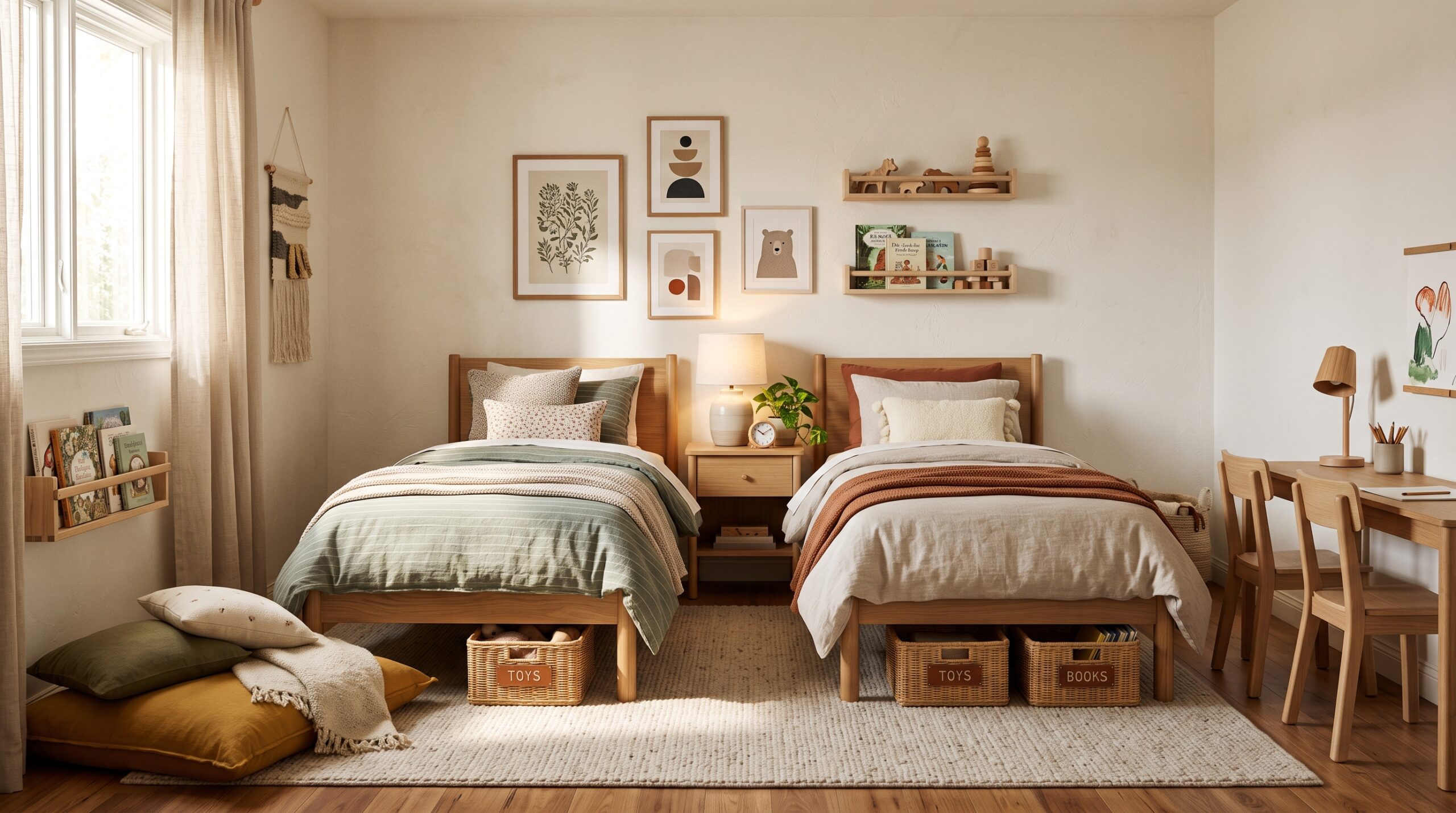
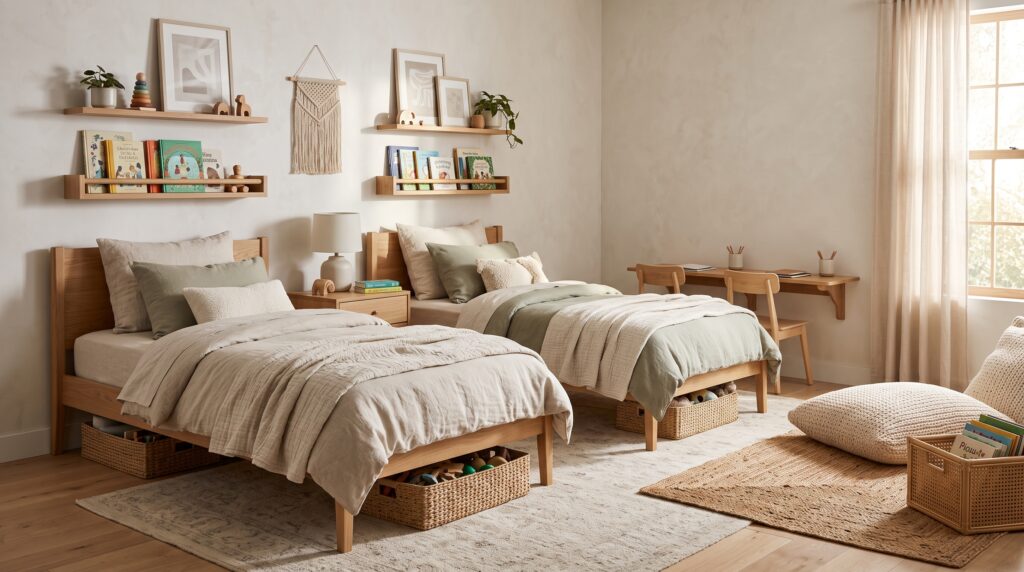
When you can’t use bunk beds — maybe the ceiling is too low, or one child has mobility needs, or they’ve simply outgrown the idea — a symmetrical side-by-side layout is your next best option. Two beds of the same size, placed on opposite walls or side by side with a nightstand between them, creates a room that feels balanced and intentional rather than like two separate rooms awkwardly merged.
The trick is to use matching furniture but different colors or textiles. Identical bed frames in the same finish, but each child gets to choose their own duvet cover and pillow arrangement. This creates visual cohesion while still honoring their individuality — and it’s a fight worth letting them win.
Twin Bed Frame is a clean, simple option that pairs well with almost any bedding style and doesn’t visually overpower a smaller room. I appreciate that it doesn’t scream “kids’ furniture” — it’s the kind of piece that can grow with them.
According to Apartment Therapy’s guide to small shared bedrooms, consistent furniture height across a shared room makes a space feel more cohesive and less chaotic — something I noticed immediately when we switched to matching frames.
Add a Shared Study Area If You Have the Space
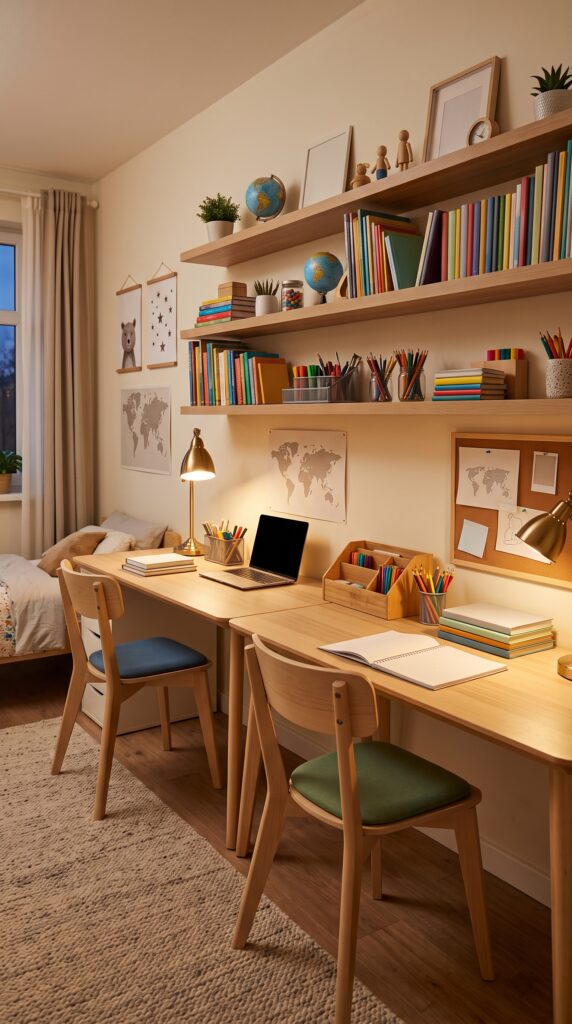
Not every shared bedroom has room for a dedicated study area, but if yours does, it’s worth prioritizing over other extras. Homework done in the bedroom — at a proper desk — tends to go better than homework done at the kitchen table with distractions everywhere.
A long, single desk that both children can use side by side is more space-efficient than two separate desks. Add a drawer organizer or small tray for each child so their supplies don’t get mixed together, and use wall shelves above the desk for books and folders.
Kids Study Desk is a practical choice here — it’s sized well for school-age kids, has enough surface area for two, and doesn’t take over the room visually. Pair it with good task lighting and you’ve got a functional little study nook that genuinely gets used.
Neutral Base, Personal Accents — the Formula That Always Works
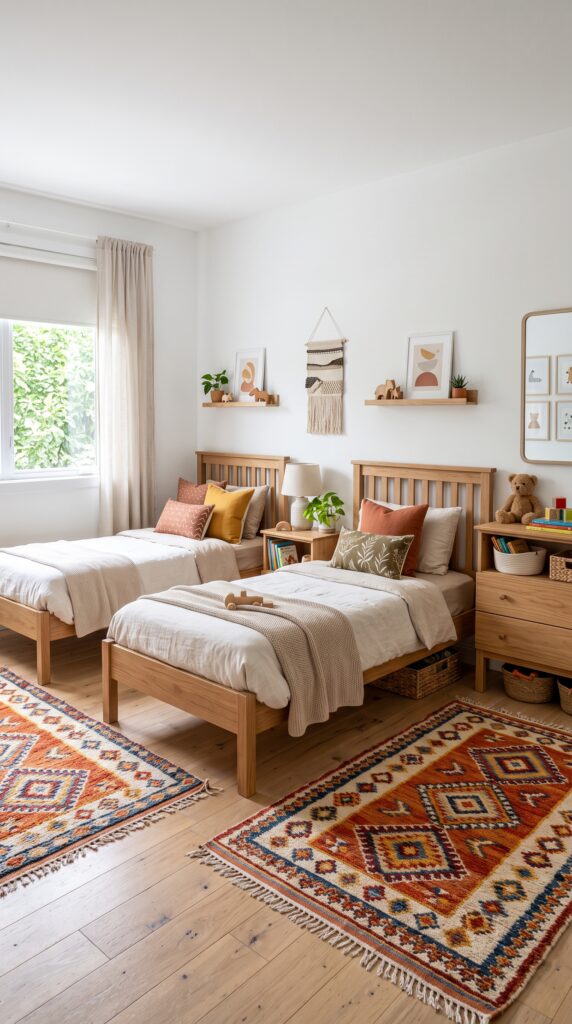
Deciding on a color scheme for a room shared by two kids with different tastes is genuinely difficult. The solution I keep coming back to is a neutral base — white or soft greige walls, simple wood-toned furniture — with personality injected through textiles and accessories.
A neutral foundation means you can swap out a duvet cover or a rug when tastes change (and they will change, often and dramatically) without repainting the whole room. Each child gets to bring their personality through their bedding, their wall art, and the objects on their shelf. The room feels cohesive to visitors while still feeling personal to each kid.
A good rug is one of the most underrated tools for warming up a shared room and subtly defining zones. Kids Bedroom Rug adds texture, color, and a sense of comfort underfoot — plus it softens the room acoustically, which matters when one child is trying to sleep and the other is decidedly not.
As The Spruce notes in their shared bedroom design guide, rugs are one of the fastest ways to visually anchor a space and create distinct areas within an open room — which is exactly what a shared bedroom needs.
Final Thoughts: The Room Should Work for Both of Them
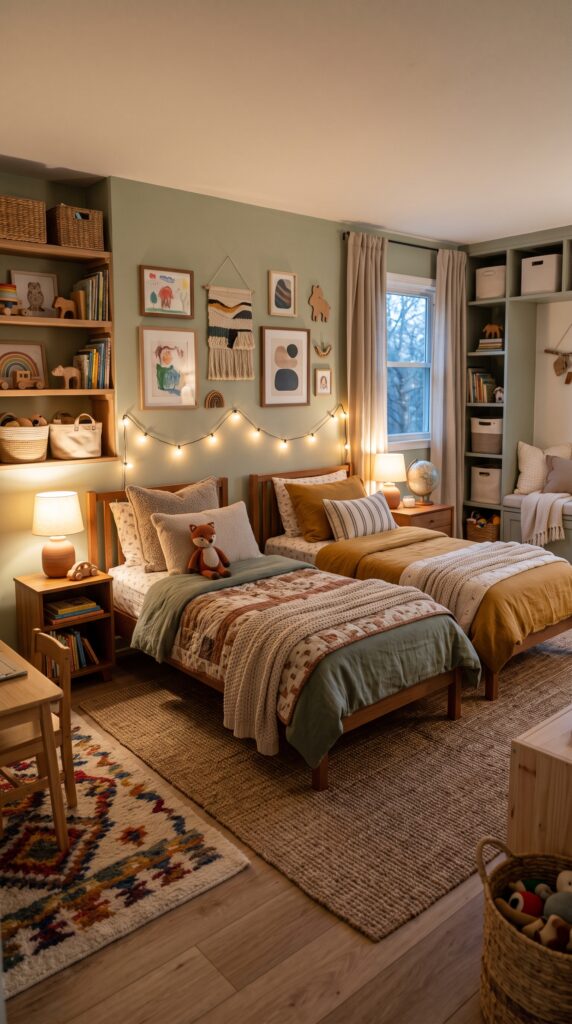
The best shared kids bedrooms I’ve seen — and the one I eventually landed on for my own kids — have one thing in common: they were designed around the specific children using them, not around a Pinterest mood board.
Start with the sleep setup (bunk beds if you can, symmetrical twins if you can’t), build in storage before you need it, carve out personal zones, and then layer in the personality through textiles and small touches. That order matters more than any individual product or design trend.
Sharing a bedroom really can bring siblings closer — there’s something genuinely sweet about a room that holds both of them, that reflects both of their personalities, and that they learn to navigate together. The design just needs to give that relationship a fair chance.
For more ideas on making shared spaces work, Good Housekeeping’s roundup of sibling bedroom solutions is a great place to browse next.