


Creating a cozy bedroom is one of the most rewarding home improvement projects you can take on, especially when you’re starting from scratch and have no idea where to begin. So many people sleep in rooms that feel cold, cluttered, or just completely disconnected from their personal style — and they have no idea how easy it is to fix that. The good news? You don’t need a designer’s budget or years of decorating experience to transform your bedroom into a warm, inviting sanctuary. This guide walks you through everything you need to know, from understanding what makes a space feel cozy in the first place, to the specific changes you can make this weekend.
What Actually Makes a Cozy Bedroom Feel Cozy?

Before you start buying throw pillows or repainting walls, it helps to understand the underlying principles that make a cozy bedroom actually feel cozy. “Cozy” isn’t a single product or color — it’s a feeling created by a combination of sensory elements working together.
The psychology behind coziness comes down to a sense of warmth, enclosure, and softness. Research in environmental psychology consistently shows that people feel most comfortable in spaces with lower ambient light, warmer color temperatures, and tactile textures that invite touch. Think about how you feel walking into a cabin in winter versus a sterile office building — that difference is entirely intentional and entirely replicable.
There are three pillars to cozy bedroom design that you’ll want to keep in mind throughout this entire process.
Warmth refers to both physical warmth (fabrics, insulation, natural materials) and visual warmth (warm-toned colors, amber lighting, wood and leather accents). Softness is about textural contrast — layering hard and soft surfaces so the room feels plush and yielding rather than rigid. Intimacy relates to scale and enclosure — furniture that feels appropriately sized, window treatments that soften harsh outdoor light, and a sense that the room wraps around you rather than swallowing you whole.
Once you understand these three pillars, every single decorating decision becomes much easier to make.
How to Choose a Color Palette for a Cozy Bedroom
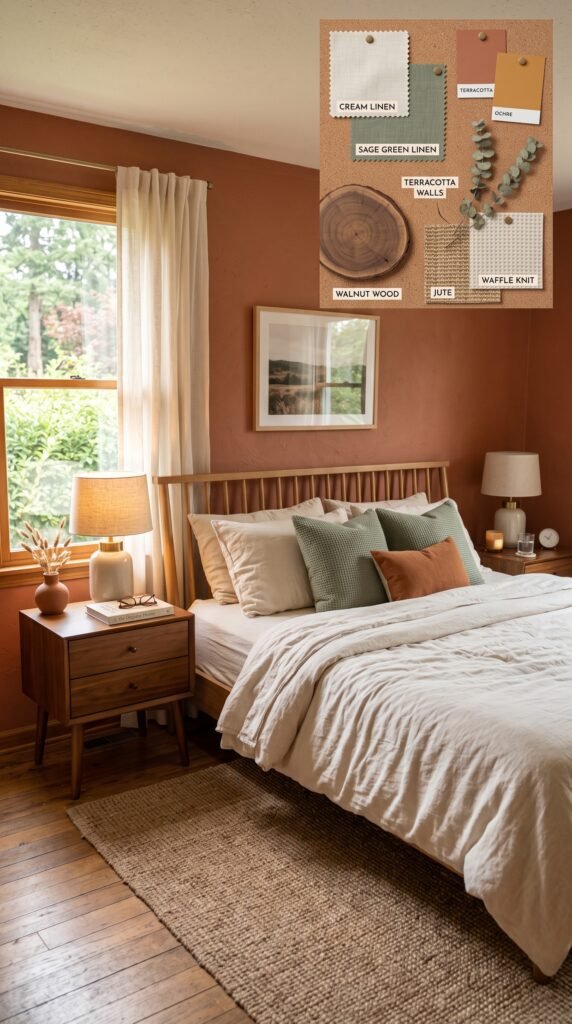
Color is one of the first things people try to tackle, and it’s also one of the most common places beginners make mistakes. Many people default to white because it feels “safe” and “clean,” but a stark white bedroom is actually one of the least cozy spaces you can create. Cozy bedroom design almost always leans toward warmth.
The best color families for a cozy bedroom include warm neutrals, earthy tones, and muted jewel tones. Think creamy whites with yellow or pink undertones rather than cool blue-white. Think warm greiges, soft terracottas, dusty sage greens, and deep moody blues. These colors absorb and reflect light in ways that make the room feel softer and more intimate.
If you’re renting or just not ready to commit to a full repaint, you can achieve the same effect through your textiles. A warm-toned duvet cover, curtains in a deep rust or forest green, and a creamy area rug can shift the entire visual warmth of a room without touching a single wall.
One practical tip: always test paint colors in your actual room before committing. Paint a large swatch (at least 12 by 12 inches) and observe it at different times of day. A color that looks warm in the store can appear completely different under your bedroom’s specific lighting conditions.
For external reference, Sherwin-Williams’ guide to paint color selection offers a useful framework for understanding undertones and how room orientation affects color perception.
Bedroom Decor Ideas That Will Make You Never Want to Leave Your Bed
Layering Textiles: The Secret to a Truly Cozy Bedroom
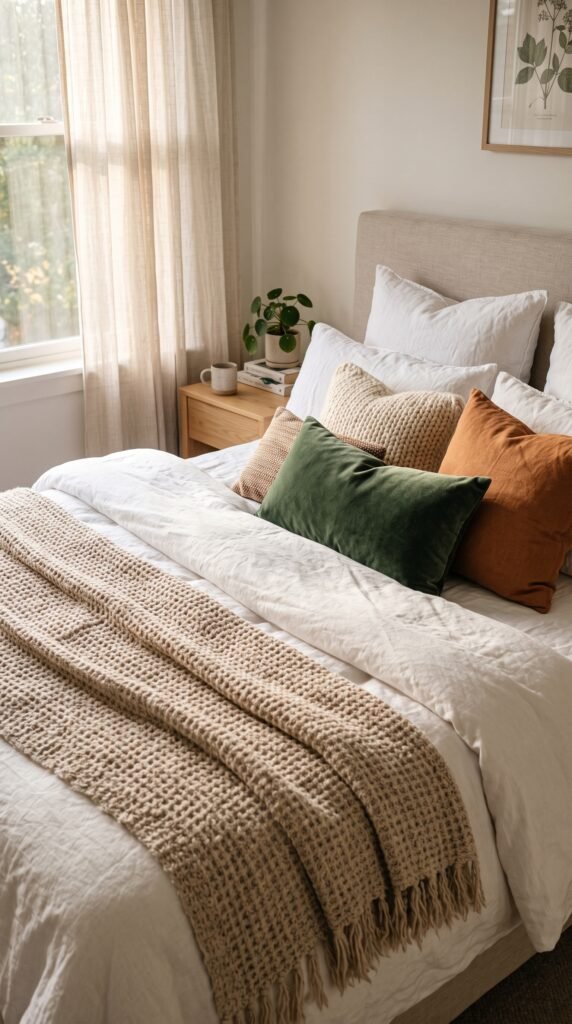
This is the single most impactful thing you can do to make your bedroom feel dramatically cozier, and it’s something you can accomplish entirely through shopping rather than renovating. Textile layering is exactly what it sounds like — building up multiple layers of fabric and texture on your bed and throughout your room to create a sense of depth, warmth, and visual richness.
Start with your foundation: quality base sheets in natural materials. Cotton percale, linen, and cotton-linen blends all breathe beautifully and soften with every wash. Thread count matters less than fiber quality — a 400-thread-count long-staple cotton sheet will outperform a 1000-thread-count polyester blend every single time.
From there, build upward. A duvet or comforter forms your primary layer. Over that, you can drape a quilt or coverlet for texture and visual interest. At the foot of the bed, a chunky knit throw or a folded blanket adds another dimension. The goal isn’t to load the bed with so many things it becomes impractical — it’s to create a layered look that signals warmth and invitation the moment you walk into the room.
Don’t forget the pillows. The standard arrangement for a cozy bedroom starts with your sleeping pillows at the back, followed by Euro shams, then standard or king-sized decorative pillows, then a small lumbar pillow at the front. You don’t have to follow this formula exactly, but having at least three different pillow sizes creates a much more intentional look than a pair of flat sleeping pillows alone.
Beyond the bed, textiles matter throughout the room. A plush area rug beside the bed is one of the most underrated cozy upgrades — stepping onto something soft first thing in the morning immediately shifts the sensory experience of the space. Window treatments in fabric (rather than plastic blinds) absorb sound and add visual softness to what are otherwise hard, flat surfaces.
According to The Spruce’s guide to bedroom design, layering is one of the top techniques recommended by interior designers for creating spaces that feel professionally styled without professional-level investment.
how to choose the right area rug for your living room
Lighting: The Most Underestimated Element of Cozy Bedroom Design

Ask any interior designer what the single most transformative upgrade you can make to a cozy bedroom is, and a significant number of them will say lighting. Most bedrooms — especially in apartments and older homes — come standard with a single overhead fixture in the center of the ceiling. This is the worst possible lighting setup for a cozy bedroom. Overhead center lighting creates flat, even illumination with no shadows, no warmth, and no sense of intimacy whatsoever.
Cozy lighting is layered lighting. Rather than relying on one bright source, you want multiple light sources at different heights and intensities. Bedside lamps at nightstand height create warm pools of light that feel intimate and personal. A floor lamp in a corner adds ambient glow without the harshness of overhead lighting. String lights, LED candles, or battery-powered fairy lights add a soft atmospheric layer that’s especially effective in the evening.
Bulb temperature matters enormously here. Look for bulbs rated between 2700K and 3000K — these fall in the warm white to soft white range and produce the amber glow that’s most associated with coziness. Bulbs above 4000K produce cooler, bluer light that’s better suited to kitchens and offices than bedrooms.
Dimmers are one of the best investments you can make. Being able to lower your overhead light from full brightness to a soft 20% glow in the evening prepares your brain for sleep and makes the room feel immediately more intimate. Most smart bulbs (including those compatible with Alexa and Google Home) offer this functionality without requiring any electrical work.
Furniture Arrangement and Scale for a Cozy Bedroom

Even the most beautifully styled cozy bedroom will feel off if the furniture is the wrong scale or arranged awkwardly. Scale and proportion are concepts that beginners often overlook, but they have a profound effect on how a room feels to be in.
The bed is the anchor of any cozy bedroom design, and it should be placed intentionally. In most rooms, the bed works best centered on the main wall — ideally the wall opposite the door, so it’s the first thing you see when you enter. Floating the bed away from the wall on both sides (rather than pushing it into a corner) allows for proper nightstands and creates a sense of visual balance.
Nightstands should be at mattress height or within a few inches — too high or too low creates visual awkwardness and practical frustration. If your room is small, look for slim, floating nightstand shelves rather than bulky table designs, which can make a small space feel cramped.
One of the most common furniture mistakes in cozy bedroom design is choosing pieces that are too small for the room. A tiny rug under a king-size bed, for example, creates a disconnected floating feeling. Your area rug should be large enough that the front legs of your nightstands and at least 18 to 24 inches of rug extend on either side of the bed.
If space allows, a reading nook — even just a comfortable chair with a floor lamp and a small side table — adds enormous coziness to a bedroom. It signals that the room isn’t just for sleeping, but for rest and retreat in a broader sense.
small bedroom furniture ideas for tight spaces
Personalizing Your Cozy Bedroom with Decor and Scent
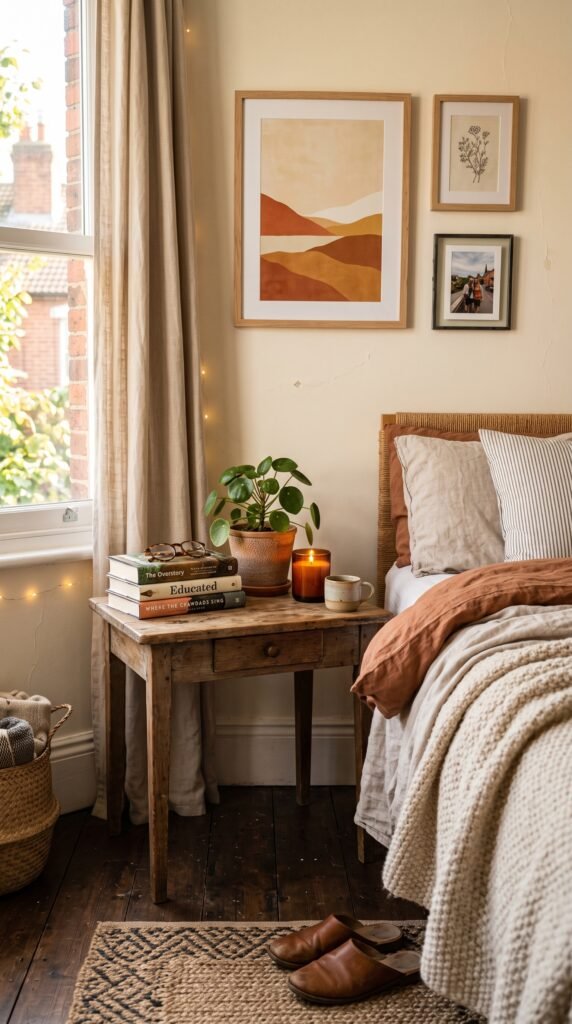
Cozy bedroom design isn’t just about furniture and textiles — it’s about creating a space that feels specifically yours. The personal touches are what elevate a nice-looking bedroom into a true sanctuary.
Books are one of the most powerful cozy signifiers. A small stack of books on a nightstand immediately adds warmth, personality, and intellectual intimacy to a space. You don’t need an entire library — three to five books you’re genuinely reading or love says everything it needs to.
Plants bring life and organic softness into a bedroom. Low-light tolerant varieties like pothos, snake plants, and ZZ plants thrive in bedroom conditions and add a living, breathing dimension to the space. There’s also growing evidence from NASA’s landmark clean air study that certain houseplants contribute to improved indoor air quality, which only enhances the restfulness of a bedroom environment.
Scent is one of the most overlooked elements of a cozy bedroom, but it’s incredibly powerful. Our olfactory system is directly connected to the limbic system — the part of the brain associated with emotion and memory — which means familiar, comforting scents can trigger an immediate sense of relaxation and safety. Candles in warm, grounded scents like sandalwood, cedar, vanilla, and amber work beautifully in bedrooms. Linen sprays or essential oil diffusers offer subtler options that you can use daily.
Art and objects on the walls and surfaces complete the picture. The key is intention — a few meaningful pieces arranged thoughtfully will always look better than a crowded collection of unrelated items. If you’re decorating on a budget, framing pages from art books, printing high-resolution images from free art archives like Unsplash, or simply grouping objects you already own in a deliberate way can look genuinely beautiful.
Pulling It All Together: Your Cozy Bedroom Action Plan
Creating a truly cozy bedroom doesn’t have to happen all at once, and it certainly doesn’t require spending a fortune. The key is approaching it systematically — understanding the principles behind coziness and then making deliberate changes that each contribute to that overall feeling.
Start with the elements that give you the most return on investment. Lighting changes (especially adding warm bedside lamps and warmer bulbs) tend to have the most immediate and dramatic impact for the least money. Textile upgrades — particularly a quality duvet cover, a cozy throw blanket, and an area rug — come next. Color follows, whether through paint or through the textiles and accents you bring in.
From there, refine your furniture arrangement, pay attention to scale and proportion, and layer in the personal touches that make the space feel genuinely yours. Scent, plants, books, and art come last — they’re the finishing notes that turn a well-designed cozy bedroom into a space you never want to leave.
The most important thing to remember is that coziness is ultimately about how a room makes you feel. There are principles and techniques that reliably create it, but the specific colors, textures, and objects that feel cozy to you are personal. Trust your instincts, make changes gradually, and pay attention to how each addition shifts the feeling of the space. Your ideal cozy bedroom is absolutely within reach — and it probably starts with something as simple as changing a light bulb.