If you’ve been searching for modern garden ideas that actually work for real backyards and tight schedules, you’re in the right place. Too many homeowners feel stuck between an overgrown mess and a blank concrete slab, unsure how to create something beautiful, functional, and easy to maintain. The good news is that today’s design trends offer smarter solutions than ever before — and you don’t need a landscape architect or a massive budget to pull them off.
Why Most Outdoor Spaces Fall Short (And How Modern Garden Ideas Fix That)
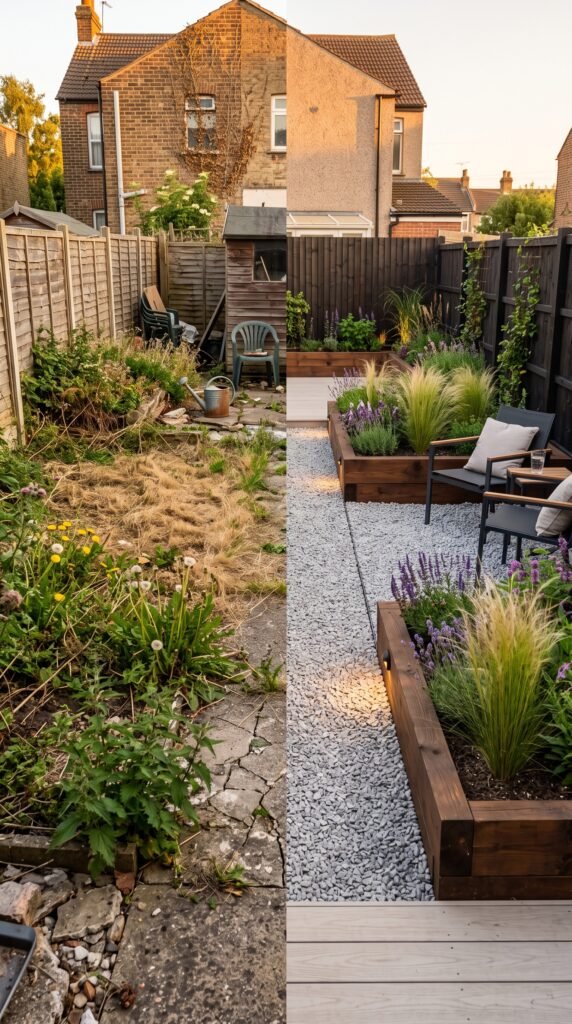
The problem with most outdoor spaces isn’t a lack of plants — it’s a lack of intention. People scatter a few pots around, throw down mulch, and call it done. Within one season, maintenance anxiety takes over, and the garden becomes something you avoid rather than enjoy.
Modern garden design solves this by leading with structure first and softening with plants second. When hardscaping — pathways, borders, raised beds, and seating zones — anchors the layout, the entire space feels cohesive even when plants are still growing in. This is the foundational shift that separates a thoughtful outdoor space from a yard that just happened.
Understanding this principle is the first step. The next is knowing which specific modern garden ideas are actually worth your time and investment.
15 Modern Garden Ideas That Genuinely Transform Outdoor Spaces
1. Define Zones With Geometric Hardscaping
One of the most impactful modern garden ideas is to divide your outdoor space into clearly defined zones using geometric shapes. A rectangular gravel path leading to a circular seating area, for example, instantly creates visual hierarchy.
Use materials like porcelain pavers, smooth concrete stepping stones, or compacted crushed granite. The key is contrast — pair warm-toned timber with cool grey stone to add depth without clutter.
2. Go Vertical With Living Walls
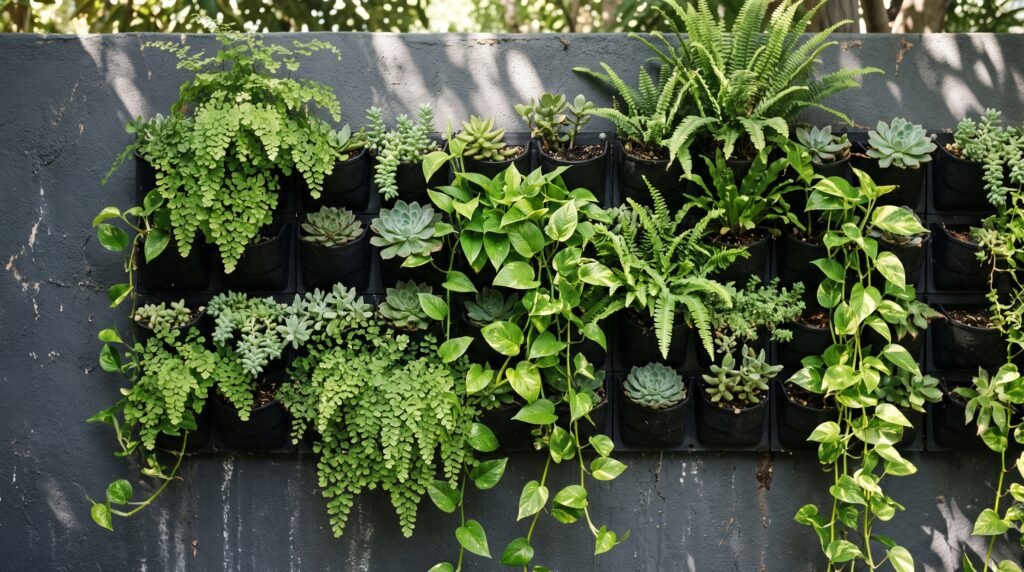
Vertical gardens solve one of the most common suburban problems: lack of ground space. A mounted planter system on a fence or exterior wall can hold herbs, succulents, or trailing ferns while freeing up your ground-level real estate entirely.
Modular systems are ideal because you can rearrange panels as plants grow or as your taste evolves. According to the Royal Horticultural Society, vertical plantings also help insulate walls and reduce urban heat island effects, making them a genuinely smart investment.
3. Embrace Ornamental Grasses for Low-Maintenance Drama
Ornamental grasses are underused in residential gardens, but they’re one of the easiest ways to bring movement, texture, and year-round interest to a modern planting scheme. Varieties like Karl Foerster feather reed grass or Blue Oat Grass thrive in full sun with minimal watering once established.
Pair them in odd-numbered clusters along a border or as a backdrop to lower perennials. They also act as natural privacy screens, which is a practical bonus in tight urban plots.
4. Install Raised Steel Planter Beds
Corten steel raised beds have become a hallmark of contemporary garden design — and for good reason. Their warm, rust-toned finish weathers beautifully over time, providing a natural contrast against green foliage while offering a clean, architectural edge.
how to build raised garden beds
Raised beds also improve drainage and soil quality dramatically compared to in-ground planting. You control the soil mix entirely, which means fewer weeds, better root development, and more productive harvests if you’re growing edibles.
5. Use Gravel and Mulch as Design Elements, Not Afterthoughts
Gravel isn’t just a filler material. In modern garden ideas rooted in Scandinavian or Japanese minimalism, gravel becomes a design feature — raked into patterns, bordered by clean edging, or used to create negative space that lets focal plants breathe.
Pea gravel, slate chippings, and white marble aggregate each carry a completely different visual mood. Choose a material that complements your home’s exterior palette, and use metal or composite edging to keep lines crisp.
6. Light Your Garden Like an Interior Space
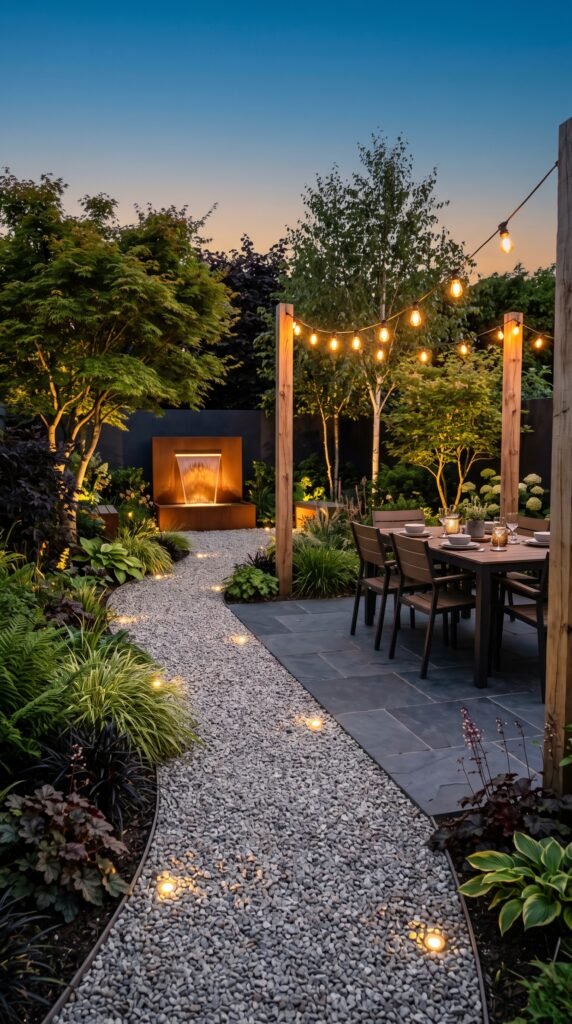
Outdoor lighting is one of the most transformative and underestimated elements in modern garden ideas. Most people stop at a single floodlight over a back door. A layered lighting approach — path lights, uplights on trees or architectural plants, and ambient string lights over a seating area — creates an entirely different experience after dark.
LED systems with smart controls allow you to adjust brightness and color temperature to suit the season or occasion. The Illuminating Engineering Society recommends layering ambient, task, and accent lighting outdoors the same way interior designers do inside — a principle that produces dramatically better results than a single bright fixture.
7. Create a Sensory Pathway
A pathway doesn’t just connect A to B — it creates an experience. Wide, evenly spaced stepping stones through a bed of low ground cover, bordered by lavender or catmint, engage sight, touch, and smell simultaneously.
This is particularly effective in smaller gardens where you want to elongate the perceived journey through the space. Step width and spacing matter more than most people realize — aim for a 600–650mm spacing to match a natural walking stride comfortably.
8. Add a Water Feature for Calm and Sound
Even a modest water feature — a wall-mounted spout, a shallow basin with aquatic plants, or a recirculating boulder fountain — introduces sound into your garden. Moving water masks street noise, attracts wildlife, and creates a focal point that no static object can replicate.
Modern interpretations tend toward clean geometry: rectangular reflection pools, cube fountains, or narrow rill channels cut into paving. These align perfectly with contemporary hardscaping rather than fighting against it.
9. Select a Restricted Plant Palette
One of the most sophisticated modern garden ideas is also one of the most counterintuitive: use fewer plant species, not more. A planting scheme with five to seven carefully chosen varieties repeated across the garden creates visual unity and feels intentional.
Pick one structural plant, one flowering perennial, one ornamental grass, one ground cover, and one climber. Repeat those selections in varying quantities across your borders. The result looks designed rather than assembled.
10. Build a Timber Deck With Clean Lines
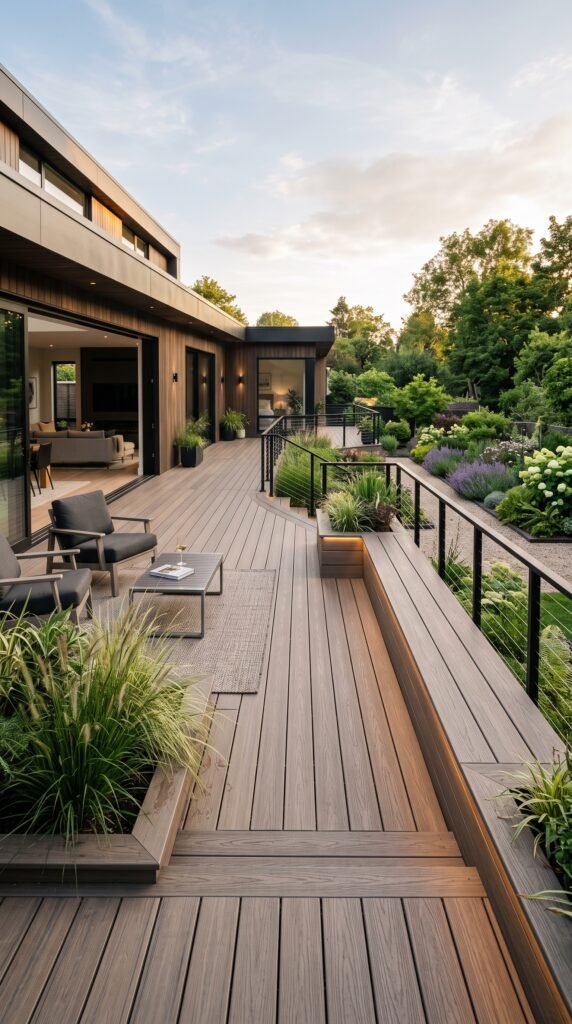
Decking remains one of the most popular modern garden ideas for good reason: it creates instant level changes, defines an outdoor living zone, and extends your living space with relatively low construction complexity. Composite decking materials have improved significantly — they now rival the appearance of hardwood while requiring almost no maintenance.
Keep lines clean by avoiding ornate balustrade designs. Simple vertical or horizontal steel cables, or frameless glass panels, maintain a contemporary feel without visually chopping up the space.
11. Introduce Topiary and Structural Shrubs
Box topiary, clipped yew columns, and cloud-pruned hollies bring formality and permanence to a modern garden. They serve as living sculptures that anchor a planting scheme across all four seasons — crucial in temperate climates where summer perennials die back.
Even a single clipped sphere of Pittosporum ‘Tom Thumb’ in a sleek concrete pot at an entrance can transform the feel of a property. These plants require some patience but very little day-to-day maintenance once established.
12. Incorporate Edible Planting Into the Design
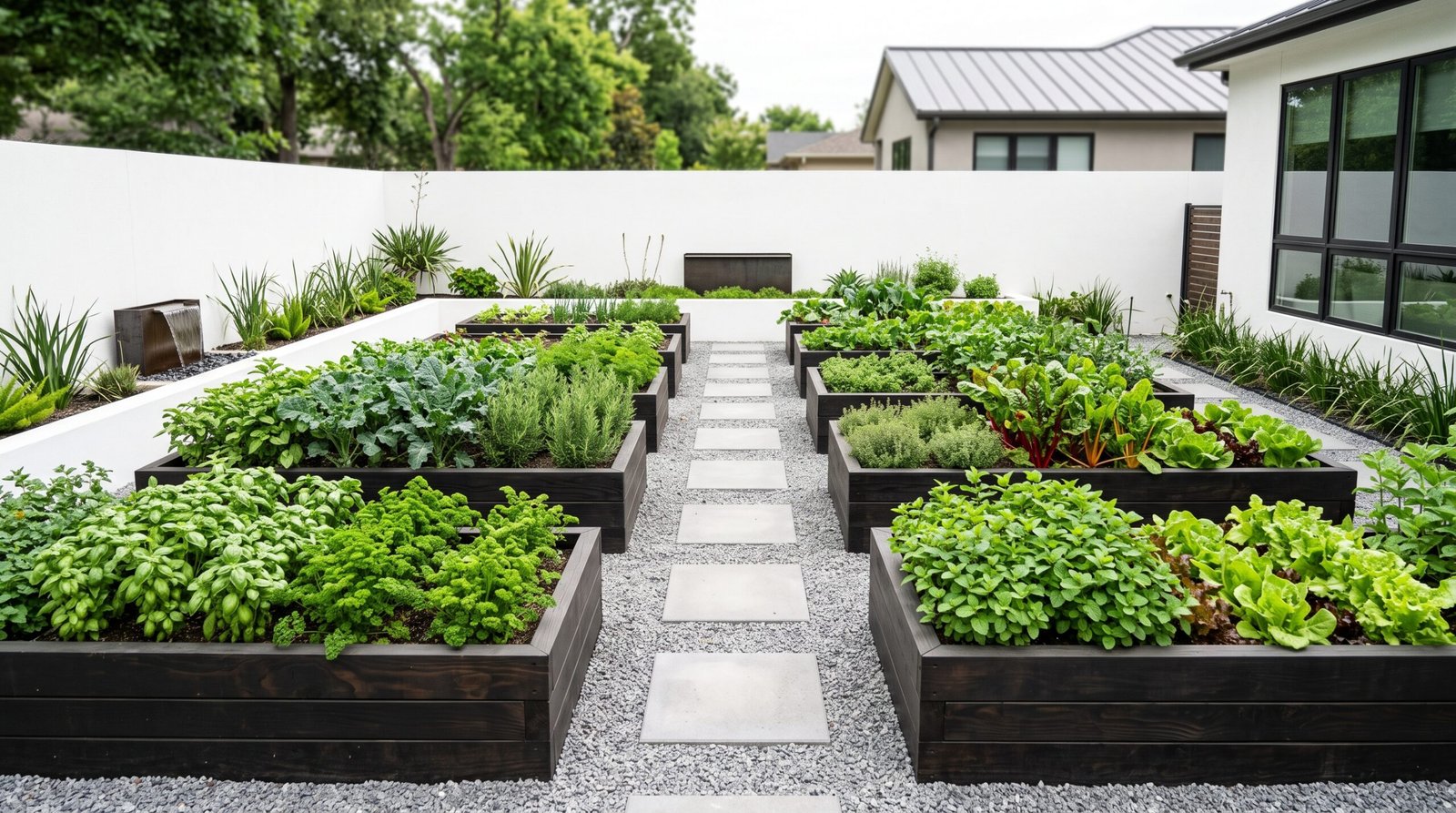
Productive gardening and modern aesthetics are no longer at odds. Architectural vegetables like rainbow chard, bronze fennel, artichokes, and climbing French beans offer genuine ornamental value while feeding you through the season.
how to design a productive kitchen garden
Grow them in raised beds integrated into the main garden layout rather than hidden in a corner. This approach, sometimes called “potager” or kitchen garden style, is increasingly popular in modern urban gardens where space is precious.
13. Use Outdoor Rugs and Furniture to Anchor Social Zones
Defining a social zone with an outdoor rug under a dining table or lounge set creates the same psychological effect as interior design — it signals that this is a room, not just a space. Weatherproof rugs in neutral tones or geometric patterns are widely available and dramatically elevate a basic patio area.
Furniture choice matters equally. Clean-lined powder-coated aluminium frames, rattan weave sofas, or solid concrete side tables all hold up to modern aesthetics far better than fussy, ornate garden furniture styles.
14. Install Smart Irrigation to Reduce Maintenance
One of the most practical modern garden ideas for busy homeowners is automating watering entirely. Drip irrigation systems connected to a smart controller — which adjusts watering schedules based on weather data — eliminate one of the biggest sources of garden failure: inconsistent moisture.
According to the Environmental Protection Agency’s WaterSense program, smart irrigation systems can reduce outdoor water use by up to 50% compared to conventional timer-based systems. Less water waste, fewer dead plants, and zero effort once set up is a compelling combination.
15. Add a Bold Focal Point
Every well-designed modern garden needs at least one bold focal point that draws the eye and gives the space a reason for being. This could be a sculptural specimen tree like a multi-stem birch or Acer, a large-scale ceramic pot, a statement planter wall, or a custom fire pit.
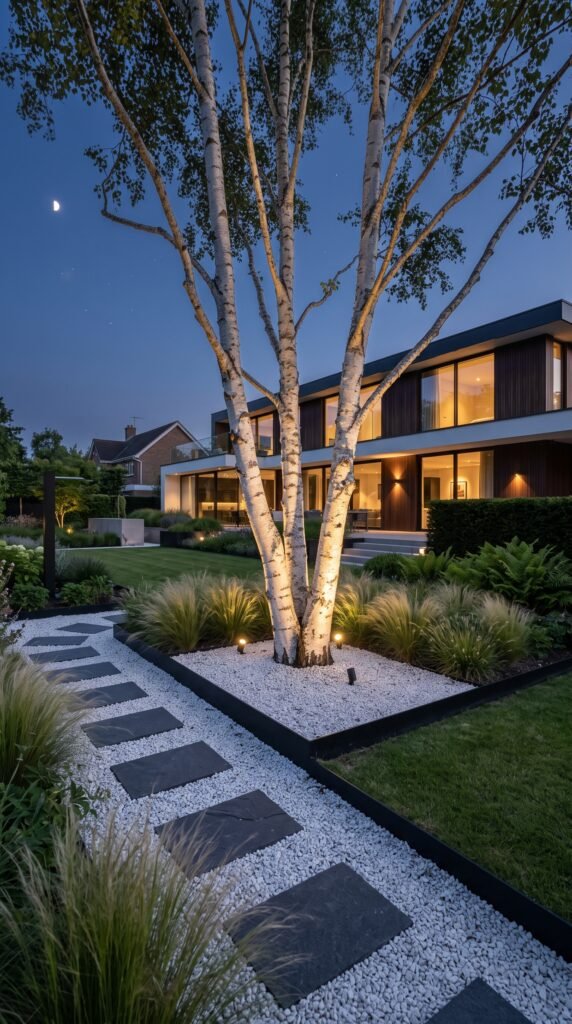
The focal point should be visible from your primary indoor vantage point — usually the kitchen or living room window. Designing with that sightline in mind ensures the garden feels like an extension of the interior rather than a separate, forgotten space.
How to Prioritize These Modern Garden Ideas for Your Space
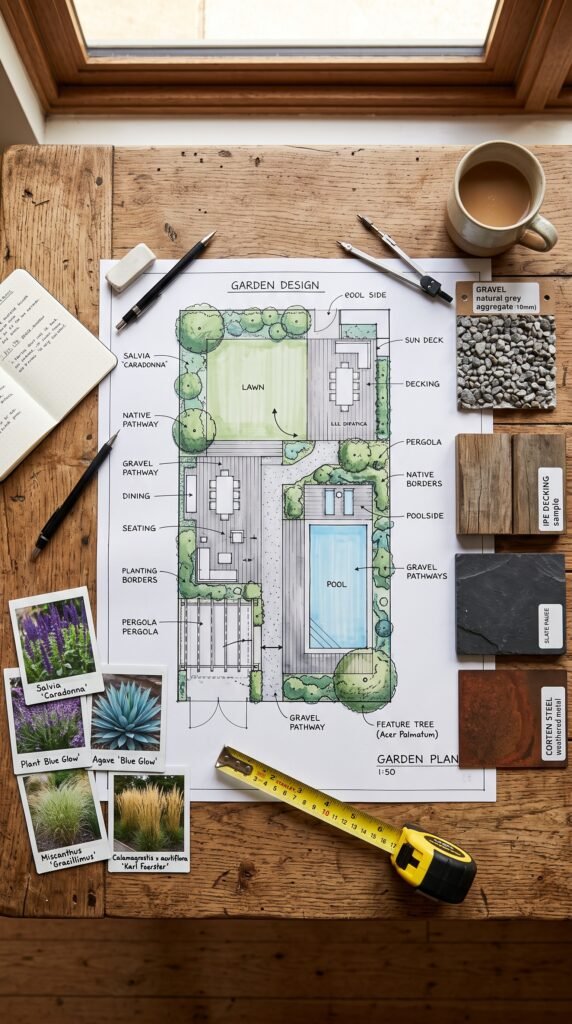
Not every idea on this list needs to happen at once — and trying to implement all fifteen simultaneously is a reliable route to overwhelm and abandoned projects. A smarter approach is to work in phases.
Start with the hardscaping framework: define your zones, establish your pathways, and install any structural elements like raised beds or decking. This foundational layer costs more upfront but pays dividends because every subsequent planting decision has clear boundaries to work within.
Phase two is planting — select your restricted palette and install structural shrubs and grasses first, then fill in with perennials and seasonal interest. Phase three is the finishing layer: lighting, furniture, water features, and the kind of detail that makes a garden feel truly complete.
This phased approach means you can budget sensibly, adjust your vision as the structure reveals itself, and enjoy visible progress at every stage rather than one exhausting all-or-nothing push.
The One Principle That Ties All Modern Garden Ideas Together
Every single idea on this list succeeds or fails based on one underlying principle: restraint. Modern garden design is not about filling every inch with something interesting. It is about editing ruthlessly, choosing materials and plants that genuinely belong together, and allowing negative space to do as much work as the planted areas.
The most transformative modern garden ideas share that quality of confidence — they commit to a direction, repeat it consistently, and trust that simplicity is compelling rather than boring. When you approach your outdoor space with that mindset, the results tend to exceed expectations every time.