
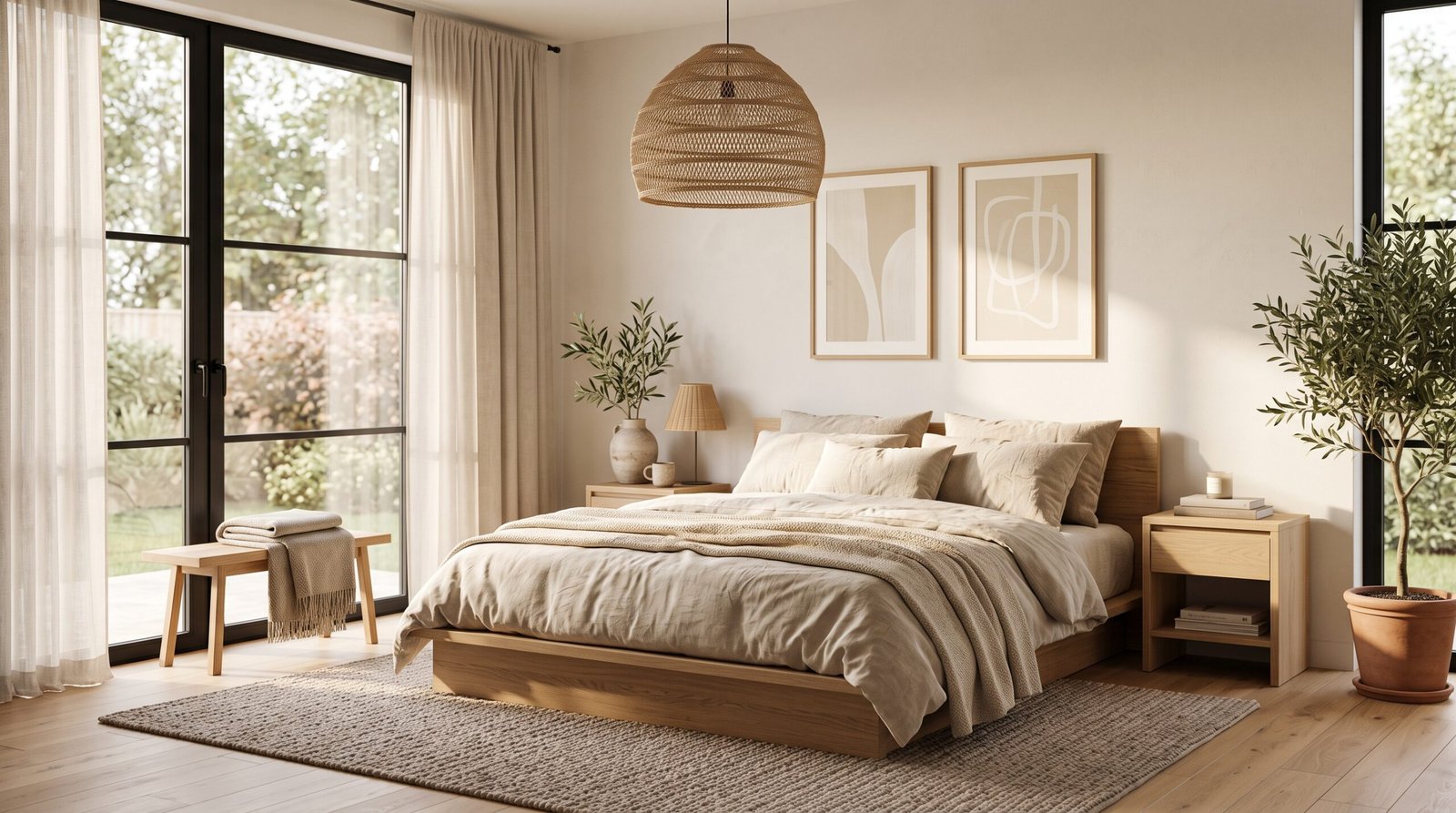
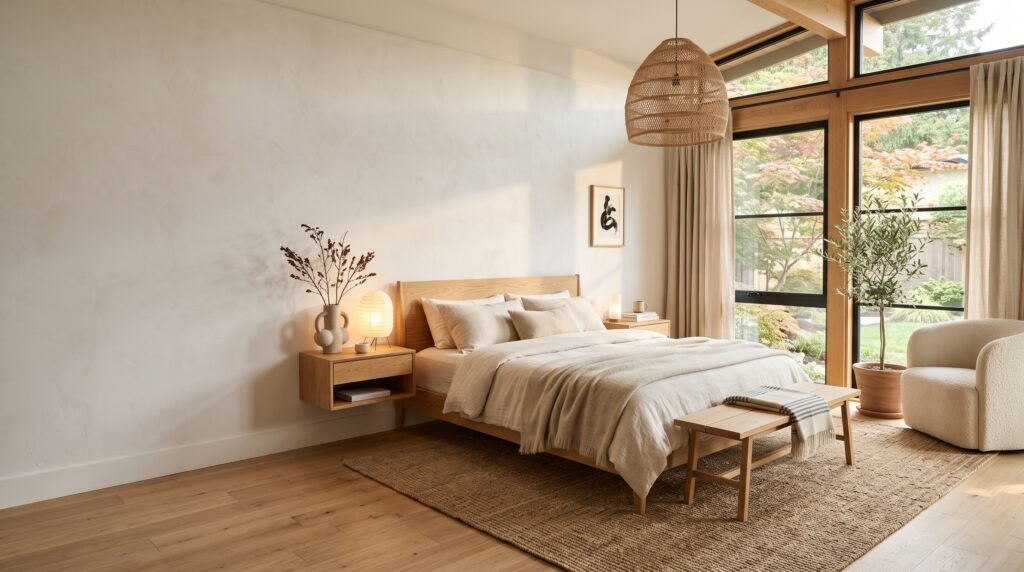
Creating a japandi bedroom is one of the most rewarding design projects you can tackle in a single weekend — and the results can genuinely change how you feel when you wake up each morning. This hybrid aesthetic blends Japanese minimalism with Scandinavian warmth to produce spaces that feel calm, intentional, and deeply livable. If your bedroom currently feels cluttered, cold, or just visually noisy, the japandi approach offers a concrete, step-by-step path to something better.
What Is the Japandi Bedroom Aesthetic and Why Does It Work?
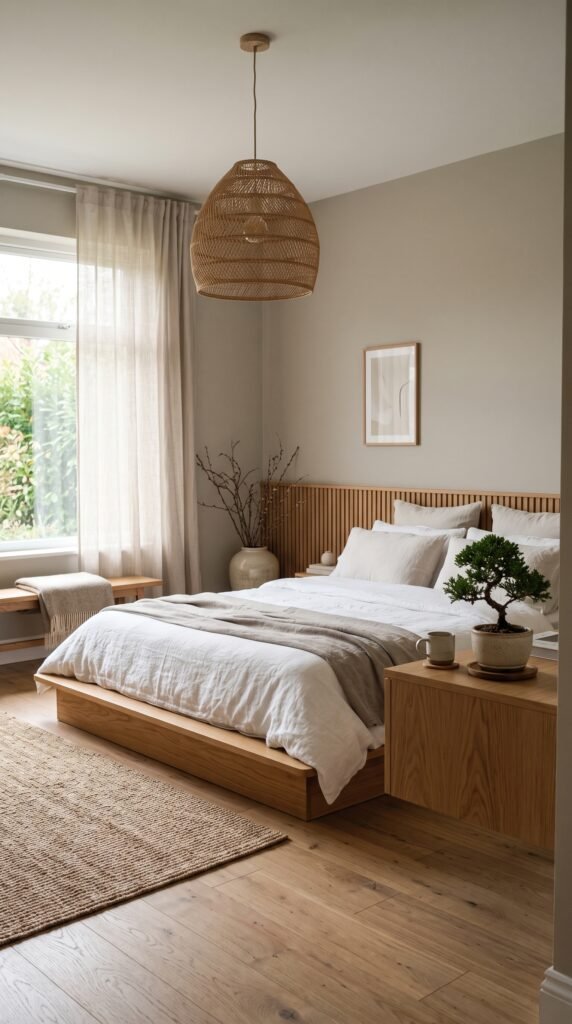
The japandi bedroom is not simply a design trend. It is a philosophy built on two complementary cultural approaches to living. Japanese design, rooted in the concept of wabi-sabi, finds beauty in imperfection and impermanence. Scandinavian design, guided by hygge, prioritizes coziness, functionality, and human comfort. When these two traditions meet in a bedroom, the result is a space that strips away excess without feeling sterile.
What makes this aesthetic so effective psychologically is the deliberate reduction of visual noise. Research published by Princeton University’s Neuroscience Institute found that physical clutter competes for your attention and impairs your ability to focus — and that includes the clutter your brain processes while you sleep in a disorganized room. A japandi bedroom counters this by ensuring every object earns its place.
The palette is typically restrained: warm whites, soft grays, earthy taupes, and muted sage greens. Textures do the heavy lifting that color would in other styles — think linen, raw wood, ceramic, and natural fiber rugs. The furniture sits low to the ground, echoing Japanese interiors, while the overall warmth of materials nods to Scandinavian sensibility.
Understanding this foundation before you start shopping or rearranging is what separates a genuinely cohesive japandi bedroom from a room that just has some wooden furniture and white bedding.
Step-by-Step Guide to Creating Your Japandi Bedroom This Weekend
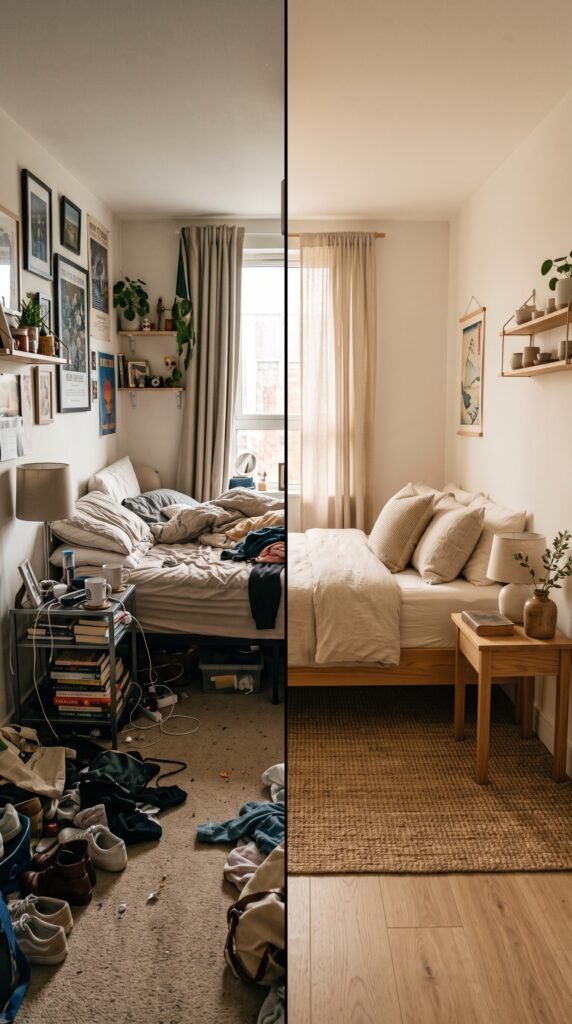
Transforming your bedroom does not require a full renovation. Most people who commit to this over a weekend achieve a dramatic shift using what they already own, with only a few targeted additions. Here is how to approach it systematically.
Step 1 — Declutter Before You Decorate
Before a single new object enters your japandi bedroom, everything that currently lives there needs to be evaluated. Pull everything off surfaces, out of corners, and off the walls. Work from a cleared baseline.
Ask one question about every item: does this serve a daily function or bring genuine calm? If the answer is no, it leaves the room. Decorative items that feel busy, mismatched frames, excess throw pillows, and visible cable clutter are all candidates for removal. The japandi bedroom breathes through its empty spaces — negative space is not wasted, it is structural.
Step 2 — Commit to a Grounded Color Palette
Once the room is clear, assess your walls and existing furniture. The japandi bedroom typically works within a range of warm neutrals: off-white, warm linen, soft clay, mushroom brown, or muted sage. If your walls are currently a bold color, a weekend is enough time to repaint with a proper primer and two coats.
If repainting is not on the table, use textiles and furniture placement to shift the temperature of the room. Dark, cool grays can be warmed with linen throws and wood-toned accents. According to Sherwin-Williams’ color psychology resources, warm beige and earthy clay tones actively support a sense of rest and shelter — precisely what a japandi bedroom aims to deliver.
Step 3 — Anchor the Room With a Low Bed Frame
The bed is the single most important piece of furniture in a japandi bedroom. Traditional Japanese sleeping culture favors floor-level or near-floor-level beds, and Scandinavian interiors tend toward clean-lined, low-profile frames with no fussy ornamentation. Together, these influences produce the signature japandi bed: low, solid, made from natural wood, and dressed simply.
If replacing your frame is not feasible this weekend, removing the box spring and placing the mattress on a low platform, or even temporarily on the floor on a natural fiber mat, can approximate the effect while you source the right frame over time.
Step 4 — Layer Texture Through Bedding and Rugs
In a japandi bedroom, texture replaces pattern as the primary design language. Instead of printed duvet covers or busy cushion arrangements, the approach is tonal layering. Start with a linen or organic cotton duvet cover in a warm white or natural oatmeal tone. Add one or two textured cushions in a complementary neutral. A chunky knit or woven wool throw draped at the foot of the bed adds depth without introducing competing color.
On the floor, a natural fiber rug — jute, sisal, or a flatweave wool — grounds the space and introduces warmth underfoot. The Apartment Therapy guide to layering bedroom textiles is an excellent practical reference for getting the proportions right without overcrowding.
Step 5 — Edit Your Lighting Intentionally
Overhead lighting is one of the fastest ways to undermine a japandi bedroom. Harsh, bright, overhead fixtures work against the calm atmosphere the style depends on. Wherever possible, replace a central ceiling light with a woven rattan pendant or a paper lantern-style fixture — both reference Japanese craft while staying within a neutral visual register.
Layer the lighting with a ceramic table lamp on the nightstand and, if space allows, a slim floor lamp in the corner. Warm-toned bulbs (2700K to 3000K) are non-negotiable. Cool white light will flatten the warmth of your wood tones and linen textiles and undo much of the atmosphere you are trying to build.
Step 6 — Introduce Organic Elements Sparingly
A japandi bedroom earns much of its character from the presence of natural, living elements introduced with restraint. A single ceramic pot with a trailing pothos or a sculptural fiddle leaf branch near the window is enough. Avoid clustering multiple plants or mixing many different species — the effect should feel curated, not garden-like.
A single piece of handmade ceramic on the nightstand — a small bowl, a bud vase, a rough-textured cup — adds the wabi-sabi imperfection that keeps a japandi bedroom from feeling too polished or showroom-perfect.
Common Mistakes That Undermine a Japandi Bedroom
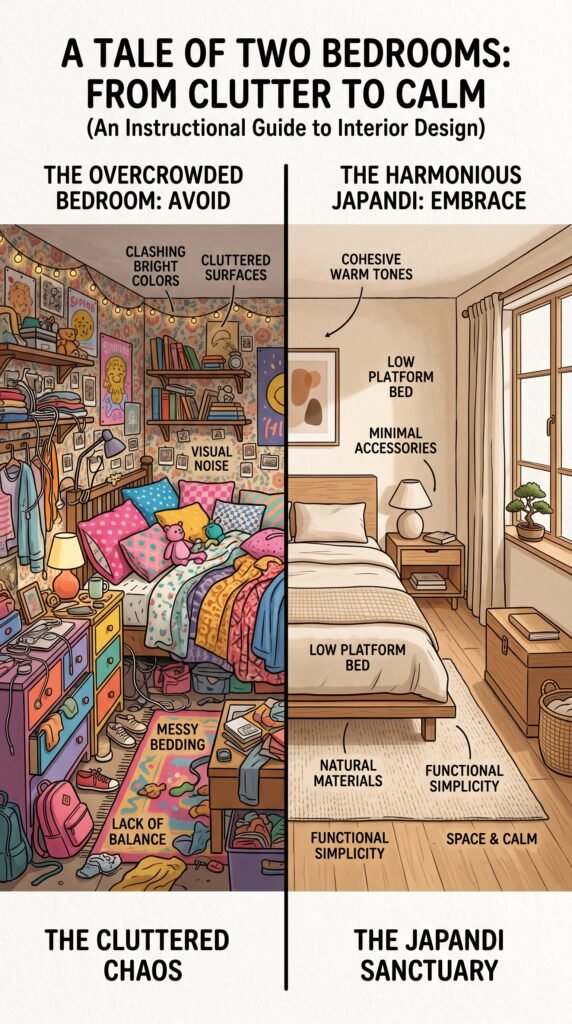
Understanding what to avoid is just as important as knowing what to include. The japandi bedroom is frequently misinterpreted, and several common missteps can make the whole effort fall flat.
Mixing too many wood tones. Japandi interiors typically commit to one or two complementary wood tones — usually lighter oak or ash alongside one deeper walnut or bamboo accent. When five different wood finishes compete in the same room, the visual cohesion dissolves. Audit your furniture and aim for consistency.
Overloading with plants. This is one of the most common errors people make when attempting a japandi bedroom. Plants are beautiful, but in excess they shift the aesthetic toward a jungle-style or bohemian look. One well-chosen plant, placed with intention, carries the natural element without distraction.
Choosing the wrong white. Pure, bright white walls read as clinical and cold — the opposite of what a japandi bedroom needs. The correct choice is always a warm white with slight yellow, pink, or beige undertone. Test paint samples at different times of day before committing.
Ignoring storage. Minimalism is not the same as having nowhere to put your things. A japandi bedroom requires thoughtful storage that keeps clutter genuinely hidden — not piled on a chair or stacked on a shelf. Built-in wardrobes, under-bed drawers, and lidded baskets in natural materials all serve the aesthetic while doing practical work.
Adding too many “japandi” accessories at once. Rattan trays, ceramic vases, linen everything, bonsai, bamboo blinds — these are all legitimate japandi elements. But arriving at a japandi bedroom in a single shopping trip and deploying all of them simultaneously produces a room that feels like a mood board rather than a lived-in space. Add slowly, edit constantly.
Best Tools and Resources for Designing Your Japandi Bedroom
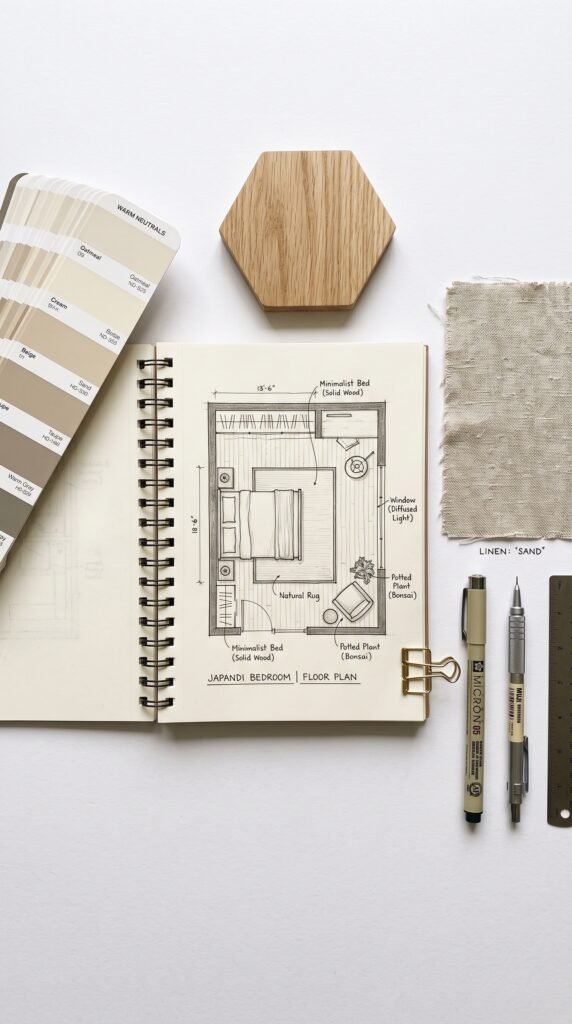
Pulling off a japandi bedroom with intention — rather than guesswork — is much easier when you have the right planning tools from the start.
Room planning software like RoomSketcher lets you map your existing space, test furniture arrangements, and visualize scale before you move anything physically. This is especially valuable for getting the low-bed placement right relative to windows and doors.
Paint sample services from most major paint brands now offer peel-and-stick swatches or sample pots you can test on your actual walls. Never commit to a wall color for your japandi bedroom based on a screen or small chip — always test a sample in the specific light conditions of your room.
Pinterest and design platform references are useful for building a visual brief of your target japandi bedroom before you begin. The discipline is in curating tightly — save only images that share the same mood, color temperature, and furniture scale, rather than saving anything broadly “minimal.”
Furniture measurement templates are underrated. Knowing the footprint of your room and the dimensions of key pieces (especially the bed frame) prevents the most expensive mistakes — ordering a frame that makes the room feel cramped, or a rug that is too small to anchor the bed.
Wrap-Up: Your Japandi Bedroom Is Closer Than You Think
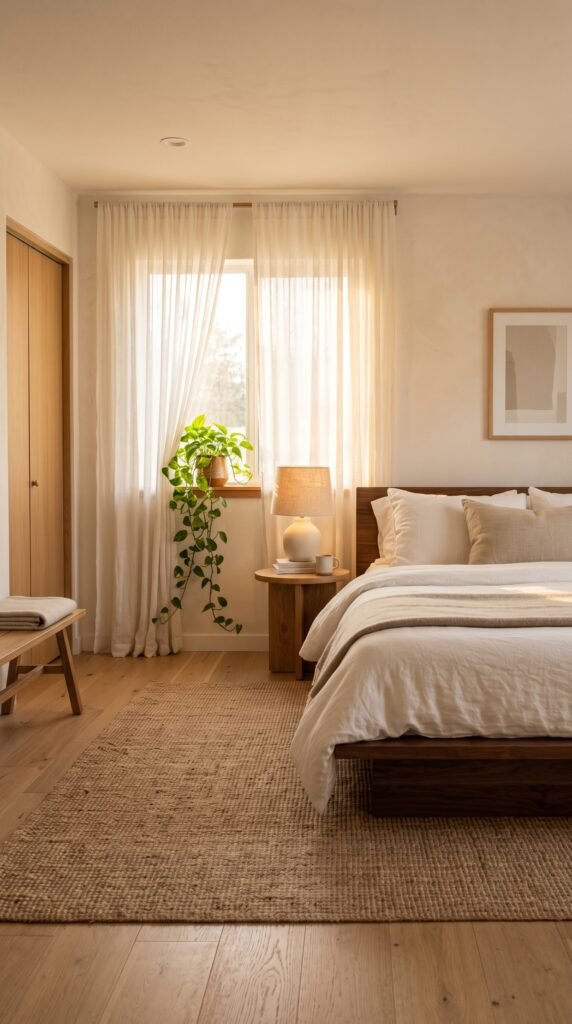
A japandi bedroom is not about achieving perfection or spending a large budget in a single weekend. It is about making deliberate decisions — removing what creates noise, choosing materials that age gracefully, and giving negative space the same respect as the objects you place within it.
The six steps outlined here — decluttering first, committing to a warm palette, anchoring with a low bed, layering texture, editing your lighting, and introducing organic elements sparingly — give you a complete framework for the transformation. The common mistakes section arms you with the awareness to avoid the pitfalls that derail most attempts.
Start this weekend with the declutter. You may find that step alone shifts the feeling of the room significantly. Then move through each step at whatever pace allows you to make considered choices rather than rushed ones. The japandi bedroom rewards patience and restraint — two qualities that, once practiced in your physical space, tend to carry into the rest of your life as well.
The design philosophy behind this style — finding beauty in simplicity, valuing craft over novelty, choosing function alongside form — is one that genuinely improves with time. Your japandi bedroom will look and feel better in six months than it does on day one, as the materials develop patina and as your own editing eye sharpens.
That is the real promise of this style. Not a finished room, but a living space that keeps getting quieter and more right.