Good 4th of July celebration planning turns Independence Day from a last-minute scramble into a relaxed backyard party. The holiday marks the adoption of the Declaration of Independence on 4 July 1776, and it is widely celebrated outdoors across the United States. HISTORY’s guide to the Fourth of July sets out how the holiday developed after that date, and the guide below builds on the same idea: a good party is a planned party. This 4th of July celebration planning guide covers the decisions that matter most: guest list and space, decorations, cookout food and grill safety, music and lighting, fireworks safety, and a step-by-step checklist you can follow from two weeks out to the day itself.
Table of Contents
- Start With a Plan: Guest List, Space and Budget
- 4th of July Decorations That Set the Mood
- The 4th of July Cookout: Food, Grill and Drinks
- Music, Lighting and the Evening Wind-Down
- Fireworks and Sparkler Safety
- Your 4th of July Planning Checklist
- Frequently Asked Questions
Start With a Plan: Guest List, Space and Budget
Start 4th of July celebration planning with three numbers: how many guests are coming, how much usable space you have, and how much you want to spend. Those three answers shape every other decision, from the size of the grill to the number of chairs. Settle them first, and the rest of the plan becomes much simpler.
Guest list and space
Confirm the guest list about ten days before the holiday, and ask about dietary needs and children at the same time. A firm number lets you buy the right amount of food and set out the right number of seats, rather than guessing on the day. Allow about 24 inches (60 cm) of table width per person, and leave at least 36 inches (90 cm) of clear space behind chairs so guests can move without squeezing past the table.
Divide the garden into zones before anyone arrives: a cooking zone around the grill, a food and drinks table in the shade, a seating zone, and a separate play area for children. Keeping the grill away from the seating and play areas matters for safety, especially when children are moving around. A 10 by 10 foot pop-up canopy covers about six to eight seated guests, so measure your seating area before you buy or borrow one. For a fuller step-by-step approach to outdoor hosting, see how to host the perfect garden party on a budget.
Set a budget before you shop
Keep 4th of July celebration planning costs under control by listing the spending categories in advance: food and drinks, ice, decorations, seating and shade, and any fireworks or sparklers. Decide a limit for each category, and keep receipts so you can see where the money actually goes. Reusable items, such as fabric bunting, metal lanterns and melamine serveware, cost more the first year and much less in later years because they can be used again.
Food and drink quantities
Use this table as a starting point for 4th of July celebration planning, and adjust it for appetites, the length of the party and the weather. Count children as about half an adult portion, and add extra water on hot days.
| Guests | Burgers and hot dogs (pieces) | Drinks (12 oz cans or bottles) | Ice |
|---|---|---|---|
| 10 | 15 | 24 | 10 lb |
| 20 | 30 | 48 | 20 lb |
| 30 | 45 | 72 | 30 lb |
4th of July Decorations That Set the Mood
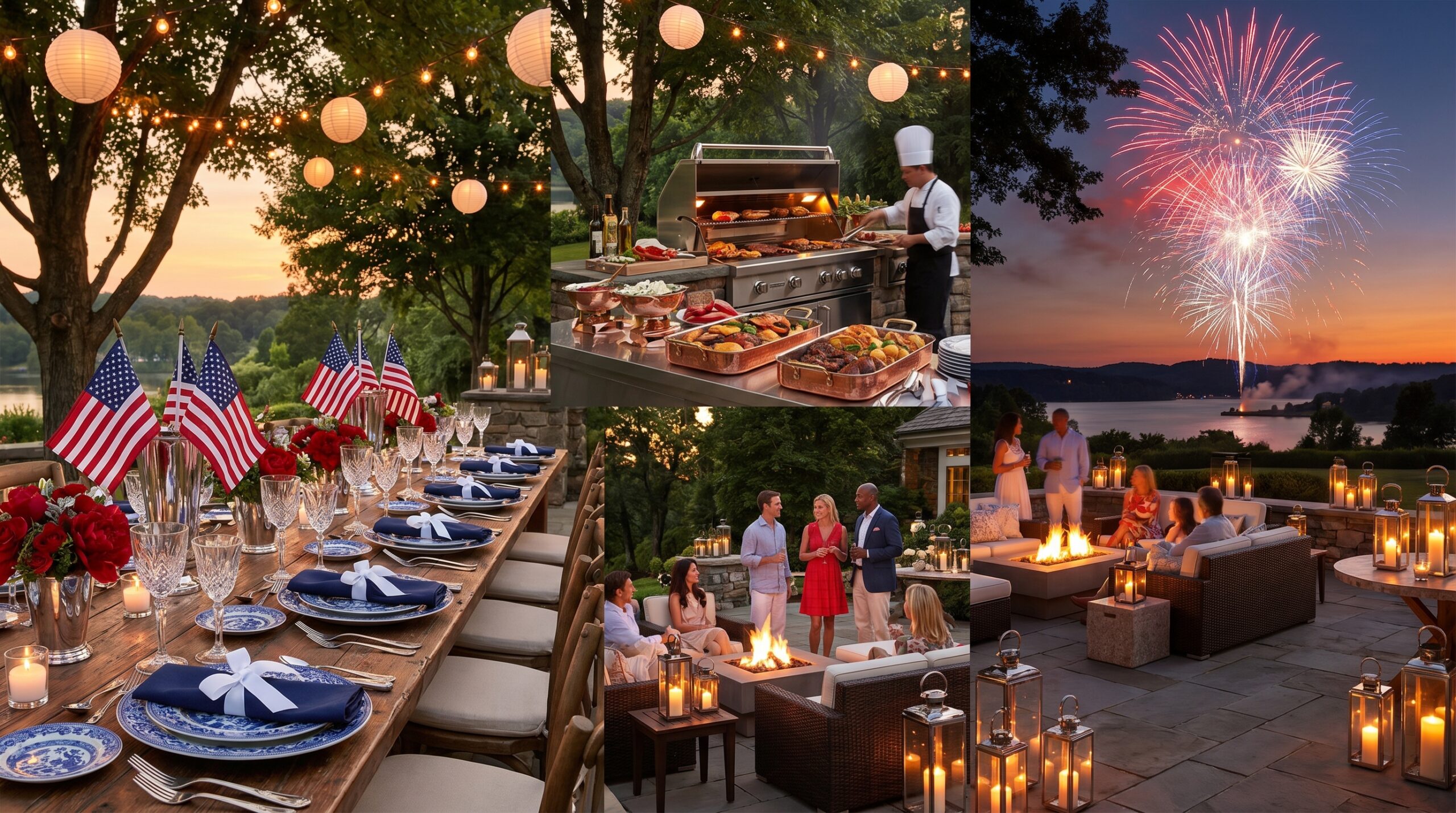
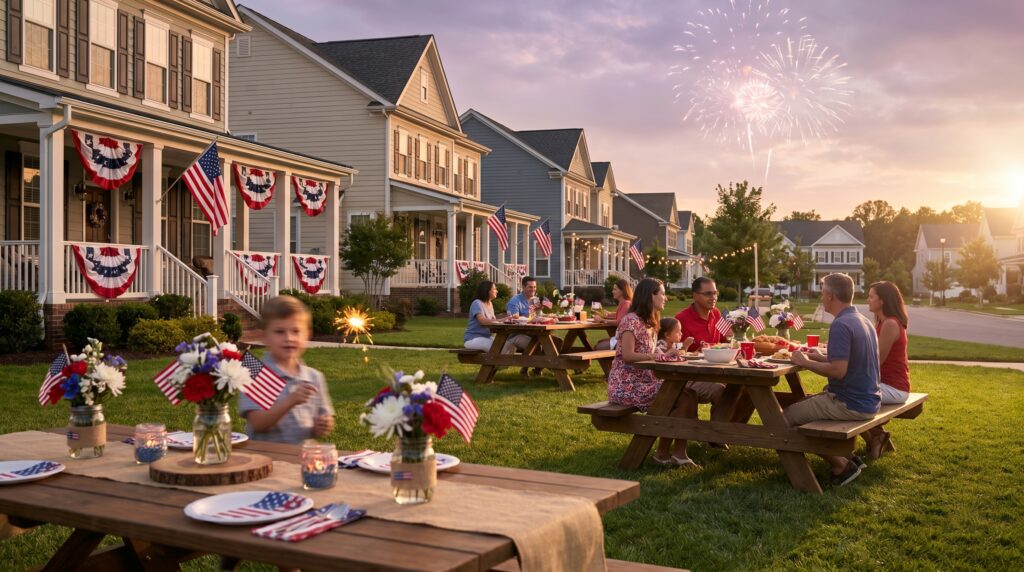
In 4th of July celebration planning, decorations work best when they are organised around one clear idea: red, white and blue, used consistently from the front door to the back garden. Limit the palette to those three colours plus one neutral, such as natural wood or white, and the whole party will look intentional even if you only use a few pieces.
Lighting first
Start with lighting, because it does more for the atmosphere than any other single decoration. Hang string lights along a fence, porch railing or pergola, about 7 to 8 feet above seating areas so guests can walk underneath without catching them. Use lights rated for outdoor use, and test them the day before the party rather than discovering a dead strand as guests arrive. Add lanterns or flameless candles on tables for a second layer of light once the sun goes down.
Table, porch and shade
For the table, a plain white or navy cloth, red napkins and a simple centrepiece, such as a jar of cut flowers or a row of small flags, is enough. Melamine plates and sturdy reusable cups are practical outdoors because they do not break if they are dropped. On the porch, bunting, a wreath and two potted plants by the door create a welcome that guests see before they reach the garden.
If the party extends into an area without much natural shade, a pop-up canopy is worth setting up early. Anchor each leg with a weight or sandbag, and check the forecast for wind before you leave it up overnight. If your patio needs a refresh before guests arrive, these backyard patio ideas that look expensive but aren’t show low-cost ways to tidy the space.
Decoration mistakes to avoid
- Decorating only at eye level. Add height with bunting, tall planters and lights overhead so the space feels finished from every angle.
- Hanging lights too low. Lights below head height get in the way and get pulled down; 7 to 8 feet above seating is a safer height.
- Mixing too many colours and themes. Stick to red, white and blue, and leave other colours for another occasion.
- Forgetting a wet-weather plan. Keep a canopy ready and know which decorations can be moved indoors quickly if rain arrives.
The 4th of July Cookout: Food, Grill and Drinks
No 4th of July gathering is complete without good food, and good food starts with a grill that suits the guest list. A 22-inch kettle charcoal grill handles roughly eight to ten burgers at a time, which is enough for a small party if you cook in batches. For larger groups, a gas grill or a second grill saves you from long waits, because you can cook one batch while the next one rests. That is why 4th of July celebration planning should start with the grill and the menu, not with the decorations.
Grill setup and timing
Light charcoal 20 to 25 minutes before you want to cook, and wait until the coals are covered with grey ash. Set up two heat zones if you can: a hotter side for searing burgers and a cooler side for finishing chicken or keeping food warm. Keep the grill on a flat, stable surface away from the house, trees and anything that can catch fire, and never leave a lit grill unattended.
Cook food safely
Use a food thermometer rather than guessing, and check the FoodSafety.gov safe minimum internal temperature chart for the current guidance. As a starting point, ground beef and pork should reach 160 degrees Fahrenheit, poultry should reach 165 degrees Fahrenheit, and steaks and chops should reach 145 degrees Fahrenheit and rest for three minutes before serving.
Keep cold food at or below 40 degrees Fahrenheit, and do not leave perishable food sitting out for more than two hours, or more than one hour when the temperature is above 90 degrees Fahrenheit. Put salads, dips and dairy-based sides back in the cooler or fridge between servings, and use separate plates and utensils for raw and cooked meat.
Drinks, ice and the cooler
Good 4th of July celebration planning also covers drinks, because warm drinks end a party faster than almost anything else. Pre-chill the cooler the night before with a bag of ice, then fill it on the day. Plan about one pound of ice per guest, and freeze a few water bottles in advance so they act as extra ice blocks while they thaw. Offer a non-alcoholic option, such as lemonade, iced tea or sparkling water, and label drinks clearly so guests can find what they want without opening every cooler. If you are thinking longer term, outdoor kitchen designs for every budget and backyard size can help you plan a permanent cooking area.
Music, Lighting and the Evening Wind-Down
The afternoon cookout is easy to plan. What most hosts underestimate is the evening, when the light changes, the temperature drops and guests settle in for fireworks. A little 4th of July celebration planning for the evening makes that part of the day feel just as considered as the food.
Music
Build a playlist of three to four hours in advance, and mix upbeat songs for the afternoon with slower songs for the evening. Keep the volume low enough that people can talk without raising their voices, and place the speaker near the seating area rather than next to the grill, where it competes with conversation. Charge the speaker the night before, keep it under cover if rain is possible, and keep a spare charging cable nearby.
Lighting after dark
As the light fades, switch on the string lights and lanterns you set up earlier, and add lights along paths and steps so guests can move safely in the dark. Flameless candles are a practical choice on tables and near children, because they give the same warm glow without an open flame. Check the batteries and bulbs the day before so nothing needs fixing after dark.
Fire pit safety
If you use a fire pit, place it at least 10 feet from the house, fences, trees and overhanging branches, and keep chairs at least 3 feet back from the edge. Check local rules before you light it, keep children supervised around it, and never leave it burning unattended. Keep a bucket of water or a hose nearby, and make sure the fire is fully out, with the ashes cold to the touch, before you go to bed.
Fireworks and Sparkler Safety
Fireworks safety is a part of 4th of July celebration planning that should not be left to the day itself. Fireworks are the highlight of the evening for many people, and they are also the part of the day that needs the most care. Check local laws before you buy anything, because consumer fireworks are restricted in many towns and cities. Watching a public display is the safest option, and it is often the best view as well.
- Buy only legal fireworks, read the instructions on each item, and follow them exactly.
- Light one firework at a time, stand well back, and never point fireworks at people, houses or dry grass.
- Never try to relight a firework that did not go off. Wait at least 20 minutes, then soak it in a bucket of water.
- Keep a bucket of water and a hose nearby, and soak used fireworks before putting them in the bin.
- Keep sparklers away from young children, and have an adult light them and hold them at arm’s length. Glow sticks are a safer choice for small children.
- Keep pets indoors, in a quiet room with water and their usual bedding, away from the noise and flashes.
Your 4th of July Planning Checklist
A checklist is the simplest part of 4th of July celebration planning, and it is the one that saves the most stress. Work through it in order, and tick each item off as you finish it.
Two weeks out: Confirm the guest list, set a budget, order string lights and serveware, and check that you have enough chairs, tables and shade.
One week out: Plan the menu, confirm the final guest count, order food and drinks, and check the grill, cooler and speaker are clean and working.
Day before: Fill the cooler with ice and drinks, set up the seating, shade and decorations, build the playlist, and charge the speaker and any lanterns.
Day of: Light the grill early, because charcoal needs 20 to 25 minutes to reach cooking temperature. Serve most of the food before sunset, then switch on the lights, start the evening playlist and light the fire pit.
After the party: Soak used fireworks in water, make sure the fire pit is fully out, bring food indoors or throw away anything that has been out for too long, and store reusable decorations for next year.
The 4th of July only comes once a year, but good 4th of July celebration planning makes it feel relaxed rather than rushed. Start early, keep the guest list and the menu simple, and leave time in the evening to enjoy the fireworks with everyone else.
Frequently Asked Questions
How far in advance should I start 4th of July celebration planning?
Start two weeks before the holiday for the main decisions, such as the guest list, budget and any items you need to order. Confirm the final guest count and buy food and drinks in the last week, and leave setup, ice and cooking for the day before and the day itself.
How much food should I plan per person?
Plan one to one and a half grilled items per adult, such as a burger or a hot dog, plus a side dish, a salad and a dessert. The table in the planning section above gives quantities for 10, 20 and 30 guests. Count children as about half an adult portion.
What time should a 4th of July party start?
Start in the late afternoon, serve the main food before sunset, and save fireworks for after dark. That order works well in most places, and it gives you time to switch on the lights and move guests to the best viewing spot before the display starts.
Are sparklers safe for children?
Sparklers burn hot enough to cause serious burns, so they are not suitable for young children. Older children should only use them with adult supervision, holding them at arm’s length and away from other people. Glow sticks are a safer choice for small children.
What should I do if it rains on the 4th of July?
Move the food table under a canopy or indoors, and keep the grill under cover if it is safe to do so. Keep the playlist and lighting ready indoors, and watch the local forecast so you can decide early whether to move the whole party inside. Having a canopy ready before the day is the simplest backup plan.