
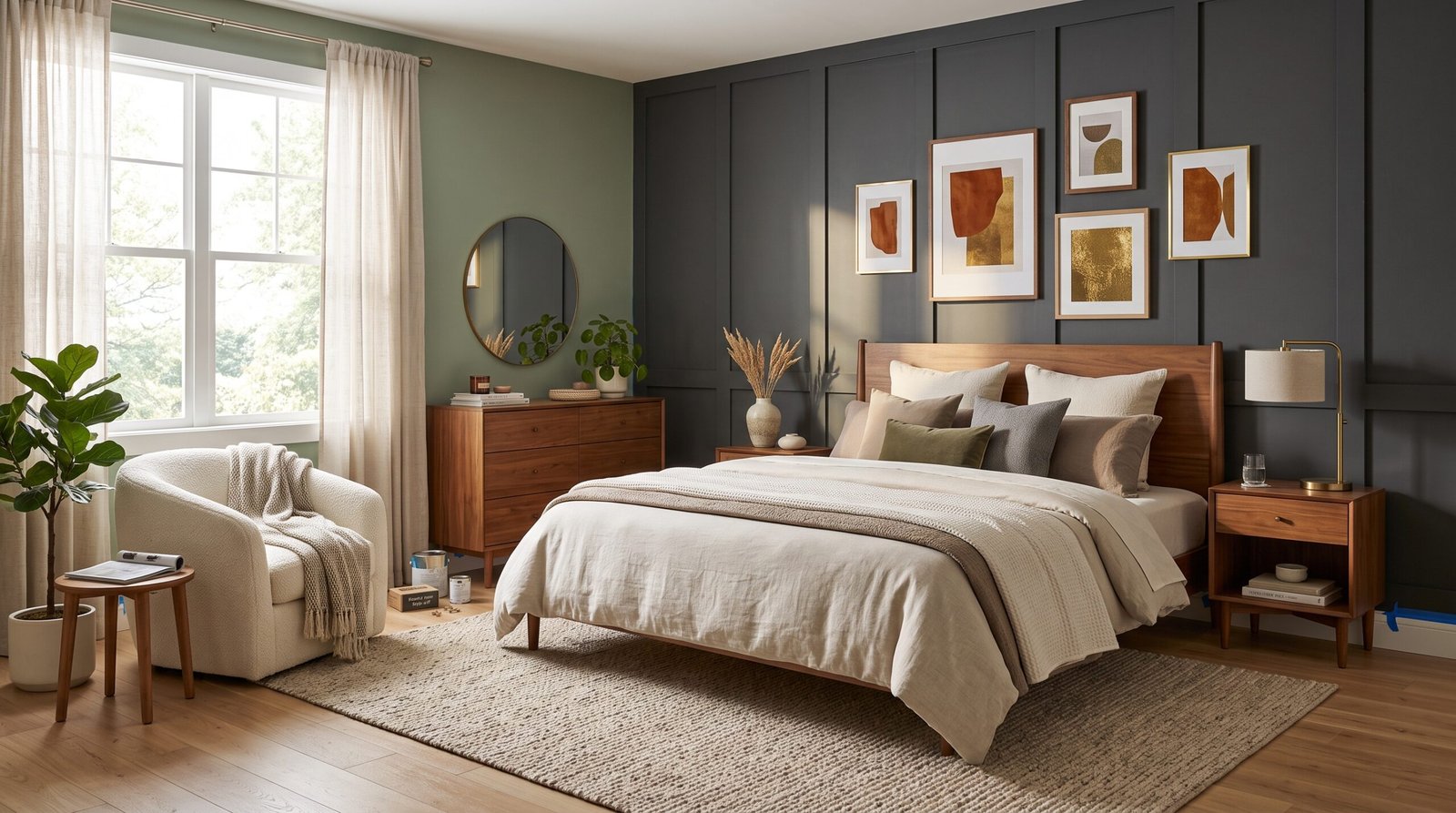
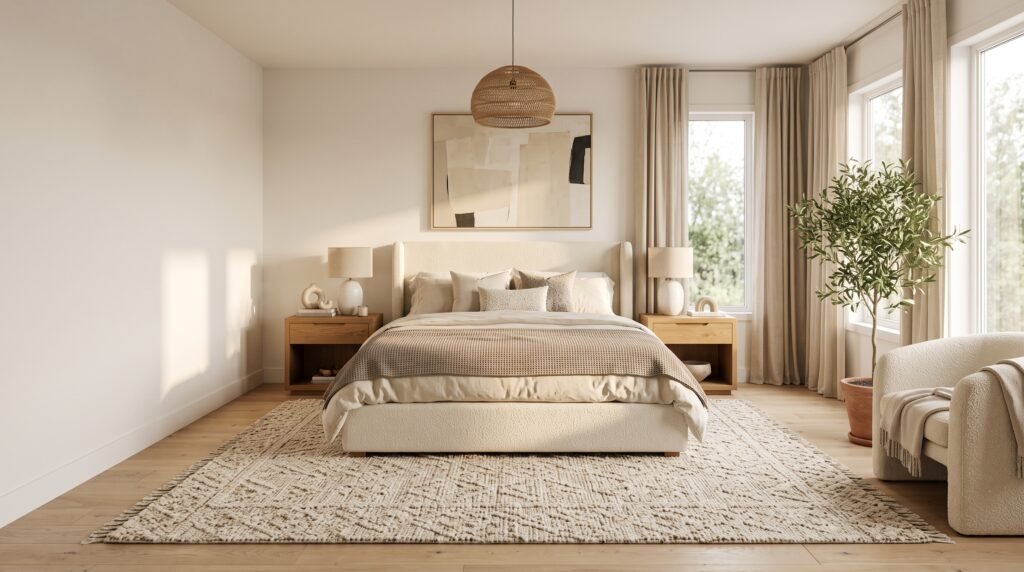
If your bedroom ideas keep falling flat no matter how many Pinterest boards you save or YouTube videos you watch, you are not alone — and the problem is almost never about taste.
Most people assume that failed bedroom transformations come down to budget or style. In reality, the disconnect happens much earlier than that — at the planning stage, before a single piece of furniture is moved or a single paint sample is taped to the wall. This guide breaks down the real reasons your bedroom ideas are not translating into the room you actually want, and it gives you a clear, practical fix for every single one.
The Real Reason Your Bedroom Ideas Fall Flat
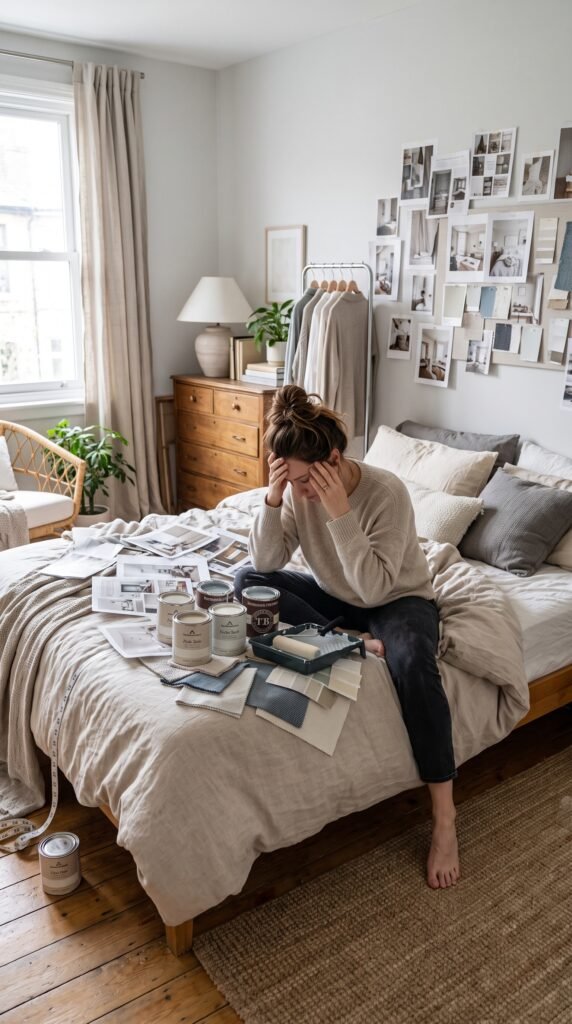
Most bedroom ideas fail at the foundation level, and the foundation has nothing to do with aesthetics. It has to do with how your room actually functions — or fails to.
Before you decide on a color palette or a headboard style, you need to answer three questions about your space. How much natural light does it get, and at what time of day? What is the primary function of the room beyond sleep — is it a reading nook, a work-from-home zone, a dressing room? And what is the scale of the room relative to the furniture you are already working with?
When bedroom ideas skip these three questions, you end up with a beautifully styled room that somehow never feels right. The layered lighting does not match the natural light. The furniture scale is off. The room is trying to do too many things at once.
The simple fix is to write a one-paragraph brief for your bedroom before you look at a single image for inspiration. Describe the light, the size, the function, and the feeling you want at the end of each day. Pin that brief somewhere visible and use it as a filter for every decision that follows.
How Scale and Proportion Destroy Otherwise Great Bedroom Ideas
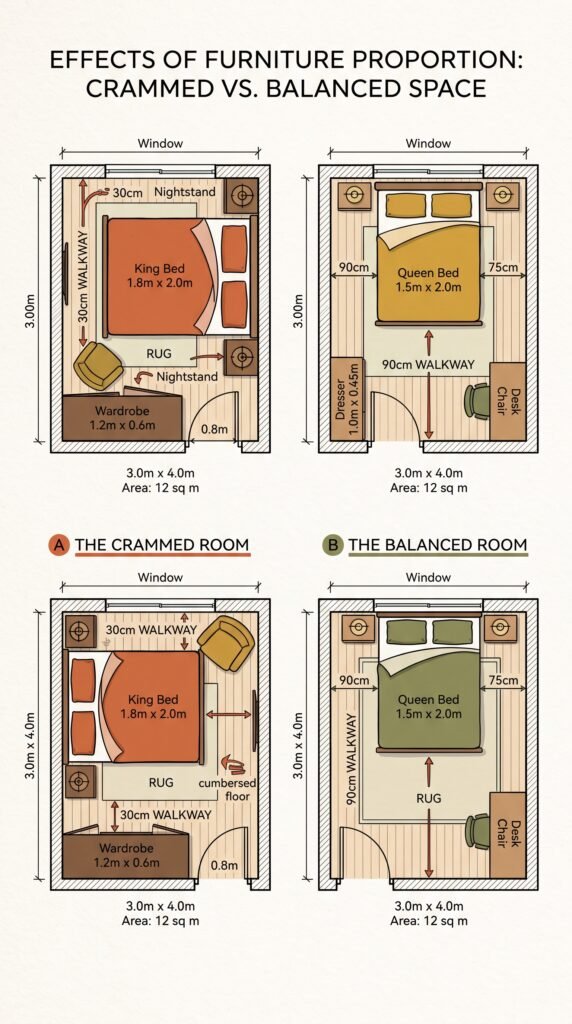
Scale is the silent killer of bedroom ideas, and it is the mistake most people make twice before they figure it out.
Oversized furniture in a small room does not just look wrong — it changes how the room feels to move through and how your nervous system reads the space when you are trying to wind down. A bed that is too large for a room makes the ceiling feel lower. A dresser pushed against a wall it barely fits past creates a psychological sense of constriction every time you walk by it.
On the other end, under-scaled furniture in a large room creates a completely different problem. A queen bed with two small nightstands floating in a large primary bedroom looks like a hotel lobby that forgot to finish decorating. The emptiness reads as neglect rather than minimalism.
The industry standard rule that professional designers use is the traffic lane rule: you should have a minimum of 24 inches of clear walking space on at least two sides of your bed, and ideally 36 inches if the room size allows. Before you buy anything new, tape out the footprint of your planned furniture layout on the floor using painter’s tape. Walk it. Live with it for a day. This single step eliminates the majority of scale mistakes before they cost you money.
15 Proven Ways to Decorate a Bedroom on Any Budget
Why Your Color Palette Is Working Against You
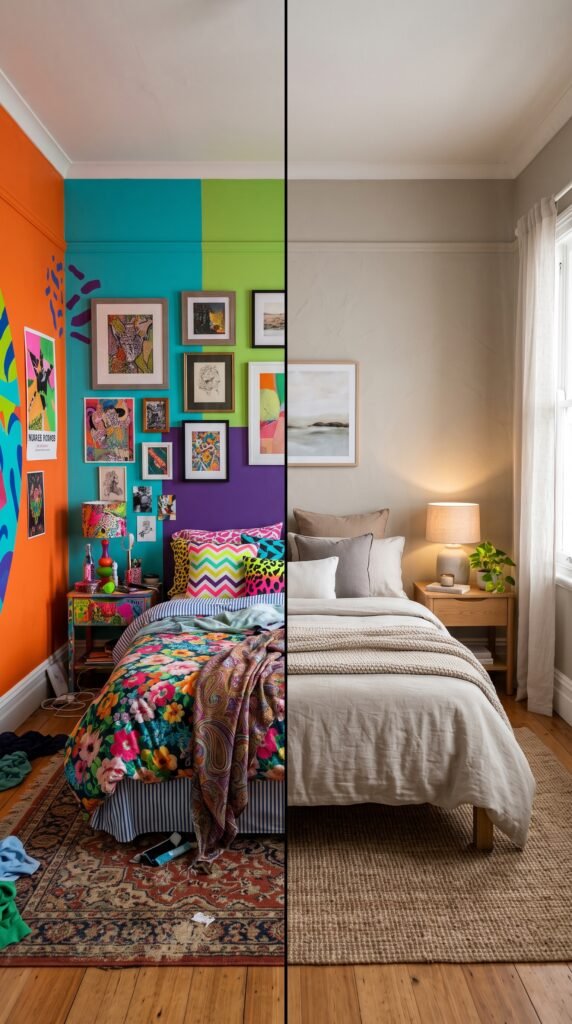
Color is where most bedroom ideas begin, and it is where a surprising number of them unravel.
The most common color mistake is choosing a paint color from a small chip in a fluorescent-lit hardware store and expecting it to behave the same way on a large wall in a room with specific light conditions. Paint colors shift dramatically depending on the direction your room faces, the intensity of your light sources, and the surrounding colors of your flooring and textiles.
A north-facing bedroom will make cool colors feel even cooler and sometimes outright gray. A south-facing room with warm afternoon light will amplify yellow and orange undertones in ways that can make a supposedly neutral paint feel almost sherbet-like by 4pm.
The fix is to test large paint samples — at least 12 by 12 inches — directly on your walls and observe them at different times of day over the course of 48 hours. Services like Samplize offer peel-and-stick large paint samples that remove the mess of traditional sampling and make this step genuinely easy.
Beyond paint, consider the 60-30-10 rule for your overall palette. Sixty percent of the room should reflect your dominant color — walls, large furniture pieces. Thirty percent should come from secondary tones in textiles and medium-scale pieces. Ten percent is reserved for accent pieces and details. When bedroom ideas feel “off” without a clear reason, it is usually because the 60-30-10 balance is being ignored and too many competing tones are fighting for visual dominance.
Struggling to Decorate Your Bedroom Walls?
The Lighting Problem Almost Every Bedroom Has
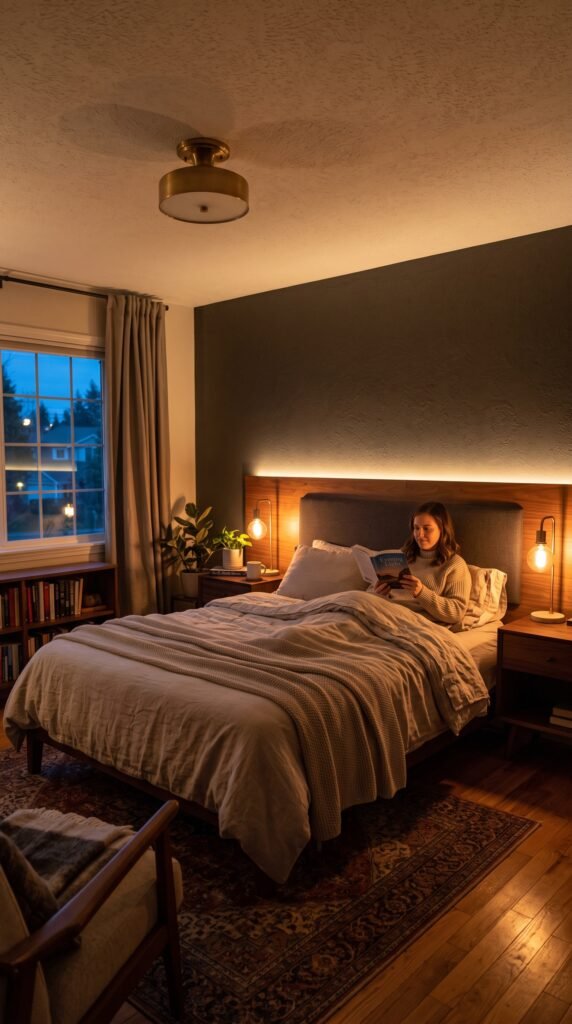
Lighting is the element that transforms good bedroom ideas into great ones — and the one that most people treat as an afterthought.
The single overhead light fixture that comes standard in most bedrooms is fundamentally incompatible with relaxation. Overhead lighting hits the eye at a direct angle, suppresses melatonin production, and creates a flattened visual environment with no shadow play or warmth. It is the lighting equivalent of a vending machine: functional, but not enjoyable.
Bedroom lighting needs at least three layers to work properly. The first is ambient light — a soft, diffused source that replaces the harsh overhead with something gentler, like a ceiling fixture with a warm bulb behind a frosted shade or a pendant with a fabric diffuser. The second layer is task lighting — bedside lamps for reading, positioned so the bulb sits at roughly shoulder height when you are sitting in bed. The third is accent lighting — the layer that most bedroom ideas overlook entirely. This includes things like LED strips behind a floating headboard, a low floor lamp in a reading corner, or picture lights over artwork.
According to research from Harvard Medical School’s Division of Sleep Medicine, exposure to warm-spectrum light (below 3000K) in the two hours before bed significantly improves sleep onset time. Switching your bedroom bulbs to warm-white or soft-white options rated between 2700K and 3000K is one of the highest-return, lowest-cost improvements your bedroom ideas can include.
Texture and Layering: The Missing Ingredient in Flat Bedroom Ideas
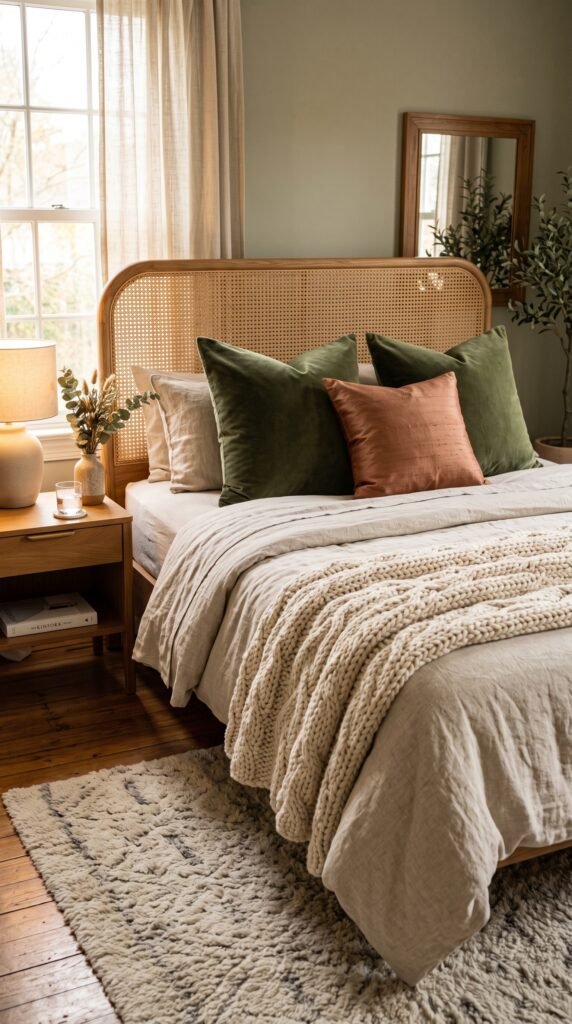
When a bedroom feels “almost right” but still misses the mark, the culprit is almost always a lack of tactile variation — what designers call layering.
Texture does something color and furniture arrangement cannot: it makes a room feel inhabited. A monochromatic bedroom in perfect proportion with ideal lighting will still feel cold and showroom-like if every surface has the same finish and every fabric has the same weight.
Layering bedroom ideas means intentionally mixing hard and soft surfaces, matte and reflective finishes, smooth and rough textures. A linen duvet over cotton sheets. A jute rug under a softer wool accent rug. A rattan headboard paired with velvet throw pillows. A raw-edge wood nightstand next to a ceramic lamp base. These contrasts give your eye places to travel and your hands reasons to engage with the space.
The practical layering rule used by interior designers is called “something rough, something smooth, something natural, something made.” For every surface area in your bedroom — the bed, the nightstands, the floors, the walls — you should be able to identify all four of those qualities somewhere within reach. When bedroom ideas hit all four, the room stops looking like a catalog photo and starts feeling like somewhere you actually want to be.
A resource worth exploring here is Apartment Therapy’s guide to bedroom styling, which covers layering principles alongside real-reader before-and-after transformations that make the theory feel tangible.
Why You Keep Copying Bedroom Ideas Without Getting the Same Result
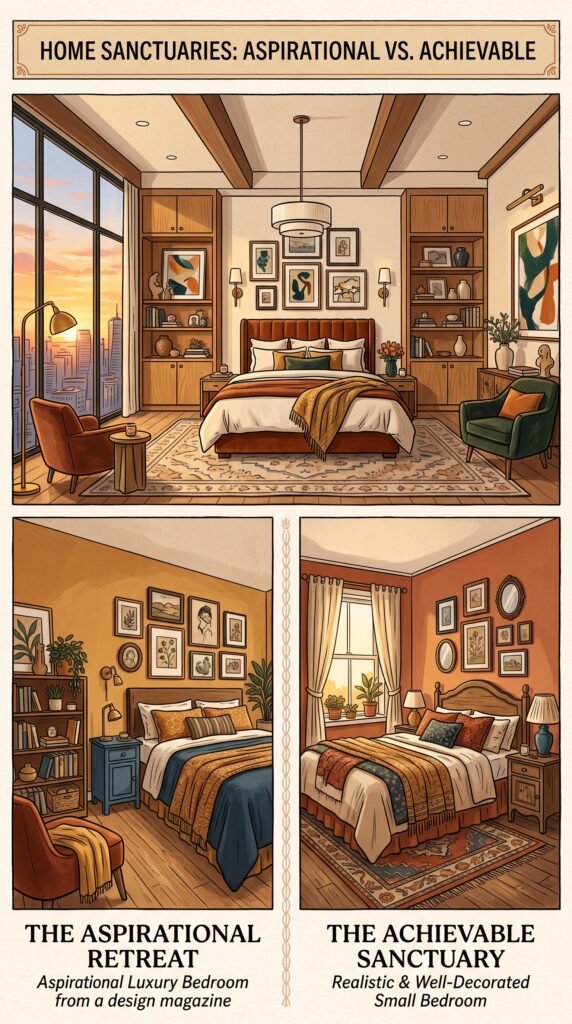
Inspiration is not instruction, and this is the gap where most bedroom ideas fail in translation.
When you see a stunning bedroom on Instagram or in a magazine, you are looking at a space that has been professionally staged, photographed with specialized lighting equipment, and often edited in post-production to enhance contrast and warmth. The furniture is frequently custom-built or pulled from luxury showrooms. The art is often borrowed. The bedding is styled by hand for the shot and would never survive an actual night of sleep looking that arranged.
None of this means you cannot get a beautiful result — it means you need to extract the principles from the inspiration rather than copying the products.
When you find a bedroom idea image that excites you, instead of asking “where can I buy that exact bed,” ask these four questions. What is the dominant color family in this image? What is the light source and what direction does it appear to come from? How many distinct textures can you count? What is the ratio of furniture to negative space? Those four answers are your actual transferable blueprint. The specific products are almost irrelevant.
According to Architectural Digest’s design philosophy guide, the most livable bedrooms are built around personal comfort cues rather than trend adherence — meaning the rooms that work best over time are the ones designed specifically for how their owner actually lives, not for how a photo will perform online.
Frequently Asked Questions About Bedroom Ideas
Why do my bedroom ideas always look better on paper than in real life?
This usually comes down to two factors: scale and light. A layout that looks balanced on a floor plan sketch can feel very different in three-dimensional space, especially once natural and artificial lighting come into play. Always test your ideas at full scale using painter’s tape on floors and walls before committing to purchases.
How do I make a small bedroom feel bigger without spending a lot of money?
The most effective low-cost bedroom ideas for small spaces focus on verticality and reflection. Hanging curtains close to the ceiling and letting them fall to the floor draws the eye upward and makes the room feel taller. Adding a mirror on the wall opposite your main window doubles the perceived light and depth. Keeping the floor as clear as possible — using under-bed storage and wall-mounted nightstands instead of floor-standing ones — opens the visual field significantly.
What is the biggest mistake people make with bedroom ideas on a budget?
Buying fast-furniture that solves an immediate need but sacrifices scale and material quality. A well-proportioned secondhand dresser in solid wood will do more for your bedroom than a brand-new particleboard piece at the same price point. Budget bedroom ideas work best when you prioritize the things that cannot be faked — proportion, lighting, and quality bedding — and use DIY or secondhand options everywhere else.
How do I choose between two bedroom color schemes I love equally?
Take both palettes and hold them against your largest fixed element — usually your flooring. The palette that creates the least visual tension with your floor color is almost always the right choice. Floors anchor the entire room and are the one thing most people never change, so designing around them rather than despite them is always the smarter call.
How long should it actually take to get a bedroom right?
Professional interior designers typically spend three to six months on a primary bedroom project from brief to final styling — and that is with a clear budget, experienced trades, and established vendor relationships. For DIY bedroom ideas, giving yourself four to six months to implement changes in phases is not slow — it is realistic. Spaces that are done in a single weekend shopping trip almost always need revisiting within a year.
Do bedroom ideas from social media actually work in real life?
Some do, with the right adjustments. The bedroom ideas that translate most reliably from social media to real life are the ones rooted in principle rather than product — layering techniques, color balance strategies, lighting approaches. The ones that fail most often are the ones that depend on a very specific piece of furniture, a custom architectural feature, or an unusually large room to work at all.