
If you’ve been searching for laundry room mural ideas but keep landing on projects that look like they require an art degree, a steady hand, and about three weekends you don’t have — this is the article you’ve been waiting for.
Here’s the thing: the laundry room is the most ignored space in most homes. People slap a shelf up, maybe add a rug, and call it done. But it’s also a room you visit multiple times a week. Sometimes daily. And there’s no law that says a functional space can’t also be beautiful.
The good news? You don’t need to know how to draw. You don’t need expensive tools. And you definitely don’t need to hire someone. What you need is the right idea, a little patience, and a plan that actually matches your skill level.
📋 Table of Contents
- Why the Laundry Room Deserves a Mural (Seriously)
- Understanding Your Space Before You Pick a Style
- The Best Laundry Room Mural Ideas for Beginners
- Botanical and Leaf Patterns
- Geometric and Abstract Shapes
- Vintage Laundry Typography
- Watercolor Wash Backgrounds
- Tools and Supplies That Actually Make a Difference
- Common Mistakes to Avoid With Laundry Room Mural Ideas
- How to Scale Up Your Design Without Losing Your Mind
- Finishing Touches That Pull the Whole Room Together
Why the Laundry Room Deserves a Mural (Seriously)
Most people save wall art for the living room or bedroom. The laundry room gets a clock, maybe a sign that says something like “loads of fun,” and nothing else.
But think about the time you actually spend in there. Sorting. Waiting. Folding. For a lot of households, that adds up to several hours a week. Staring at a blank beige wall while you wait for the spin cycle to finish isn’t exactly inspiring.
A mural changes the entire feeling of the room. Not just aesthetically — though yes, it looks amazing — but psychologically. Research on environmental design consistently shows that people feel better, work faster, and experience less stress in spaces that have visual interest and personality. Even color psychology studies from the University of British Columbia suggest that visual stimulation in workspaces affects mood and performance in measurable ways.
And laundry rooms, as much as we hate to admit it, are workspaces.
So the real question isn’t whether you should paint a mural. It’s which laundry room mural ideas will actually work for your space, your skill level, and the time you realistically have.
Understanding Your Space Before You Pick a Style
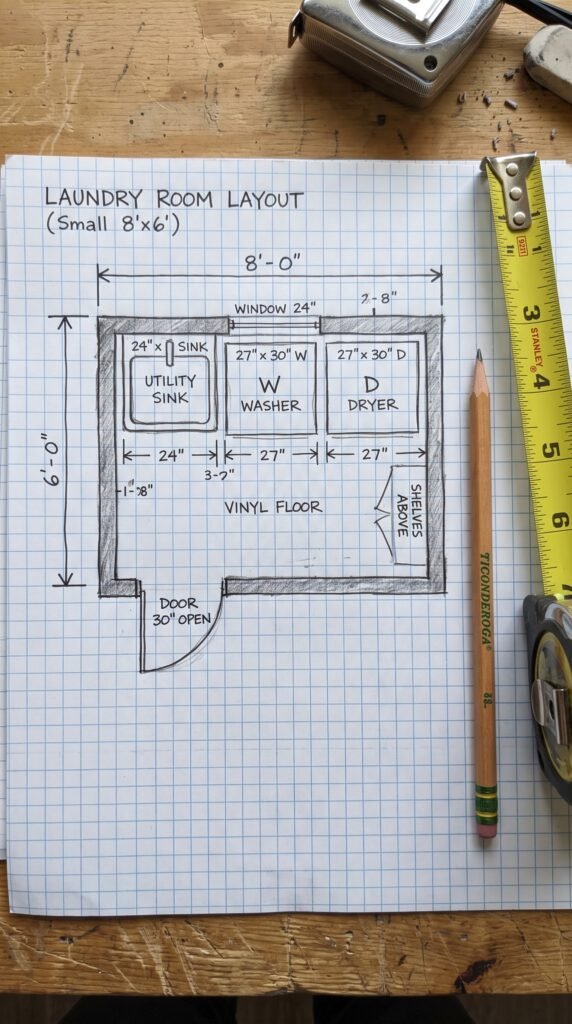
Before anything else, spend five minutes actually looking at your laundry room.
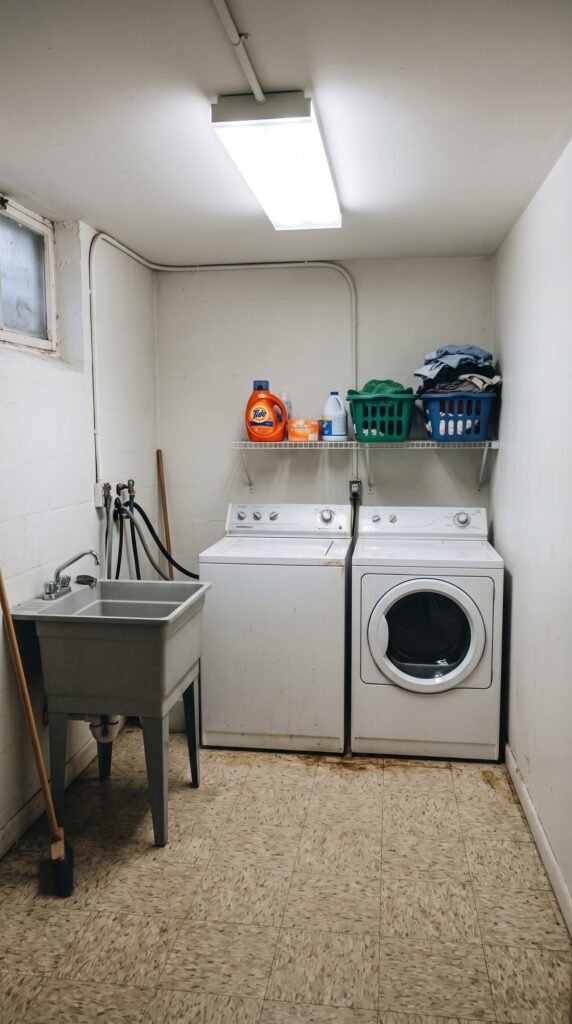
How big is the wall you’re working with? Is it interrupted by outlets, switches, shelving brackets, or a door? What’s the lighting like? Natural light makes colors pop in ways that fluorescent bulbs never will. And what’s already in the room — are the walls white, cream, or some color that’ll need to be painted over first?
Picture this: someone gets excited about a dark navy galaxy mural, buys all the supplies, and doesn’t realize until day two that the wall has a white tile backsplash that cuts the painting surface in half. The mural ends up looking cramped and weird. That’s not a design failure. That’s a planning failure.
The fix is simple. Measure your usable wall space. Take a photo of the room and sketch rough shapes on it (even in a notes app on your phone). Decide early whether you want a full wall mural, a partial accent section, or a wraparound design that plays with the room’s architecture.
Most beginner-friendly laundry room mural ideas work best on a single, uninterrupted wall. It keeps the project manageable and the visual impact strong.
12 Smart Small Laundry Room Organization Ideas on a Budget
The Best Laundry Room Mural Ideas for Beginners
This is where it gets good. These aren’t dumbed-down suggestions. They’re genuinely beautiful ideas that happen to be achievable by someone with zero art experience.
Botanical and Leaf Patterns
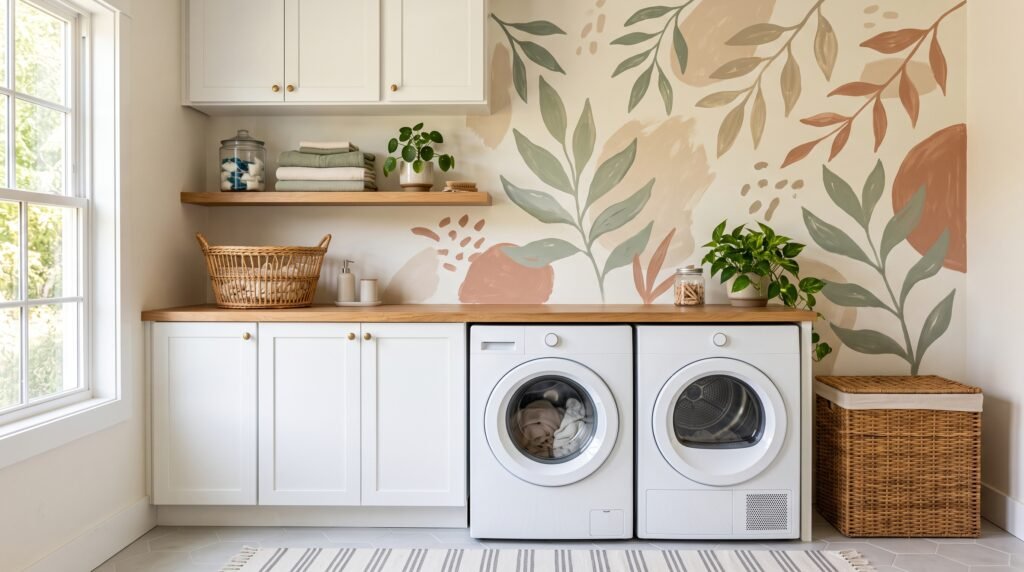
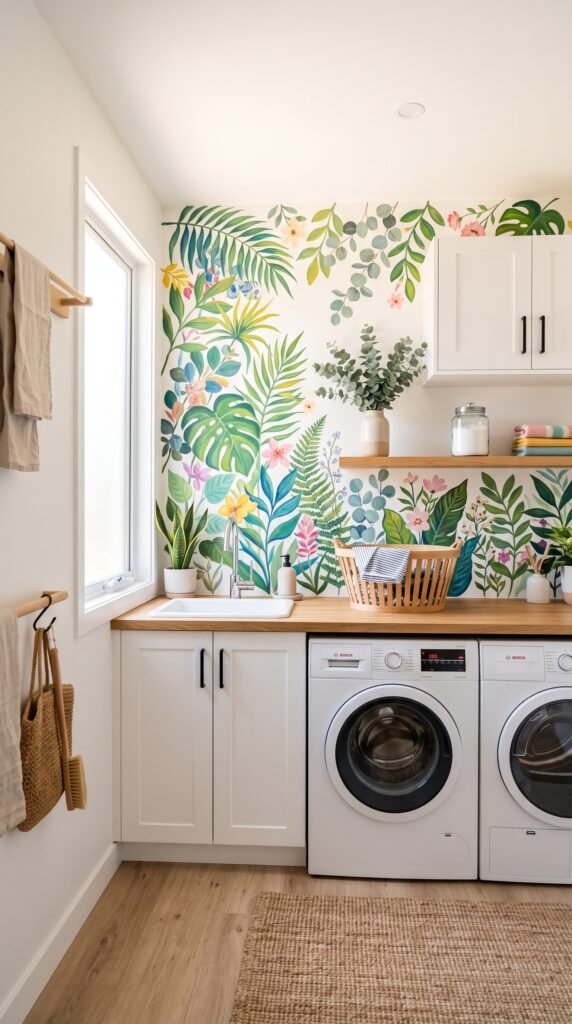
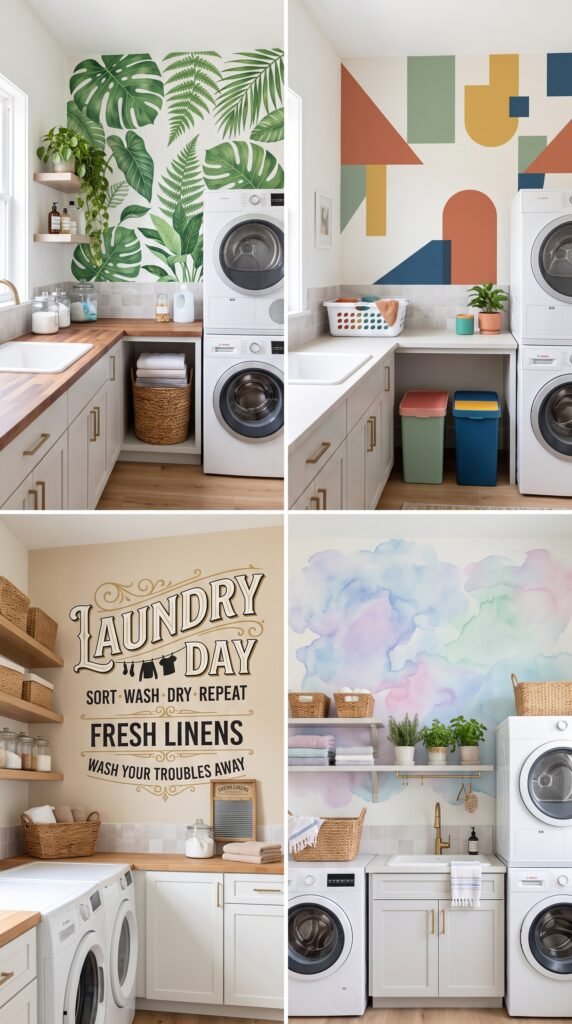
Botanical designs are everywhere right now, and for good reason. They’re forgiving. Leaves don’t have to be perfect — real leaves aren’t perfect either. You can use a simple stencil, freehand loose shapes, or even trace around real leaves pressed flat against the wall.
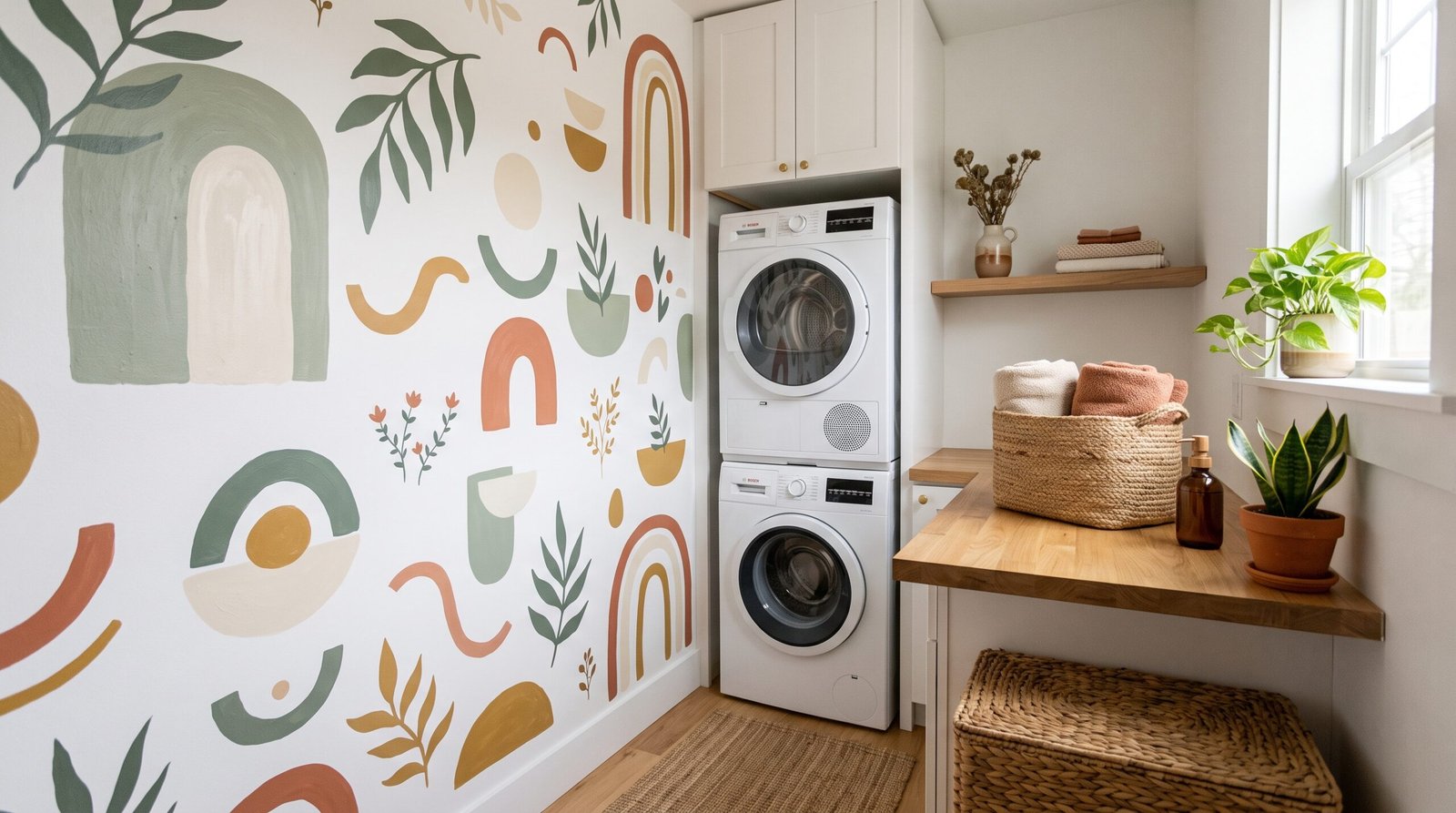
The trick is keeping the color palette tight. Two or three shades of green, maybe a cream background, and a few accent colors if you want flowers. Simple color constraints make the whole thing look intentional even when it isn’t.
Most people run into this exact problem when going botanical: they start strong and then try to fill every single inch of space. Don’t. Negative space is your friend. Let the wall breathe.
Modern Laundry Room Ideas for a Clean & Minimal Look
Geometric and Abstract Shapes
If botanical feels too organic and unpredictable, go geometric. Straight lines, clean triangles, overlapping circles. Geometry is math, and math is consistent. You can use painter’s tape to create crisp lines, which essentially does the hard work for you.
A popular version of this approach is a simple color-block design. Pick two or three colors that complement your existing cabinets or flooring. Tape off sections. Paint. Peel. Done. It looks modern, intentional, and actually takes less time than you’d expect.
Fair warning: buy quality painter’s tape. The cheap stuff bleeds, and you’ll spend twice as long fixing edges than you would’ve spent just doing it right the first time.
Vintage Laundry Typography
This one leans more into illustration than painting. Think old-fashioned laundry signs, retro fonts, subtle line drawings of clothespins and washtubs. You can use a projector (even a phone projector) to trace letterforms and outlines directly onto the wall. Then fill them in.
It sounds like cheating. It’s not. Professional muralists use projectors all the time. The art is in the composition, the color choices, and the finishing details — not in your ability to draw freehand letters from scratch.
Watercolor Wash Backgrounds
Not technically a mural in the traditional sense, but the effect is stunning and the execution is beginner-proof. You wet the wall lightly, then apply diluted paint in soft, overlapping strokes. The color spreads and blends in ways that look intentional and artistic even when they’re completely random.
This works best as a backdrop for a simpler top layer — a few stenciled botanicals, a quote, or just left as an abstract wash on its own.
Tools and Supplies That Actually Make a Difference
You don’t need a lot. But what you do need matters.
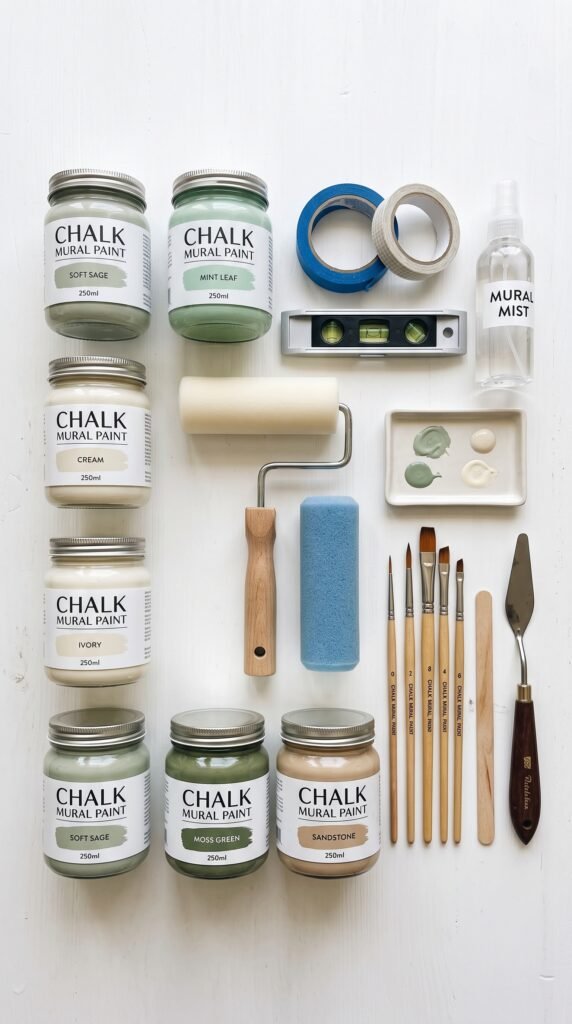
Chalk-based paint is a beginner’s best friend. It dries fast, blends easily, and mistakes can be wiped away while it’s still wet. For more permanent results, acrylic craft paint works well and is available at any craft store.
For wall prep, prime the surface if you’re going over a dark color. Skip primer and you’ll fight the old color showing through your new paint for every single layer. Not worth it.
A good set of foam rollers handles large areas. Detail brushes handle edges and fine work. And if you’re doing geometric designs, a level and painter’s tape are non-negotiable. Don’t eyeball straight lines. Ever.
One more thing: a spray bottle of water and a damp rag on standby. Acrylic dries fast. Mistakes caught in the first two minutes are nothing. Mistakes caught after the paint dries are a repainting job.
Laundry Room Ideas for Every Home: Small Spaces, Storage & Stylish Designs
Common Mistakes to Avoid With Laundry Room Mural Ideas
Every beginner makes a few of these. Knowing them in advance saves a lot of frustration.
Skipping the sketch phase is the biggest one. Even a rough pencil drawing on paper — or a five-minute doodle in an app like Procreate or Canva — helps you see whether your idea actually works before paint hits the wall.
Choosing too many colors is another trap. More isn’t more here. A three-color palette feels curated. A seven-color palette feels chaotic, no matter how well you execute the brushwork.
Then there’s the lighting mistake. Colors look dramatically different under fluorescent lights versus natural daylight. Paint a test swatch on cardboard and hold it up in the room at different times of day before committing to anything.
And finally, rushing the drying time. Acrylic paint says dry in 20 minutes. That’s surface dry. Apply another layer on top too soon and you’ll drag and muddy the color underneath. Give it time. Do a load of laundry while you wait. You’re literally already in the right room.
How to Scale Up Your Design Without Losing Your Mind
Once you’ve nailed a basic design, the next challenge is making it fill the wall proportionally without distorting the whole thing.
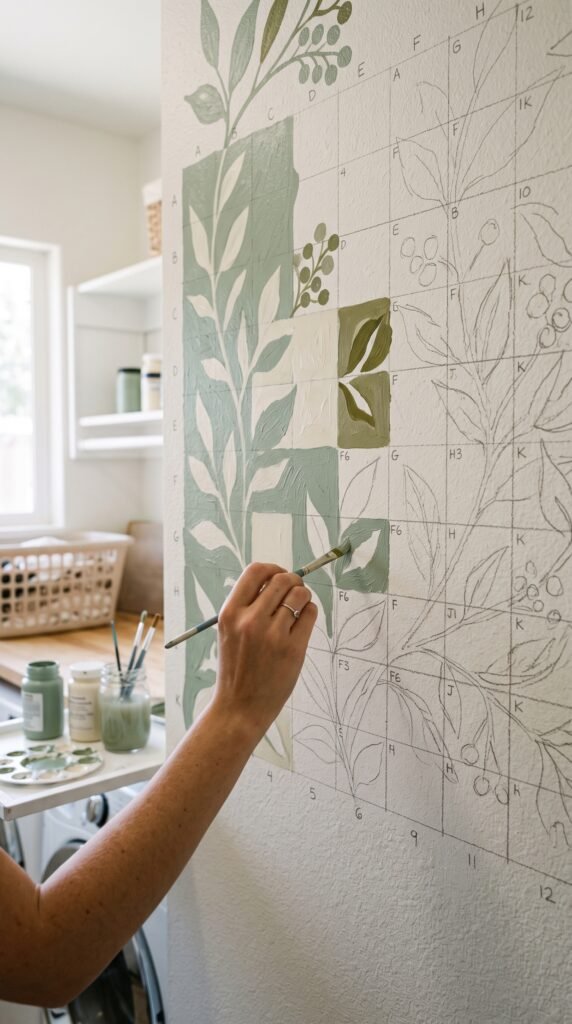
The grid method is the classic solution and it works. Divide your reference image into a grid (say, 6×6). Draw the same grid lightly on your wall with pencil. Copy one square at a time. This breaks a big, intimidating project into tiny, manageable chunks that almost anyone can handle.
The projector method is even faster. Connect a phone or laptop to a cheap projector, display your design on the wall, and trace the outlines. Then paint inside the lines. It’s basically adult coloring — and there’s nothing wrong with that.
According to the National Endowment for the Arts, engaging in creative activities like painting has measurable positive effects on mental wellbeing, stress reduction, and even cognitive function. So this project is quite literally good for you.
Some people also use peel-and-stick mural wallpaper as a hybrid solution. It’s not hand-painted, but it looks the part and takes about two hours to install. For renters especially, it’s a smart alternative. Spoonflower sells artist-designed wallpaper and fabric by the yard, including designs that mimic hand-painted murals authentically.
Finishing Touches That Pull the Whole Room Together
A mural doesn’t exist in isolation. It lives alongside your washer, dryer, shelving, and whatever else is already in the room.
Once the mural is done, step back and look at what it’s asking for. A bold botanical wall might want simple white shelving and minimal accessories to let it breathe. A vintage typography mural pairs beautifully with wire baskets, wooden hangers, and antique-style light fixtures.
Color-matching your accessories to one or two colors in the mural creates cohesion without effort. It doesn’t have to be an exact match. Even pulling a similar tone (warm versus cool, light versus dark) reads as intentional design to anyone who walks in.
Small things matter too. A new light fixture. A runner rug on the floor. Even changing out outlet covers to match your wall color (yes, you can paint them) tightens up the whole look in ways that seem small but register subconsciously.
The laundry room doesn’t have to be a chore to look at. That’s the whole point of laundry room mural ideas like these — turning a space that gets ignored into one that actually sparks a little joy every time you walk in.
And honestly? Once you finish it, you’ll wonder why you waited so long.