
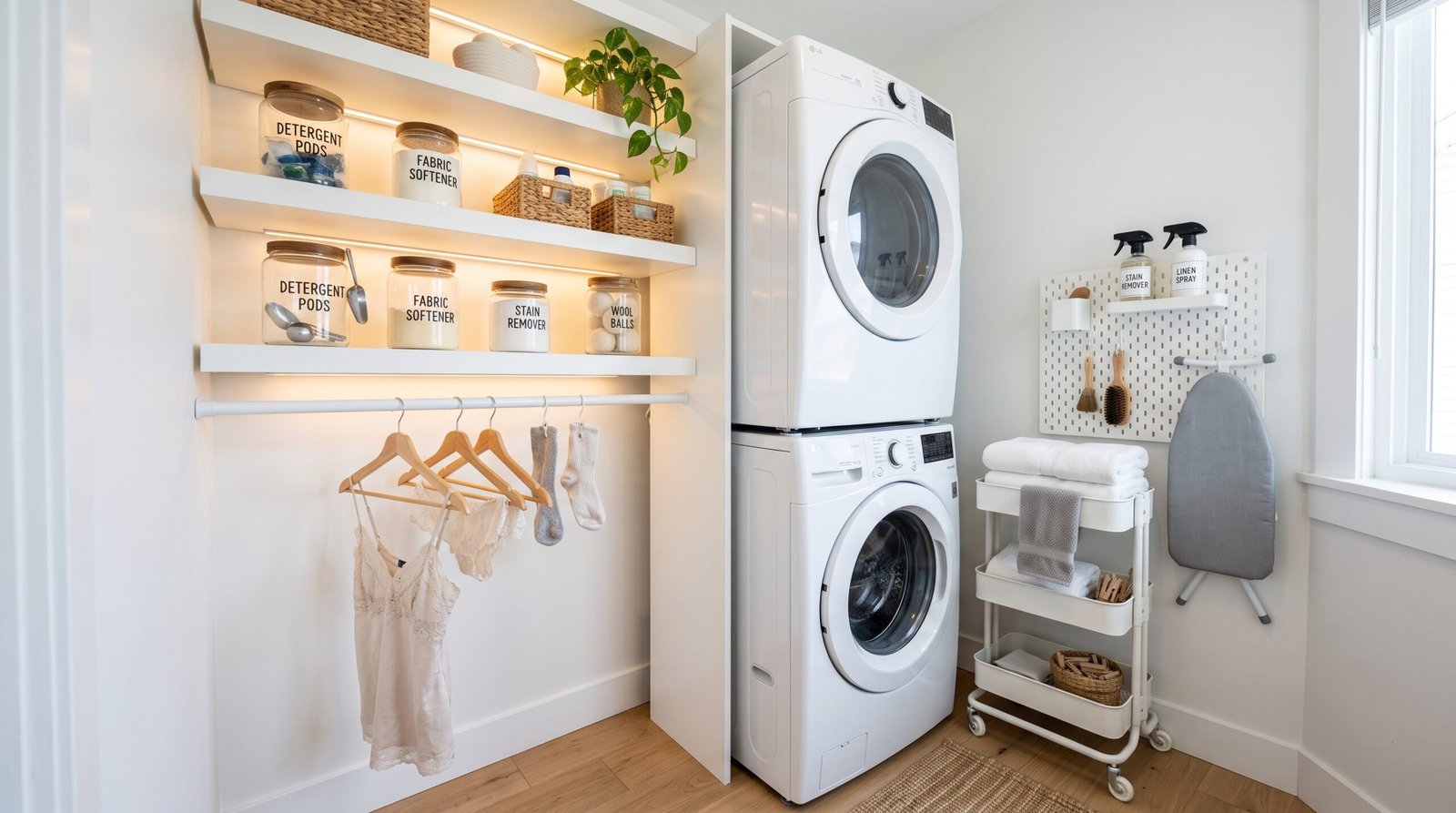
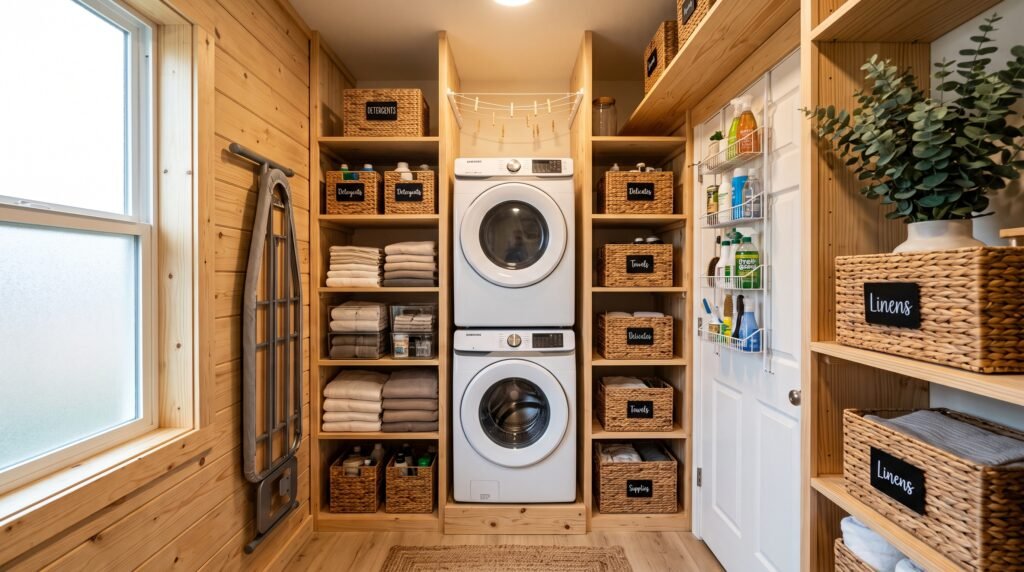
Small laundry room organization is one of the most overlooked home improvement opportunities — yet it delivers one of the biggest returns in daily comfort and sanity. Whether you’re working with a closet-sized laundry nook, a galley-style utility room, or a shared basement corner, the right strategies can transform a chaotic, cramped space into something that actually works for you.
The best part? You don’t need a renovation budget or a professional organizer. Most of the ideas in this guide cost under $30 each, and many require nothing more than a weekend afternoon and a trip to the dollar store.
Busting the Biggest Myths About Small Laundry Room Organization
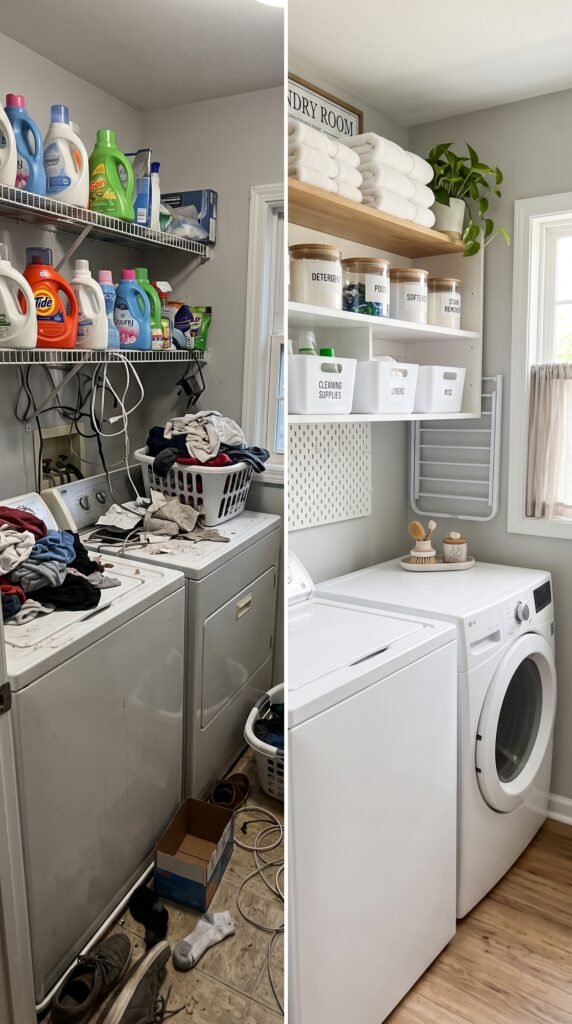
The first thing standing between you and an organized laundry room isn’t your square footage — it’s the myths you’ve been told about what organization actually requires. Let’s clear those up before diving into the practical tips.
Myth #1: You need a big space to stay organized.
This is the number one lie people tell themselves, and it keeps them stuck with chaos. Tight spaces actually have a structural advantage: everything is within arm’s reach. The problem is almost never the square footage — it’s the lack of vertical thinking and the overuse of floor space for things that belong on walls or inside cabinets.
Studies from the National Association of Professional Organizers show that the average household spends 55 minutes per day searching for misplaced items. In a small laundry room, poor organization multiplies that waste because items compete for limited flat surfaces and frequently get shuffled or buried.
Myth #2: Organization products have to be expensive.
Walk into any big-box home store and you’ll be greeted by shelving systems that cost $200, sleek hampers that run $80 each, and custom cabinetry quotes that start at $1,500. It’s easy to assume that getting organized means spending big. The reality? The most effective laundry room organizers are often tension rods from the dollar bin, adhesive hooks rated for five pounds, and over-the-door pocket organizers that cost less than a latte.
Myth #3: A small laundry room will always feel messy.
This is a mindset issue more than a space issue. Small laundry room organization works best when you establish systems rather than just tidying. A clean-looking room that has no system falls apart within a week. A room with smart systems — designated zones, consistent labels, surfaces cleared by default — stays organized almost automatically.
Myth #4: You have to do a complete overhaul.
Incremental improvements compound. Adding one wall shelf, one over-door organizer, and one collapsible hamper can dramatically shift how a space feels and functions. You don’t need to rip out cabinets or buy a new washer-dryer stack to make progress. Start with one problem area, solve it well, and build from there.
The Real Facts: What Makes Small Laundry Room Organization Actually Work
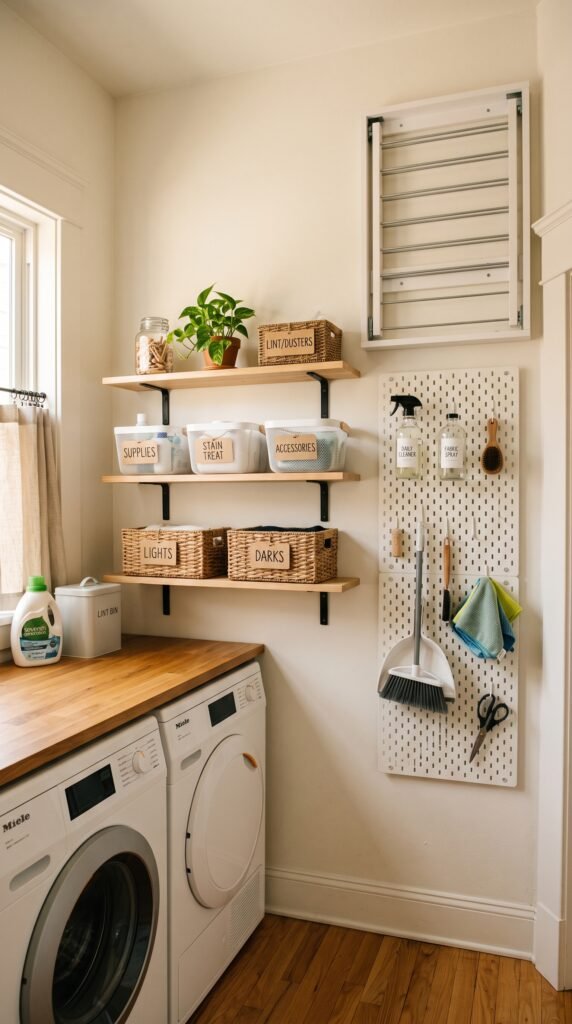
Now that the myths are out of the way, here’s what the evidence and expert consensus actually say about effective small laundry room organization.
Vertical space is your biggest untapped resource. The average laundry room has 8 feet of wall height, and most people use only the bottom 4 feet. Installing shelves, pegboards, or wall-mounted cabinets in that upper half can effectively double your usable storage without touching the floor plan. According to The Spruce’s home organization guidelines, going vertical is the single highest-impact change in small utility spaces.
Zones eliminate the “where does this go?” problem. Effective small laundry room organization is zone-based: a washing zone (detergent, fabric softener, stain remover), a drying zone (rack, hangers, clips), a folding zone (a surface or a wall-mounted fold-down table), and a sorting zone (labeled hampers or bins). When every item has a zone, decisions become automatic.
Labels are the silent system managers. Research in behavioral psychology consistently shows that labeled containers reduce decision fatigue and increase the likelihood that household members — including kids — put things back where they belong. In a small laundry room, even basic chalkboard labels on baskets make a measurable difference.
Reducing visual clutter reduces stress. A 2016 study published in the Personality and Social Psychology Bulletin found a direct correlation between cluttered home environments and elevated cortisol (stress hormone) levels. Hiding detergent bottles inside a cabinet or a pretty basket versus leaving them out on top of the machine sounds trivial — but the cumulative visual simplification genuinely affects your mood.
Multipurpose furniture outperforms single-use items. In a small space, every piece of furniture or storage product needs to earn its footprint. A bench with hidden storage beats a standalone hamper. A shelf with a rod underneath for hanging beats a shelf alone. A wall-mounted fold-down ironing board beats a freestanding one stored in a closet. When you’re evaluating any purchase for a small laundry room, ask: does this do two things?
12 Expert Tips for Small Laundry Room Organization on a Budget
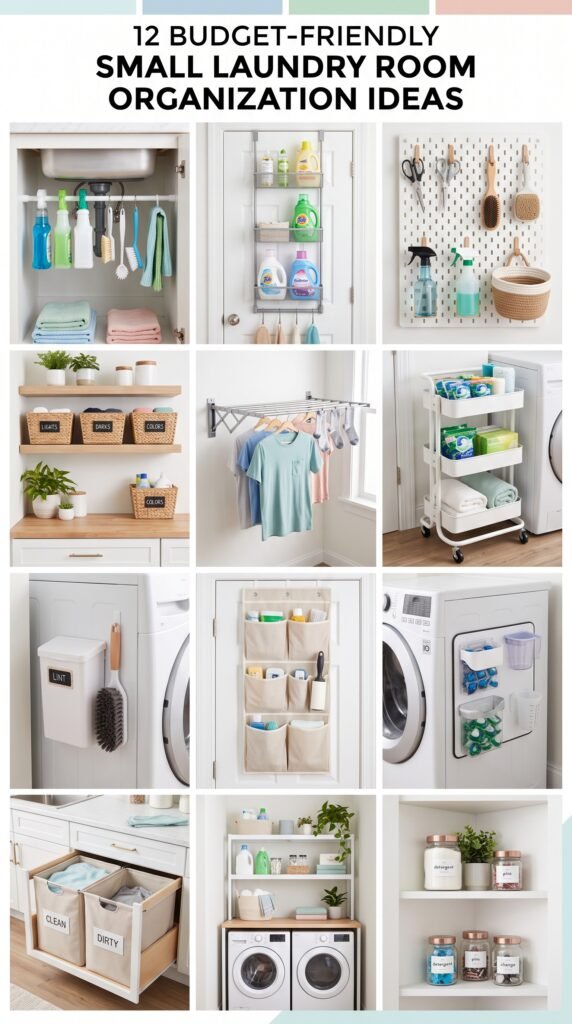
Here are twelve practical, field-tested ideas that cover every corner of a tight laundry space — all achievable on a shoestring budget.
1. Install a Tension Rod Under the Sink or Shelf
A tension rod costs $5–$12 and installs in seconds with no tools. Position one under a utility sink or beneath a low shelf to hang spray bottles by their triggers. This clears an entire shelf or cabinet floor instantly.
2. Use an Over-the-Door Organizer for Laundry Supplies
Over-the-door pocket organizers designed for shoes work equally well for laundry room supplies. Dryer sheets, stain sticks, measuring scoops, lint rollers, and small tools fit perfectly. This converts the back of your laundry room door into a full storage panel without any drilling.
3. Mount a Pegboard for Flexible Storage
A 2×4-foot pegboard panel runs about $15 at most hardware stores. Mount it on an unused wall section and add hooks, small baskets, and tool holders that you can rearrange at any time. This is ideal for items you reach for frequently — scissors, tape, a small flashlight, extra clothespins.
4. Stack Your Machines and Add a Shelf Above
If you have a front-loading washer and dryer, stacking them with a proper stacking kit (usually $20–$40) frees up an entire machine’s worth of floor space. Add a floating shelf above the stack and you’ve created both counter space and overhead storage in one move.
5. Add a Fold-Down Wall Table for Folding
Wall-mounted fold-down tables attach flush to the wall when not in use, taking up about 4 inches of depth. When lowered, they provide a full folding surface. Many models are available for $40–$80 and can support 50–100 lbs. This is one of the highest-impact upgrades for small laundry room organization because it eliminates the “fold on the machine lid” habit that leads to clutter.
6. Repurpose a Rolling Cart as a Mobile Station
A three-tier rolling utility cart (the kind popularized by organizing influencers on social media) costs $25–$45 and can be tucked beside the machine, pulled out when needed, and rolled away when not in use. Use it to hold detergent on one tier, folded items on another, and a small bin for lost socks on the third.
7. Use Clear, Airtight Containers for Powder Detergents
Decanting powder detergent from its original box into a clear airtight container removes visual clutter, prevents moisture damage, and makes it easy to see when you’re running low. Matching containers — even inexpensive ones from a discount store — create a visual cohesion that makes the space feel intentional.
best storage containers for laundry supplies
8. Hang a Retractable Clothesline for Air Drying
Retractable indoor clotheslines mount between two walls or on a single wall with a hook. They extend when needed and retract flat when not in use. A basic model runs $10–$25. This is far more practical in a small laundry room than a freestanding drying rack that blocks the floor.
9. Label Everything — Seriously, Everything
Use a label maker, chalkboard labels, or even printed paper labels in small frames. Label hamper sections (lights, darks, delicates), shelves (cleaning, ironing, air-dry items), and drawers. This step sounds almost too simple, but it’s one of the most durably effective small laundry room organization habits you can build.
10. Install Floating Shelves Above the Machine
A pair of floating shelves above the washer and dryer — positioned so you can comfortably reach them — provides the most flexible storage in the room. Use baskets to corral smaller items and keep the shelves looking tidy. A basic floating shelf with brackets costs $15–$30, and installation takes about 30 minutes with a drill and a level.
11. Use Slim, Stackable Hampers Instead of Round Ones
Round laundry baskets waste corners and awkward gaps between machines. Slim rectangular hampers with removable bags stack efficiently and fit between or beside machines without wasting space. Many have separate compartments for pre-sorting, which eliminates a step on laundry day.
12. Dedicate a Small Basket to “Found Items”
Pockets yield coins, receipts, hair ties, and general mystery items on every laundry day. A small basket mounted or placed near the machine specifically for found items prevents those things from colonizing your countertop. Empty it weekly into the appropriate place — junk drawer, coin jar, trash.
laundry room organization checklist
Putting It All Together: A Realistic Approach to Small Laundry Room Organization
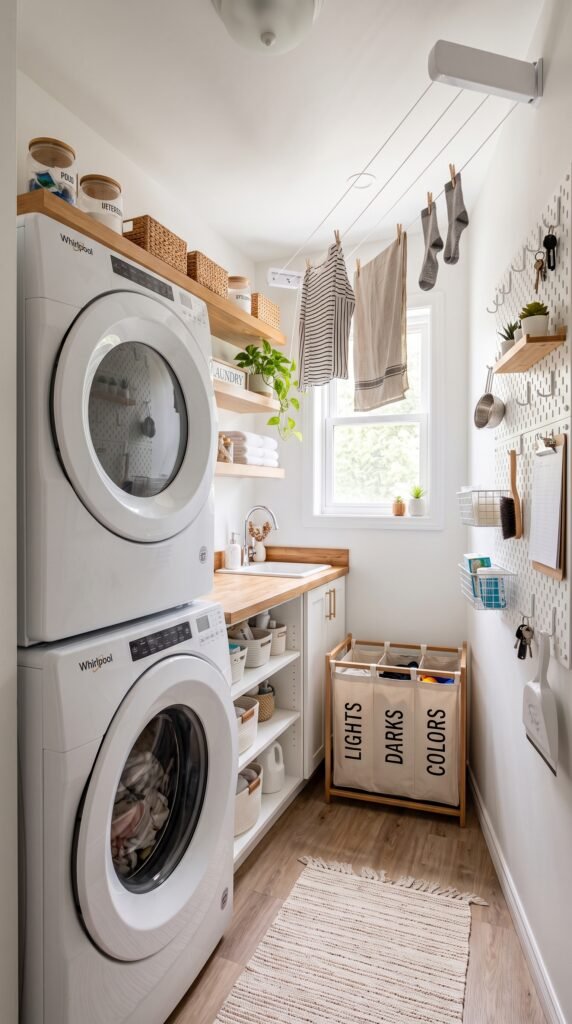
The smartest approach to transforming your laundry space is to prioritize by pain point. What frustrates you most every single time you do laundry? Start there.
If detergent clutter drives you crazy, solve the countertop problem first — clear containers, a tension rod for spray bottles, a labeled shelf. If the floor is always piled with laundry, solve the hamper situation first. If you never have a flat surface to fold on, install a fold-down wall table before anything else.
Small laundry room organization doesn’t require perfection. It requires sequencing. Each improvement you make reduces friction, which makes the next improvement easier to implement and maintain.
Budget roughly $50–$150 total for a meaningful transformation, spread across whichever of these twelve ideas address your biggest pain points. Many people find that six or seven of these ideas together — purchased over a month or two — create a result that looks and feels like a complete professional makeover.
The Long Game: Maintaining Your Small Laundry Room Organization System
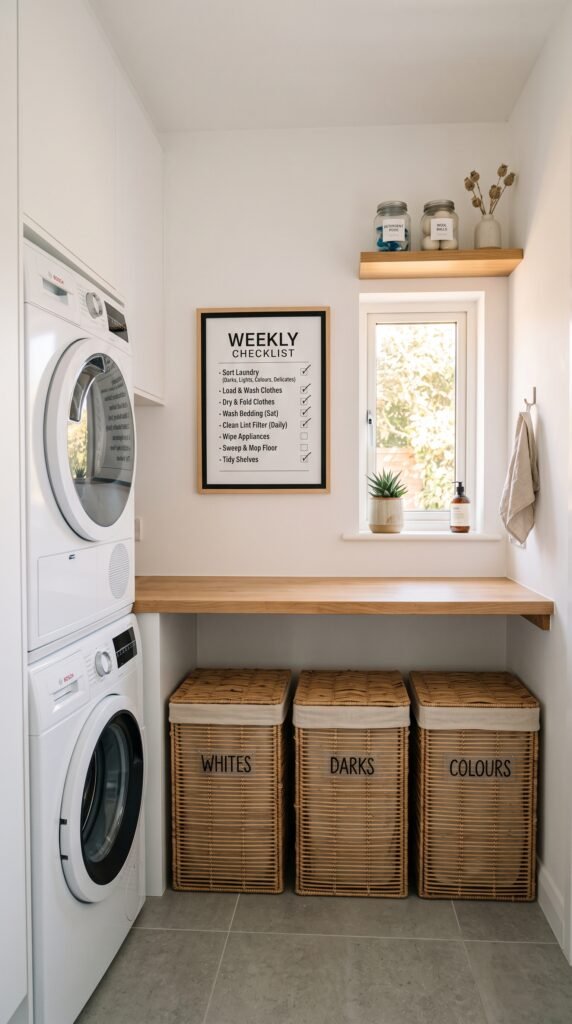
Getting organized is only half the challenge. Keeping a small laundry room organized requires a simple maintenance routine — not a major weekly effort.
A two-minute reset at the end of each laundry day handles most of it: move finished laundry out, wipe the machine tops, return any stray items to their labeled homes, and check that the found-items basket is emptied. That’s genuinely all it takes when the systems are in place.
Once a month, do a five-minute audit: check that supplies are adequately stocked, look for items that have drifted into the wrong zone, and assess whether anything in the space is no longer earning its keep. Removing one unnecessary item every month keeps the space from slowly creeping back toward clutter.
According to professional organizers interviewed by Real Simple, the most common reason organized spaces fall apart isn’t laziness — it’s that the original system was too complicated to sustain. The best small laundry room organization systems are boring in their simplicity: one basket per purpose, one shelf per category, one routine per week.
Keep it simple. Keep it labeled. Keep it zoned. Your laundry room will hold the line.