
Affiliate Disclosure: This post contains affiliate links. If you purchase through these links, I may earn a small commission at no extra cost to you. I only recommend products that genuinely solve real problems.
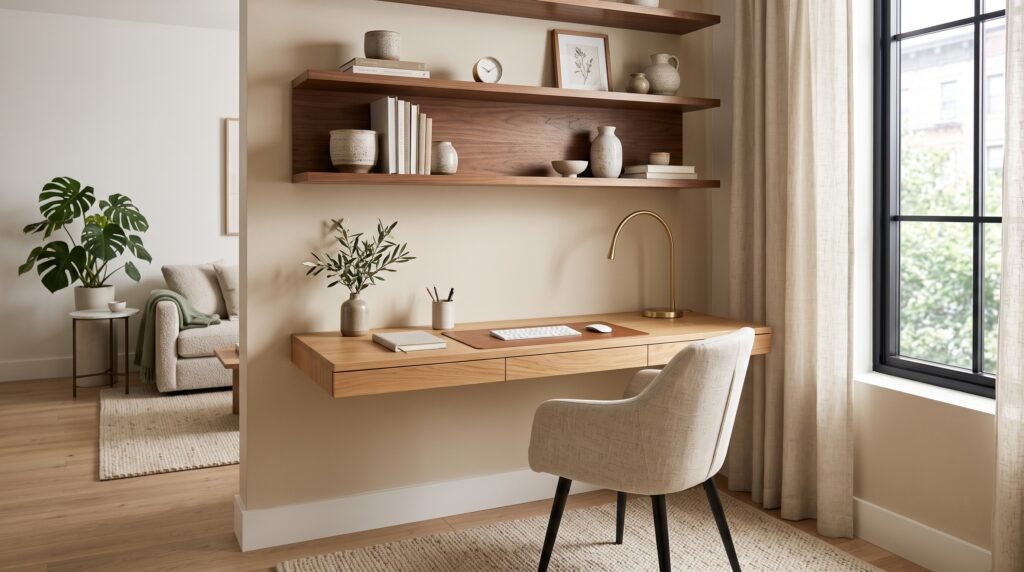
The best home office ideas aren’t always about having a spare room. Most of us are working with what we’ve got — a cramped apartment, a bedroom that doubles as everything, or a living room that refuses to cooperate. And yet, productive, beautiful, functional workspaces get carved out of these exact situations every single day.
Here’s what nobody tells you: the constraint is actually the creative engine. When you can’t just “add a room,” you get smart. You go vertical. You go hidden. You stop treating every square foot like a problem and start treating it like an opportunity.
That’s what this guide is about.
📋 Table of Contents
- Why Most People Get Small Home Office Ideas Wrong
- The Best Home Office Ideas for Spaces Under 50 Square Feet
- Home Office Ideas That Hide in Plain Sight
- Closet Offices: The Home Office Idea You’re Probably Overlooking
- Ergonomics in Tiny Spaces: Why This Part Can’t Be Skipped
- Making Any Corner Feel Like a Real Office
- The Takeaway on Small Space Home Office Ideas
Why Most People Get Small Home Office Ideas Wrong
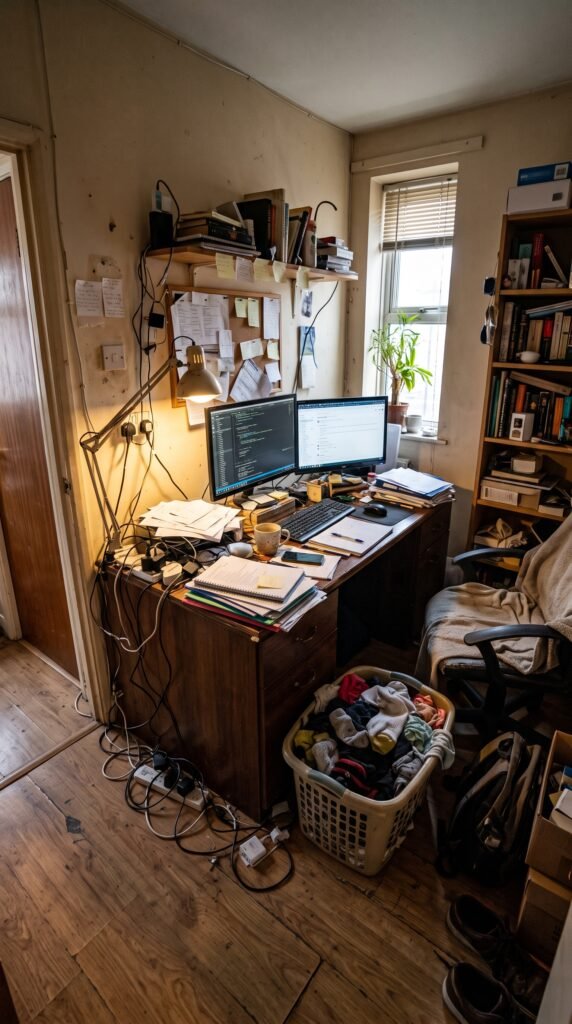
Picture this: someone finally decides to set up a home office. They buy the biggest desk they can find because it feels productive. It arrives, takes up half the bedroom, and within two weeks it’s covered in laundry and guilt.
Sound familiar?
Most people approach small-space home office ideas backwards. They start with the furniture and then try to fit their life around it. The right move is the opposite — start with your actual habits, your real work patterns, and the specific corners of your home that already have potential.
Ask yourself three questions before buying anything. How many hours a day do you actually sit down to work? Do you need a permanent setup, or can you pack it away? And what’s the one thing driving you crazy about your current situation?
Those answers are your blueprint.
The other big mistake? Ignoring vertical space. Most of us think horizontally — desk here, chair there, done. But walls are basically free real estate. The moment you start thinking in three dimensions, tiny rooms transform fast.
10 Cozy Home Office Ideas You’ll Love Working In
My Top Picks
Floating Wall-Mounted Folding Desk
Mounts directly to the wall and folds flat when not in use, making it perfect for tiny …
Shop on Amazon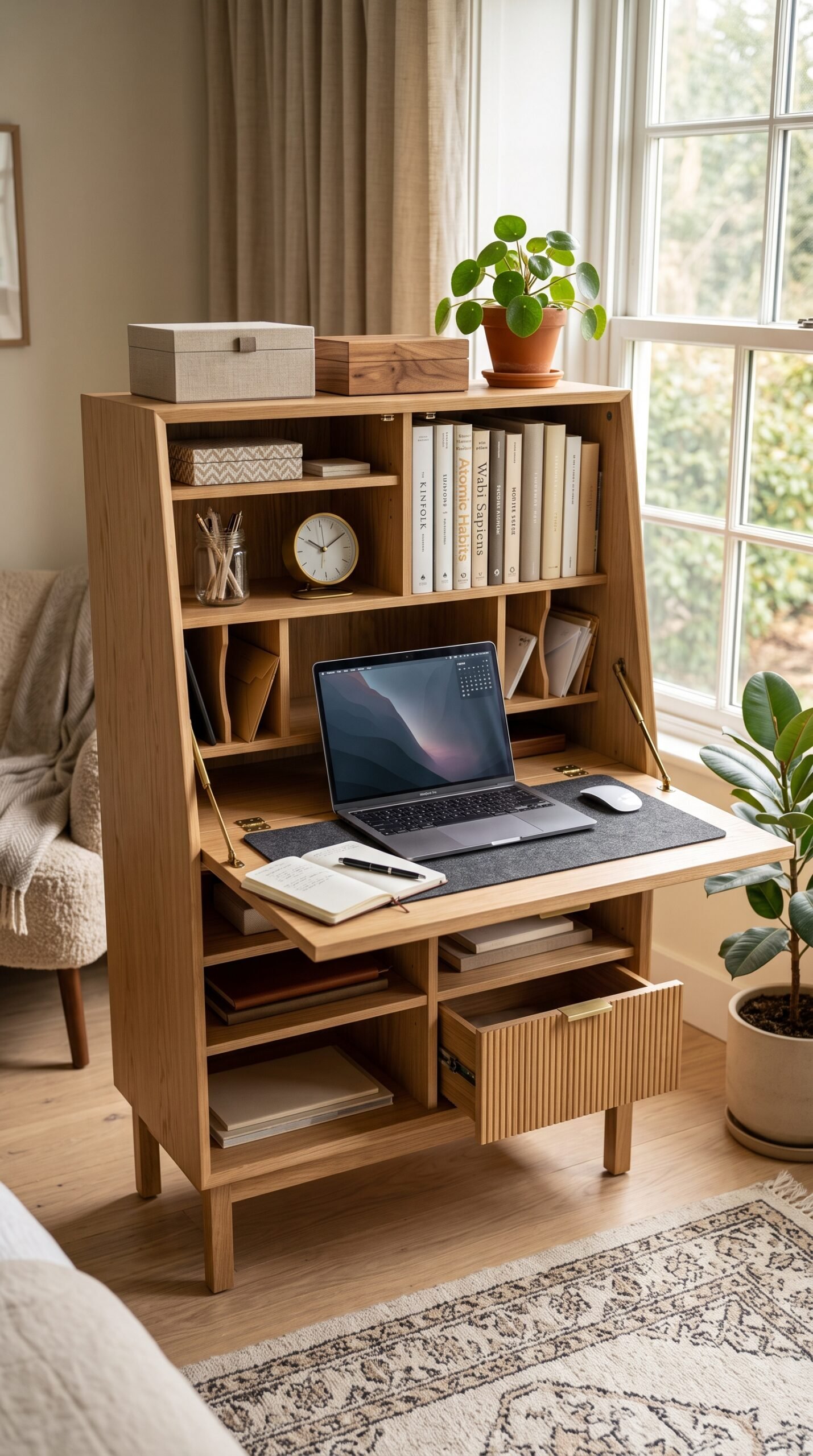
Secretary Desk with Hutch and Fold-Down Surface
Looks like a cabinet when closed, reveals a full workspace when opened. Ideal for livin…
Shop on Amazon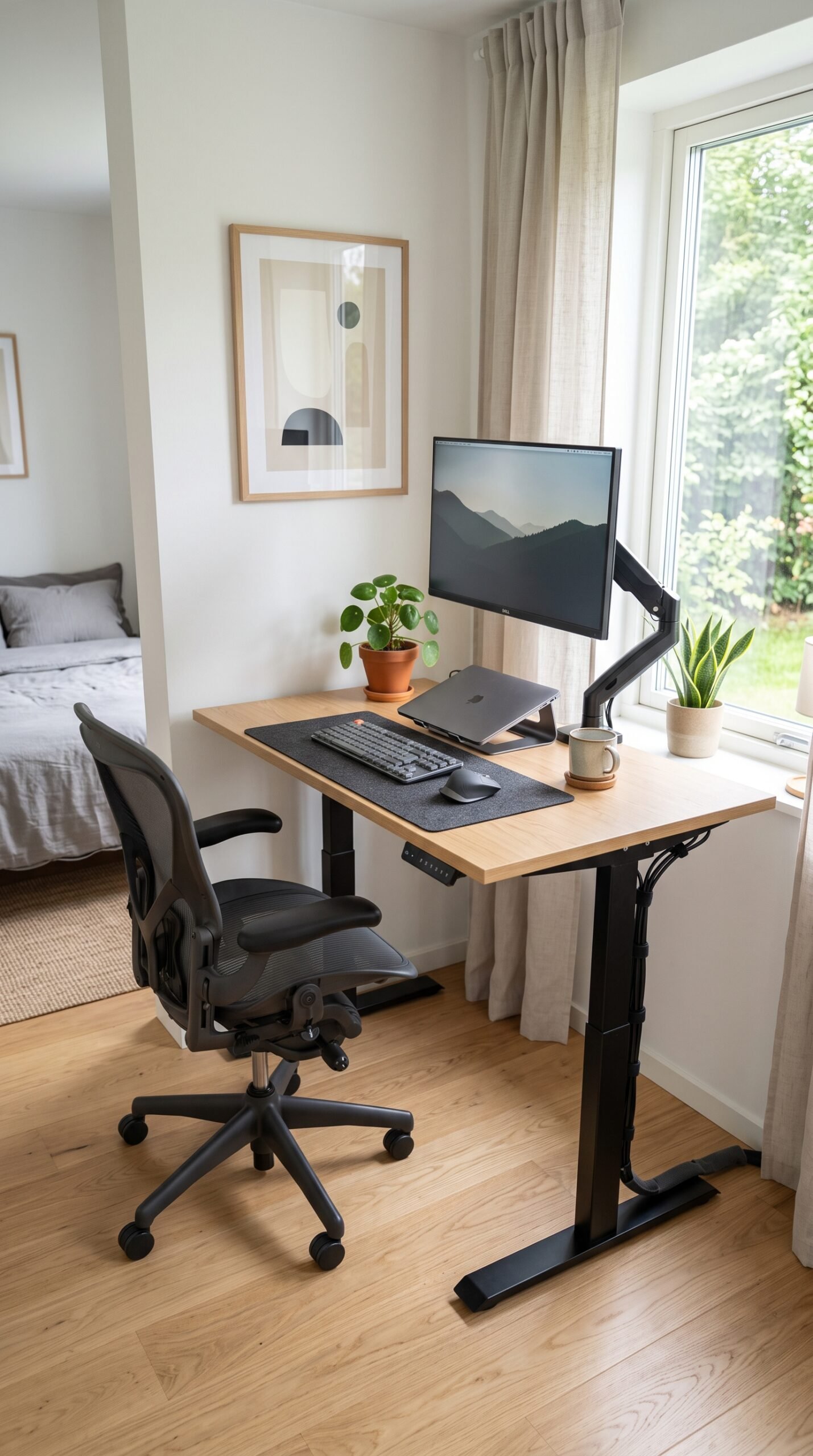
Autonomous SmartDesk Core Home Edition
A compact sit-stand desk that fits in tight corners while promoting ergonomic health. I…
Shop on Amazon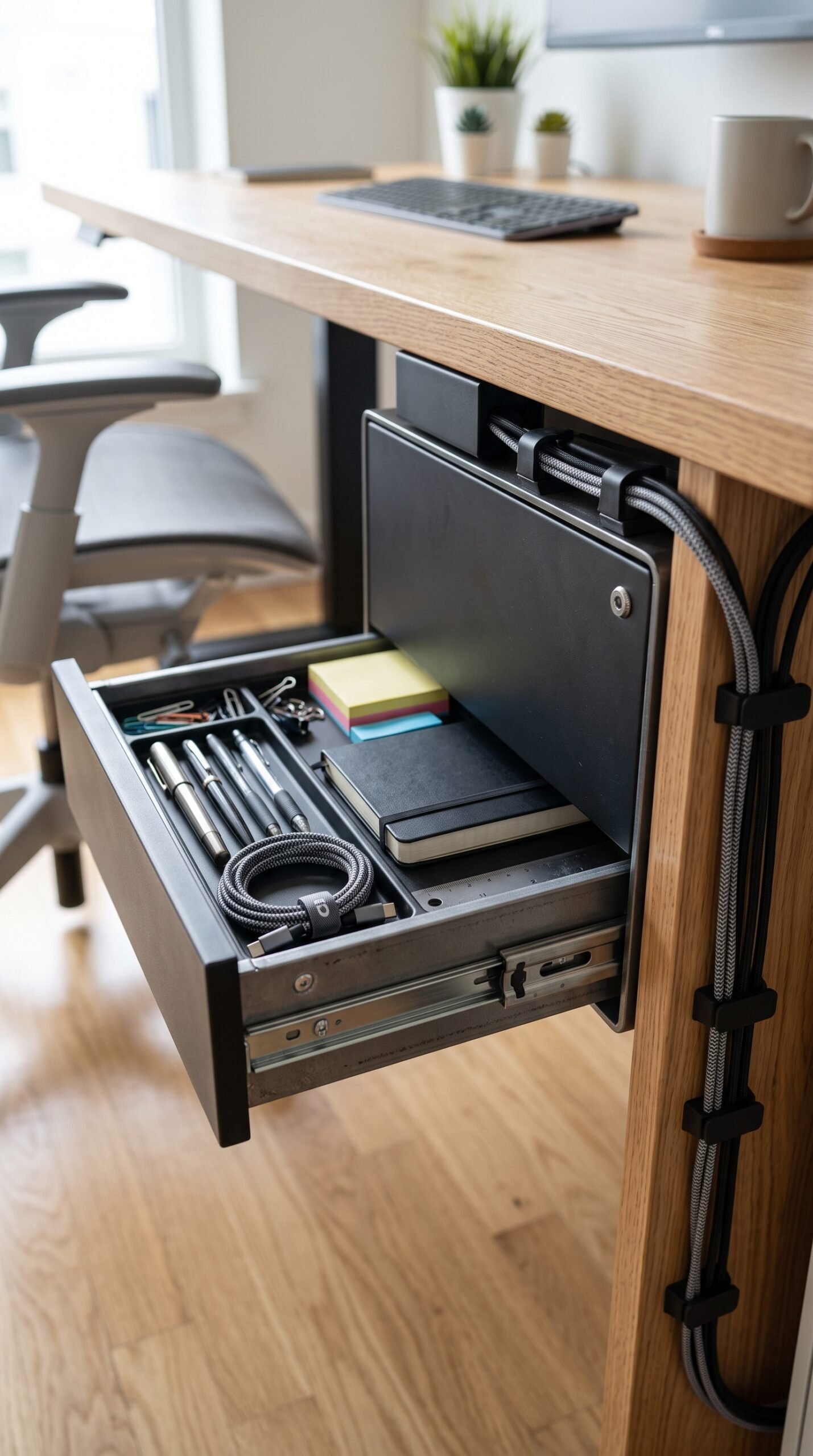
Under-Desk Drawer Organizer with Cable Management
Mounts beneath any desk surface to add hidden storage for pens, notebooks, and cables w…
Shop on Amazon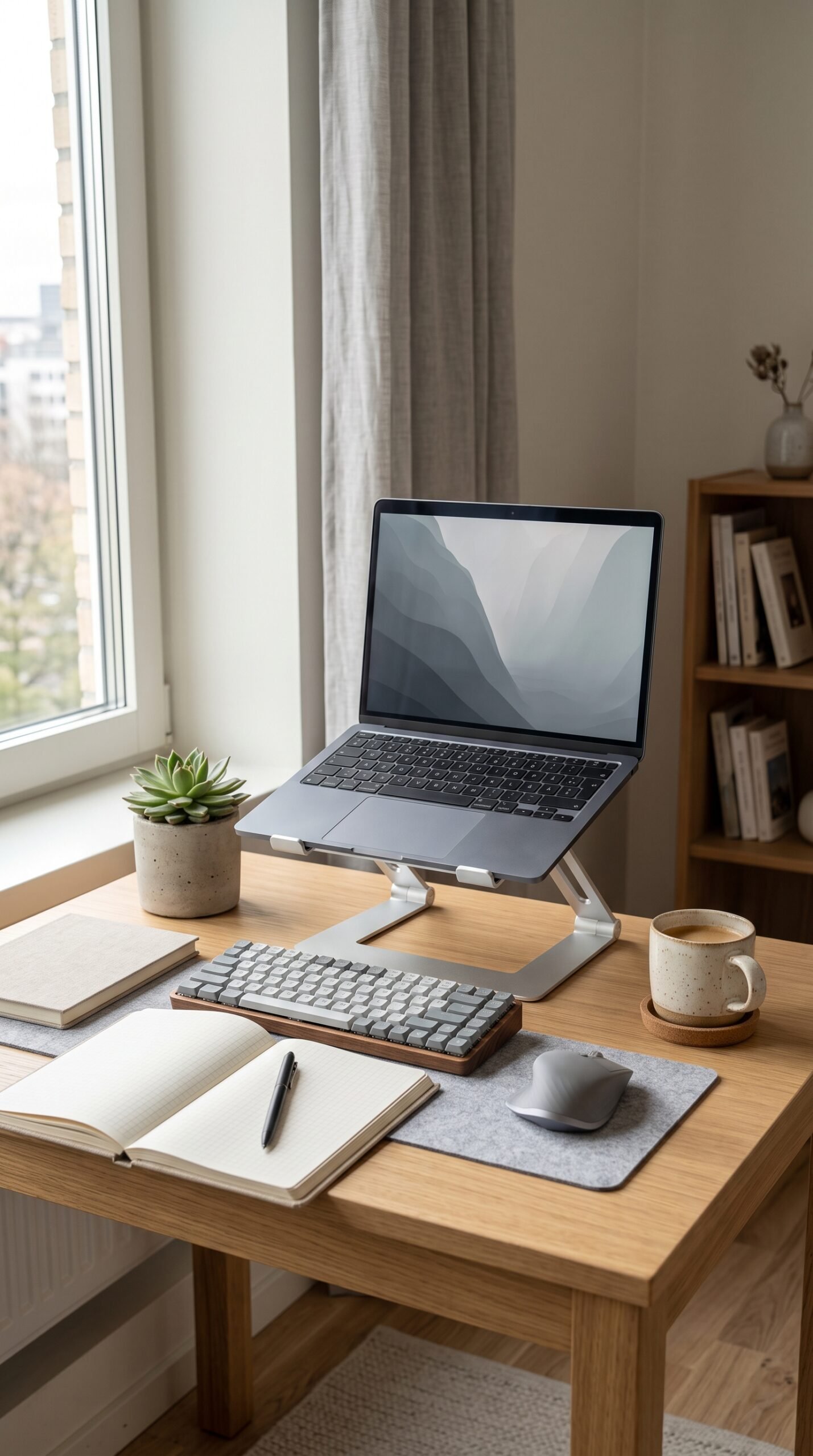
Roost Laptop Stand
Ultralight, foldable laptop stand that raises any screen to ergonomic height and packs …
Shop on Amazon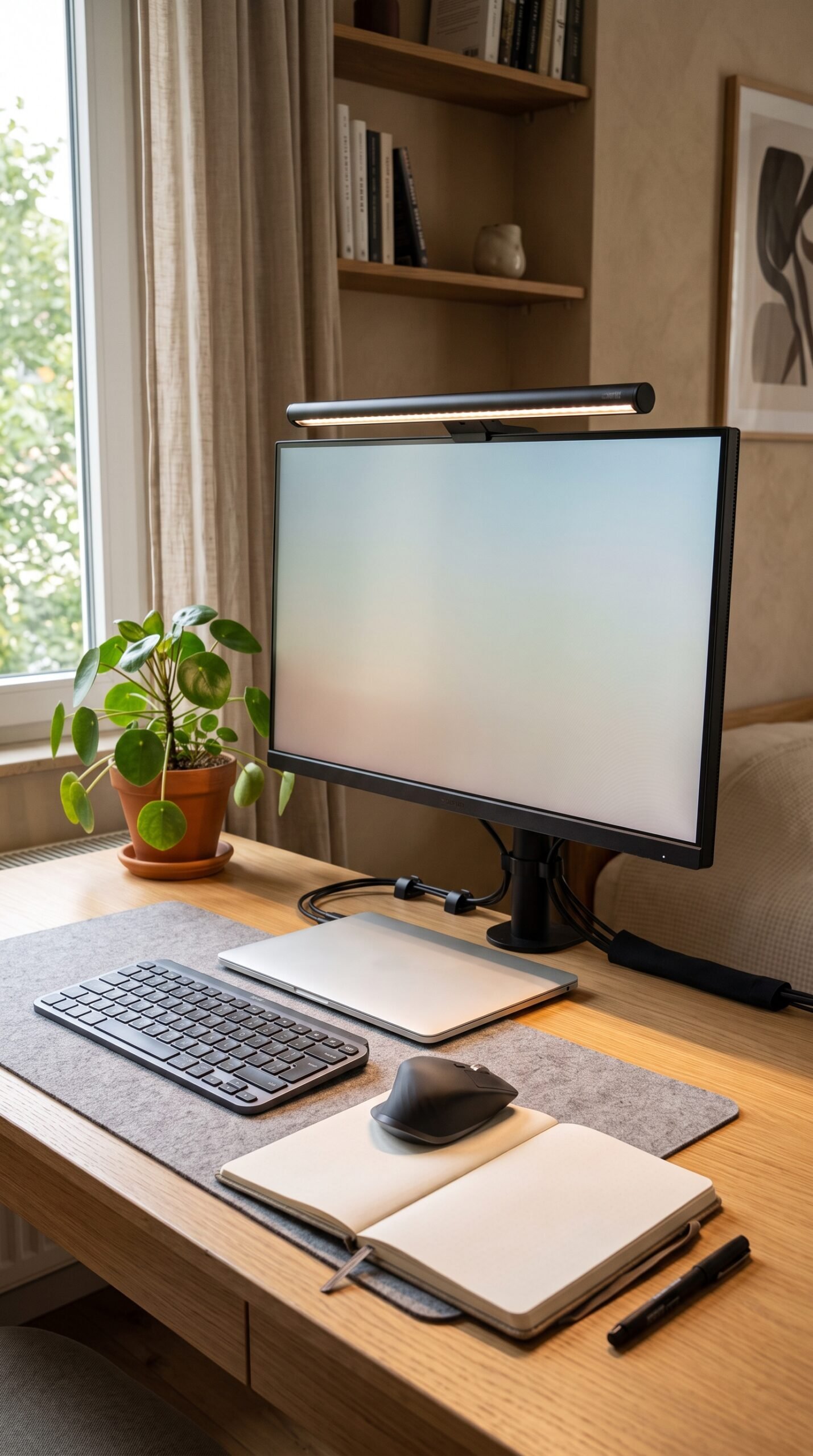
Lume Cube Edge LED Desk Light
A slim, clip-on LED panel that attaches to laptops or monitors, eliminating the need fo…
Shop on Amazon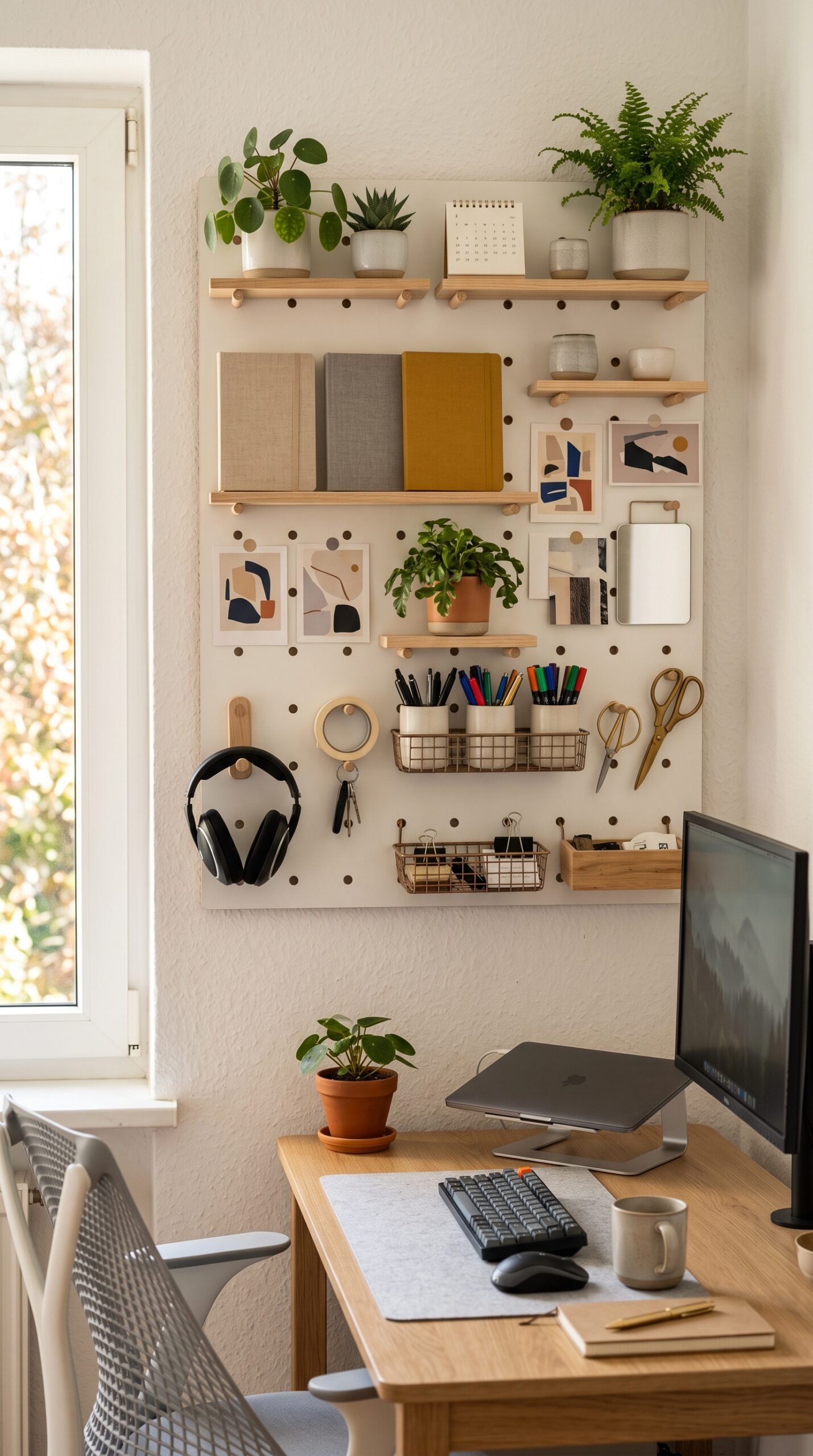
Pegboard Wall Organizer Kit
Turns bare wall space above a desk into a full storage system for supplies, headphones,…
Shop on Amazon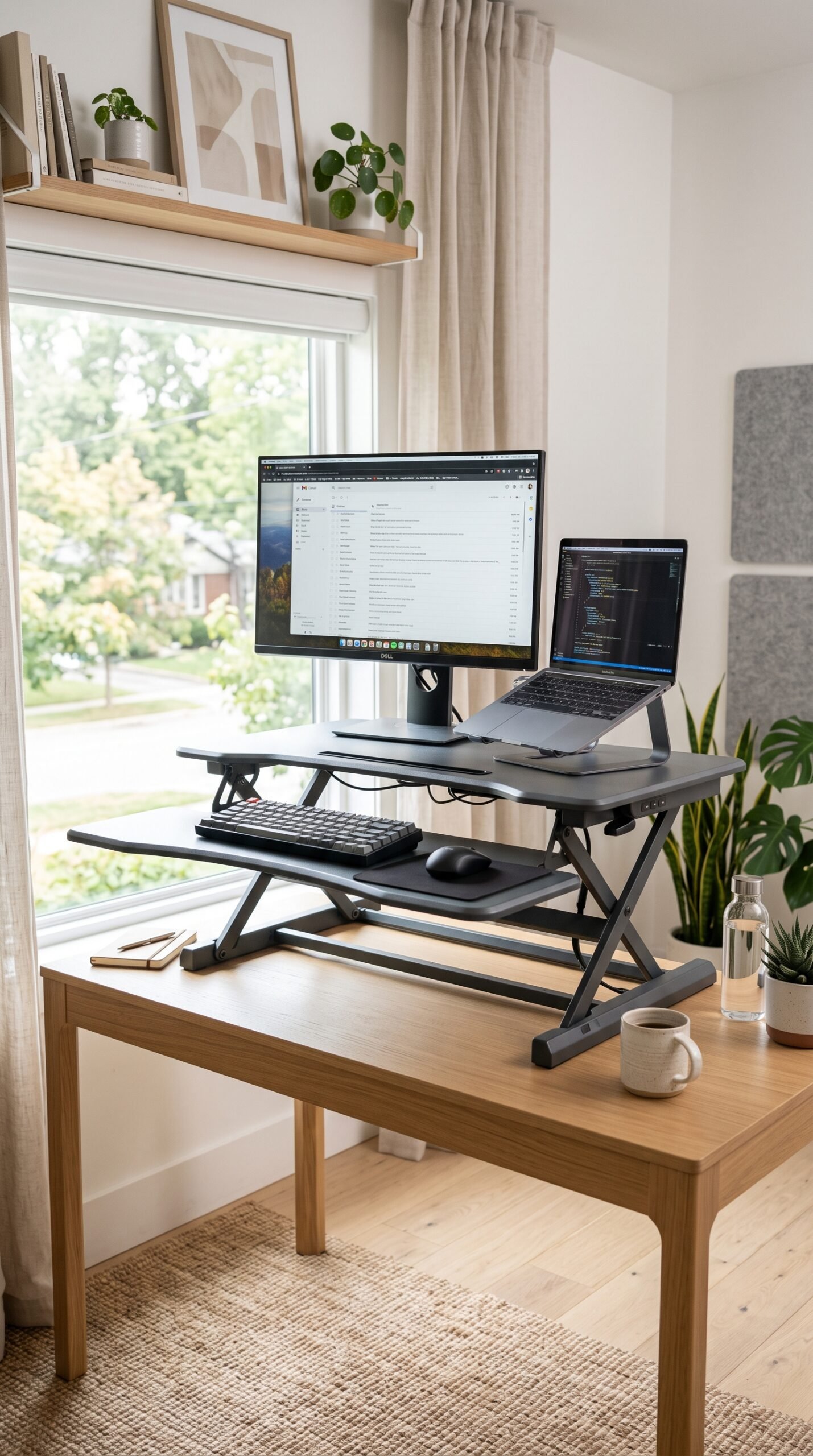
Flexispot E1 Electric Standing Desk Converter
Sits on top of any existing table or countertop and converts it into a sit-stand workst…
Shop on AmazonThe Best Home Office Ideas for Spaces Under 50 Square Feet
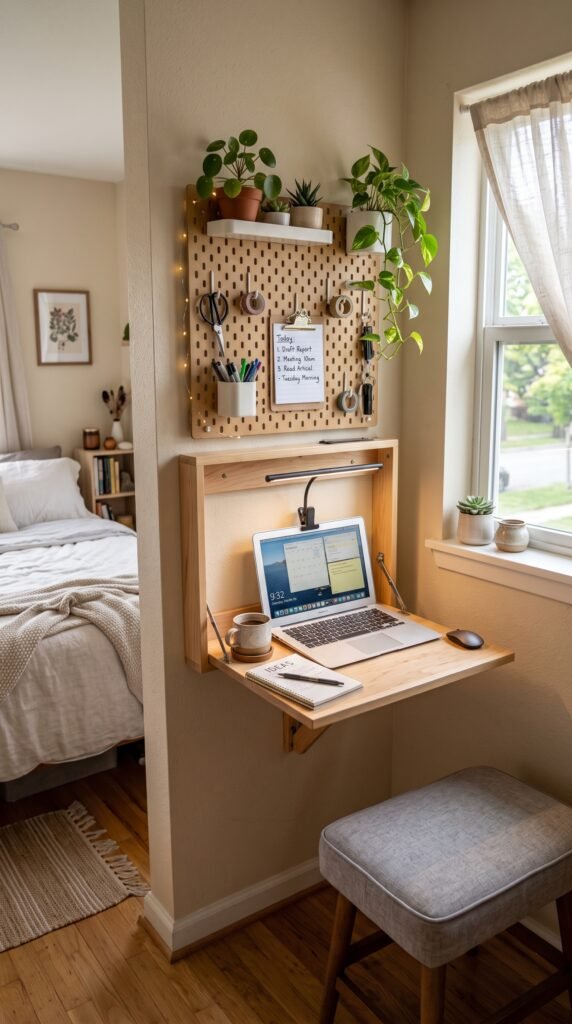
Fifty square feet sounds impossible. It’s not.
A hallway nook, a bedroom corner, a section of living room wall — all of these can become a real workspace. You just need the right tools built specifically for the job.
Start with the wall, not the floor.
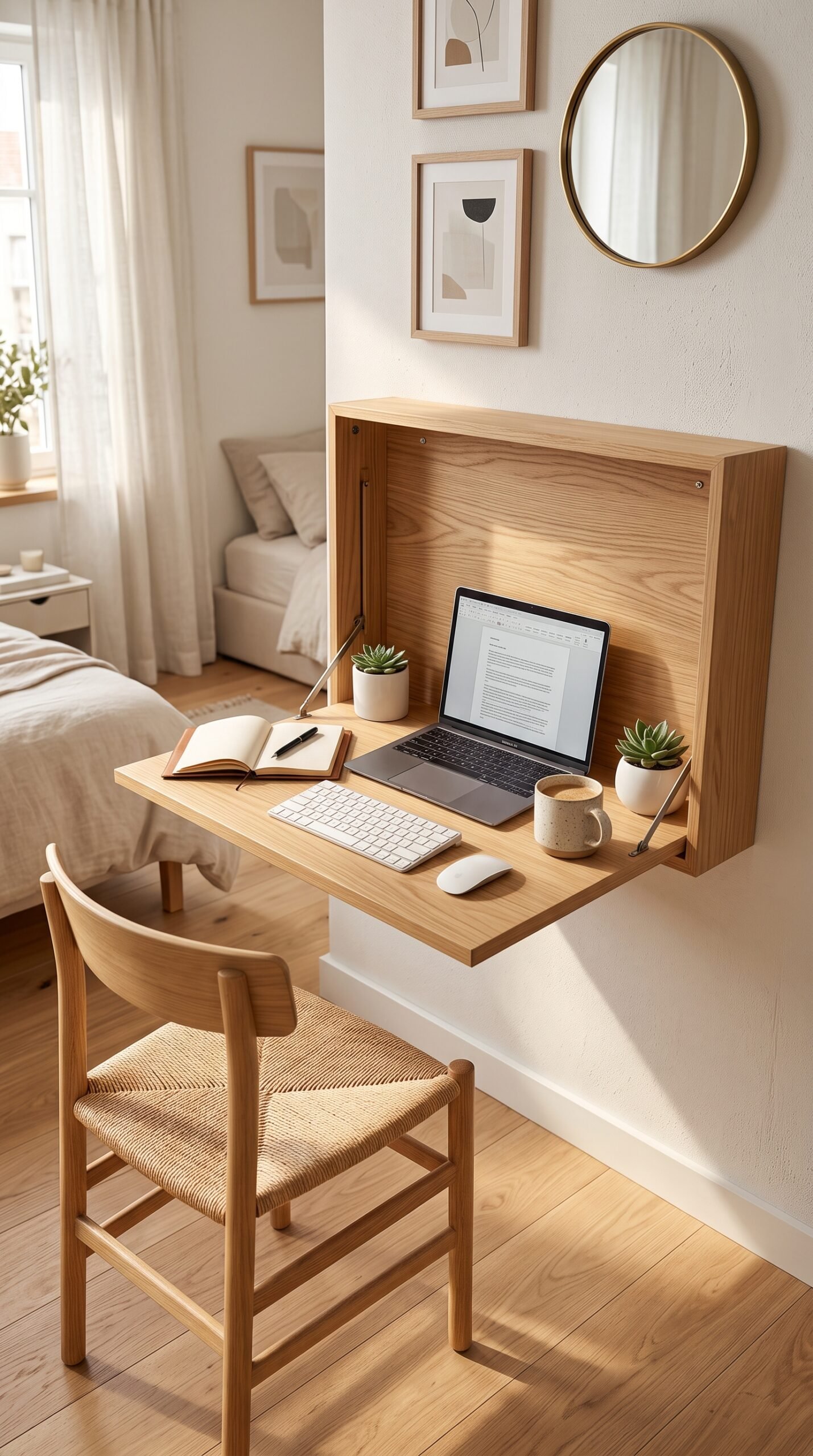
The Floating Wall-Mounted Folding Desk by VIVO is one of those products that genuinely earns its shelf space (except it doesn’t take any). Mount it to the wall at the right height, use it when you need it, fold it flat when you don’t. Your hallway is now an office. Your bedroom is still a bedroom. The floor footprint is essentially zero.
For about $60-$90, it’s one of the highest-return purchases for anyone in a small apartment or rental. No assembly drama. No massive desk dominating a room you actually live in.
Then go vertical above it.
Once you’ve got a surface, your instinct will be to pile things on it. Don’t. Instead, put those things on the wall. The Pegboard Wall Organizer Kit by Wallniture turns the wall above your desk into a full storage system. Headphones, notebooks, a small plant, a cup of pens — all off the desk, all within reach, all looking intentional instead of chaotic.
Honestly, pegboards make small home offices look designed rather than improvised. That matters more than you’d think for your mindset going into a workday.
And deal with the lighting problem.
Most micro workspaces have a lighting problem. There’s no good place for a traditional desk lamp, or the lamp cable creates another mess to manage. The Lume Cube Edge LED Desk Light clips directly onto your laptop or monitor screen. Slim, adjustable, no cord running across your workspace. For closet offices or wall-mounted setups where a lamp is basically impossible, this solves everything.
Home Office Ideas That Hide in Plain Sight
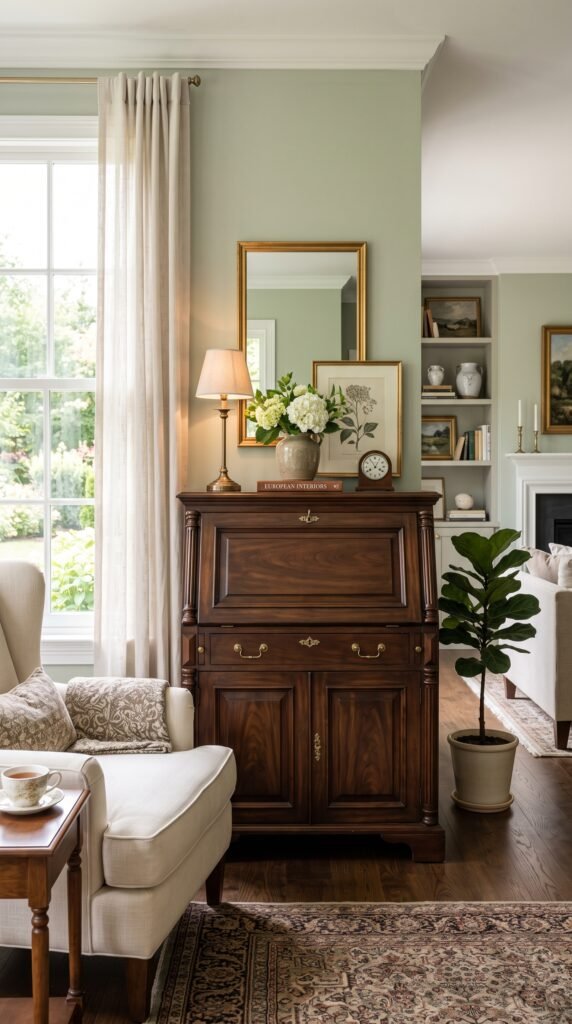
Not everyone can dedicate wall space to a folding desk or pegboard. Maybe you’re renting and can’t drill. Maybe the aesthetic of your home matters and you don’t want “office corner” to be a visible thing.
That’s exactly the problem the Secretary Desk with Hutch and Fold-Down Surface by Sauder was built for. When it’s closed, it looks like a cabinet. Clean, furniture-store-appropriate, totally inconspicuous in a living room or bedroom. Open it up, and there’s a full workspace inside: a fold-down writing surface, storage compartments, hutch space above.
The psychological benefit of this is underrated. When work is done, you close the doors and it’s gone. No visual reminder of unfinished tasks bleeding into your evening. The office disappears.
Most people in apartments or studio layouts underestimate how much the visual presence of work affects their ability to switch off. Out of sight genuinely does mean out of mind, at least enough to matter.
For the renters who can’t commit to anything permanent:
The Flexispot E1 Electric Standing Desk Converter sits on top of whatever surface you already have — a dining table, a kitchen counter, even a dresser. It raises and lowers electronically to let you sit or stand throughout the day. No drilling. No replacing any existing furniture. No lease violation.
According to research from the CDC, alternating between sitting and standing during work reduces musculoskeletal discomfort and fatigue over time. So this isn’t just a space hack — it’s a health upgrade. The fact that it works on any flat surface just makes it an obvious choice for anyone who can’t commit to a full desk replacement right now.
Closet Offices: The Home Office Idea You’re Probably Overlooking
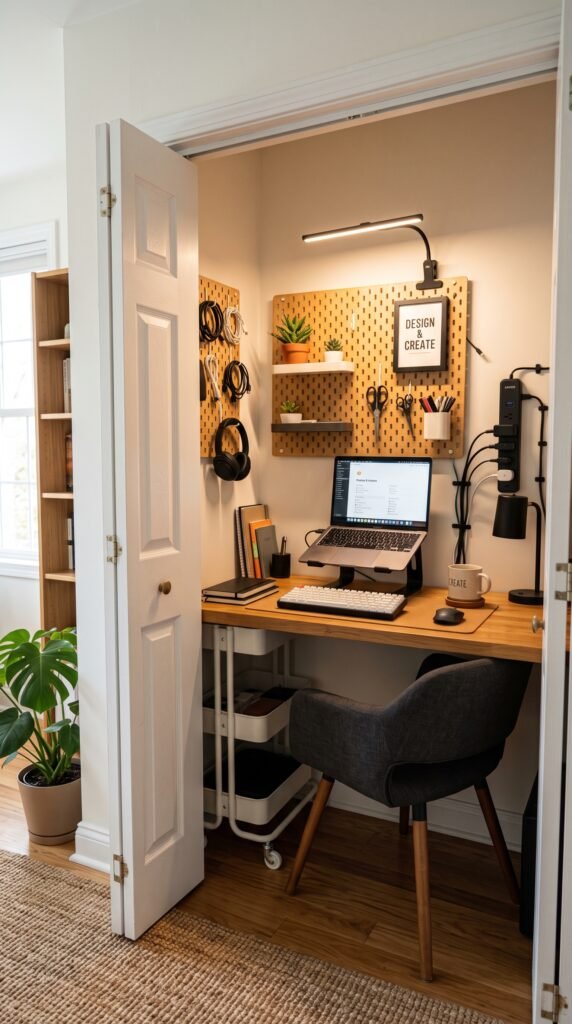
The “cloffice” — closet office — has had a moment, and it’s not going away. Because it works.
Most closets are 2 to 3 feet deep and 3 to 6 feet wide. That’s not a small footprint — that’s a dedicated workspace that closes completely when the day is done. Pull the doors shut and your bedroom is just a bedroom again.
The setup strategy for a closet office is simple. Remove the hanging rod. Add a shelf or a simple desk surface. Mount a power strip to the back wall. Handle the lighting problem. And then use vertical space aggressively.
For the desk surface itself, the Floating Wall-Mounted Folding Desk works perfectly here too — it mounts directly to the closet’s back wall and can fold flat when you want to reclaim the space for actual closet use.
Lighting inside a closet is almost always a problem. No window, bad overhead light, eye strain within an hour. The Lume Cube Edge LED Desk Light clips to your monitor and casts even, adjustable light exactly where you need it. No floor lamp. No awkward clip-on trying to balance on a shelf. Just clip it and work.
Storage inside the closet office: The Under-Desk Drawer Organizer with Cable Management mounts underneath your desk surface to create hidden storage for everything you’d otherwise pile on top. Pens, a notebook, cables, sticky notes, chargers. It screws up into the underside of the surface and disappears from view completely. Critical for closet offices where surface area is limited and every inch counts.
Ergonomics in Tiny Spaces: Why This Part Can’t Be Skipped
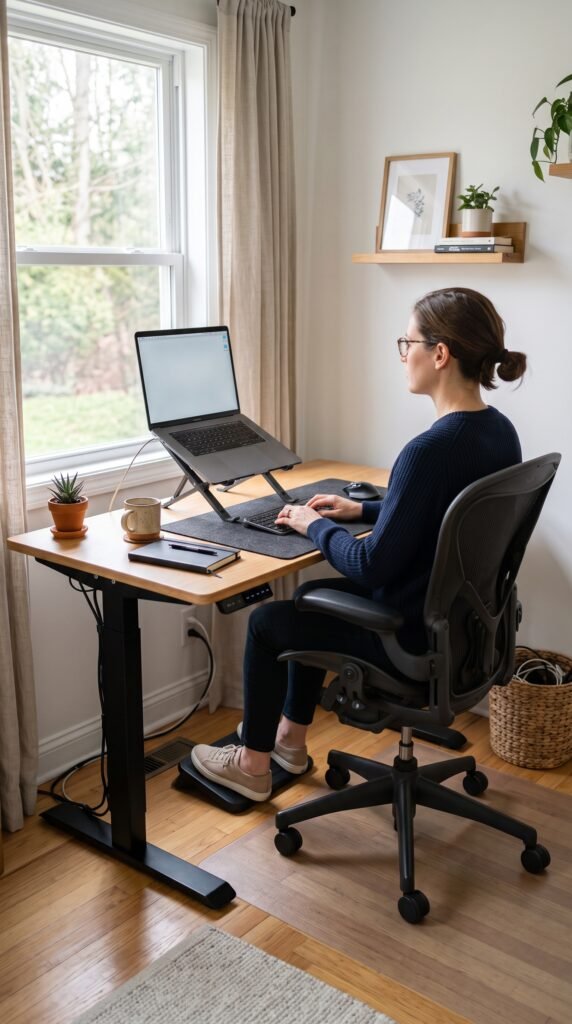
Here’s something that gets skipped in almost every “small space home office” conversation: your body doesn’t care that the space is small. It still needs proper ergonomics or you’ll pay for it later.
Poor posture, screens at the wrong height, no ability to stand during the day — these cause real problems over time. Research from the American Journal of Preventive Medicine has consistently linked prolonged sitting to increased health risks independent of exercise habits. Meaning even if you work out, sitting for 8 hours straight is still a problem.
Two products directly address this in small spaces.
The Roost Laptop Stand raises your laptop screen to eye level wherever you’re working. A nightstand, a kitchen counter, a tiny folding desk — the Roost works on all of them. It folds down to the size of a pen, so you carry it everywhere. The ergonomic difference between looking down at a laptop versus looking straight ahead at eye level is massive. Neck pain, shoulder tension, headaches — most of it traces back to screen height.
And if you’re serious about eliminating the sit-all-day problem, the Autonomous SmartDesk Core Home Edition is worth every dollar. It’s a sit-stand desk with a compact, minimalist frame designed specifically to fit in tight spaces — bedroom corners, alcoves, even a narrow section of a living room wall. At $299-$449, it’s a premium buy. But for people who work full-time from home, the ergonomic investment pays itself back in avoided chiropractor visits pretty fast.
Making Any Corner Feel Like a Real Office
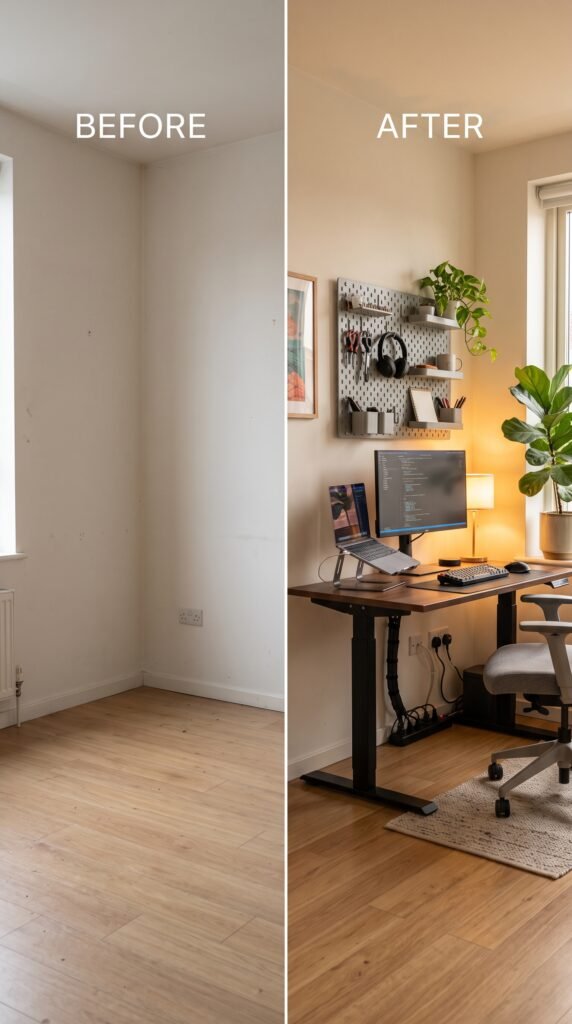
You don’t need a dedicated room. You need a dedicated zone.
The difference is mostly psychological, but psychology is where productivity lives. A corner that looks put-together, has good lighting, keeps clutter off the surface, and separates work from the rest of the room — that corner becomes an office in every way that matters.
Here’s the practical setup path, from scratch:
Start with a surface. Wall-mount the Floating Wall-Mounted Folding Desk if you need it to disappear when not in use. Or go for the Autonomous SmartDesk Core Home Edition if you want something permanent and health-forward. If you’re not ready to commit to a new desk at all, drop the Flexispot E1 Electric Standing Desk Converter on whatever surface you have.
Add vertical storage. The Pegboard Wall Organizer Kit above the desk handles everything that would otherwise clutter the surface. [INTERNAL_LINK: pegboard organization ideas for home offices | pegboard wall storage setup]
Handle hidden storage. Mount the Under-Desk Drawer Organizer with Cable Management underneath to keep pens, cables, and small items off the desk and out of sight.
Fix your screen height. The Roost Laptop Stand gets your laptop to eye level in seconds. Your neck will notice within the first day.
And sort out the lighting. Clip the Lume Cube Edge LED Desk Light to your screen and get clean, even task lighting without needing any additional surface or floor space.
That’s the whole setup. Five products, potentially under $300 if you’re shopping the budget options, and a corner becomes a workspace that actually works.
For more inspiration on small-space transformations, Apartment Therapy’s home office archives are one of the best free resources out there. And if you want to dig into the science behind workspace psychology and productivity, the Harvard Business Review’s research on workspace design is genuinely eye-opening.
The Takeaway on Small Space Home Office Ideas
No spare room. No problem. That framing shift from “I don’t have space” to “I haven’t found the space yet” is where good home office ideas actually begin.
The room doesn’t make the office. The intentionality does.
Whether you’re converting a closet, mounting a desk to a wall, or just dropping a standing converter onto your dining table, every move toward a real setup is a move toward more productive, more comfortable, more sustainable work-from-home life.
Start with one change. The right change has a way of making everything else obvious.