If you’ve been searching for home office ideas for women that actually work in real life — not just Pinterest boards you’ll never recreate — you’re in the right place.
Because here’s the thing: a great home office isn’t about having a spare room or a big budget. It’s about designing a space that helps you focus, feel good, and actually get things done. And that looks different for every woman, every home, every work style.
📋 Table of Contents
- Quick Answer: What Are the Best Home Office Ideas for Women?
- 1. Start With Your “Why” Before You Buy Anything
- 2. Choose the Right Desk for Your Body and Your Work
- 3. Lighting Is the One Thing That Changes Everything
- 4. Invest in Your Chair Before Anything Else
- 5. Create Zones Even in a Small Space
- 6. Smart Storage Solutions That Don’t Look Like an Office Supply Store
- 7. Color and Décor — Make It Feel Like Yours
- 8. Tackle the Cable Chaos Once and For All
- 9. Set Up a Dedicated Video Call Background
- 10. Use Vertical Space — Especially in Small Rooms
- 11. Noise Control Matters More Than You Think
- 12. Add a Reading or Thinking Corner
- 13. Get Your Tech Right
- 14. Design a Real Start-of-Day Ritual for Your Space
- 15. Keep Evolving the Space
- FAQ: Home Office Ideas for Women
Quick Answer: What Are the Best Home Office Ideas for Women?
The best home office ideas for women combine function with personal style. Think ergonomic seating, good lighting, smart storage, and a setup that reflects who you are. You don’t need a dedicated room. A well-designed corner, a closet conversion, or even a styled nook can work just as well — sometimes better.
1. Start With Your “Why” Before You Buy Anything
Most people skip this step entirely. Don’t.
Before you start buying desk organizers and wall art, ask yourself what you actually need from this space. Are you on video calls all day? You need a clean, well-lit backdrop. Do you do deep focus writing? Noise and distraction are your enemies. Running a product-based business? Storage is everything.
Picture this: you spend $300 setting up a gorgeous minimalist desk, only to realize three weeks in that you have nowhere to put your printer, your shipping supplies, or your ring light. Not fun.
Know your workflow first. Then design around it.
2. Choose the Right Desk for Your Body and Your Work
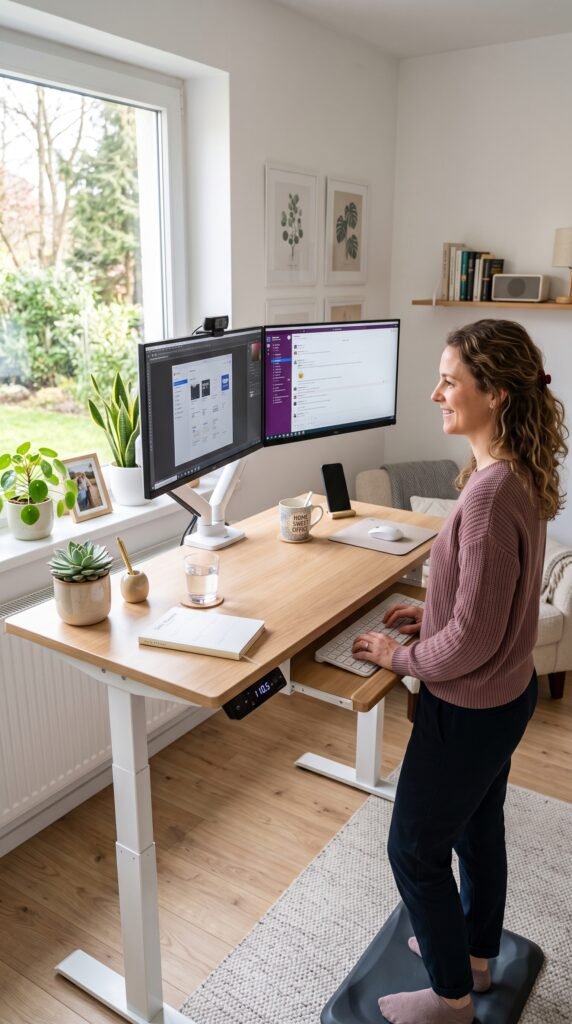
This is one of the most underrated home office ideas for women, and it matters more than aesthetics ever will. A desk that’s too high strains your shoulders. Too low and your back pays for it by 3pm.
Standard desk height is around 28-30 inches, which suits most women. But if you’re petite or tall, that number shifts. A height-adjustable standing desk gives you flexibility to sit and stand throughout the day, which research from the Mayo Clinic links to reduced fatigue and better mood over time.
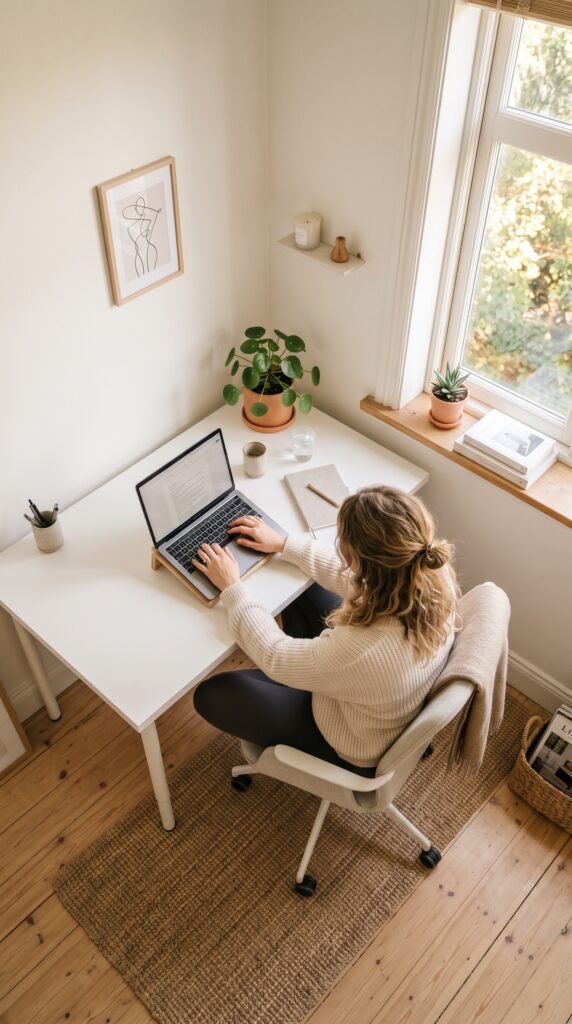
A corner desk is worth considering too. It gives you two work zones — one for your screen, one for papers or creative work — without taking up much more space than a standard desk.
3. Lighting Is the One Thing That Changes Everything
Bad lighting is responsible for more headaches, eye strain, and terrible Zoom appearances than any other factor. And yet it’s the most overlooked part of most home office ideas for women.
Natural light is best. Position your desk so the window is to your side, not directly behind or in front of you. Behind you creates glare on your screen. In front creates a silhouette on calls. Neither is ideal.
For artificial lighting, layer it. A ceiling light alone creates harsh shadows. Add a desk lamp for task lighting and consider a bias light behind your monitor to reduce eye fatigue during long work sessions. The Lighting Research Center at RPI has solid guidance on this if you want to geek out on the science.
4. Invest in Your Chair Before Anything Else
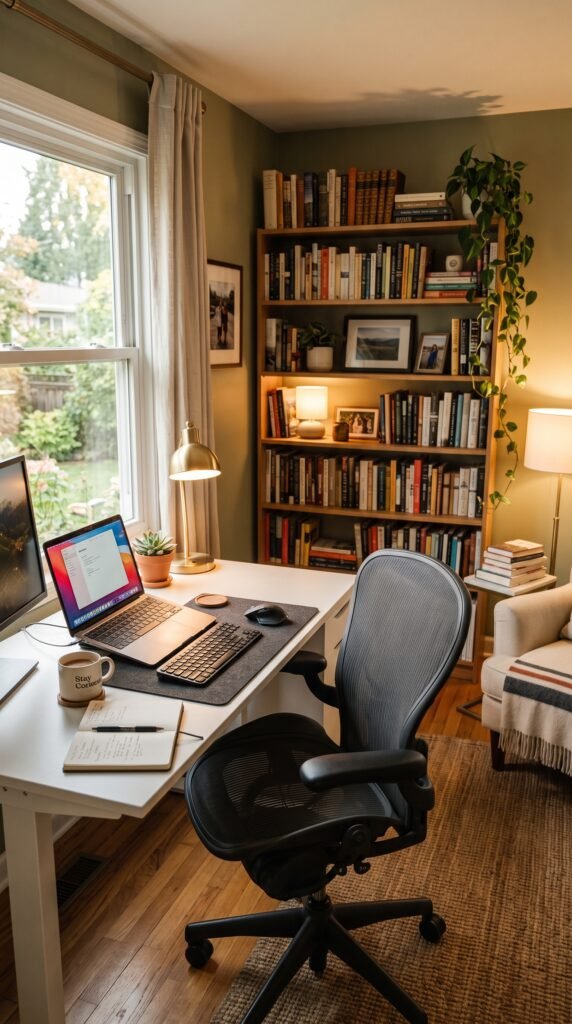
Here’s a truth most décor-focused posts won’t tell you: your chair is more important than your desk. You’ll spend hours in it every day. Skimping here costs you in back pain, chiropractor bills, and lost productivity.
Look for lumbar support, adjustable seat height, and armrests that can be repositioned. You don’t have to spend $1000 on a Herman Miller (though they’re worth it if you can swing it). There are solid ergonomic options in the $200-400 range that make a genuine difference.
5. Create Zones Even in a Small Space
One of the smartest home office ideas for women working in tight quarters is zone thinking. Your space doesn’t have to be big. It has to be intentional.
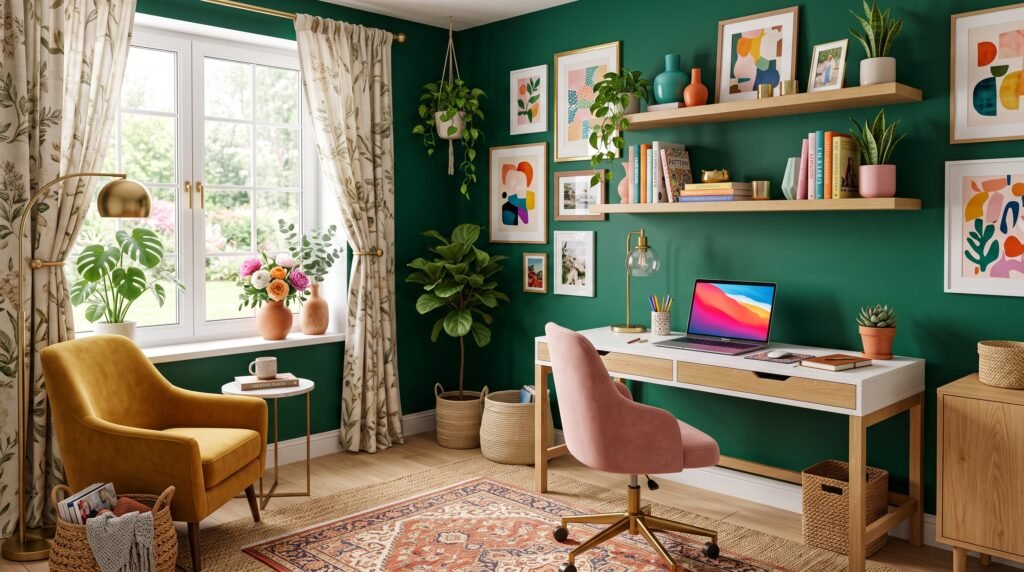
Separate your “work zone” from your “thinking zone” if possible. Even just a small armchair with a side table near your desk creates a mental shift when you need to read, brainstorm, or take a call without staring at your to-do list. Your brain responds to physical cues more than you’d think.
Use a rug to define the work area. A bookcase as a room divider. A curtain to close off a closet-turned-office. These boundaries help your brain know when it’s work time.
6. Smart Storage Solutions That Don’t Look Like an Office Supply Store
Clutter is a focus killer. But the solution isn’t to hide everything — it’s to store things where you actually need them, in a way that doesn’t stress you out visually.
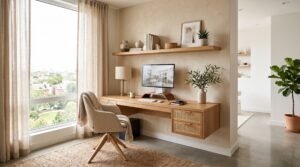
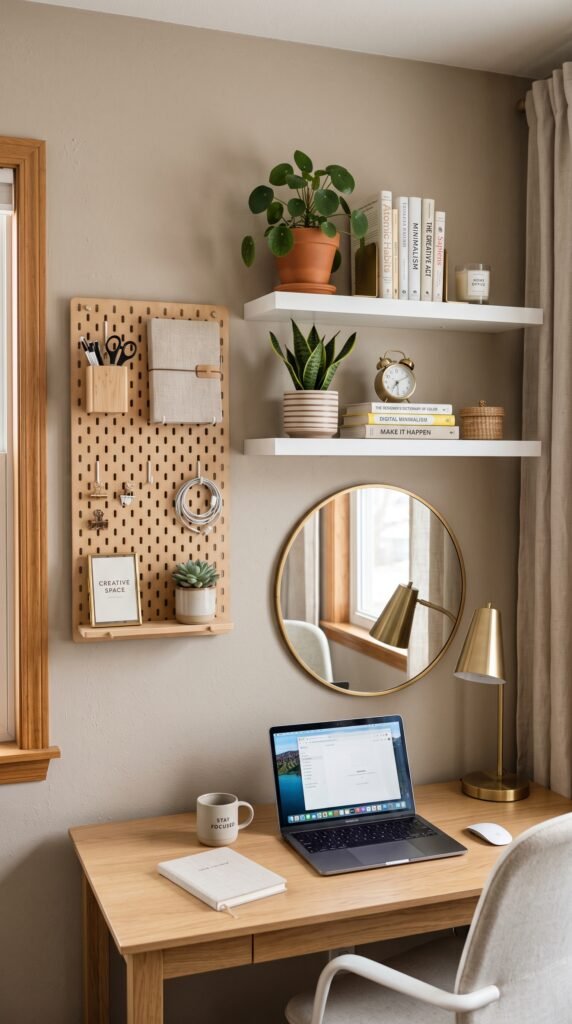
Wall-mounted shelves above your desk keep the surface clear without sacrificing storage. Floating shelves styled with a mix of books, plants, and a few functional items (a pen holder, a small tray) look intentional rather than cluttered. Pegboards are having a serious moment in home office design right now and for good reason — they’re endlessly customizable.
For paperwork, a simple accordion folder or a few labeled binders beats a massive filing cabinet in a small space. Every time.
7. Color and Décor — Make It Feel Like Yours
This is where home office ideas for women often get overthought. You don’t need to commit to an aesthetic. You need a space that makes you feel calm, capable, and like yourself.
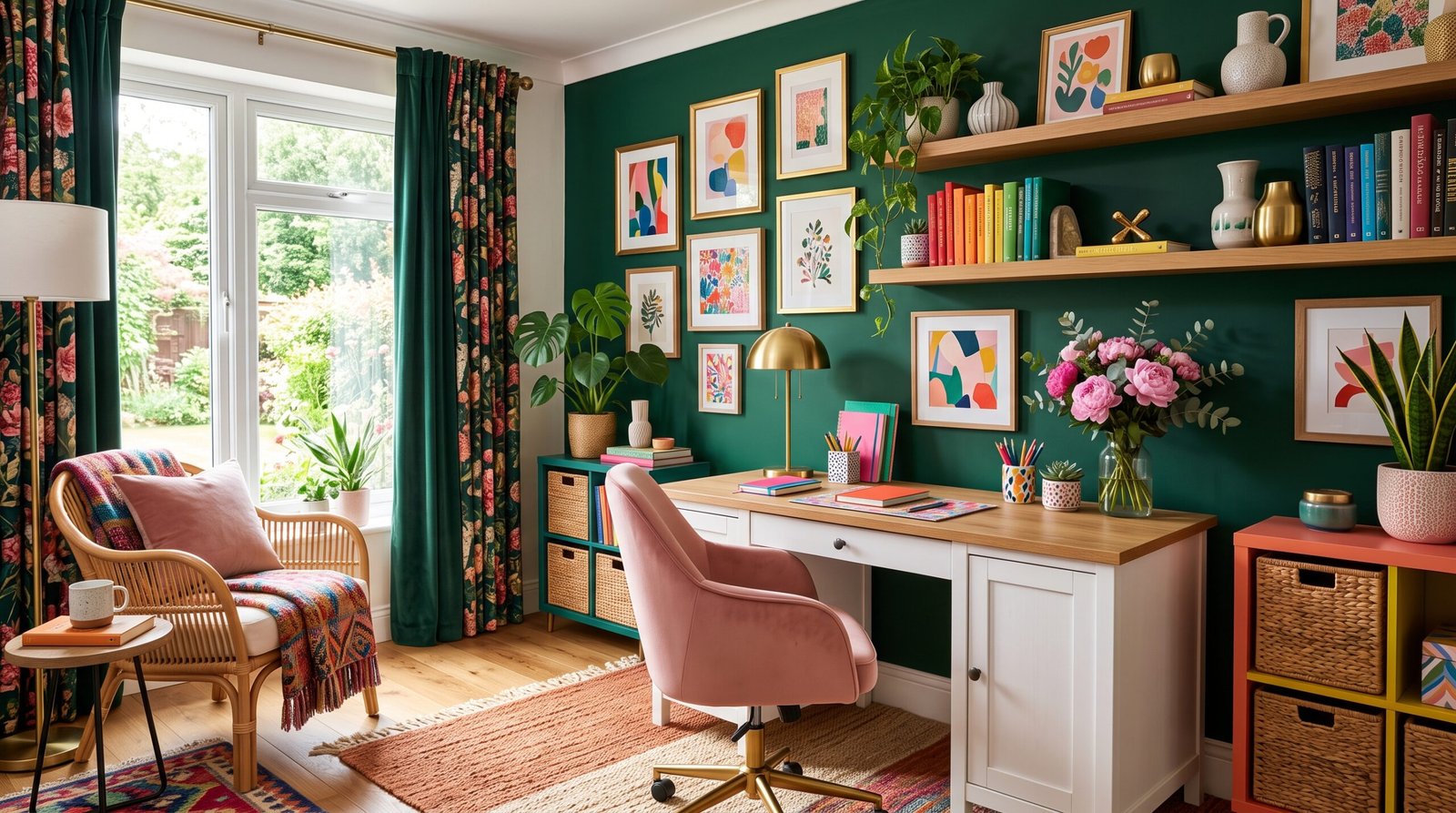
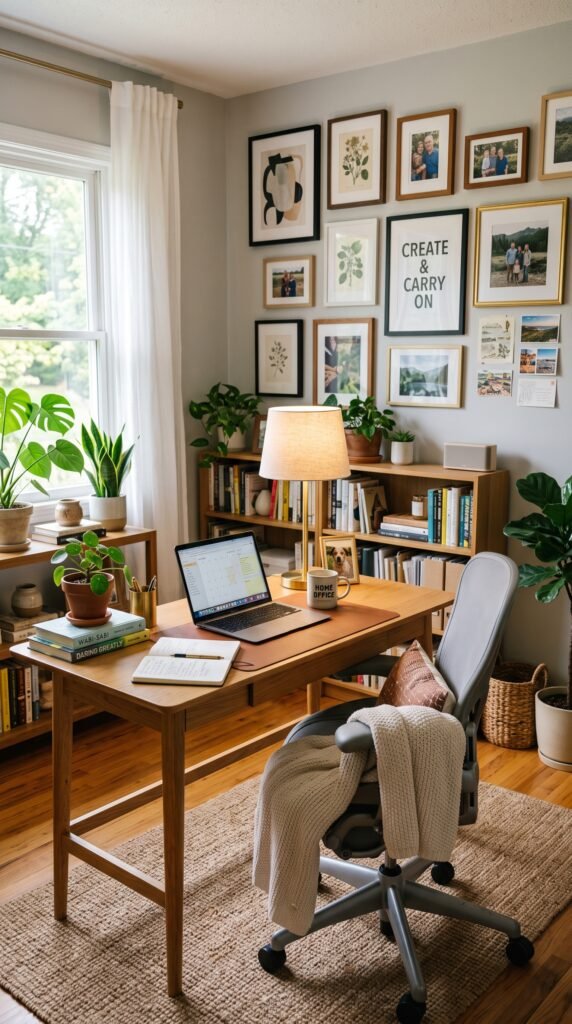
Soft neutrals (warm whites, beiges, sage greens) create focus without feeling sterile. If you love bold color, use it as an accent — one gallery wall, a colored chair, a statement lamp — rather than painting the whole room.
Plants genuinely help. Studies from the American Psychological Association suggest that natural elements in a workspace reduce stress and increase attention span. Even a small pothos or snake plant on your desk counts.
Personal touches matter too. A photo, a piece of art, a candle. These aren’t frivolous. They make a space feel safe and yours, which matters more than people admit.
8. Tackle the Cable Chaos Once and For All
Nothing undermines a beautiful setup faster than a nest of cables behind your desk. And yet most people just… live with it.
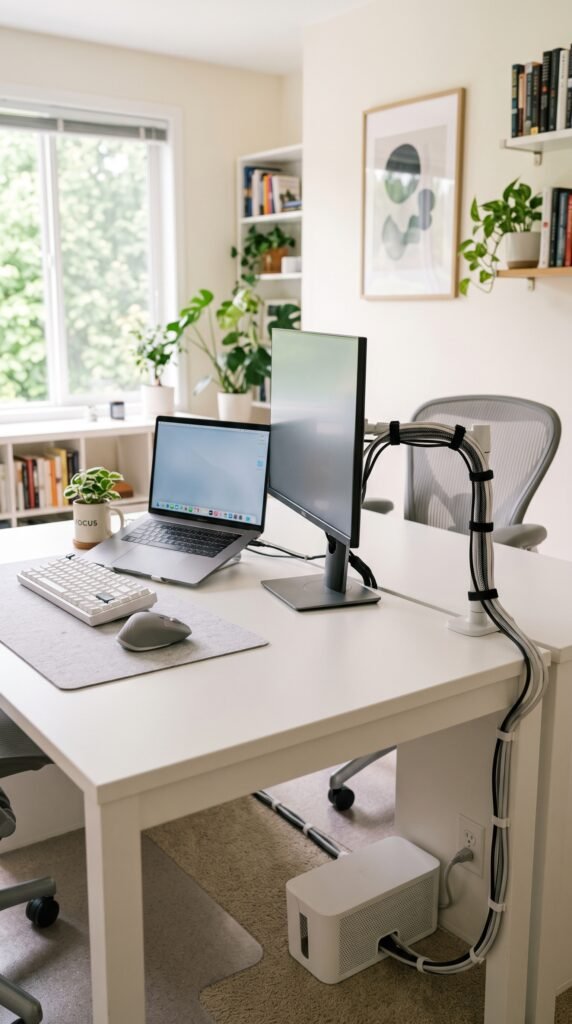
A few cable management clips along the back of your desk, a cable box to hide your power strip, and some velcro ties are all it takes. An hour of setup saves you from visual chaos every single workday.
9. Set Up a Dedicated Video Call Background
If you’re on calls regularly, this deserves its own section. Your background says something before you say a word.
You don’t need a ring light and a full studio. A tidy shelf styled with books and a plant, positioned so natural light hits your face, is enough. Keep it clean, uncluttered, and professional — but let it show a bit of personality. A piece of art, a tidy bookcase, a calming neutral wall all work.
What doesn’t work: laundry in the background, a kitchen with dishes piled up, or a wall so bare it looks like a storage closet. First impressions happen fast.
10. Use Vertical Space — Especially in Small Rooms
Most small home office setups waste the best real estate: the wall. Going vertical with your storage and organization keeps your desk clear and makes even a tiny space feel structured and spacious.
Floating shelves, pegboards, wall-mounted organizers, even a corkboard or whiteboard mounted at eye level — all of these move clutter off your workspace and onto the walls where it’s visible but not in your way.
11. Noise Control Matters More Than You Think
This one’s for the women working in shared homes, with kids, partners, roommates, or in apartments with thin walls. Noise is one of the top productivity killers, and most home office guides completely ignore it.
A white noise machine near your door helps mask background sounds without you needing complete silence. Heavy curtains absorb sound (and control light). A door sign that signals “on a call” prevents the inevitable interruption right when you’re about to make a good point in a meeting.
If you share a space, noise-canceling headphones are a non-negotiable investment.
12. Add a Reading or Thinking Corner
Some of the best work doesn’t happen at a desk. It happens when you step away from the screen for 10 minutes.
If your space allows, a small armchair or floor cushion with a side lamp and a notebook creates a thinking zone that’s separate from your computer. Use it for reading, planning, brainstorming, or just staring at the ceiling while an idea forms. It sounds small. The impact on creative thinking is anything but.
13. Get Your Tech Right
Slow WiFi. A laptop screen too small to work on comfortably for eight hours. A keyboard that makes your wrists ache. These are the things that quietly destroy your workday.
A WiFi extender or mesh network system solves dead zones in home offices. An external monitor (even a budget one) transforms how much you can do on screen at once. A wired keyboard and mouse reduce wrist strain compared to laptop-only setups.
Good tech isn’t glamorous. But it’s the backbone of every productive home office.
14. Design a Real Start-of-Day Ritual for Your Space
Your environment shapes your mindset. One of the most effective and underused home office ideas for women is designing a morning ritual that signals “it’s work time” to your brain.
Light a candle. Put on a playlist. Clear your desk before you open your laptop. These rituals sound minor, but they create a psychological boundary between home life and work life — which is one of the hardest parts of working from home.
The ritual is the commute you don’t have anymore.
15. Keep Evolving the Space
Your needs will change. The job you have now might look different in six months. You might have a new project that needs different tools, or you might discover that the desk you chose is killing your posture.
The best home office isn’t the one you design once and leave forever. It’s the one you pay attention to and adjust as your work and life evolve. Give yourself permission to rearrange, upgrade, and change your mind.
FAQ: Home Office Ideas for Women
What’s the most important element in a home office for women?
Ergonomics, full stop. Good seating and proper desk height protect your body over long work sessions. Lighting comes a close second. Everything else is a bonus.
How do you set up a home office in a small space?
Go vertical with storage, keep your desk surface clear, use a wall-mounted shelf instead of a bulky bookcase, and define your zone with a rug. A small, intentional setup beats a large, chaotic one every time.
What colors work best in a home office?
Soft neutrals, warm whites, sage green, and dusty blues tend to promote focus and calm. High-contrast colors like bright red or orange can increase energy short-term but lead to fatigue in longer sessions. Use bold colors as accents, not the dominant tone.
Do you need a dedicated room for a home office?
No. A corner of a bedroom, a closet conversion, or a well-styled nook in a living area all work. What matters is that the space is consistent, organized, and mentally associated with work.
How do you make a home office feel less corporate?
Plants, personal art, warm lighting, a rug that you actually love, and one or two objects that mean something to you. A home office should feel like a space you chose, not a space assigned to you.
How much should you spend setting up a home office?
You can build a functional setup for $300-500 if you prioritize chair and lighting over aesthetics. A more complete, ergonomic, and personalized setup runs $800-1500. The expensive parts (chair, desk, monitor) pay for themselves in productivity and health over time.