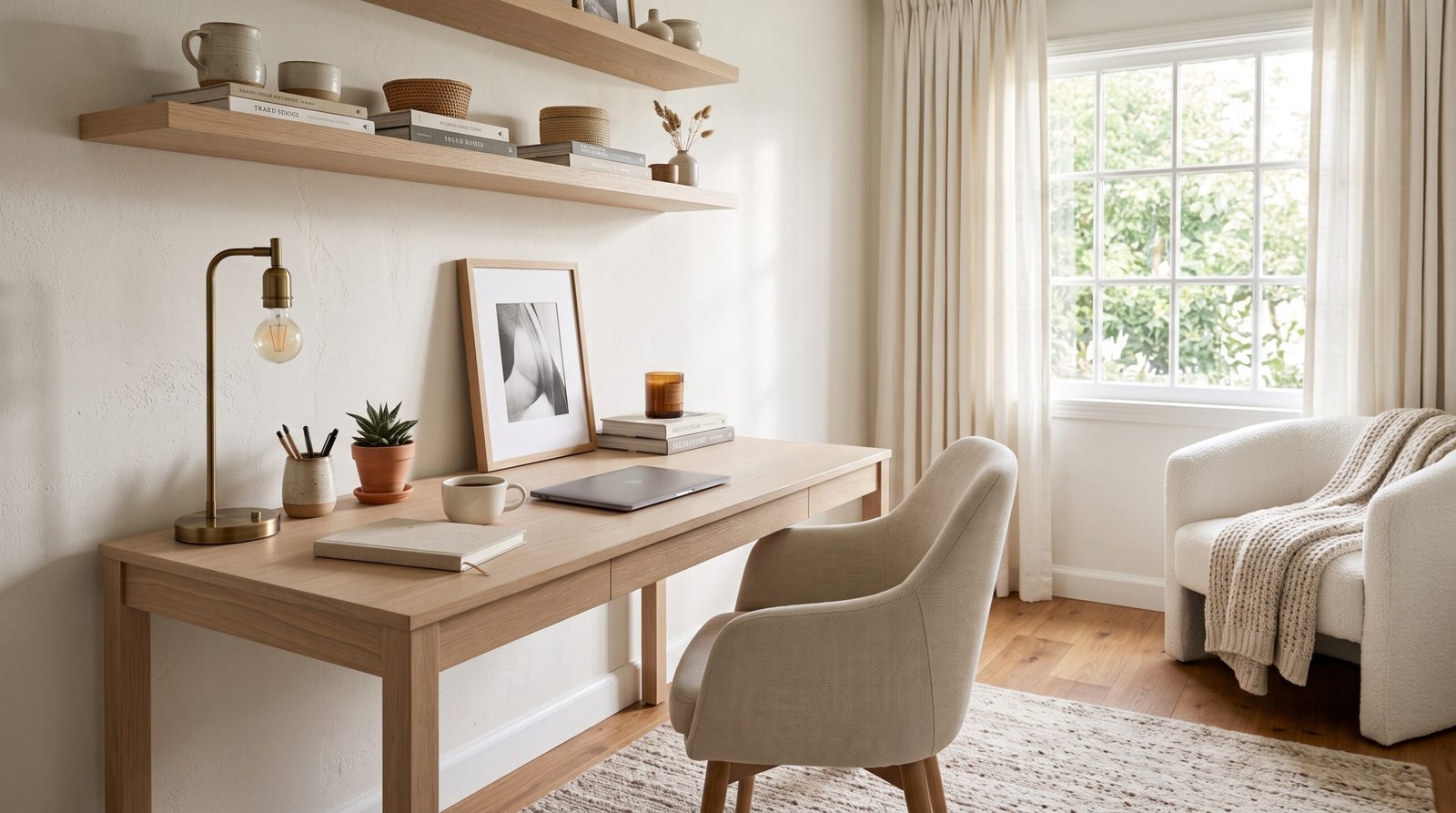
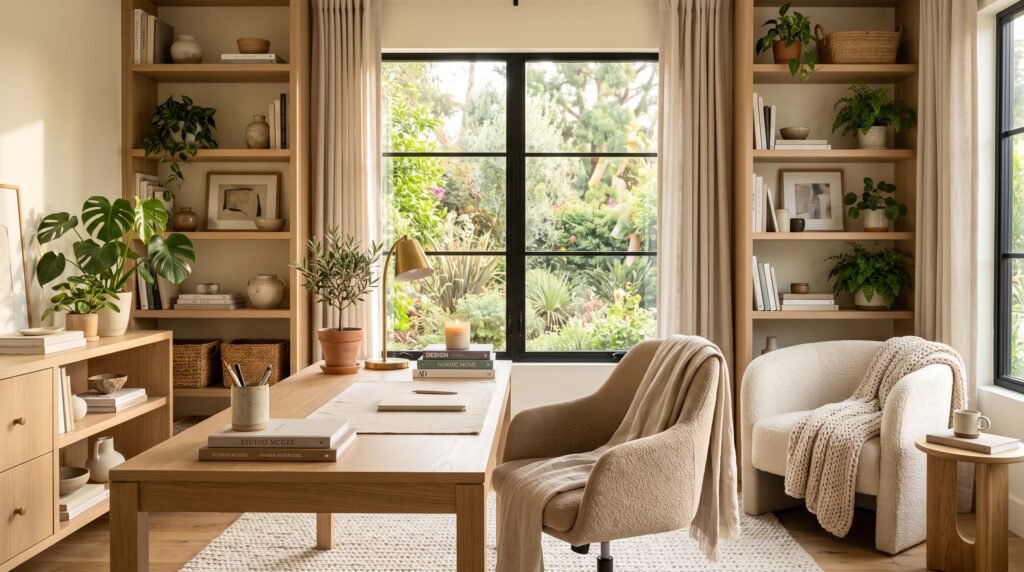
These cozy home office ideas show how small, deliberate changes can make a workspace feel warmer, calmer and easier to work in — whether you have a spare room or a corner of your bedroom. Each idea below includes the measurements, materials and steps to get it right, and the mistakes to avoid, so you can plan the room once and enjoy it every working day.
Start with the room you have, not the room in a catalogue. Measure the desk wall, note where the light falls at mid-morning, and choose the ideas below that fit that space — a corner, a spare room or a desk in a bedroom all work, as long as the basics in this guide are covered.
Table of Contents
1. Layer Your Lighting Instead of Relying on Overhead Lights
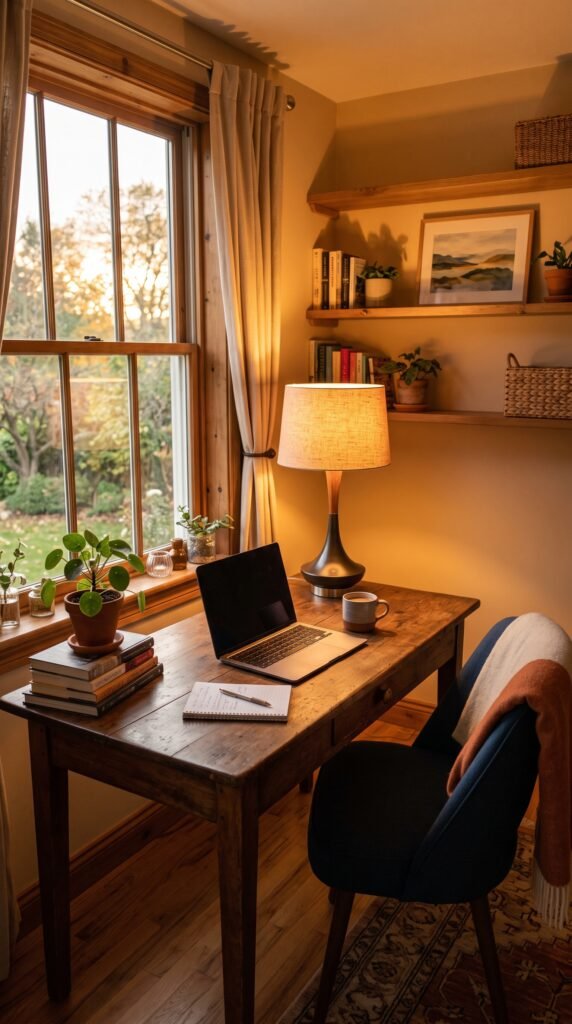
Overhead ceiling lights alone tend to flatten a room and create glare on a screen. Layer three sources instead: a ceiling or wall light for general light, a desk lamp for the work surface, and a low, warm light — a floor lamp, a small shelf lamp or fairy lights — for evenings. Choose bulbs at 2,700–3,000K (warm white) for the desk and ambient lights, and keep the desk lamp on the opposite side to your writing hand so it does not cast a shadow across your work.
Place the desk lamp 35–45 cm from the centre of your work area, angled down at about 45°, and keep the bulb shaded so you cannot see it directly from your chair. If the desk faces a window, sit side-on to it rather than facing it or with your back to it — that limits glare on the screen and on your face in video calls.
Fairy lights work best draped along a shelf or behind a monitor, on a dimmer or timer, and kept clear of paper and fabric. Avoid cool-white LEDs above 4,000K in the evening; they make a small room feel like a workplace, not a cosy one. For more low-cost lighting ideas, see our bedroom lighting ideas under $40.
2. Invest in a Chair That Supports You Without Sacrificing Style
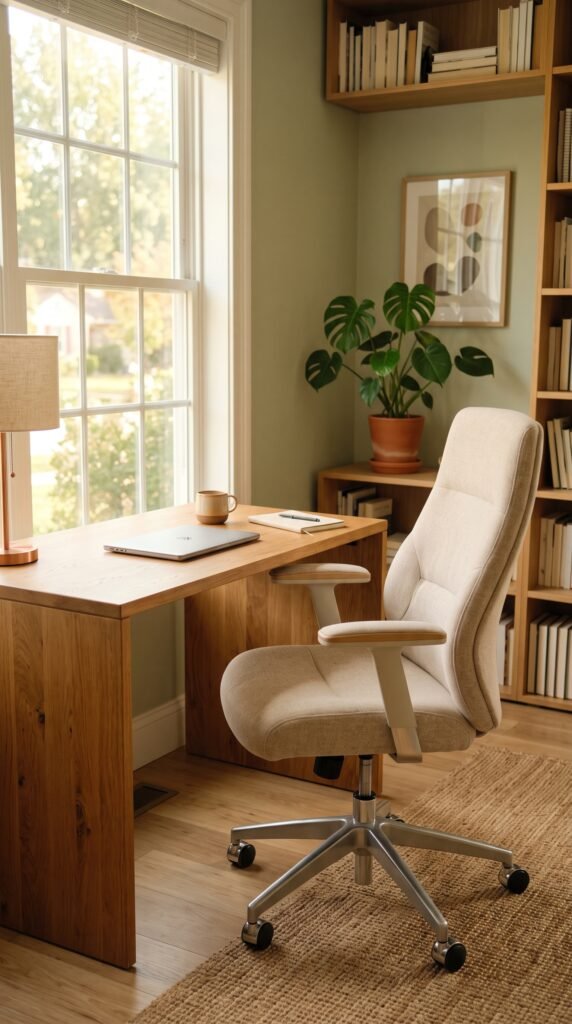
A chair is the one piece of furniture your body touches for hours every day, so comfort comes before looks. Test a chair by sitting in it for at least 15 minutes, with your feet flat on the floor and your knees at about 90°: if the seat edge presses into the back of your knees, or your shoulders rise to reach the armrests, it is the wrong size for you. The HSE guidance on working with display screen equipment sets out the same basics: screen at eye level, feet supported, and regular breaks to change position.
Look for an adjustable seat height (roughly 40–53 cm suits most adults), adjustable lumbar support that sits in the small of your back, and armrests that can move up, down and inwards. A seat depth of about 40–45 cm and a backrest that reclines slightly both help you change position during the day, which matters more than any single ‘ergonomic’ label.
Style still matters — a chair in leather, bouclé or a woven fabric can look at home in a living room, and a well-made chair lasts years. What matters most is fit: buy the chair that fits your height, your desk height (usually 71–76 cm) and your floor, not the one that photographs best.
3. Ground the Space with a Rug That Makes It Feel Intentional
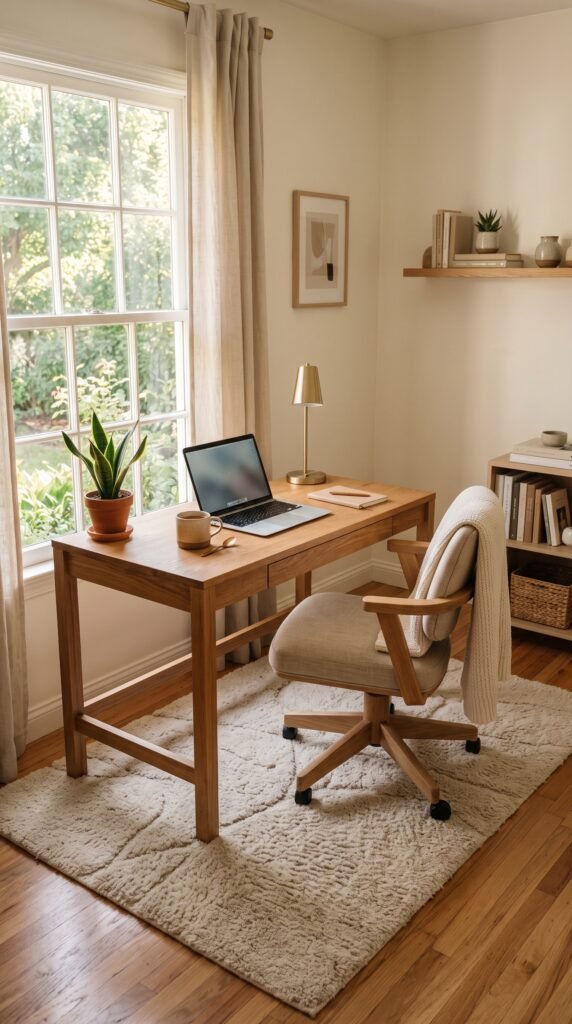
A rug defines the work zone, softens hard floors and stops a chair from sliding on a smooth surface. Without one, a desk pushed against a wall can look temporary, however good the furniture is.
Choose a flat-weave or low-pile rug (pile under about 1 cm) so a chair with castors rolls easily and the desk stays level. In a pale room, a light oatmeal, warm grey or muted pattern adds warmth without showing every mark; in a busy household, a darker tone or a washable rug is the practical choice.
Aim for a rug large enough that all four legs of your desk sit on it, with at least 15–20 cm of rug visible beyond the desk on each side. For a standard 120 × 60 cm desk, that usually means a rug of about 150 × 90 cm or larger. Measure the desk and the chair’s roll-back space before you buy, not after.
4. Bring in One or Two Plants and Let Nature Do the Rest
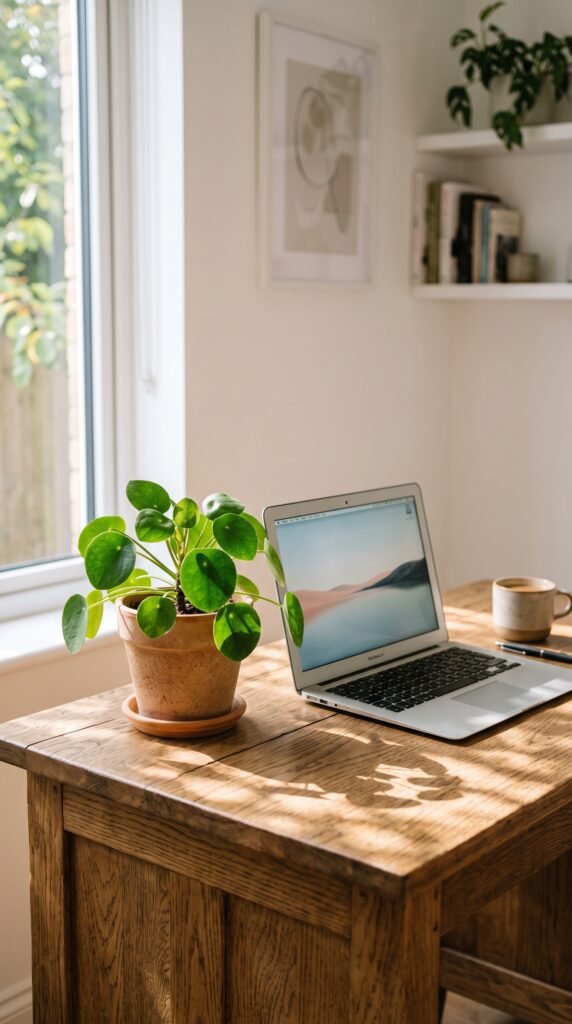
One or two plants soften the straight lines of a desk, a monitor and a shelf, and give the room something living to look at between tasks. Keep it to one or two — a desk crowded with pots is harder to work at, and plants that need daily care become another job.
Start with something low-maintenance. Pothos, snake plants and ZZ plants survive low light and irregular watering, need little attention and are easy to find. They all cope with normal indoor temperatures, roughly 15–25°C, and with the dry air most homes have in winter.
Water only when the top 2–3 cm of soil feels dry, and let excess water drain away rather than sitting in a saucer. Keep plants near a window if you can, at least 30 cm from a radiator, and wipe dusty leaves with a damp cloth every few weeks so they can take in light.
5. Choose the Right Desk for Your Space — Not Just Your Budget
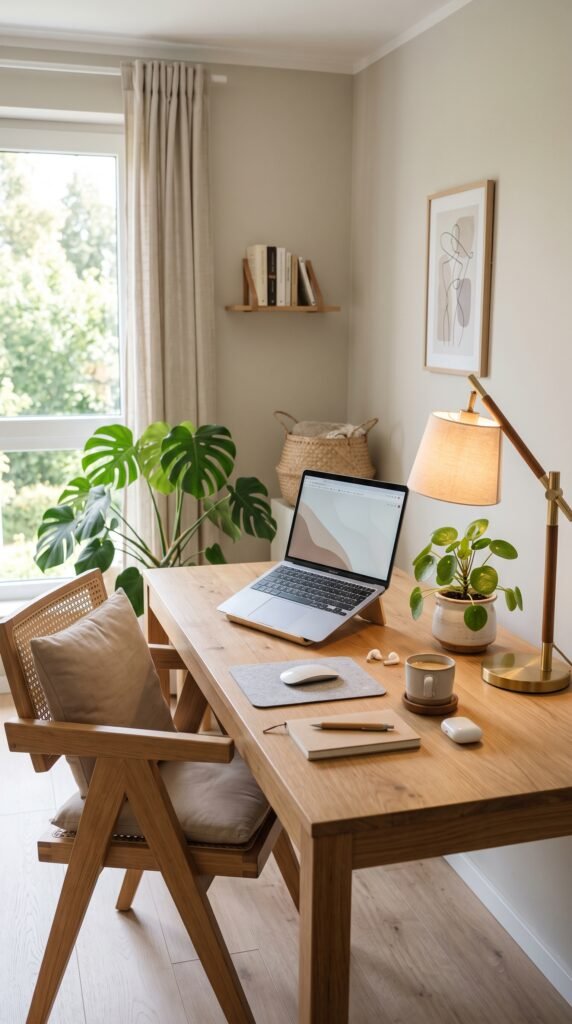
Your desk is the anchor of the whole setup, and it is worth measuring before you buy. A standard desk height is 71–76 cm, with a depth of 60–80 cm so a monitor can sit an arm’s length away and still leave room for a notebook. For a laptop and a notepad, 100–120 cm of width is enough; for a large monitor plus papers, allow 140–160 cm.
Choose a finish that suits how you work: solid wood and wood veneer wear well and feel warm to the touch, laminate is easier to wipe clean, and a matte finish reduces glare. Check the weight limit if you use a monitor arm or a heavy desktop computer, and leave at least 90 cm of clear space behind the chair so you can push back and stand up easily.
In a small space, a corner desk uses wall space that would otherwise be wasted and can give you as much surface as a straight desk in a smaller footprint. In a spare room, a desk facing the window works well if you sit side-on to the light. A folding or wall-mounted desk is worth considering only if the room has another use — check its folded depth and that it locks firmly before you rely on it daily.
6. Tame the Clutter With Systems That Actually Work
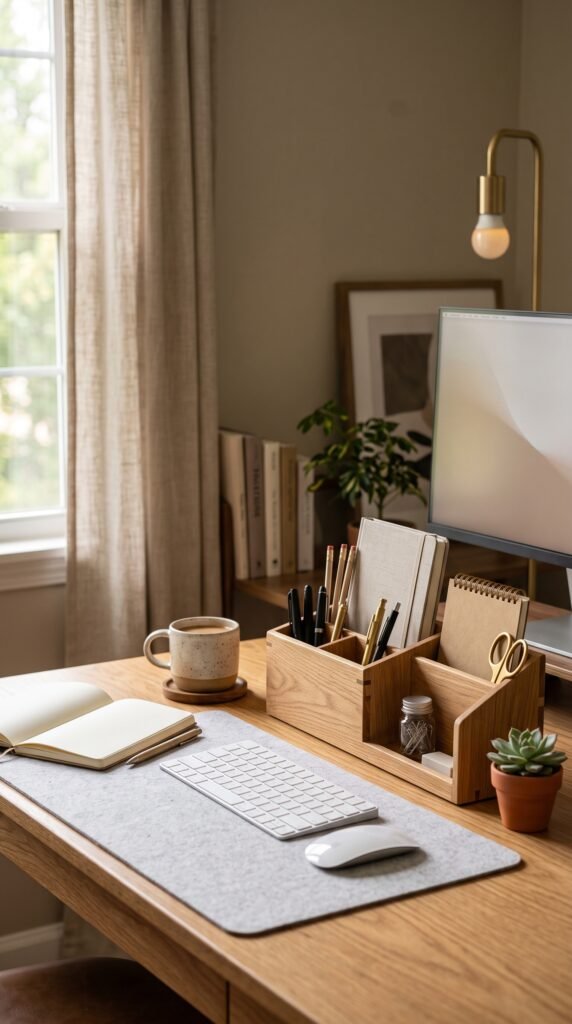
A cosy office is not a crowded one. Give everything on the desk a place, and keep only what you use daily on the surface: a monitor or laptop, a lamp, a pen pot and one personal item. The rest — spare cables, notebooks, chargers — belongs in a drawer, a box or on a shelf within arm’s reach.
Tidy cables first, because they are the most visible source of mess. Run a power strip behind or under the desk, use a cable tray or a fabric sleeve, and label each charger so you can unplug the right one without pulling the desk apart. Keep the strip off the floor and away from a rug or a heater.
Set a short reset at the end of each working day: clear the desk, empty the bin, and put tomorrow’s first task on top. A two-minute reset keeps clutter from building up, and it means you start the next morning at a clear desk rather than at yesterday’s mess.
7. Build a Color Palette That Calms Rather Than Competes
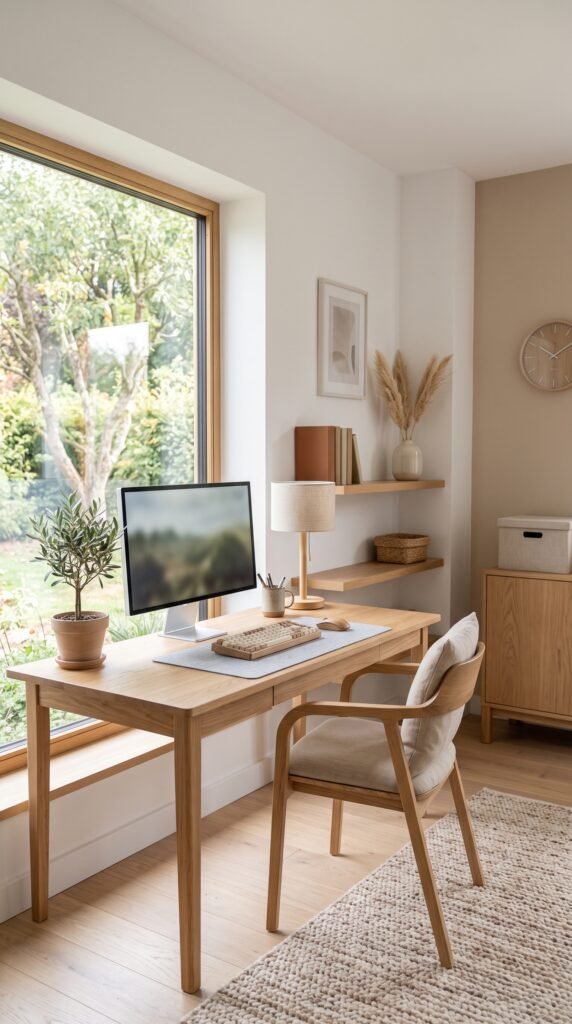
Colour sets the mood of the room more than any single object. Warm neutrals — cream, oatmeal, soft sage, warm grey — make a small room feel calm and spacious, while one muted accent (terracotta, dusty blue, olive) on a cushion, a rug or a painted shelf adds character without making the room feel busy.
Test a paint colour on the wall before you commit: paint a swatch at least 30 × 30 cm, look at it in morning and evening light, and live with it for a few days. A colour that looks soft in a shop can look cold under a cool-white bulb, so test it under the bulbs you will actually use.
Keep to two or three colours in total, including the furniture. If the desk is dark wood and the walls are cream, add one accent colour and repeat it in different places — a cushion, a plant pot, a notebook cover — rather than introducing a new colour in every object.
8. Put Something Meaningful on the Walls
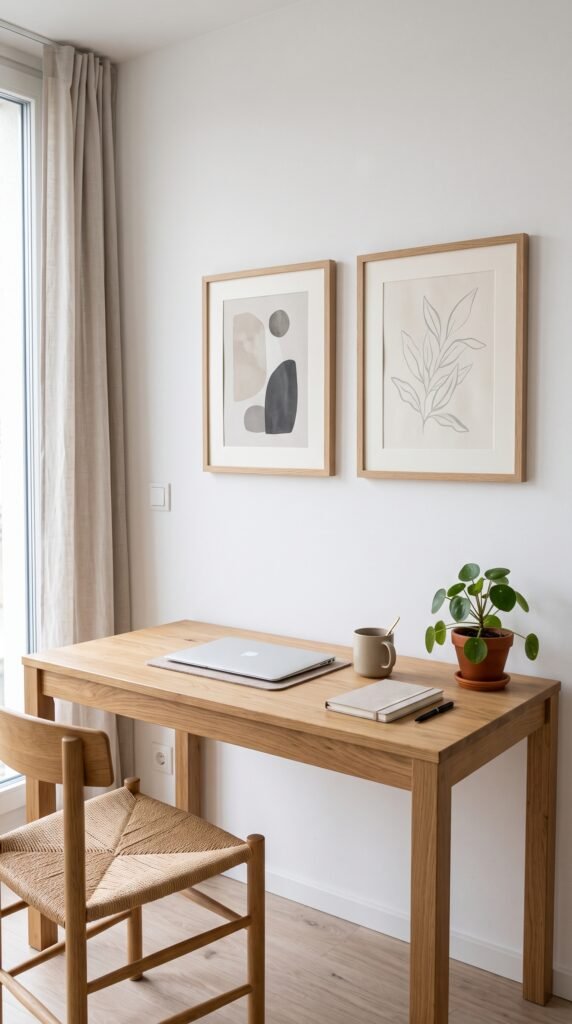
Blank walls make a workspace feel unfinished, but they do not need to be covered. Choose one wall, or one shelf, and give it a clear purpose: a framed print, a small pinboard, or a shelf for books and a plant. One considered piece has more impact than a wall full of small, unrelated items.
Hang framed art with its centre at about 145 cm from the floor — roughly eye level for most adults standing — and leave at least 5 cm between frames in a group. If you work from a shared living space, choose art you will be happy to see behind you in video calls, and avoid reflective glass that catches the light from a window.
Keep the desk wall calm. A busy pattern or a crowded shelf directly in front of you competes with your screen and your thoughts, while a plain wall with one warm detail behind the monitor helps the room feel settled.
9. Don’t Underestimate the Power of Scent
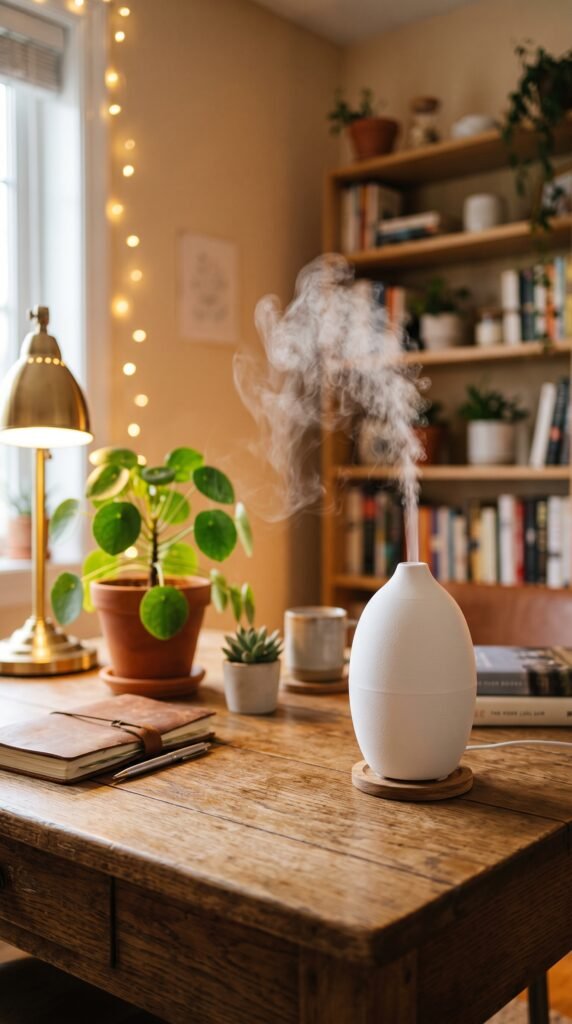
Scent is the finishing touch that most people forget. A subtle, consistent scent — a candle, a reed diffuser or an electric diffuser — can mark the start of the working day and help the room feel distinct from the rest of the house. Choose one scent for the room and keep it the same, rather than changing it weekly.
Use a diffuser for a steady, low scent that you can switch off when you finish work, and keep essential oils out of reach of children and pets. If you use candles, place them on a heat-proof surface at least 30 cm from curtains, paper and fabric, and never leave one burning in an empty room.
Match the scent to the season and the light: fresh, green scents in spring, a light citrus or herbal scent in summer, and a warm wood or spice scent in autumn and winter. A strong scent in a small, closed room is tiring — if you can smell it from the doorway, it is too strong.
10. Make It Seasonal — Small Updates Keep the Space Feeling Fresh
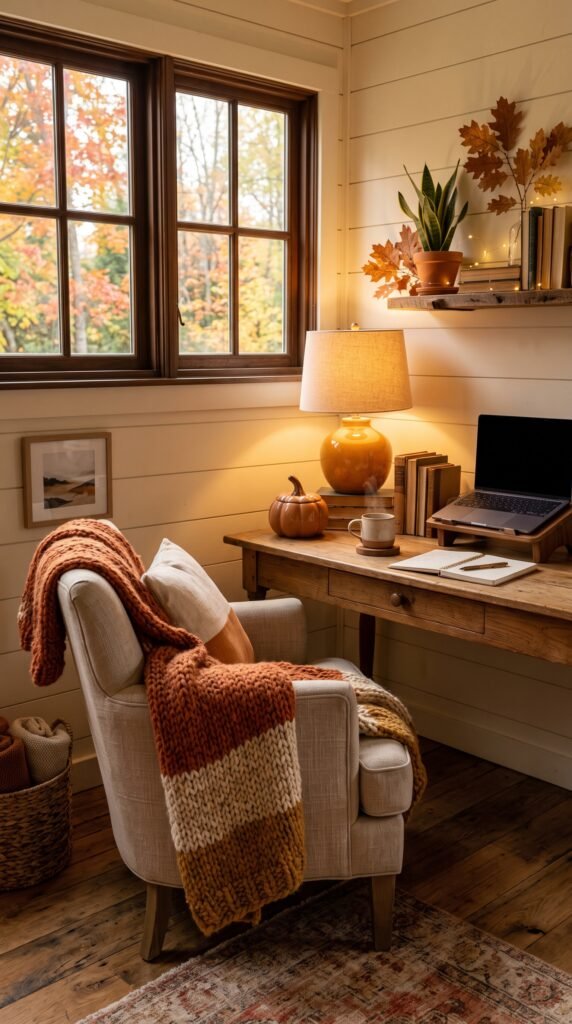
A home office can change with the seasons in a way a shared workplace cannot. Small swaps — a lighter throw in summer, a warmer one in winter, a different plant or a rotated print — keep the room feeling current without a redecoration, and they cost little if you reuse what you already own.
In winter, add a throw over the chair back for cold mornings, check that the desk lamp still gives enough light by mid-afternoon, and keep the room aired for a few minutes a day. In summer, move the plant closer to the window, swap heavy curtains for a lighter blind, and keep direct sun off the screen.
Keep seasonal changes to one or two items at a time. Changing everything at once makes the room feel unsettled, and it makes it harder to tell which change actually helped.
Seasonal candles, a new desk plant, or rotating which art print is on the wall can make returning to the same desk feel fresh again — provided the desk itself stays clear and the light stays warm.
Putting Your Cozy Home Office Ideas Together
The best home office is not the most expensive one — it is the most intentional one. Every element you add should earn its place by making the room warmer, calmer or easier to work in; if it does none of those, it is decoration, not design.
Start with the lighting, because a single warm lamp changes a room more than any other one purchase, then choose the chair, the rug and the desk in that order — comfort first, then the surface you work on. Add a plant, settle the colour palette, and finish with art and scent once the basics are in place. If you work in a small space, our home office ideas for small spaces show how to fit a desk into a corner or a bedroom.
Once the basics are sorted, the small choices matter: the throw on the back of a chair is the sign of a well-made room, not an unfinished one, and there is a difference between working at a desk and working at a kitchen table. Start with one idea from this list, measure first, and build from there.
How to Plan a Cozy Home Office: Measurements to Check First
Before you buy anything, take five measurements. They take ten minutes and stop the most common mistakes — a desk that blocks a door, a rug that is too small, and a lamp that glares on the screen. For a bolder look once the basics are set, see our maximalist home office decor ideas. Work through these cozy home office ideas in order — lighting first, then the chair, rug and desk — so each purchase builds on the last.
- Desk height: 71–76 cm, with 60–80 cm of depth so a monitor can sit an arm’s length away.
- Chair: adjustable seat height, roughly 40–53 cm, with your feet flat on the floor and knees at about 90°.
- Monitor: top of the screen at or just below eye level, about 50–70 cm from your eyes.
- Rug: large enough for all four desk legs, plus 15–20 cm visible beyond the desk on each side.
- Light: desk lamp at 2,700–3,000K, placed 35–45 cm from the centre of your work area.
Mistakes to Avoid in a Cozy Home Office
The most common mistakes when putting cozy home office ideas into practice are easy to avoid once you know them. Measure first, test the chair before you buy it, and keep the desk surface for daily work only.
- Buying furniture before measuring the wall, the door swing and the chair’s roll-back space.
- Relying on a single overhead light, which creates glare on the screen and makes the room feel flat.
- Filling every surface — a desk with no clear space is harder to work at, however pretty it looks.
- Choosing a rug that is too small, so the desk legs sit half on and half off it, or a high-pile rug a chair cannot roll across.
Frequently Asked Questions
What is the best desk height for a cozy home office?
A standard desk height of 71–76 cm suits most adults. Sit with your feet flat on the floor, your knees at about 90°, and your forearms level with the desk surface. If the desk is too high, use an adjustable chair and a footrest rather than raising the chair and dangling your feet.
What colour temperature should home office lighting be?
Warm white bulbs at 2,700–3,000K give a cozy home office its warmth, especially in the evening. Avoid cool-white bulbs above 4,000K for the main lights, and keep the desk lamp shaded and on the opposite side to your writing hand.
How can I make a small corner feel like a real home office?
These cozy home office ideas work in a corner too: define the corner with a rug, one warm lamp and a clear desk surface, and keep work items inside that zone. A corner desk, a small shelf and a chair that fits the space are usually enough — you do not need a spare room, just a defined area with good light.
What size rug should I use under a desk?
Choose a rug large enough for all four desk legs, with at least 15–20 cm visible beyond the desk on each side. For a 120 × 60 cm desk, that usually means a rug of about 150 × 90 cm or larger, in a flat-weave or low-pile finish so a chair can roll across it.
Which plants are easiest to keep in a home office?
Pothos, snake plants and ZZ plants are the easiest choices: they survive low light and irregular watering. Water only when the top 2–3 cm of soil feels dry, keep them at least 30 cm from a radiator, and start with one or two plants rather than filling the desk.