
If you’ve been scrolling through Pinterest at midnight wondering why your living room decor ideas never quite translate from screen to reality, you’re not alone. Most people think a great living room requires either a massive budget or a professional designer on speed dial. Neither is true. What it actually takes is knowing which moves make the biggest visual impact — and which ones are just aesthetic noise.
📋 Table of Contents
- The Biggest Myth About Living Room Decor Ideas (And What Actually Works)
- 1. Commit to a Statement Wall (Not Just an Accent Color)
- 2. Layer Lighting Instead of Relying on One Overhead Source
- 3. Use an Oversized Rug (Yes, Bigger Than You Think)
- 4. Add Real Living Room Decor Ideas With Plants — Not Fake Ones
- 5. Create a Gallery Wall That Doesn’t Look Like a Pinterest Fail
- 6. Rethink Your Coffee Table as a Styled Surface
- 7. Mix Metals — But Do It With a Plan
- 8. Invest in One Piece of Real Art
- 9. Edit Ruthlessly — Negative Space Is a Design Tool
The Biggest Myth About Living Room Decor Ideas (And What Actually Works)
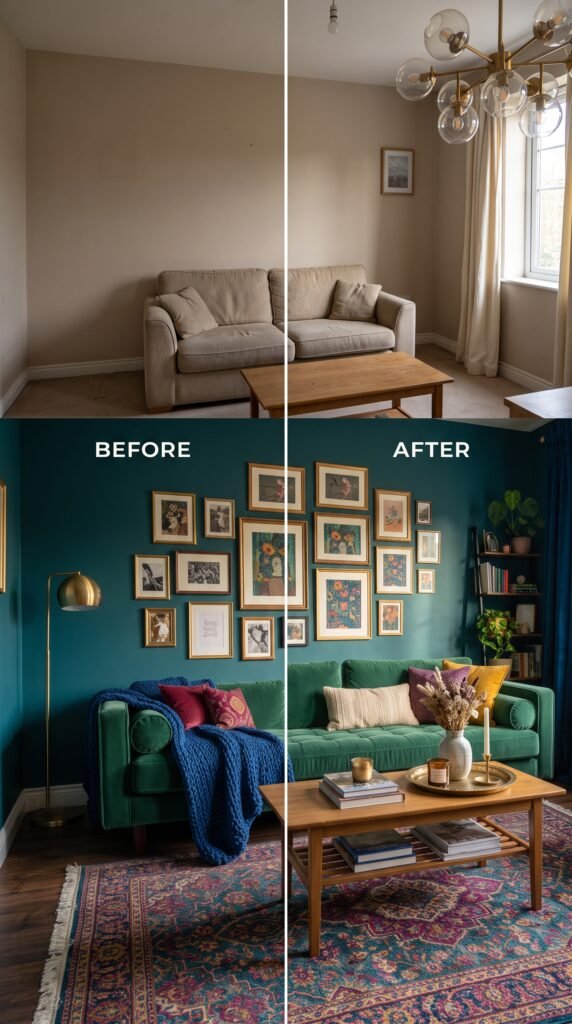
Here’s the thing — most people believe you need to gut a room to make it feel different. New sofa, new floors, new everything. But that’s not how great spaces actually happen.
Real transformation usually comes from editing what’s already there and adding three or four intentional decisions on top of it.
Picture this: someone has a perfectly functional couch, decent lighting, and neutral walls. But the room feels flat. Dead. Like a waiting room at a dentist’s office. The problem isn’t the furniture. It’s the absence of contrast, warmth, and personality. And that’s entirely fixable without touching a single piece of furniture.
The truth is, bold doesn’t mean expensive. It means considered.
According to Architectural Digest, some of the most compelling living rooms in the world are built on restraint — a few powerful choices rather than dozens of small ones. Keep that in mind as you read through these ideas, because more is almost never the answer.
1. Commit to a Statement Wall (Not Just an Accent Color)
An accent wall used to mean slapping a different paint color on one side of a room. That era is over.
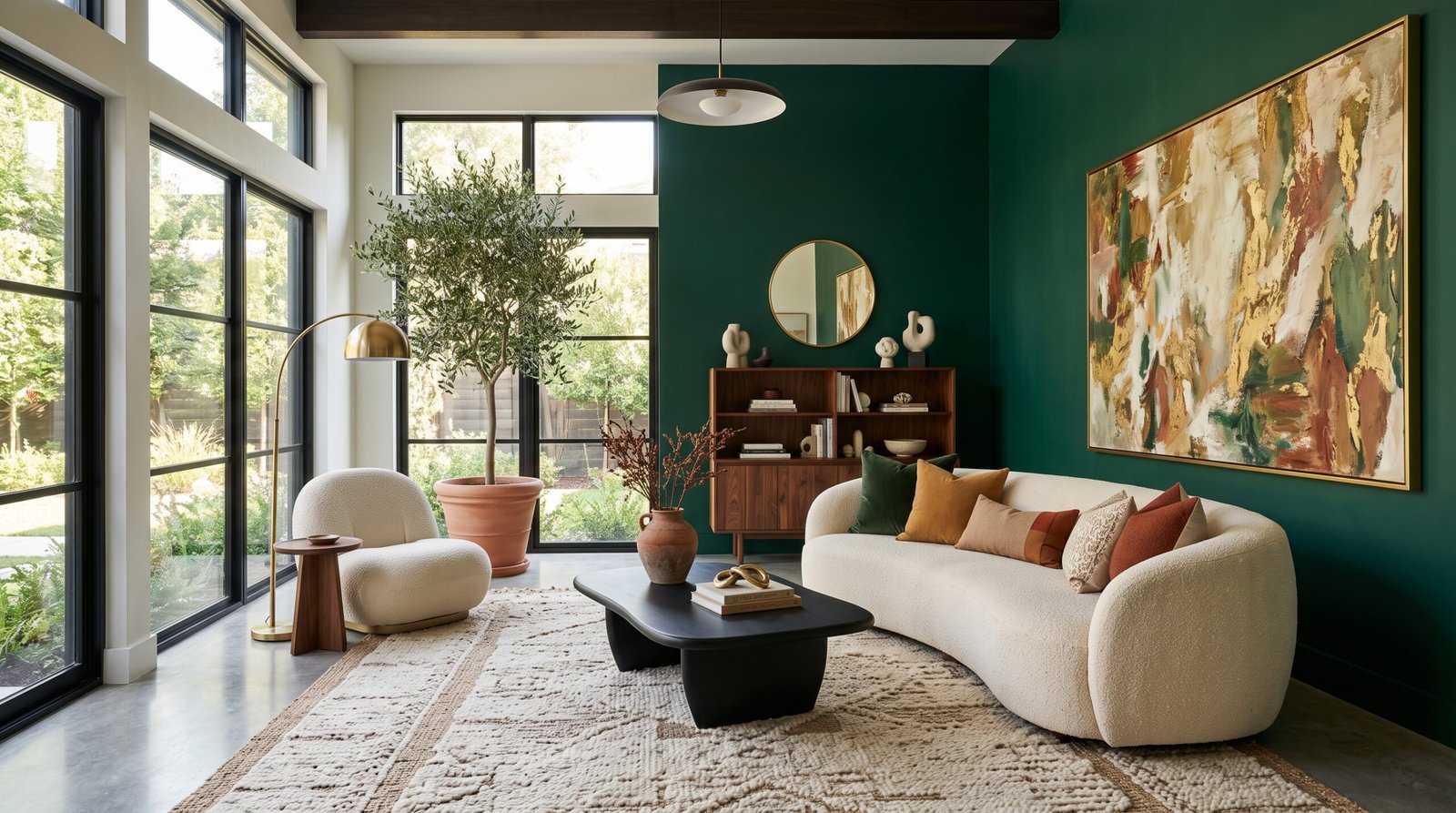
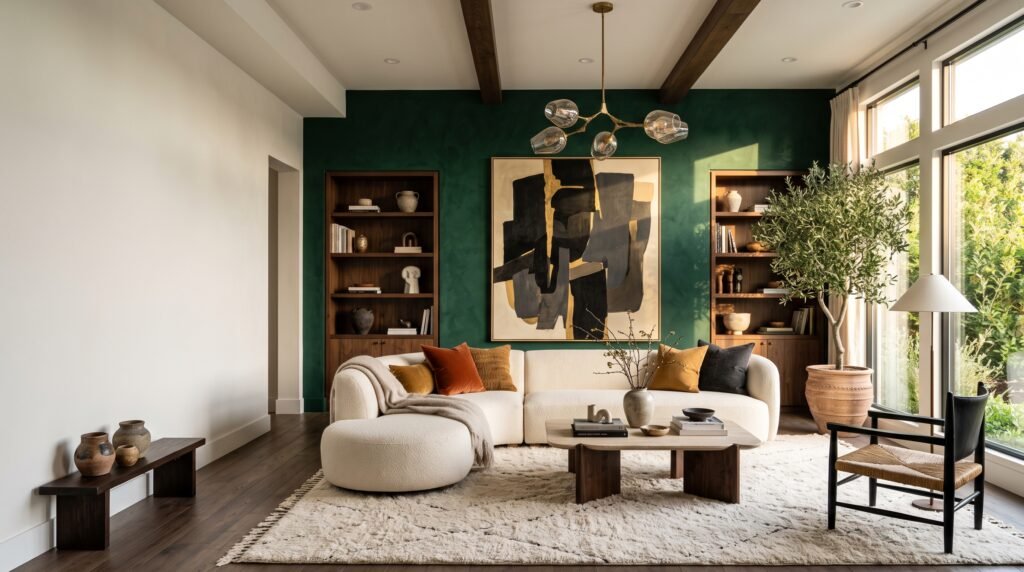
A statement wall in 2024 means texture, pattern, or material — not just pigment. Think limewash paint that shifts tone in different light. Vertical shiplap painted a deep forest green. A grid of rattan panels that adds warmth and dimension without adding visual clutter.
The psychological effect of a statement wall is real. It gives the eye somewhere to land, which makes the whole room feel more intentional.
Most people run into this exact problem: they pick a bold wall color, slap it on, and then everything else in the room fights against it. The fix is to pull one color from an existing element — a rug, a pillow, a piece of art — and use that as your wall anchor. Now the room reads as curated, not chaotic.
Fair warning: limewash and textured finishes are harder to paint over later. So pick something you can live with for at least a few years.
2. Layer Lighting Instead of Relying on One Overhead Source
This is the single change that transforms how a room feels more than almost anything else. And most people completely ignore it.
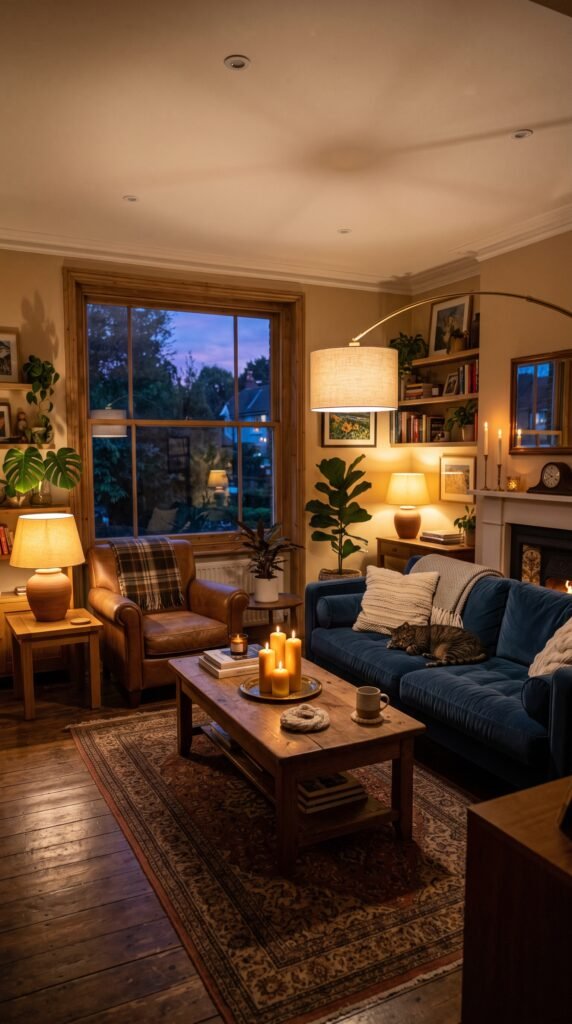
A single overhead light flattens everything. It makes furniture look cheap, colors look off, and the whole space feel institutional. Three light sources at different heights? That’s what makes a room feel like somewhere you want to actually spend time.
The formula is simple. One ambient source (ceiling or recessed), one task source (floor or table lamp near seating), and one accent source (a wall sconce, a lit shelf, or even LED strip lighting behind a media unit). That’s it. Three layers. Night and day difference.
According to the Illuminating Engineering Society, layered lighting isn’t just an aesthetic choice — it directly affects mood, productivity, and perceived room size. So there’s real science behind why your dimly lit corner suddenly makes everything feel better.
Don’t sleep on dimmers either. A $20 dimmer switch on your main overhead is one of the best-value living room decor ideas you’ll ever act on.
3. Use an Oversized Rug (Yes, Bigger Than You Think)
The most common rug mistake in living rooms is going too small. A rug that only sits under the coffee table is doing almost nothing for the room. It’s a visual island in a sea of floor, and it actually makes the space feel smaller.
The rule that designers use: at minimum, all front legs of your main seating should sit on the rug. Ideally, all four legs. And if you’re going bold, you get a rug that nearly reaches the walls on each side, leaving just a few inches of floor visible as a frame.
An oversized rug visually expands the room, ties the seating arrangement together, and adds a layer of sound absorption that makes the space feel quieter and cozier. All at once.
best rug sizes for living rooms
Pattern matters too. A large-scale geometric or an organic abstract pattern in a neutral-ish palette does more work than a plain rug twice the price. It draws the eye across the floor and creates movement.
4. Add Real Living Room Decor Ideas With Plants — Not Fake Ones
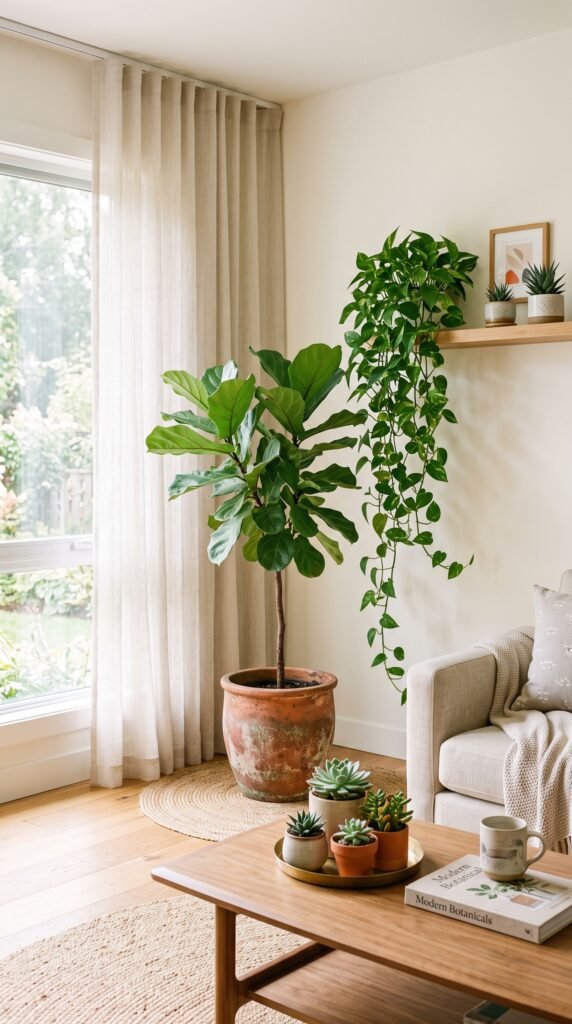
Look. Faux plants have gotten better. But there’s still a life (literally) that real plants bring to a room that no silk fern can replicate.
Plants add oxygen, reduce airborne toxins according to NASA’s clean air study, and introduce an organic shape that softens all the hard angles in most modern rooms. A fiddle leaf fig in the corner. A trailing pothos on a high shelf. A ZZ plant on the floor near a window. These are cheap, low-maintenance, and do more for a room’s visual warmth than most furniture.
The key is scale. One large floor plant makes more impact than six small ones scattered around. Go big, go single, and pick a pot that complements your palette.
Also: terracotta is having a major moment, and for good reason. It’s warm, earthy, and goes with almost every interior style from boho to Japandi.
5. Create a Gallery Wall That Doesn’t Look Like a Pinterest Fail
Gallery walls have a reputation for going wrong. Too symmetrical and they look corporate. Too random and they look chaotic. The sweet spot is structured variety.
Here’s how to nail it. Pick a cohesive thread — same frame color, same subject matter, or same tonal palette. Then vary the frame sizes dramatically. Mix a large anchor piece (at least 24×30 inches) with medium and small frames around it. Keep the gaps between frames consistent (about 2-3 inches) and you get a wall that feels intentional rather than accidental.
The biggest mistake people make is hanging everything too high. Art should sit at eye level for a standing person — roughly 57-60 inches to the center of the piece. Most people hang things a full 6-8 inches too high, which makes the room feel disconnected.
Gallery walls are one of those living room decor ideas that compound beautifully over time. You can add a piece every few months and the wall grows with you.
6. Rethink Your Coffee Table as a Styled Surface
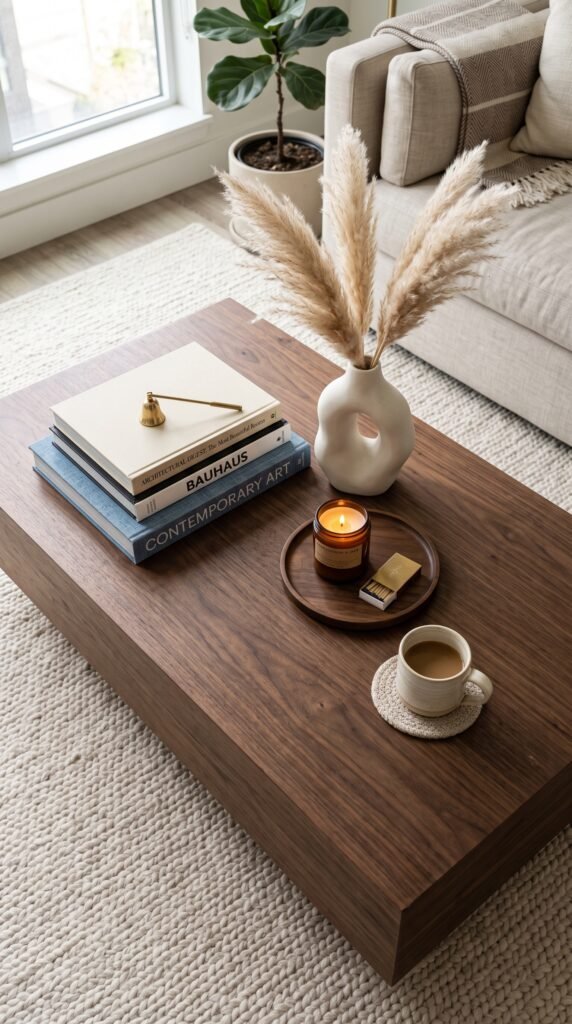
Most coffee tables look like a landing pad for remote controls and half-empty mugs. That’s not their fault. It’s a styling problem.
A well-styled coffee table works in zones. One zone for height (a vase, a plant, a candle on a stack of books). One zone for texture (a tray, a woven coaster, a small ceramic object). And one zone left intentionally empty so the eye has somewhere to rest.
The books matter more than people realize. A stack of two or three large-format art or photography books adds instant personality. They signal interests, taste, and intention. And they’re one of the most affordable living room decor ideas you can act on this weekend.
Avoid the urge to cover every inch. Negative space is doing just as much work as the objects themselves.
7. Mix Metals — But Do It With a Plan
The old rule said pick one metal and stick with it. Brass or chrome or bronze, but never all three. That rule is dead.
The new approach is to pick one dominant metal (about 60% of your metal touches), one secondary (about 30%), and let a third appear once or twice as an accent. So brushed brass on your main light fixture and cabinet hardware, matte black on your lamp bases and picture frames, and a touch of antique bronze in one or two decorative objects.
What you want to avoid is equal amounts of competing metals with no hierarchy. That’s what looks chaotic. Hierarchy is what looks curated.
This principle applies to every decorative decision in a room, not just metals. Proportion and hierarchy are the hidden architecture of great living room decor ideas.
8. Invest in One Piece of Real Art
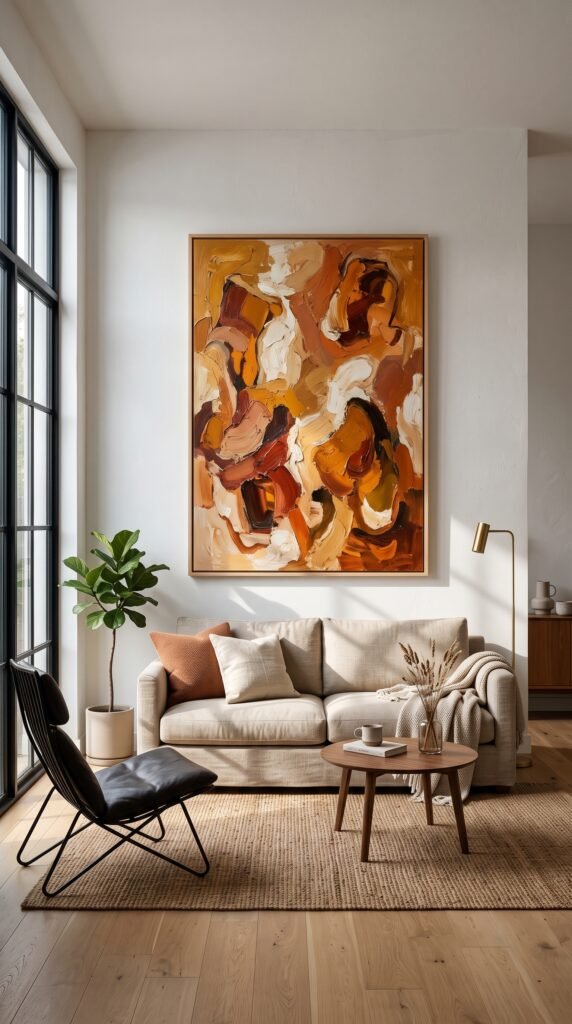
Not a print from a big-box store. Not a poster in a frame. One real piece — whether that’s an original painting from a local artist, a limited-edition print from an independent illustrator, or a large-scale photograph from an emerging photographer.
Real art does something mass-produced pieces can’t. It holds attention. It has texture, imperfection, and a story. And it becomes the visual anchor that every other element in the room responds to.
Art markets, Etsy, and platforms like Saatchi Art have made original artwork accessible at almost every price point. You don’t need to spend thousands. A 16×20 original painting from a working artist can cost less than a throw pillow from a designer brand.
Pick something that genuinely moves you. Not what matches the couch. Not what “goes with” the room. What you actually want to look at every day.
That’s the piece that makes a living room feel alive.
9. Edit Ruthlessly — Negative Space Is a Design Tool
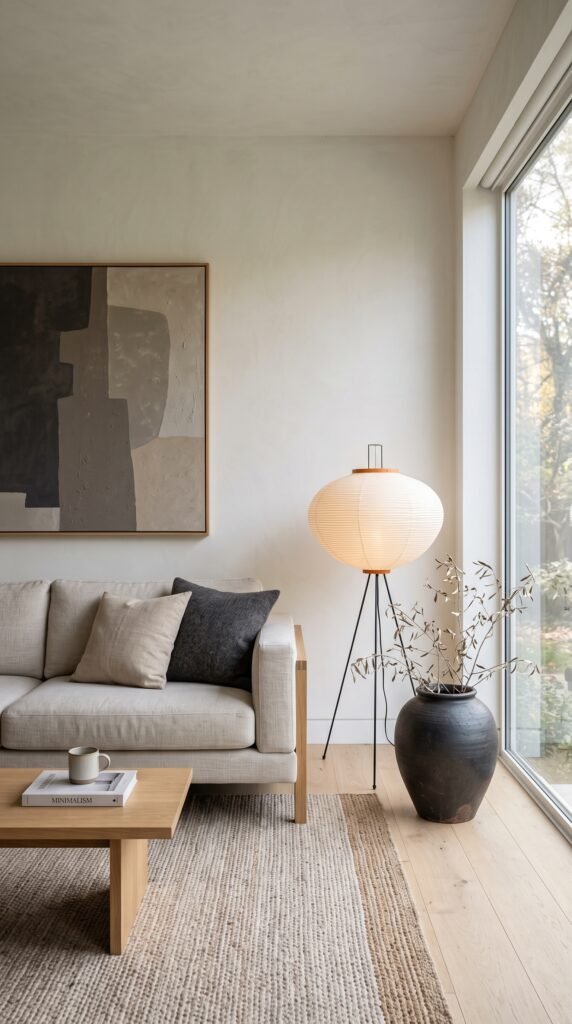
Here’s the idea that ties everything together — and the one most people skip entirely.
After you’ve added your statement wall and layered your lighting and styled your coffee table, you need to take things away. A room that’s doing too much is a room that isn’t doing anything well.
Walk into your living room and identify the three things that have no clear purpose — decorative or functional. The random candle holder that doesn’t fit the palette. The throw pillow that’s slightly the wrong color. The side table that’s there because it was always there, not because it earns its spot.
Remove them. Live without them for a week. Then decide if they go back.
Great living room decor ideas aren’t about adding until it feels full. They’re about adding until it feels right — and stopping before it tips into noise.
The rooms that stop you mid-scroll, the ones that make you save the photo and stare at it? They almost always have less in them than you’d expect. That’s not an accident. That’s the point.