
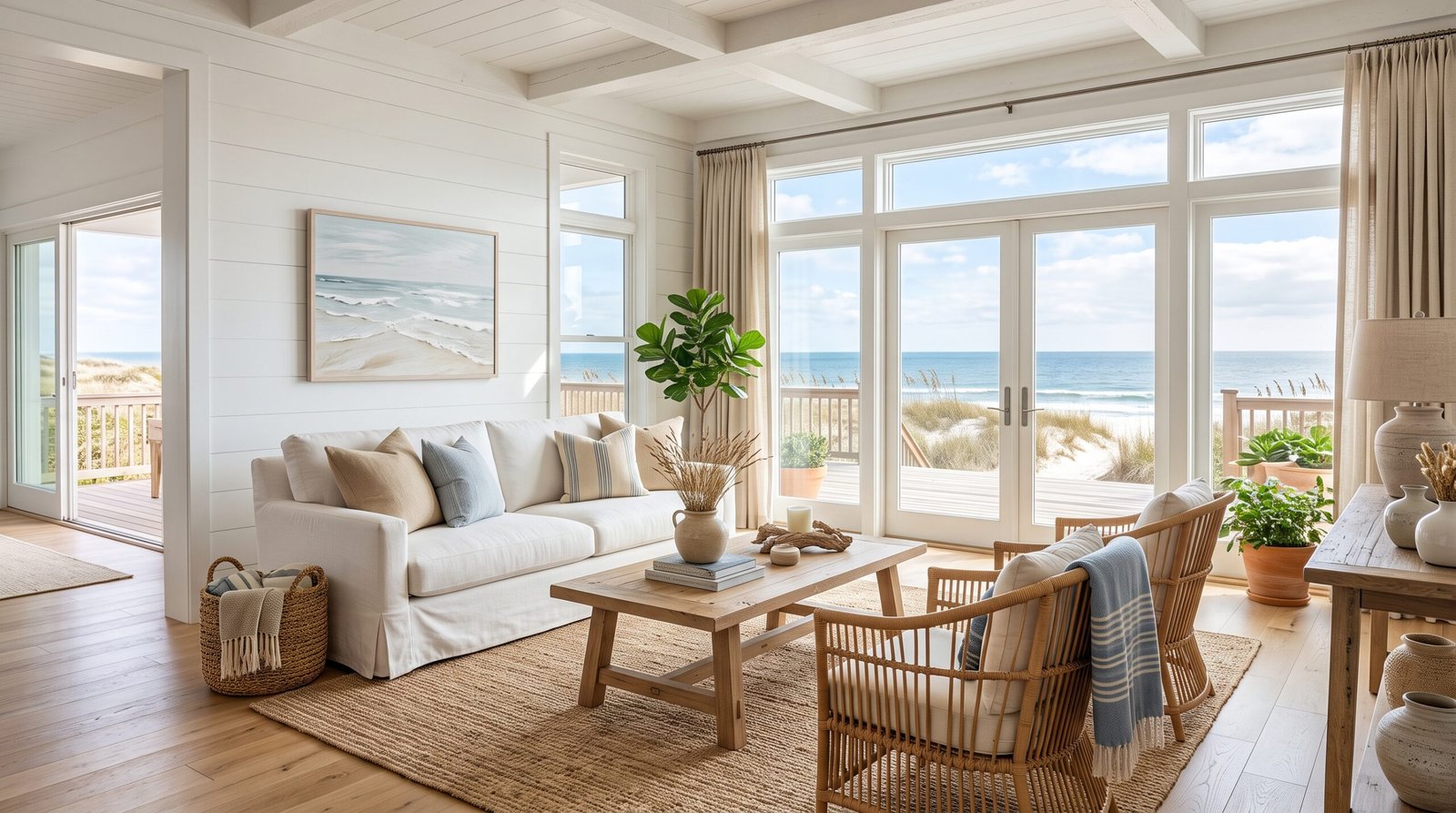
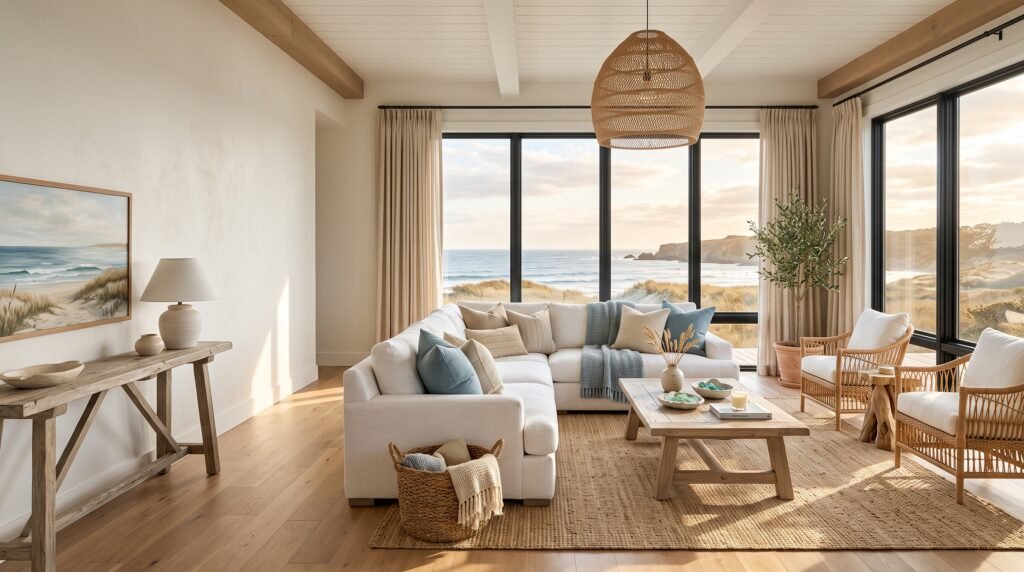
Getting your beach house living room right is one of those things that looks effortless when it’s done well — and painfully obvious when it’s not.
You’ve probably walked into a coastal rental at some point and thought, “this feels fake.” Everything matched too perfectly. The starfish were too deliberate. The throw pillows had anchors on them. And somehow, despite all that beach-themed stuff, it felt nothing like actually being near the ocean.
That’s the trap most first-time coastal homeowners fall into. And honestly, it’s not your fault. The internet is full of “coastal decor” guides that are basically just shopping lists. What they don’t tell you is why certain choices work, what the real logic is behind a space that feels genuinely lived-in and beachy at the same time.
This guide fixes that. Whether you’re decorating from scratch or reworking a room that’s just not clicking, here’s a step-by-step breakdown that actually makes sense.
Step 1: Start With the Foundation — Color and Light in a Beach House Living Room
Before you buy a single piece of furniture, you need to get the palette right. This is where most people skip ahead and pay for it later.
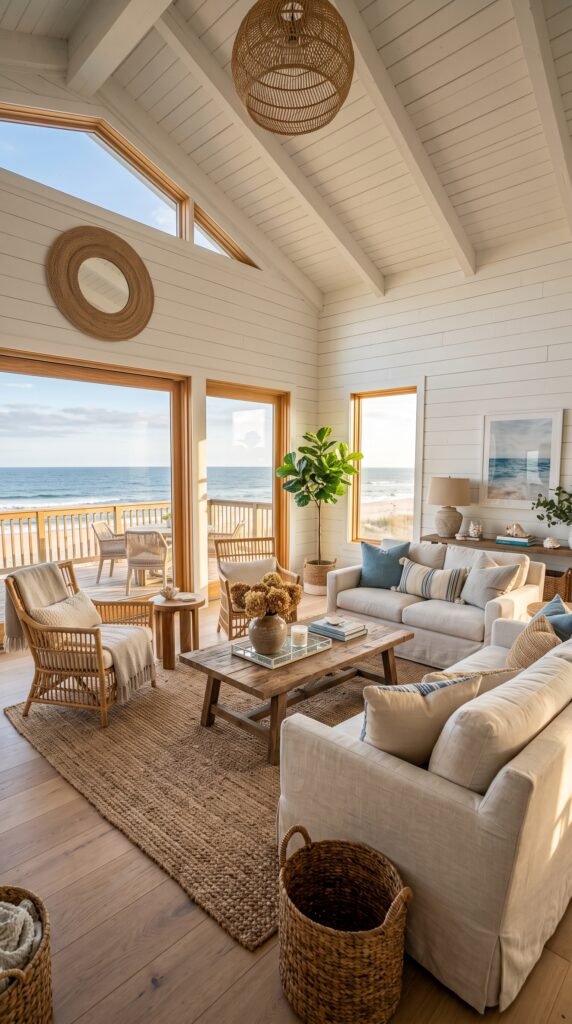
The instinct is to go blue. Nautical blue, navy, ocean teal. And sure, those colors work — but only when they’re used as accents, not as the base. The actual foundation of a great beach house living room is almost always neutral. Think warm whites, sandy beiges, soft greiges, and a lot of natural linen.
Here’s the logic: the ocean and sky outside are already providing the color. Your job is to create a backdrop that doesn’t compete with that view. Light bounces differently near the water — it’s softer, more diffuse, sometimes almost silver. Heavy, saturated walls fight that light instead of working with it.
Picture this: you’ve painted your living room a bold ocean blue, hung dark curtains, brought in a navy sectional. The room looks great in photos. But in real life, on an overcast coastal morning when the fog is still sitting on the water? It feels like a cave. The whole mood collapses.
Start neutral. Layer in color through textiles and small accents later. That’s the move.
Practical choices that work:
Go with a warm white (not stark, never bright white — something like Benjamin Moore’s White Dove or Sherwin-Williams Alabaster). For flooring, light wood tones or whitewashed oak planks are hard to beat. If you’re working with existing dark flooring, a large natural fiber rug (jute or sisal) can do a lot of heavy lifting.
Natural light management matters more than people think. Sheer linen curtains that filter light rather than block it are a consistent win. They give privacy when you need it while keeping that soft, sun-bleached feel alive in the room.
how to Decorate Your Bedroom Walls?
Step 2: Choose Furniture That Feels Like It Belongs
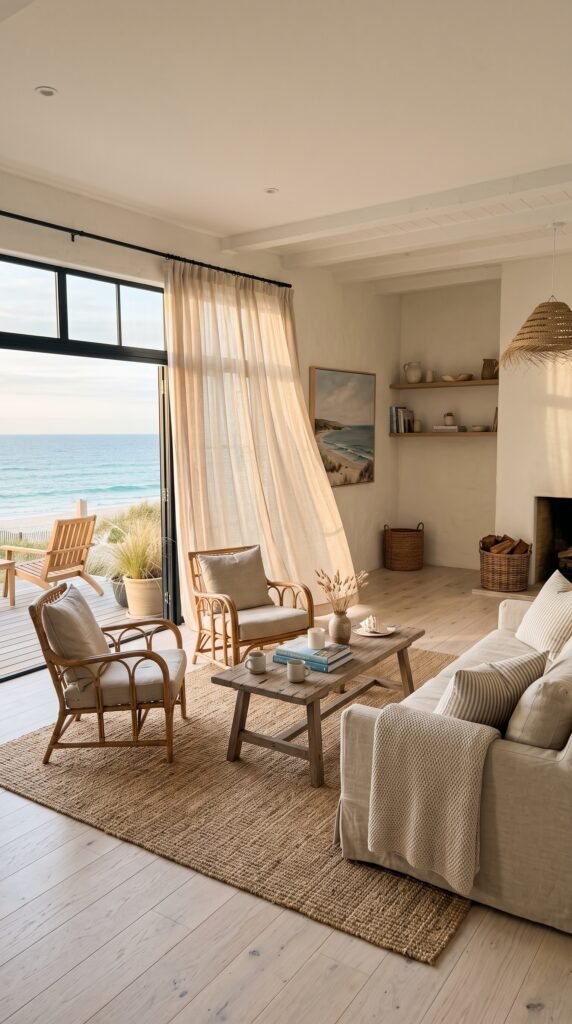
Scale and material are the two things to nail here. Get either of them wrong and the room won’t land, no matter how good the rest of it looks.
For scale: coastal living rooms should feel generous, even if the actual square footage isn’t huge. That means avoiding rooms stuffed with too much furniture. A large, low-profile sofa (ideally in a slipcover fabric so it actually survives beach living), one or two accent chairs with some visual lightness to them, and a simple coffee table. That’s often enough.
The common mistake is over-furnishing. People get excited, they want the room to feel “done,” and they keep adding pieces until the space feels crowded. Then it stops feeling coastal and starts feeling cluttered.
Materials are where you inject personality. Rattan, cane, wicker, and light natural woods are the workhorses of coastal design. They’re light in color, light in visual weight, and they bring that organic, handmade quality that makes a beach house feel like something other than a catalog shoot.
Most people run into this exact problem when selecting a coffee table: they default to glass, thinking it’ll feel airy. And it can. But glass is also a maintenance nightmare in a beach house (salt air, sandy hands, sunscreen residue — you’ll spend your whole vacation wiping it down). A bleached wood, woven abaca, or whitewashed mango wood table gives you the same visual openness with zero regret.
Step 3: Layer Textures, Not Themes
This is the single piece of advice that separates a great beach house living room from one that looks like it came out of a box marked “COASTAL.”
Avoid themed decor. No anchors. No BEACH spelled out in block letters. No starfish collections unless they’re genuinely collected (and genuinely interesting). The ocean inspires texture, not tchotchkes.
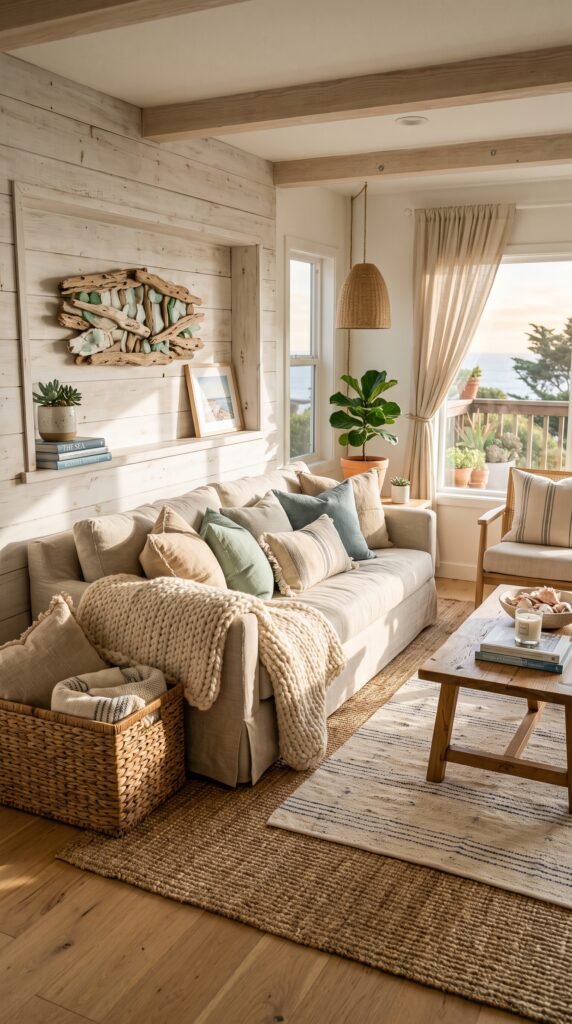
What you’re going for is layered softness with some roughness underneath. Think chunky knit throws alongside smooth linen pillows. A sisal rug with a soft cotton dhurrie layered on top. A ceramic vase with some visual weight next to a cluster of lightweight woven baskets.
The goal is that your room should feel coastal without announcing it. A guest should walk in, exhale, and feel something relaxed and open — not read a list of nautical references.
Specific textures that consistently work: linen, cotton slipcovers, jute, rattan, sea glass (used sparingly), driftwood (one or two pieces, not a collection), and raw ceramic. Real coastal homes look like people actually live in them, track in some sand, and leave a book on the arm of the sofa.
Step 4: Get Lighting Right (Most People Get This Wrong)
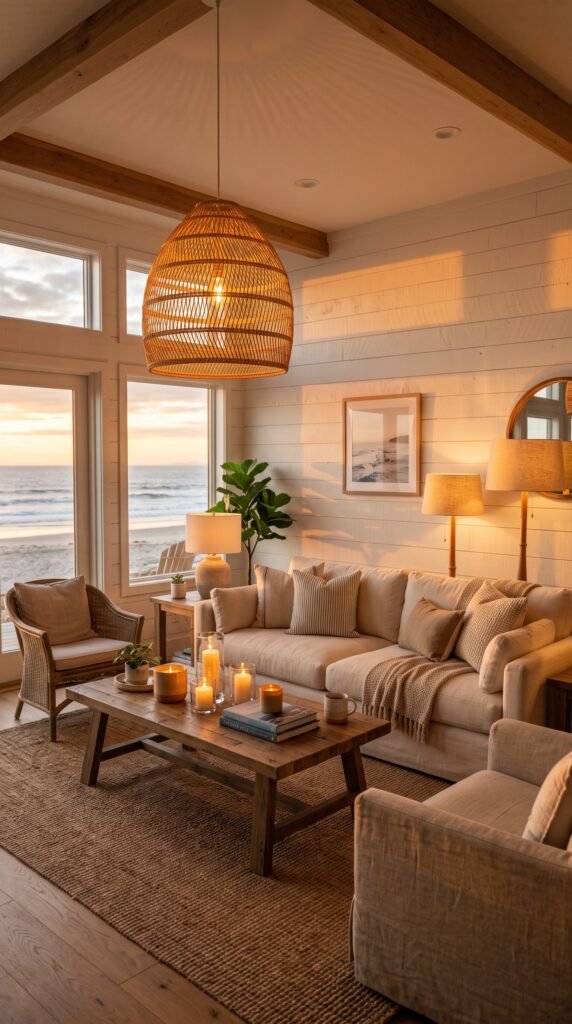
Overhead lighting is the enemy of good coastal atmosphere. It’s flat, it’s harsh, and it completely kills the soft, golden quality that a beach house living room should have, especially in the evenings.
The fix is layering light sources. Multiple lamps at different heights, a statement pendant over a reading nook or the seating area, and ideally some candles or flameless alternatives for night. You want the room to feel like it transitions naturally from the brightness of a coastal afternoon to something warm and low when the sun goes down.
Lampshades matter more than they get credit for. White or natural linen shades diffuse light beautifully — that soft glow they cast is doing serious work for your room’s atmosphere. Avoid dark shades (they absorb light and create contrast you don’t want) and skip anything too structured or formal.
According to the Lighting Research Center, layered ambient and task lighting improves both comfort and perceived spaciousness in residential interiors. That’s the science behind what designers have been doing instinctively in coastal spaces for decades.
For pendant fixtures specifically, natural materials like rattan, woven seagrass, and driftwood finishes read as coastal without being on-the-nose. They’re one of the few places in a beach house living room where you can lean into a material and have it do thematic work without feeling forced.
Common Mistakes to Avoid in a Beach House Living Room
Let’s get honest about the things that make coastal living rooms go wrong. These aren’t obscure mistakes — they’re the ones that show up constantly, even in professionally designed spaces.
Going all-in on blue. Already touched on this, but it’s worth repeating. Coastal doesn’t mean nautical. The ocean has a thousand colors. Your room doesn’t need to pick one and commit.
Buying decor that shouts “beach.” Printed pillows with waves, wall art that says “life is better at the beach,” clusters of shells in a glass bowl. These things aren’t inherently awful, but when they’re everywhere, the room feels costume-y. Restraint is the mark of a confident decorator.
Forgetting about durability. A beach house living room gets a specific kind of abuse: sand, salt air, sun exposure, wet bathing suits, sunscreen on upholstery. Delicate fabrics, dark upholstery that shows every grain of sand, white rugs — these are beautiful mistakes. Choose fabrics that clean up fast. Performance linen and Sunbrella-type indoor-outdoor fabrics exist for exactly this reason.
Over-accessorizing. More is not more here. Leave some surfaces clear. Breathing room in a coastal space isn’t an accident, it’s the whole point.
Ignoring the view. If you’re lucky enough to have a water view, your furniture arrangement should acknowledge it. Not point all chairs dramatically at the window — that looks staged. But the seating should open toward the view, allow it to be part of the room rather than something you glimpse between the TV and the bookshelf.
Per Architectural Digest, the most enduring coastal interiors tend to prioritize “restraint over referencing” — meaning the ocean inspires the choices without being literally depicted in the decor.
Dream Apartment Living Room Decor Ideas You’ll Love
Best Tools and Resources for Styling Your Beach House Living Room
You don’t need a designer, but you do need good reference points. Here are the tools and resources that are worth your time.
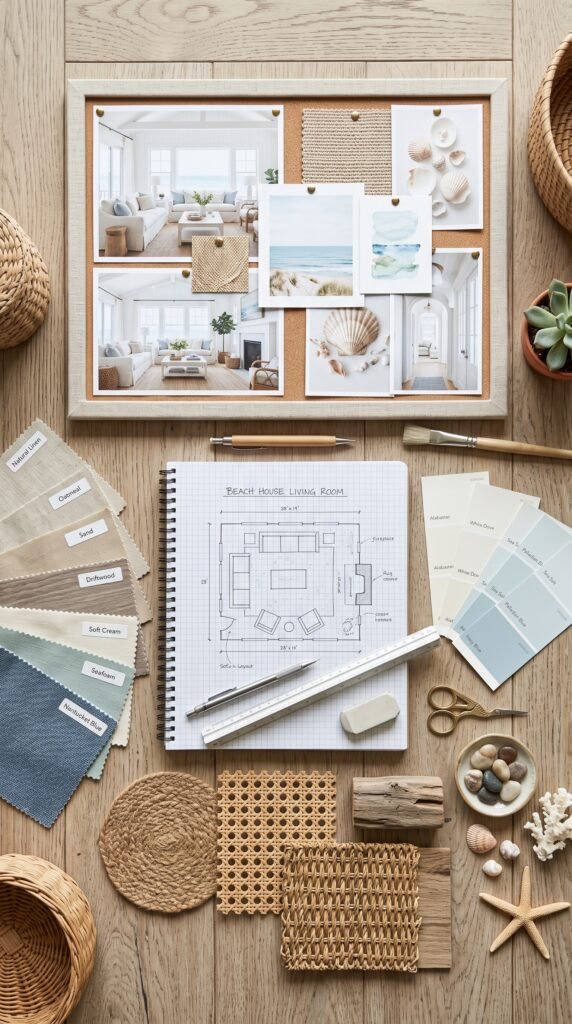
Mood boarding before buying anything. This sounds like extra work but it saves money. Put images of spaces you love next to your paint swatches, fabric samples, and floor samples before committing. Inconsistencies become obvious fast when you can see everything side by side. Pinterest is fine, but Houzz’s ideabooks let you save more structured collections and often link directly to products.
Fabric samples. Order them. Every time. Especially for a coastal climate where sunlight, humidity, and heavy use will test the material. What looks good online can feel wrong in the actual space.
A scale floor plan. Even a rough one sketched on paper with measured dimensions helps enormously before buying furniture. The number of people who order a sofa and can’t get it through the door — or worse, get it in and realize it’s eating half the room — is staggering.
Natural light audit. Spend a full day in the space across different times. Morning, midday, late afternoon, evening. Note where the light hits, what direction it comes from, how it changes the feel of the room. This changes everything about your color and material choices.
Bringing It All Together
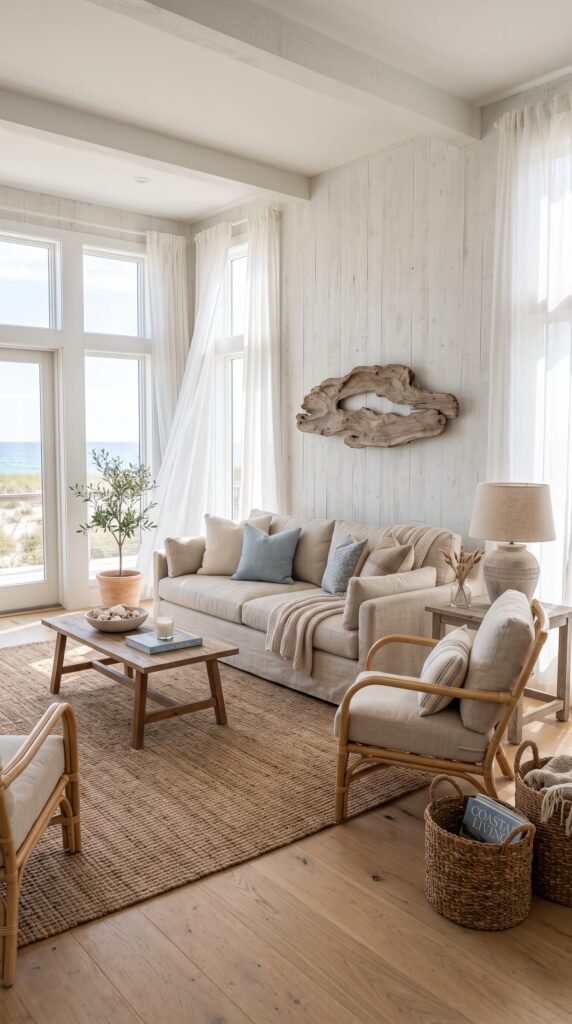
A beach house living room that works isn’t about checking boxes on a coastal shopping list. It’s about understanding what creates the feeling of a coastal space — the light, the air, the openness, the sense that nothing in here is trying too hard.
The best coastal rooms feel effortless because they reflect actual choices made by someone who thought about what the space needed, not just what “beach decor” is supposed to look like.
Start with the foundation: neutral walls, light floors, natural fiber textiles. Build up through furniture with the right scale and materials. Layer textures, not themes. Get your lighting layered and low. And edit ruthlessly — the space between things matters as much as the things themselves.
Get those fundamentals right and the room will do the rest. You won’t need the anchor pillows.