How to Choose the Best Pool Deck Ideas for Your Home
When it comes to transforming your backyard into a true outdoor retreat, exploring the right pool deck ideas is the single most important design decision you will make. A pool deck does far more than simply surround your water feature — it sets the entire mood of your outdoor space, determines how safe and functional the area is, and has a direct impact on your home’s resale value. Yet despite how critical this choice is, many homeowners approach it armed with outdated assumptions, half-truths, and design myths that lead to expensive regrets.
This guide cuts through all of that noise. You will find myth-busting facts, real expert guidance, and practical advice that helps you choose a pool deck material, layout, and style that genuinely fits your climate, lifestyle, and budget.
Common Myths About Pool Deck Ideas That Are Holding You Back
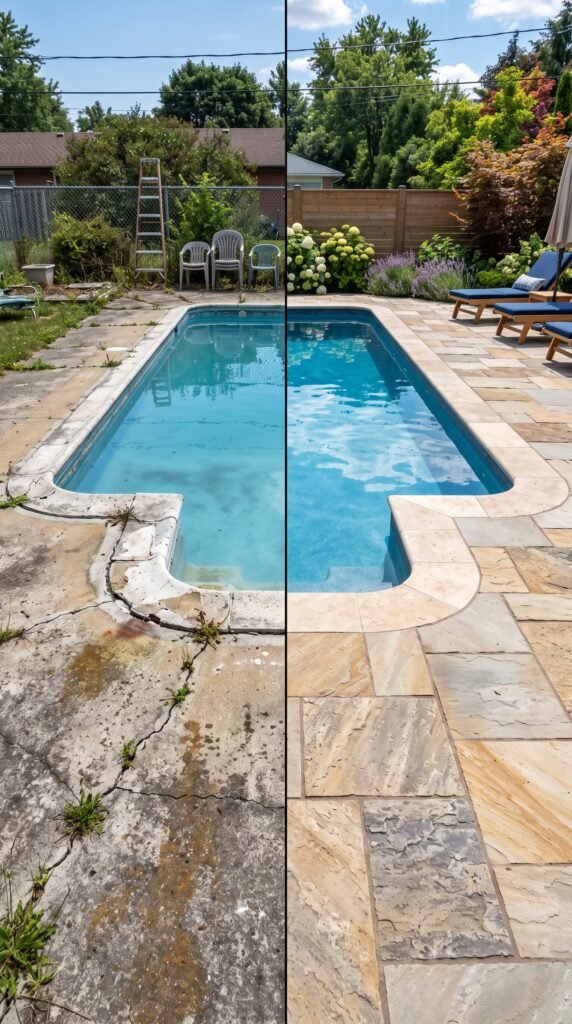
One of the most persistent myths in the pool design world is that concrete is always the cheapest and most practical choice. While concrete is certainly affordable upfront, the long-term picture is far more complicated. Unsealed or poorly finished concrete absorbs heat aggressively, making it nearly unbearable to walk on barefoot during summer afternoons in warmer climates.
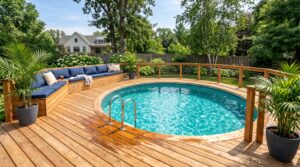
Another widely repeated myth is that wood decking is too high-maintenance to be worth considering. This belief is rooted in older thinking from an era before composite and pressure-treated lumber technology matured. Modern composite decking, for example, can mimic the look of natural wood with a fraction of the maintenance burden, resisting rot, fading, and insect damage for decades.
The third myth worth addressing early is that all pool deck ideas are created equal regardless of climate. This could not be further from the truth. A material that performs brilliantly in the dry heat of Arizona may crack, warp, or become dangerously slippery in the humidity and freeze-thaw cycles of the Midwest or Northeast.
Finally, many homeowners believe that a larger deck automatically means a better deck. Size without thoughtful design just gives you more surface area to manage without improving how you actually use the space. Proportionality, traffic flow, shade planning, and zoning for different activities matter far more than sheer square footage.
The Real Facts Behind Choosing Pool Deck Ideas That Last
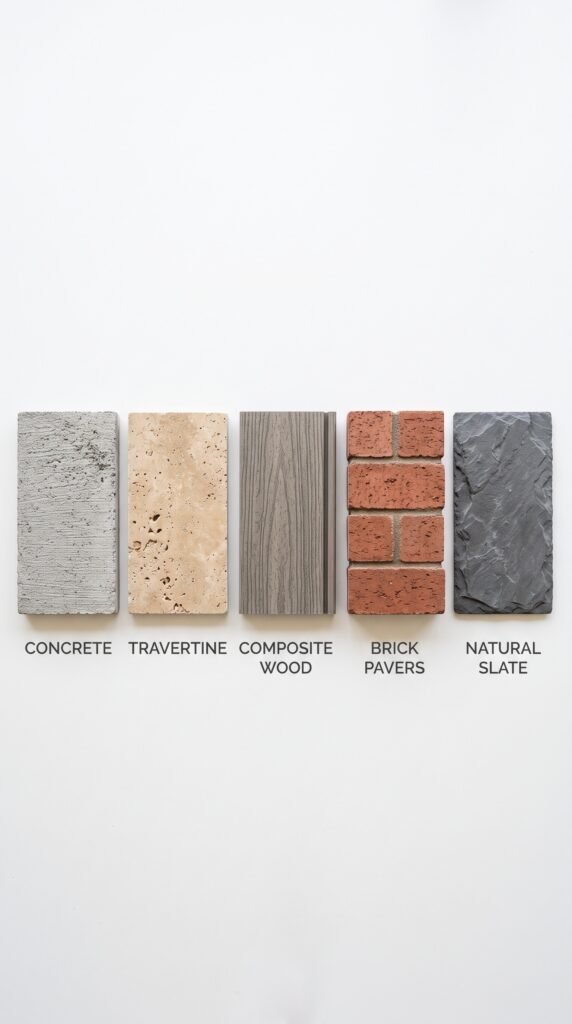
Understanding the actual performance data behind common decking materials will save you from costly mistakes. Here is what the evidence actually shows.
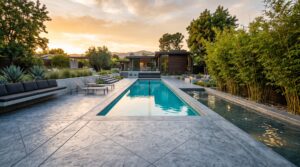
Concrete remains the most widely used pool decking material in North America, and for good reason — it is versatile, widely available, and relatively affordable at installation. According to the National Concrete Masonry Association, properly finished and sealed concrete can last 25 to 50 years with appropriate maintenance. The critical variable is finish: broom-finished, exposed aggregate, or stamped concrete all dramatically change slip resistance, heat absorption, and visual character.
Natural stone, particularly travertine and bluestone, has surged in popularity among higher-end installations. Travertine is especially prized because its natural porous surface and light color reflect heat rather than absorbing it, keeping the surface comfortable underfoot even on peak summer days. The Pool & Hot Tub Alliance consistently ranks travertine among the highest-performing materials for heat management in pool environments.
Composite decking has transformed the wood deck conversation entirely. Products engineered from recycled wood fiber and polymers hold up against moisture, UV exposure, and heavy foot traffic in ways that raw timber simply cannot. Many manufacturers now offer 25-year warranties on fade and stain resistance, which speaks to how seriously the industry has advanced.
Brick pavers offer a timeless aesthetic and a practical advantage that poured concrete does not: individual units can be replaced without disturbing the rest of the surface. This makes long-term maintenance simpler and less expensive when damage does occur.
Porcelain tile has become increasingly popular for contemporary pool deck designs. Large-format porcelain pavers with a textured surface finish provide excellent slip resistance when wet, are nearly impervious to staining, and create a sleek modern look that photographs beautifully.
best outdoor flooring options for wet areas
The right material for your pool deck ideas will ultimately come down to four intersecting factors: your local climate, your budget across both installation and maintenance, the architectural style of your home, and how intensively the deck will be used.
Expert Tips for Planning Pool Deck Ideas That Work in the Real World
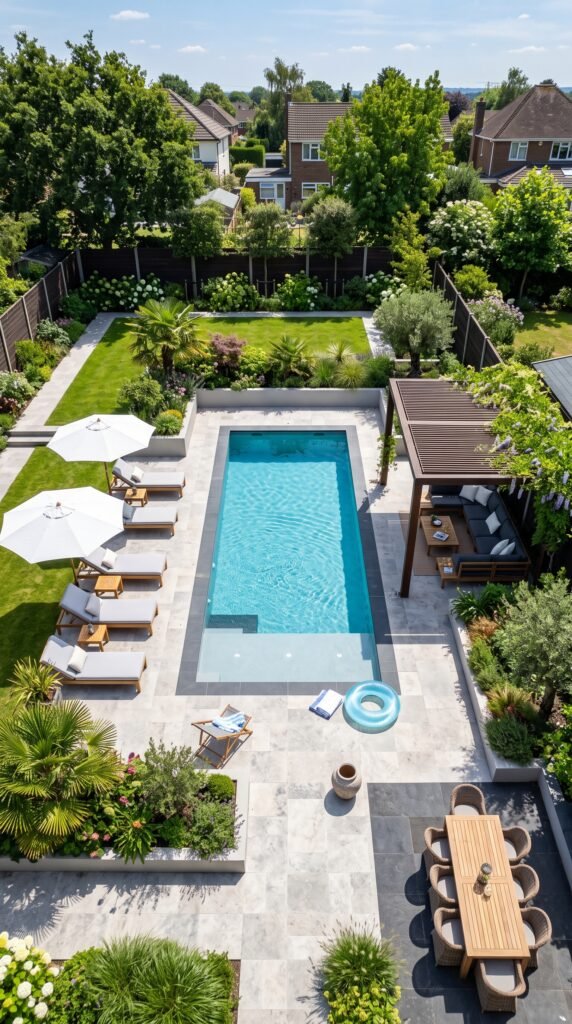
Getting the layout right is just as important as getting the material right. Here are the expert-backed principles that professional landscape architects and pool designers apply when developing pool deck ideas for residential projects.
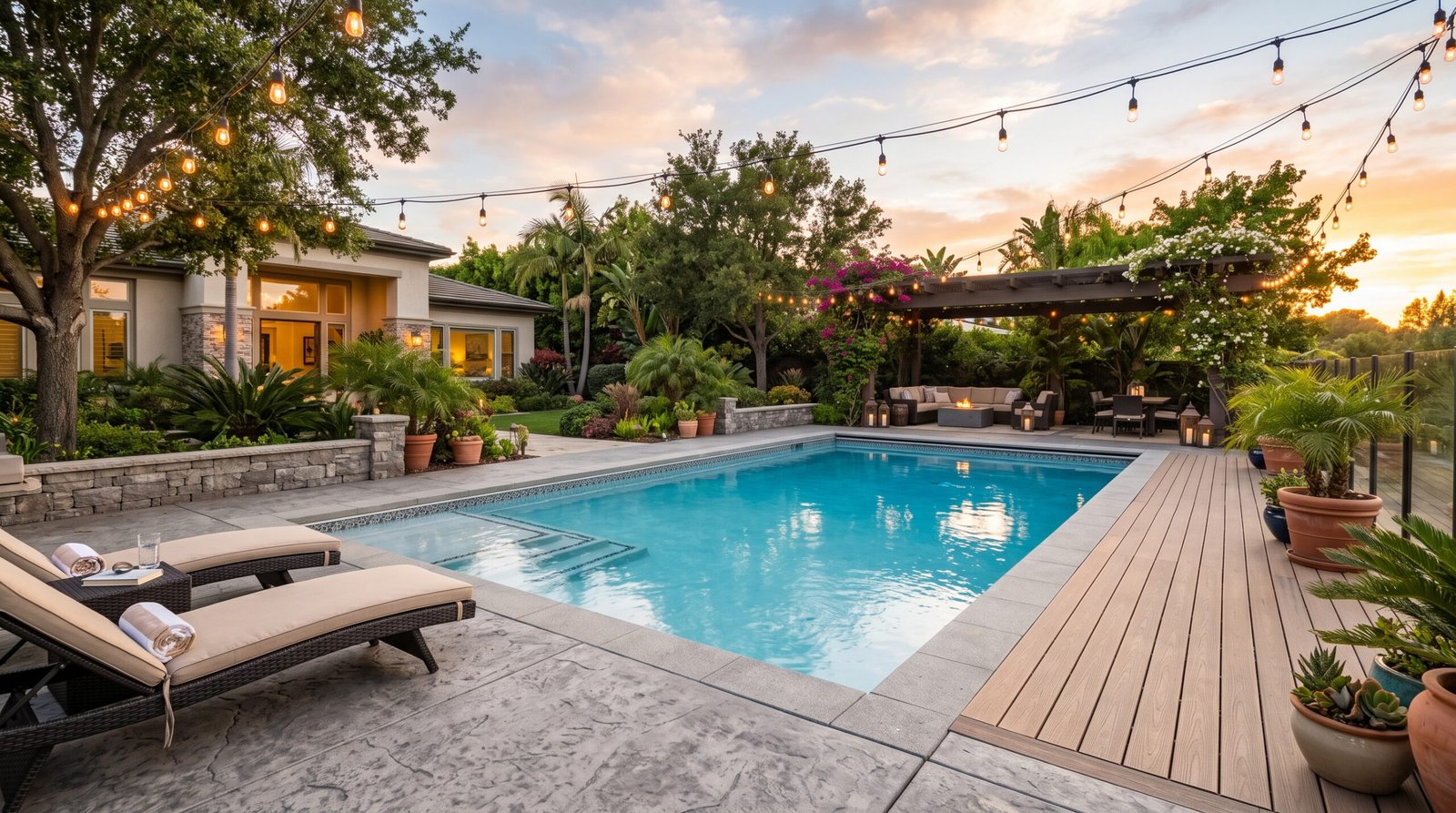
Zone your deck with intention. A well-designed pool deck typically divides naturally into at least three zones: an active sun-lounging area with direct sun exposure, a shaded retreat area under a pergola or shade sail, and a transitional zone that connects the pool to the home’s interior via a clear path. When you plan these zones from the beginning rather than retrofitting them later, the space feels cohesive and genuinely functional rather than cluttered.
Design for slip safety from the ground up. The American National Standards Institute sets guidelines for wet surface slip resistance, and any material you choose should meet or exceed those standards. A Dynamic Coefficient of Friction (DCOF) of 0.42 or higher is generally considered safe for wet applications. Always ask your contractor or supplier for the specific DCOF rating of any material you are considering.
Account for your local freeze-thaw cycle. If your climate experiences hard winters, the expansion and contraction of frozen moisture inside porous materials can cause cracking, heaving, and surface degradation over time. Dense, low-absorption materials like porcelain tile, sealed concrete, and certain natural stones handle freeze-thaw stress better than softer, more porous options.
Mind the slope. Every pool deck should be graded to drain water away from both the pool and your home’s foundation. A slope of approximately one-eighth to one-quarter inch per foot is the industry standard. Poor drainage is one of the leading causes of premature pool deck deterioration, and it also creates standing water hazards.
Think about barefoot comfort. Color plays a significant practical role here. Darker surfaces — charcoal pavers, dark stained concrete — absorb substantially more solar energy than lighter alternatives. On a 90-degree day, a dark concrete surface can reach surface temperatures exceeding 150°F, which is painful and potentially dangerous underfoot. Choosing lighter tones or materials with natural reflective properties is not merely an aesthetic preference; it is a safety and comfort decision.
how to choose outdoor lighting for pool areas
Plan for furniture placement early. One of the most common pool deck design regrets is realizing after installation that there is not enough flat, stable surface for outdoor furniture without it sitting awkwardly across different elevation zones or surface joints. A good rule of thumb is to plan for at least 6 to 8 feet of clear deck surface on each side of the pool where seating will be placed.
Consider surrounding landscaping as part of the deck design. Trees that drop leaves, seeds, or fruit near the pool create extra maintenance burden. Raised planting beds built into the deck perimeter, however, can add natural beauty, privacy screening, and shade without the debris problem — particularly when planted with ornamental grasses, lavender, or agave varieties.
Exploring Popular Pool Deck Ideas by Style and Material
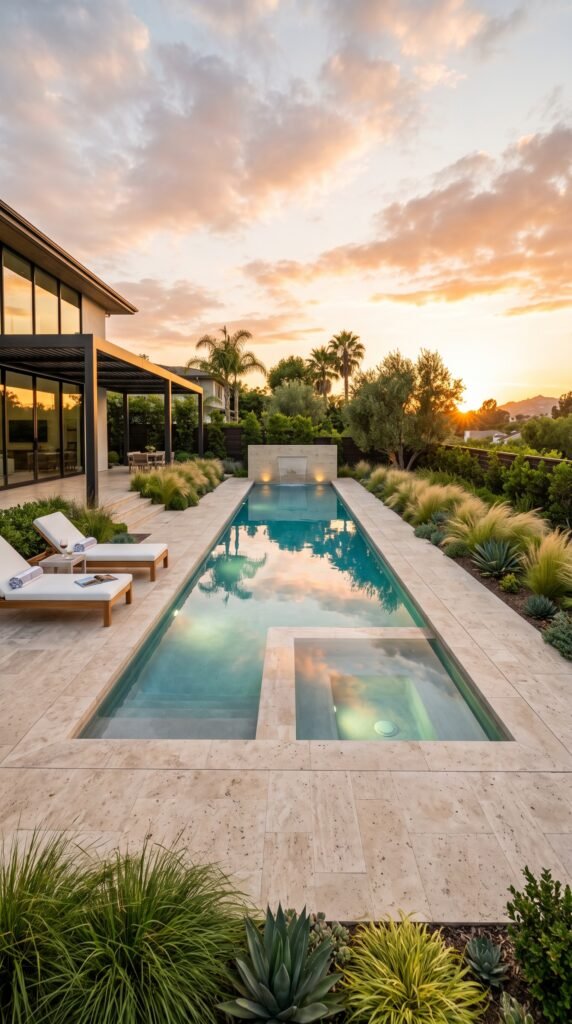
With the foundational knowledge in place, it is worth walking through the most popular pool deck ideas by design style so you can identify which direction aligns with your home and personal taste.
Modern Minimalist Pool Decks lean heavily on large-format porcelain pavers in neutral tones — whites, warm grays, and sand tones. The emphasis is on clean lines, minimal grout joints, and a monolithic look that blends seamlessly with contemporary architecture. Integrated lighting strips along the coping or deck edge add a high-end finish that photographs exceptionally well.
Mediterranean and Tuscan-Inspired Decks favor warm earthy tones and natural materials. Travertine, tumbled limestone, and terracotta-toned concrete pavers all work beautifully here. Terracotta planters, wrought iron accents, and lush Mediterranean plantings like rosemary, bougainvillea, and olive trees complete the aesthetic. This style is especially well-suited to Spanish or Italian-influenced home architecture.
Tropical Resort-Style Decks prioritize natural materials and lush greenery. Ipe wood or composite decking with a wood-grain finish creates a warm, organic feel, surrounded by banana palms, bird of paradise plants, and large-leafed tropical ground covers. A swim-up bar or outdoor kitchen built into the deck perimeter elevates this style from attractive to genuinely resort-like.
Rustic Farmhouse Decks favor weathered wood tones, natural stone accents, and a relaxed, unpretentious character. Wide composite planks in weathered gray or driftwood tones, combined with natural boulders and wildflower plantings, create a space that feels casual and welcoming rather than formal or showcase-oriented.
Classic Traditional Decks often feature brick pavers or stamped concrete with a stone or brick pattern. This style has broad curb appeal and ages gracefully, which is why it remains one of the most consistently popular pool deck ideas among homeowners who prioritize resale value alongside personal enjoyment.
Budgeting Honestly for Your Pool Deck Ideas
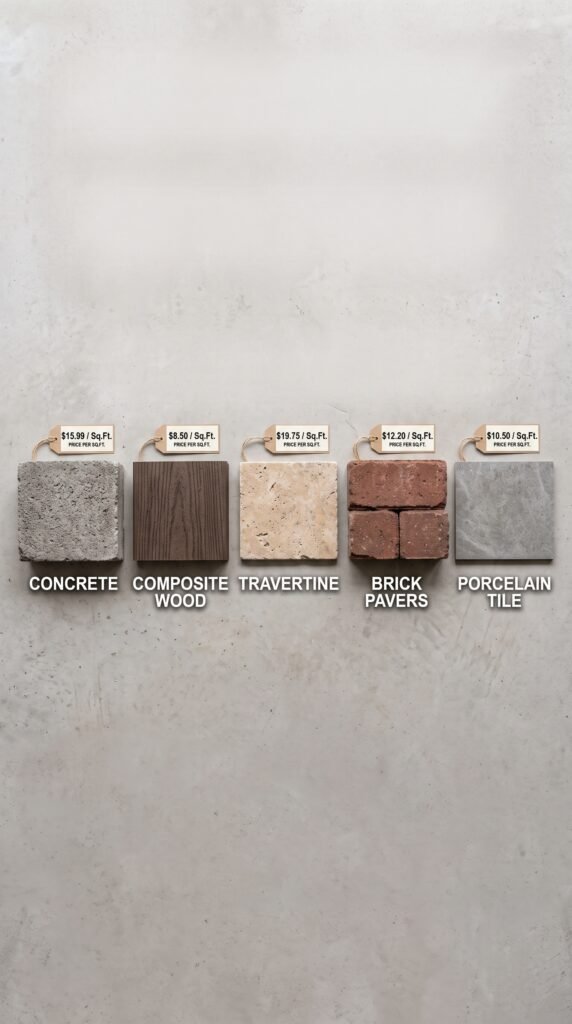
Budget reality is where many pool deck projects go sideways, and that usually happens because homeowners are comparing installation cost alone without accounting for the full 10-to-20-year cost of ownership.
Here is a realistic cost breakdown based on industry averages as of 2024, measured per square foot installed:
Concrete (basic broom finish) typically runs between $6 and $12 per square foot. Stamped or decorative concrete ranges from $12 to $20. Composite decking runs $15 to $30 per square foot depending on brand and complexity. Brick or concrete pavers typically fall between $10 and $25. Natural travertine generally runs $20 to $40 per square foot installed. Porcelain tile for outdoor applications tends to run $18 to $35 per square foot.
These numbers can shift significantly based on your region, the complexity of the layout, and current material costs in your local market. Always gather at least three contractor quotes for any project of this scale.
The hidden costs that most budgets fail to account for include base preparation (grading, compacting, and sometimes excavating the subsurface), drainage improvements, permits (required in most municipalities for pool decks over a certain square footage), and ongoing sealing or maintenance products over time.
Investing slightly more in a higher-quality material upfront frequently results in lower total cost of ownership over a decade because you avoid the resealing, repair, and replacement cycles that lower-cost materials require.
Making Your Final Decision on the Best Pool Deck Ideas for Your Home
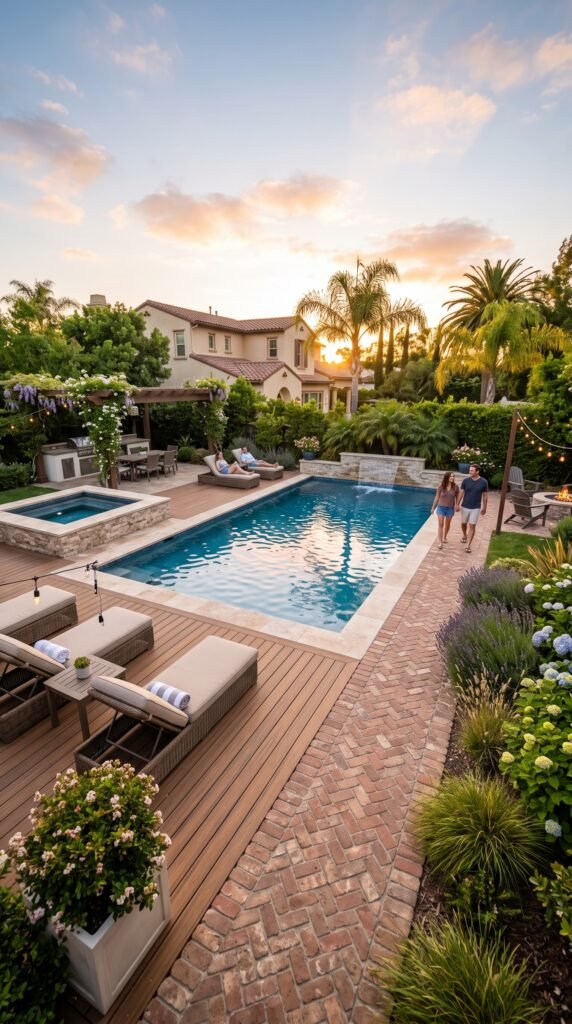
The best pool deck ideas are ultimately the ones that serve the way you and your family actually live, not the ones that look most impressive in a magazine spread.
If you have young children, slip resistance, surface temperature, and durability under heavy active use should outweigh purely aesthetic considerations. If you entertain frequently, traffic flow, furniture zoning, and the visual impression made on guests become more central. If low maintenance is your priority, composite decking and porcelain pavers consistently deliver the lowest hands-on maintenance burden over time.
Start by identifying your three non-negotiables — the features or qualities you absolutely cannot compromise on — and use those as your filter when evaluating materials and layouts. From there, work with a licensed landscape architect or pool deck contractor who can evaluate your specific soil conditions, climate data, and home architecture before making final material recommendations.
Great pool deck ideas do not come from a single source of inspiration. They come from the intersection of honest self-knowledge about how you use your outdoor space, accurate information about material performance, and thoughtful design that integrates the deck into the broader landscape of your home.
Take your time with this decision. A well-chosen and well-installed pool deck can realistically last 30 years or more — making the care you invest in the planning phase one of the highest-return activities in your entire home improvement journey.