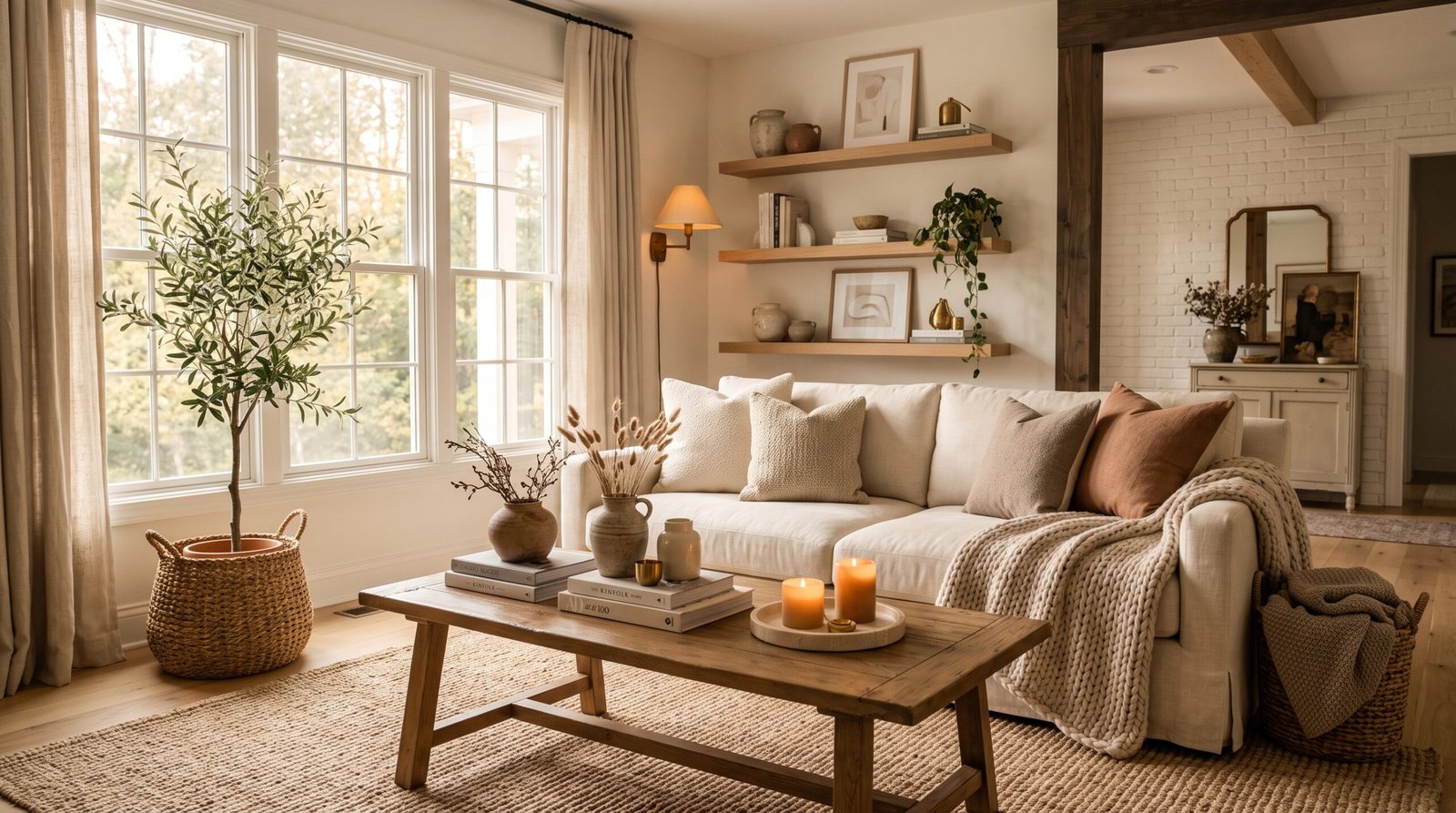
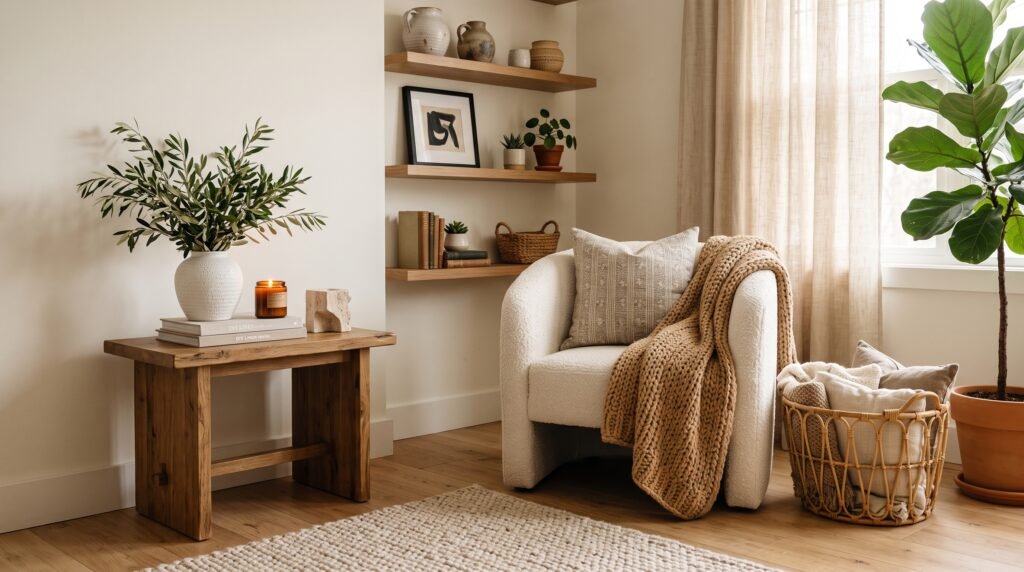
These cheap decor hacks are for anyone whose room feels cold or forgettable but whose budget will not stretch to a designer or a full renovation. The fixes that work best cost little and take an afternoon at most: layering the right textures, getting the lighting right, and adding a few personal details that make a room feel like yours. This guide covers seven of them, each with the measurements, steps and mistakes to avoid, so you can start with one corner and see the difference before you spend anything more.
In this guide:
- Layer Soft Textiles Until the Room Feels Like a Hug
- Ditch the Overhead Light and Go Warm and Layered
- Bring In Greenery Without the Maintenance Stress
- Build a Reading Nook Out of One Underused Corner
- Use Scent as a Design Element, Not an Afterthought
- Use a Mirror to Double Your Light and Space
- Add Personal Touches That Actually Mean Something
- Bringing It All Together
- Frequently Asked Questions About Cheap Decor Hacks
1. Layer Soft Textiles Until the Room Feels Like a Hug
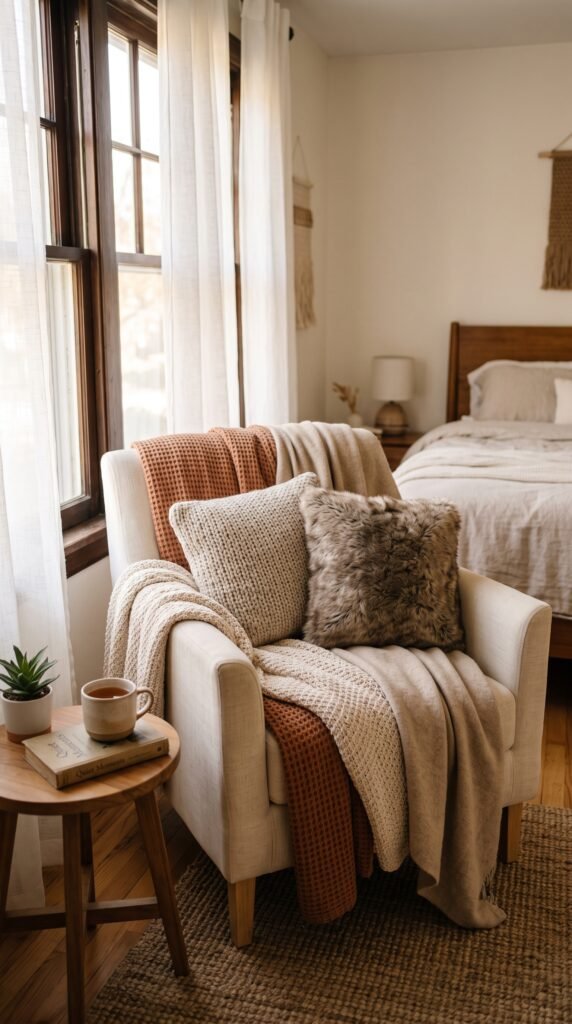
Start with textiles, because they change how a room feels faster than anything else. A bare sofa or bed looks like a waiting room; the same seat with a throw, two cushions and a rug underneath it looks finished. Mix two or three textures rather than matching sets: a chunky knit against smooth linen, or a velvet cushion beside a woven one. Keep the palette to three colors or fewer so the layers read as deliberate, and choose machine-washable fabrics for anything that will be used daily. Done this way, textiles are one of the most reliable cheap decor hacks for a cold, bare room.
Use rugs to anchor seating areas, drape a throw over one arm of a chair rather than folding it away, and put cushions in odd numbers — three on a sofa, one or two on a chair. A rug should sit at least 15 cm under the front legs of the furniture it serves, or it will look like a mat that drifted into the room. When the seating and the floor both carry soft layers, a plain room starts to feel like somewhere to settle in.
There is no need to buy a matching set. One of the simplest cheap decor hacks is to buy one good wool or cotton throw, roughly 130 cm by 170 cm, which will cover a lap, a chair back or the end of a bed, and a pair of plain cushion covers in different textures, which costs less than most single decorative cushions. Wash the throw before you use it — new textiles often carry a factory finish that makes them feel stiff, and one wash is usually enough to soften them.
2. Ditch the Overhead Light and Go Warm and Layered
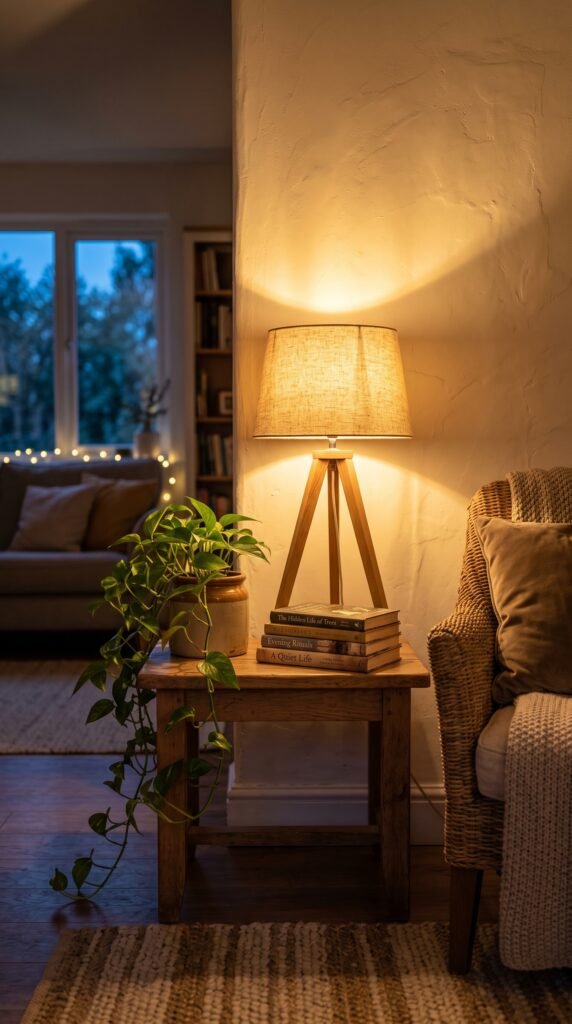
Overhead lighting is the silent killer of cozy rooms. It flattens everything, highlights clutter, and makes a space feel like a hospital corridor rather than a home. The fix is cheap and immediate: turn the overhead off, bring in a couple of lamps at eye level, and watch the whole room change.
Choose bulbs labeled warm white — usually 2700K to 3000K on the box — for living rooms and bedrooms, and save cooler daylight bulbs, around 5000K, for a desk or a workspace where you need to see detail. ENERGY STAR’s guide to LED lighting explains how bulb color, brightness and lifetime work, so you can pick the right bulb before you buy. Match the brightness to the job, too: a table lamp needs roughly 400 to 800 lumens, while a reading lamp does better at the upper end of that range.
Position lamps in corners rather than the center of the room, and place one near any seat you use regularly. The goal is pools of soft light rather than one harsh source. A fabric or linen shade diffuses the light so it glows instead of glaring, and a slim or tripod base takes up less table space than a wide ceramic one. For more ideas on doing this on a budget, these bedroom lighting ideas under $40 show how small, cheap changes can warm a room up.
3. Bring In Greenery Without the Maintenance Stress
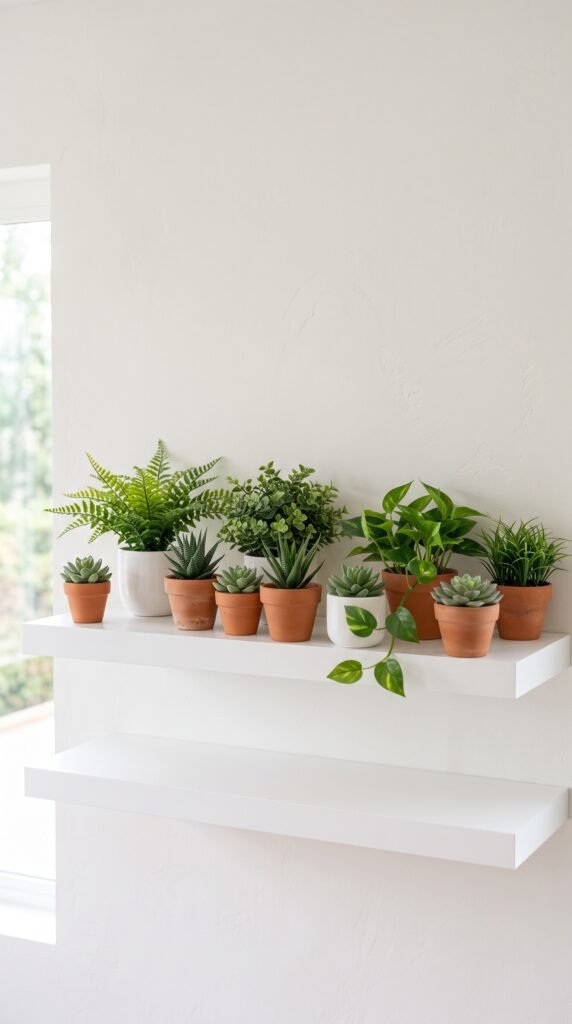
Plants do something to a room that no other decor element quite replicates. They add organic shape, soft color and a bit of life, especially in rooms with lots of straight lines and hard surfaces. But a dried-out, yellowing plant does the opposite of what you want. If you can keep even one plant alive, start there — one healthy plant beats five struggling ones.
If you travel, forget to water things, or have low-light rooms, faux plants are a sound choice. A good fake trailing plant on a high shelf or a small succulent on a bathroom windowsill reads perfectly well from a normal distance, and it never drops a leaf. Keep faux plants dusted, though — a dusty plastic leaf is easy to spot — and avoid the brightest green, most uniform-looking ones, which tend to look the most artificial.
Match the plant to the spot, not the other way round: shade-tolerant plants such as pothos, snake plants and peace lilies cope with a room that gets little direct sun, while cacti and succulents need a bright windowsill and very little water. The RHS guide to choosing houseplants lists easy plants by light level and room, and it is a good place to check before you buy, so you choose something that will actually thrive.
4. Build a Reading Nook Out of One Underused Corner
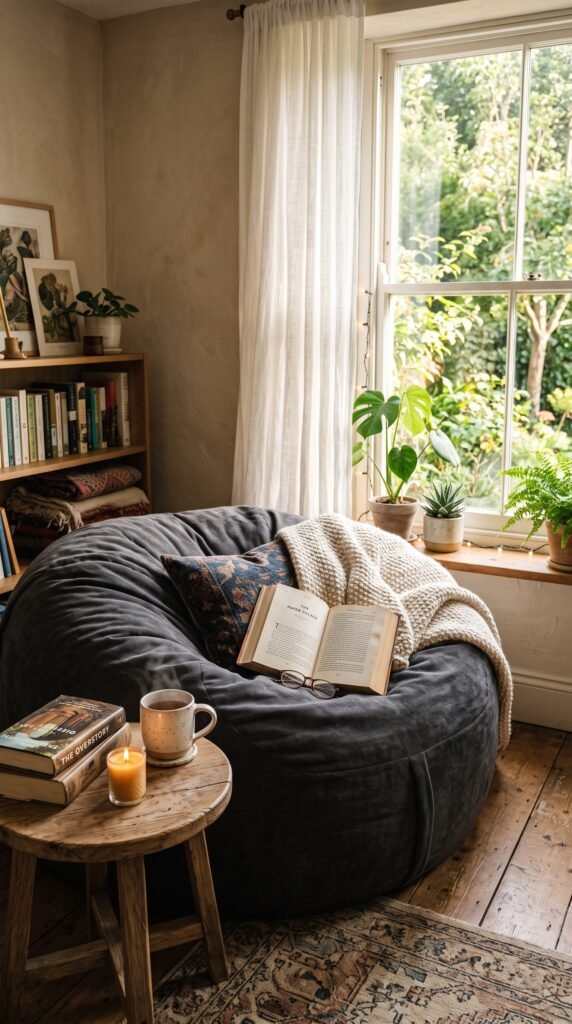
A reading nook is one of the coziest cheap decor hacks because it turns a forgotten corner into the room’s best seat. Most rooms have at least one corner that isn’t doing anything useful. A bare corner next to a window, the space beside a wardrobe, the end of a hallway — these forgotten spots can become the best part of a room with very little effort or money. A dedicated nook gives you a reason to step away from screens, and there’s something about having a specific place for a specific kind of rest that actually makes you use it.
You don’t need much: a comfortable seat, a side table or a stack of books, a lamp, and a small rug to define the space. A rug around 90 cm by 120 cm is enough to mark out a single chair, and a side table or stool at about the same height as the seat arm keeps a book and a drink within reach. Keep the nook clear of clutter, or the corner will slide back into being a dumping ground within a week.
For the seat itself, look for comfort over looks: a second-hand armchair, a deep floor cushion with a backrest, or a large bean bag all work, and each one costs less than a new armchair. Sit in it for ten minutes before you commit, and check that your feet can rest flat on the floor — if your knees sit higher than your hips, the seat is too low for comfortable reading.
5. Use Scent as a Design Element, Not an Afterthought
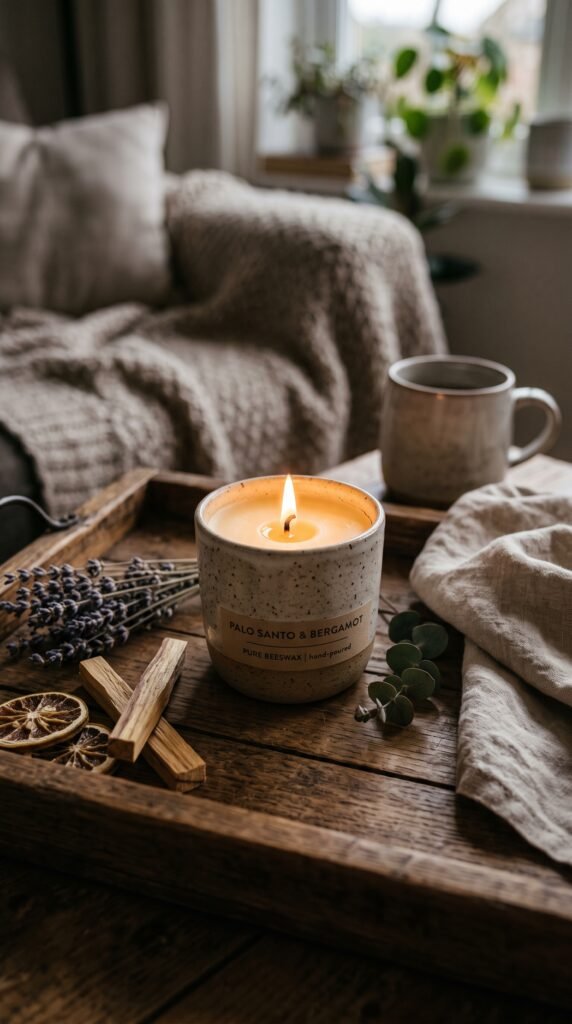
Scent is one of the most underrated tools in home decor, and it costs almost nothing to get right. The way a room smells shapes how it feels within seconds of walking in — before you’ve even consciously registered the lighting or the furniture. A room that smells stale or synthetic undermines everything else you’ve done.
The most effective approach is to pick one signature scent for each room and stick with it, rather than mixing candles, diffusers, and air fresheners all at once. Bedrooms benefit from calming scents like lavender or sandalwood. Living rooms and reading nooks suit something warmer and more complex — vetiver, palo santo, bergamot.
Choose a single-scent candle or a reed diffuser, and keep the wick trimmed to about 5 mm before you light it — a long wick makes a smoky flame and a sooty jar. Burn a candle long enough for the wax to melt to the edges each time, around an hour for every 2.5 cm of the jar’s diameter, so it does not tunnel down the middle. Never leave a burning candle unattended, and keep it away from curtains, books and anything that can catch.
6. Use a Mirror to Double Your Light and Space
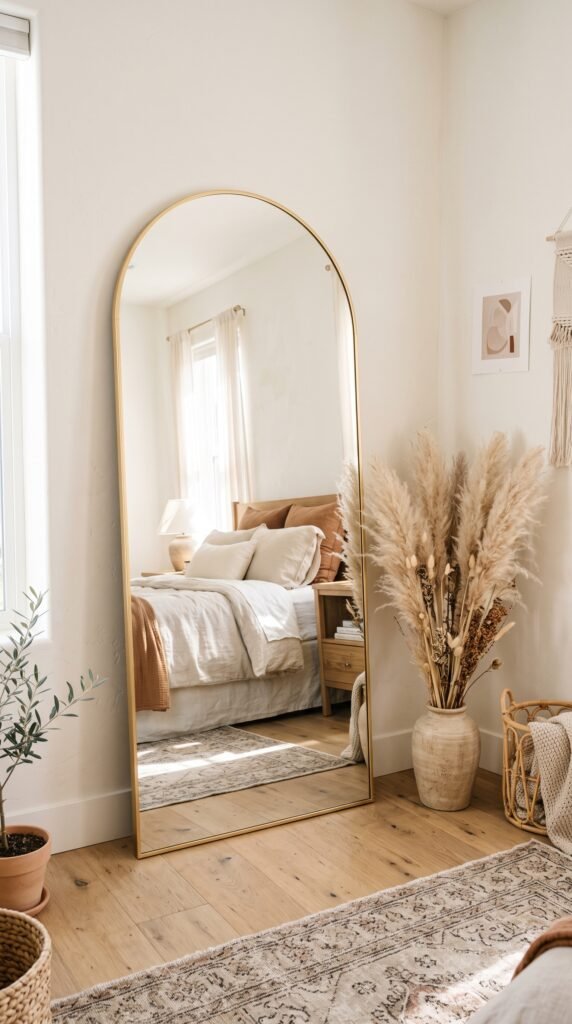
A well-placed mirror is one of the oldest cheap decor hacks in existence, and it still works. Mirrors bounce light around a room, create the illusion of more space, and reflect the parts of a room you actually like. A mirror opposite a window makes the room noticeably brighter, and on a gray day it can lift the whole space without a single new light fitting.
The placement matters more than most people realize. A mirror positioned opposite a window, or at an angle to one, catches the most light and the best view. Avoid facing a mirror at a cluttered wall or a pile of laundry, because the mirror will simply double the clutter. Hang a mirror so its center sits at about eye level, roughly 145 cm from the floor, unless the mirror is meant to reflect a specific view from a seat.
Leaning a mirror rather than hanging it gives a room a relaxed, modern feel, and it also lets you move it around until the angle is right. A leaning mirror should be at least 120 cm tall to be useful for more than decoration, and it needs a secure footing — put a non-slip pad underneath and a small fixing or furniture strap at the top so it cannot topple, especially in a home with children or pets.
7. Add Personal Touches That Actually Mean Something
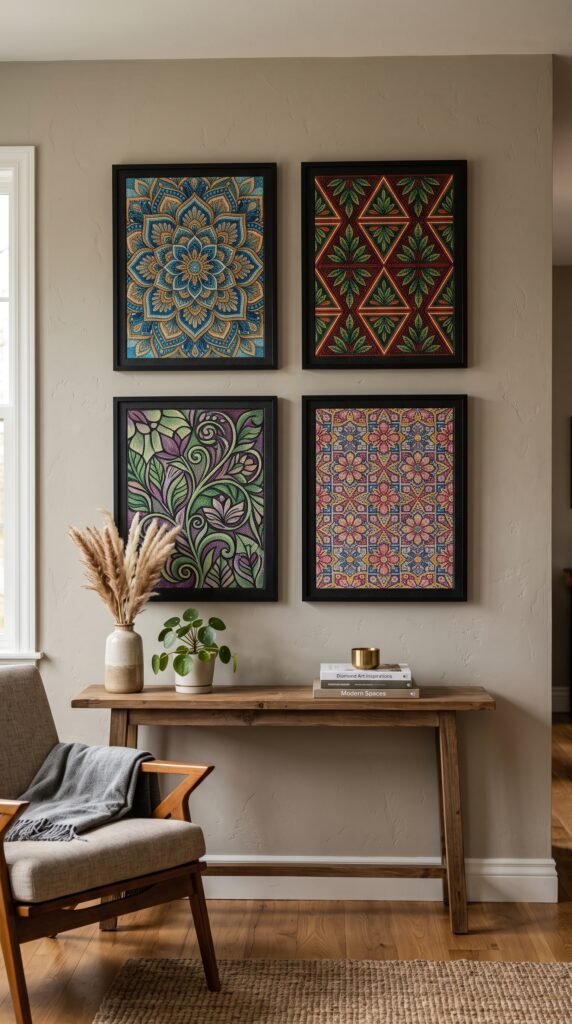
The difference between a room that looks styled and a room that feels like home is almost always personal detail. Generic artwork from a big box store adds color, but it doesn’t add meaning — and your eye knows the difference, even if you can’t articulate why. Photos, handmade pieces, and objects with a story change the entire energy of a space. That is why personal touches work as cheap decor hacks — they cost little, but they make the room unmistakably yours.
One simple way to add genuinely unique art without commissioning anything is diamond painting — a craft that leaves you with finished, jewelled pictures that look good framed. Work to a size you can frame easily, an A4 sheet or a small canvas, and choose a design that matches your palette rather than a random kit, so the finished piece sits comfortably with the rest of the room.
A small series works better than one large piece: three matching frames in a row, hung with 5 to 8 cm between them, turns a plain wall into a gallery. Keep the frames identical, or at least the same colour and depth, so the pictures read as a set. When you hang them, mark the positions on the wall with painter’s tape first — it is much easier to adjust tape than to fill in wrongly placed holes.
If you want a full step-by-step for the wall itself, this guide to how to decorate your bedroom walls works through focal walls, art height and sizing, frames and color, so you can plan the whole wall before you hang anything.
Bringing It All Together
None of these cheap decor hacks require a big budget or a full weekend. Most of them use things you already own, or a single low-cost buy, and each one changes one sense at a time — texture, light, scent — so the room feels different without looking like a project.
Start with lighting and textiles if you’re not sure where to begin — of all these cheap decor hacks, those two changes alone will make more difference than any furniture purchase. Then layer in the other elements as you go: a plant here, a mirror there, a corner nook that becomes the room’s whole personality.
For a bedroom-first start, follow this one-weekend cozy bedroom plan, which maps out the same ideas across a single weekend, room by room.
The goal isn’t a perfect room. It’s a room that feels like you actually want to be in it — and that’s entirely achievable without spending much at all.
Frequently Asked Questions About Cheap Decor Hacks
How can I make a room feel cozy without spending much?
Start with the simplest of these cheap decor hacks: turn off the overhead light and use two lamps with warm white bulbs (2700K to 3000K) instead, then add a throw and two cushions to the main seat. Those three changes cost very little and change how the room feels the same evening.
Which bulbs should I choose for a cozy room?
Swapping to warm white bulbs is one of the easiest cheap decor hacks: look for bulbs labeled warm white, usually 2700K to 3000K on the box, and aim for roughly 400 to 800 lumens for a table lamp. Cooler daylight bulbs, around 5000K, are better saved for a desk or a workspace where you need to see detail.
Are fake plants a good idea?
Yes, for spots that are hard to reach or get little light, such as a high shelf or a windowless bathroom. Faux plants are one of the most forgiving cheap decor hacks: choose a good-quality trailing plant or succulent, keep it dusted, and avoid the brightest green, most uniform-looking ones, which look the most artificial. Real plants are still better where they will thrive — shade-tolerant plants such as pothos and snake plants cope with little direct sun.
How do I build a reading nook in a small corner?
Pick a corner near a window, add a comfortable seat, a side table or stack of books at about arm height, a lamp, and a rug around 90 cm by 120 cm to mark the space. A reading nook is one of the most satisfying cheap decor hacks because it turns a forgotten corner into the room’s best seat — sit in the chair for ten minutes before you commit, and check that your feet rest flat on the floor.
How do I keep a cozy room from looking cluttered?
Give every soft layer a home: a basket for throws, one shelf for books, and a single clear surface in each room. Tidy the nook and the side tables for two minutes each evening, and put anything you are not using back where it belongs — keeping the layers tidy is what makes these cheap decor hacks look intentional rather than cluttered.