
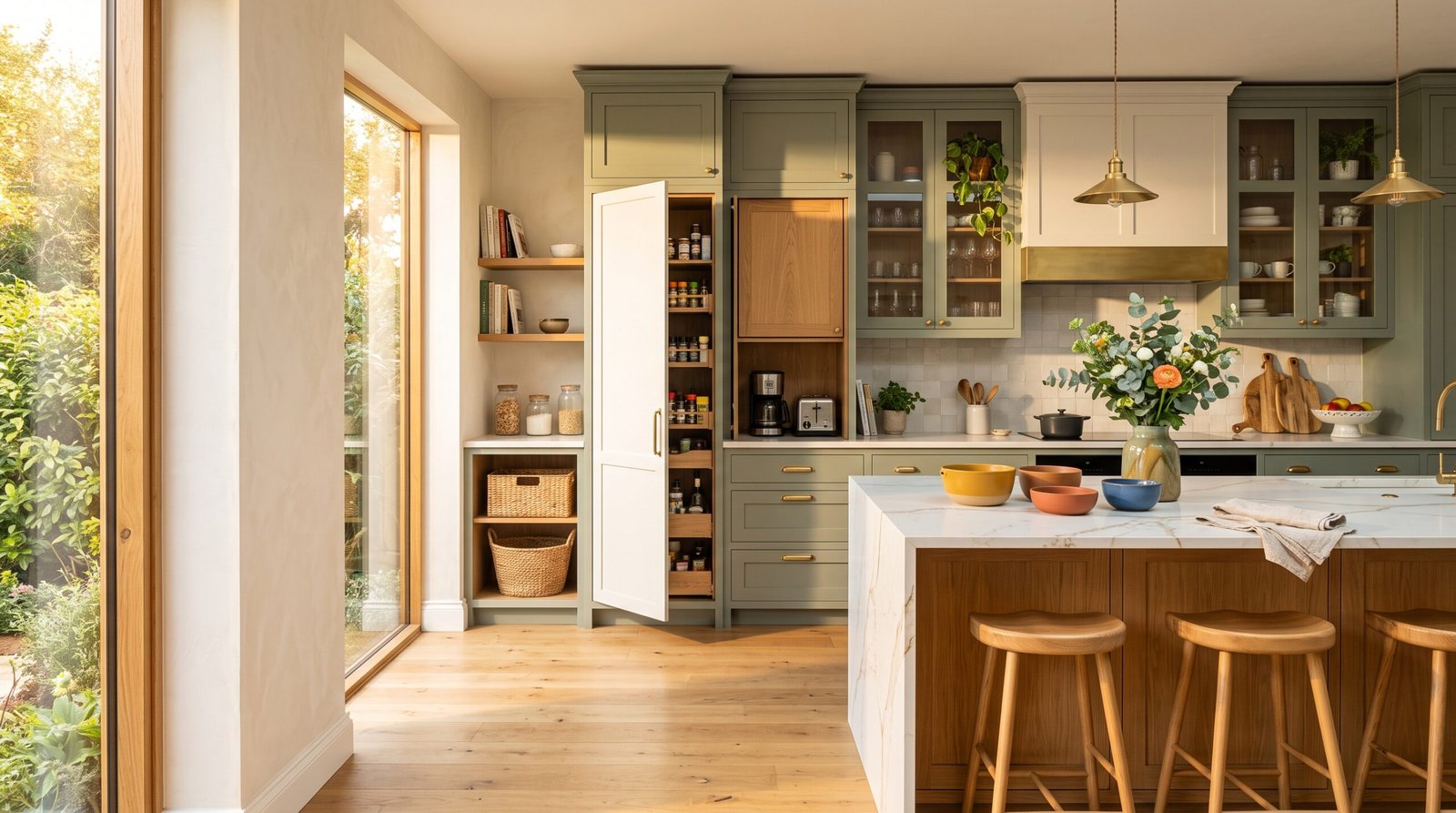
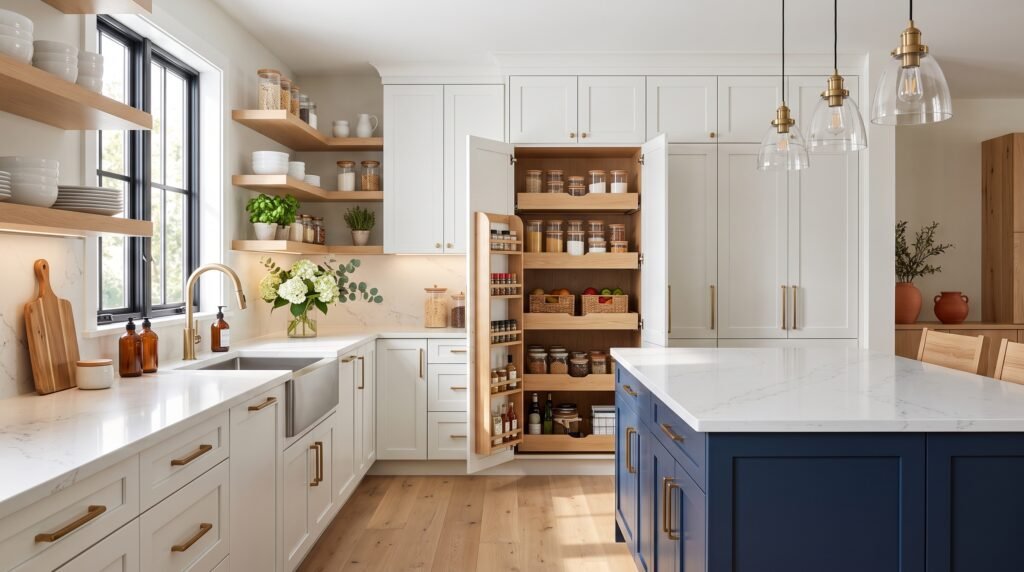
Your kitchen cabinets are the backbone of your entire kitchen — get them wrong, and no amount of fancy countertops or high-end appliances will save you. Most homeowners don’t realize the damage until they’re already living with the consequences: wasted space, warped wood, or a layout that makes cooking feel like a chore. These aren’t small annoyances. They’re expensive, hard-to-fix mistakes that show up every single day.
📋 Table of Contents
- Blunder #1: Ignoring the Work Triangle When Planning Kitchen Cabinets
- Blunder #2: Choosing Kitchen Cabinets Based on Looks Alone
- Blunder #3: Underestimating Storage Needs Inside Kitchen Cabinets
- Blunder #4: Getting Cabinet Measurements Wrong
- Blunder #5: Skipping the Ventilation Plan Around Kitchen Cabinets
- Blunder #6: Forgetting Lighting in Kitchen Cabinet Planning
- Blunder #7: Rushing the Finish and Hardware Choices for Kitchen Cabinets
- What All These Kitchen Cabinet Mistakes Have in Common
Blunder #1: Ignoring the Work Triangle When Planning Kitchen Cabinets
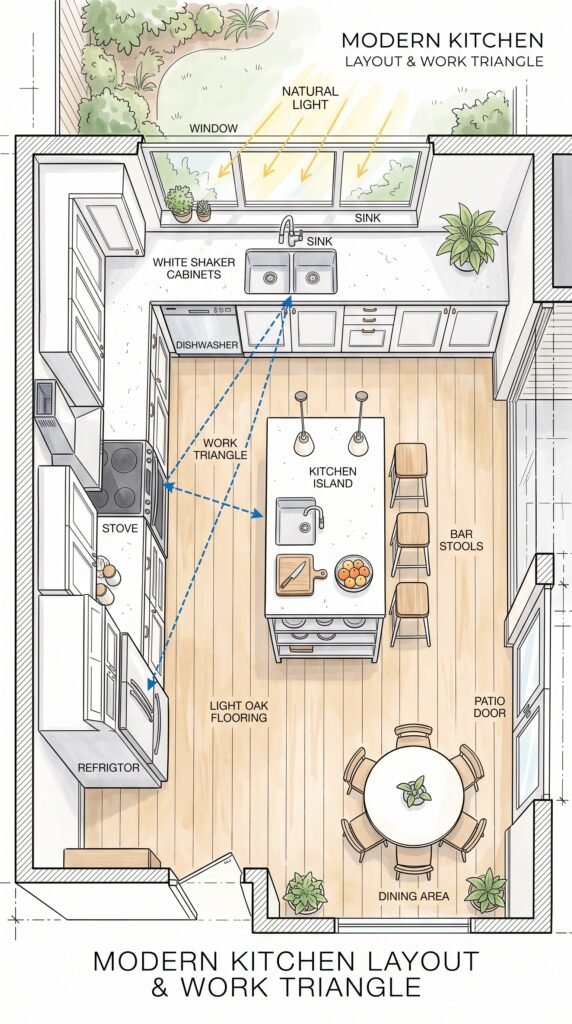
Here’s the thing — most people pick their cabinets before they’ve ever thought about how they’ll actually move around the kitchen. And that’s where things go sideways fast.
The work triangle concept connects your sink, stove, and refrigerator in an imaginary triangle. The total distance between all three should sit between 13 and 26 feet, according to the National Kitchen and Bath Association. Go too tight and you’re bumping into yourself. Go too spread out and you’re walking a marathon just to make breakfast.
Picture this: you’re mid-recipe, hands covered in flour, and the baking sheet you need is in a cabinet clear across the kitchen because that’s where the space happened to be. Now you’re tracking flour across the floor. Every time. That’s a layout problem, not a storage problem.
Actionable steps:
- Sketch your kitchen dimensions before ordering anything
- Mark where your three main appliances will live
- Plan cabinet placement around movement flow, not just wall space
- If you’re hiring a designer, ask specifically whether they’ve optimized for the work triangle
The cabinet plan should serve the cook. Not the other way around.
Kitchen Organization Ideas: Smart Ways to Create a Clutter-Free Space
Blunder #2: Choosing Kitchen Cabinets Based on Looks Alone
This one stings because it’s so understandable. You walk into a showroom, see the gorgeous deep navy cabinets with the brass hardware, and your brain goes: yes, those. Done.
But looks are only about 20% of the equation.
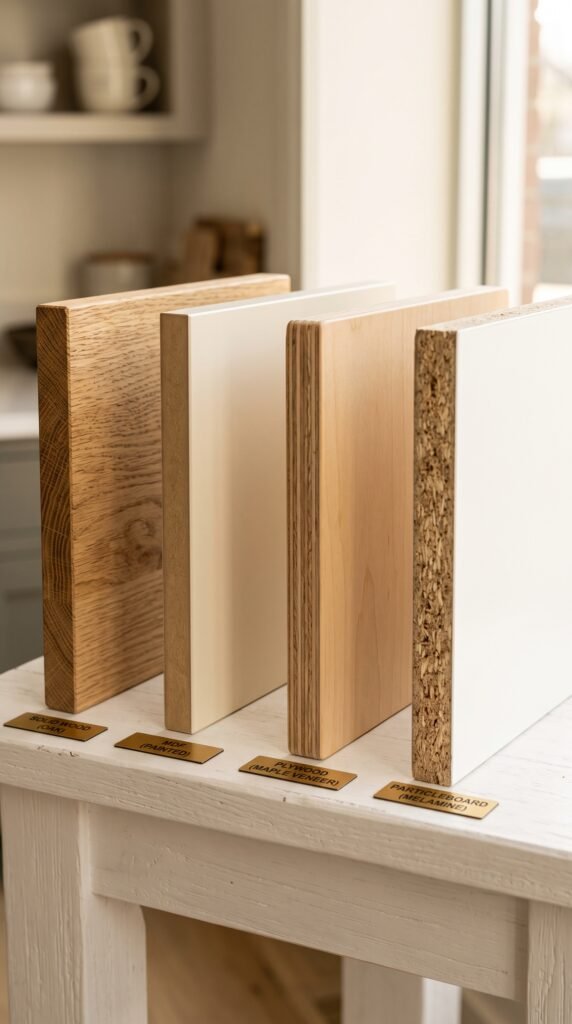
Material matters enormously, especially in a kitchen where humidity swings, steam rises, and spills happen constantly. Solid wood is durable and can be refinished, but it expands and contracts with moisture changes. Plywood boxes hold up better to humidity than particleboard. MDF gives you a smooth, paint-ready surface but can swell if water gets in. Thermofoil wraps peel with enough heat exposure near stoves.
The Cabinet Makers Association recommends asking specifically about box construction — not just door style — because the box is what determines longevity. Most homeowners never think to ask this.
And honestly, that navy cabinet you fell in love with? It might look completely different under your kitchen’s specific lighting. Always pull a physical sample and live with it for a few days.
Actionable steps:
- Ask what the cabinet box is made from, not just the doors
- Request samples and evaluate them under both natural and artificial light in your actual kitchen
- Check the hardware quality — cheap hinges wear out fast and drive you crazy
- Look for soft-close mechanisms as a baseline, not an upgrade
Blunder #3: Underestimating Storage Needs Inside Kitchen Cabinets
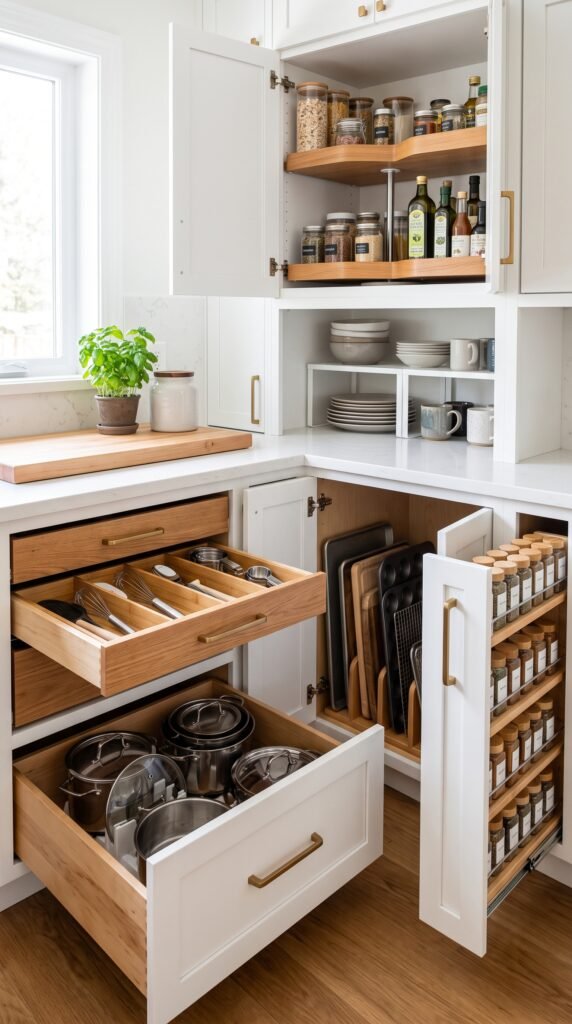
Storage regret is real. And it hits about three weeks after move-in.
Most homeowners count cabinet doors and think: that’s plenty. But the interior organization is where the real capacity lives. A standard cabinet with fixed shelves wastes roughly 30-40% of its vertical space. Add a pull-out shelf or two, and suddenly that same cabinet holds twice as much and you can actually see what’s in it.
Most people run into this exact problem when they realize their corner cabinet is basically a black hole. Things go in. Things don’t come back out. A lazy susan or a pull-out corner organizer fixes this completely, but retrofitting it after installation costs significantly more than specifying it upfront.
Actionable steps:
- Inventory everything you currently store in the kitchen before ordering cabinets
- Identify your pain points: do you struggle with pots, baking sheets, spices, cleaning supplies?
- Request pull-out shelves in base cabinets as a standard inclusion
- Plan at least one dedicated drawer stack for utensils — the days of crammed junk drawers should be over
Farmhouse Kitchen Remodel Ideas for a Warm and Cozy Look
Blunder #4: Getting Cabinet Measurements Wrong

Nothing is more brutal than cabinets that almost fit. Almost is the word that costs homeowners thousands.
A gap of even half an inch in the wrong place means fillers, custom pieces, or worse — complete reinstallation. Walls are rarely perfectly plumb. Floors are rarely perfectly level. And standard cabinet dimensions don’t account for any of this automatically.
The rule most professionals follow: measure three times at different heights, because the wall reading at 18 inches off the floor is frequently different from the reading at 54 inches. That difference matters more than most people expect.
Fair warning: if you’re buying stock cabinets from a big box store, the dimensions shown online are nominal, not always exact. Always confirm actual measurements before finalizing the order.
Actionable steps:
- Measure wall width at multiple heights
- Check floor level with a long level tool — note any dips or rises
- Account for appliance clearances specified in the appliance manuals
- If in doubt, consult a kitchen designer for a professional measurement consultation (many offer this free or low-cost)
Blunder #5: Skipping the Ventilation Plan Around Kitchen Cabinets
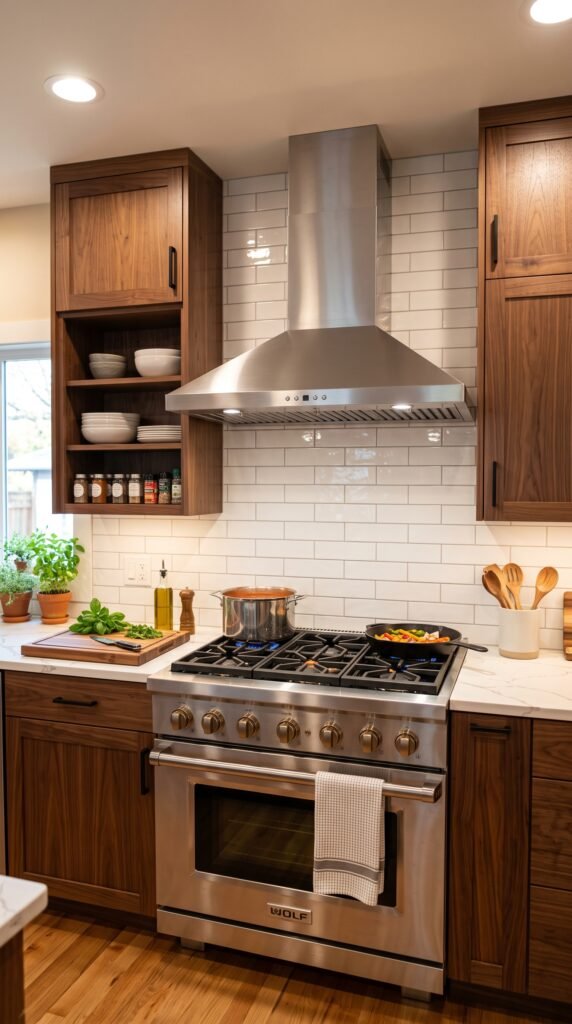
Ventilation is the blunder that doesn’t look like a problem until your cabinets start smelling like last Tuesday’s fish dinner.
The cabinets directly above your range take the most abuse in the entire kitchen. Heat, grease, steam — all of it rises straight into that cabinet space if your range hood isn’t doing its job properly. And if the hood isn’t sized and vented correctly, it doesn’t matter how expensive your cabinets are. They’ll absorb years of cooking residue and start to break down.
According to Energy Star guidelines, range hoods should move at least 100 CFM for every 10,000 BTUs of gas cooktop output. Most homeowners have never heard of CFM. Which explains a lot.
Cabinet placement matters here too. The standard 18-inch clearance between the cooktop and the bottom of upper cabinets exists for a reason. Go less than that and you’re creating a fire hazard, full stop.
Actionable steps:
- Calculate your cooktop’s BTU output before choosing a range hood
- Ensure at least 18 inches of clearance between cooktop surface and cabinet bottom
- Plan ductwork runs before cabinets are installed, not after
- Choose cabinets in the range zone that can be wiped down easily — glass-front or painted finishes fare better than raw wood in high-heat zones
Blunder #6: Forgetting Lighting in Kitchen Cabinet Planning
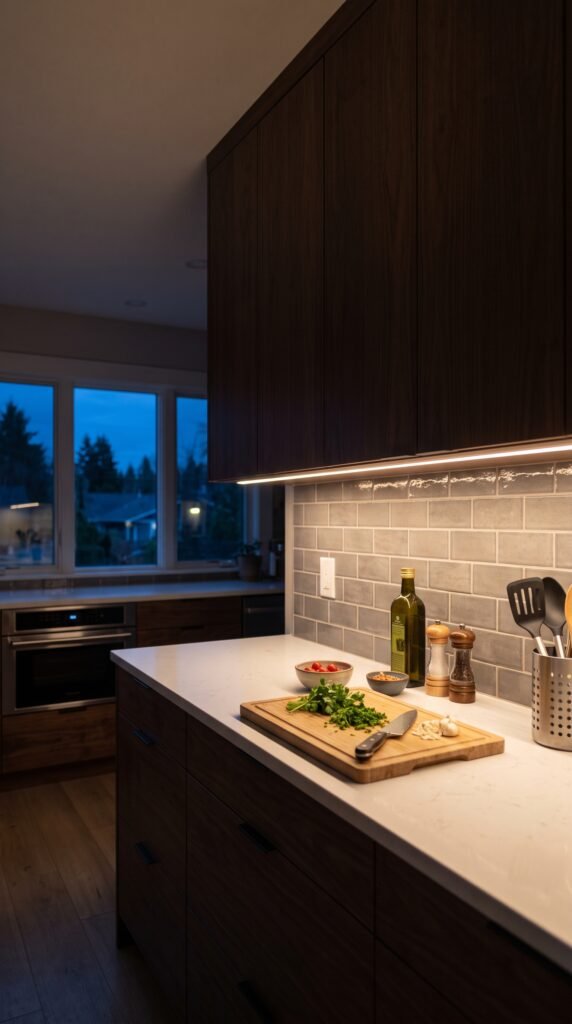
Bad kitchen lighting is one of those invisible problems. You don’t always know it’s the issue — you just know cooking feels harder than it should.
Upper kitchen cabinets create a shadow zone on your countertops. Every time you chop vegetables directly under a cabinet, your own body blocks the overhead light and you’re essentially working in the dark. Under-cabinet lighting solves this completely. But retrofitting it after installation means drilling through finished cabinets, running wires after the fact, and dealing with a messier result.
The time to plan for it is before installation. Not after.
Most people run into this problem in rental properties and then never forget it when they finally get to design their own kitchen. That shadow on the cutting board becomes something you swear you’ll never deal with again.
Actionable steps:
- Specify outlet placement inside or beneath upper cabinets during the planning phase
- Choose between hardwired LED strips (cleaner look, more expensive) or plug-in LED strips (easier, slightly more visible cords)
- Warm white (2700–3000K) light works best for kitchen task lighting without distorting food colors
- If budget allows, add interior cabinet lighting as well — especially useful in pantry-style or deep upper cabinets
Modern Kitchen Remodel Ideas for a Sleek & Minimal Look
Blunder #7: Rushing the Finish and Hardware Choices for Kitchen Cabinets
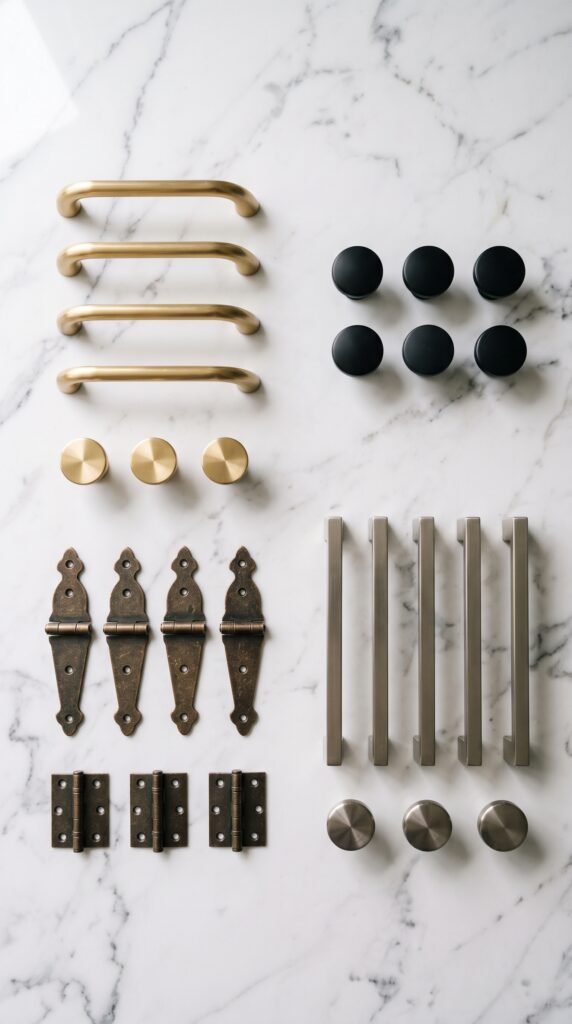
This is the last blunder — and it’s the one that trips up people who’ve done everything else right.
Hardware and finish feel like the fun part. And they are. But rushing them is how you end up with pulls that wobble after six months or a painted finish that chips the first time you nick it with a pan. The finish quality isn’t always obvious in a showroom photo. Which is why samples exist.
Painted finishes are beautiful and on-trend, but they show wear faster than stained wood, especially on corners and edges. If you’ve got kids or a busy household, factor that in. Thermofoil finishes hold up better to wiping down but can peel near heat. A stained wood finish ages gracefully and hides minor dings far better than any solid painted color.
Hardware finish durability varies wildly by brand. Unlacquered brass develops a patina (which some love, some hate). Matte black shows fingerprints on oily hands. Brushed nickel is forgiving and timeless. Satin brass splits the difference.
The American Institute of Architects suggests treating finish selection as a long-term durability decision first and an aesthetic decision second. That’s the mindset that saves you money.
Actionable steps:
- Order physical hardware samples before committing to a finish
- Test the finish under your kitchen’s actual lighting, not showroom lighting
- For painted cabinets, ask specifically about the topcoat hardness rating
- Choose a hardware style that won’t look dated in five years — simple, clean lines age best
- Check screw hole spacing (called “boring”) before buying pulls to confirm they’ll fit existing or planned door drilling
What’s the point of a kitchen renovation you’ll want to redo in three years? Get these decisions right the first time and live happily with the result for decades.
What All These Kitchen Cabinet Mistakes Have in Common
Every single one of these blunders comes down to the same root cause: making decisions in isolation instead of thinking about the kitchen as a system. The layout affects the storage. The storage affects the lighting. The ventilation affects the finish longevity. Everything connects.
The homeowners who get their kitchen cabinets right aren’t necessarily the ones with the biggest budgets. They’re the ones who slow down, ask the uncomfortable questions, and make decisions in the right order — plan first, shop second.
Take these seven blunders seriously before you spend a dollar on cabinets, and you’ll be years ahead of most people who’ve already made the mistakes and are living with them right now. Your future self, cooking in a kitchen that actually works, will thank you.