
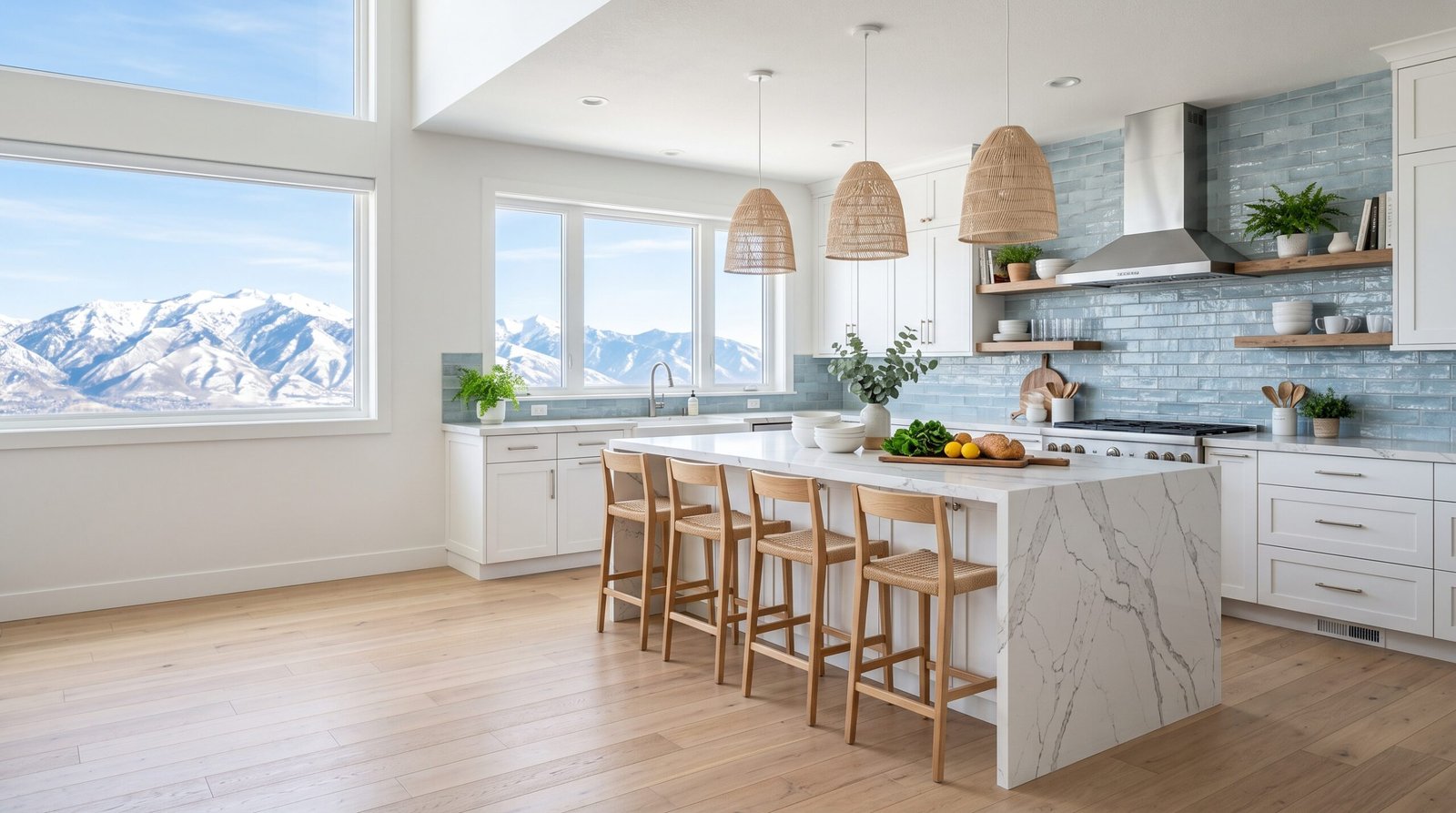
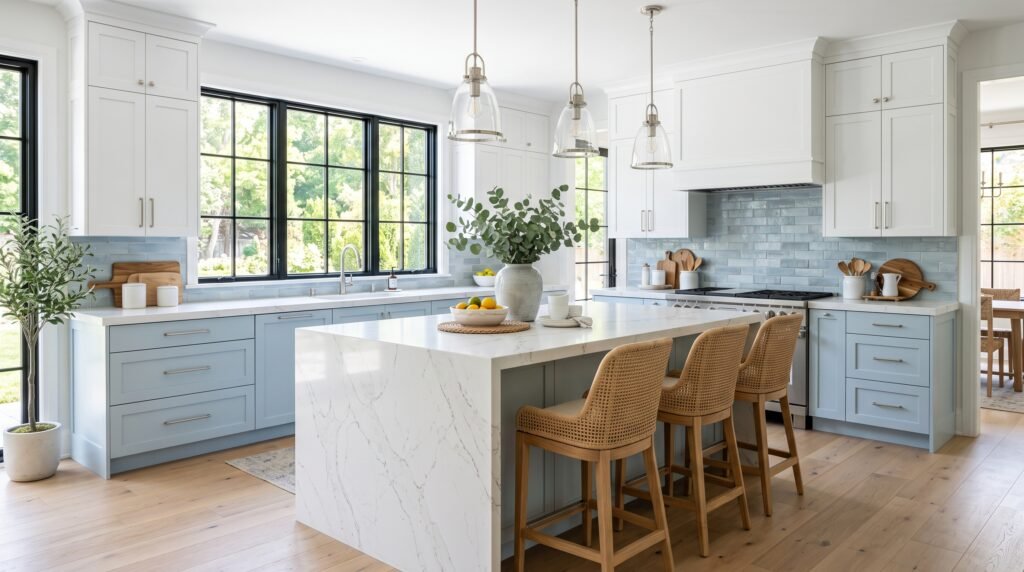
Glacier inspired kitchens are quietly becoming the most talked-about design trend in residential renovation, and if your kitchen still feels stuck in a past decade, this aesthetic shift might be exactly what you have been waiting for.
There is something undeniably magnetic about the cool, expansive stillness of a glacier translated into a living space. The palette draws from nature at its most dramatic — icy whites, muted blues, frosted grays, translucent greens — and the result is a kitchen that feels both timeless and immediately modern. Whether your space is compact or sprawling, this design language has a way of making everything feel cleaner, calmer, and considerably more elevated.
Before diving into how to achieve this look, it is worth clearing up a few persistent myths that stop homeowners from attempting it in the first place.
Myth #1: Glacier Inspired Kitchens Are Only for Huge, Expensive Spaces
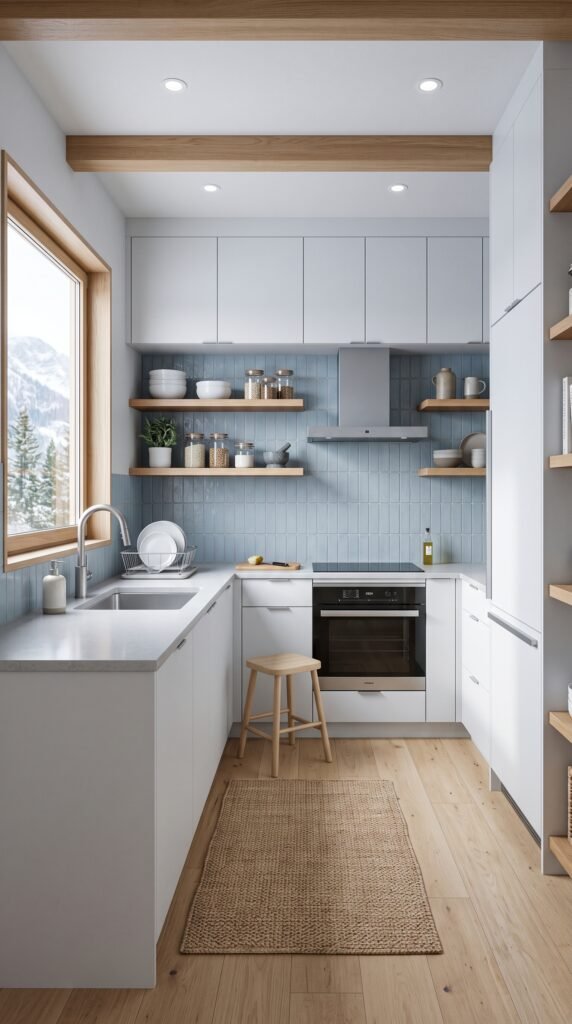
This is probably the single most common misconception that stops people from even considering the style. Walk into any design showroom and the glacier aesthetic tends to be presented in sprawling open-plan layouts with twelve-foot islands and professional-grade appliances. That framing does the trend a disservice.
The truth is that the glacial palette — whites, silvers, pale blues, and frosted neutrals — actually performs better in smaller kitchens than darker, warmer tones do. Light reflects off those cool surfaces and bounces around the room, creating a perception of depth and airiness that no amount of clever cabinetry tricks can fully replicate. A galley kitchen dressed in glacier tones with the right lighting will feel twice its actual size.
The key principle at work here is visual expansion through tonal cohesion. When your walls, cabinetry, and countertop surfaces all share a similar cool, light value range, the eye struggles to identify where one surface ends and another begins. That ambiguity reads as spaciousness, and it works regardless of square footage.
Budget is a separate concern, but again the myth overstates the limitation. You do not need imported Italian marble or custom cabinetry to pull off glacier inspired kitchens. Laminate in a matte white finish, peel-and-stick subway tile in a muted blue-gray, and a butcher block countertop bleached or sealed in a pale tone can collectively deliver the aesthetic for a fraction of the premium material cost.
how to renovate a small kitchen on a budget
Myth #2: The Look Is Cold and Unwelcoming
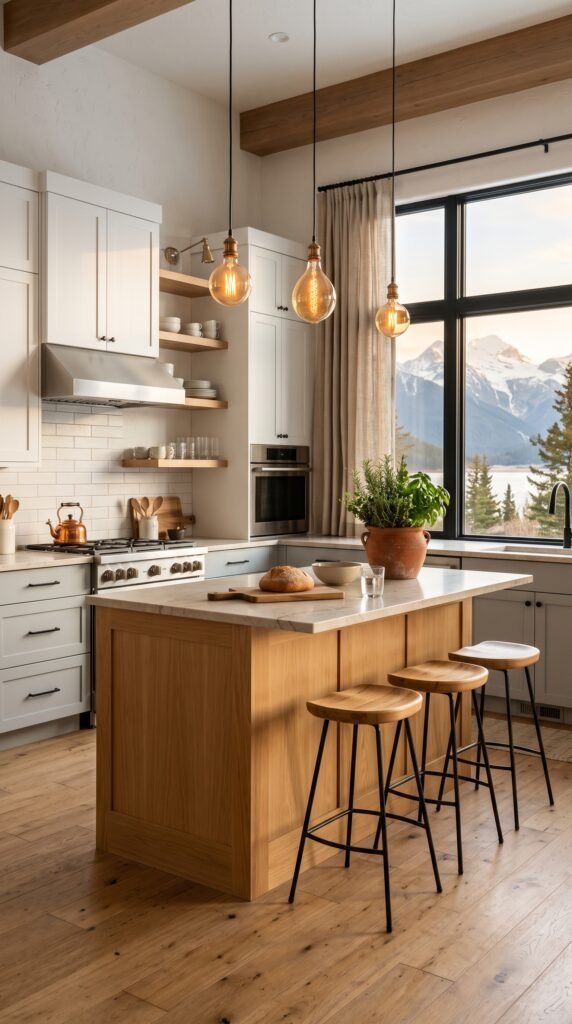
The word “glacier” conjures cold, and cold kitchens do not appeal to most homeowners who want their space to feel welcoming and lived-in. This objection is legitimate on the surface, but it misunderstands how the best glacier inspired kitchens actually work.
Professional designers who work within this aesthetic consistently rely on the concept of warm-cool contrast. The cool, icy foundation of the palette creates calm and clarity. Then carefully chosen warm elements — natural wood, aged brass hardware, linen textiles, terracotta accents, soft ambient lighting — interrupt that coolness just enough to feel human and inviting.
Think of how an actual glacier looks at golden hour. The ice itself is blue-white, yes, but the light hitting it turns edges amber and peach, and the surrounding landscape softens the drama. That same interplay is what makes a glacier kitchen feel welcoming rather than clinical.
A concrete example: white flat-front cabinets paired with a frosted glass tile backsplash would read as cold and corporate without intervention. Add a butcher block section to the island, swap the hardware for unlacquered brass, and hang a pendant with a warm Edison bulb, and the room transforms entirely. The ice is still there, doing its visual work. But the warmth balances it, and the overall effect is sophisticated without being sterile.
Textiles matter enormously here. A raw linen window treatment, a vintage-style woven runner on the floor, or even a hand-thrown ceramic fruit bowl on the counter will absorb some of that cool frequency and give the eye somewhere softer to rest.
Real Facts: What Makes Glacier Inspired Kitchens Work Scientifically
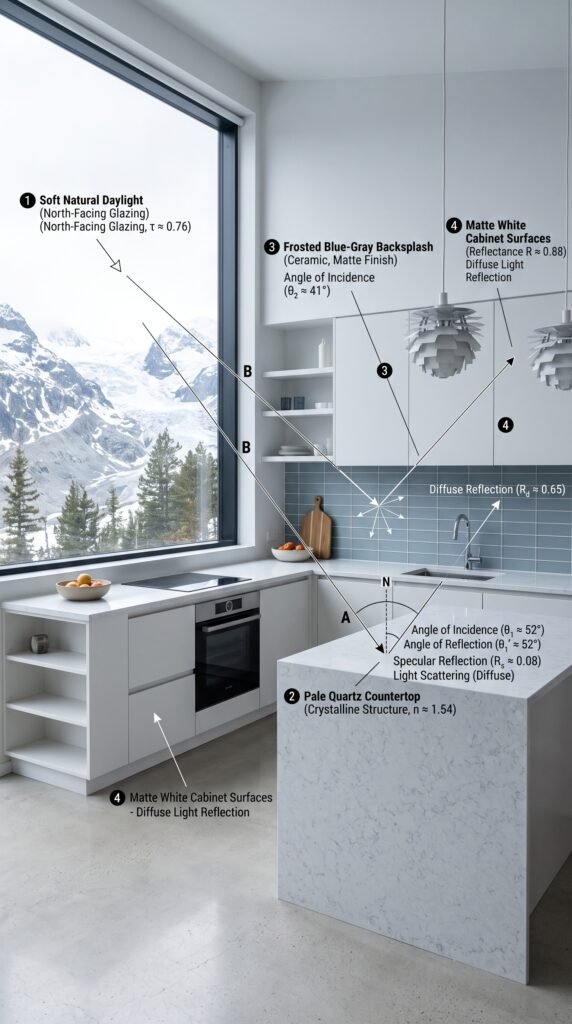
Beyond the aesthetic appeal, there is real science behind why this design language is so effective, and understanding it helps you make smarter decisions when planning your renovation.
Color psychology research consistently shows that cool, desaturated hues — particularly in the blue-white-gray spectrum — reduce perceived ambient temperature and lower cortisol responses in occupants. A 2015 study published in the journal Color Research & Application found that rooms decorated in cool neutral palettes were rated as more calming and more spacious by participants regardless of actual room dimensions. For a kitchen, a space historically associated with heat, noise, and activity, that psychological counterbalance is genuinely useful.
Light reflectance value, commonly abbreviated as LRV, is a measurable property of any paint or finish. It runs from 0 (pure black, absorbs everything) to 100 (pure white, reflects everything). The most effective glacier inspired kitchens tend to use primary surfaces in the LRV range of 70 to 90. This is the sweet spot where the room feels bright without feeling harsh or clinical, and where artificial lighting works with the surfaces rather than fighting them.
Quartz countertops in the glacier family — think Caesarstone’s Frosty Carrina or Silestone’s White Arabesque — have become a reference point for the style not just because of their appearance but because of their practical performance. Quartz is non-porous, highly resistant to staining, and maintains its cool tonal appearance without the sealing requirements of natural marble. For homeowners who want the look without the maintenance anxiety, engineered quartz in pale, veined patterns is the professional designer’s go-to recommendation.
According to Houzz’s 2024 Kitchen Trends Report, white and gray remain the dominant cabinetry colors chosen by homeowners undergoing major kitchen renovations, with over 46% of respondents selecting these tones. That is not coincidence — it reflects both the enduring appeal of the neutral-cool palette and the proven resale value these choices deliver.
best quartz countertop brands for white kitchens
Expert Tips: How to Execute Glacier Inspired Kitchens Without Making Common Mistakes
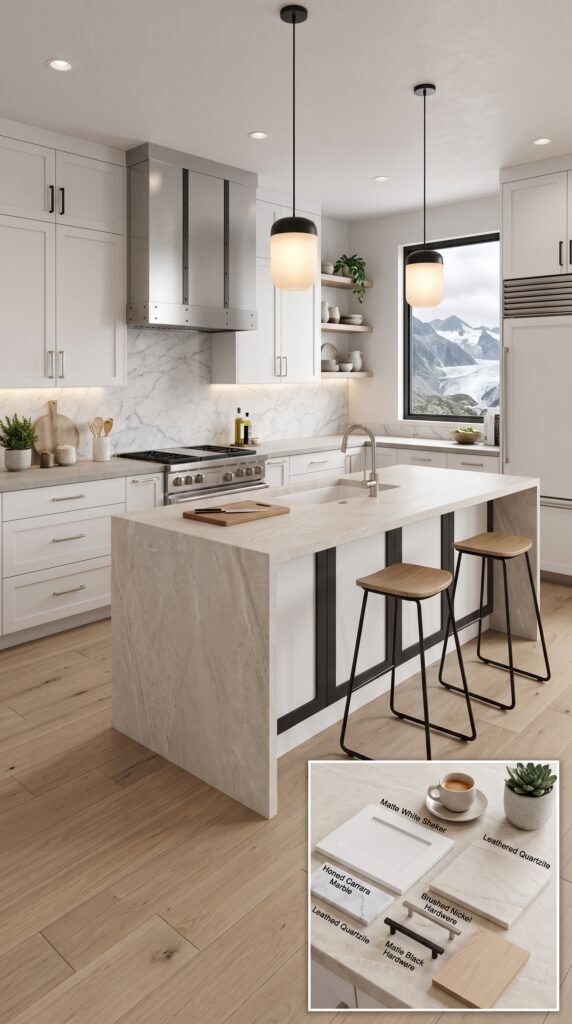
Knowing that glacier inspired kitchens work is one thing. Knowing how to execute them without landing in territory that feels cold, flat, or unfinished requires a more detailed understanding of what separates the successful versions from the ones that fall short.
Tip 1: Commit to Tonal Variation Within the Cool Palette
One of the most common mistakes is treating “glacier” as a single color: white. The result is a kitchen that reads as simply white, not as a considered design. Real glacial landscapes are extraordinarily varied — ice blue shadows, translucent turquoise depths, bright white peaks, gray-green slush at the edges. Your kitchen should reflect that same internal variation.
Use your coolest, brightest tone on upper cabinets and walls. Step down to a slightly deeper, slightly grayer tone on lower cabinets. Allow the countertop to carry a faint vein of pale gray or barely-there blue. Choose a backsplash tile that introduces a third tonal shift — perhaps a matte frost-blue subway tile with a slightly irregular handmade finish. Each element shares the same cool family but occupies a distinct position within it, giving the room depth and visual intelligence.
Tip 2: Understand the Role of Sheen and Finish
Matte and satin finishes dominate glacier inspired kitchens for good reason. High-gloss white reads as clinical and mass-produced — think institutional rather than aspirational. A matte or low-sheen finish on cabinetry absorbs light slightly, which paradoxically makes the color feel richer and more intentional.
For countertops, honed rather than polished marble or quartz gives a softer, more diffused surface that photographs beautifully and wears well in a kitchen environment. The National Kitchen and Bath Association consistently reports that matte and honed surface finishes are among the fastest-growing specifications in premium kitchen renovations, a trend that aligns directly with the glacier aesthetic’s preference for quiet luxury over loud shine.
Tip 3: Layer Your Lighting Thoughtfully
No design element will undermine a glacier kitchen faster than wrong lighting. Cool fluorescent or LED lighting in the 5000K-6500K range will push your beautiful ice-white surfaces into harsh, clinical territory. The goal is to counterbalance the inherent coolness of the palette.
Aim for a layered lighting approach: ambient lighting at 2700K-3000K (warm white) for your primary overhead source, under-cabinet LED strips in the same warm range to illuminate the countertop workspace, and a statement pendant over the island or dining area that introduces warmth through both color temperature and material. Aged brass, amber glass, or natural rattan pendant shades are all consistent with the warm-cool contrast principle discussed earlier.
Tip 4: Use Organic Materials as Anchors
Natural materials are the counterweight that makes the cool palette livable. In glacier inspired kitchens, the most successful organic anchors include solid wood open shelving in a light natural finish, a rattan or woven pendant, linen curtains, a ceramic sink in white or pale clay, and stone-look flooring with visible natural variation. These materials carry warmth and irregularity that manufactured surfaces cannot replicate, and they prevent the kitchen from feeling like a rendered concept rather than a real home.
Tip 5: Pay Attention to the Floor
The floor is the element most often treated as an afterthought in kitchen renovations, and in a glacier inspired kitchen, that is a costly mistake. Dark floors will create a jarring contrast that disrupts the tonal cohesion of the space. Very light floors can feel stark if they share the exact same tone as the cabinetry.
The most effective floor choices for this aesthetic include large-format porcelain tile in a pale warm gray with subtle natural stone variation, wide-plank engineered wood in a light matte finish, or polished concrete in a pale gray tone. Each option shares the cool, clean quality of the palette while introducing enough tonal or textural distinction to ground the room.
The Renovation Roadmap: Where to Start With Glacier Inspired Kitchens
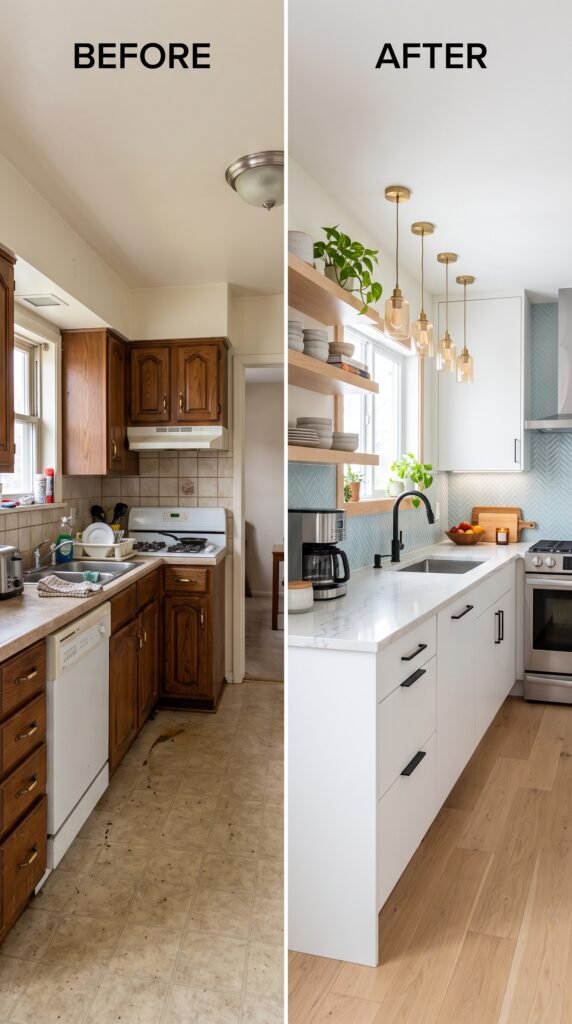
If the full renovation feels overwhelming, prioritize the changes that deliver the most visual impact per dollar spent. Glacier inspired kitchens do not require a full gut renovation to make a significant impression, particularly when you approach the project strategically.
Start with cabinet paint or finish. If your existing cabinet boxes are in good structural condition, painting them in a high-quality matte or satin finish in the right cool-white or pale gray tone will transform the room more dramatically than almost any other single change. This is consistently cited as the highest-return kitchen update in Remodeling Magazine’s annual Cost vs. Value Report.
After cabinetry, focus on the countertop and backsplash together, since these two surfaces occupy the most visually prominent horizontal and vertical real estate in the kitchen. Even an inexpensive peel-and-stick tile in a matte frost gray, layered under a pale laminate countertop in a white marble print, will read as coherent and intentional if the tones are correctly matched.
Hardware is the punctuation of a kitchen. Switching out dated bronze or chrome pulls and knobs for simple bar pulls in brushed nickel, matte black, or satin brass takes an afternoon and costs very little, but it updates the entire room’s personality immediately.
Finally, address lighting. Swapping a single overhead fixture for a warm-toned statement pendant over the island, and adding under-cabinet LED strips, will change how the entire space is perceived at every hour of the day.
Why This Trend Is Built to Last
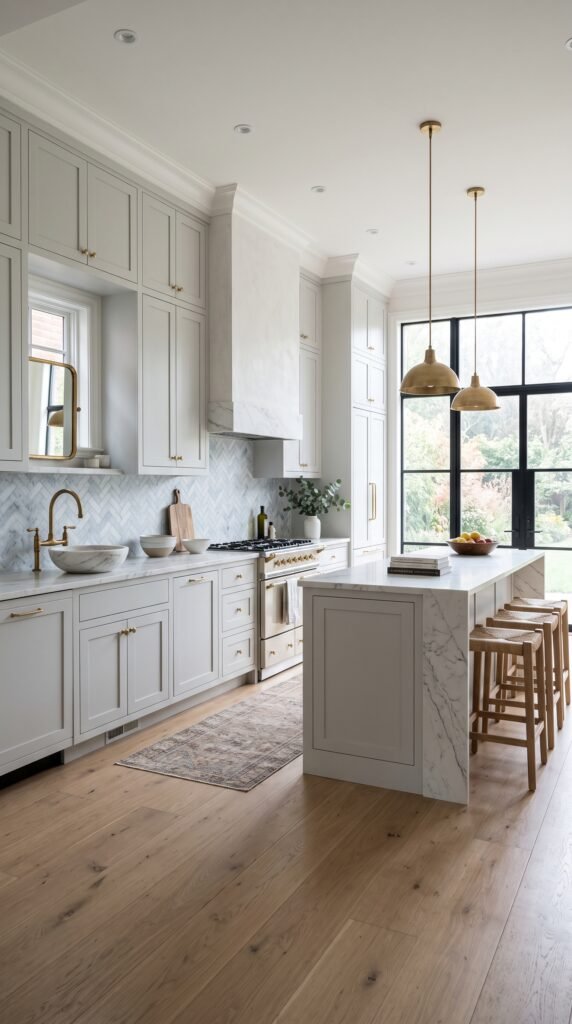
Design trends tend to fall into two categories: those driven by novelty and those driven by a deeper human response to environment and material. Glacier inspired kitchens sit firmly in the second category.
The appeal of cool, light, expansive space is not a passing preference. It is tied to how humans have always responded to natural environments that signal cleanliness, abundance, and calm. Glaciers in the cultural imagination represent purity, scale, and a kind of awe-inducing stillness. When that language is translated into a domestic space, those associations follow.
The most compelling evidence for the trend’s durability is its flexibility. Unlike highly specific microtrends — shiplap, all-black kitchens, maximalist pattern mixing — the glacier aesthetic can absorb stylistic shifts without losing its identity. It reads as Scandinavian minimalism to one homeowner and as coastal luxury to another. It accommodates traditional shaker profiles and ultra-modern flat fronts. It works with Victorian architecture and contemporary new builds. That kind of adaptability is what separates a lasting design principle from a trend that dates rapidly.
If your kitchen feels stuck, uninspired, or simply tired, the cold, clear clarity of glacier inspired kitchens might be the most refreshing renovation decision you can make. The ice doesn’t lie — and in this case, it might be exactly what your space has been waiting for.