

There’s a specific kind of frustration that comes from finishing a room and still not liking it. The paint color was right. The furniture was chosen carefully, maybe even researched for weeks. And somehow the room still feels a little wrong — not bad, just off, in a way that’s hard to put into words.
The instinct is almost always to blame the last thing you bought. Swap the rug. Try a different lamp. Repaint an accent wall. Most of the time, none of that is actually the problem.
📋 Table of Contents

The Usual Suspects Aren’t Usually Guilty
Color and furniture get blamed first because they’re the most visible decisions in a room. But a room’s “wrongness” is more often a spatial problem than a taste problem — something about how the room is structured that no amount of swapping throw pillows will fix.
Two culprits show up far more often than people expect:
Everything in the Room Is the Same Height
Walk into a room and mentally trace a line across the top of every object — the couch back, the coffee table, the console, the side chairs. In a room that feels off, that line is often almost flat. Nothing breaks it. The eye has no reason to look up, so the whole room reads as low and a little squat, even if the ceiling itself is perfectly normal height.
There’s a Gap the Eye Keeps Finding
Every room has a “resting spot” for the eye — the place it lands when nothing else is competing for attention. In a room that feels unfinished, that resting spot is usually an empty corner or a blank stretch of wall, and the eye keeps drifting back to it, unsatisfied, without you consciously noticing why.
Why This Gets Missed So Often
Height is easy to overlook because nothing about it shows up on a shopping list. When you’re picking out a couch or a rug, you’re comparing colors, fabrics, and price tags — all things you can hold up next to each other and judge directly. Height variation isn’t a product you buy off a shelf; it’s a relationship between the things already in the room, which makes it almost invisible until you’re specifically looking for it.
It also doesn’t photograph the way other decorating problems do. A mismatched color is obvious in a single photo. A flat skyline only becomes obvious when you’re standing in the actual room, turning your head, noticing that nothing above waist height is catching your eye. That’s part of why so many “before and after” decorating posts focus on rugs and paint — those changes show up instantly in a photo, while a height fix is something you feel more than you see in a still image.
A Two-Minute Way to Check
Before buying anything new, it’s worth doing a quick, unscientific test: stand in the doorway of the room and count how many objects reach above chest height. In a lot of “something feels off” rooms, the answer is zero or one. Everything else tops out around the same level — coffee table, couch arm, side table — and the room ends up feeling flat no matter how nice each individual piece is.
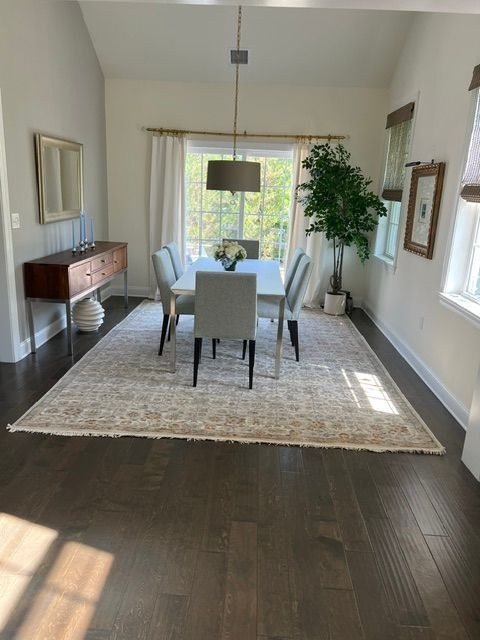
This dining room works partly because of the table setting, but the height variation matters just as much — a tall tree in the corner breaks up a room that would otherwise top out at chair height.
The Fix Costs Less Than You’d Think
Once height turns out to be the actual problem, the fix is usually simpler — and cheaper — than the furniture swap most people try first. A single tall element, placed in the room’s dead corner, does two things at once: it breaks the flat line across the top of the room, and it gives the eye somewhere satisfying to land instead of an empty gap.
A tall plant is the easiest way to do this without buying furniture. It doesn’t compete with the room’s existing color scheme, it doesn’t need to match anything, and it solves the height problem and the empty-corner problem in a single move.
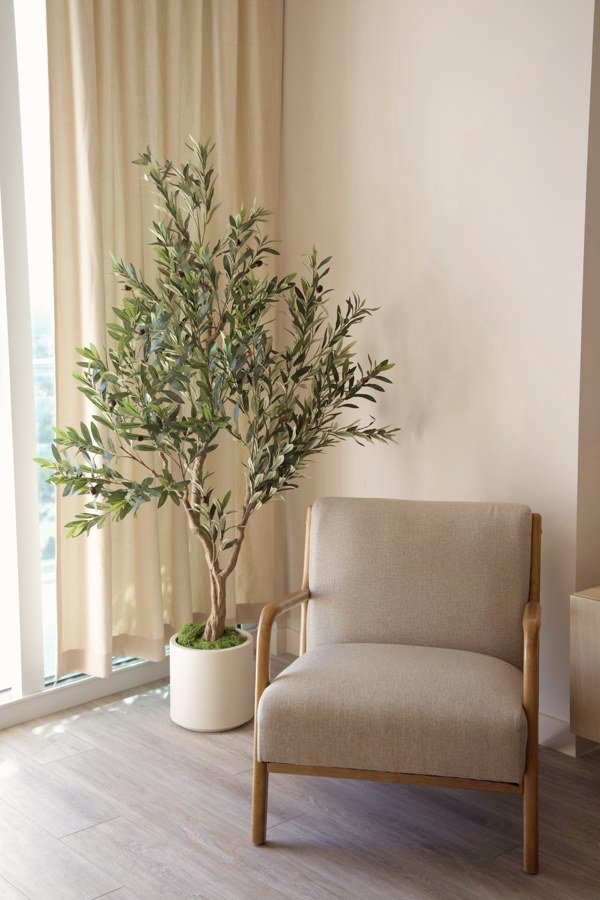
A simple example: one chair, one tree, one corner that used to be empty. Nothing else in this room changed — the tree alone is doing the work of breaking up the flat line and filling the gap.
Testing This Without Committing to Anything
Before spending real money, it’s worth testing the theory cheaply. A tall lamp, a folded ladder, even a broom propped in the corner for five minutes can tell you whether height is actually the missing piece — if the room suddenly reads as more finished with something tall standing in that corner, that’s the signal. It sounds silly to stand in a doorway squinting at a broom, but it costs nothing and takes less time than a single trip to a store, which makes it worth doing before committing to anything.
Once the test confirms it, the actual plant doesn’t need to be expensive or perfect. A real plant works if you’re willing to keep it alive in that spot; a well-made faux one works if the corner doesn’t get enough light for anything real to survive, which is often exactly why the corner was empty in the first place. A few of the newer faux olive and fig trees — the ones from lines like
Rootless, for instance — have gotten good enough that this stops being a compromise and starts just being the easiest option.
What to Do With This
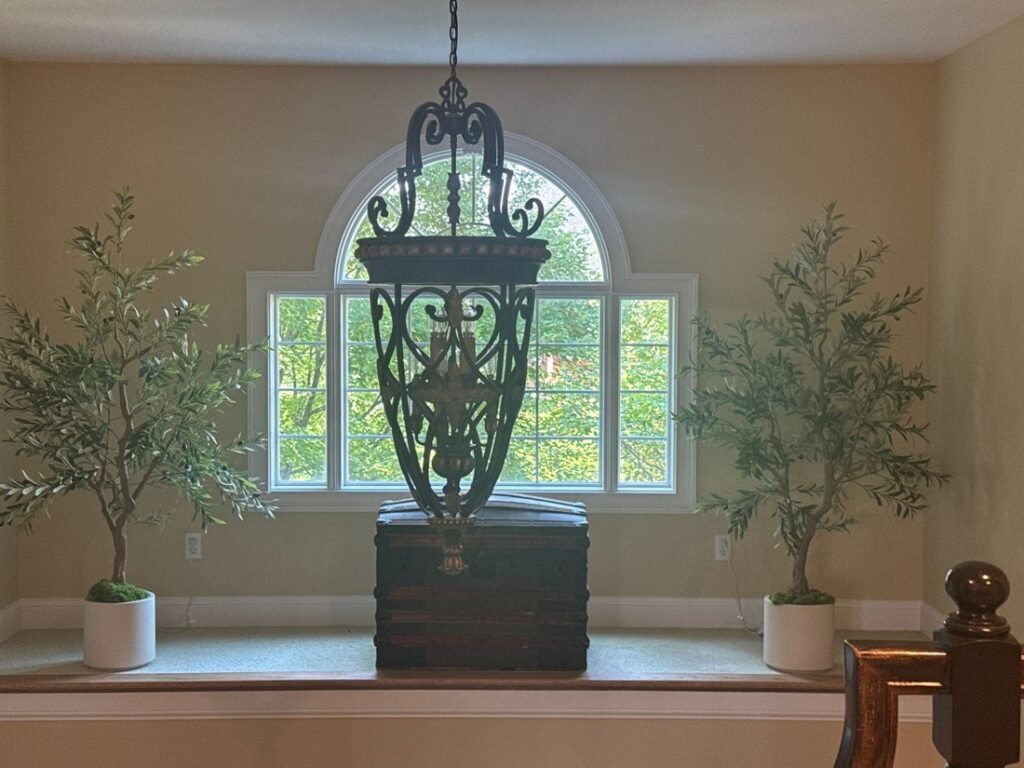
A more dramatic version of the same fix — two trees instead of one, used to break up a tall, formal window wall that would otherwise read as flat. The principle scales: whether it’s one corner or a whole wall, height is the variable doing most of the work. If you’re shopping for something similar, a slender pair works better than one wide tree in a spot like this.
If a room has been quietly bothering you and you can’t pin down why, skip the rug and the paint swatches for a minute and just look at the skyline of the room — the line traced across the top of everything in it. If that line is flat, you’ve probably found the actual problem, and it’s a much cheaper fix than a new sofa.
Sometimes the room isn’t wrong. It’s just missing something tall — and that’s usually a much easier problem to live with than the vague, hard-to-name “off”rying that sent you looking for a fix in the first place.