
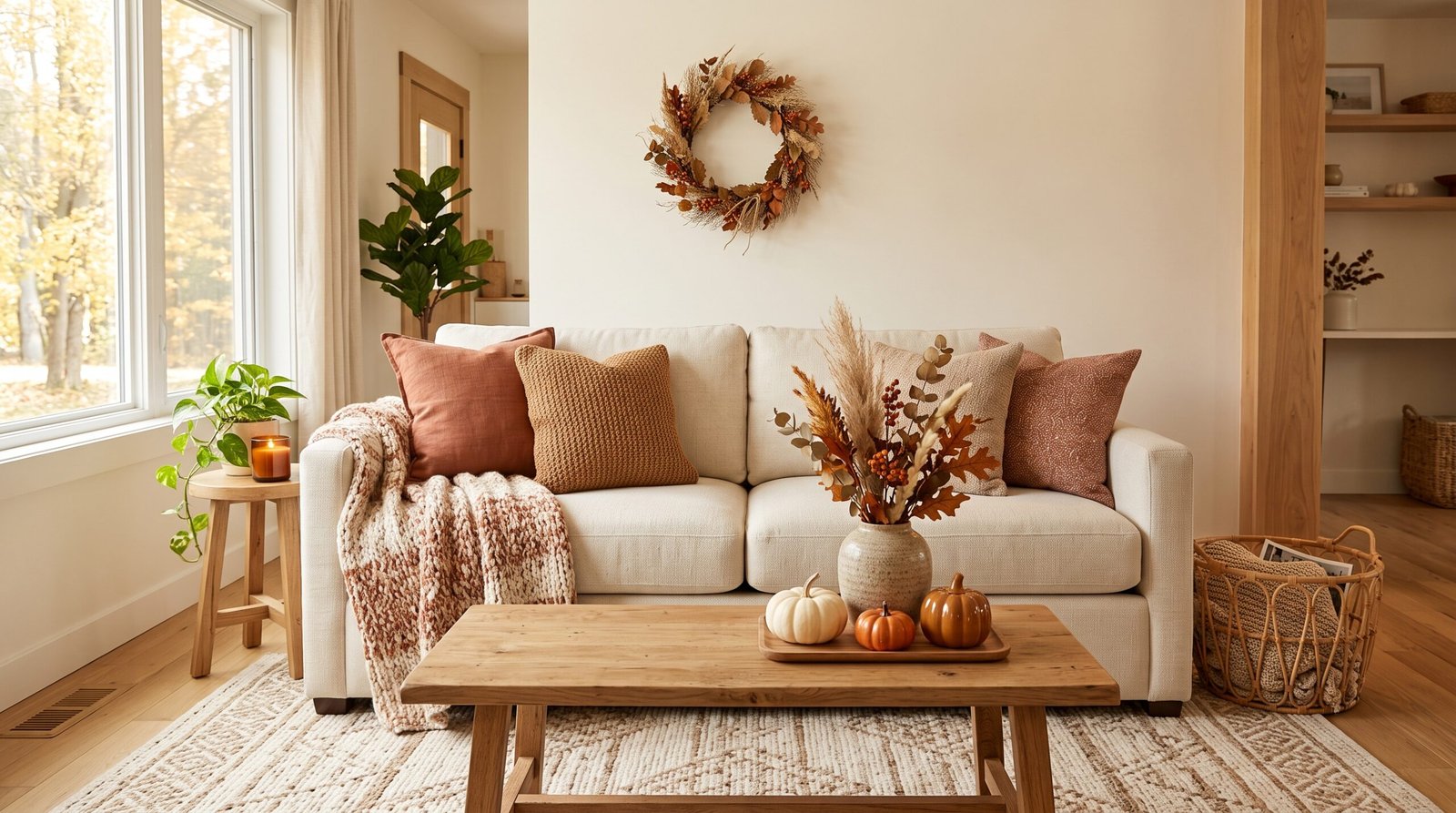
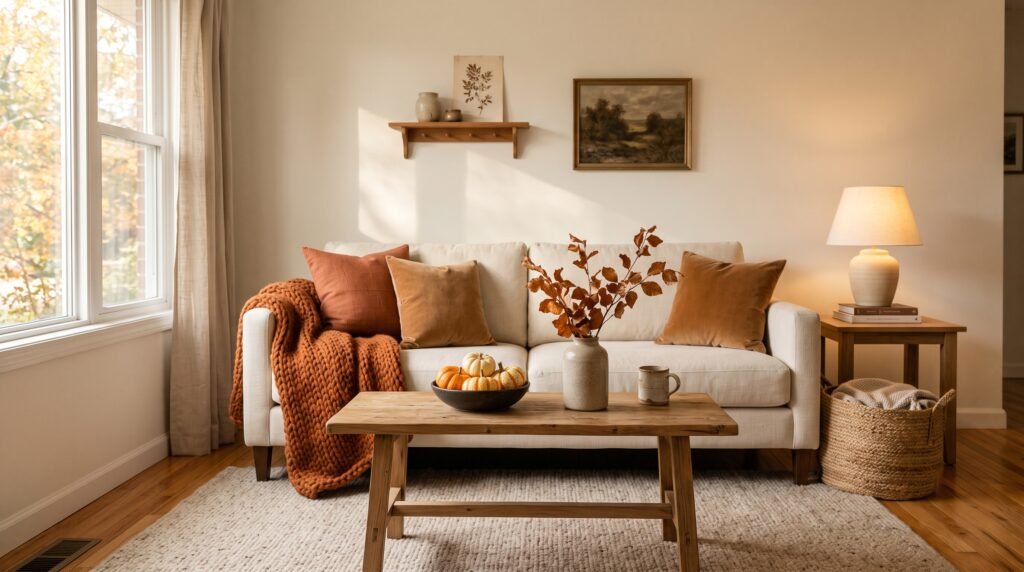
Getting fall living room decor right doesn’t require a design degree, a Pinterest obsession, or a budget that makes your bank account cry. Most people assume autumn decorating is this complicated, layered process reserved for people who own matching linen everything and know what “vignette” means. It’s not. And the proof is everywhere once you know what to actually look for.
This guide is built for real people. People who want their living room to feel warm and seasonal without accidentally making it look like a craft store exploded in there. You’ll walk away with practical moves, myth-busting facts, and a clear sense of what actually works.
📋 Table of Contents
- The Biggest Myths About Fall Living Room Decor (That Are Holding You Back)
- The Real Facts Behind Seasonal Decorating That Experts Know
- Expert Tips for Fall Living Room Decor That Actually Work
- Start With Your Sofa, Not Your Coffee Table
- Use Natural Elements as a Foundation
- Work With What You Already Own
- The “One Swap” Method for Beginners
- How to Build a Fall Color Scheme Without Starting from Scratch
- Anchor Colors vs. Accent Colors
- Don’t Ignore Your Walls
- Common Beginner Mistakes to Avoid in Fall Living Room Decor
- The Truth About Fall Living Room Decor Nobody Tells Beginners
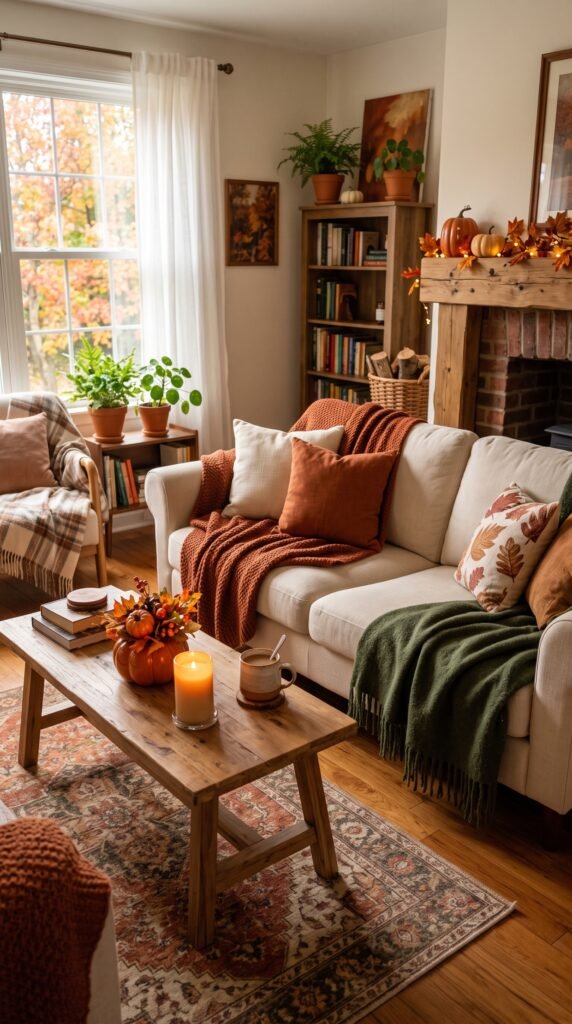
The Biggest Myths About Fall Living Room Decor (That Are Holding You Back)
Here’s something nobody tells beginners: most of what you believe about fall decorating is wrong. Not a little off. Actually, fundamentally backwards.
Myth #1: You need to buy new stuff every year.
This one costs people the most money and the most frustration. The fall decor industry absolutely loves this myth. But seasonal decorating that works? It’s mostly about rearranging and layering what you already own, then adding one or two inexpensive pieces that carry the season.
Picture this: most first-time decorators walk into a home goods store in September, panic-buy a basket of plastic gourds, three orange throw pillows, and a “Hello Fall” sign, arrange everything on their coffee table, and then wonder why it looks chaotic instead of cozy. The problem isn’t the budget. It’s the approach.
Myth #2: Fall colors mean orange. Always orange.
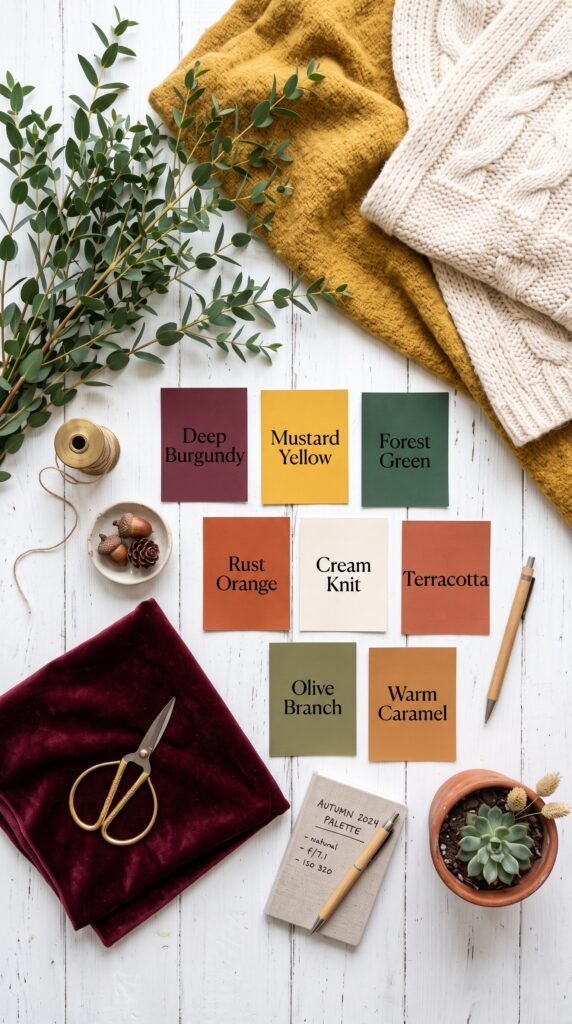
Orange is one note in a full chord. Real fall living room decor draws from the entire season — deep burgundy, warm mustard, forest green, chocolate brown, cream, and even muted terracotta. Rooms that look professionally styled almost never go all-in on pumpkin orange. They use it as an accent, not a foundation.
Myth #3: More is more.
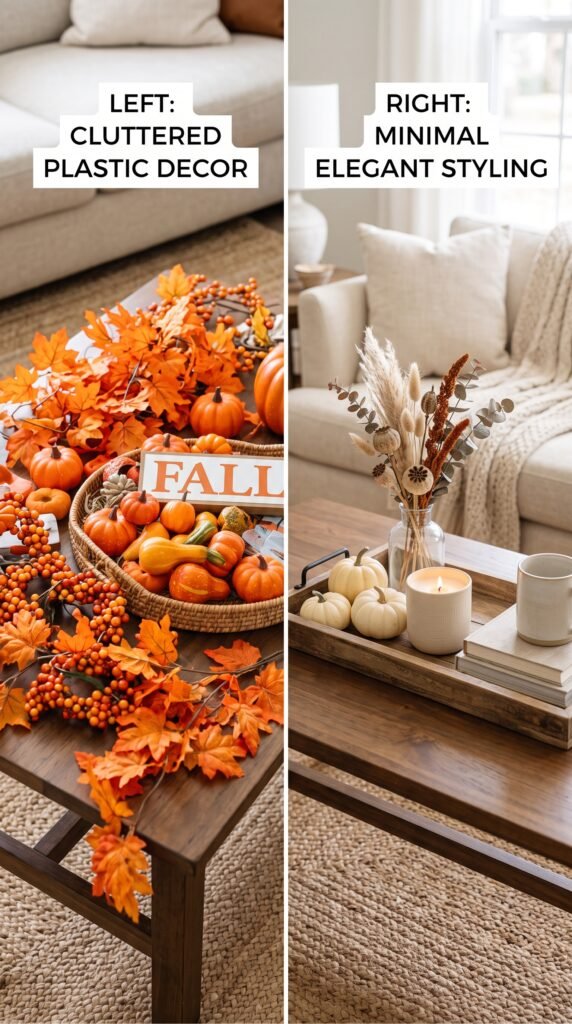
This might be the most damaging myth of all. Overcrowding a space doesn’t make it feel festive. It makes it feel cluttered. The rooms you screenshot and save? They’re usually built around restraint. A few deliberate pieces, placed with intention, do more than a dozen random seasonal objects scattered around.
The Real Facts Behind Seasonal Decorating That Experts Know
So what actually makes fall living room decor work? It comes down to a few things that designers understand intuitively but rarely explain out loud.
Texture does more work than color.
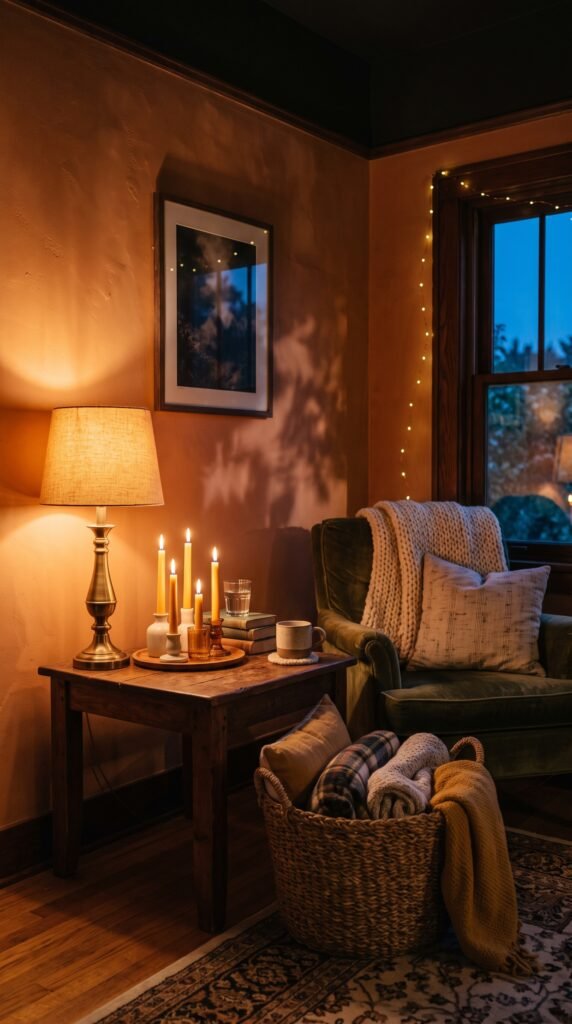
This is the insight that changes everything. When a room feels authentically autumnal, it’s usually because of what you can almost feel just by looking at it. Chunky knit blankets. Rough-hewn wood. Soft velvet cushions. Matte ceramic candle holders. These textures communicate warmth on a sensory level that no orange throw pillow can match on its own.
Research from environmental psychology supports what designers have long known: tactile richness in a space directly influences how warm and comfortable people perceive an environment to be. You’re not just decorating for the eyes. You’re decorating for the whole experience of being in the room.
Lighting is the secret weapon nobody talks about.
Fall living room decor lives and dies by light. Overhead lighting makes even the most carefully styled room feel flat and clinical. Warm-toned bulbs (look for 2700K on the packaging), table lamps, and candles work together to create the kind of ambient glow that makes a room feel like a hug. This costs almost nothing to change and makes an enormous difference.
Layering follows a rule of three.
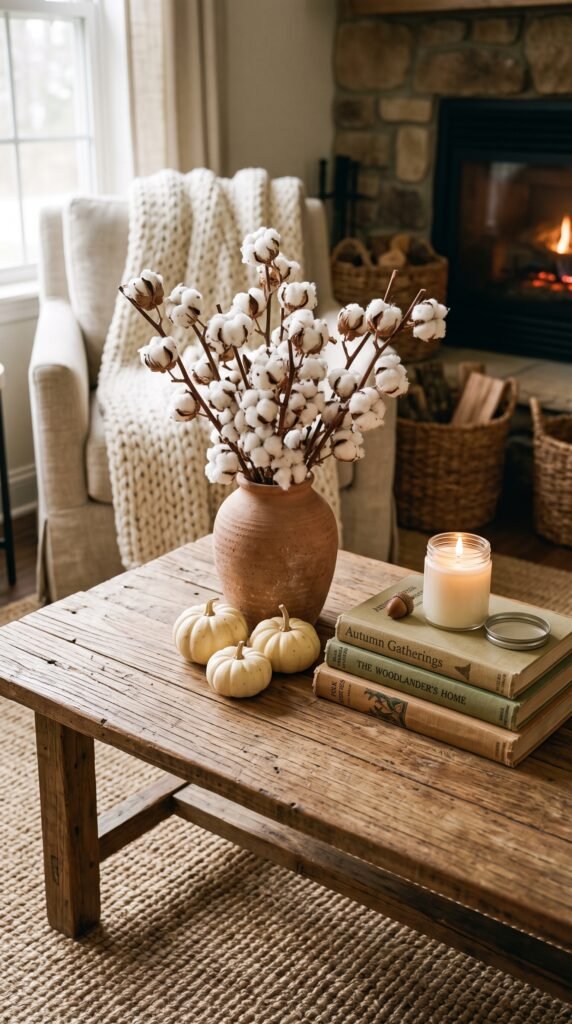
Every well-styled surface in a fall room follows some version of the rule of three: vary height, vary texture, vary visual weight. A coffee table styled with one tall candle, one medium-height bowl of pinecones, and one low flat book stacks up in a way that feels intentional. Three objects at the same height, same texture, same visual weight? It just looks like stuff sitting on a table.
10 Affordable Finds That Transform Cozy Living Room Decor
Expert Tips for Fall Living Room Decor That Actually Work
Let’s get specific. These are the moves that separate a room that looks “okay, kind of festive” from one that makes guests stop and ask who helped you decorate.
Start With Your Sofa, Not Your Coffee Table
Most beginners go straight for the coffee table. Makes sense. It’s the focal point, right? But experienced decorators start with the sofa because it’s the largest surface in the room.
Two or three throw pillows in fall tones, one cozy blanket folded or casually draped, and suddenly you have a warm anchor for everything else. The coffee table, side tables, and mantel build outward from there. Get the sofa right first. Everything else follows.
Use Natural Elements as a Foundation
Dried pampas grass, eucalyptus stems, cotton stems, pinecones, acorns, small gourds, and branches with leaves bring in the season without looking like you bought a pre-packaged “fall kit.” These things are inexpensive, often free (a walk in the right neighborhood in late September can cover you), and they add genuine organic texture that manufactured decor can’t replicate.
The Spruce has a solid overview of which natural elements work best indoors and how long each one typically lasts before it needs replacing. Worth a quick read before you shop.
Work With What You Already Own
Before buying a single thing, pull every blanket, pillow, candle, basket, and vase out of your home. Sort by color. You’ll almost certainly already have some warm neutrals, some textures that work, and some pieces you forgot about entirely.
Fair warning: this step feels tedious. But people who skip it end up buying duplicates of things they already own, then wondering why the room still doesn’t feel cohesive. The cohesion usually comes from editing what you have, not adding more.
The “One Swap” Method for Beginners
If you want a simple framework for fall living room decor without overwhelm, try this: swap one thing in each zone of your living room. One pillow on the sofa. One candle on the side table. One natural element on the coffee table. One throw blanket on the armchair. One piece of artwork or a mirror leaned against the wall with something seasonal in front of it.
That’s five swaps. Done right, that’s a transformed room. And you’ll spend a fraction of what most people spend in September.
15 Best Mid Century Modern Living Room Ideas Worth Stealing
How to Build a Fall Color Scheme Without Starting from Scratch
Color intimidates people. But here’s the thing about fall color schemes: the season does most of the work for you. The palette already exists. Your job is just to pull from it in a way that doesn’t feel random.
Anchor Colors vs. Accent Colors
Pick one or two anchor colors (these go on your larger pieces, like throw pillows and blankets) and one accent color (this goes in smaller doses, like candles, small objects, and natural elements). A classic combination that always works: warm cream as an anchor, deep burgundy as a second anchor, and mustard yellow as an accent.
That combination is warm, seasonal, sophisticated, and completely achievable without buying a single expensive piece. You can find all three in any home goods section of a department store right now for under $40 total.
Don’t Ignore Your Walls
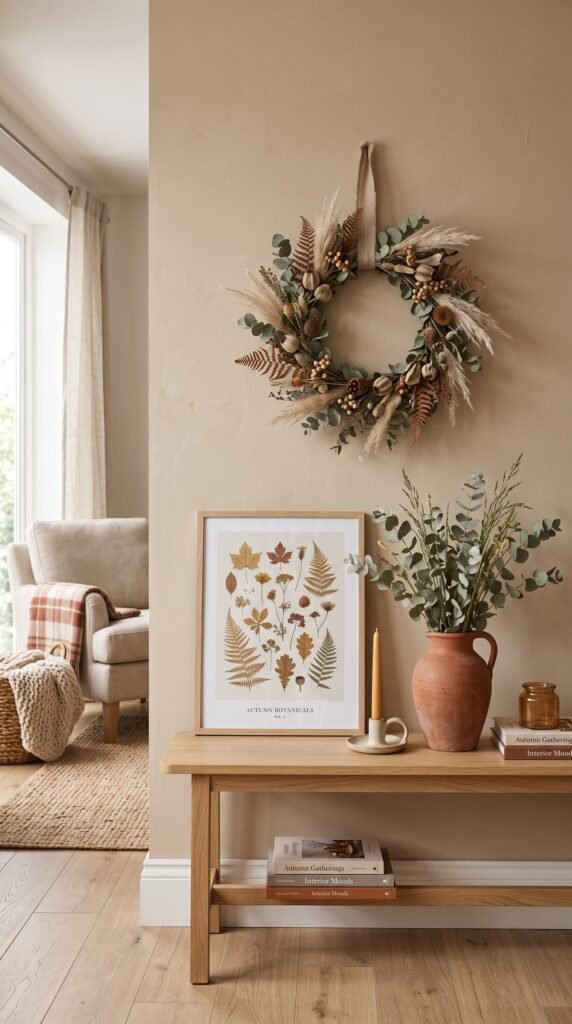
Most people decorate horizontally, across surfaces. But vertical space matters too. A simple wreath on an interior wall (not just the front door), a piece of artwork with warm tones, or even a cluster of small frames with fall-adjacent prints can draw the eye up and make the room feel fuller without adding clutter to surfaces.
Better Homes & Gardens covers the vertical decorating approach in a way that’s genuinely accessible for beginners. Their photo examples are worth studying for how they balance horizontal and vertical elements in small rooms.
Common Beginner Mistakes to Avoid in Fall Living Room Decor
You’re going to make at least one of these mistakes. That’s fine. Knowing about them ahead of time just means you catch it faster.
Buying everything in the same place. If all your fall decor comes from one store, it’ll look like it. Mix sources: a grocery store for natural elements, a thrift store for baskets and trays, a home goods store for one or two anchor pieces. Variety of origin creates variety of texture and character.
Using plastic or artificial anything in prominent spots. Fake leaves on a coffee table, plastic pumpkins front and center, artificial berry branches in a clear vase. These all read as cheap immediately, even when the rest of the room is thoughtfully styled. Push faux elements to the background or skip them entirely in key spots.
Forgetting scent. A room can look perfectly autumn and still not feel it if it smells like nothing, or worse, like whatever cleaning product you used that morning. A single candle in cinnamon, cedar, amber, or apple does something no amount of visual styling can. Scent is a fast track to atmosphere.
Most people forget scent entirely. Don’t be most people.
Keeping everything out too long. Fall decor that’s still up in December just looks like you forgot to take it down. A good rule: transition by Thanksgiving. Shift toward winter neutrals and you’ll buy yourself another full seasonal chapter without your living room looking stuck in October.
9 Bold Living Room Decor Ideas That Transform Any Space Fast
The Truth About Fall Living Room Decor Nobody Tells Beginners
Here’s what it really comes down to. Fall living room decor isn’t about having the right stuff. It’s about making intentional choices with whatever you have. The cozy, pulled-together rooms you admire aren’t produced by people with bigger budgets or better taste. They’re produced by people who know to edit ruthlessly, layer textures, light the space right, and let the season breathe instead of forcing it into every corner.
You don’t need to nail every piece on the first try. Decorating is an experiment. You’ll move things around, decide something doesn’t work, try something else. That’s not failure. That’s how it actually works, even for people who do this professionally.
Start with your sofa. Add texture. Light a candle. Bring in one natural element. Step back and see what the room needs next.
That’s fall living room decor. And you’ve already got this.