
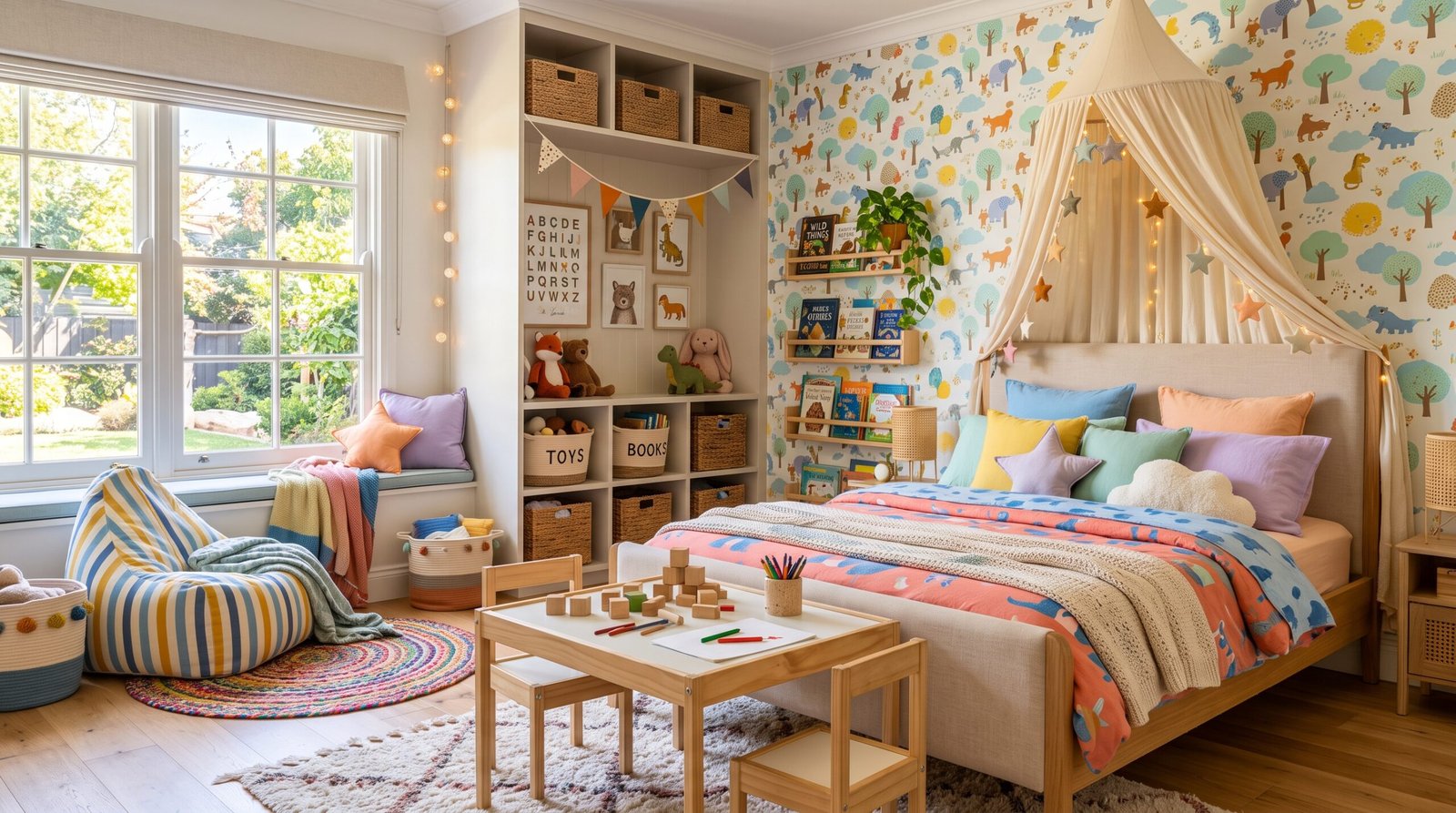
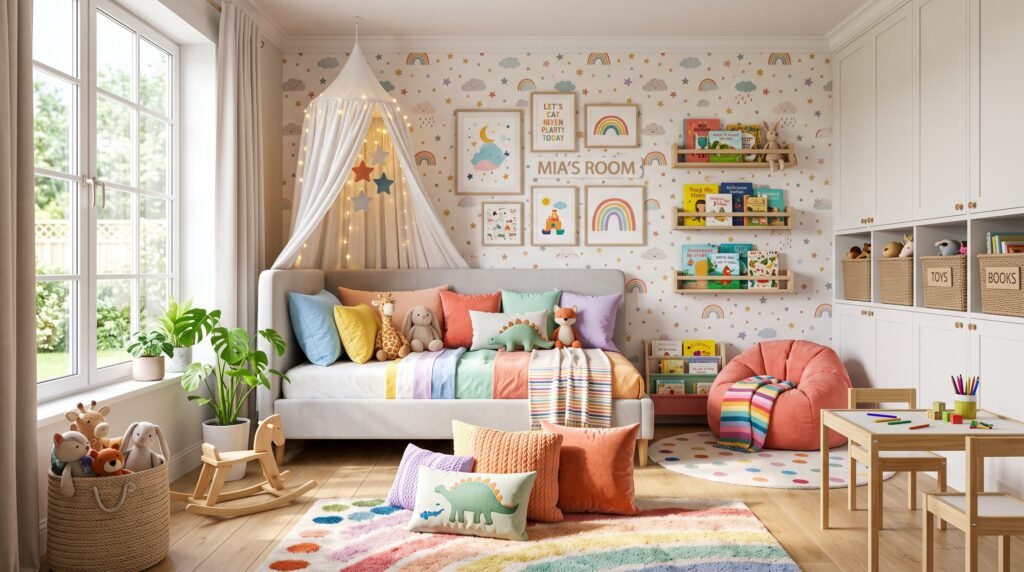
Finding the right Bedroom Ideas for Kids can feel overwhelming — there are a thousand directions you could go, and somehow every option either looks like a Pinterest fantasy that costs a fortune or something so bland your kid will lose interest in three weeks.
Here’s the thing: a great kid’s bedroom isn’t just about aesthetics. It’s about creating a space that grows with them, sparks creativity, supports sleep, and actually functions for real family life. Not the Instagram version of it. The real version, where backpacks get dropped on the floor and LEGOs migrate under the bed.
This guide covers 23 genuinely brilliant ideas — from big design moves to small, cheap details that make a surprising difference.
📋 Table of Contents
- Why Bedroom Ideas for Kids Are Worth Taking Seriously
- Sleep-First Bedroom Ideas for Kids
- 1. Blackout Curtains Are Non-Negotiable
- 2. Build a Canopy Moment Over the Bed
- 3. Use Warm, Dimmable Lighting
- 4. Choose a Mattress That Actually Fits Their Body
- Creative Play-Focused Bedroom Ideas for Kids
- 5. Create Zones, Not Just a “Room”
- 6. Install a Wall-Mounted Pegboard for Art Supplies
- 7. Add a Chalkboard or Whiteboard Wall Section
- 8. Consider a Loft Bed to Double the Usable Floor Space
- 9. Leave Open Floor Space on Purpose
- Smart Storage Bedroom Ideas for Kids That Actually Work
- 10. Go Low With All Storage
- 11. Use Open Bins, Not Lids
- 12. Build Vertical With Wall Shelving
- 13. Use the Space Under the Bed
- 14. A Toy Rotation System Changes Everything
- Personalization and Theme Bedroom Ideas for Kids
- 15. Choose a Theme With Longevity (Not Just the Current Obsession)
- 16. Put Their Name or Initial on the Wall
- 17. Create a Gallery Wall at Their Eye Level
- 18. Let Them Pick One Statement Element
- Growing-With-Them Bedroom Ideas for Kids
- 19. Invest in Furniture That Converts or Adjusts
- 20. Choose a Neutral Base, Add Color With Accessories
- 21. Build In a Dedicated Homework and Creativity Zone Early
- 22. Plan for the Stuff That Accumulates
- 23. Revisit and Refresh Every Year or Two
Why Bedroom Ideas for Kids Are Worth Taking Seriously
Most parents treat the kid’s room as an afterthought. Paint it a neutral color, throw in a bed and a dresser, call it done. And then six months later, the kid doesn’t want to spend any time in there, sleep is a battle, and the space is perpetually chaotic.
The research on this actually matters. According to the American Academy of Pediatrics, children’s environments have a direct impact on their sleep quality, focus, and emotional regulation. A well-designed room isn’t a luxury — it’s a tool.
So let’s use it like one.
The 23 ideas below are organized by theme: sleep, play, storage, personalization, and growth. Because a room that works on all five of those fronts is one your kid will actually want to be in.
Sleep-First Bedroom Ideas for Kids
Sleep is the foundation. Everything else is secondary. Before you pick a paint color or choose furniture, think about the sleep environment first.
1. Blackout Curtains Are Non-Negotiable
Most people underestimate how much light affects kids’ sleep. Even small amounts of light exposure can suppress melatonin production in children, who are actually more sensitive to it than adults. A pair of blackout curtains — in any color or pattern your kid loves — is one of the highest-ROI changes you can make.
And they don’t have to look clinical. There are blackout options in every style now, from jungle prints to galaxy patterns to simple linen-look neutrals.
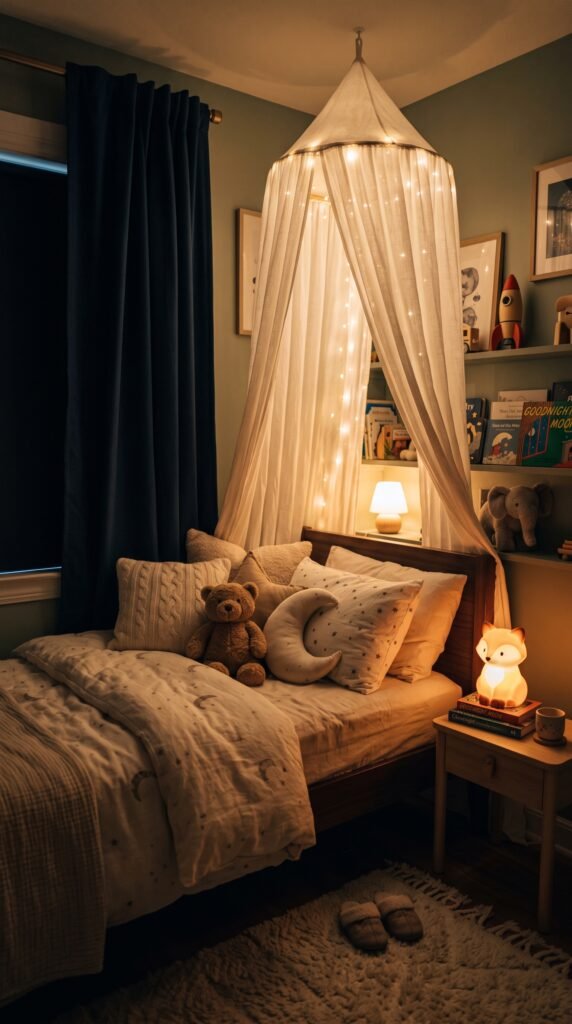
2. Build a Canopy Moment Over the Bed
Canopies create a visual boundary around the sleep space. That matters more than it sounds. When a child’s bed feels like its own contained world — separate from the play area — their brain starts to associate it with rest rather than activity.
A simple hoop canopy hung from the ceiling with sheer fabric costs very little. But the effect on bedtime willingness? Worth it.
3. Use Warm, Dimmable Lighting
Overhead bright lights before bed are a sleep thief. Swap the main light for a dimmable warm-tone bulb, add a small lamp at low level, and consider a plug-in nightlight for kids who need a bit of comfort glow.
The goal is a gradual wind-down cue built right into the environment.
4. Choose a Mattress That Actually Fits Their Body
Kids aren’t small adults. Their spines are developing, and a mattress that’s too firm or too soft affects posture and sleep quality. Look for options specifically designed for growing bodies — medium-firm tends to work well for most ages. The Sleep Foundation has solid guidance on what to look for by age group.
Shared Kids Bedroom Ideas for Siblings That Are Stylish and Functional
Creative Play-Focused Bedroom Ideas for Kids
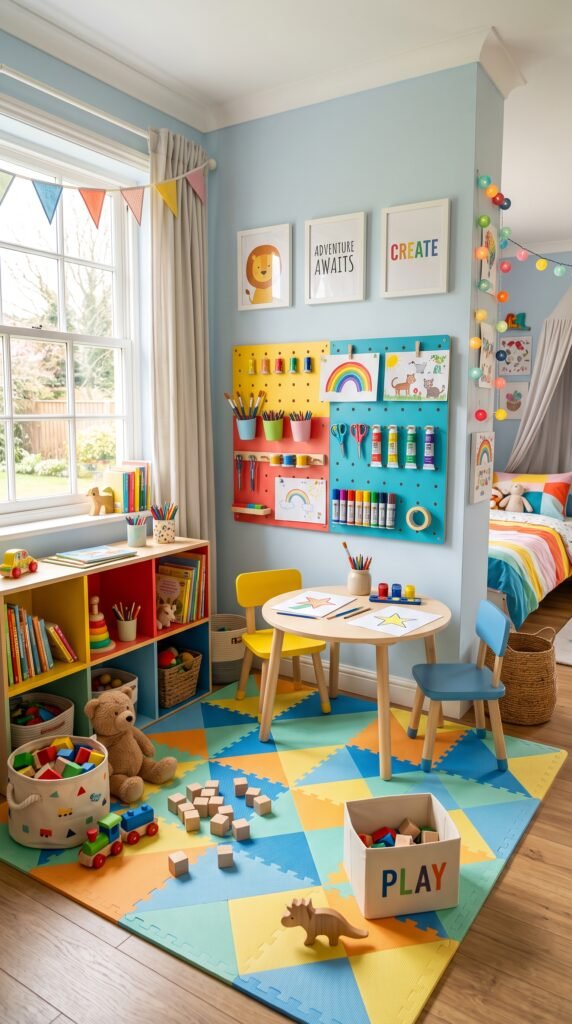
Play happens in the bedroom. That’s just reality. So instead of fighting it, design for it.
5. Create Zones, Not Just a “Room”
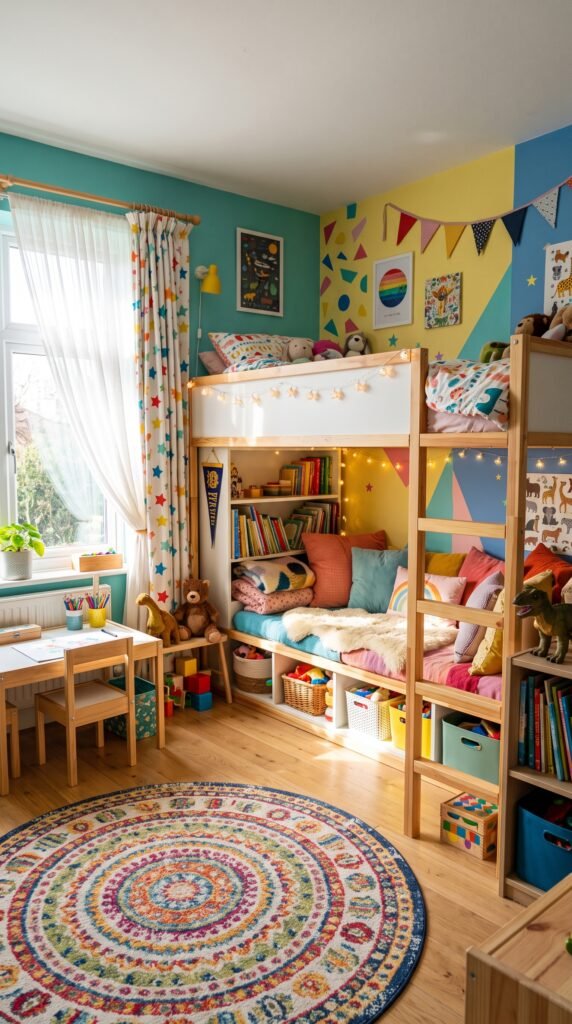
Picture this: your kid walks into their room and there’s a reading corner with a beanbag, a play mat area defined by a rug, and a desk zone. Three distinct areas. Suddenly the space feels intentional, and kids actually use each zone for its intended purpose instead of doing everything on the bed.
Use rugs, lighting changes, and even just furniture arrangement to carve out zones. No construction required.
6. Install a Wall-Mounted Pegboard for Art Supplies
Pegboards aren’t just for garages. Mounted at kid height with colorful hooks and small baskets, they keep art supplies visible and accessible without cluttering surfaces. And when supplies are easy to grab, kids actually use them more.
This is one of those small changes that quietly encourages creativity every single day.
7. Add a Chalkboard or Whiteboard Wall Section
A single wall (or even a large panel) of chalkboard or whiteboard paint gives kids a giant creative canvas that doesn’t require new paper every time. It also keeps drawings off the actual walls, which is a quiet win for you.
Fair warning: commit to this only if you’re okay with occasional mess. But most parents report that kids spend significantly more independent time in their rooms once this goes up.
8. Consider a Loft Bed to Double the Usable Floor Space
Loft beds are one of the best space-efficiency moves in any kids bedroom ideas toolkit. The bed goes up, and underneath becomes whatever the room needs most: a play area, a reading nook, a desk, even a small “fort” zone with curtains.
In smaller rooms especially, this one idea can transform the whole feel of the space.
9. Leave Open Floor Space on Purpose
The instinct is to fill every corner with furniture. Resist it. Open floor space is where imaginative play happens. It’s where the blanket forts get built, where they spread out puzzles, where the stuffed animal kingdoms are established.
Less furniture, more room to actually be a kid.
15 Proven Ways to Decorate a Bedroom on Any Budget
Smart Storage Bedroom Ideas for Kids That Actually Work
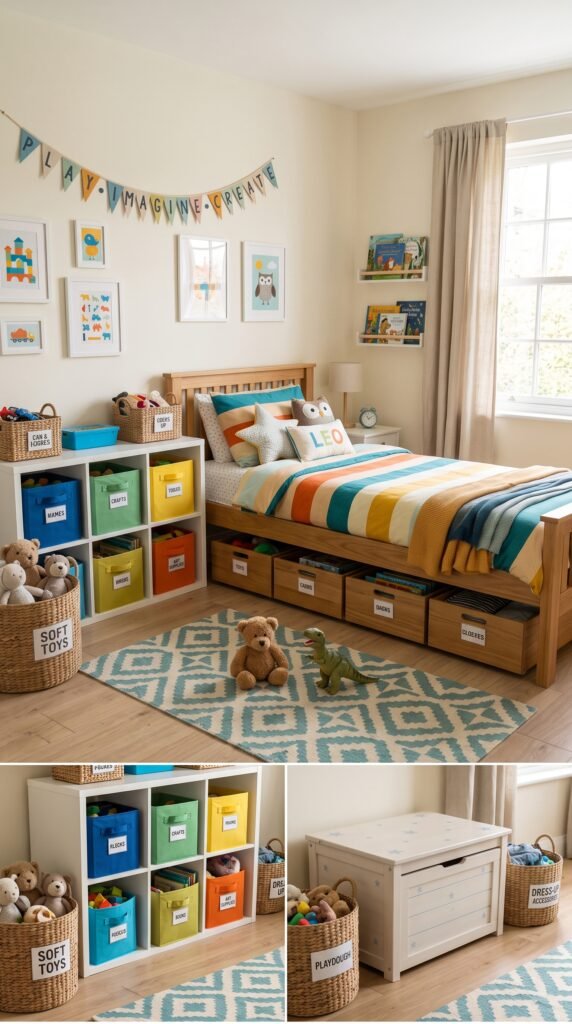
Storage is where most kids’ rooms fall apart. Not because there isn’t enough of it, but because it’s not designed for how kids actually function.
10. Go Low With All Storage
Kids can’t use storage they can’t reach. This is so obvious and yet so often ignored. Every bin, basket, shelf, and drawer for a child’s personal items should be at or below their shoulder height. If it’s not within easy reach, it won’t get used — and the floor becomes the default storage solution.
Low bookshelves, floor-level cubbies, and rolling bins under the bed are all great.
11. Use Open Bins, Not Lids
Bins with lids are for adults. Kids need open-top containers where toys can be tossed in quickly, without the extra step. The fewer friction points between picking something up and putting it away, the more likely a kid is to actually do it.
Color-code by category if you want to get real about organization.
12. Build Vertical With Wall Shelving
Wall-mounted shelves above desk height work well for display items, books the child is between reading, or categories of things that don’t need daily access. It keeps surfaces clear and adds personality to the room without taking up floor space.
Just anchor them properly. That part’s not optional.
13. Use the Space Under the Bed
Underbed storage is free square footage that most families ignore. Rolling bins, flat drawers, or even just open fabric boxes work well for seasonal items, extra bedding, or collections that don’t need to be on display.
14. A Toy Rotation System Changes Everything
Most people run into this exact problem: the room is organized, then within a week it’s chaos again. A toy rotation system — where a portion of toys are stored away and swapped in every few weeks — keeps the room manageable AND keeps kids more engaged with the toys they have. Less overwhelm, more play.
The National Association for the Education of Young Children actually supports the concept of simplified, rotated toy environments for better focus and deeper play.
Personalization and Theme Bedroom Ideas for Kids
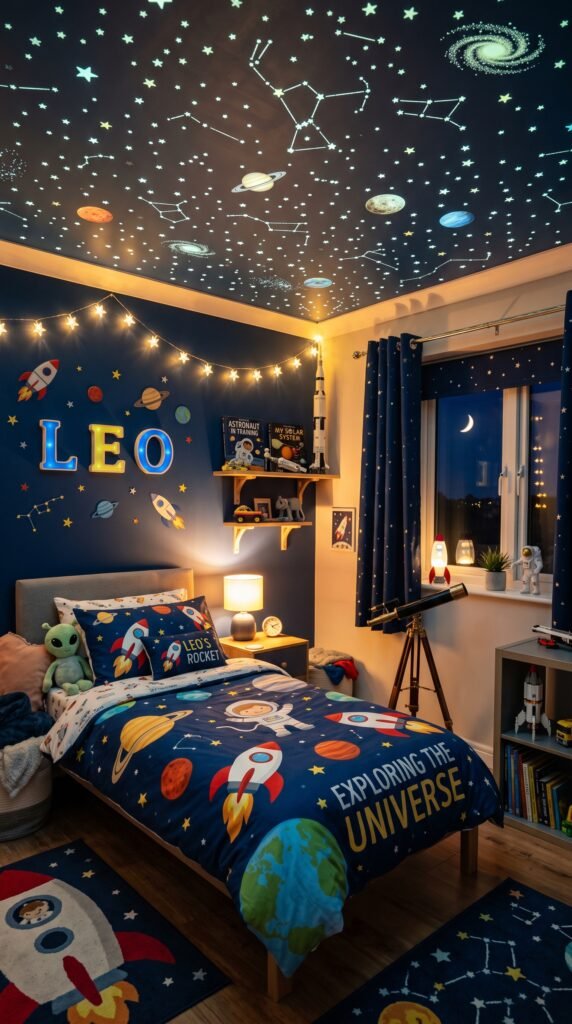
This is the part kids care about most. And honestly, it’s where a lot of parents spend too much money on themes that get abandoned in a year.
15. Choose a Theme With Longevity (Not Just the Current Obsession)
The character-specific themes — the licensed bedding, the branded wall decals — tend to expire fast. The interest outlasts the phase by maybe six months, and then you’re looking at a room that needs a full overhaul.
Broader themes hold up better. “Space” instead of one specific show character. “Ocean” instead of one specific movie. “Forest animals” instead of one cartoon franchise. The child can grow into and through a broader theme in a way they can’t with something hyper-specific.
16. Put Their Name or Initial on the Wall
It sounds simple. But personalization at that level genuinely matters to kids. A name spelled out in wooden letters, a custom initial in a specific color, even a simple vinyl decal with their name. It signals that this is their space in a concrete, visible way.
And it’s inexpensive. That’s a nice combination.
17. Create a Gallery Wall at Their Eye Level
Hang their artwork. Print photos they care about. Add a few decorative prints in colors they chose. A gallery wall at kid height (not adult eye level) gives them ownership over the aesthetic of their space, which matters more as they get older.
18. Let Them Pick One Statement Element
One thing that’s fully theirs to choose. Maybe it’s the rug pattern. Maybe it’s the color of the desk lamp. Maybe it’s the comforter. But giving a child real input on one decision in their room — not fake input where you steer them to what you already chose — builds genuine attachment to the space.
Kids who feel ownership over their room tend to take better care of it. That’s not just intuition, it’s a consistent pattern.
Growing-With-Them Bedroom Ideas for Kids
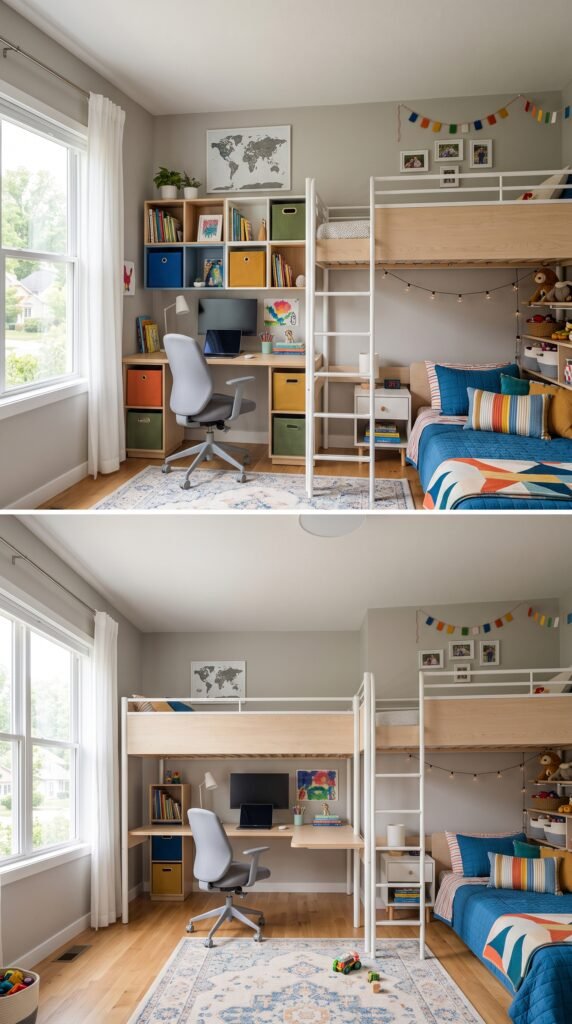
The biggest mistake in kids’ room design is building for who they are right now instead of who they’re becoming.
19. Invest in Furniture That Converts or Adjusts
Adjustable-height desks. Beds with trundle options. Bookshelves that can be reconfigured. The more adaptable a piece of furniture is, the longer it stays useful — and the less you spend replacing it every few years.
20. Choose a Neutral Base, Add Color With Accessories
Paint the walls in a color you can live with for eight years. Then do the bold color in the bedding, the curtains, the rug — things that can be swapped without repainting. This approach lets the room evolve with the child without requiring major investment each time.
21. Build In a Dedicated Homework and Creativity Zone Early
Even before kids are doing formal homework, a small desk and chair establishes the habit of having a place to sit, focus, and create. By the time school demands increase, the habit of using that space is already built. Starting early matters here.
22. Plan for the Stuff That Accumulates
Kids collect things. Books, trophies, models, art projects. Build the storage plan around growth, not just the current inventory. Extra shelf capacity now saves a scramble later.
23. Revisit and Refresh Every Year or Two
The best bedroom ideas for kids aren’t static. A quick refresh — new bedding, a different rug, some updated wall art — keeps the room feeling current without a full renovation. Involve your child in that process. It teaches them how to care for and update a space, which is a genuinely useful skill.
The truth is, the perfect kid’s room isn’t a one-time project. It’s an ongoing conversation between what your child needs, who they’re becoming, and the practical reality of daily life.
Get the fundamentals right — sleep environment, accessible storage, room to play, and a space that feels like theirs — and the rest is just details you can adjust as you go.
That’s what great bedroom ideas for kids actually look like in practice. Not perfect. Just thoughtfully designed for the real kid who lives there.