
Tired of Bland Patios? Vintage Garden Decor Changes Everything
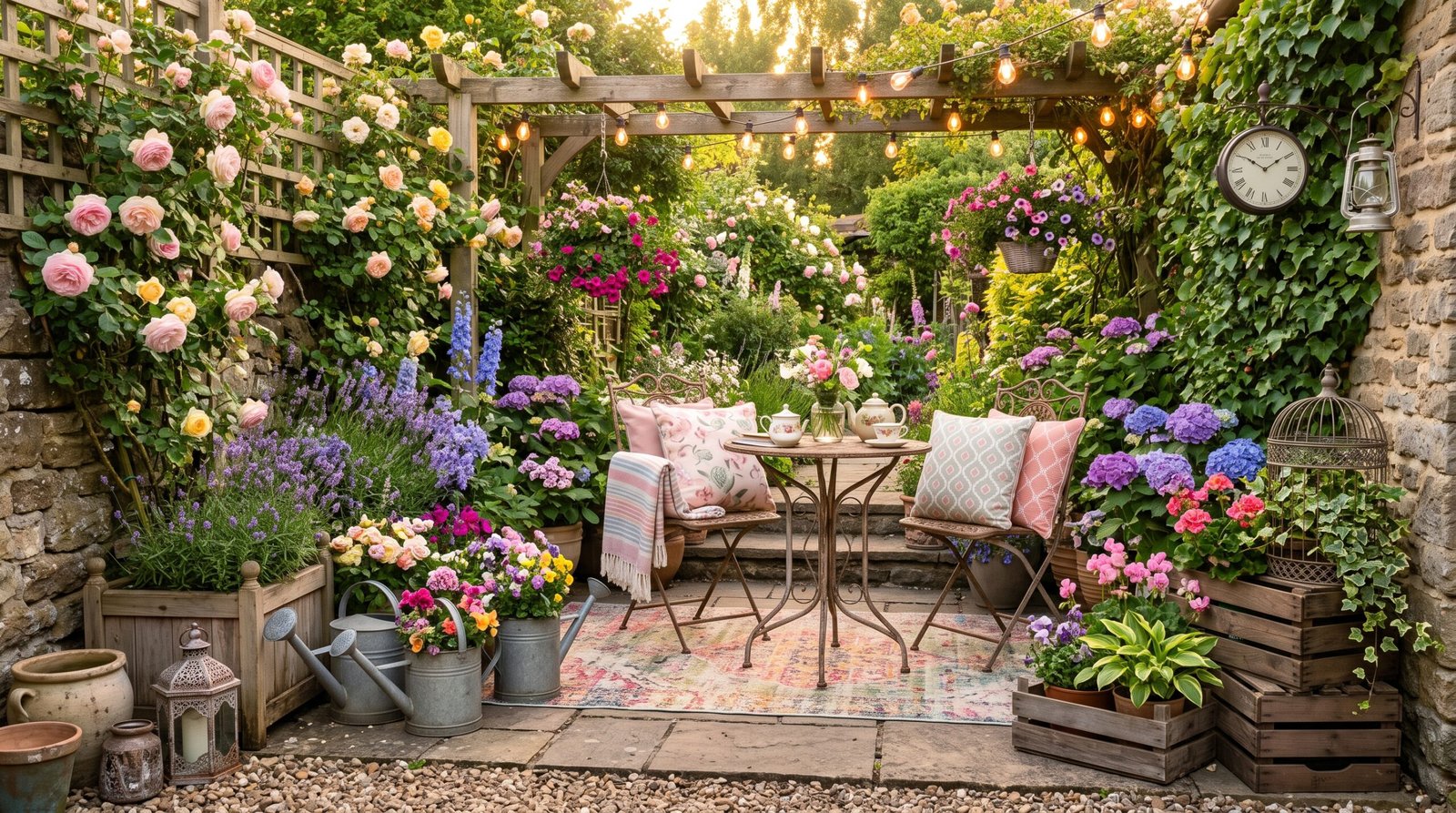
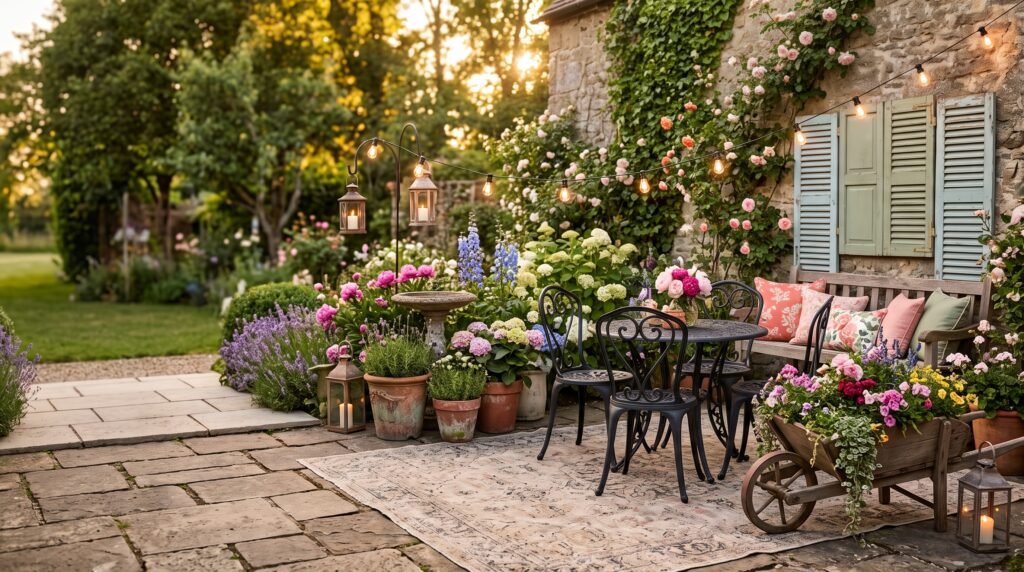
If you’ve been scrolling through outdoor living inspiration and feeling like something’s missing, vintage garden decor might be exactly what your patio has been waiting for. There’s a reason this style keeps showing up in every “dream outdoor space” roundup. It’s not a trend. It’s a design philosophy.
And the difference between a patio that feels like a waiting room and one that feels like a destination? Usually comes down to the details.
📋 Table of Contents
- The Myths Around Vintage Garden Decor That Need to Go
- What the Research Actually Says About Outdoor Spaces and Design
- The Actual Elements That Define Great Vintage Garden Decor
- Expert Tips for Building Your Vintage Garden Look Without Wasting Money
- Vintage Garden Decor by Category: What to Focus On First
- How to Make Vintage Garden Decor Work in a Modern Space
The Myths Around Vintage Garden Decor That Need to Go
Here’s the thing most people get wrong before they even start: they assume vintage means old, fragile, and expensive. That assumption alone has kept thousands of patios permanently beige.
Let’s bust that first.
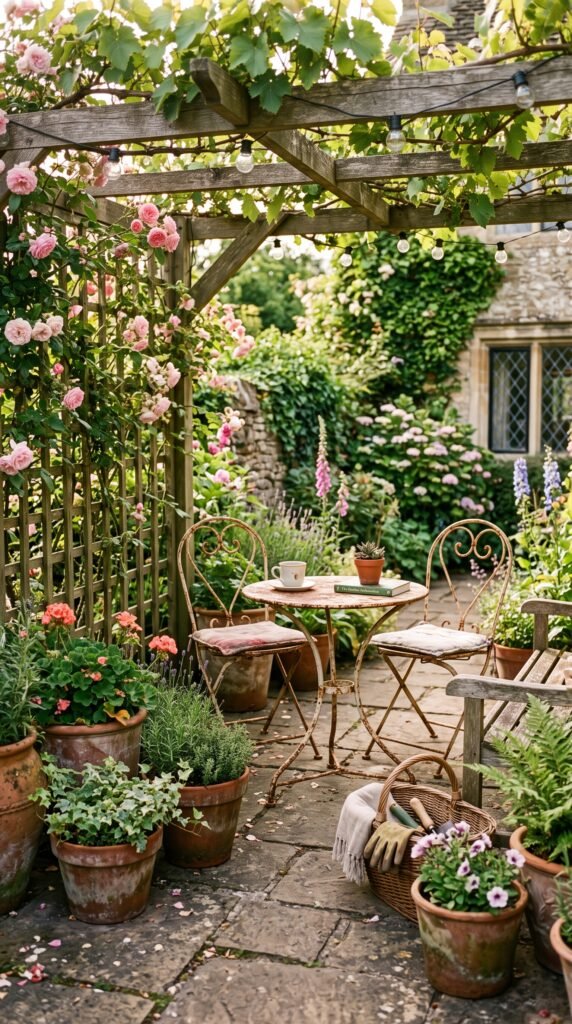
Vintage garden decor doesn’t require antique store hunting trips or a big renovation budget. It’s not about owning genuinely old pieces. It’s about capturing a feeling. That feeling of a space that has history, personality, and a little bit of soul baked into every corner.
The second myth? That it only works in cottage-style or country homes. Not true. Picture this: a clean-lined modern townhouse with a black iron lantern grouping on the steps, a single concrete urn overflowing with trailing ivy, and a small reclaimed wood bench tucked along the fence. That’s vintage. That’s also unmistakably sophisticated.
The third myth, and honestly the one that does the most damage, is that vintage decor is “high maintenance.” People imagine fussing over rust, repainting every season, keeping things perfect. But the truth is the opposite. Vintage-style pieces are often forged, cast, or made from natural materials that age gracefully. A little rust on a garden stake? That’s patina. That’s character. You don’t fight it. You lean into it.
And one more: the idea that you need to commit to a single cohesive “look” all at once. Real vintage gardens evolved over time. They look collected, not decorated. Which means you can start small and build something special gradually without it ever looking unfinished.
What the Research Actually Says About Outdoor Spaces and Design
This isn’t just aesthetics. There’s real science backing up why certain outdoor spaces make us feel better than others.
According to the American Psychological Association, time spent in natural, green environments reduces cortisol levels, lowers blood pressure, and measurably improves mood. But here’s what most people skip over in that research: it’s not just being outdoors that delivers the benefit. It’s the quality of the environment. Cluttered, sterile, or visually chaotic spaces don’t produce the same calming effect as spaces that feel intentional and organic.
That’s where vintage garden decor has a genuine psychological edge.
Aged textures, natural materials, and organic shapes all trigger what researchers call biophilic response. Our brains are wired to feel comfortable around things that look like they belong in nature. A cast iron planter covered in verdigris reads to your nervous system as safe, settled, established. A plastic garden chair in a matching pastel set does not produce the same effect.
The National Trust for Historic Preservation has written extensively about how historic design elements in everyday environments help people feel grounded. That’s not abstract theory. You’ve felt it yourself. You walk into a space that has old bricks, worn wood, handmade-looking objects, and something in you relaxes before you’ve even sat down.
Vintage garden decor works for a simple reason: it makes outdoor spaces feel like they’ve been loved for a long time. And spaces that feel loved invite you to stay.
how to create a cottage garden aesthetic on a budget
The Actual Elements That Define Great Vintage Garden Decor
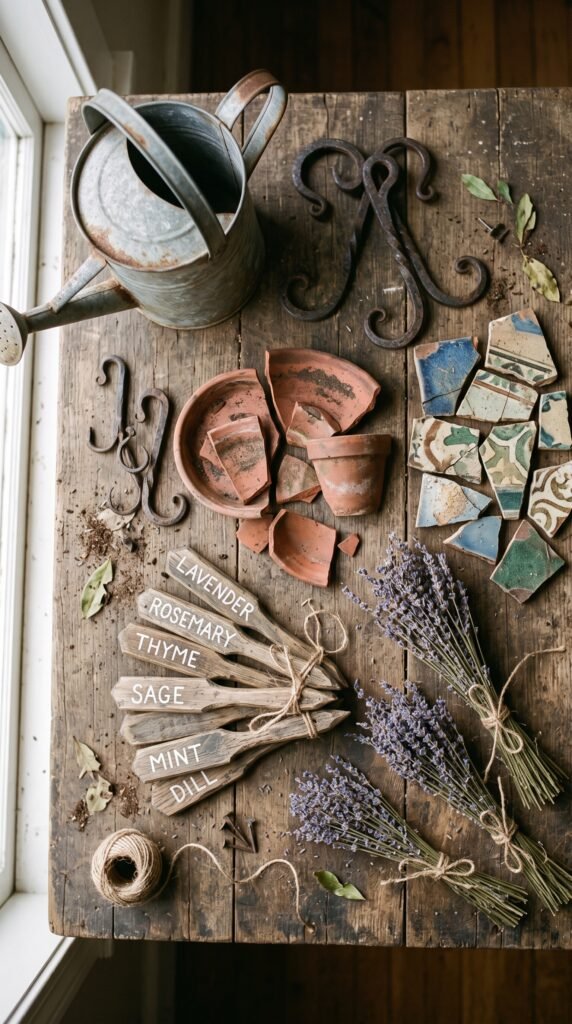
So what actually makes something feel vintage in a garden context? Let’s get specific.
Materials matter more than age. The materials that read as vintage are consistent: cast iron, wrought iron, terracotta, stone, galvanized metal, weathered wood, aged brass, and hand-thrown ceramics. These are all materials that change over time in ways that look better rather than worse. Compare that to plastic or powder-coated aluminum, which fade, crack, and chalk in ways that just look neglected.
Scale and proportion tell the story. Most people go too small. A cluster of tiny terracotta pots on a large patio disappears. A single large stone urn makes a statement. A substantial iron garden arch covered in climbing plants becomes a focal point. Vintage design historically favored bold, well-proportioned pieces because outdoor spaces are viewed from a distance. Think bigger than feels comfortable. You’ll almost always be right.
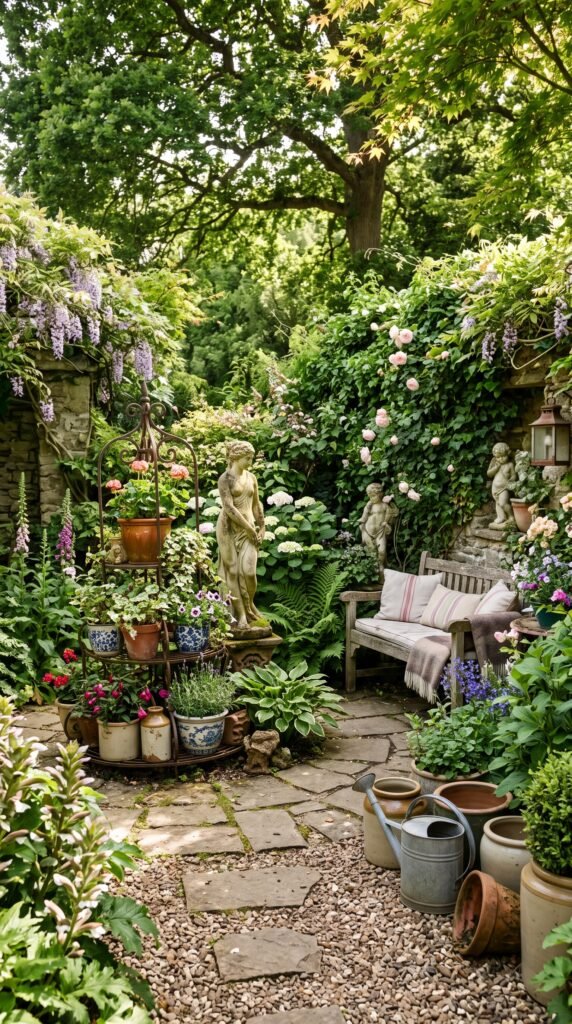
Layering creates depth. This is the single biggest difference between a patio that looks designed and one that looks collected. Layering means different heights, different textures, different materials working together. A wrought iron plant stand next to a terracotta pot next to a wooden crate next to a stone garden figure. None of those things match. All of them belong together.
Patina is a feature, not a flaw. Most people make the mistake of trying to keep vintage-style pieces looking new. Don’t. The aged surface of a copper watering can, the green oxidation on a bronze garden ornament, the silver weathering of an unpainted cedar plank bench — these are what give the style its personality. According to Gardenista, the most compelling vintage gardens embrace what designers call “the beauty of imperfection.” That’s not settling. That’s intention.
Plants complete the picture. No amount of beautiful vintage objects will save a patio with no plants, or worse, plants in wrong-looking containers. The plants that work best with vintage garden decor are ones with some wildness to them: trailing vines, tall grasses, sprawling roses, herbs that spill over pot edges. Structured topiary can work, but only if it’s balanced against something looser.
best plants for a cottage garden patio
Expert Tips for Building Your Vintage Garden Look Without Wasting Money
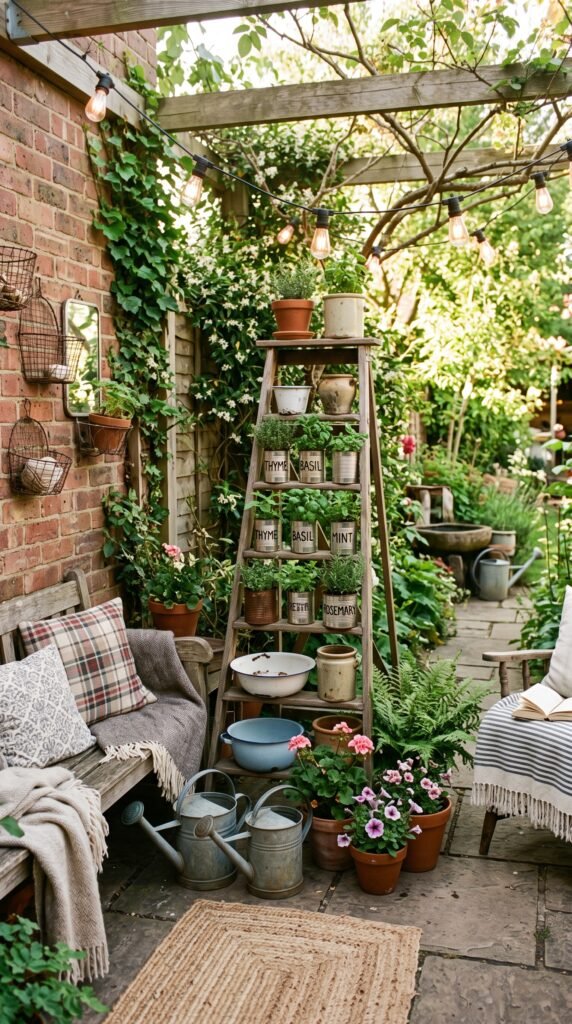
Most mistakes in vintage garden decorating come from buying the wrong things in the wrong order. Here’s how to avoid that.
Start with one anchor piece. Before you buy anything else, find one statement object. A large stone garden urn. A vintage-style iron bench. A substantial wall-mounted planter in aged cast iron. This becomes the visual anchor that everything else orbits around. Without it, collections of smaller pieces tend to look scattered.
Shop in the right places. Estate sales, architectural salvage yards, and antique markets are obvious starting points. But don’t overlook garden centers that specialize in traditional or heritage-style products. Many sell new pieces made to vintage specifications that will age beautifully in a real garden environment. Facebook Marketplace is genuinely underrated for finding cast iron and stone pieces locally, often at a fraction of retail price.
Use plants to age things faster. This sounds counterintuitive but it works. Painting a terracotta pot with diluted yogurt or buttermilk encourages moss growth. Placing bare metal objects outside and letting weather do its work speeds up patina development. Within a season, something new can look like it’s been there for decades.
Group odd numbers. Three pots look better than two or four. Five garden stakes look better than six. This is a basic design principle that vintage style happens to play well with. Odd groupings feel organic. Even groupings feel like they came from a box.
Don’t over-accessorize. The restraint is what makes vintage spaces feel curated rather than cluttered. Leave negative space. Let one strong piece breathe instead of surrounding it with ten weaker ones. Most beautifully styled vintage gardens have far fewer objects than you’d expect — they just choose those objects well.
Picture this: you buy a beautiful old iron gate, lean it against a fence, and plant a climbing hydrangea at its base. That’s it. That single composition will get more compliments than a patio covered in mismatched vintage-ish items from a big box store. Simplicity with quality beats quantity every time.
how to style a small patio for maximum visual impact
Vintage Garden Decor by Category: What to Focus On First
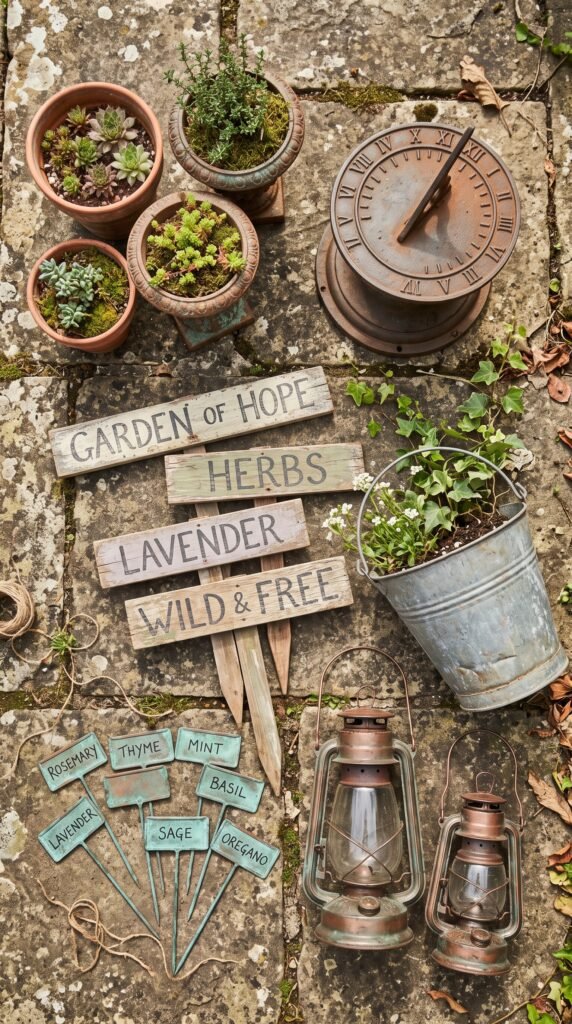
Not all vintage garden decor categories are equal when it comes to impact versus investment. Here’s a practical breakdown of where to put your attention.
Planters and urns deliver the most impact per dollar spent. A well-chosen urn can transform a corner completely. Look for terracotta, cast stone, or genuine cast iron as your top three options. Resin fakes exist and some are decent, but they never age the same way and they’re obvious to anyone who looks closely.
Lighting is the category most people underinvest in. Vintage garden lanterns, antique-style wall sconces, and old-fashioned string lights with Edison bulbs do more for evening ambiance than almost any other single upgrade. The right lighting makes a vintage garden look magical after dark. The wrong lighting makes it look like a parking lot.
Furniture is where the budget goes fast, so choose carefully. One beautiful piece is worth more than three mediocre ones. A genuine cast iron bistro table and chair set is worth the investment if you’ll use it. If you’re budget-constrained, prioritize seating first since a garden you can’t comfortably sit in is just a yard you walk through.
Ornaments and statuary are the most personal category and the one most prone to going wrong. The rule is simple: choose fewer, choose better. One well-proportioned stone figure or sundial has gravitas. Eight mismatched garden gnomes have chaos. You know which one you want.
Garden structures — arches, obelisks, trellises, pergolas — are the backbone of a truly immersive vintage garden space. These are worth saving up for because they create the framework that everything else hangs on. A wrought iron arch covered in roses is the kind of thing that makes people stop walking and stare.
How to Make Vintage Garden Decor Work in a Modern Space
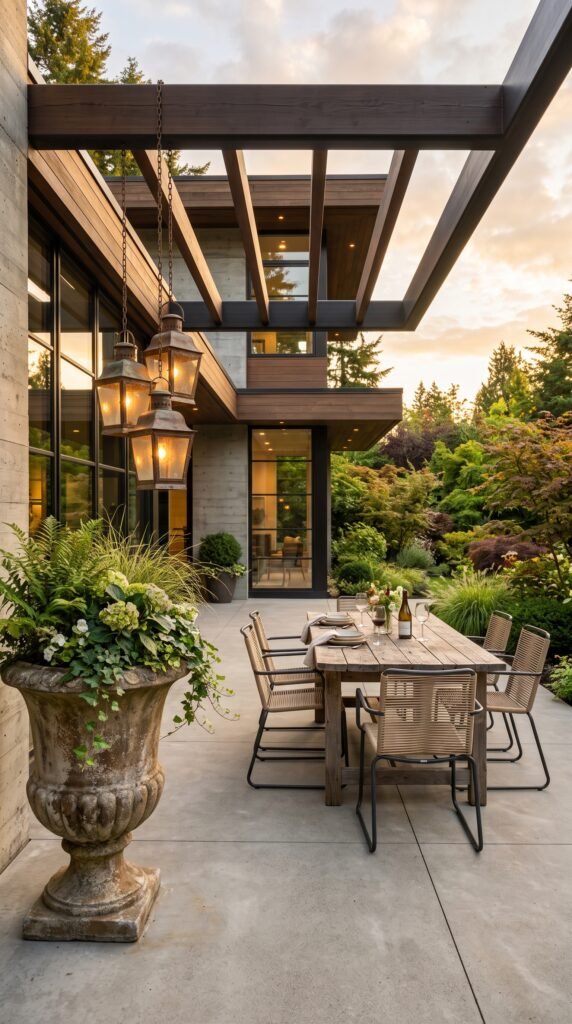
This is where it gets interesting. Because the vintage aesthetic doesn’t just live in cottage gardens and farmhouses. It works in modern spaces too, and sometimes it works even better there.
The contrast is the point.
A stark, minimal concrete patio with a single large aged stone planter and nothing else is more striking than a busy cottage garden where the eye doesn’t know where to land. Modern architecture gives vintage pieces room to be seen properly. And vintage pieces give modern architecture warmth it can’t generate on its own.
The key to making the two work together is restraint and scale. Choose fewer pieces and choose larger ones. Let clean lines and aged textures exist in conversation rather than competition.
Fair warning: the most common mistake people make when mixing vintage and modern is buying things that are “vintage-inspired” rather than materials that actually age. In a modern context especially, you want real terracotta, real iron, real stone. The authentic materials hold their own against contemporary architecture. Resin fakes don’t.
One practical approach that works well: define your modern space with its clean structure and furniture, then introduce one or two significant vintage garden decor elements as anchor points. A large cast iron urn planted with something dramatic. A pair of aged wall-mounted lanterns flanking the door. Done well, these pieces don’t look like additions. They look like the space was designed around them.
Because in the best vintage gardens, that’s exactly what happens. The objects and the plants and the architecture all feel inevitable together. Like they couldn’t possibly exist any other way.
That’s the goal. And with vintage garden decor, it’s more achievable than most people think.