Stock Tank Pool Ideas: Everything You Need to Get Started
If you’ve been scrolling through Pinterest or Instagram lately, you’ve probably already seen some seriously inspired stock tank pool ideas — and now you’re wondering if you can pull one off in your own backyard. The answer is almost certainly yes. What started as a quirky Texas summer hack has become a full-blown backyard design movement, and for good reason: these pools are affordable, surprisingly stylish, and weekend-project simple.
Table of Contents
Why Stock Tank Pools Became a Backyard Obsession
It is easy to see why the idea caught on so fast. A traditional in-ground pool is a major construction job — excavation, plumbing, fencing and weeks of work — and it costs many thousands of dollars. A stock tank pool starts with a ready-made galvanised steel tank, so there is no excavation and no contractor is needed for the basic version. The main costs are the tank, a filter pump and basic fittings, and most of the work is a weekend DIY job.
There is also a genuine sense of accomplishment in building one yourself. There is no months-long installation timeline, and a basic set-up can be finished in a weekend once the tank and pump are on site. Check your local rules before you start, because some areas require a fence or a permit for a pool of any kind. That do-it-yourself satisfaction is part of why stock tank pool ideas spread so fast.
The appeal goes beyond price, though. Stock tanks have an honest, unfussy look — raw galvanised steel with a utilitarian charm that photographs beautifully against a wood deck, a gravel yard or a patch of green lawn. They fit spaces that would never accommodate a traditional pool, like a small urban backyard or a side yard.
Before you fill the tank, the ground underneath has to be flat and solid — our guide to above ground pool ideas covers the groundwork and layout for a small backyard pool.
1. Choose the Right Tank Size and Material
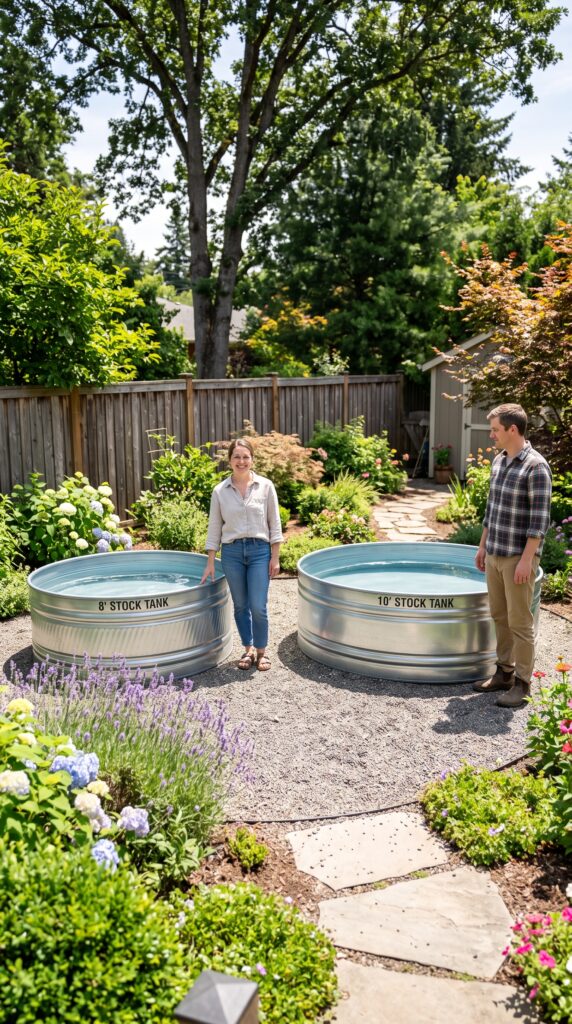
Most stock tank pool ideas start here: before the decorating, furniture and accessories, you need to nail down which tank you’re buying. This decision shapes everything, from how many people can fit to how much water you’ll use and how much maintenance you’re signing up for. Round or oval, galvanised or poly — take time to get this part right.
Size and Capacity
Stock tanks typically come in round or oval shapes, ranging from 6 feet to 10 feet in diameter. An 8-foot round tank holds roughly 700 gallons of water and comfortably fits two adults. A 10-foot round tank gets you closer to 1,100 gallons and is the sweet spot for small families or couples who like to stretch out.
Depth typically runs 2 feet, which is shallow enough to be safe for casual lounging but deep enough that you’re genuinely submerged when you sit or recline. For kids, supervision is still essential — never assume shallow water means safe water unsupervised.
Material and Durability
Galvanised steel is the standard, and for good reason. It resists rust, handles temperature swings, and holds up to UV exposure better than you might expect. Stock tanks are made as farm equipment, so a round 8-to-10-foot tank is built for outdoor conditions far harsher than a backyard. Buy the largest tank your space and budget allow — you cannot easily upsize later.
One thing worth knowing: galvanised steel can release small amounts of zinc into the water, especially in the first weeks before the surface has settled. Rinse the tank well before first use, keep free chlorine between 1 and 3 ppm, and test the water regularly. The CDC’s healthy swimming guidance covers the same basics — test the water and keep disinfectant in range — and those basics apply to a stock tank pool just as they do to any small pool.
2. Set Up Filtration That Keeps the Water Clear
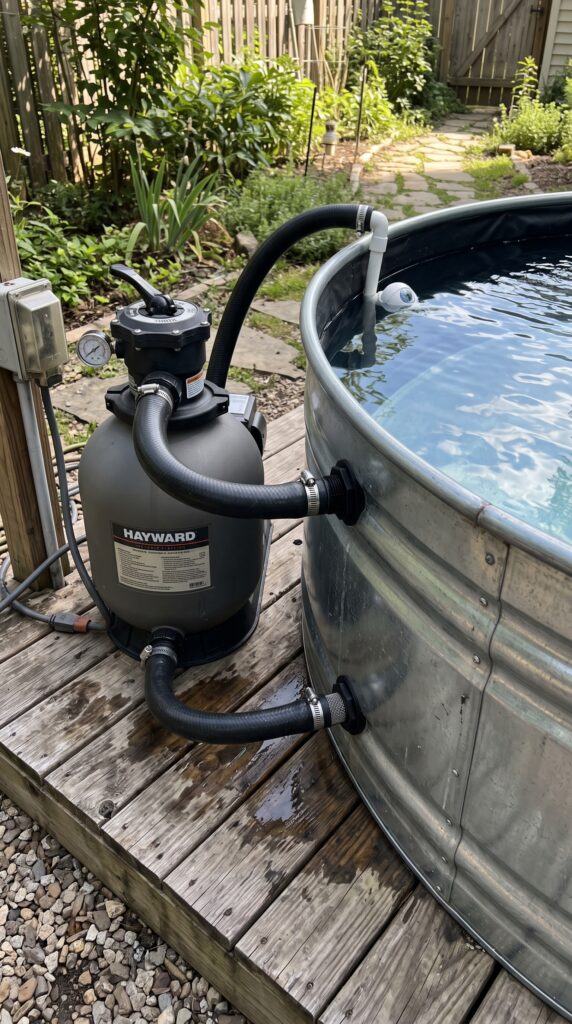
This is where a lot of first-time stock tank pool builders make a costly mistake. They fill the tank, enjoy it for a week, and then watch the water turn green. Without a filtration system, stagnant water in a warm environment is basically a mosquito resort and algae paradise.
The Filtration Basics
You need two things: a filter pump to move and clean the water, and a sanitizing agent to kill bacteria and prevent algae growth. These work together, not as substitutes for each other.
A sand filter pump is the most common choice for a stock tank pool: it moves a useful volume of water, catches fine debris, and the sand inside only needs changing every few years with normal use. Size the pump to your tank — it should be able to turn the whole volume over in a few hours — and put it on a flat, dry spot beside the tank, with short hose runs.
To connect the pump to your tank, you will need to drill a hole and fit a bulkhead fitting that seals around it. It is a straightforward job with the right parts, but measure twice: the fitting, hoses and connectors must match in size and thread, or you will be back at the store. A pump kit that bundles the fittings, hoses and connectors takes the guesswork out of it.
3. Sanitise the Water and Test It Weekly
Once filtration is in place — the step most stock tank pool ideas get wrong — you need a sanitiser to handle bacteria and organic matter. Chlorine tablets in a floating dispenser are the simplest option for a stock tank: the tablets dissolve slowly, so the water stays treated between top-ups. Follow the dose on the label, and keep the dispenser out of reach of children.
Aim for a free chlorine level between 1 and 3 ppm (parts per million), which is the same target range used for full-size residential pools. A basic water test kit or test strips will let you monitor this easily.
4. Control the Temperature: Heat It or Cool It Down
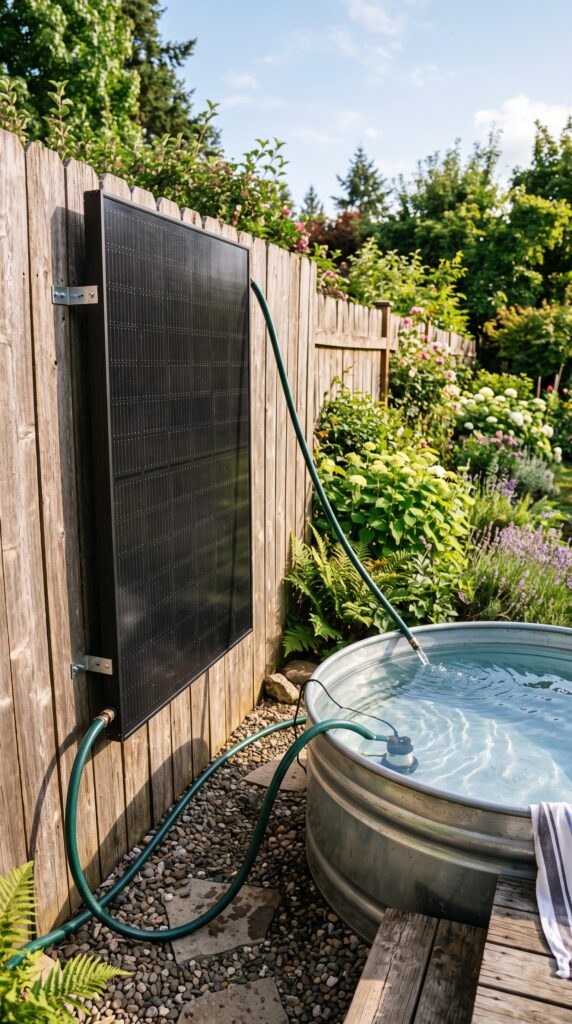
One thing people don’t always think about upfront is water temperature. In the height of summer, a metal tank sitting in full sun can actually get uncomfortably warm — almost bathtub hot. In spring and fall, the reverse problem applies: the water stays chilly enough to limit how long you can actually enjoy it.
Heating Options
A solar heating panel is the lowest-running-cost option for the cooler months: water is pumped through dark panels in the sun and returns to the tank warmer. It is not instant — it works over the course of a sunny day — so pair it with a cover at night to hold the heat. Electric heaters and heat pumps also work, but they draw far more power and add to your running costs.
On the opposite end, if your tank overheats in direct summer sun, a shade sail or umbrella positioned strategically above the water can drop the surface temperature by several degrees and make midday swimming actually enjoyable.
Monitoring Water Temperature
A floating pool thermometer is a small, worthwhile purchase. It lets you check the water at a glance, so you know whether heating is doing anything and whether the water is comfortable before anyone gets in. Most swimmers find about 26–30°C (78–86°F) comfortable — use the reading as a guide, not a target.
5. Get In and Out Safely
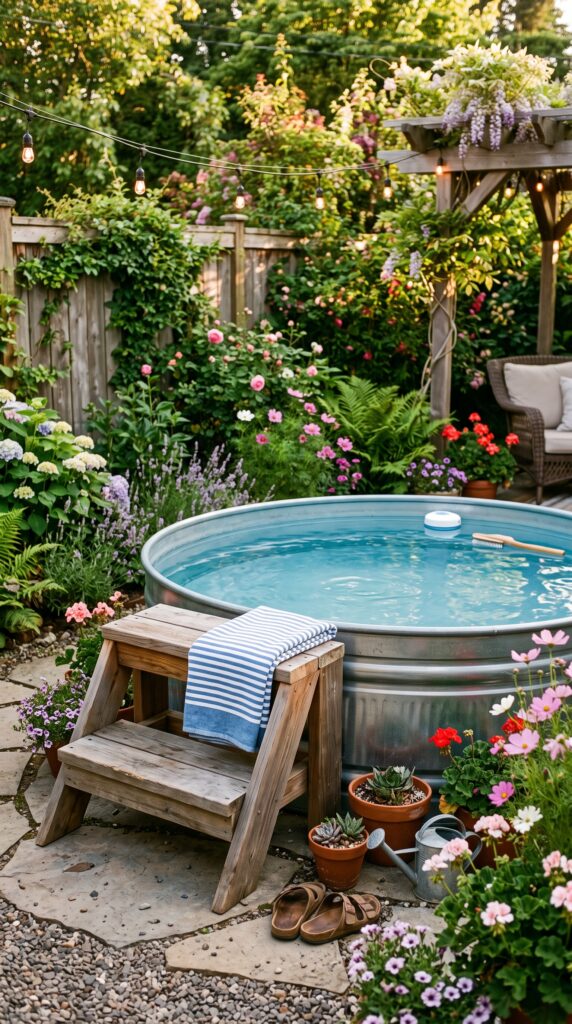
It’s easy to overlook entry and exit logistics until you’re standing next to a 2-foot-tall steel wall in a wet swimsuit trying to figure out how to get out gracefully. A good step or ladder makes the experience dramatically better — and safer, especially for kids and older adults.
A purpose-built pool ladder or sturdy outdoor steps are the safest option for a two-foot tank wall. Choose steps with a wide, non-slip tread, and a handrail if anyone in the family is less steady on their feet. Whatever you use, it must sit flat, take an adult’s full weight, and not slide when wet.
If you’re building a wood platform deck around your tank (a very popular stock tank pool idea), you can also frame the deck at the same height as the tank rim, which eliminates the need for a ladder entirely and creates a seamless, polished look.
6. Style It Like an Outdoor Room
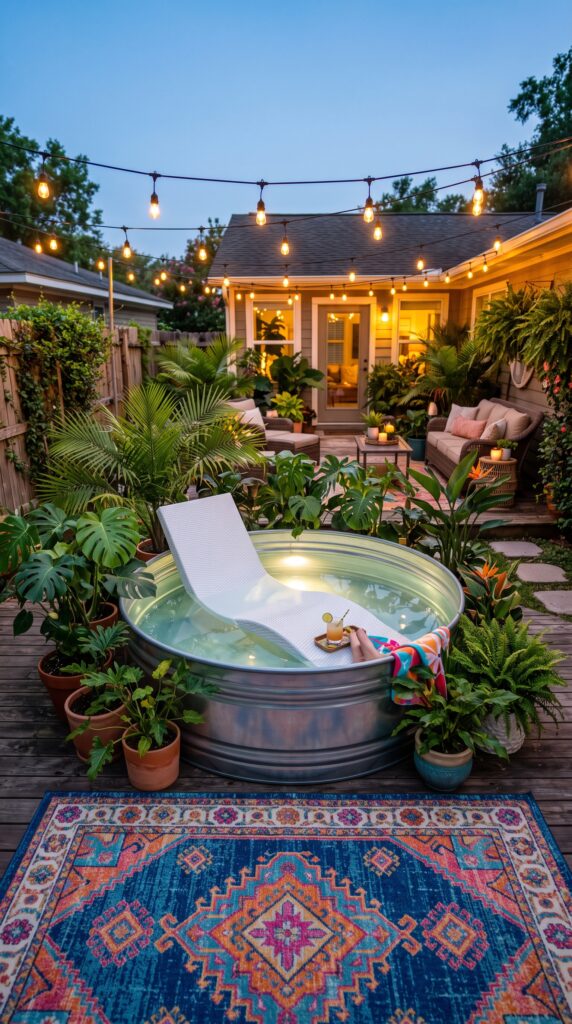
This is where stock tank pool ideas really get fun. The tank itself is just the beginning — how you style the space around it is what turns a farm supply purchase into a genuine backyard destination.
7. Create an Outdoor Living Space Around the Tank
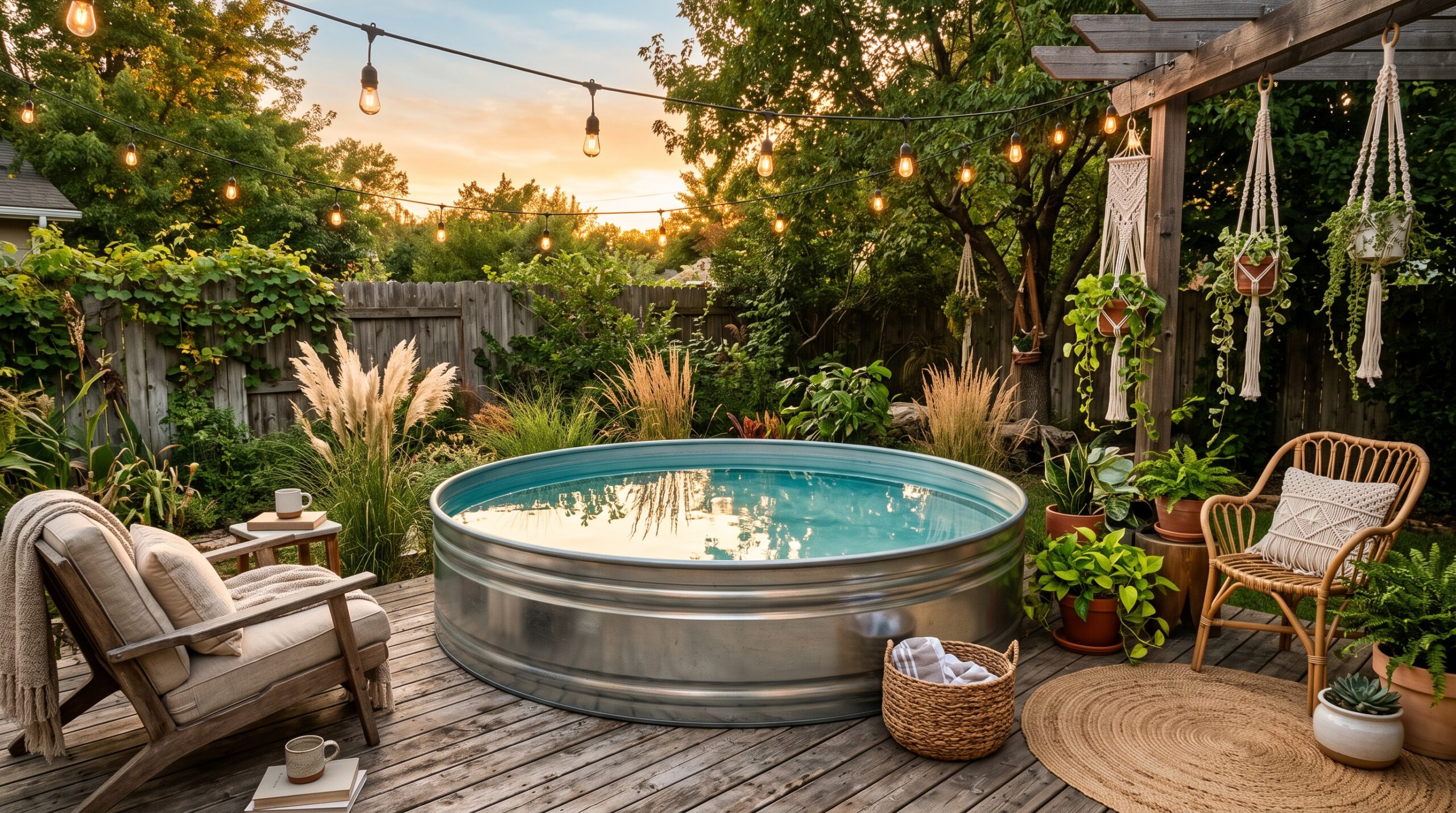
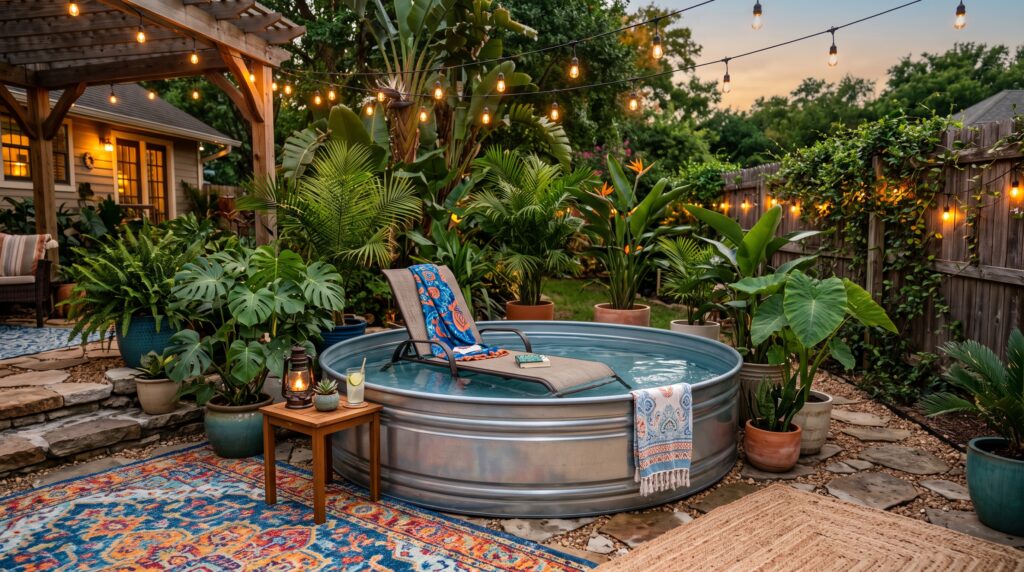
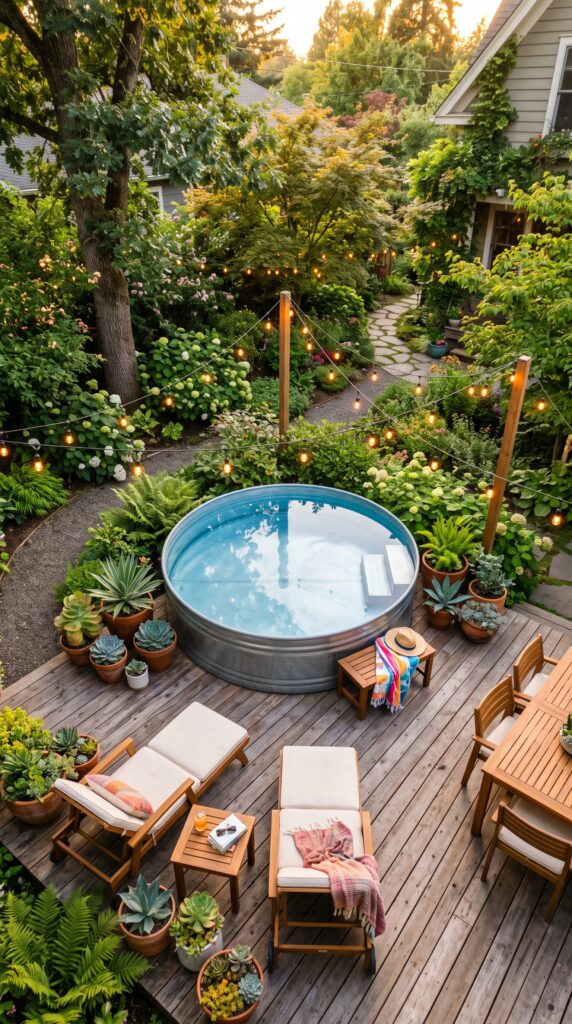
Think about the tank as the anchor point of a larger outdoor room. A simple wood platform deck built around the base of the tank elevates the whole look and gives you flat, splinter-free ground to walk on. Add an outdoor rug, a couple of low-profile chairs, and some potted plants, and the space starts to feel like something out of a boutique hotel.
String lights are almost universally popular with stock tank pool setups, and it’s easy to see why — they’re inexpensive, easy to install, and completely transform the vibe after dark.
8. Add a Luxury Touch or Two
If you want to lean fully into the backyard oasis look, add an in-pool lounger or a ledge shelf: a wide shelf at water level doubles as a drinks rest and a place to sit with your feet in the water. Built-in seats use up a surprising amount of space in a small pool, so add them only if you can still stretch out and float.
For readers who find the stock tank a little too small for their family’s needs but still love the DIY aesthetic, the Bestway Steel Pro MAX Above Ground Pool is a natural next step. It offers a slightly larger footprint with a built-in liner and more capacity, while still delivering that approachable, assemble-it-yourself experience at a reasonable price point.
To finish the look, these above ground pool deck ideas show how a simple platform turns a bare tank into a proper backyard feature.
Whatever you choose, treat the pool as part of the garden, not a separate object sitting in it. Plan seating, shade and planting around the tank, and the whole yard will look deliberate rather than improvised.
9. Cover the Tank Between Swims
A cover is one of the simplest upgrades in any list of stock tank pool ideas. Draped over the tank between swims, it keeps leaves and dust out, slows the loss of chlorine to sunlight and helps hold heat overnight. A piece of plywood, a solar cover cut to size, or a simple tarpaulin clipped to the rim all do the job — just weigh it down on windy days. Never leave a rigid cover on while children are using the pool, and always remove it fully before anyone gets in.
Final Thoughts on Getting Started
Stock tank pool ideas work because they’re rooted in a genuinely good concept: a durable, affordable container, a basic filtration setup, and a little creativity in how you style the space around it. You don’t need a huge budget, a large yard, or any special skills to pull this off.
Start with the right tank, invest in a proper filter, keep your water chemistry in check, and then have fun with the details. The best stock tank pool ideas aren’t the ones with the biggest budgets — they’re the ones built with intention.
The hardest part is usually making yourself stop scrolling through inspiration and actually placing the order. Once you do, you’re usually swimming within a weekend.
Frequently Asked Questions
How much does a stock tank pool cost?
For most stock tank pool ideas, the tank is the main cost, followed by a filter pump, fittings and water treatment. Prices differ by size, supplier and whether you buy new or used, so check current local prices before you commit to a budget.
How do you keep a stock tank pool clean?
Run the filter pump every day, keep free chlorine between 1 and 3 ppm, test the water at least once a week, skim leaves off the surface and cover the tank between swims. If the water turns cloudy, check the chlorine first and run the pump longer before adding anything else.
Does a stock tank pool need a filter?
Yes, if you want to swim in it for more than a day or two. Without a filter, leaves and body oils build up fast and the water goes cloudy. A pump sized to your tank’s volume, plus chlorine, is the practical minimum.
Can you heat a stock tank pool?
Yes. For stock tank pool ideas in cooler climates, a solar heating panel is the cheapest option to run, while an electric heater or heat pump warms the water faster and costs more to run. A cover at night makes the biggest difference to holding whatever heat you have gained.
How long does a stock tank pool last?
A galvanised steel tank is built as farm equipment, so it is made to live outdoors for years. How long yours lasts depends on water care, whether it is drained and dried for winter, and how it is stored. Keep the water balanced and cover it when it is not in use.