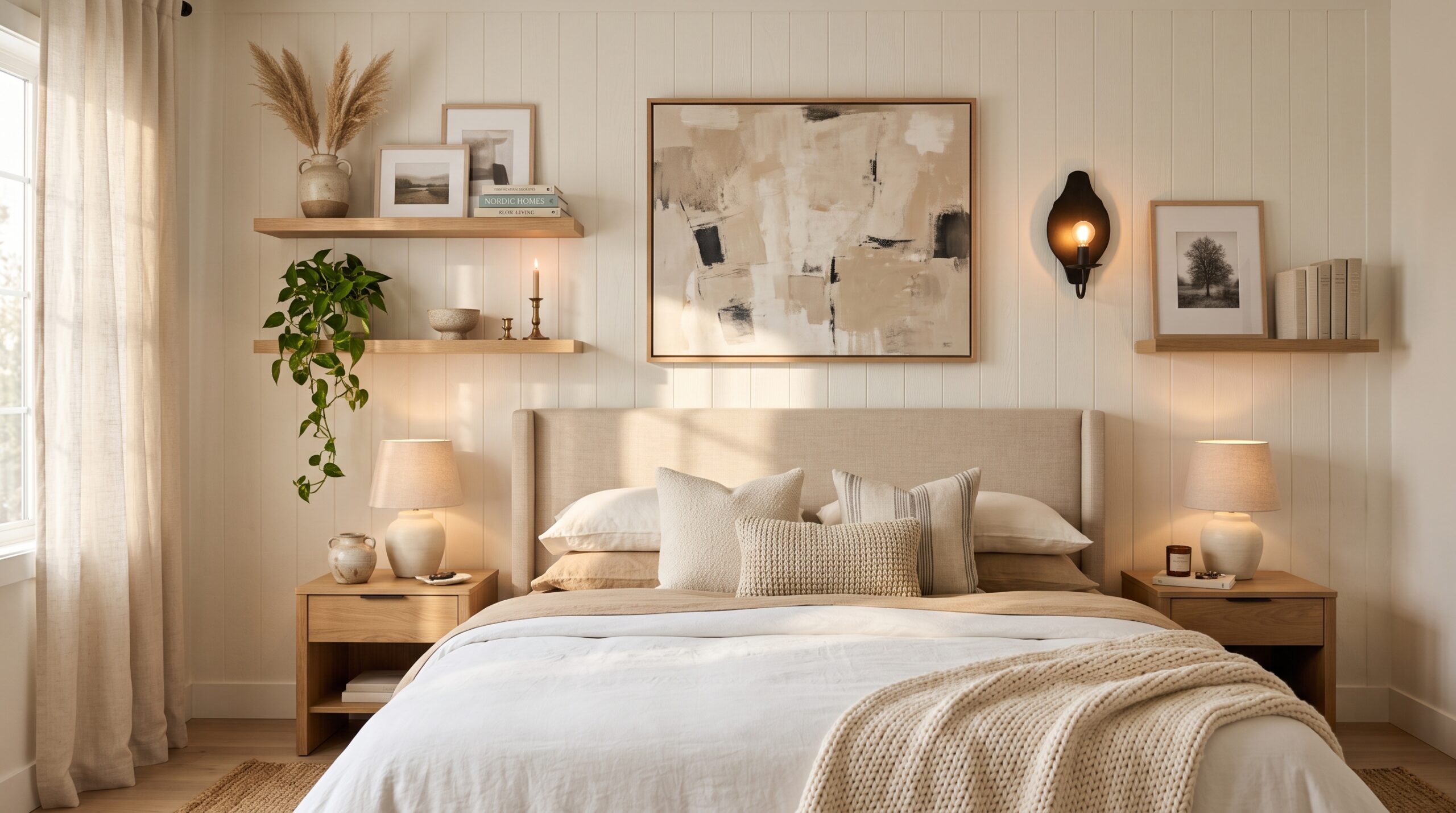
A blank bedroom wall is not a lack of taste. It is usually a lack of a plan. When you decorate bedroom walls without deciding on a focal point, a size and a colour palette first, every picture, shelf and frame has to compete for attention, and the wall ends up looking either empty or cluttered. This guide gives you seven practical fixes you can work through in order, with measurements, steps and the mistakes to avoid, so you can decorate bedroom walls with confidence and finish with a room that feels calm and settled.
In this guide
- Why bedroom walls feel hard to decorate
- 1. Choose one focal wall
- 2. Hang art at the right height
- 3. Size art to the furniture below it
- 4. Use frames that suit the room
- 5. Choose the colour palette before you buy
- 6. Add light, texture and shelves
- 7. Combine pieces, then edit
- Frequently asked questions
Why bedroom walls feel hard to decorate
When you decorate bedroom walls, most of them fail for one of three reasons. The first is scale: a single small frame on a wide wall looks lost, while a large frame squeezed between a window and a wardrobe looks cramped. The second is height: art hung too high floats away from the furniture it should relate to, so the wall and the bed look like two separate rooms. The third is colour: bedding, curtains and frames are chosen at different times, in slightly different whites, creams and greys, and nothing quite ties them together.
Work through the fixes below in order when you decorate bedroom walls. Decide where the eye should land first, then get the height and size right, then choose frames and colour, and only then add light and texture. If you work in that order, each decision makes the next one easier, and you are far less likely to buy a frame you later have to return. Start by standing in the doorway, which is how you and your guests see the room first, and note the one wall that draws your eye. That is usually the wall behind the bed.
1. Choose one focal wall
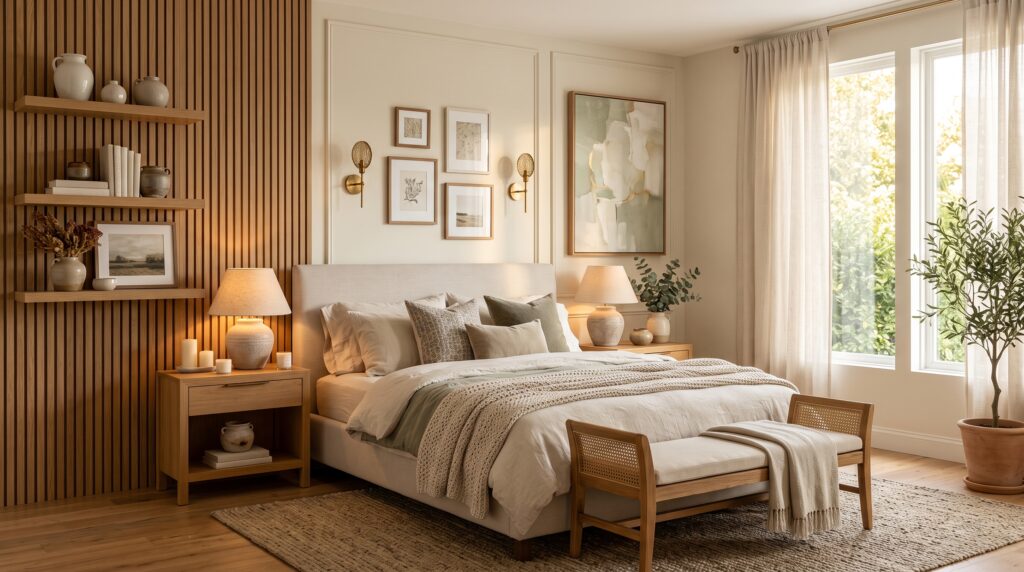
A focal wall is the wall your eye rests on when you enter the room, and in most bedrooms that is the wall behind the headboard. Give that wall one clear job: one large piece of art, one gallery arrangement, or one shelf display. Leave the other walls quieter, with a single small frame, a mirror or nothing at all. When every wall shouts, none of them is heard, and the room feels busy even when it contains very little.
To choose your focal wall, stand in the doorway and look at the bed, then look at the wall opposite it. The bed wall is the right choice in most rooms because the bed is the largest piece of furniture and already anchors the space. If the bed sits under a window, choose the longest plain wall instead and let the window stay clear. Once you have chosen, plan the whole arrangement on that wall before you hang anything, using paper templates cut to the size of each frame and fixed to the wall with painter’s tape. Move them around for a day and live with the layout before you make a single hole.
2. Hang art at the right height
Height is the single most common mistake when people decorate bedroom walls, and it is also the easiest to fix. For a picture standing on its own, aim for the centre of the artwork to sit about 145 cm (57 inches) from the floor, which is roughly eye level for most adults. That is the height galleries commonly use, because it lets you look at a picture without tilting your head up or down.
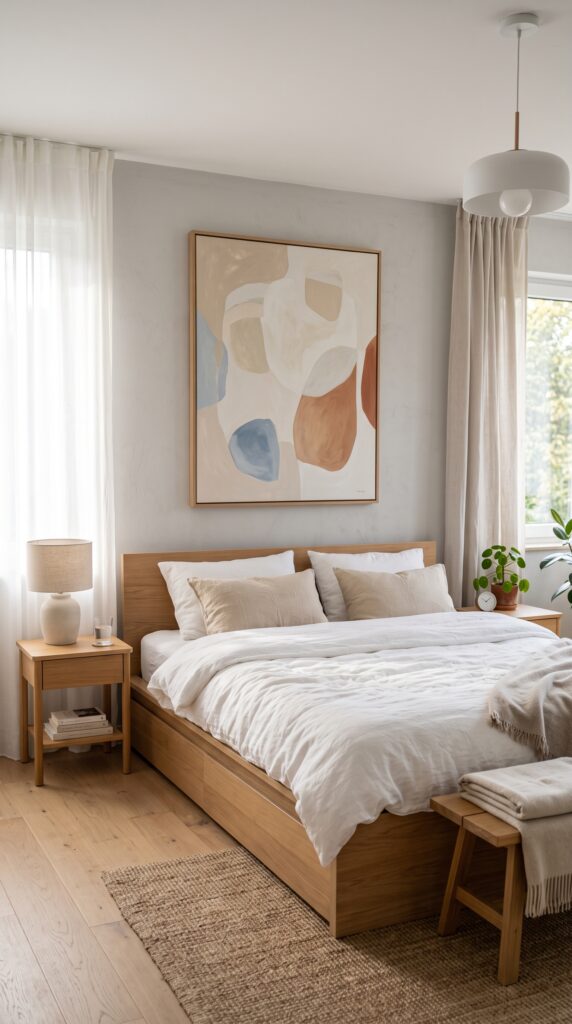
Above furniture the rule changes, because the art should relate to the furniture below it rather than to the floor. Hang a picture above a bed, headboard, chest of drawers or console so that the bottom of the frame sits 15 to 20 cm above the top of the furniture. Measure from the top of the headboard, not from the mattress, and mark the wall with a pencil before you drill.
Check the height with a spirit level, step back to the doorway and look again, and only then fix the hook. If the picture still feels high, it probably is: lower it by 5 cm and look again rather than adding a second picture to fill the gap.
3. Size art to the furniture below it
When you decorate bedroom walls above a bed, a picture that is too small is the second most common mistake. As a starting point, a single piece above a bed or chest of drawers should be about two-thirds to three-quarters as wide as the furniture below it. For a standard double bed about 150 cm wide, that means art roughly 100 to 115 cm wide. For a king-size bed about 180 cm wide, aim for roughly 120 to 135 cm. A piece narrower than half the width of the bed will look like an afterthought, however beautiful it is on its own.
If one large piece is out of reach, use a group instead. Two or three frames of the same height, hung as one block, can fill the same width. Treat the group as a single rectangle: measure the whole block, including the gaps, and size it to the same two-thirds to three-quarters rule. Keep the gaps between frames even, at 5 to 8 cm, and keep the outside edges level. Paper templates help here too. Cut them to the exact size of each frame, tape them up, and photograph the wall from the doorway before you commit.
4. Use frames that suit the room
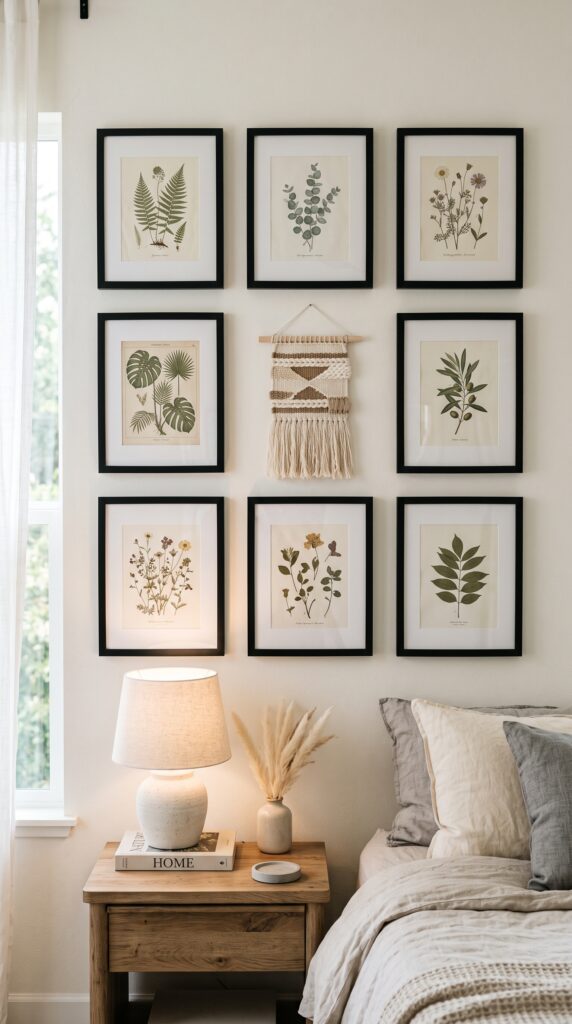
Frames do more than protect a print. They set the mood of the wall, and they either connect a picture to the room or fight against it. They matter more than most people expect when they decorate bedroom walls. A thin black or dark wood frame suits most bedrooms because it reads as a clean line and lets the image do the work.
A chunky, ornate frame suits a traditional room but can overwhelm a small print in a small bedroom. A pale oak or white frame suits a light, calm room but can disappear against a white wall, so leave a mount, or mat, of unprinted space around the image to give it definition.
Keep to one or two frame finishes in a room, and repeat them. A black frame above the bed, a black frame on the opposite wall and black bedside lamps will look deliberate. Five different finishes will look accidental, even if each one was chosen carefully. The same applies to mounts: use the same mount colour and width across a group. If you are framing a photograph, print it at least a little larger than you think you need. A small print in a large frame with a wide mount looks generous; a large print squeezed into a frame that is too small looks like a mistake.
5. Choose the colour palette before you buy
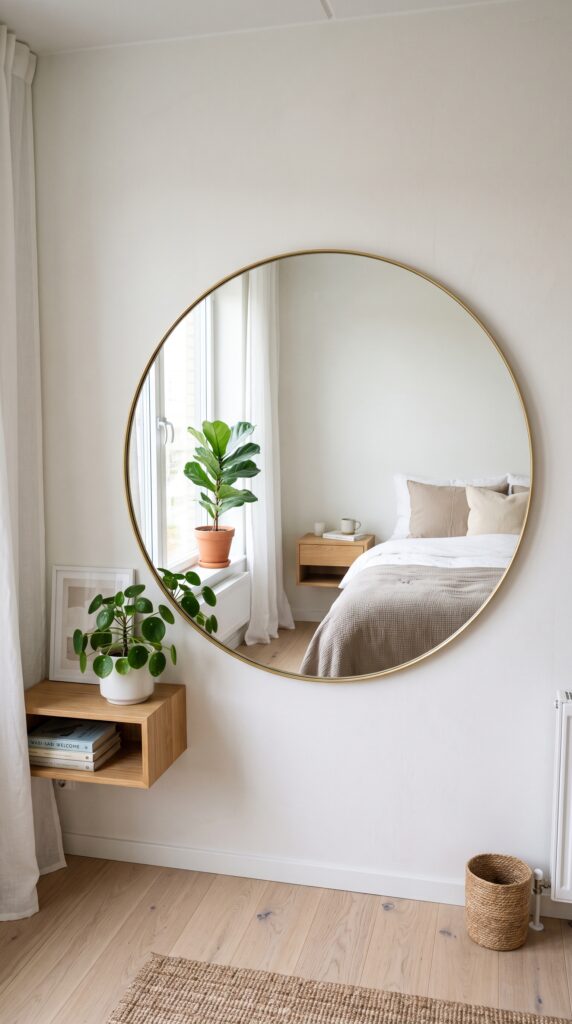
Colour is where most bedroom walls go wrong, because art is often bought first and the room is expected to follow it. Reverse the order. Choose three colours for the room: a main colour for the walls and bedding, a second colour for larger pieces such as curtains or a throw, and one accent colour for frames, cushions and small objects. Then, when you decorate bedroom walls, choose wall art that contains at least two of those three colours, so the picture belongs to the room rather than sitting on top of it.
If your bedroom is mostly warm white, cream and pale wood, look for art with warm neutrals, soft sage, clay or muted terracotta. If it is mostly cool grey and white, look for art with slate blue, soft green or charcoal. Test paint and fabric together in daylight and again in the evening under your bedside lamps, because artificial light warms most colours. A small painted swatch card held against the bedding and the frame tells you more than a colour name on a tin ever will. If you are renting and cannot paint, use the same three colours in bedding, art and a throw, and the wall will still feel planned.
6. Add light, texture and shelves
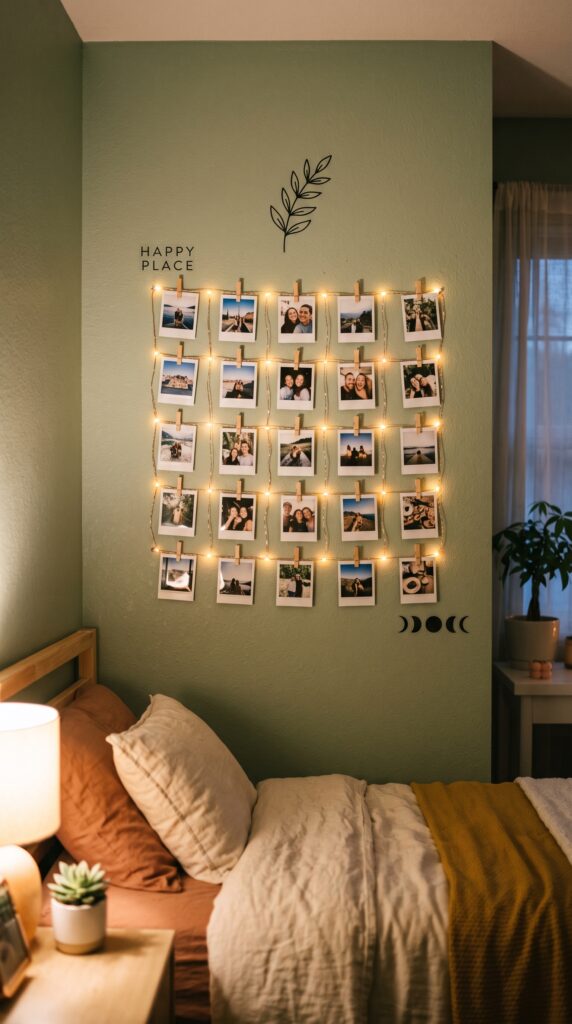
A flat wall comes alive when you add a second layer. A wall light or picture light above or beside a frame makes the art visible in the evening and adds a warm pool of light to the room. Warm white light, around 2700K, suits bedrooms because it flatters skin tones and bedding. Avoid a bright, cool bulb above art in a bedroom: it makes the wall feel like a gallery corridor rather than a place to rest. If you do not want wiring, a battery picture light or a small wall light on a shelf does the same job without an electrician.
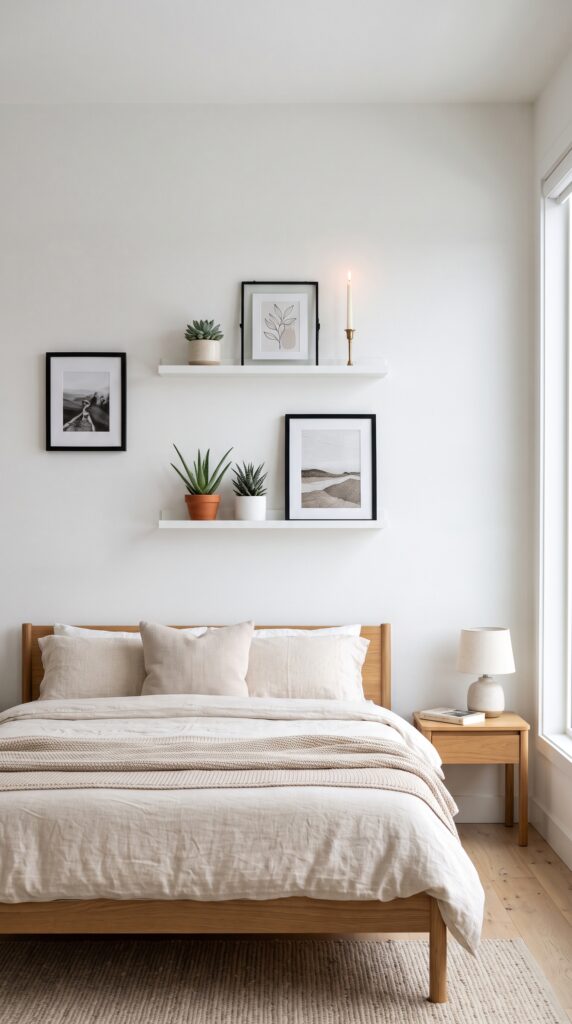
Texture does the same work as colour when you decorate bedroom walls, quietly. A woven wall hanging, a fabric panel, a rattan tray used as wall decor, or a wooden shelf with a vase and a book all soften a hard, flat wall. Floating shelves work best when they are planned like art: one shelf holding three to five objects, with space between them, beats two crowded shelves.
Fix shelves into studs or use fixings rated for the weight you plan to put on them, and keep anything heavy, such as a stack of books or a ceramic vase, off a shelf directly above a bed. For more ideas on the lighting side, see these bedroom lighting ideas under $40, which cover affordable wall lights and bedside lamps that work with the art you have already hung.
7. Combine pieces, then edit
The final step when you decorate bedroom walls is to put the pieces together and then take something away. Hang the largest piece first, add the second largest, step back and look from the doorway. If two frames are fighting for attention, move the smaller one to another wall or remove it altogether. A finished wall usually has one clear hero, one or two supporting pieces, and empty space around them. Empty space is not a gap to fill. It is what lets the eye rest, and it is what makes a bedroom feel calm.
Work in this order on the day you hang things: clear the wall, lay every piece on the bed in the arrangement you planned, measure and mark the first hook, hang the hero piece, check it with a spirit level, then hang the supporting pieces one at a time.
Use the right fixings for your wall: picture hooks or screws into studs for heavier frames, and plasterboard fixings for hollow walls. For rented homes, use adhesive strips or hooks rated for the weight of the frame, follow the removal instructions exactly, and lean larger frames on a chest of drawers instead of hanging them. If the room still feels unfinished after this, the problem is often not the wall at all: read why your room feels off before you buy anything else, and browse the IKEA bedroom ideas pages for furniture and layouts that fit the wall plan you have chosen.
Frequently Asked Questions
How high should I hang a picture above a bed?
Hang it so the bottom of the frame sits 15 to 20 cm above the top of the headboard. For a picture on a bare wall with no furniture below it, centre the artwork about 145 cm from the floor. Measure, mark with a pencil and check with a spirit level before you fix the hook.
How big should wall art be above a bed?
Aim for art that is about two-thirds to three-quarters as wide as the bed below it. For a double bed about 150 cm wide, that is roughly 100 to 115 cm of art. A group of two or three frames can fill the same width if you measure the whole group, including the gaps, as one block.
How can I decorate bedroom walls in a rented home?
Use adhesive strips and hooks that are rated for the weight of each frame, and follow the removal instructions so you do not damage the paint. Lean large frames on a chest of drawers, use washi tape for lightweight prints, and put colour into bedding, cushions and a throw if you cannot paint the walls.
What should I put on a large blank bedroom wall?
To decorate bedroom walls that feel blank, start with one large piece of art, a gallery group sized to the furniture below it, or a single floating shelf with three to five objects. One generous piece fills a large wall far better than several small frames scattered across it, and it is easier to hang well.
How do I stop a gallery wall looking messy?
Keep to one or two frame finishes, use the same mount colour across the group, keep the gaps between frames even at 5 to 8 cm, and align the outside edges. Plan the layout with paper templates first, and remove one piece if the wall still feels crowded.
Start with one wall, one hero piece and the measurements above, and the rest of the room will follow. When you decorate bedroom walls in this order, focal point first, then height, size, frames and colour, you spend less, make fewer holes and end up with a bedroom that feels finished rather than filled.