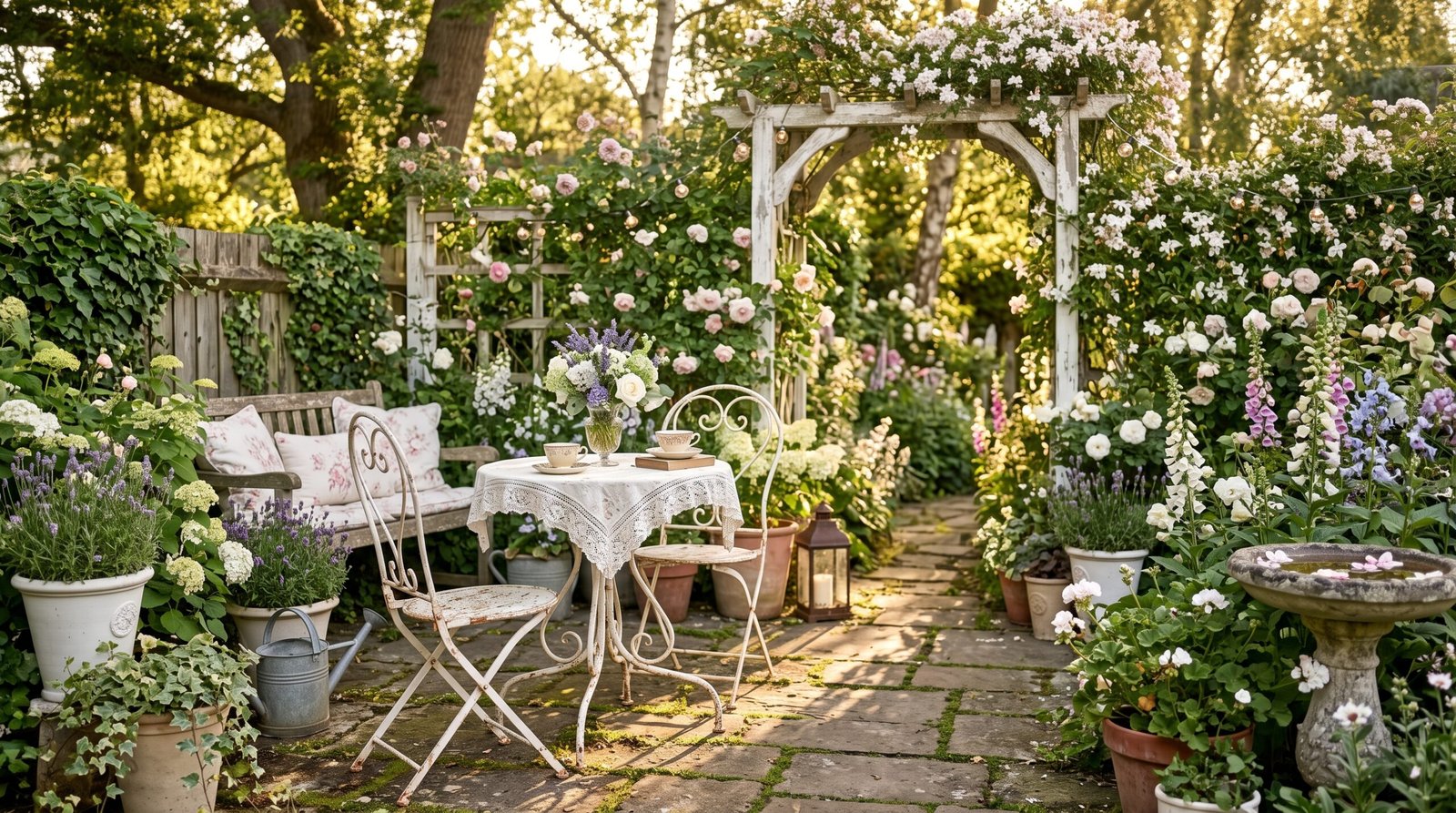
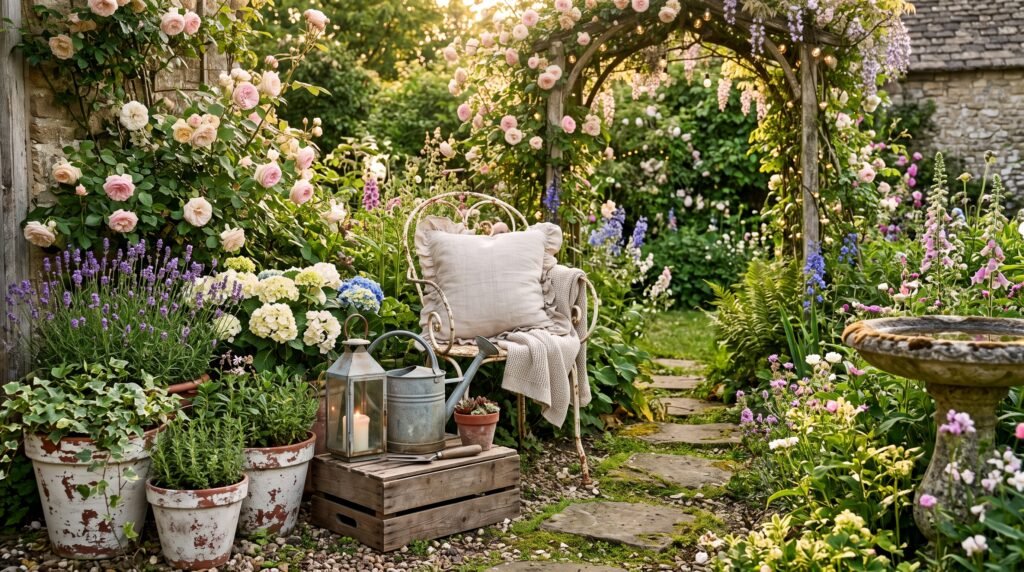
These vintage garden ideas will help you create a charming shabby chic outdoor space, whether you have a sprawling back garden or a modest balcony. The style is about layering beauty with imperfection — soft florals, sun-bleached finishes and plants that look as if they grew there — so the garden feels personal rather than freshly assembled from a catalogue.
Table of Contents
What Actually Defines the Vintage Garden Style
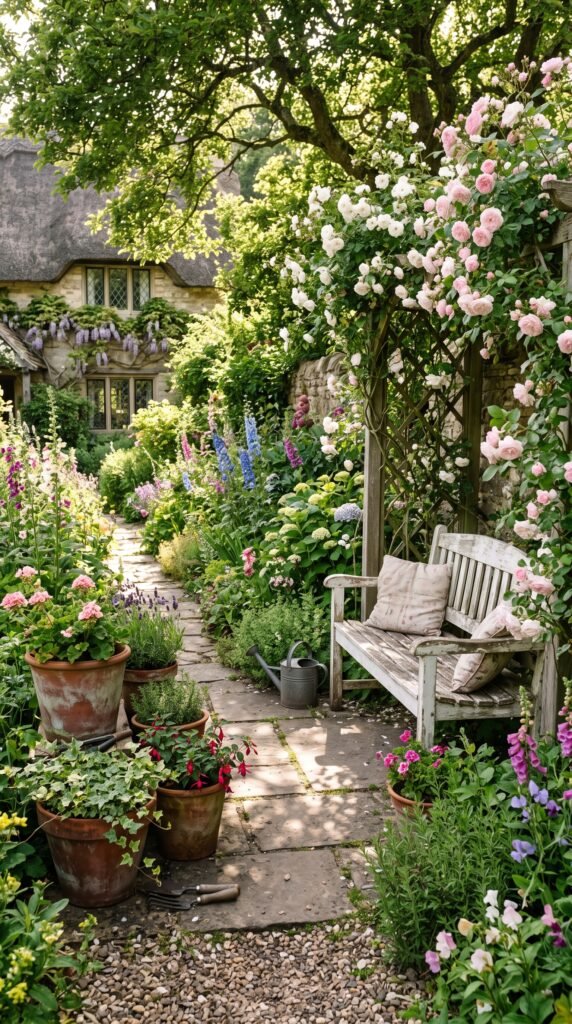
The vintage garden style sits at the intersection of nostalgia and nature. It’s not about recreating a specific historical period — it’s about evoking a feeling. Think of a space that looks as though it’s been lovingly tended for decades, where every piece has a story behind it and nothing looks too new or too deliberate.
The defining characteristics are weathered textures, soft color palettes, abundant plantings, and a mix of materials that somehow all belong together. Distressed wood, aged iron, worn terracotta, and cracked ceramic all coexist beautifully in this style because imperfection is the point. Unlike a contemporary garden where clean lines and uniformity matter, a vintage garden rewards asymmetry and character.
Understanding this philosophy changes how you shop, plant, and style your space. You stop chasing perfection and start appreciating patina.
Building Your Color Palette First
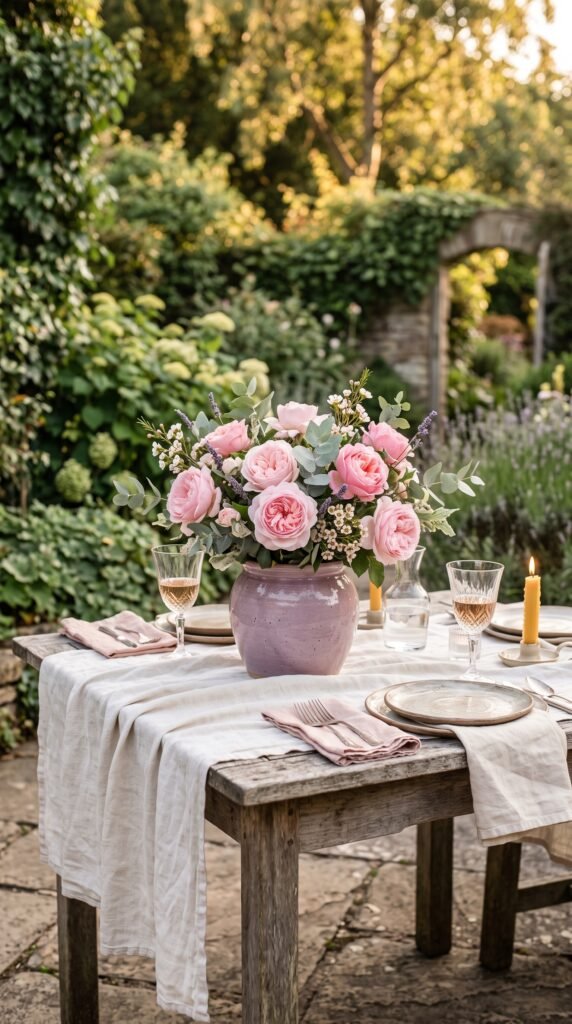
Color is the invisible structure of a vintage garden, and getting it right sets the tone for everything that follows. The palette you’re aiming for is soft, muted, and sun-washed — as though the tones have been gently faded by years of gentle afternoons.
Creamy whites and ivory are your foundation. From there, layer in dusty pinks, blush roses, pale lavender, powdery blue, and muted sage green. These shades work because they echo the natural hues of old-fashioned flowers and aged materials. Harsh, saturated colors like bright red or electric blue will immediately break the spell, so reserve those for small accents at most.
When you’re choosing outdoor cushions, tablecloths, or decorative accessories, run everything through the same filter: does it look like it could have faded gracefully in the sun? If the answer is yes, it belongs. The Soft Pastel Decor collection is a reliable starting point for finding pieces already calibrated to this palette, saving you the guesswork of mixing and matching from scratch.
Choosing Furniture That Looks Like It Has a History
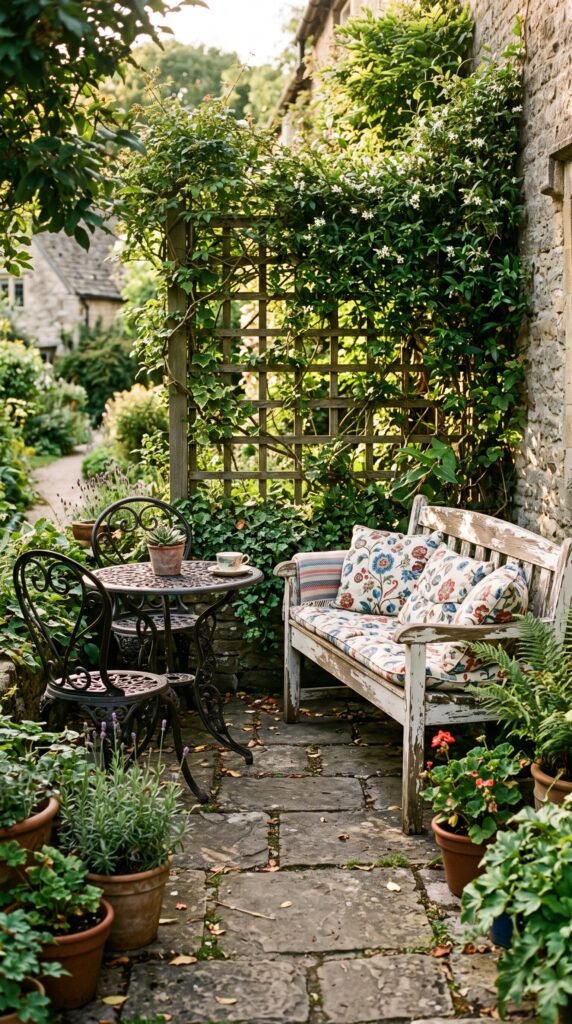
Your furniture choices are the backbone of the entire look, and the most important thing to remember is that matching is not the goal. Vintage gardens thrive on collected pieces — a wrought iron bench here, a wooden farmhouse table there, a pair of mismatched chairs that somehow feel intentional together.
Wrought iron is particularly valuable because it ages gracefully and brings that classic cottage-garden silhouette. Look for ornate scrollwork, curved backs, and a slightly rusted or painted finish rather than polished chrome or sleek modern forms. Distressed wooden furniture — especially anything painted in white, sage, or pale grey and allowed to chip at the edges — adds the kind of warmth that new furniture simply cannot replicate.
If everything you have is new, don’t worry. A few coats of chalk paint and some light sanding can transform a basic piece into something that looks decades older. The technique is simple: paint, let dry completely, then lightly sand the edges and raised details where natural wear would occur. The result is convincingly aged without requiring you to hunt through every flea market in the region. For pieces that are already styled for this aesthetic, Vintage Furniture offers options that skip the DIY step when time is short.
The Art of Antique and Repurposed Decor
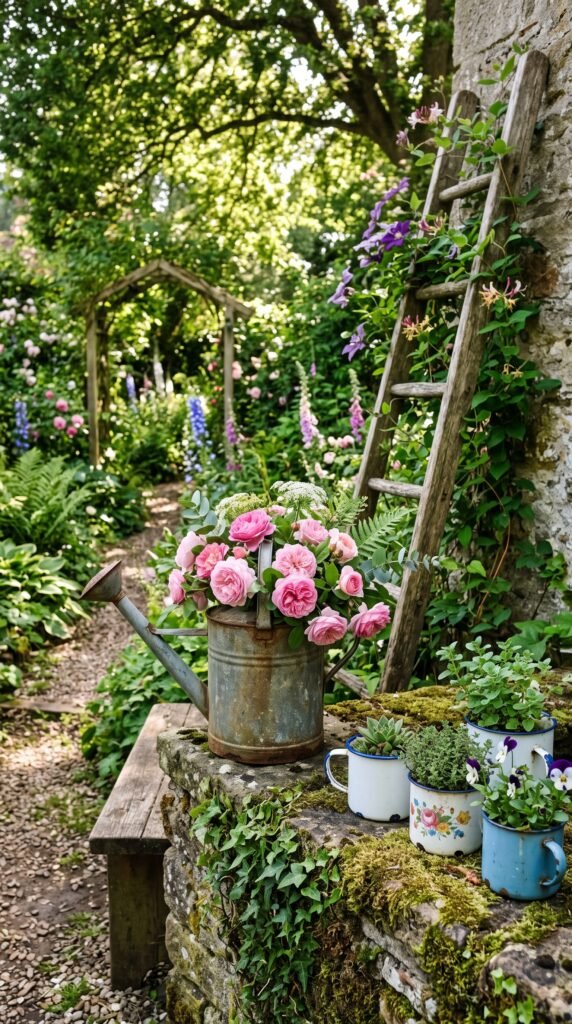
This is where vintage garden ideas move from style exercise to genuine creative expression. The objects you choose to display tell the story of your space, and the best vintage gardens feel like they’ve been curated slowly over time rather than purchased in a single afternoon.
Old watering cans make wonderful planters — fill them with trailing lobelia or compact lavender and leave them slightly dented, because the wear is part of the charm. Vintage teapots, enamelware bowls, and even old colanders with drainage holes can hold soil and flowers just as well as purpose-built containers. Wooden crates stacked at different heights create instant visual interest and work as both plant stands and storage.
Antique lanterns and candle holders add atmosphere once the sun goes down. Even a few pillar candles inside a weathered iron lantern transform an ordinary patio evening into something genuinely lovely. Flea markets, thrift stores, and estate sales are ideal hunting grounds, but online sources like Vintage Decor Finds can surface pieces you’d otherwise spend weekends searching for.
Cottage garden planting traditionally balances structure and softness: a strong shape, such as a path, an arch or a hedge, with loose, generous planting around it, so the garden feels romantic rather than messy.
Handmade Details That Give Your Garden Personality
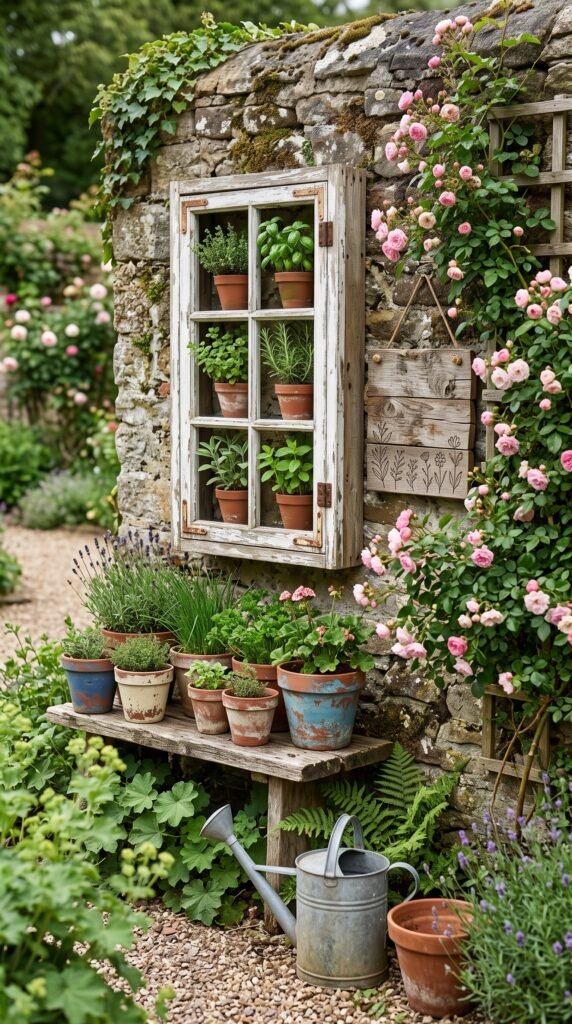
No vintage garden feels complete without at least a few handmade elements, and they don’t need to be complicated to be effective. Handmade pieces carry a warmth that even the best vintage-style shop items can’t fully replicate, because they hold the mark of genuine effort.
Painting terracotta pots is one of the easiest places to start. Use chalk paint in a soft colour, let it dry, then lightly distress the rim and raised sections with fine-grit sandpaper. Seal with a matte varnish to protect them outdoors. The result looks collected and characterful without being precious.
Mason jar lanterns are another weekend project worth the hour it takes. Fill clean jars with a small amount of sand to stabilise tea lights, tie twine or lace around the neck, and hang them from shepherd’s hooks or low tree branches. At dusk, the light they cast is genuinely magical. For more inspiration on handmade projects, DIY Garden Decor brings together the kinds of materials and kits that make these projects approachable even on a tight schedule.
Upcycled window frames, mounted on a fence or exterior wall and filled with climbing plants or small hanging pots, are another layer worth adding. They create vertical interest and a sense of architectural history in spaces that might otherwise feel flat.
Planting for a Romantic, Abundant Look
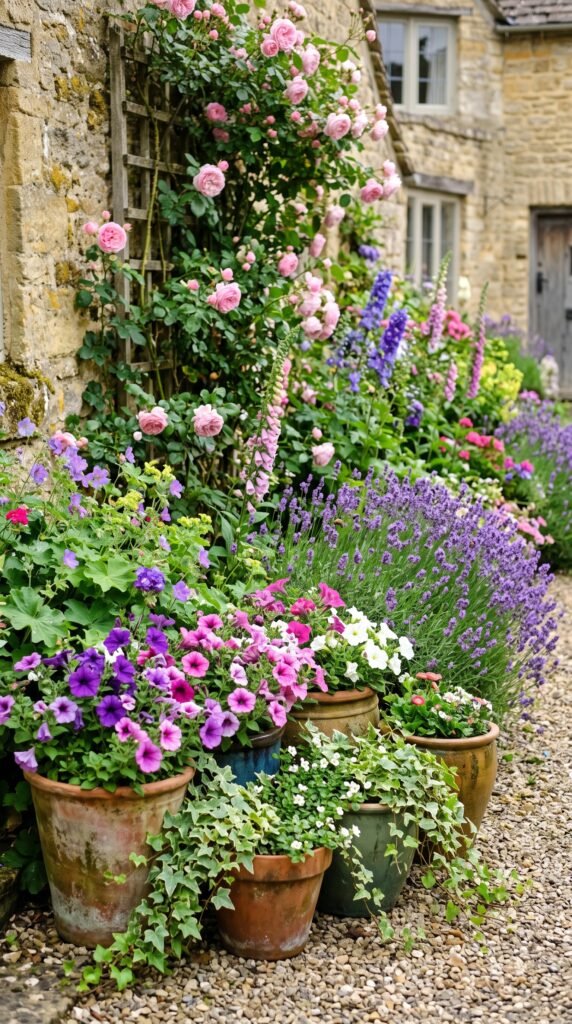
The plants you choose are just as important as the decor surrounding them, and the vintage garden leans heavily toward flowers with an old-fashioned personality. Think roses above all else — climbers along a trellis or fence, shrub roses in mixed borders, or miniature varieties spilling from a painted wooden box.
Lavender is almost non-negotiable. It contributes colour, fragrance, and a silvery-green texture that looks beautiful against weathered surfaces. Petunias in soft pink or white trail beautifully from elevated pots, while ivy and other cascading vines soften the edges of containers and walls alike. Foxgloves, sweet peas, hollyhocks, and cosmos all belong in this planting vocabulary — they have the loose, romantic structure that defines the style.
When arranging pots, the odd-number rule is genuinely useful. Groups of three or five read as intentional rather than accidental, and varying the heights within the group — tall at the back, trailing at the front — creates natural depth. Pot Styling Ideas includes containers already shaped for this kind of layered arrangement, from weathered urns to distressed metal tubs that plants settle into beautifully.
For roses, choose varieties with open, cupped blooms and strong fragrance, such as David Austin shrub roses. They suit the cottage and vintage look, repeat through the season and work well with lavender, catmint and other soft, billowing plants.
Layering Texture to Create Depth
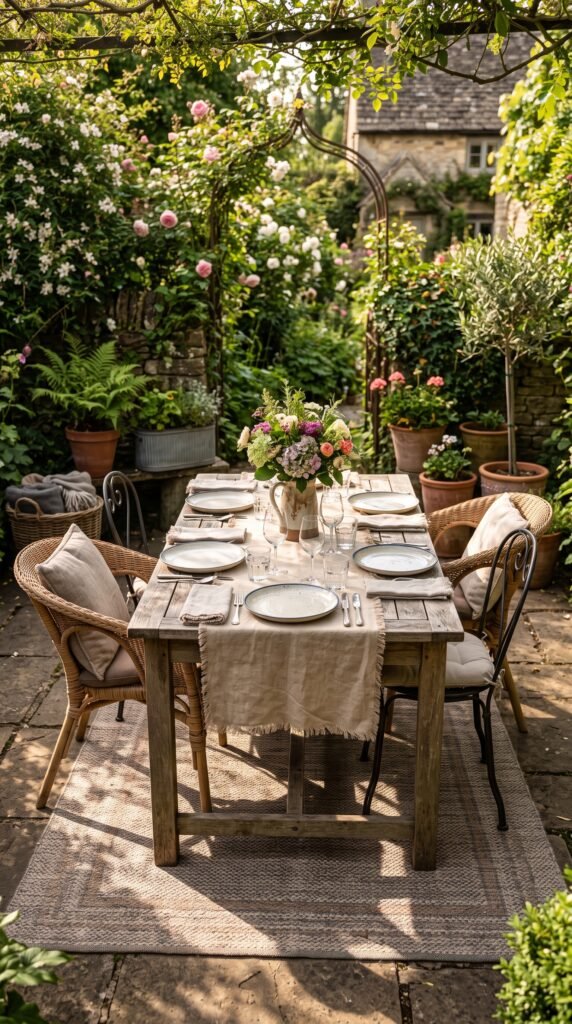
Texture is what separates a vintage garden that looks intentional from one that simply looks cluttered. The key is to think in layers — from the ground up, from hard materials to soft ones — so that every surface contributes something different to the overall feel.
Stone pathways or gravel underfoot anchor the space and give it permanence. Wooden furniture adds warmth and grain. Wrought iron brings structure and silhouette. Then softer elements — an outdoor rug in a muted pattern, a linen table runner, cushions in faded florals — introduce comfort and movement. This combination of hard and soft, rough and smooth, is what creates that lived-in cosiness that characterises the style at its best.
Layering also extends to plant combinations. Pairing a loose, billowing rose with the spiky structure of lavender and the fine texture of trailing herbs creates a tapestry effect that feels intentional without looking engineered. Outdoor textiles in muted, faded florals — a linen table runner, weatherproof cushions — add the same softness at ground level.
cheap vintage garden decor ideas that look expensive
Pulling the Whole Look Together
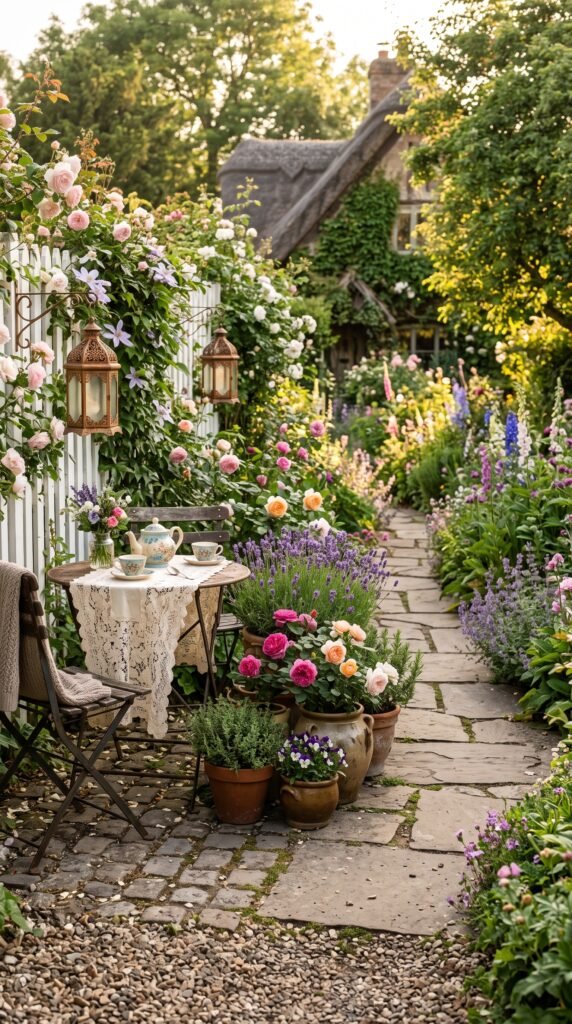
The most important thing to understand about vintage garden ideas is that the look builds over time — and that’s actually its greatest strength. You don’t need to buy everything at once or achieve a finished look in a single weekend. In fact, the gardens that feel most authentically vintage are usually the ones that have been assembled piece by piece, with each addition chosen because it spoke to the person tending the space.
Start with one strong anchor piece — a beautiful bench, an oversized urn, a section of fence covered in climbing roses — and let everything else grow around it. Add texture gradually. Seek out odd, imperfect pieces and give them a place. Keep your color palette consistent even as your decor evolves.
If you are beginning from scratch, do not try to buy everything at once. Set out the anchor piece and the main planting first, live with the space for a few weeks, and add decorative details only where the garden still feels bare.
The gardens that age most beautifully are designed around relationships — between plants and structures, between textures and colours, and between the garden and the people who use it. Keep that idea in mind whenever you add something new.
Mistakes to Avoid in a Vintage Garden
Do not paint every surface white at once — a garden needs a mix of finishes, and too much pale paint turns a romantic space into a stark one. Avoid planting in neat rows; vintage gardens look best when plants spill over paths and pots sit in loose groups of three or five. Do not buy everything new: a garden assembled from new, matching pieces looks like a showroom, not a garden with a history. And do not forget drainage — pots and watering cans used as planters need holes in the base, or the roots will rot after the first heavy rain.
More Vintage Garden Ideas
7 best vintage garden decor ideas that completely transform bland patios
vintage garden decor ideas for small gardens
Frequently Asked Questions
How do I start a vintage garden on a budget?
Start with what you already have: repaint old pots with chalk paint, turn a watering can or a crate into a planter, and buy plants in small sizes — they grow. Second-hand markets and car boot sales are the best sources for wrought iron, lanterns and terracotta, and one strong anchor piece matters more than a dozen small decorations.
What plants suit a shabby chic garden?
Choose soft, romantic plants that spill and self-seed: roses, lavender, catmint, foxgloves, sweet peas and trailing lobelia. Group them in odd numbers, mix heights and leaf shapes, and leave some gaps for the garden to fill in over the season.
How do I keep vintage furniture looking good outdoors?
Let wrought iron age naturally but brush off loose rust each spring and treat flaking areas with a rust-inhibiting paint. For wood, use exterior paint or oil and keep the legs off damp soil. Bring cushions and fabric indoors in wet weather, and store lantern candles somewhere dry.
Can I create a vintage garden in a small space or on a balcony?
Yes. Use vertical space: a tiered plant stand, wall-mounted pots and a small folding bistro set. Choose one or two colours, keep the pots in a consistent finish, and let a climbing rose or sweet peas soften the walls.