
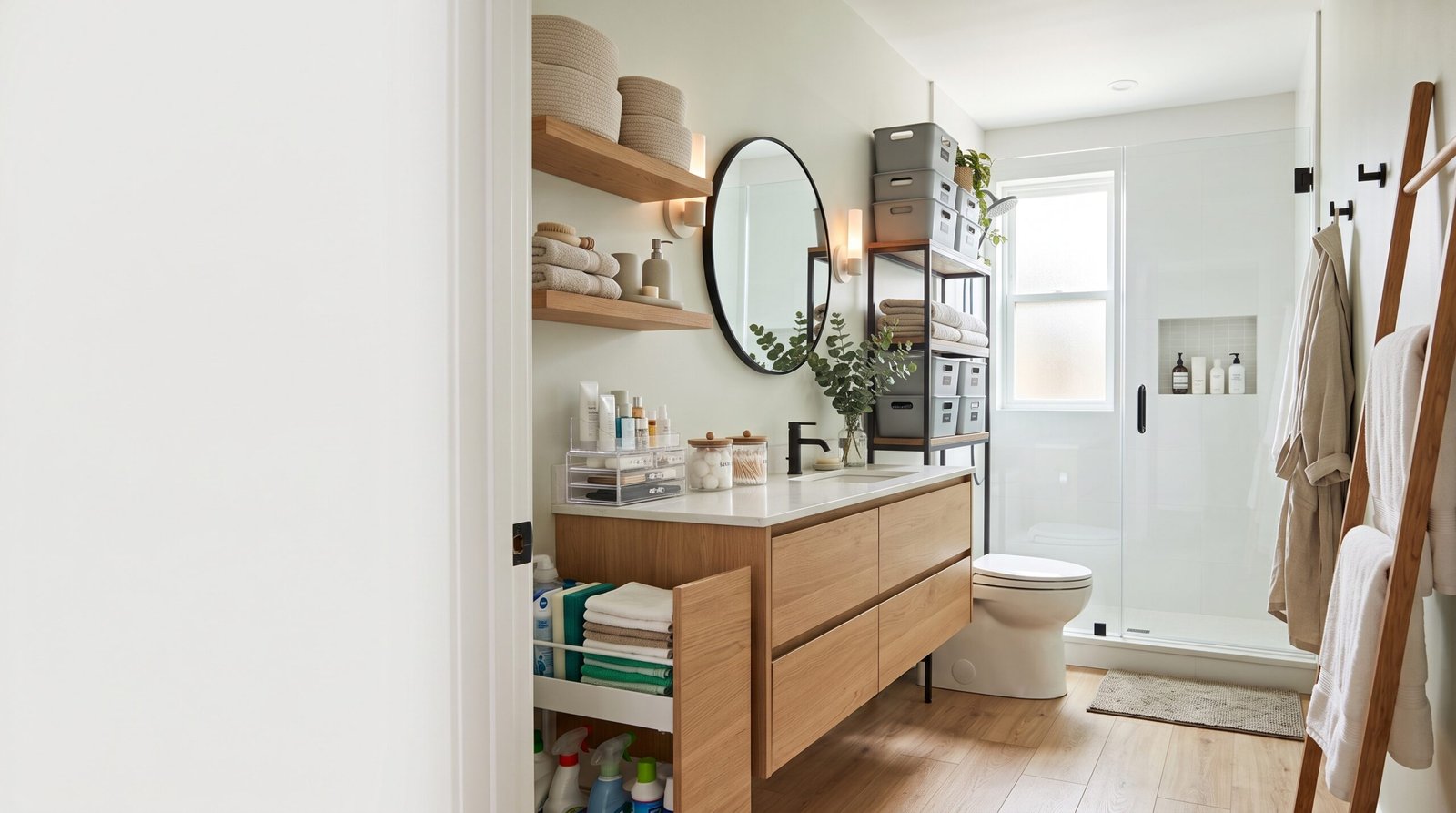
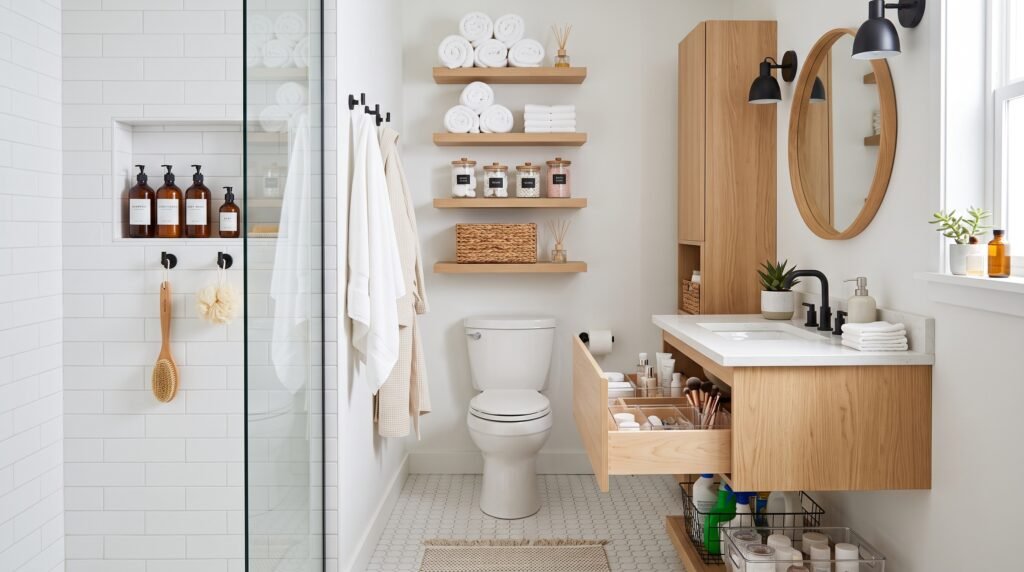
If you’ve ever stared down a cluttered countertop and wondered how anyone pulls off tiny bathroom organization without losing their mind, you’re in exactly the right place. These aren’t Pinterest-perfect tips that require a renovation budget. They’re real, repeatable wins that work in actual small bathrooms — the kind with no linen closet, one sad shelf, and approximately zero counter space.
Why Tiny Bathroom Organization Feels So Hard (And Why It’s Not Your Fault)
Most bathrooms under 50 square feet weren’t designed with real storage in mind. Builders toss in a vanity and a mirror and call it done. So when you move in with a full skincare routine, hair tools, and enough toiletries to survive a small emergency, you’re already working against the architecture.
The good news? You don’t need more space. You need smarter systems.
Here’s the thing — most tiny bathroom organization problems come down to three things: too much stuff, too few zones, and storage that doesn’t match how you actually use the room. Fix those three, and everything else clicks.
Step-by-Step Guide to Tiny Bathroom Organization That Actually Sticks
Step 1: Edit Before You Organize
This is the step most people skip. They go straight to buying bins and baskets before they’ve dealt with the expired face wash from 2021 or the twelve half-empty shampoo bottles.
Pull everything out. Every single thing. Then sort into three piles: keep, toss, relocate. That last pile matters more than people think — a lot of items stored in bathrooms (extra toilet paper, towels, backup products) do better in a hallway closet or bedroom shelf.
Less stuff means less to organize. And less to organize means it actually stays organized.
Step 2: Map Out Your Zones
Picture this: you brush your teeth every morning in a blur, reaching for the same five things in the same order. Your bathroom should reflect that sequence. Organize by habit, not by product category.
A simple zone map for most tiny bathrooms looks like this. A daily use zone near the sink. A shower or bath zone near the tub. A hair and styling zone near the outlet. An under-sink zone for backstock.
When everything has a home that makes sense for how you move through your routine, you stop leaving things on the counter because you’re done using them.
Step 3: Go Vertical Fast
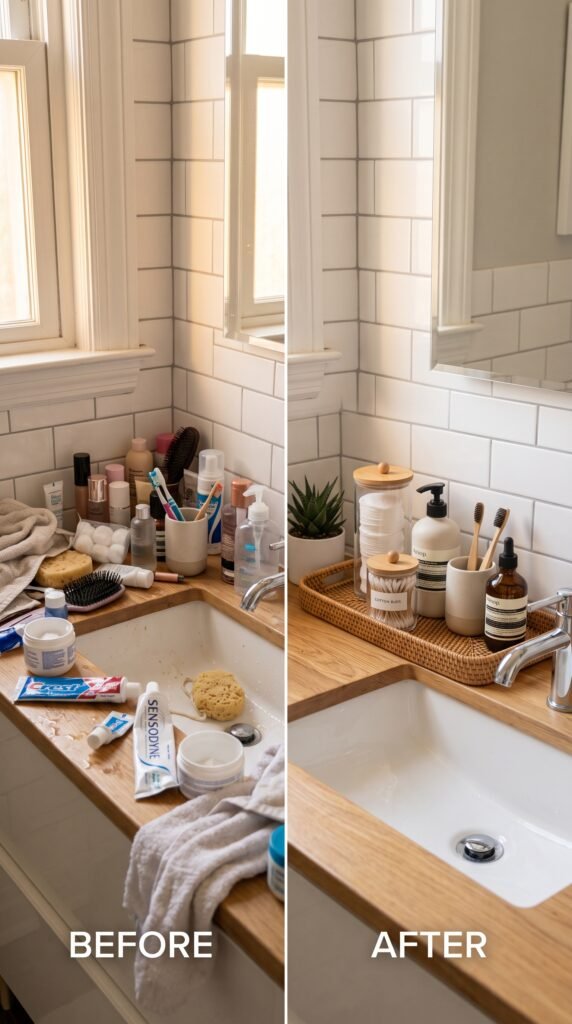
Counter space is your most valuable real estate. Stop storing things on it that don’t earn their spot.
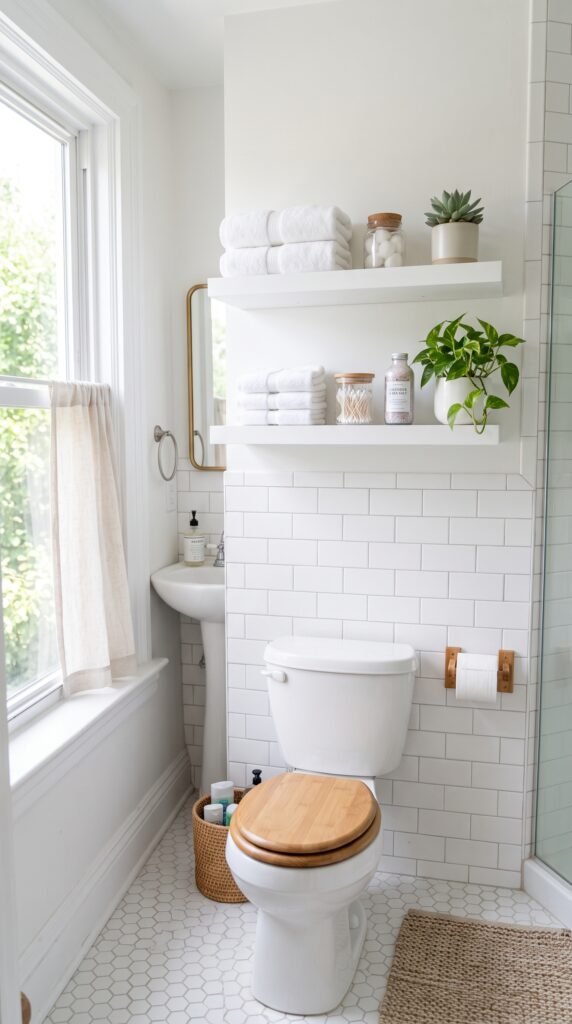
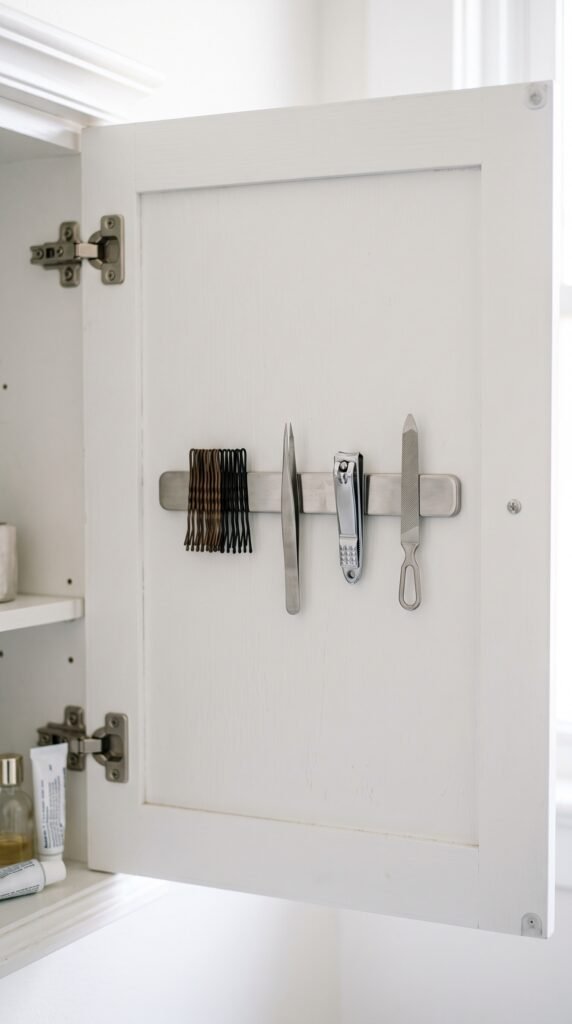
The wall above your toilet is one of the most underused spaces in a small bathroom. A simple over-toilet shelf unit can hold towels, toilet paper, candles, whatever you need. Add a wall-mounted magnetic strip inside a cabinet door for bobby pins and nail clippers. Hang a pegboard on a small empty wall for hooks, small baskets, and tool holders.
Vertical storage is the single biggest unlock for tiny bathroom organization in tight spaces.
Step 4: Use the Inside of Every Cabinet Door
This one’s a game changer and it costs almost nothing.
A few adhesive hooks or an over-the-door organizer on the inside of your vanity cabinet suddenly gives you space for hair dryer, brushes, or cleaning supplies. Command strips hold small caddies for flat items. A magazine-style wall file becomes a surprisingly good holder for styling tools.
You paid for every square inch of that cabinet. The door counts.
Step 5: Decant and Consolidate
Mismatched product bottles from five different brands aren’t just visually noisy — they’re space inefficient. Different shapes stack badly, fall over, and make it hard to see what you have.
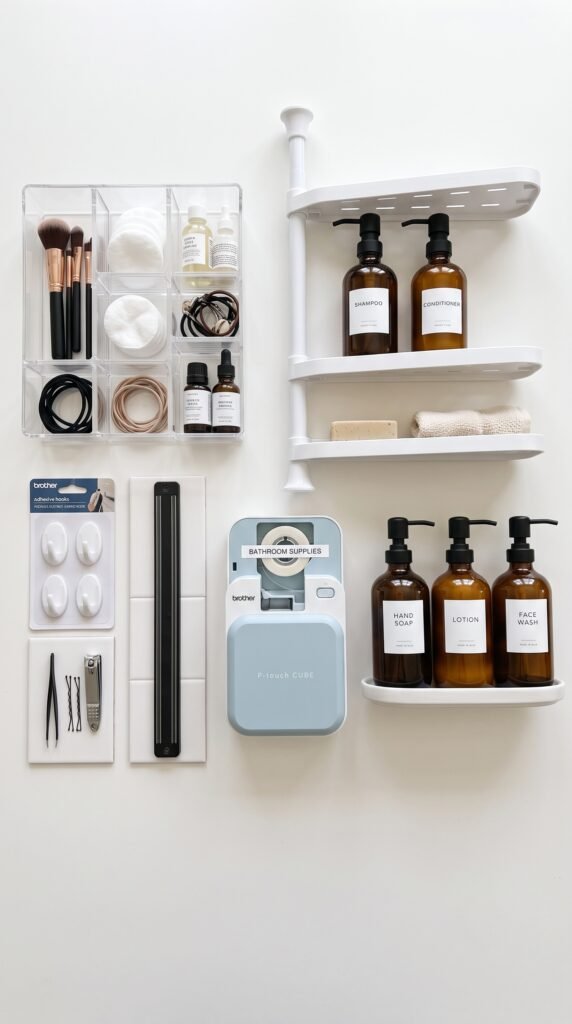
Decanting daily-use products into matching containers takes about twenty minutes and makes an immediate difference. Clear glass or simple white dispensers on the counter look intentional. They also make it faster to spot when something’s running low before you’re out mid-shower.
You don’t need to do every product. Start with shampoo, conditioner, and hand soap. See how it feels.
Step 6: Think In Layers Inside Drawers
Most bathroom drawers are a chaotic jumble of loose items. The fix isn’t a bigger drawer. It’s a divider.
Small bamboo or acrylic drawer organizers let you stack a second layer of small items — cotton rounds, lip balms, hair ties — above a first layer of flat items. You double the storage in the same drawer with zero renovation required.
best drawer organizers for small spaces
Step 7: Make the Shower Work Harder
A cluttered shower ledge or perpetually falling over shampoo bottles is a daily annoyance that adds up. A corner tension pole caddy or a rust-proof hanging caddy frees up the ledge entirely and keeps products sorted by person or by use.
Bonus: get everyone in your household their own caddy color or section. It stops the “who left this here” problem entirely.
Step 8: Use Magnetic Storage for Small Metal Items
Bobby pins. Nail clippers. Tweezers. These tiny things are responsible for more bathroom chaos than anything else because they disappear constantly and end up everywhere.
A small magnetic strip inside a drawer or cabinet door corrals them in seconds. You’ll wonder why you waited so long.
Common Tiny Bathroom Organization Mistakes to Stop Making
Buying Storage Before Editing
This is the number one mistake. And it’s easy to understand why it happens — organizing feels productive and shopping is satisfying. But if you buy baskets for a bathroom full of stuff you don’t actually need, you’ve just organized clutter. It’ll fall apart in a week.
Edit first. Always.
Choosing Style Over Function
A beautiful woven basket that lets dust and product residue fall through its gaps and then never gets cleaned is not helping you. Closed containers hide mess but need occasional clearing out. Open trays look great but require daily maintenance to stay tidy.
Be honest about which type of person you are before you buy. Neither is wrong, but buying the wrong one for your habits means the system fails.
Ignoring the Back of the Door
Most people use the inside of the bathroom door for exactly nothing. That’s real estate you’re leaving on the table. An over-the-door organizer with clear pockets holds an enormous amount of product without touching a single inch of counter or shelf space.
over-the-door organizer options
Keeping Backstock in the Bathroom
This one surprises people. Backup toiletries — extra shampoo, a spare deodorant, three bottles of conditioner you bought on sale — don’t belong in the bathroom. They belong in a closet or under a bed in a labeled bin. The bathroom is for what you’re actively using.
Move the backstock out and watch your bathroom suddenly feel twice as big.
Skipping Labels
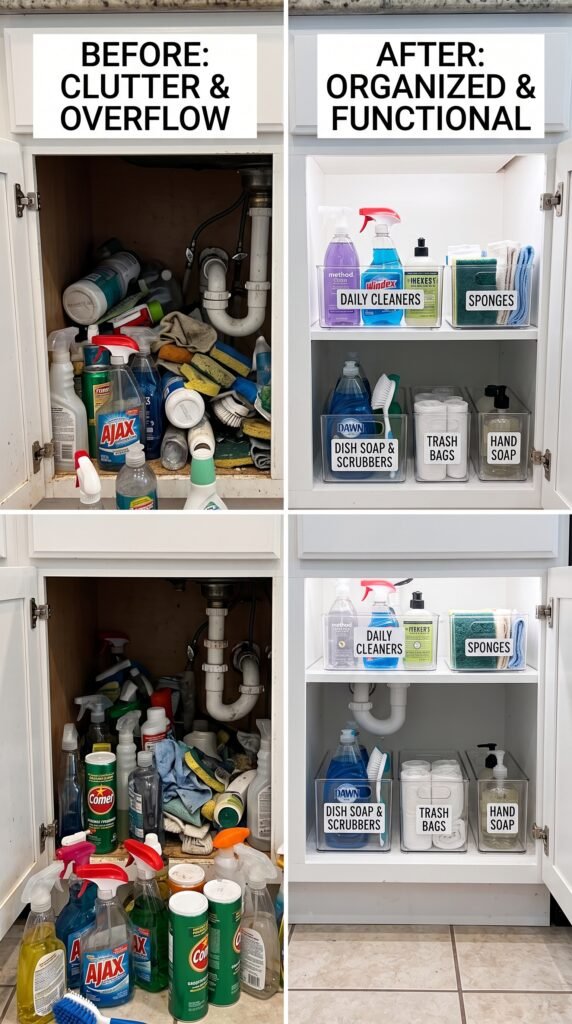
Even if you live alone, labels matter. They turn “a place you put things” into “a system.” Labeled zones mean things get returned to the right spot instead of just… wherever.
A label maker costs about fifteen dollars and takes ten minutes to use. It’s one of the highest-return organizing investments you can make.
Organizing Once and Walking Away
Here’s the truth about tiny bathroom organization: it’s not a one-time event. It’s a habit. Plan a five-minute reset every Sunday — just a quick scan to return things to their zones, toss empties, wipe surfaces. That five minutes protects the work you put in.
Without it, entropy wins. Every time.
Best Tools for Tiny Bathroom Organization
Acrylic Drawer Dividers
These are clear, stackable, and fit in almost any standard bathroom drawer. They’re not glamorous. But they work. The clear material means you can see everything at a glance, which keeps you honest about how much stuff you’re actually keeping.
Look for sets with multiple sizes — you’ll want small sections for hair ties and cotton rounds and a larger section for your full-size products.
Tension Corner Shower Caddies
No drilling, no adhesive damage to tiles, adjustable height. A good tension caddy sits between the floor and ceiling of a shower corner and holds an impressive amount of product. The better ones are rust-proof steel and have hooks for loofahs and razors.
Worth checking out this bathroom organization research from the National Kitchen and Bath Association if you want data on how professional designers approach small-space storage — it’s genuinely interesting.
Over-Toilet Shelving Units
Freestanding versions require no installation and move easily if you rearrange. Wall-mounted versions feel more permanent and polished. Both work. The key feature to look for is adjustable shelf height — bathroom items vary so much in size that fixed shelves leave wasted space.
Magnetic Strips and Adhesive Hooks
Combined, these two products might solve forty percent of your small bathroom organization problems. Magnetic strips inside drawers or on cabinet doors. Adhesive hooks on the side of the vanity, on the wall near the mirror, inside cabinet doors.
Both are renter-friendly. Both are cheap. And both add usable storage without touching the floor or counter.
Clear Stackable Bins for Under the Sink
The under-sink area is usually wasted potential. Pipes cut through the space awkwardly, items fall to the back and disappear, nothing stays sorted. Clear stackable bins with labels fix this. So does a small two-tier shelf riser that sits around the pipe configuration.
The Container Store’s organization guides are a solid free resource for measuring and planning under-sink storage specifically.
Lazy Susans
Rotating trays under the sink or in a cabinet mean you never dig through things to reach the back again. Put one under the sink for cleaning supplies. Put a smaller one on the counter for your top-five daily products. Spin to access. No reaching, no toppling things over.
For detailed product comparisons and rotating tray specs, Good Housekeeping’s bathroom storage roundups have done the testing legwork.
Wrapping Up: Your Tiny Bathroom Organization Game Plan
Tiny bathroom organization doesn’t require spending a lot of money or living like a minimalist monk. It requires thinking about the space like it’s working for you — every wall, every door, every drawer — and building systems that match your actual habits, not your aspirational ones.
Start with the edit. Map your zones. Go vertical. Spend ten minutes with a label maker. Then do a five-minute reset every week to protect the work.
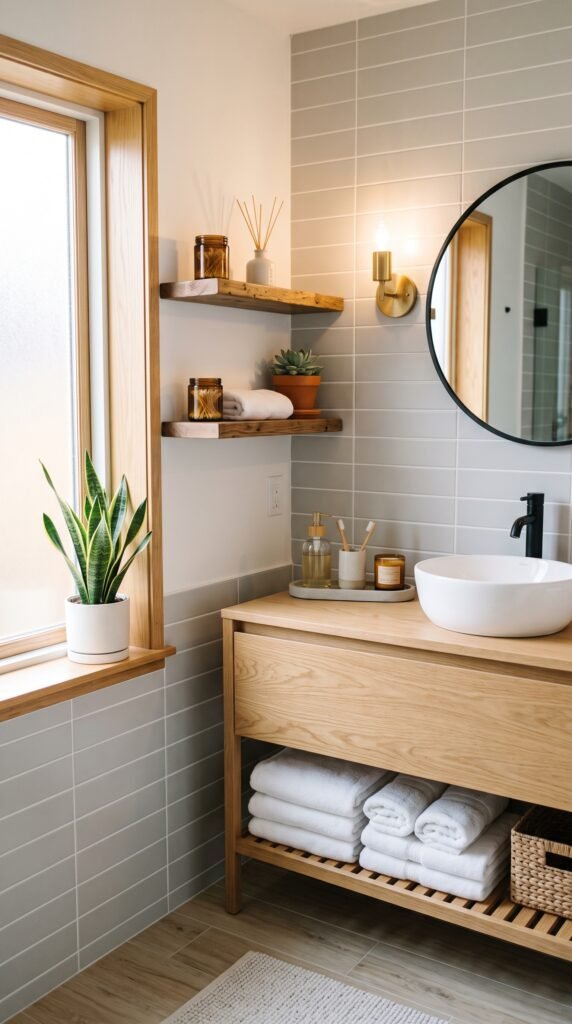
The bathroom that feels impossible to tame right now? It’s a system problem, not a space problem. And systems are fixable.