
How to Clean Your Bathroom Faster With These Hacks
If you’ve been searching for real bathroom cleaning hacks that actually save time, you’re in the right place. Cleaning the bathroom is one of those chores that nobody loves, but with the right approach it doesn’t have to eat up your entire Saturday morning. Whether you’re dealing with soap scum that won’t quit, a toilet that needs constant attention, or grout that’s seen better days, a smarter strategy makes all the difference.
The secret isn’t scrubbing harder — it’s working smarter, in the right order, with the right products and techniques. This guide walks you through a proven step-by-step system, highlights the mistakes that waste your time, and points you to the tools that make the whole job faster and easier.
The Right Order Makes All the Difference
One of the most underrated bathroom cleaning hacks is simply cleaning in the right order. Most people wipe down the sink, then clean the toilet, then notice they’ve dripped cleaner on the floor they just mopped. Sound familiar?
The golden rule is to always work top to bottom, and wet-to-dry. Here’s the order that professional cleaners swear by:
Step 1: Declutter and Dry Dust First
Before any liquid touches any surface, remove everything from the countertops — soap dispensers, toothbrush holders, candles, whatever lives there. Then do a quick dry dust of shelves, light fixtures, and the tops of cabinets. Dust falls down, so doing this first means you won’t re-contaminate surfaces you’ve already cleaned.
Give the exhaust fan a quick wipe with a dry cloth too. That one gets forgotten constantly and it builds up a surprising amount of grime.
Step 2: Apply Cleaners and Let Them Sit
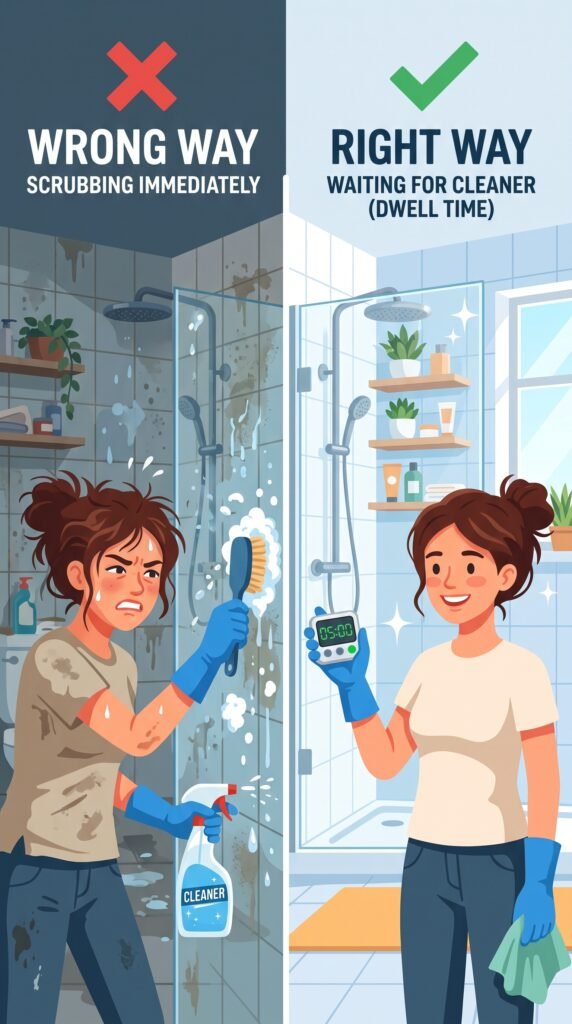
Spray your toilet bowl cleaner inside the bowl and let it dwell while you work on everything else. Do the same with any tile or grout spray, and your shower or tub cleaner. This dwell time is where the real magic happens — the chemistry does the work so you don’t have to.
According to the American Cleaning Institute, letting a disinfectant sit for the manufacturer’s recommended contact time (usually 30 seconds to 10 minutes depending on the product) is critical to actually killing bacteria and viruses. Spraying and immediately wiping is one of the biggest time-wasting mistakes people make.
Step 3: Tackle the Shower and Tub
After the cleaner has had time to dwell, come back to the shower and tub. Use a stiff-bristled brush for grout lines and a non-scratch scrubber for tile surfaces and the tub basin. Rinse thoroughly from top to bottom so residue doesn’t cling to lower surfaces.
For glass shower doors, a squeegee used after every shower dramatically reduces how often you need to deep clean. This is one of those simple bathroom cleaning hacks that compounds over time — the more consistently you use it, the less scrubbing you need to do on cleaning day.
Step 4: Sink, Faucets, and Mirror
Spray the sink basin, faucet, and surrounding counter, then wipe down with a microfiber cloth. For faucets with mineral buildup, wrap a cloth soaked in white vinegar around the base and let it sit for 5–10 minutes before wiping. The minerals dissolve without any aggressive scrubbing.
Mirrors are easiest done with a microfiber cloth barely dampened with glass cleaner — buff in a circular motion and finish with a dry pass to eliminate streaks.
Step 5: Toilet — Outside First, Inside Last
Wipe down the outside of the toilet first: the tank, the handle, the base, and under the seat. Then lift the seat and scrub under the rim with a toilet brush before flushing the bowl cleaner away. This sequence prevents cross-contamination and keeps things organized.
Step 6: Floors Last
Sweep or vacuum the floor to pick up hair and debris before any liquid hits it. Then mop or wipe with a damp cloth, working from the far corner toward the door so you’re not stepping on clean floor. This final step caps off the process cleanly.
Common Mistakes That Slow You Down
Even people who clean regularly make mistakes that double their effort. Knowing these bathroom cleaning hacks pitfalls helps you cut your cleaning time significantly.
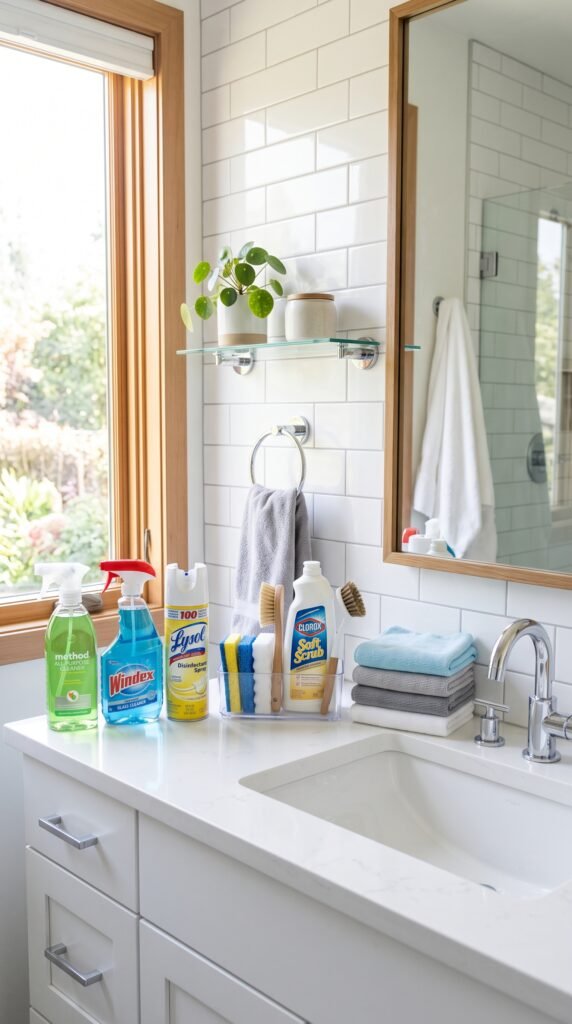
Using too many products. It’s tempting to think more products mean a cleaner bathroom, but layering multiple cleaners on the same surface can create residue, reduce effectiveness, and actually make surfaces harder to clean. A good all-purpose bathroom cleaner, a glass cleaner, a toilet bowl cleaner, and a grout brush cover almost everything you need.
Using paper towels instead of microfiber. Paper towels shred, leave lint, and disintegrate on wet surfaces. A good microfiber cloth picks up more bacteria, holds more liquid, and gives streak-free results on mirrors and faucets. According to University of California research on microfiber effectiveness, microfiber removes up to 99% of bacteria from surfaces with just water — something paper towels simply can’t match.
Scrubbing before soaking. This is probably the single biggest time drain in bathroom cleaning. If you spray and immediately scrub, you’re relying entirely on elbow grease. Letting products dwell means the chemistry breaks down soap scum, mildew, and mineral deposits before you even touch them.
Forgetting high-touch spots. Light switches, door handles, the toilet flush handle, and the faucet handle are touched constantly but rarely cleaned. These are actually the highest-priority surfaces for disinfection, and they take about 30 seconds to wipe down.
Cleaning without a caddy or system. Walking back and forth to get different products adds real time. Keep a simple cleaning caddy stocked with everything you need so you can carry it from bathroom to bathroom without thinking.
The Best Bathroom Cleaning Hacks for Stubborn Grime
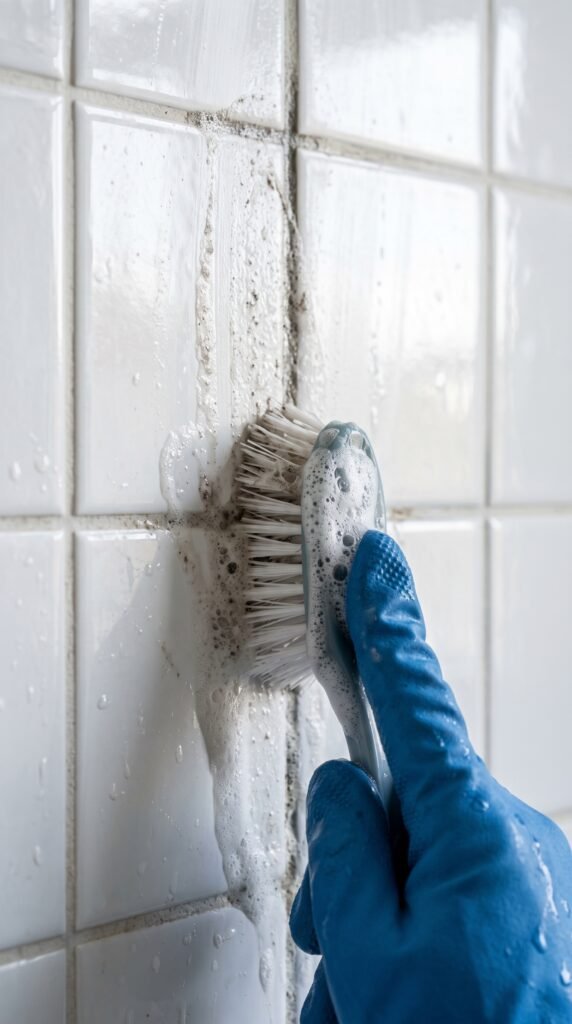
Some messes need a targeted strategy. These specific bathroom cleaning hacks handle the toughest bathroom problems without harsh chemicals or endless scrubbing.
Soap scum on tile and glass: Mix equal parts white vinegar and dish soap in a spray bottle. Spray it on, let it sit for 10 minutes, then wipe or rinse away. The acid in the vinegar cuts through mineral deposits while the dish soap lifts the greasy film left by bar soap.
Mildew on grout: Make a paste of baking soda and a few drops of tea tree oil. Apply it to grout lines with an old toothbrush, scrub gently, and rinse. Tea tree oil has natural antifungal properties, and the mild abrasiveness of baking soda lifts staining without scratching the tile.
Hard water stains on faucets and shower heads: Fill a small plastic bag with undiluted white vinegar, secure it around the showerhead or faucet with a rubber band, and leave it overnight. By morning, mineral buildup wipes off with almost no effort.
Rust rings in the toilet bowl: A pumice stone designed for toilet cleaning removes rust and mineral rings without scratching porcelain. Wet the stone first, scrub gently, and the ring lifts away. This is one of those bathroom cleaning hacks that feels almost too easy once you try it.
Foggy shower glass: After cleaning, apply a thin layer of car wax (Rain-X or similar) to the inside of glass shower doors. It creates a hydrophobic barrier that causes water to bead and roll off, keeping the glass cleaner between scrubbing sessions.
The Best Tools for Faster Bathroom Cleaning
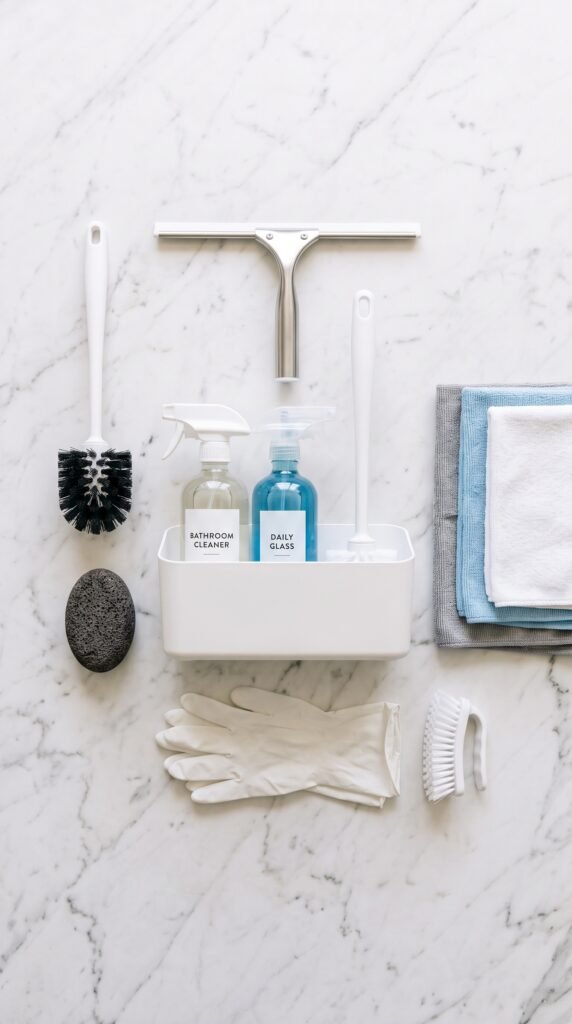
Having the right tools is itself one of the smartest bathroom cleaning hacks you can adopt. The wrong tools make every task harder and slower than it needs to be.
Microfiber cloths are non-negotiable. Keep a separate set color-coded for the bathroom so they never get mixed up with kitchen cloths. Wash them after every use.
A stiff-bristled grout brush makes grout cleaning dramatically faster than a regular scrub brush. The narrow head fits into grout lines precisely, and the stiffness does the work your wrist would otherwise have to do.
A squeegee with a suction hook mounted inside the shower means you can squeegee the walls and door after every shower in under 60 seconds. Over weeks and months, this one habit reduces deep cleaning frequency significantly.
An extendable microfiber duster handles ceiling vents, light fixtures, and the tops of cabinets without a stepstool. These spots accumulate dust and grime that eventually falls onto surfaces you’ve already cleaned.
A toilet wand with disposable heads keeps the toilet brush sanitary and easy to use. Traditional toilet brushes harbor bacteria in their holder — disposable head systems eliminate that issue entirely.
how to organize your bathroom supplies for maximum efficiency
According to Good Housekeeping’s cleaning tool guide, investing in a few quality tools consistently outperforms buying lots of cheap ones that wear out quickly or don’t perform well under real-world conditions.
How to Maintain a Clean Bathroom With Minimal Effort
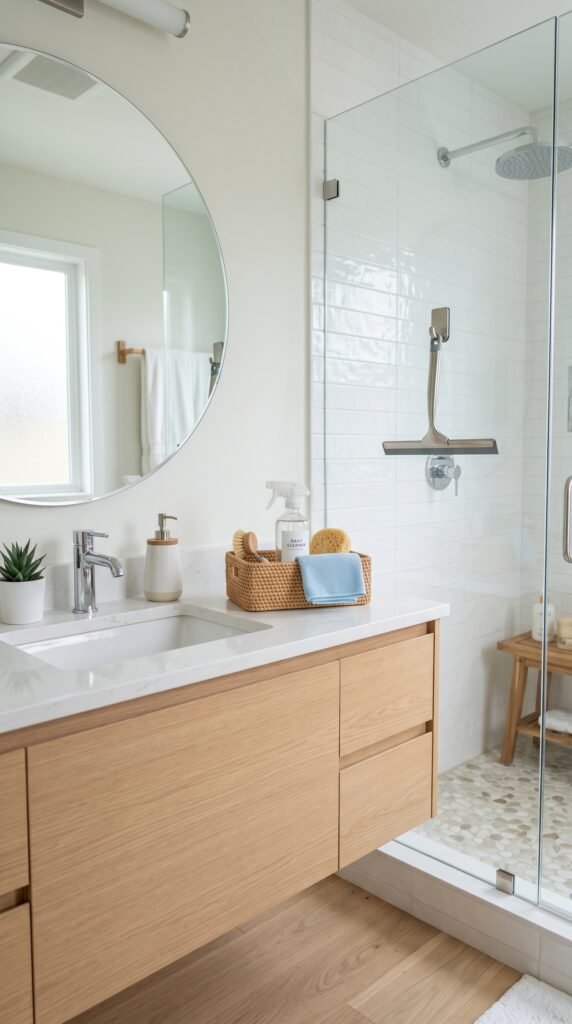
The best bathroom cleaning hacks aren’t just about the big weekly clean — they’re about what you do in between. A few daily habits dramatically reduce how much deep cleaning you ever need to do.
Wipe the sink after brushing your teeth. It takes 10 seconds and prevents toothpaste buildup from hardening. Squeegee the shower after each use. Spray a daily shower spray (many good options exist that require no rinsing) to prevent soap scum and mildew from forming in the first place.
Keep a canister of disinfecting wipes inside the cabinet under the sink so it’s easy to grab and swipe the toilet seat, handle, and faucet a couple of times a week without pulling out a full cleaning kit.
Once a week, do a light 10-minute touch-up: wipe surfaces, swipe the toilet bowl quickly, and freshen the floor. With these habits in place, your monthly deep clean becomes a light session rather than a battle.
Wrap-Up: Work Smarter, Not Harder
The core principle behind all great bathroom cleaning hacks is the same: reduce friction, let chemistry do the heavy lifting, and build small consistent habits that prevent big messes from forming.
Start with the right order, avoid the most common mistakes, invest in a handful of quality tools, and use targeted solutions for stubborn grime. Follow through with a few daily habits that take under a minute each, and you’ll spend less time cleaning your bathroom than you ever thought possible — without it ever feeling like a disaster zone.
A cleaner bathroom isn’t about cleaning more. It’s about cleaning smarter.