
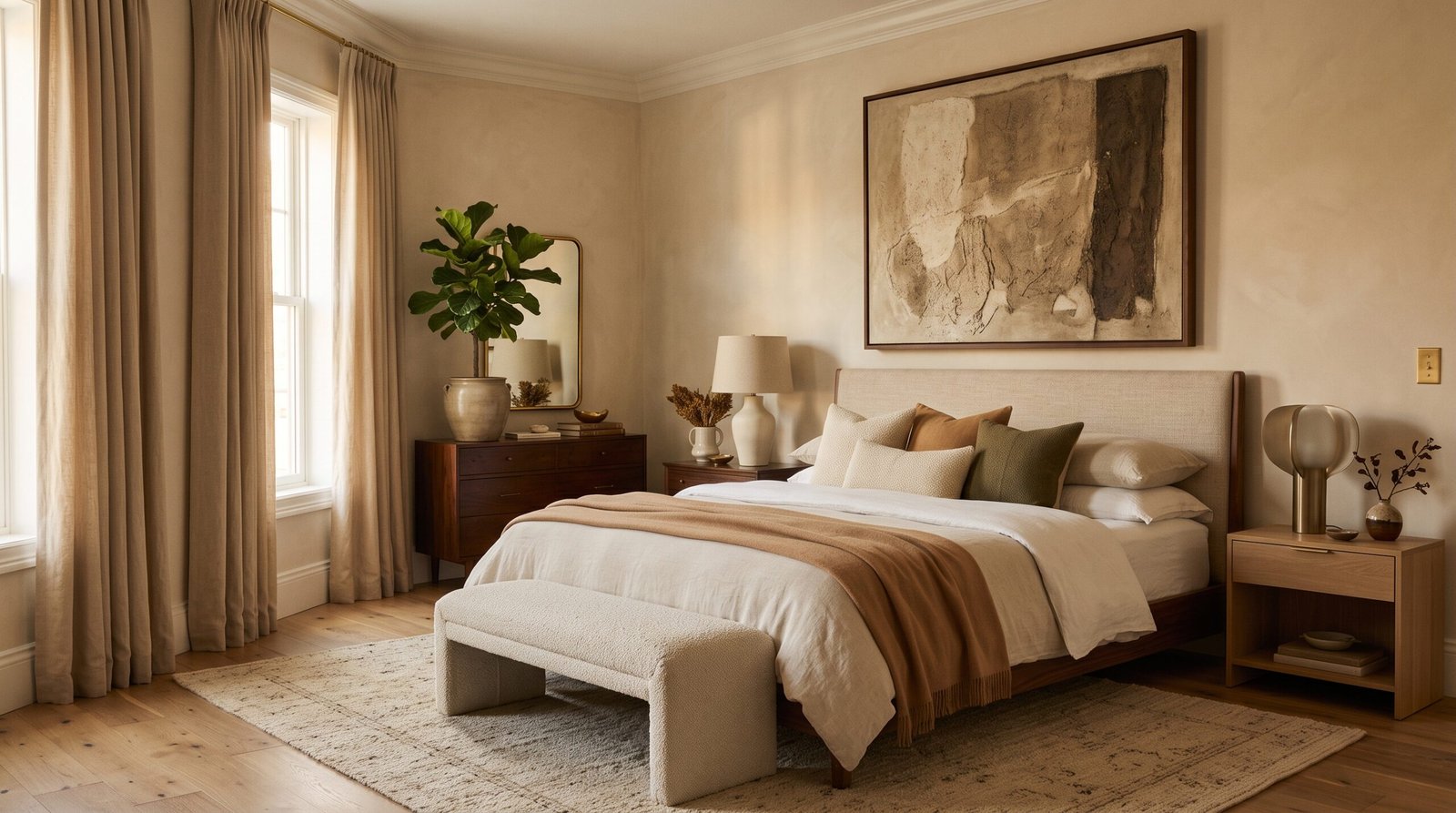
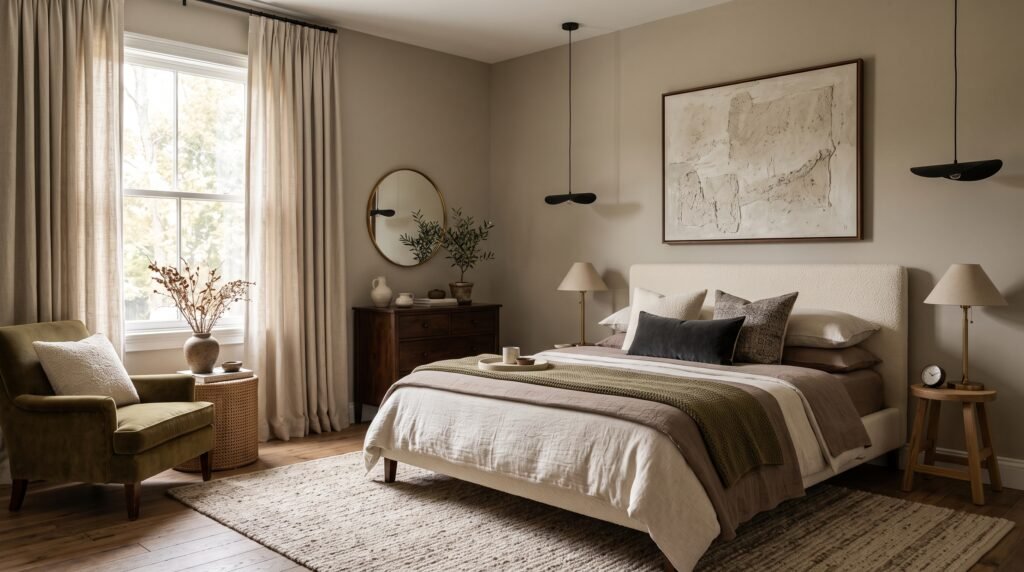
The best bedroom decor ideas aren’t usually the ones splashed across Pinterest boards or featured in glossy magazines. They’re the ones interior designers mention almost offhandedly, the tricks that never quite make it into the “10 Easy Tips” listicles because they’re harder to photograph and easier to just… know.
And that’s exactly what this is. The stuff the pros keep quiet about.
📋 Table of Contents
- Why Most Bedroom Decor Ideas Fall Flat Before You Even Start
- The Bedroom Decor Ideas Designers Actually Use (And Rarely Talk About)
- Treat the Ceiling Like a Fifth Wall
- Layer Your Lighting Like a Pro
- The Rug Size Rule Nobody Follows
- Bedroom Decor Ideas for Small Spaces That Actually Work
- Use Vertical Space Aggressively
- Go Dark Instead of Light
- The Details That Make Bedroom Decor Ideas Look Expensive
Why Most Bedroom Decor Ideas Fall Flat Before You Even Start
Picture this: you’ve spent a weekend watching home renovation content, you’ve pinned 200 images, you’ve got a cart full of throw pillows and a new rug on order. The room still feels… off. Nothing quite connects. It looks like a showroom where nobody actually sleeps.
That’s the trap.
Most people treat bedroom decorating like a shopping problem. Buy the right things and the room fixes itself. But designers don’t think that way. They think about the feeling of the room first and the furniture second.
Here’s the thing — your bedroom isn’t a guest space or a status symbol. It’s where your nervous system winds down. Every bedroom decor decision should serve that one goal. And when you start there, the whole process gets a lot cleaner.
The most common mistake? Choosing pieces that look good in isolation but fight each other once they’re in the room together. A bold headboard, a patterned rug, a gallery wall, and a decorative ceiling fan can all be individually “nice” and collectively chaotic.
So before you buy a single thing, figure out one word that describes how you want to feel in that room. Calm. Cozy. Airy. Dramatic. Everything else should serve that word.
Small Cozy Bedroom Ideas That Maximize Comfort and Space
The Bedroom Decor Ideas Designers Actually Use (And Rarely Talk About)
Treat the Ceiling Like a Fifth Wall
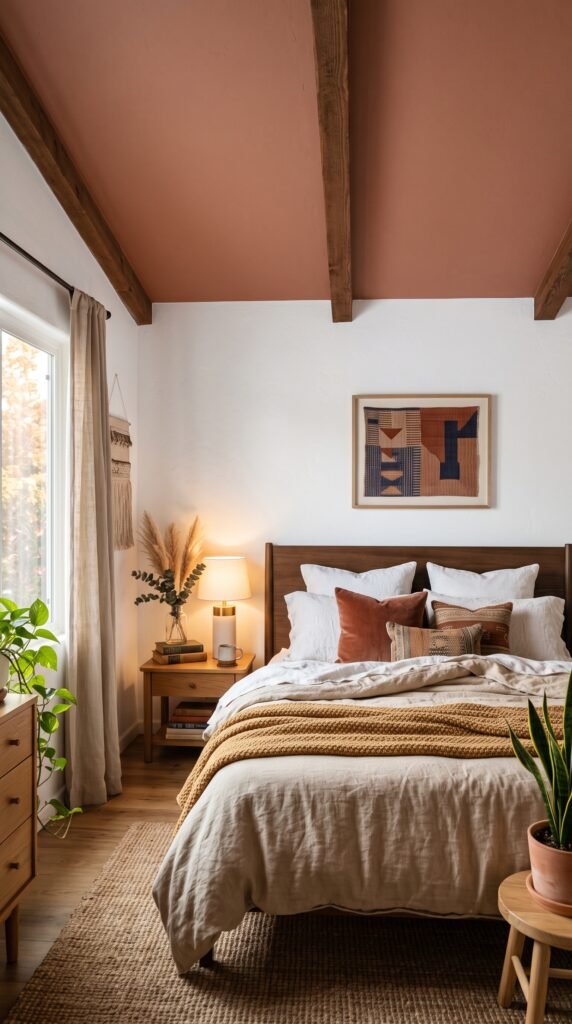
Most people decorate four walls and forget there’s a surface directly above them for eight hours every night. The ceiling is prime real estate and almost nobody uses it.
A coat of paint two shades deeper than your walls makes a room feel intimate and pulled together. Not dark, not dramatic — just slightly richer. Designers do this constantly. It’s one of those bedroom decor ideas that costs almost nothing and changes everything.
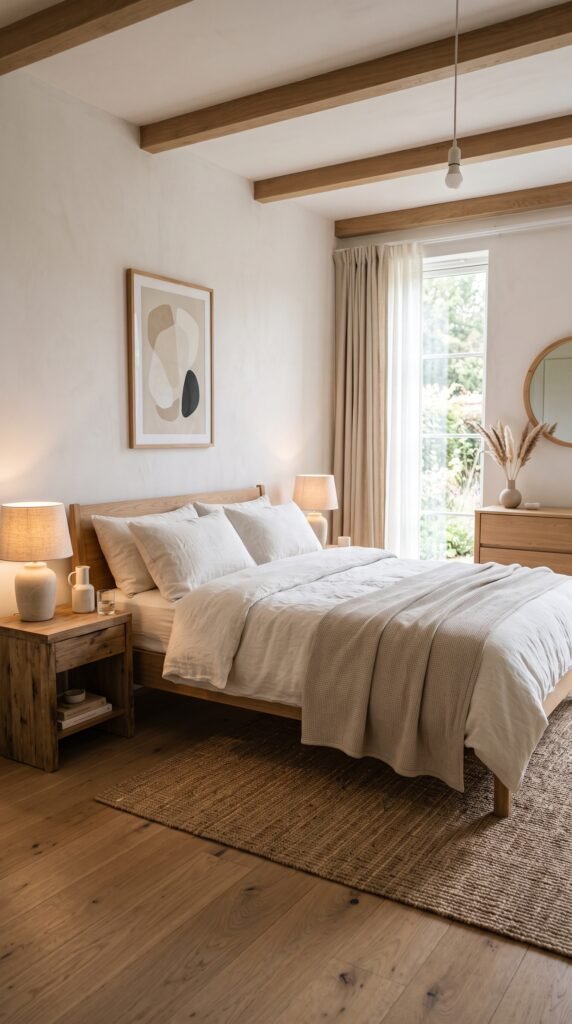
Alternatively, wallpaper just the ceiling. Or add a simple wooden beam detail. Or do absolutely nothing except paint it warm white instead of bright white. That last one alone is a bigger deal than it sounds.
Layer Your Lighting Like a Pro
Single overhead light. That’s the enemy of a good bedroom.
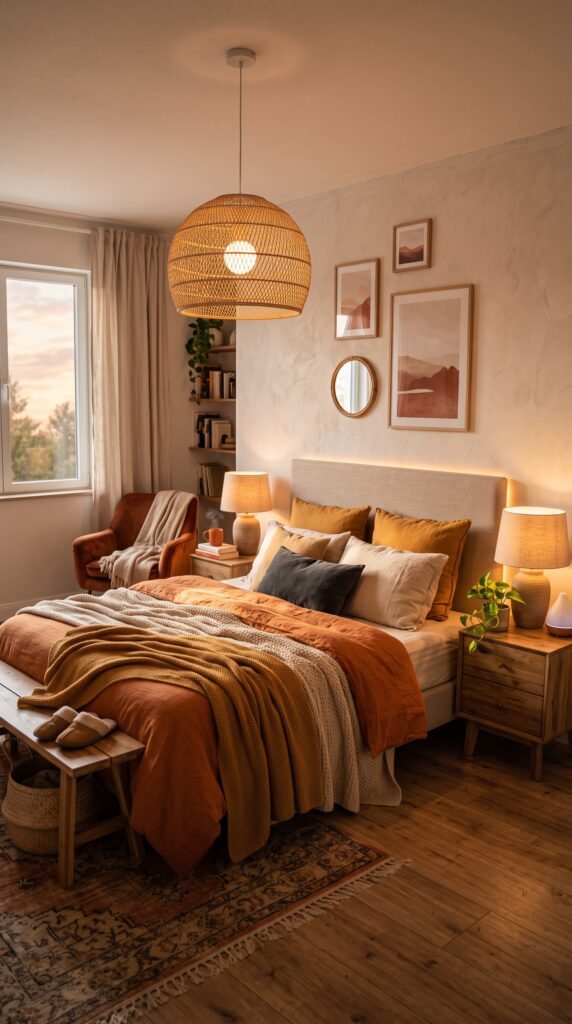
Most bedrooms ship with one ceiling fixture and people just… live with it. One harsh, flat light source that makes everything look like a dentist’s waiting room. Interior designers almost never rely on overhead lighting alone.
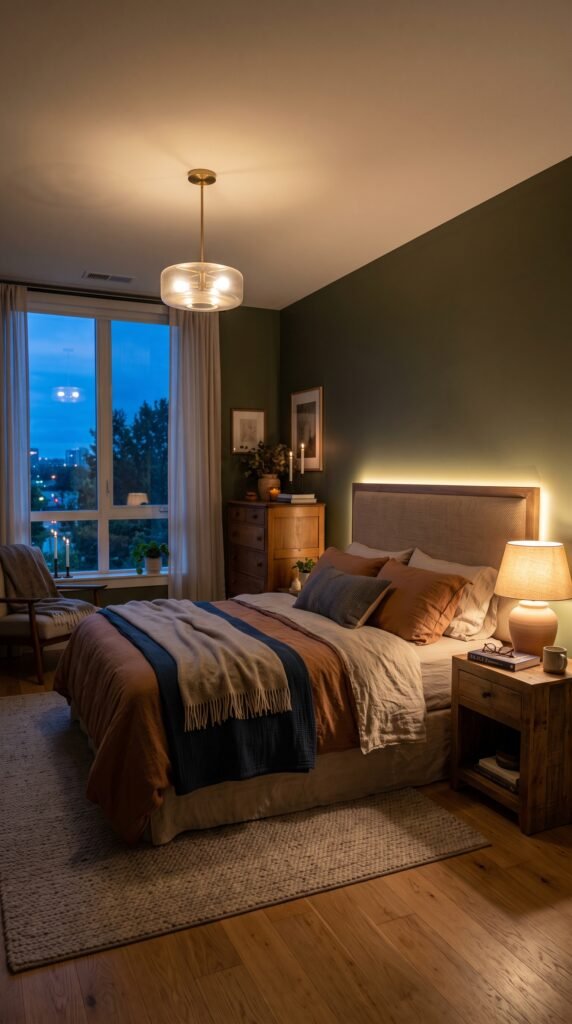
The formula is simple: ambient light (soft ceiling or indirect), task light (reading lamps on both sides of the bed), and accent light (something low, something warm — a candle, a dim table lamp, LED strip lighting behind furniture). Three layers, minimum.
Most people run into this exact problem when they try to make a bedroom feel “cozy” by just buying softer bedding. The bedding helps. But if the light overhead is still fluorescent-white and overhead-only, no amount of linen duvet is saving that room.
Swap your bulbs to 2700K or warmer. Add a lamp you never had before. See what happens.
Dreamy Bedroom Ideas: 7 Cozy and Aesthetic Designs to Transform Your Space
The Rug Size Rule Nobody Follows
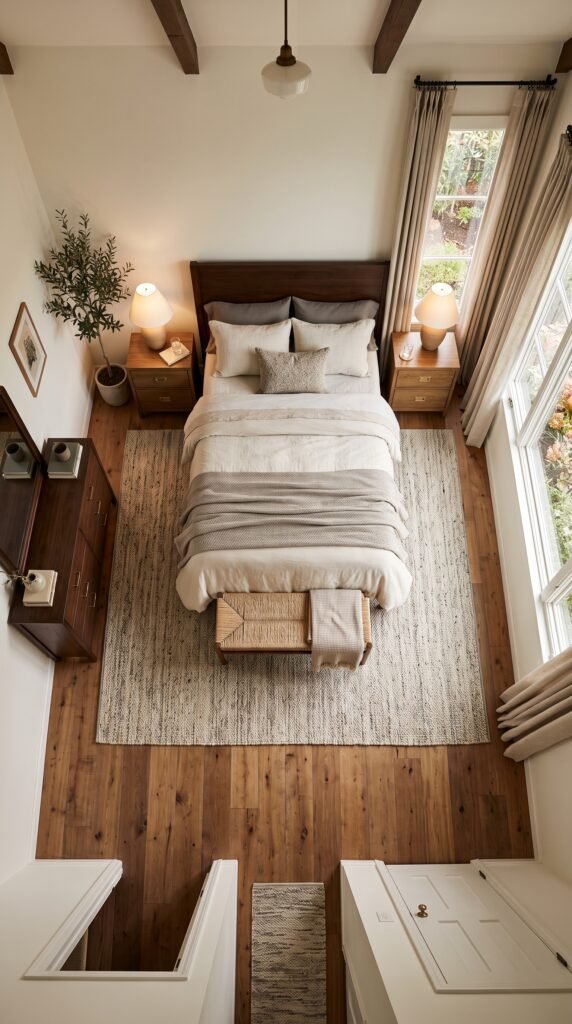
If your rug is too small, your furniture floats. The room looks accidental. Like the rug arrived late and everyone already sat down.
The rule is that at minimum, the front legs of your bed and both nightstands should sit on the rug. Ideally, you go bigger — all four legs of the bed fully on the rug, with at least 18 to 24 inches of rug extending on each side. That’s what grounds the whole space and makes it feel designed rather than decorated.
Most people buy the size that looks right in the store. In a real bedroom with real furniture, it always ends up too small.
Go one size up from whatever you think you need. That’s not bad advice. That’s just the rule.
Bedroom Decor Ideas for Small Spaces That Actually Work
Small bedrooms aren’t a design death sentence. But they do require a different set of moves.
The biggest one? Stop trying to make a small room look bigger. Instead, make it feel intentional. Cozy, even. A small bedroom that leans into intimacy feels like a design choice. A small bedroom desperately trying to appear large just looks crowded and confused.
Use Vertical Space Aggressively
Floor-to-ceiling curtains make ceilings feel taller. Tall, narrow bookshelves draw the eye up. A headboard that goes almost to the ceiling in a small room doesn’t crowd the space — it anchors it and makes the room feel taller by comparison.
This is one of those bedroom decor ideas that feels counterintuitive until you see it. Height creates the illusion of square footage. Use it.
According to the American Society of Interior Designers, the vertical plane is consistently underutilized in residential spaces, particularly bedrooms. It’s not just aesthetics — using height efficiently changes how a room feels to move through.
Go Dark Instead of Light
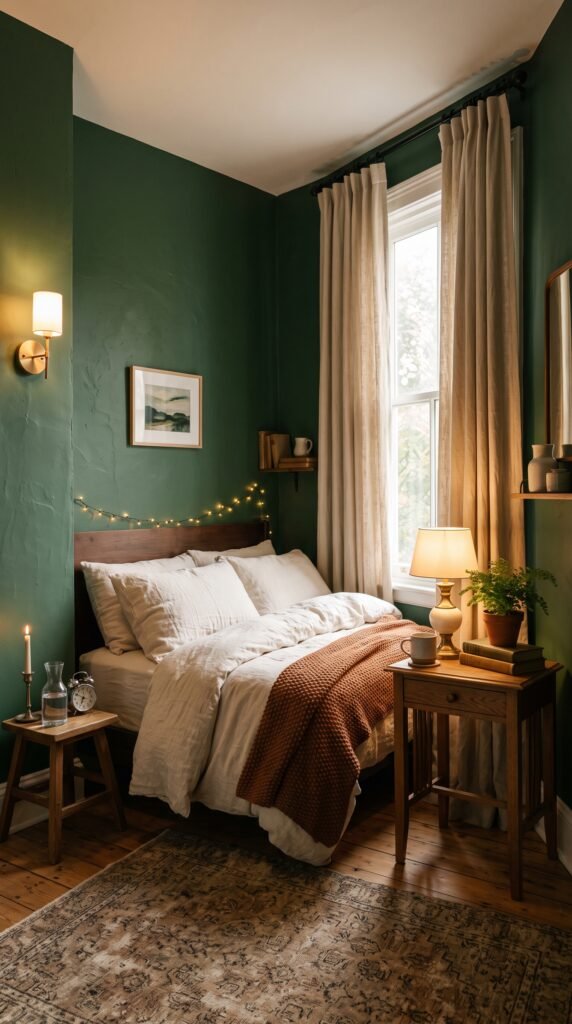
Another counterintuitive move: paint a small bedroom a deep, moody color. Dark sage. Dusty navy. Rich terracotta.
Light colors in small rooms create contrast with every shadow, making the dimensions obvious. Dark colors blur the edges of a room and make the walls recede. Done right, a small dark bedroom feels like a sanctuary. Done wrong, it just feels small. The difference is usually lighting and the right
For evidence, look at how boutique hotels design their smallest rooms. Rarely bright white. Usually moody, layered, low-contrast. There’s a reason for that.
The Details That Make Bedroom Decor Ideas Look Expensive
Here’s what separates a room that looks put-together from one that looks like it was assembled from a catalog.
Odd numbers. Group decor in threes, not twos. Three candles on a nightstand. Three throw pillows instead of four. Two feels symmetrical and stiff. Three feels collected, like things landed there over time.
Mixing textures. A room with all smooth surfaces feels clinical. A room with all soft surfaces feels messy. The magic is in mixing — linen next to wood next to ceramic next to something woven. According to Architectural Digest, texture is consistently one of the most underused tools in residential interior design, particularly in bedrooms where people default to matching sets.
One thing that doesn’t “belong.” The room that looks most designed usually has one piece that breaks the expected style. A modern room with a vintage lamp. A cozy traditional space with one clean-lined geometric mirror. It signals intention. It says someone with a real eye put this together, not an algorithm.
Bedding that’s slightly undone. The perfectly made bed with military corners looks like a hotel. A good-looking bedroom has bedding that’s layered and slightly relaxed — a throw pulled back at one corner, pillows that aren’t perfectly centered. Lived-in, on purpose.
The difference between a bedroom that looks decorated and one that looks designed usually comes down to these micro-decisions. Not the furniture. Not the budget. The details.
And honestly, that’s the whole secret. The best bedroom decor ideas aren’t expensive or complicated. They’re just specific. They require knowing why something works, not just that someone on Instagram said it did.
Start with how you want to feel. Layer everything else from there. The room will follow.
For more inspiration on what actually works in real spaces (not just staged ones), Dezeen’s residential design coverage is worth bookmarking. Real projects, real constraints, real results.