Affiliate Disclosure: This post contains affiliate links. If you purchase through these links, I may earn a small commission at no extra cost to you. I only recommend products I would genuinely use in my own home.
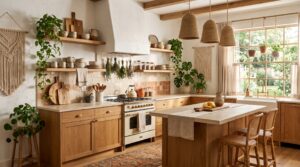
Modern Kitchen Remodel Ideas for a Sleek and Minimal Look
There’s a moment when you walk into a beautifully designed kitchen and everything just feels right — calm, clean, and somehow larger than it actually is. I chased that feeling for years before finally tackling my own kitchen remodel, and what I learned along the way changed how I think about every single design decision. A sleek, minimal kitchen isn’t about stripping away personality. It’s about making every choice count.
Whether you’re planning a full gut renovation or a smart cosmetic refresh, these kitchen remodel ideas will help you build a space that feels intentional, functional, and genuinely beautiful to cook in every day.
1. Start With a Neutral Color Palette That Actually Works
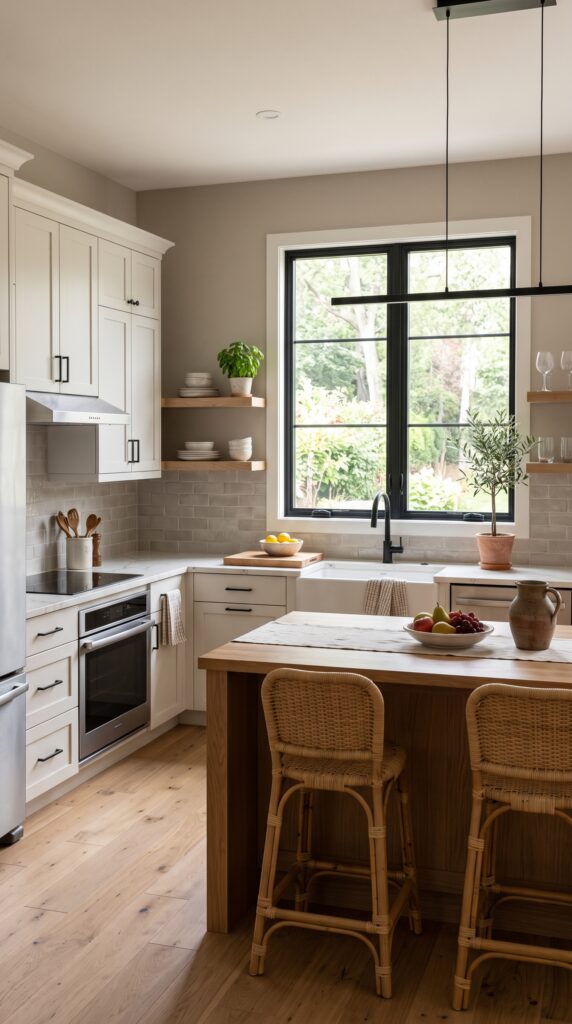
Minimalism lives and dies by your color choices, and I cannot overstate how much the wrong palette can sabotage an otherwise great layout. When I first planned my remodel, I wanted something bold — deep navy, maybe a forest green. But after testing swatches on the actual walls, I kept coming back to warm whites and soft greiges because they made the room breathe.
Neutral tones like white, warm gray, beige, and soft stone work because they reflect light and recede visually, making the kitchen feel more open than it is. This isn’t a compromise — it’s a strategic choice. The key is to avoid going stark, clinical white, which can feel cold and unforgiving. Instead, look for whites with a warm or creamy undertone, like Benjamin Moore’s White Dove or Sherwin-Williams Alabaster.
If you want personality without visual chaos, add one accent material rather than one accent color. Matte black hardware, a strip of raw oak open shelving, or a single textured tile backsplash can do enormous work. According to Architectural Digest’s design principles, restraint in material choices is what separates a truly minimal kitchen from a merely plain one.
The trick that made the biggest difference in my own kitchen was matching the upper cabinet color to the wall color. The eye loses the boundary between cabinet and wall, making the whole room feel like one continuous, cohesive space rather than a collection of boxes.
My Top Picks
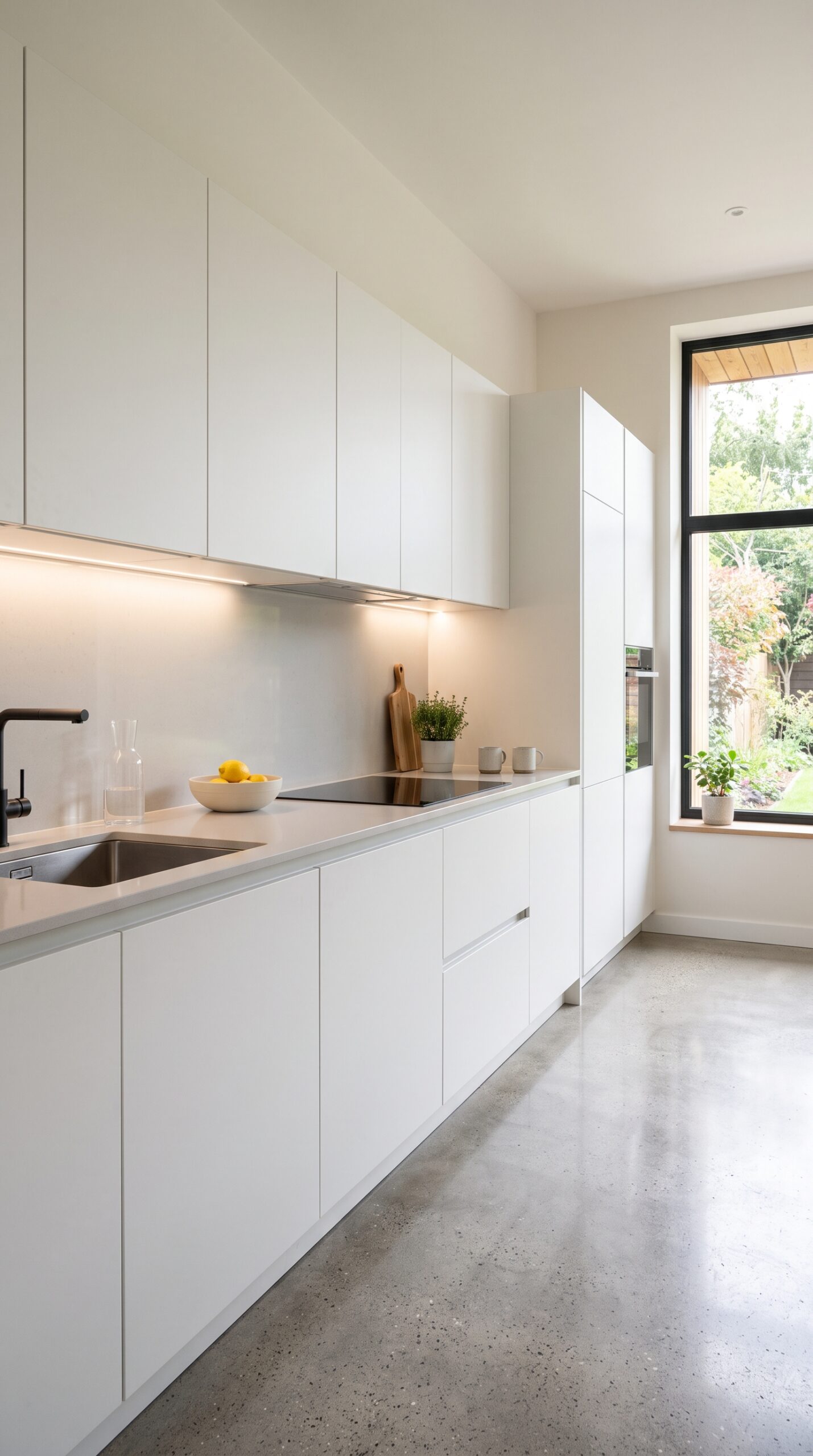
Upgrade Your Cabinets
Tidy up without the eyesore. The Upgrade Your Cabinets keeps clutter hidden while looking like a deliberate design choice.
Shop on Amazon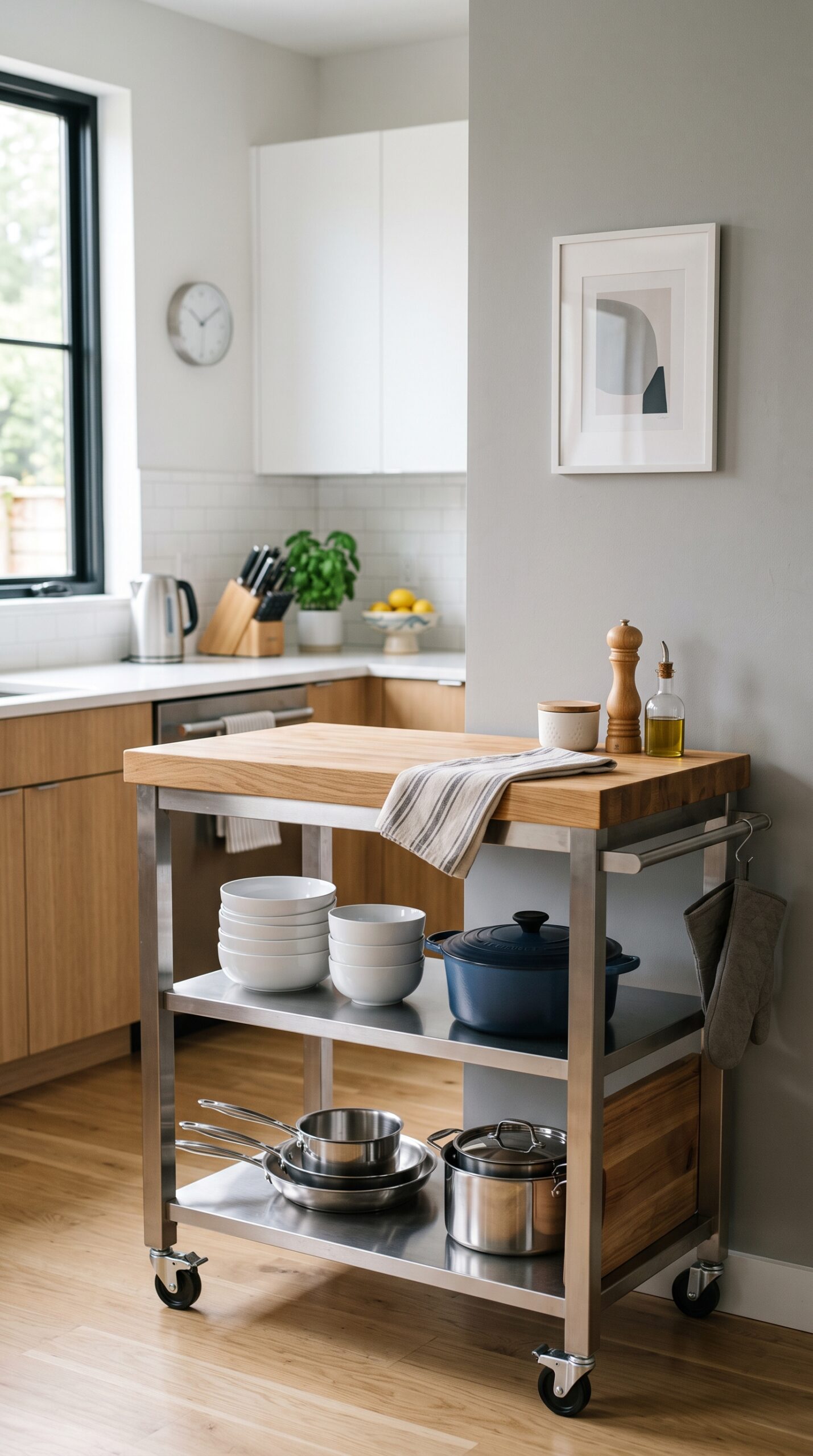
Shop Kitchen Carts
A standout pick. The Shop Kitchen Carts delivers quality and reliability you'll notice from day one.
Shop on Amazon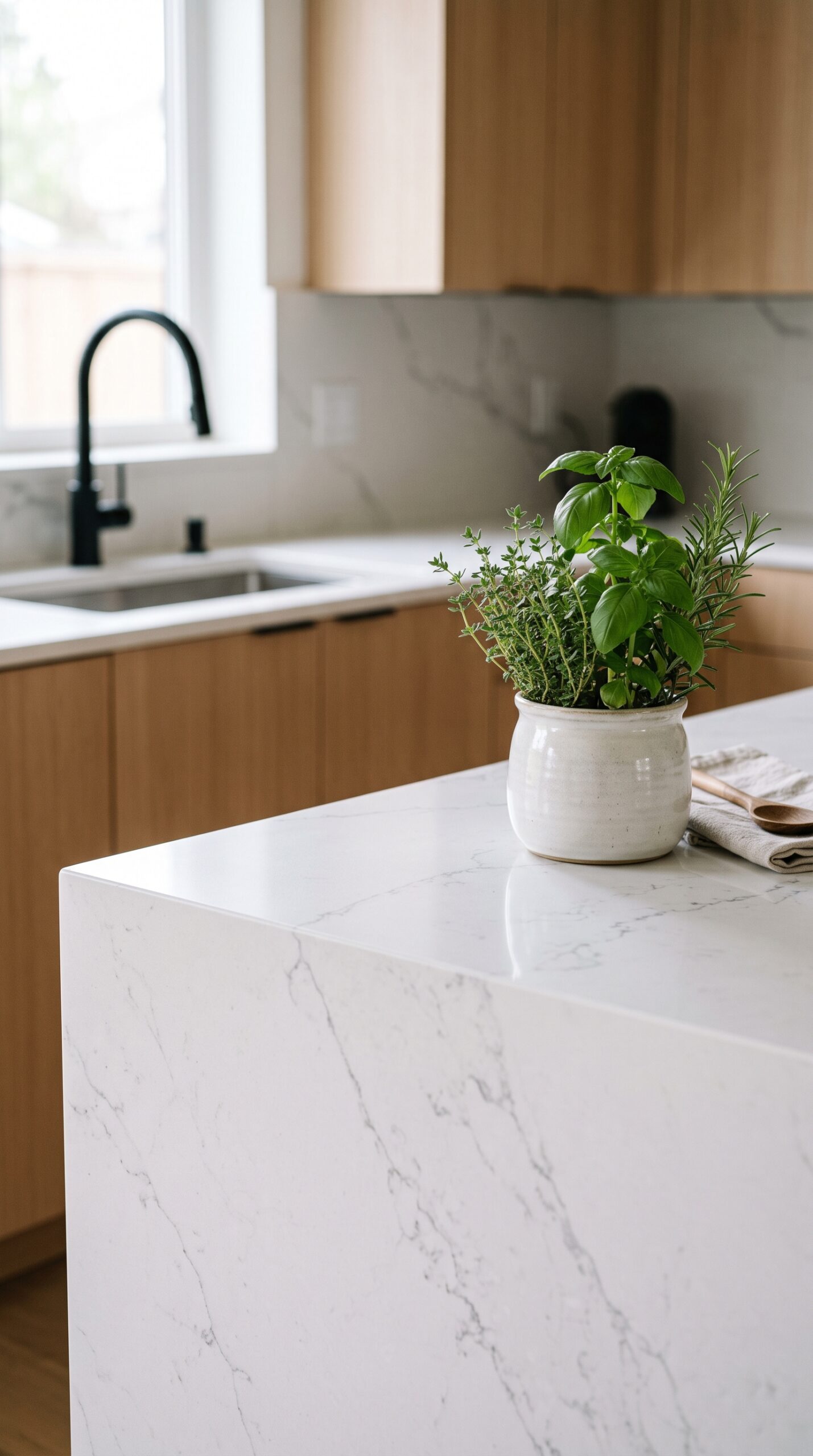
Shop Quartz Countertops
A standout pick. The Shop Quartz Countertops delivers quality and reliability you'll notice from day one.
Shop on Amazon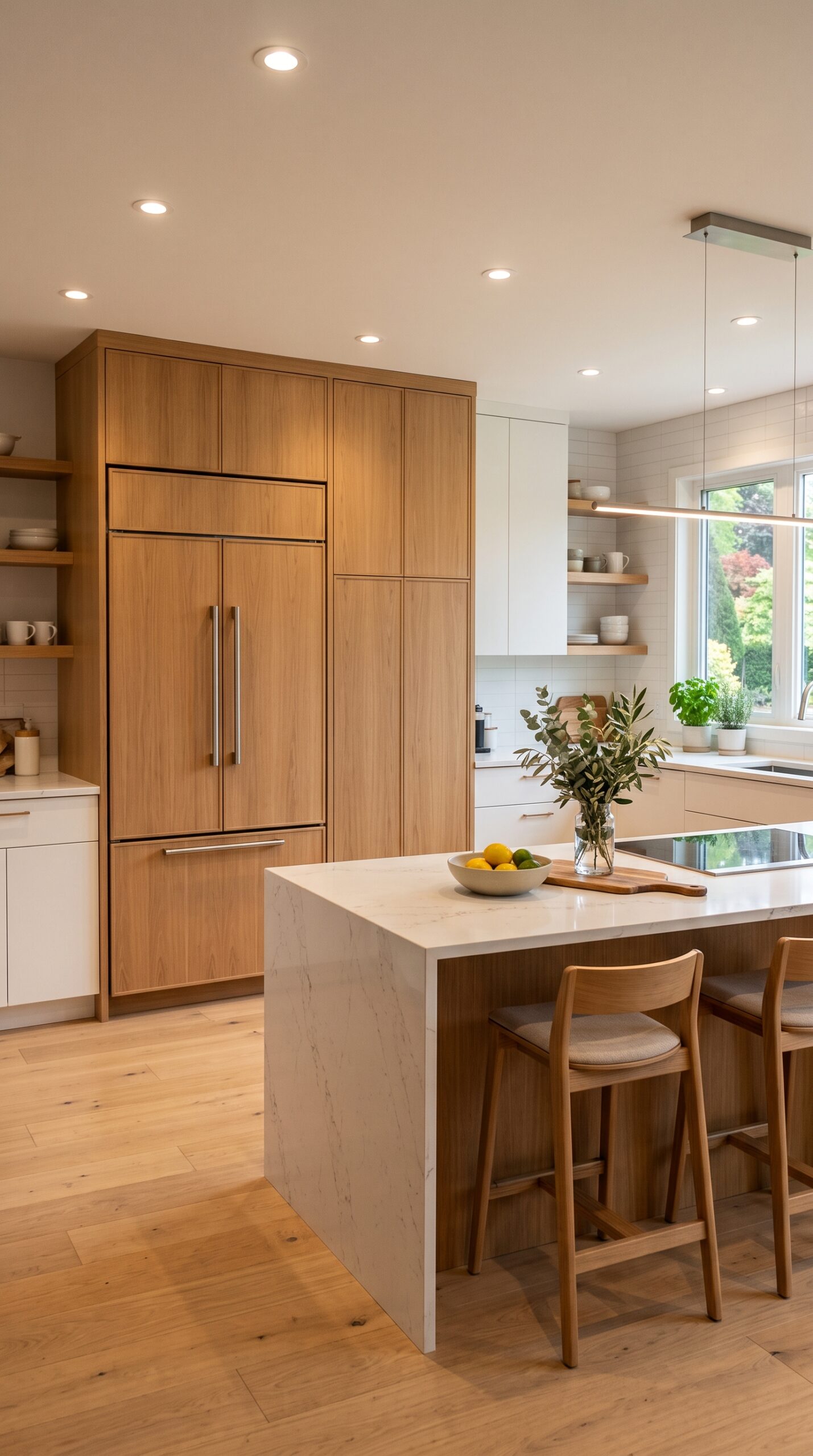
Shop Modern Appliances
A standout pick. The Shop Modern Appliances delivers quality and reliability you'll notice from day one.
Shop on Amazon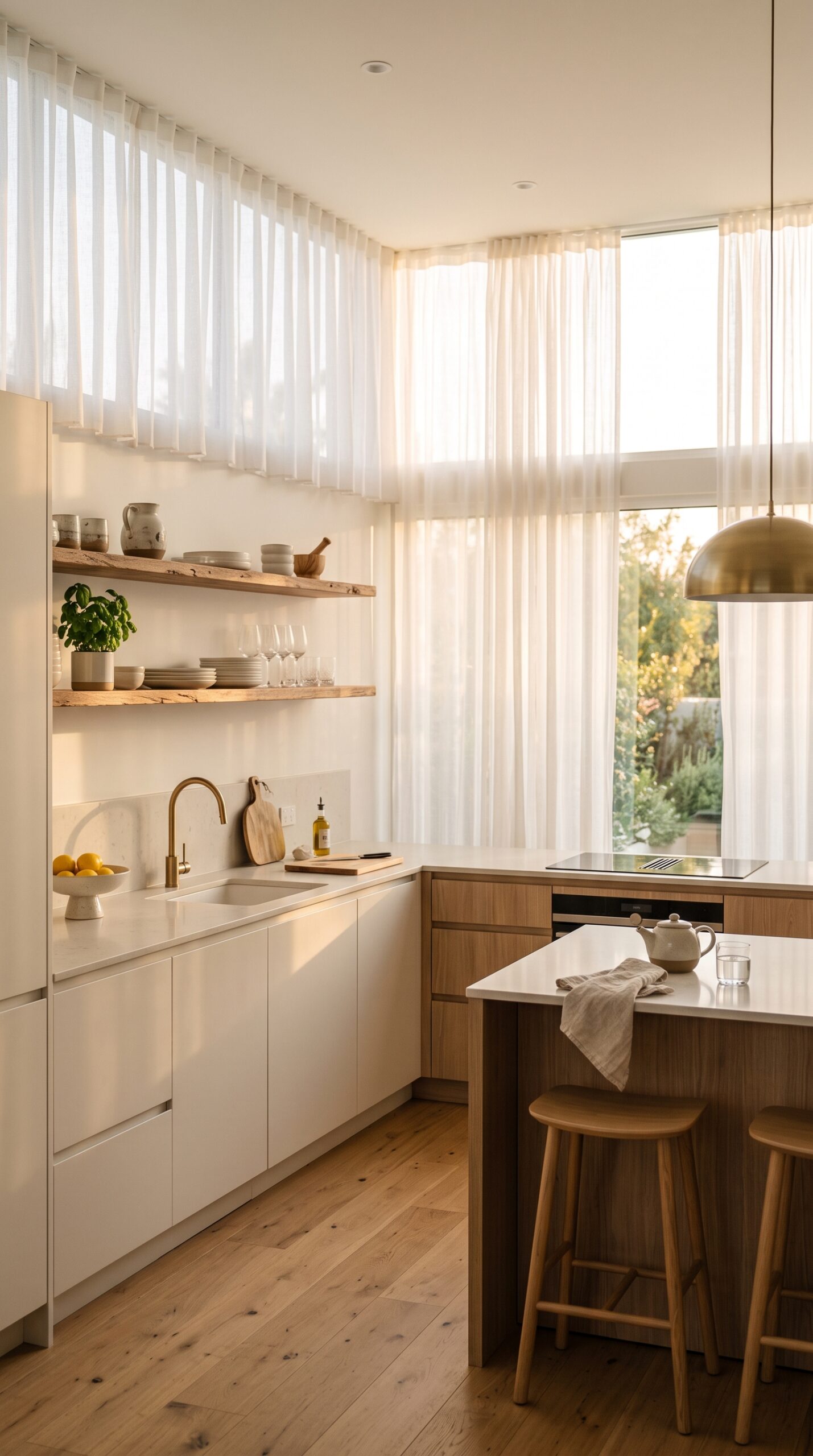
Shop Sheer Curtains
A standout pick. The Shop Sheer Curtains delivers quality and reliability you'll notice from day one.
Shop on Amazon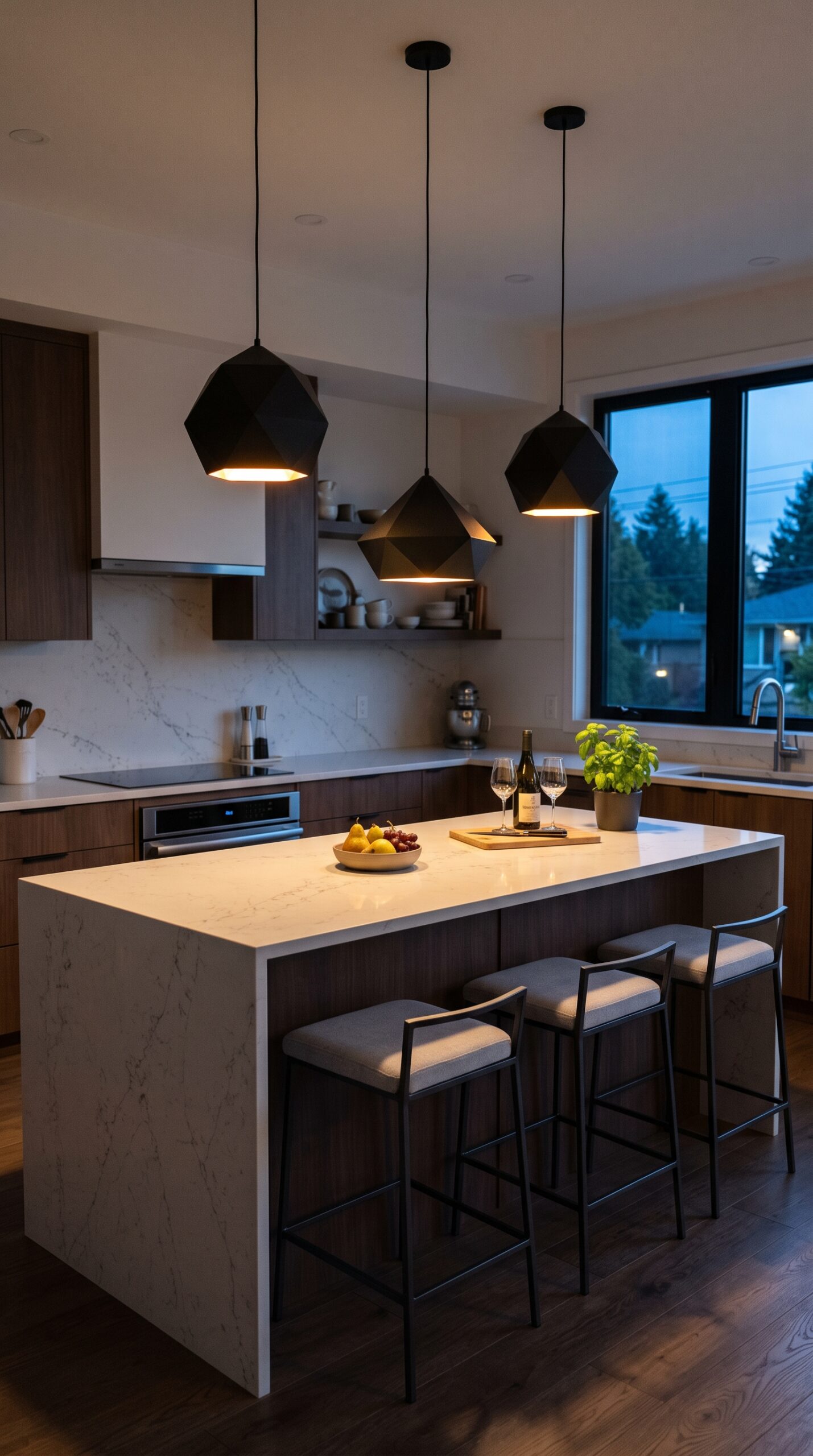
Shop Pendant Lights
Set the right mood instantly. The Shop Pendant Lights delivers warm, adjustable lighting that transforms any corner of your home.
Shop on Amazon2. Choose Cabinetry That Earns Its Place
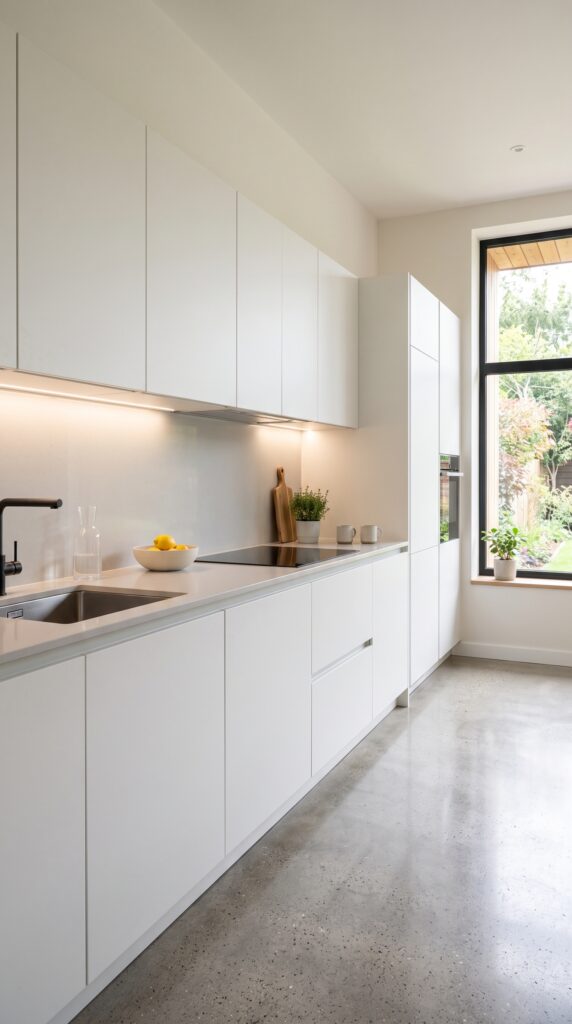
Cabinets are the single most impactful element in any kitchen remodel, which is exactly why so many homeowners either overspend or make choices they regret within two years. I’ve seen people blow their entire budget on statement ranges while leaving builder-grade cabinets with outdated raised panels, and the result always looks unfinished.
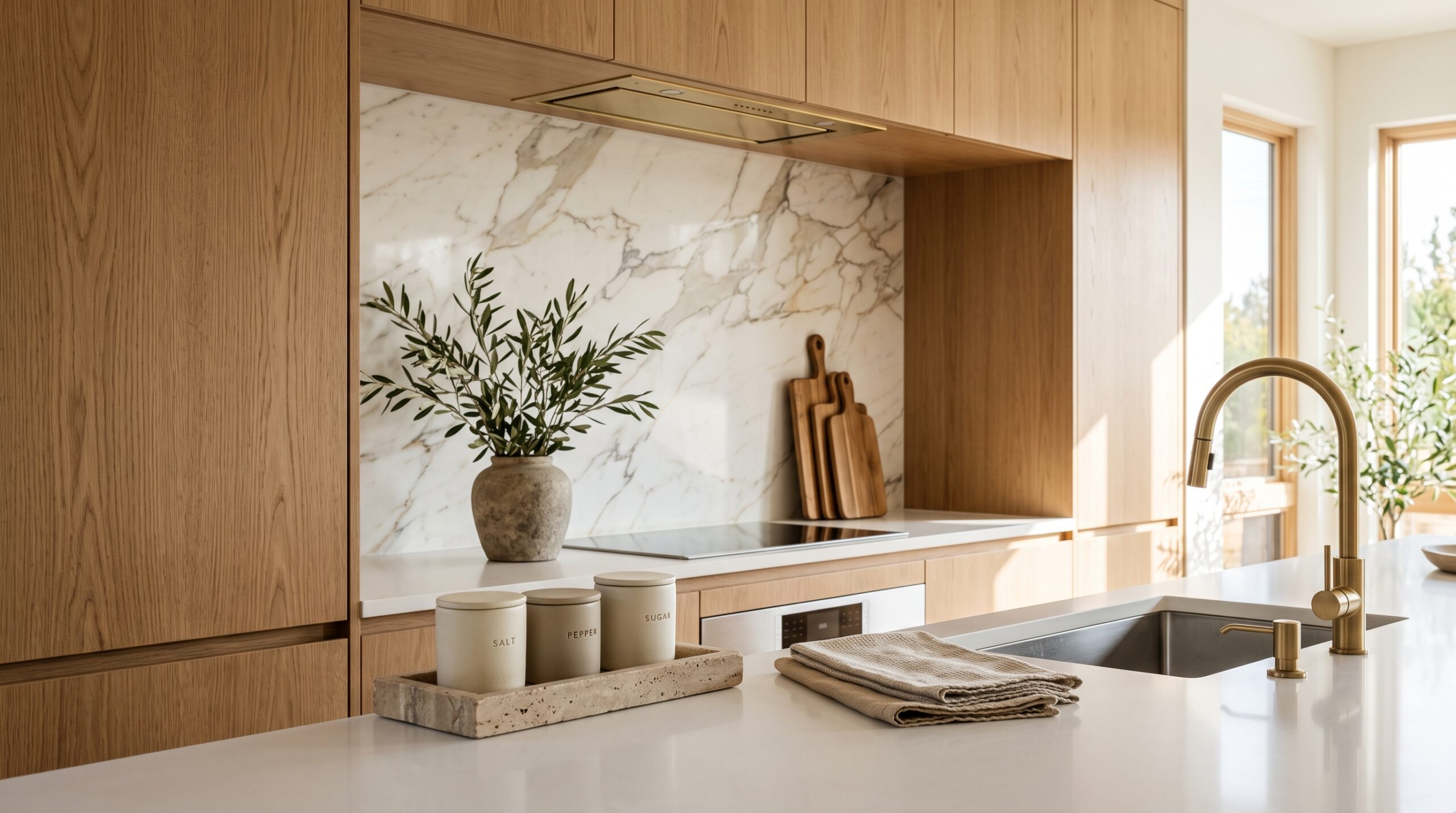
For a minimal, modern look, flat-panel (also called slab-front) cabinets are the correct choice. They have no ornamental detail, which means they age extremely well and never feel dated. Handleless options — either with integrated channels or push-to-open mechanisms — take the look even further by eliminating every visual interruption across the cabinet face.
Finish matters more than most people realize. Glossy finishes are excellent for smaller kitchens because they bounce light around the room and add depth. Matte or satin finishes work beautifully in larger kitchens where you want warmth and tactility without shine. I went with a satin finish in a warm off-white, and it’s been one of the best decisions in the whole project.
If your cabinet boxes are in good structural shape, a refacing or door replacement is far more cost-effective than a full replacement. Upgrade Your Cabinets is a great starting point for quality hardware and door options that can dramatically change the feel of your kitchen without a full demo.
3. Design for How You Actually Cook
Layout is the part of kitchen design that nobody talks about enough. Everyone gets excited about countertops and hardware, but if your kitchen layout fights you every time you cook, none of the aesthetics matter. I learned this the hard way after designing a beautiful kitchen that put my stove, sink, and fridge in the worst possible triangle configuration.
The work triangle — the path between your stove, sink, and refrigerator — should be compact and unobstructed. For open-plan spaces, an L-shaped layout gives you natural zoning between cooking and living areas. U-shaped layouts maximize storage in larger kitchens. Galley kitchens, when done right, are shockingly efficient because everything is within a single pivot.
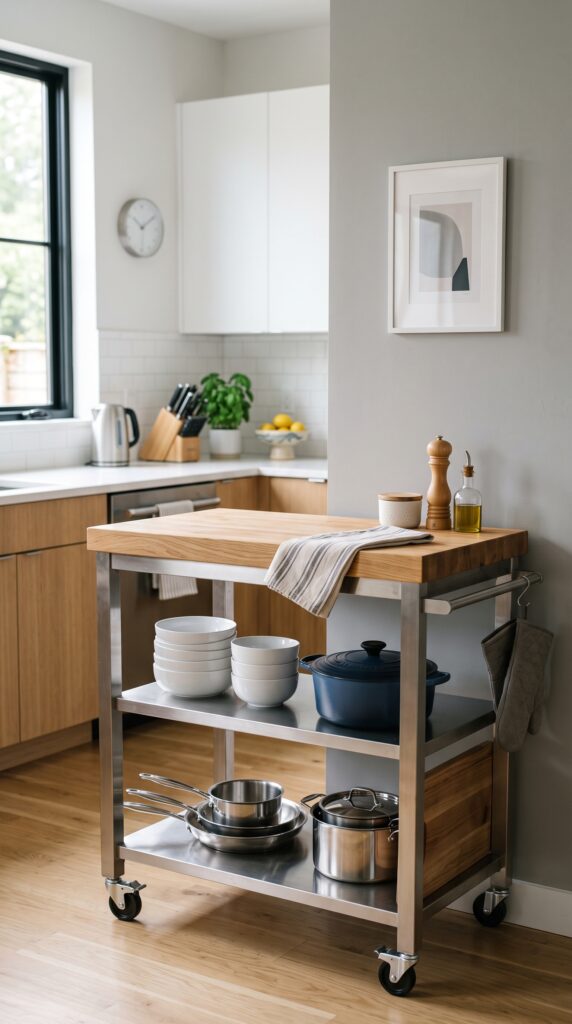
Hidden storage is what separates a truly minimal kitchen from one that just looks minimal until you start cooking. Pull-out drawers in base cabinets, deep pantry pullouts, and appliance garages that hide your toaster and coffee maker behind flush cabinet doors all make a huge difference. If your kitchen lacks an island or prep station, a well-chosen rolling cart solves that problem without a construction project. Shop Kitchen Carts offers several options that are both functional and minimal enough to complement a modern space.
4. Invest in Countertops You’ll Never Want to Change
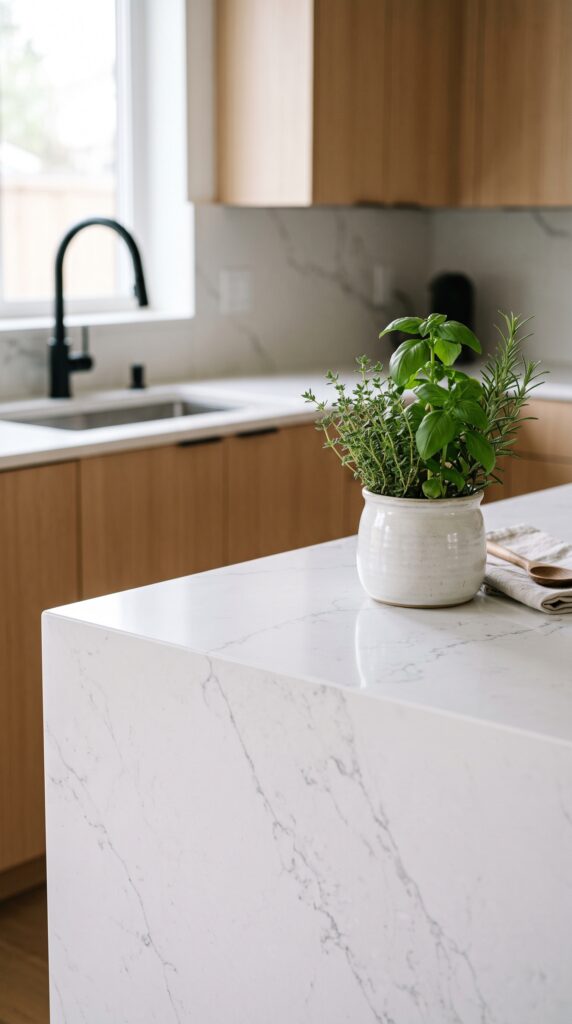
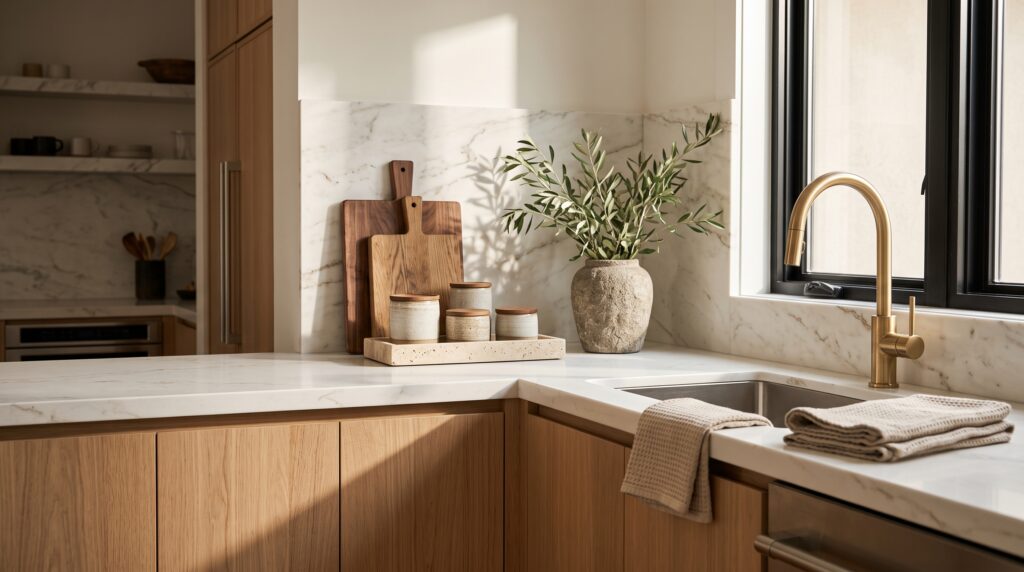
After cabinetry, countertops are where your remodel budget does the most visible work. I spent months researching materials before landing on quartz, and I haven’t looked back. Unlike natural stone, quartz is non-porous, which means it resists staining from wine, coffee, and olive oil — the three things that destroyed my previous laminate counter within a year.
For a minimal look, solid-colored quartz or subtle veined patterns in white, light gray, or warm concrete tones are the most versatile. Avoid busy, dramatic veining unless you’re building the whole kitchen palette around it. The countertop should support the space, not dominate it.
One upgrade worth considering if your budget allows: a waterfall edge, where the countertop material continues vertically down the side of the island or cabinet. It’s a small detail that reads as architectural rather than decorative, which is exactly the kind of move that elevates a kitchen from nice to exceptional. Shop Quartz Countertops is a solid resource for finding quality quartz surfaces at a range of price points.
5. Integrate Your Appliances for Clean Lines
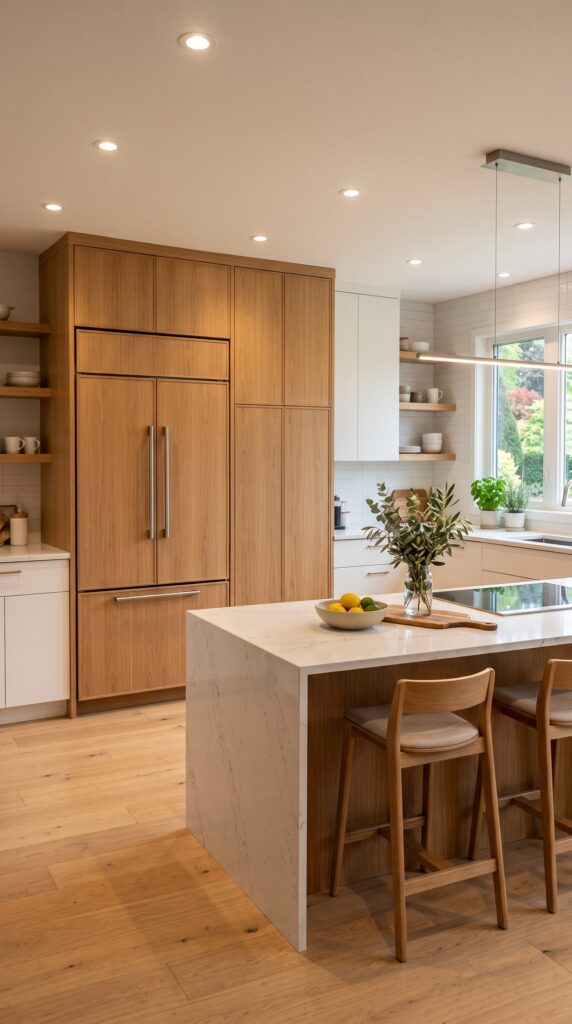
Nothing breaks the visual flow of a minimal kitchen faster than appliances that stick out like furniture that doesn’t belong. The modern approach is integration — building appliances into the cabinetry run so they sit flush with cabinet faces and disappear into the design.
Panel-ready refrigerators and dishwashers, which accept a cabinet front panel to match surrounding cabinets, used to be reserved for high-end renovations. The price gap has closed significantly in recent years. Even if full integration isn’t in the budget, choosing appliances in a single consistent finish — all stainless, all matte black, or all white — creates a coherent look that reads as intentional.
For smaller appliances, the real win is getting them off the counter entirely. An appliance garage with a tambour door can hide your coffee maker, toaster, and stand mixer behind a single flush surface, leaving your countertops clear. Shop Modern Appliances is worth browsing for built-in and integrated options that work at different budget levels.
6. Use Light as a Design Material
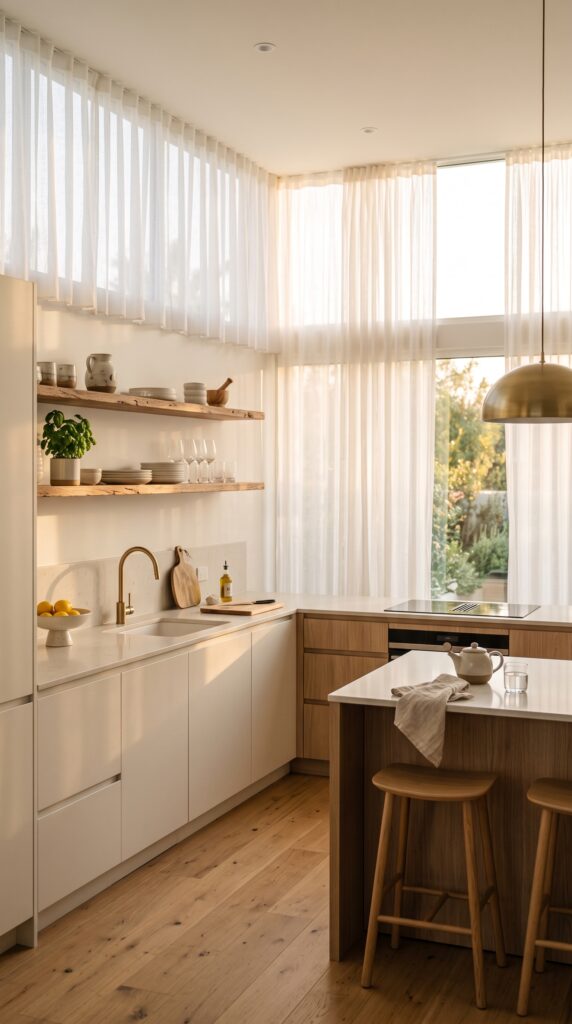
Every great minimal kitchen I’ve ever been in had one thing in common: an abundance of light. Natural light makes materials read correctly — it shows the true depth of your countertops, the actual tone of your cabinets, and the warmth of any wood accents. Designing for light is designing for the space to look its best at any time of day.
If you’re in a remodel, consider enlarging existing window openings or adding a skylight above a prep area. For privacy without darkness, frosted or reeded glass keeps light moving through while keeping sightlines blocked. Shop Sheer Curtains offers lightweight window treatments that diffuse harsh direct sun beautifully without cutting off natural light.
For evenings, layered lighting is essential. Recessed ceiling lights handle ambient illumination, under-cabinet LED strips handle task lighting at the counter, and pendant lights over an island or peninsula add the warmth and personality that overhead lighting alone never achieves. According to Houzz’s kitchen lighting guide, the most common lighting mistake in kitchen remodels is relying on a single overhead source and wondering why the space feels flat.
7. Finish With Intentional, Minimal Decor
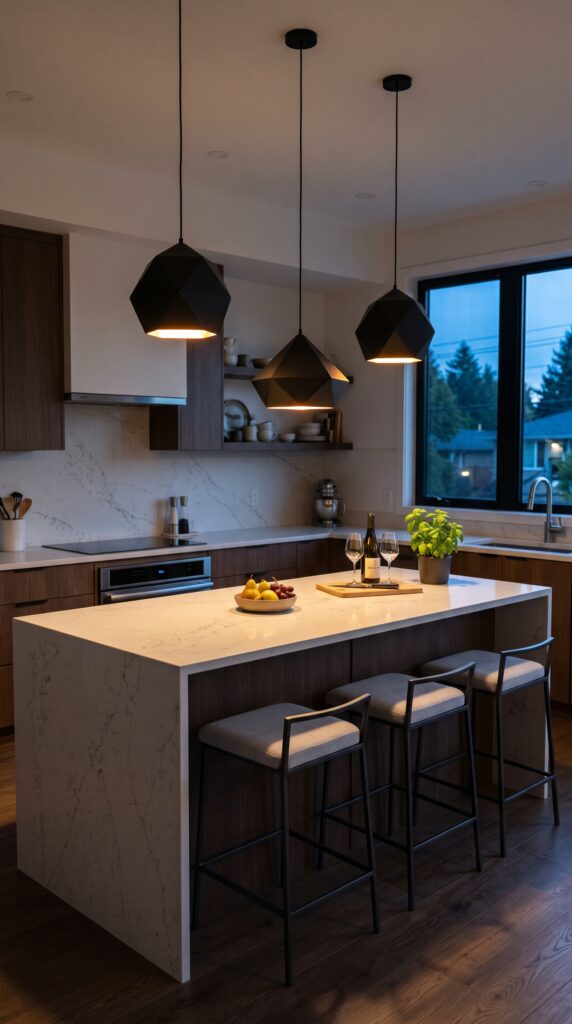
Here’s the thing about minimal kitchens that took me a while to understand: they require more discipline after the remodel than during it. The design only works if you commit to keeping surfaces clear and every object earns its place on the counter.
The accessories I keep out are the ones I use every day — a wooden cutting board that doubles as a serving surface, a simple ceramic vessel for a single potted herb, and one small bowl for fruit. That’s it. Everything else lives in a drawer or cabinet.
Lighting is the one place I encourage people to be slightly expressive. A well-chosen pendant over an island or dining area can introduce texture, shape, and warmth without adding visual clutter, because it lives above the eyeline. Shop Pendant Lights has a strong range of geometric and sculptural options that complement a minimal aesthetic without competing with it.
For further design inspiration, Dezeen’s kitchen design archive is one of the best free resources for seeing how professional designers apply minimal principles across different kitchen sizes and budgets.
small kitchen storage solutions
Final Thoughts on Your Kitchen Remodel
A truly sleek and minimal kitchen isn’t something you design once and forget. It’s a set of decisions that compound — each choice reinforcing the ones around it, every material and finish working together toward the same feeling of calm, open functionality. Start with the elements that have the most visual impact (cabinets, countertops, layout) and let the smaller decisions follow from those anchors.
The best advice I can give is this: buy less, choose better, and give every surface room to breathe. When you walk into a kitchen that follows that principle, you feel it immediately — and that feeling is worth every careful decision it took to get there.