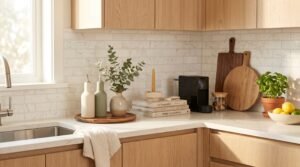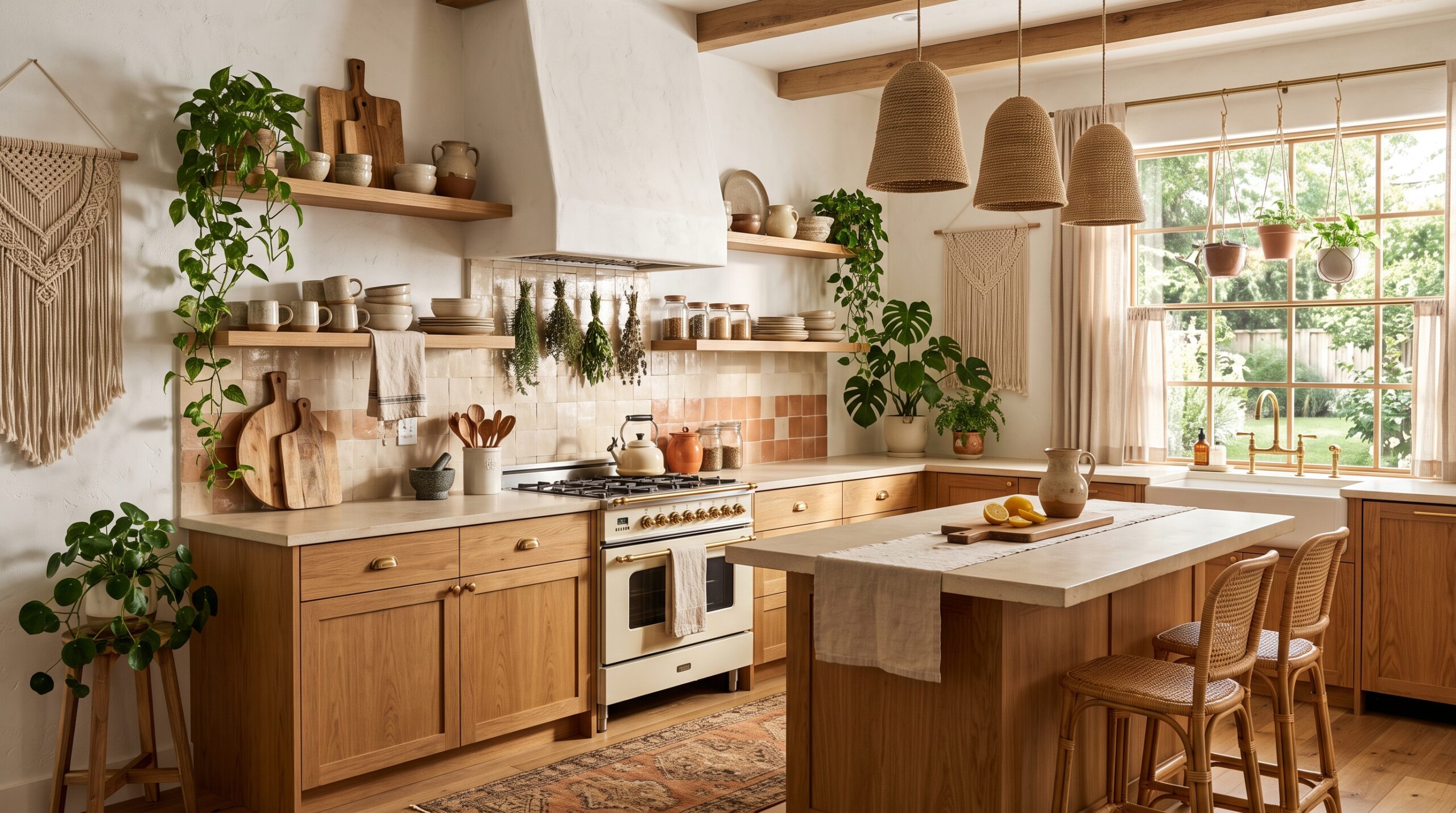
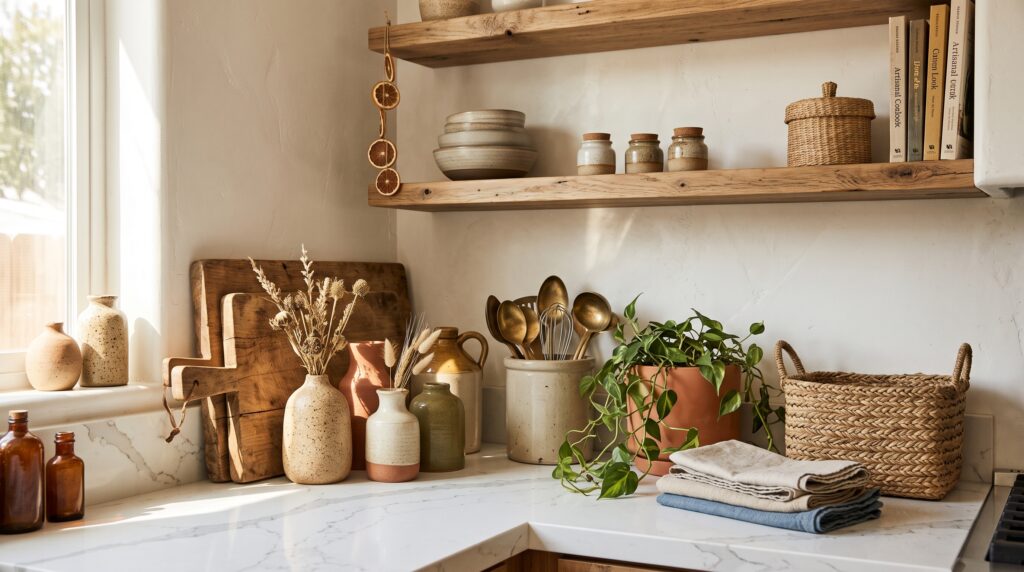
Bohemian kitchen decor is a style that looks effortless, but it takes a little thought to get right. The difference between a kitchen that feels warm and collected and one that just looks cluttered is intentional layering: warm color, natural texture, and objects that were chosen over time rather than bought as a matching set. This guide gives you 10 ways to add that free-spirited style to your cooking space, with the measurements, materials, and steps to get each one right.
If you have been staring at your kitchen wishing it had more soul, start with one change from this guide, live with it for a week, and then add the next. Bohemian kitchen decor works best when it grows in layers, not when everything arrives in one delivery.
In This Guide
- What Is Bohemian Kitchen Decor?
- 10 Ways to Add Bohemian Style to Your Kitchen
- How to Start on a Small Budget
- Mistakes to Avoid in a Bohemian Kitchen
- Frequently Asked Questions
What Is Bohemian Kitchen Decor?
Bohemian style, often called boho, is an eclectic style built on three things: earthy color, natural texture, and collected objects. In a kitchen, that means warm walls and wood, woven baskets and linen, handmade ceramics, plants, and pieces that do not all match. It is not a single product or a single color. It is a mix that feels personal because the pieces were chosen one at a time.
What bohemian kitchen decor is not is clutter for its own sake. A boho kitchen still needs clear worktops, safe walkways, and places for the things you use every day. The collected look works when each surface has a clear job, and when the color palette and the materials repeat across the room. Keep that limit in mind, and the style will feel warm rather than messy.
10 Ways to Add Bohemian Style to Your Kitchen
These 10 ways to add bohemian kitchen decor are listed in the order that makes the biggest visual difference first: color and texture, then shelves and plants, then lighting, textiles, and the finishing pieces. Each one works on its own, and together they build the layered look that defines the style.
1. Start With Earthy Color
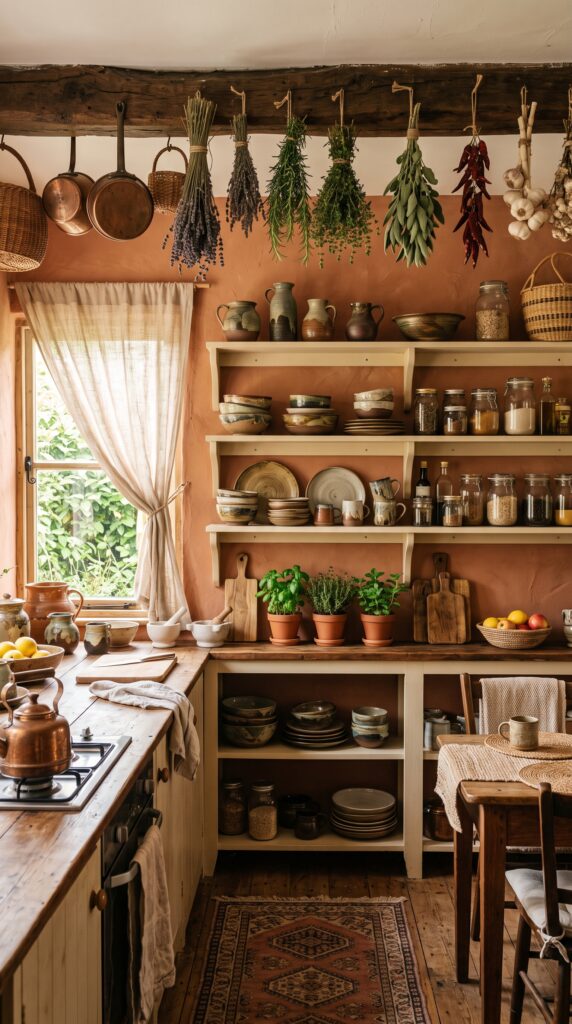
Bohemian kitchens feel grounded because they borrow their palette from nature: warm white or cream as a base, then terracotta, olive green, mustard, and warm wood tones as accents. Choose two or three accent colors and repeat them across the room, so a terracotta towel, a mustard cushion, and a terracotta plant pot all belong to the same palette.
You do not need to repaint a single wall to shift the mood. Start with the items you touch every day: stoneware plates and bowls in warm tones, wooden utensils, and linen towels. If you do paint, test a swatch on the wall and look at it in daylight and in the evening, because warm colors change a lot under kitchen lighting. A color that looks soft in the morning can look much stronger under a warm bulb at night.
2. Layer Natural Texture

If there is one thing that separates a flat kitchen from a bohemian one, it is texture. Wood and rattan next to ceramic and brass, linen next to smooth stone, and woven baskets next to glass jars give the eye something to move across. Without that mix, even a colorful kitchen can feel flat.
Storage is one of the best places to introduce texture. Use woven baskets for dry goods, fruit, and cloths, and keep them in a dry spot away from the sink, so they do not stay damp. Use a wooden board for serving, a linen cloth for drying, and a ceramic jar for utensils. Limit yourself to three main materials in any one area, so the mix reads as layered rather than random. That balance is at the heart of good bohemian kitchen decor.
3. Add Open Shelving With Real Personality
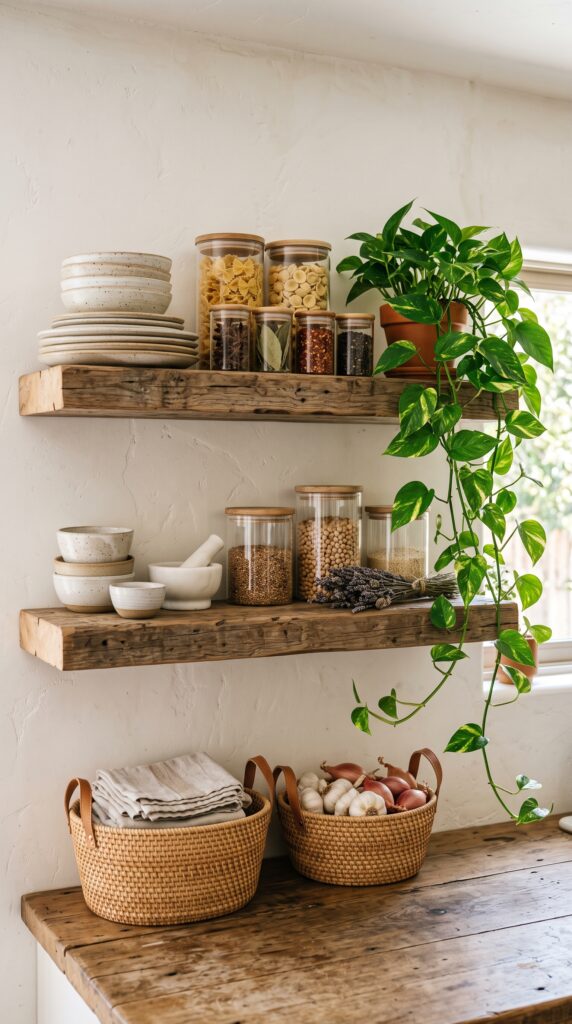
Closed cabinets keep things tidy, but they also hide everything. Open shelving shows the pieces you actually use, and that is where a bohemian kitchen gets its personality. A few stacked plates, a trailing plant, a jar of dried pasta, and a couple of cookbooks tell you what the kitchen is for, in a way a closed door never will.
Choose a shelf depth of 10 to 12 inches, so plates and jars sit safely without sticking out, and fix the shelf into wall studs or use fixings rated for the weight of the items you plan to put on it. Place the lowest shelf about 18 to 20 inches above the worktop, so you can reach it without stretching and it does not block the worktop below. Keep everyday items on the lowest shelf, where you can reach them, and use higher shelves for display. Group items in clusters of three, with different heights in each cluster, and leave some empty space between clusters. If you are planning shelves as part of a larger change, see The Ultimate Guide to Kitchen Remodel Ideas for Every Style and Budget to plan the layout before you start.
4. Bring in Plants That Suit a Kitchen
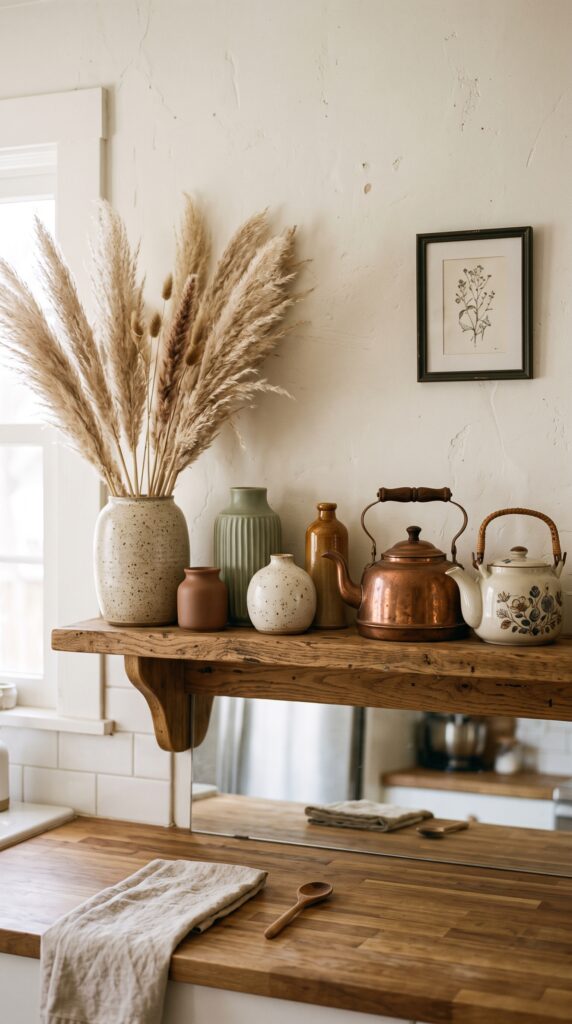
Plants add life to a kitchen in a way no other decor can. They soften hard edges, add color that changes with the seasons, and make a room feel lived in. In a bohemian kitchen, plants are part of the style, not an afterthought, so give them a real place: a shelf, a windowsill, or a hanging planter near a window.
Choose plants that suit a kitchen. Trailing pothos and ivy do well in bright, indirect light and need watering only when the top inch of soil feels dry. Herbs such as basil and mint need a sunny windowsill and regular watering, and they are useful as well as decorative. Keep plants away from direct heat above the stove, and use a saucer under each pot so water does not damage a shelf or a worktop. Start with two or three plants, and add more only when you know how much light and care each spot gets. Plants are one of the easiest bohemian kitchen decor ideas to start with, because a single healthy plant changes a whole corner.
5. Layer Lighting for a Warm Glow
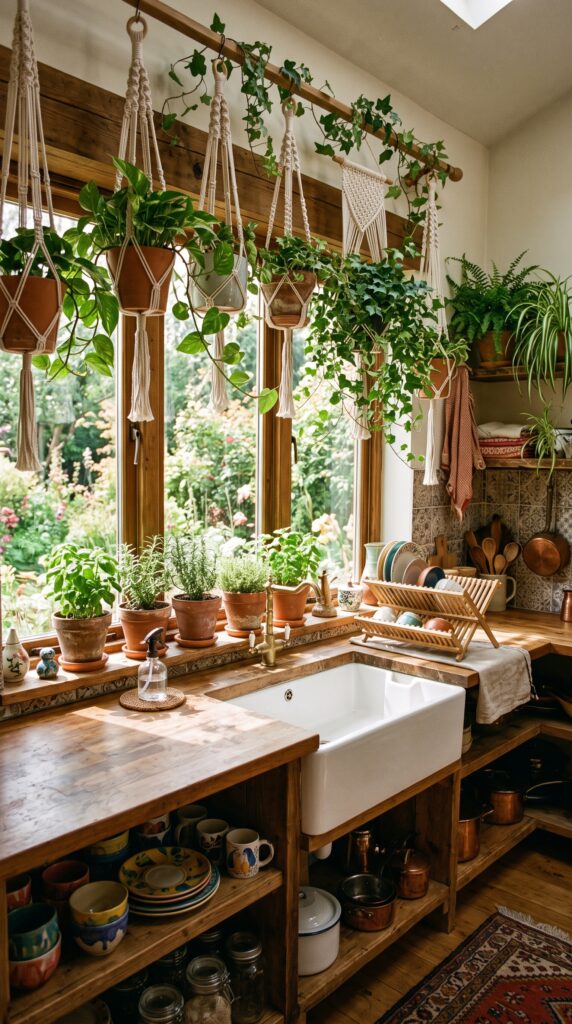
Lighting can change a kitchen more than almost any other single item. Overhead lighting alone makes a kitchen feel flat and clinical. Layer it instead: a ceiling light for cooking, a pendant or a wall light over a dining area for warmth, and a small lamp or a candle on a shelf for the evening. Each layer should be on its own switch, so you can turn the bright cooking light down when you sit down to eat.
Use warm-white bulbs in the lights you use in the evening, and keep the bulb wattage within the rating printed on the fitting. Hang a pendant 30 to 36 inches above an island or a dining table, so it lights the surface without blocking the view across it. A woven pendant shade, a rattan shade, or a simple fabric shade will soften the light and add texture at the same time. If you are not sure about a fitting, hold it in place and check the height from a seated position before you fix it. Layered, warm lighting is one of the most effective bohemian kitchen decor ideas for a kitchen that feels cold under a single ceiling light.
6. Add a Patterned Rug in the Kitchen
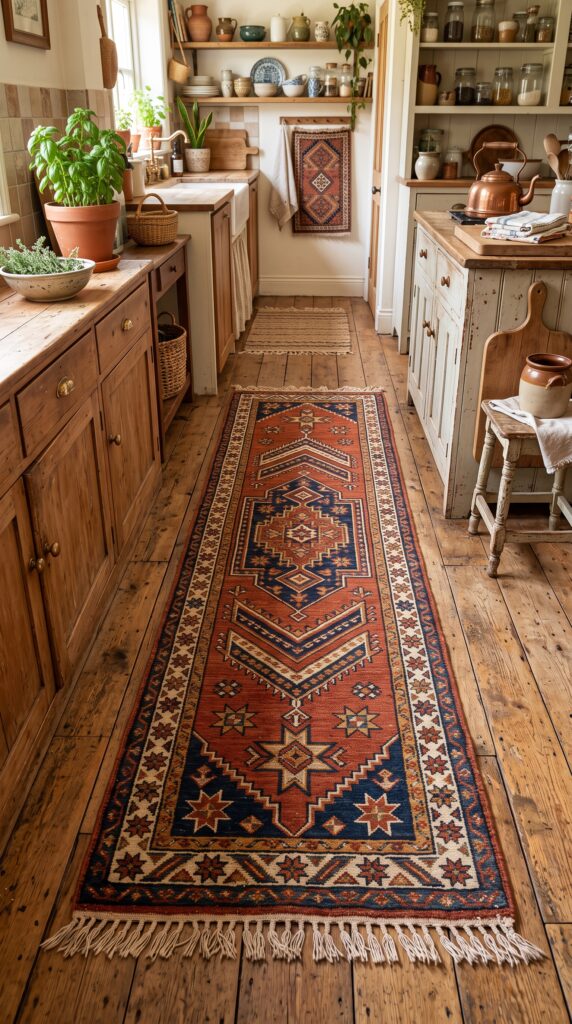
The first instinct is often to keep rugs out of the kitchen, because of spills and mess. A washable runner, chosen for the right spot, does the opposite: it adds pattern, warmth, and comfort underfoot, and it can be cleaned when it needs to be. Place it in a spot that does not get constant splashes, such as in front of the sink or along a walkway, rather than directly in front of the stove.
Measure the walkway first. A runner should be narrower than the walkway, with a clear border of floor on each side, and long enough to cover the area you stand in most. Choose a low-pile, washable rug with a non-slip backing, and check the care label before you buy. Persian-inspired or Moroccan-inspired patterns in terracotta, rust, and cream work well with a bohemian palette, because the pattern hides small marks and the colors repeat the palette used elsewhere in the room. A rug is one of the simplest bohemian kitchen decor ideas for a rented kitchen, because it changes the floor without changing anything permanent.
7. Display Handmade and Vintage-Inspired Pieces
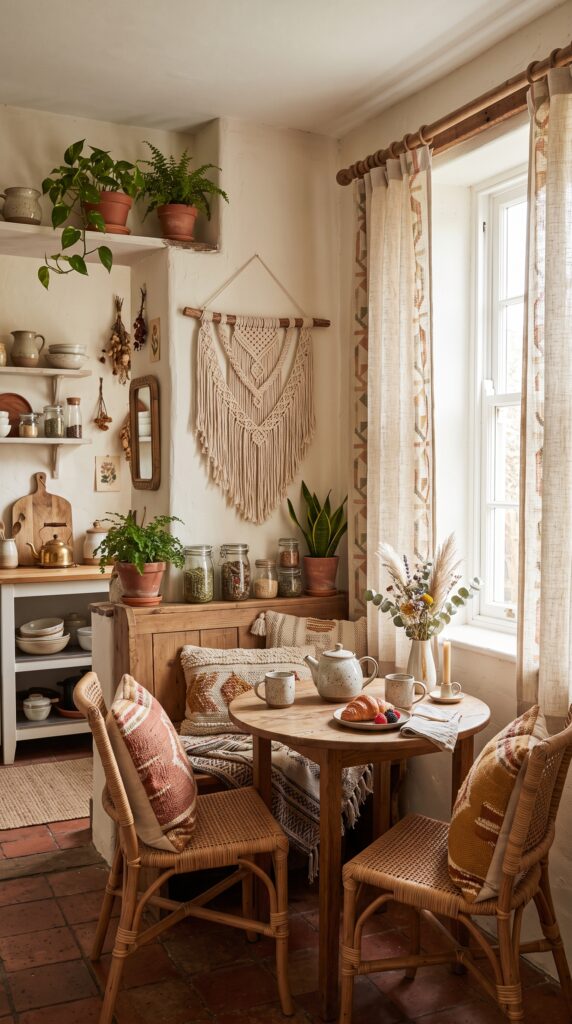
Bohemian style is about celebrating the imperfect and the personal. Handmade pottery, copper cookware, vintage teapots, textured vases, and dried flowers all carry the marks of how they were made, and those marks are the point. A kitchen full of identical, mass-produced pieces will never feel bohemian, however colorful it is.
Choose pieces you will actually use, or that you love looking at, and display them where they can be seen. A handmade ceramic vase on a shelf, a copper pan hung on a hook, or a set of mismatched mugs on a rail all work, as long as they are not crowded together. Check that any handmade piece used for food or drink is food-safe and glazed on the inside, and wash it by hand if the maker recommends it. A few well-chosen pieces will do more for bohemian kitchen decor than a shelf full of items bought all at once.
8. Mix Metals, but Keep Them Warm
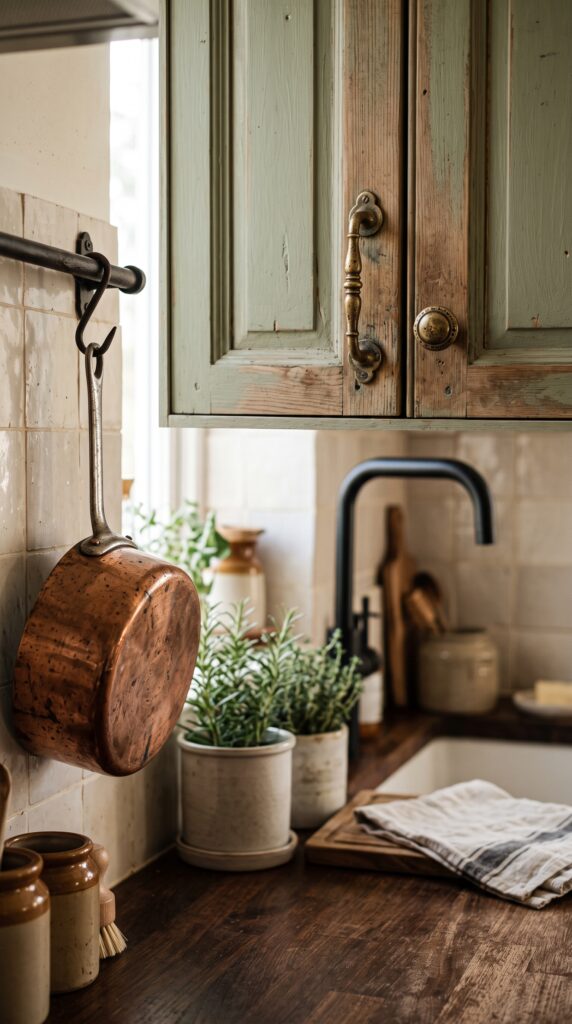
One of the smallest upgrades that makes a big difference is changing the cabinet hardware. New handles and knobs change how every cabinet looks, without changing the cabinets themselves. For a bohemian kitchen, warm metals work best: brass, copper, and antique gold, with wood or leather pulls for a softer touch.
Measure the hole spacing on your existing handles before you buy new ones. That is the distance between the centers of the two screw holes, and it is usually 3, 3.75, or 5 inches. Buy handles with the same spacing, so you do not need to drill new holes. Remove one old handle first, fit the new one, and check that it sits flat and that the screws are the right length for the door. If the screws are too long, they will stick out inside the cabinet. Keep one warm metal as the main finish, and use a second warm metal only as an accent, so the mix still looks intentional.
9. Layer Textile Details Throughout the Space
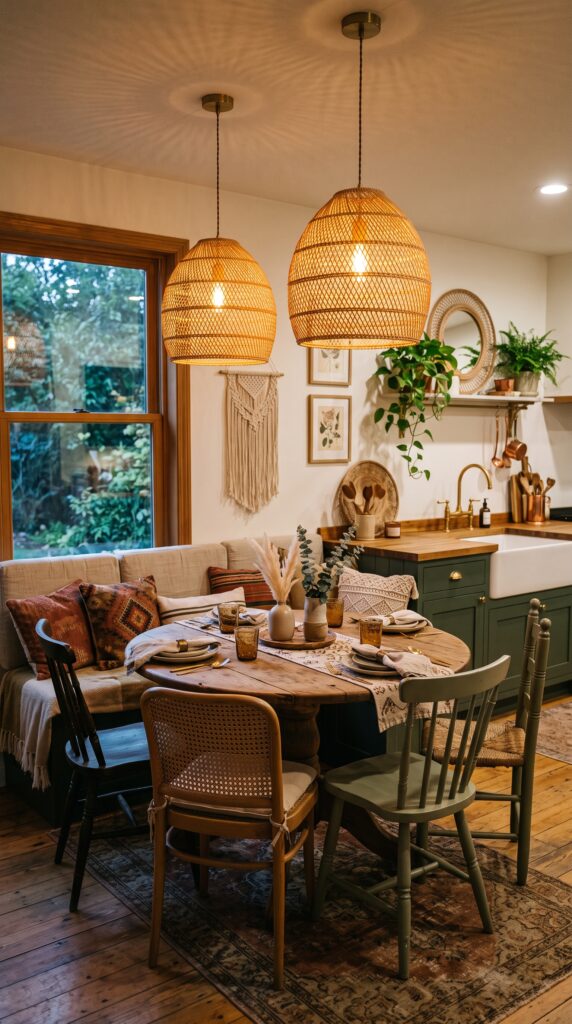
Kitchens are full of hard surfaces: tile, stone, metal, and glass. Textiles soften them. A linen towel, a cotton tablecloth, a cushion on a dining bench, or a curtain on a window all add warmth and absorb sound, so the room feels calmer as well as softer.
Choose textiles you can wash easily, and keep loose fabric away from the stove and from open flames. A macramé wall hanging, a woven wall piece, or a fabric banner can add texture to a blank wall without taking up worktop space. Hang it at eye level, with its center about 57 to 60 inches from the floor, and keep it to one wall, so it reads as a feature rather than clutter. Use the same two or three colors in your textiles as in the rest of the room, so the layers belong together. Textiles are one of the most flexible bohemian kitchen decor ideas, because you can change a towel or a cushion in minutes when the season changes.
10. Create a Collected Look, Not a Cluttered One
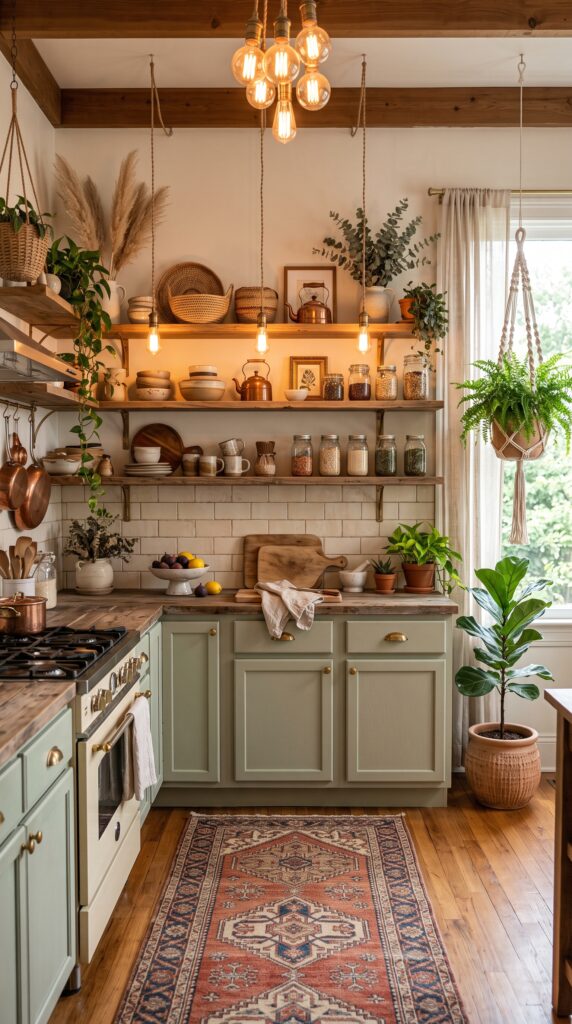
This is the idea that trips people up the most. The difference between a bohemian kitchen and a cluttered kitchen is editing. A collected kitchen has a few things on each surface, with space between them. A cluttered kitchen has everything on every surface, with no space at all.
Group decor in small clusters of three, with different heights in each cluster, and leave empty space between clusters. Use the same color palette across the clusters, so they feel like parts of one room. Remove one item from a surface before you add a new one, and put away anything you do not use or love. A kitchen that looks like it has evolved over time is the goal, and that takes patience, not more shopping. That editing habit is what keeps bohemian kitchen decor feeling calm rather than busy.
How to Start on a Small Budget
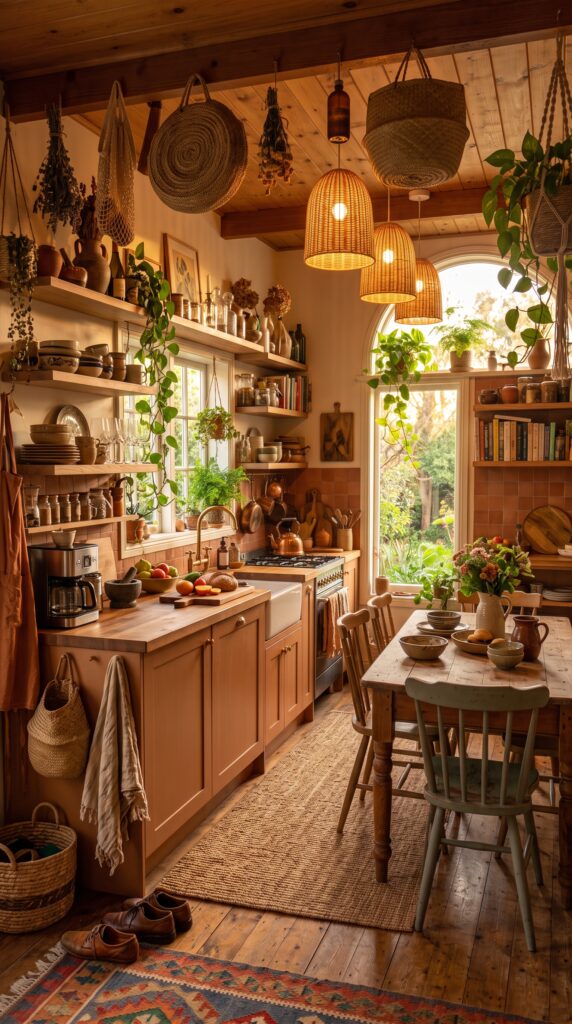
Bohemian style does not need a large budget, because much of it is about how you use what you already have. Start with the changes that cost the least and affect the room most: textiles, plants, and editing what is already on the shelves. Next, change the cabinet hardware, because it changes every cabinet at once. After that, add a washable runner and a pendant light, if the budget allows.
Look for handmade and vintage pieces at local markets and second-hand shops, and check each piece for damage before you buy it. Check that a ceramic piece is food-safe if you plan to use it for food, and that a basket is dry and clean. If you want a warmer, farmhouse feel as well as a bohemian one, see Farmhouse Kitchen Remodel Ideas for a Warm and Cozy Look for ideas that work well alongside bohemian texture. Start with one change, live with it for a week, and then add the next. A bohemian kitchen that grows slowly will feel more personal than one that was bought all at once.
Mistakes to Avoid in a Bohemian Kitchen
Most bohemian kitchen decor goes wrong for the same few reasons, so check these before you buy anything else.
- Using too many patterns at once. Two patterns, such as a patterned rug and a patterned towel, are enough. A third pattern on the curtains, the cushions, and the plates will fight with the first two.
- Blocking the worktop. Decor should not take over the space you cook in. Keep at least one clear stretch of worktop for chopping and preparing food, and keep decor to the edges and to the shelves.
- Choosing textiles you cannot wash. A kitchen towel, a rug, or a cushion that cannot be washed will soon look stained. Check the care label before you buy, and keep loose fabric away from the stove.
- Filling every surface. A shelf packed edge to edge reads as clutter, even if everything on it is tidy. Leave empty space on each shelf, and remove one item before you add a new one.
- Ignoring the lighting. A single bright ceiling light will flatten even the warmest bohemian kitchen. Layer the lighting, as described above, so the room feels warm in the evening.
If storage is the problem, rather than style, fix the storage first. See Small Kitchen Organization Ideas on a Tight Budget for practical ways to keep a small kitchen organized without losing its character.
Frequently Asked Questions
What colors work best in a bohemian kitchen?
Start with warm white or cream as a base, then add two or three earthy colors, such as terracotta, olive green, mustard, and warm wood tones. Repeat those colors in textiles, ceramics, and plants, so the room feels connected. Avoid adding a new color with every item, because that is what makes a bohemian kitchen look busy.
Can a bohemian kitchen work in a small kitchen?
Yes, if you edit carefully. In a small kitchen, use one patterned item, such as a runner or a towel, rather than pattern on every surface. Keep the worktop clear, use open shelves only for items you use often, and choose plants that fit the space, such as herbs on a windowsill. Bohemian kitchen decor works in a small space when the palette and the materials are limited, even if the style itself is eclectic.
How do I keep a bohemian kitchen from looking cluttered?
Group items in clusters of three, leave empty space between clusters, and remove one item before you add a new one. Keep the worktop clear for cooking, and keep to two or three colors and three main materials in any one area. That editing is what separates a collected look from clutter.
What plants are best for a kitchen?
Trailing pothos and ivy do well in bright, indirect light, and herbs such as basil and mint do well on a sunny windowsill. Water only when the top inch of soil feels dry, keep plants away from direct heat above the stove, and use a saucer under each pot to protect shelves and worktops.
How can I add bohemian style on a budget?
Start with textiles, plants, and editing what you already own, because those changes cost the least. Then change the cabinet hardware, and add a washable runner when the budget allows. Look for handmade and vintage pieces at local markets and second-hand shops, and check each piece for damage and for food safety before you buy it.
Your kitchen should feel like you. Start with one change, such as a warm towel, a plant, or a set of stoneware plates, and let the style grow from there. For more designer guidance on the style, see Apartment Therapy’s Boho Design Style 101 guide, which explains the eclectic mix, natural textures, and collected pieces that define boho design.