Affiliate Disclosure: This post may contain affiliate links. If you purchase through these links, I may earn a small commission at no extra cost to you. I only recommend products I genuinely believe in and would use in my own outdoor space.
I still remember the first summer I tried to give my backyard a proper vintage makeover. I had big dreams, a small budget, and absolutely no idea where to start. After a lot of trial and error — and a few trips to thrift stores that honestly changed my life — I discovered that a beautiful vintage garden has almost nothing to do with how much money you spend. It has everything to do with how you style, layer, and repurpose what you already have or can find cheaply.
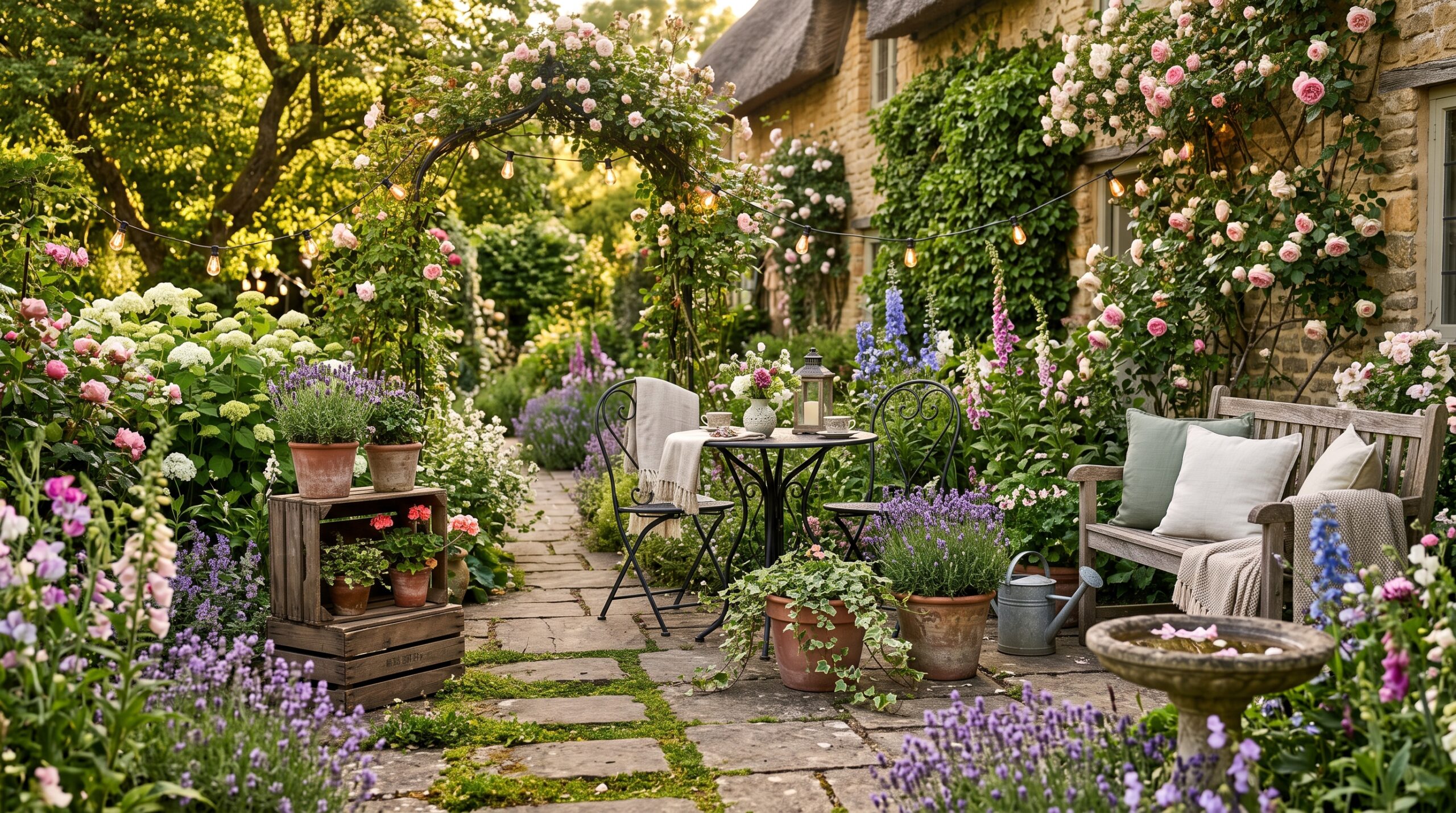
The secret that Pinterest doesn’t always spell out is this: vintage garden decor works because it leans into texture, imperfection, and warmth. Those are all things you can create on a budget if you know what you’re doing. Let me walk you through exactly what worked for me.
1. Embrace Aged Planters — Without Paying Antique Prices
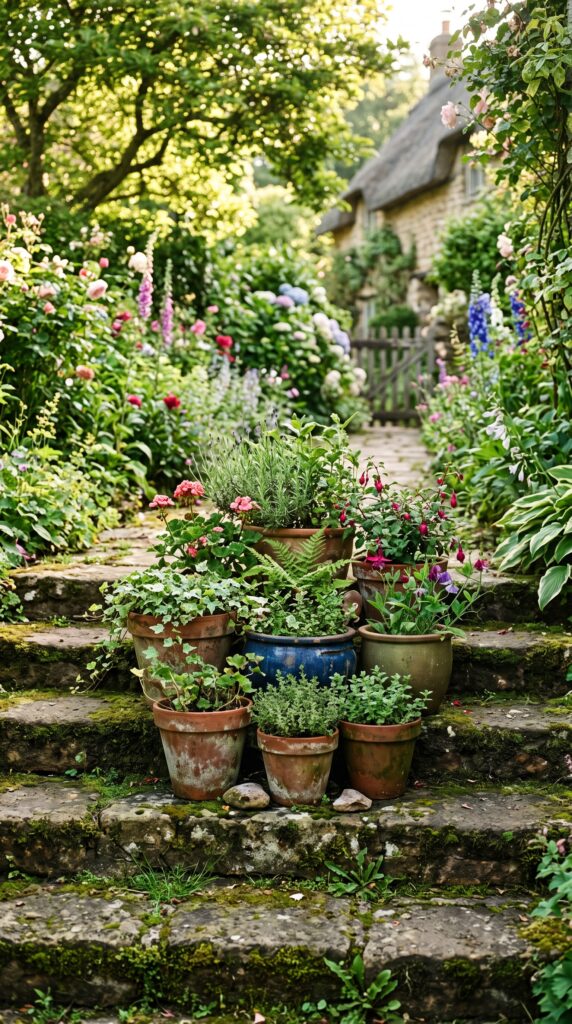
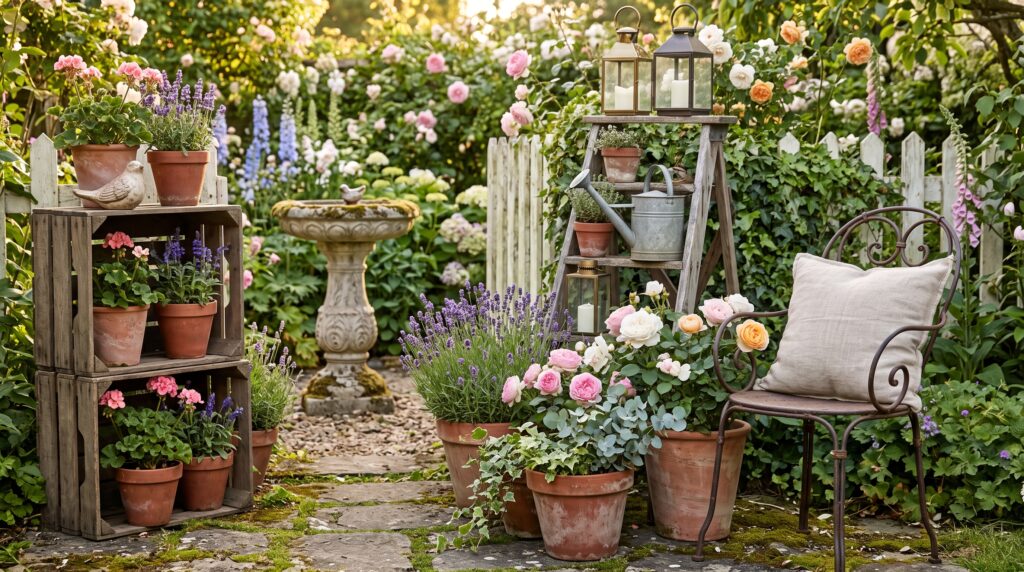
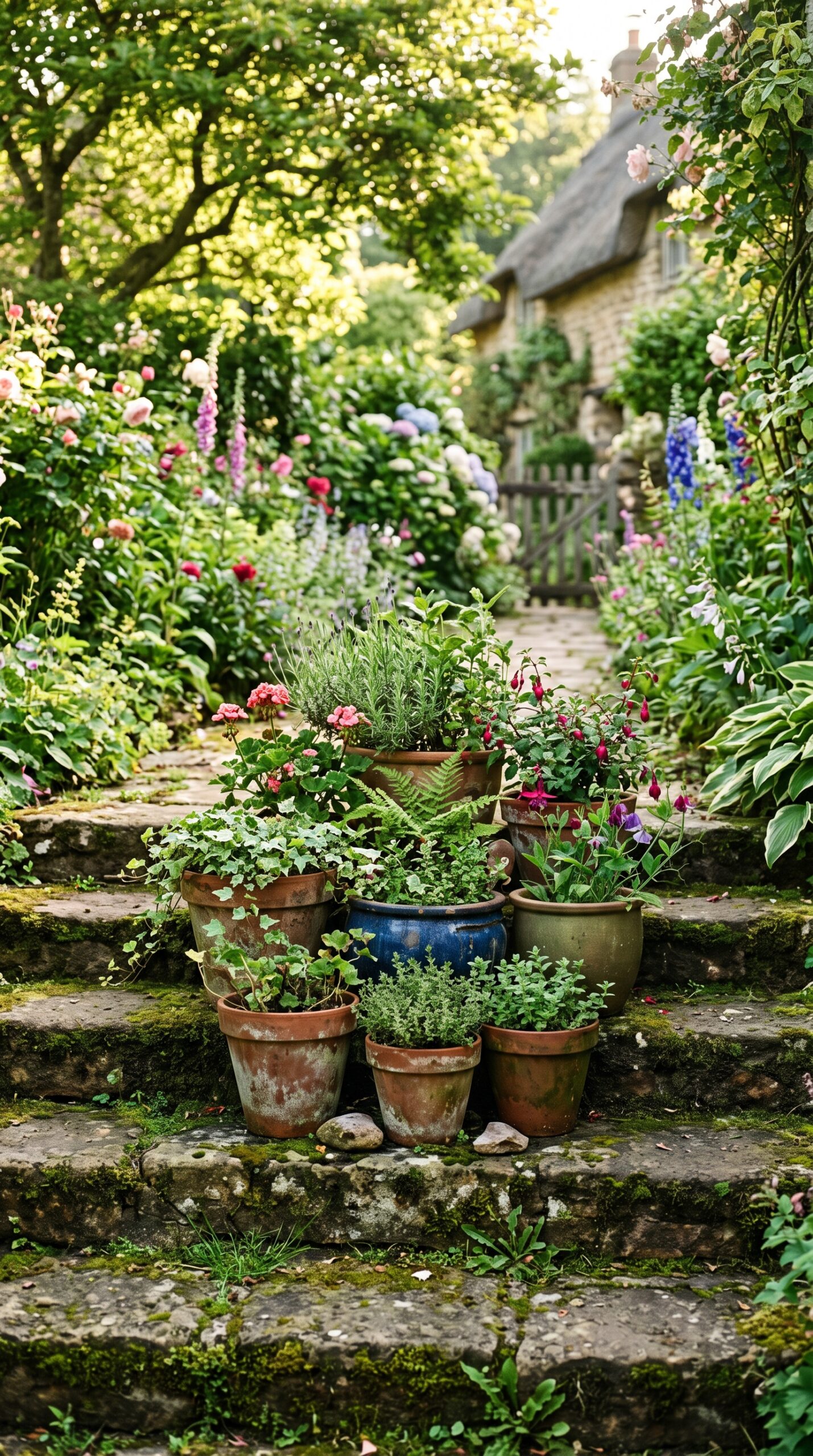
The planter is the first thing anyone notices in a vintage garden, and real antique terracotta or stone urns can run hundreds of dollars. Here’s the good news: aged texture is something you can fake convincingly with a little patience and the right base piece.
I’ve been using a simple DIY technique for years — take a plain terracotta pot, brush on a watered-down mix of grey and white chalk paint, then dry-brush a slightly darker tone over it once it’s dry. The result genuinely looks like a piece that’s been sitting in a French country garden for decades. People ask me where I bought it all the time.
What makes this approach even more effective is varying the scale and shape of your containers. Group a tall, narrow vessel with a wide squat pot and something in between. That variation in silhouette is exactly what high-end garden designers charge for. A Rustic Ceramic Vase works beautifully as the tall anchor piece in that kind of grouping — the texture reads as genuinely aged, and it holds up outdoors without cracking or fading.
Place your planter clusters near entryways, along fence lines, or flanking a garden bench. That positioning tells the eye where to look and makes even a small space feel curated and intentional.
My Top Picks
Rustic Ceramic Vase
A standout pick. The Rustic Ceramic Vase delivers quality and reliability you'll notice from day one.
Shop on Amazon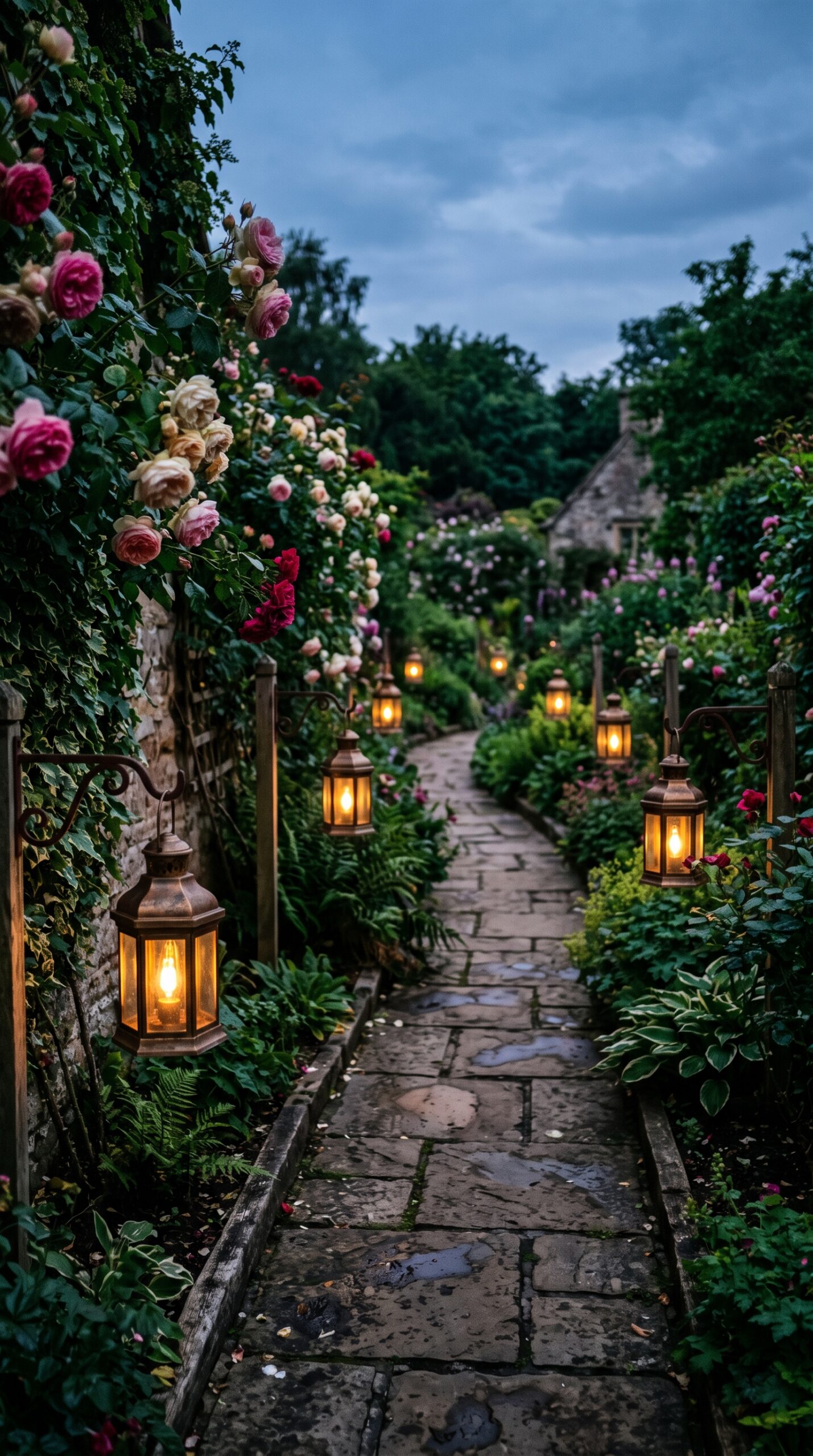
Large Decorative Lantern Set
A standout pick. The Large Decorative Lantern delivers quality and reliability you'll notice from day one.
Shop on Amazon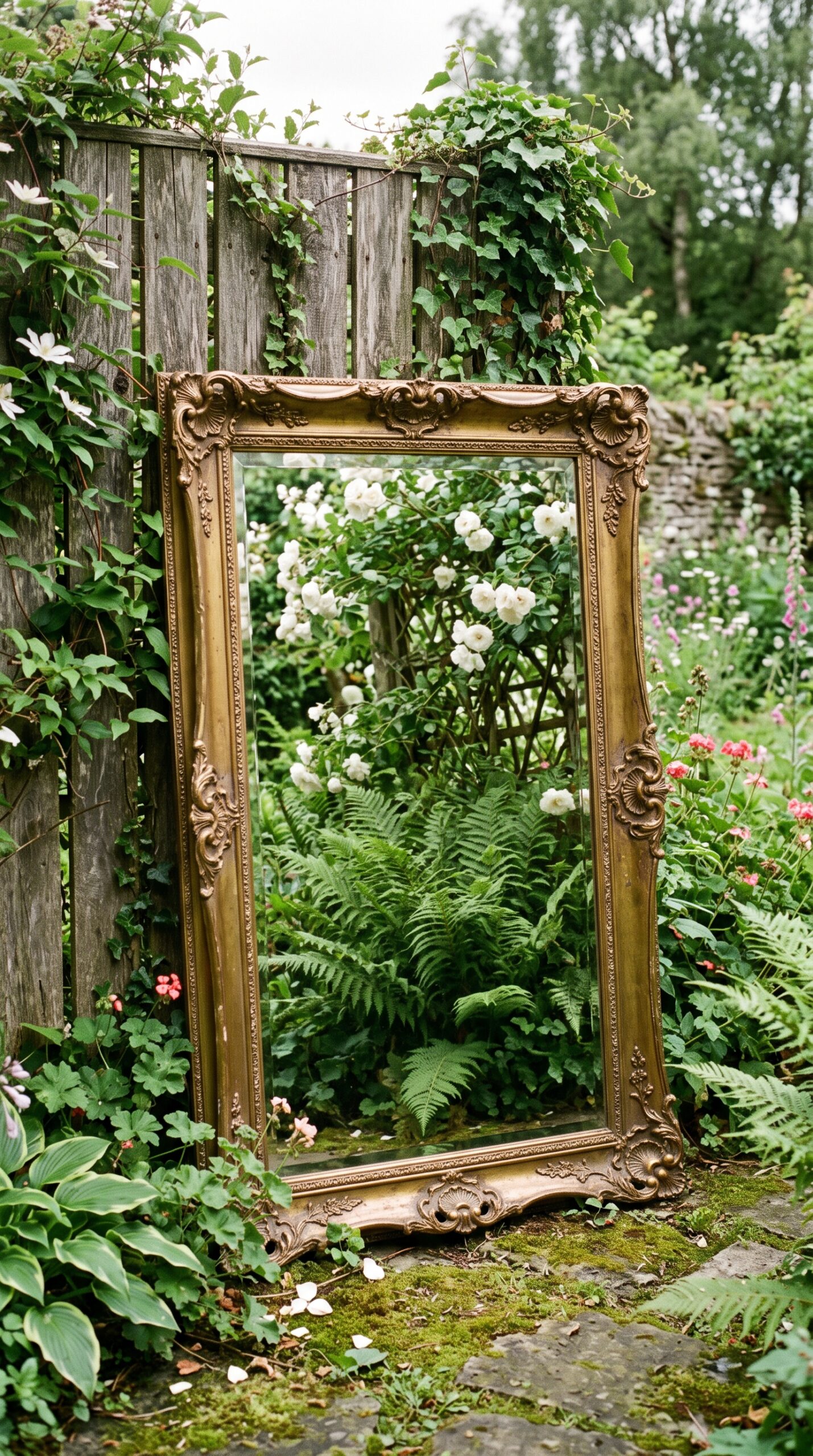
Vintage Gold Wall Mirror
A standout pick. The Vintage Gold Wall delivers quality and reliability you'll notice from day one.
Shop on Amazon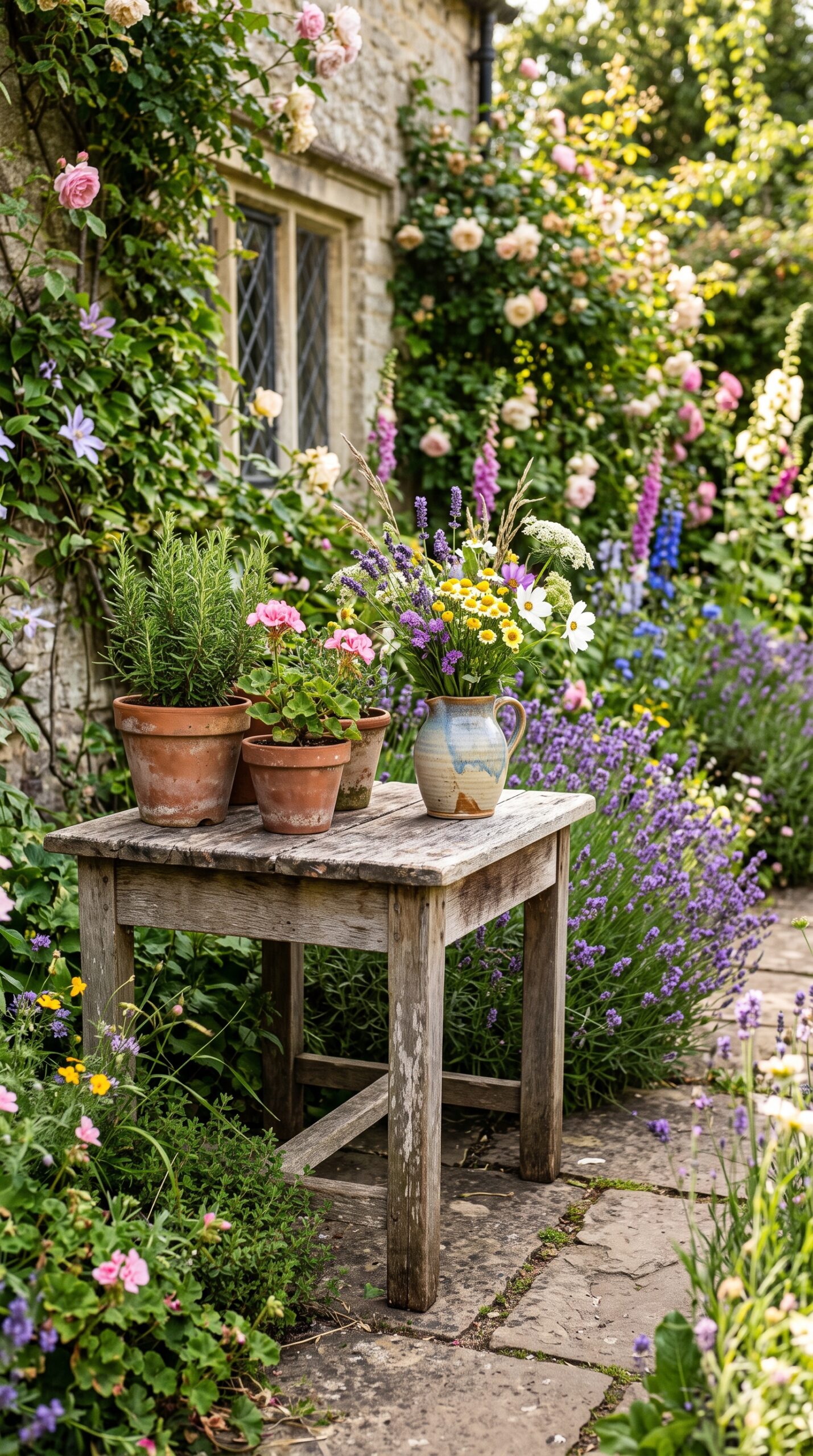
Round Side Table
Built for the way you work. The Round Side Table gives you the space and stability to stay focused and productive all day.
Shop on Amazon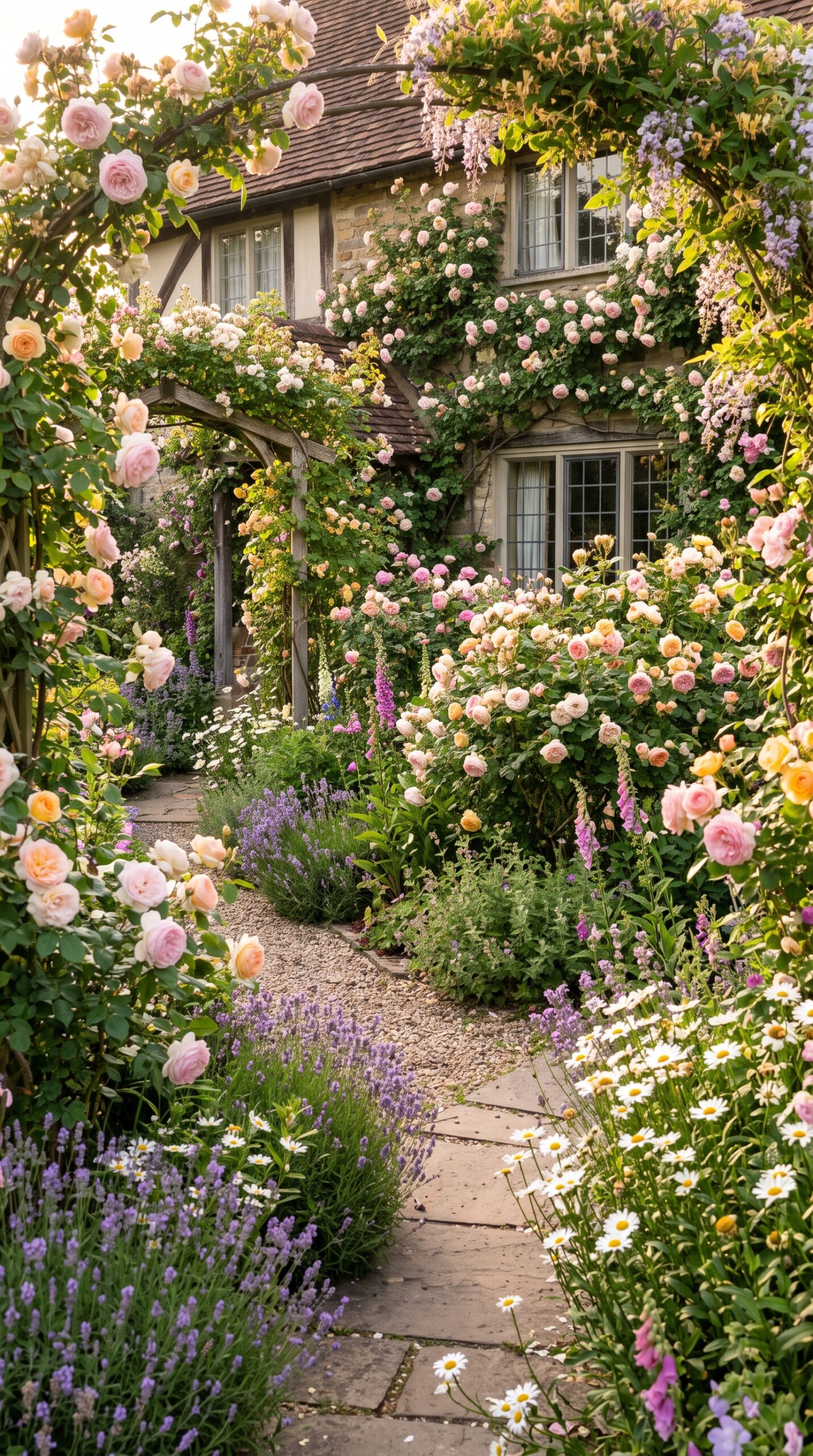
Mini Artificial Potted Plants
Cook with confidence. The Mini Artificial Potted Plants heats evenly, cleans up fast, and is built to last through years of daily cooking.
Shop on Amazon2. Use Vintage Lanterns to Create a Romantic Atmosphere
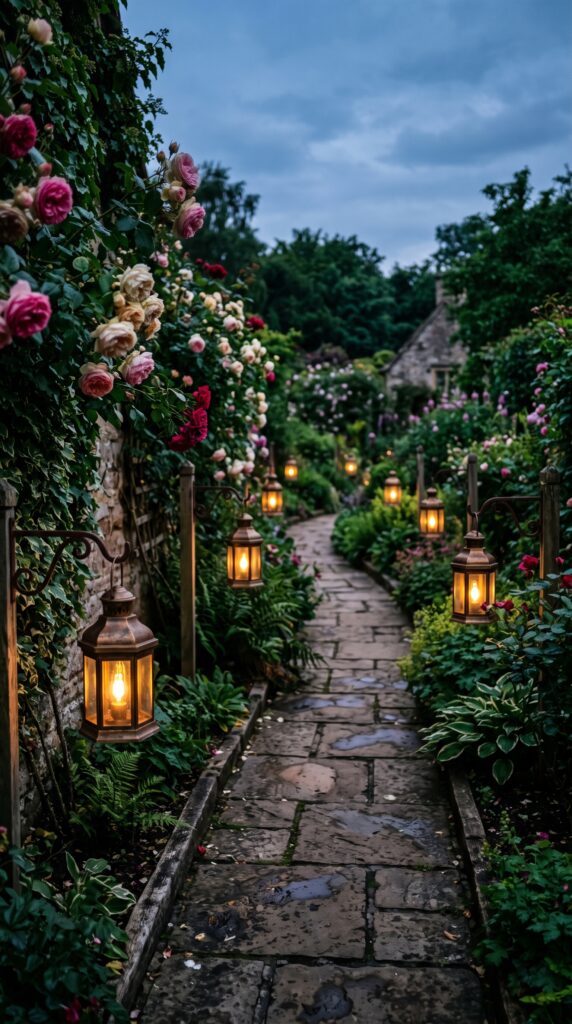
Lighting is genuinely the fastest way to make a garden feel expensive, and it’s where a lot of budget gardeners are leaving money on the table by not prioritizing it. The right lantern at dusk transforms an ordinary corner into something that looks straight out of a luxury retreat.
What I’ve learned is that finish matters more than size. Black metal and antique bronze lanterns carry visual weight and authority that chrome or brushed silver simply doesn’t in a garden setting. They read as old-world, which is precisely the tone vintage decor calls for. Warm LED pillar candles inside them are safer, longer-lasting, and honestly look more convincing than real flame in outdoor conditions.
Position lanterns in threes rather than pairs — one tall, one medium, one shorter — along a pathway or grouped near a seating area. That odd-number rule is a basic principle of interior styling that works just as powerfully outdoors. I’ve been using a Large Decorative Lantern Set for two seasons now, and what I appreciate most is that the sizing within the set already does that graduated-height work for you. You don’t have to hunt for three separate lanterns that coordinate — they arrive as a cohesive unit.
Hang a lantern from a low tree branch with jute rope, and suddenly your garden has a moment. That single detail costs almost nothing and photographs beautifully.
3. Hang a Garden Mirror to Double Your Space
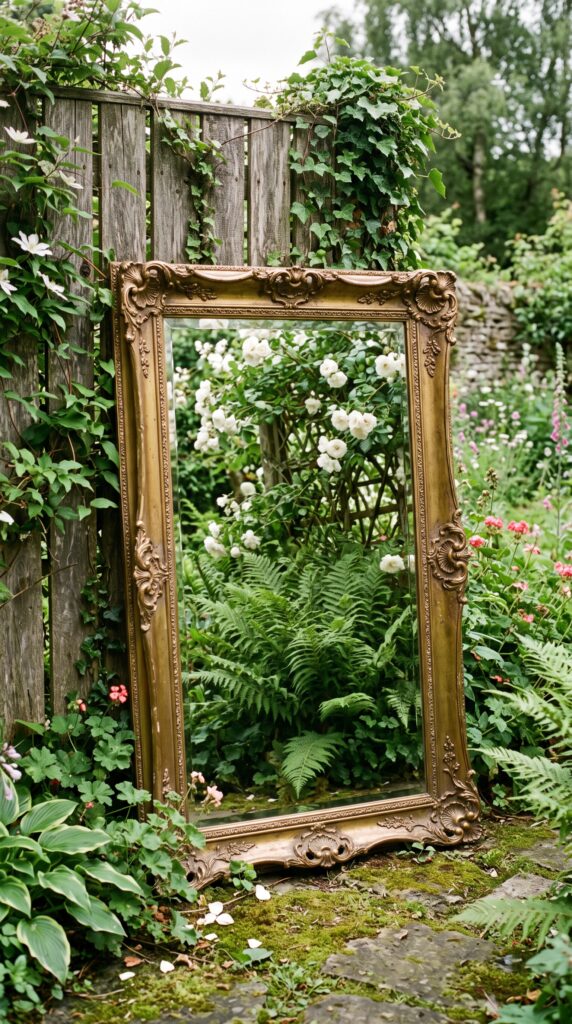
This is the one trick that separates people who’ve studied design from people who haven’t. A mirror in the garden creates the illusion of a doorway, a window into another space, and immediately makes a small garden feel larger and more layered. It’s a technique I first saw in a walled London garden tour, and I’ve been using it ever since.
The key is to lean or hang the mirror so it reflects something worth seeing — a climbing plant, a cluster of pots, a hedge. You want someone to glance at it and do a slight double-take, as if there might actually be more garden beyond it. Frames with ornate detailing, gilded edges, or distressed gold finishes work best because they hold visual interest even before you look at the reflection.
I recommend checking that any mirror you use outdoors is rated for exterior use or at least protected from direct rain. Propping it under an overhang or against a covered wall extends its life considerably. The Vintage Gold Wall Mirror has the kind of ornate framing that suits this look perfectly — the aged gold finish doesn’t look out of place among greenery, and it’s the right scale to make an actual visual impact rather than disappearing against a fence.
how to style a small garden on a budget
4. Repurpose Old Furniture into Garden Focal Points
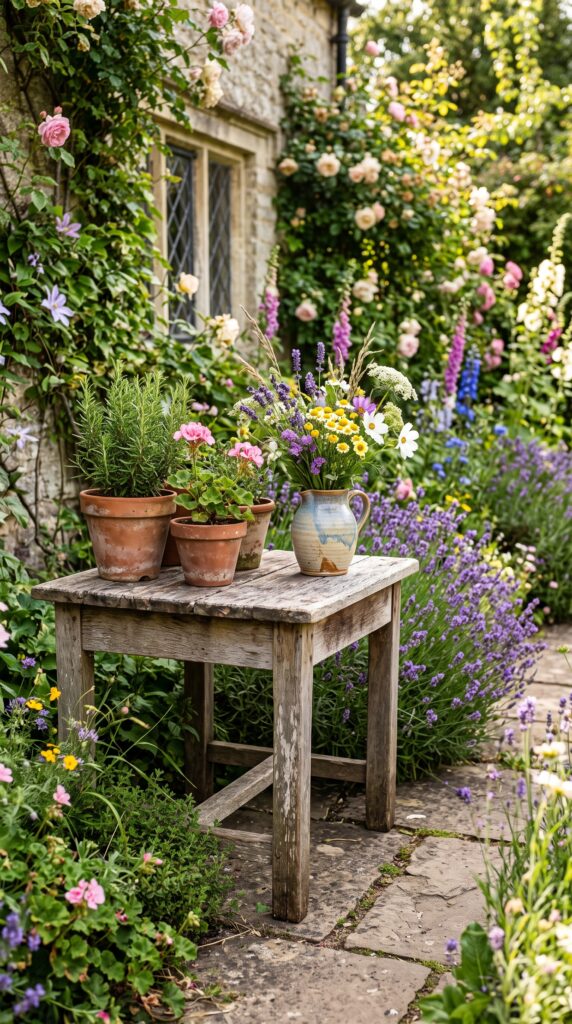
One of the things I love most about vintage garden design is that it actively rewards imperfection and history. A chipped chair, a worn wooden table, a salvaged ladder — these things that would look wrong in a modern interior become exactly right in a vintage outdoor setting.
My most-used repurposing trick is turning a small side table into a plant display station. Stack a few pots at different heights on the surface, let a trailing plant drape over one edge, and suddenly you have a focal point that looks like it was styled by someone with real design credentials. The slightly uneven surface of an aged table actually helps here — perfectly flat and pristine would look wrong against rustic pots and wild trailing greenery.
If you don’t have an old table kicking around, you don’t need to spend much to get the right look. A Round Side Table gives you that classic vintage profile, and you can accelerate the aging process yourself with a light sand and a wash of diluted grey paint if the finish is too clean for your taste. The round shape is particularly good for vintage garden styling because it softens the geometry of a space that often has a lot of straight fence lines and rectangular paving.
Look at vintage garden design inspiration on Gardenista for more ideas on how professional garden stylists repurpose furniture — seeing those examples helped me understand what scale and placement actually look like when it’s done right.
5. Layer Plants for That Lush, Cottagecore Look
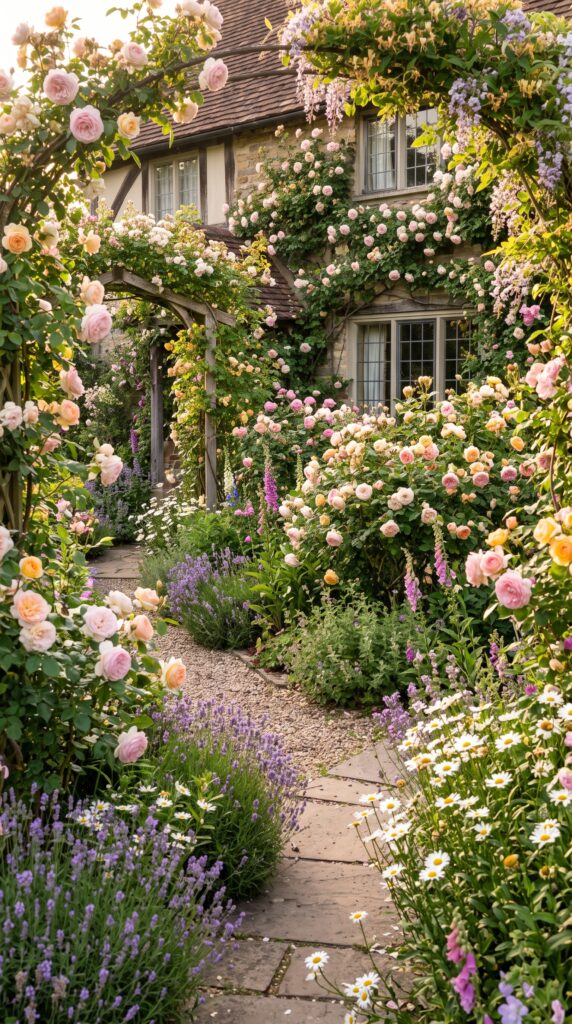
A vintage garden that’s sparse just looks neglected. The look you’re going for is abundant, slightly wild, and full of contrasting textures — which is actually easier and cheaper to achieve than a manicured formal garden.
The layering principle I use goes like this: tall plants or climbers at the back or on a trellis, medium bushy plants in the middle, and low ground-hugging or trailing plants at the front or spilling from pots. Soft pastel tones — blush roses, pale lavender, white daisies — read as inherently vintage and romantic. Let things grow slightly informally rather than trimming everything into perfect shapes; that looseness is part of what creates the charm.
For spaces where you can’t grow real plants easily — a balcony, a shaded corner, or simply a spot where you want guaranteed greenery year-round — Mini Artificial Potted Plants can genuinely fill gaps without looking cheap when mixed among real plants. I use them in spots that are hard to water consistently, tucked among real pots so they blend rather than standing out on their own.
The RHS guide to cottage garden planting is worth reading if you want to understand which plant combinations create that authentic layered look — they explain the principles behind the style rather than just listing plant names.
6. Bring It Together with Small Details That Elevate the Whole
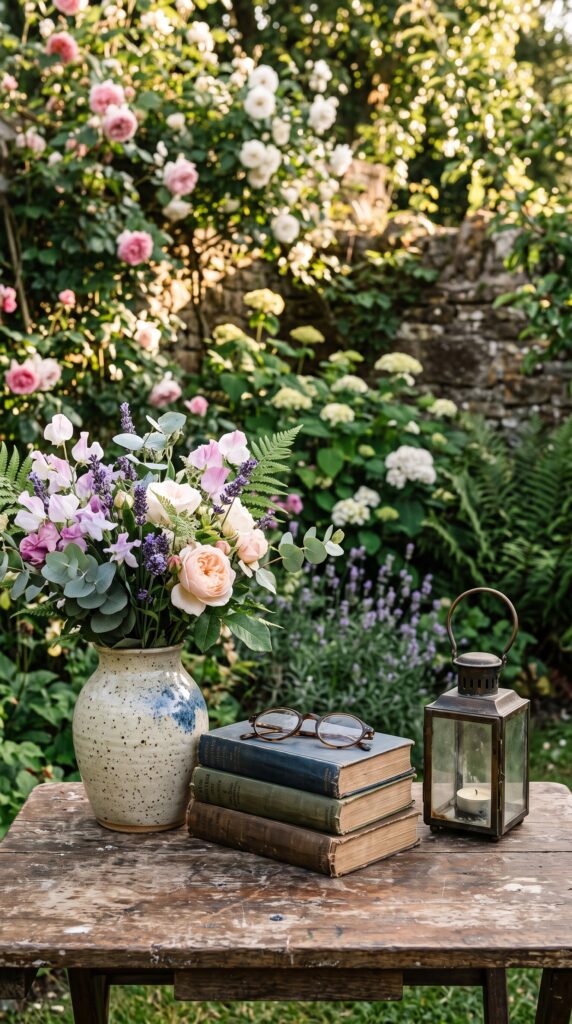
The final step that most budget garden makeovers miss is the styling layer — the small, considered details that make a space feel finished rather than assembled. This is where vintage garden decor really earns its reputation for looking expensive.
Think about adding a ceramic vase filled with dried lavender or seed heads to a table vignette. Use jute twine to tie back a climbing rose rather than plastic clips. Lay a piece of vintage-style outdoor fabric over a bench. Lean an old wooden-handled rake against a fence decoratively. These finishing touches cost almost nothing but signal intentionality, and intentionality is what luxury looks like.
The principle I keep coming back to is that a well-styled garden feels like someone actually lives in it and loves it — it isn’t just planted and left. When you add layered lighting, varied planter heights, a mirror that reflects the best of your planting, and a few carefully chosen pieces of furniture, you’re building a space with real atmosphere.
For further inspiration, Apartment Therapy’s outdoor decorating guides are a genuinely useful resource for small-space vintage styling that translates real design principles into affordable, actionable steps.
Final Thoughts
Designing a beautiful vintage garden on a budget is really an exercise in learning to see potential — in a thrifted pot, an old table, a mirror that reflects your best planting back at you. None of what I’ve described here requires a significant investment. It requires attention, patience, and a willingness to trust that texture and layering will do more for your space than anything expensive ever could.
Start with one corner. Get the lighting right first — it changes everything at the end of the day. Add planters with real variation in shape and finish. Bring in one vintage mirror moment. Let your plants grow a little wild around all of it. What you’ll end up with is a garden that genuinely stops people in their tracks, and nobody needs to know what it cost you.