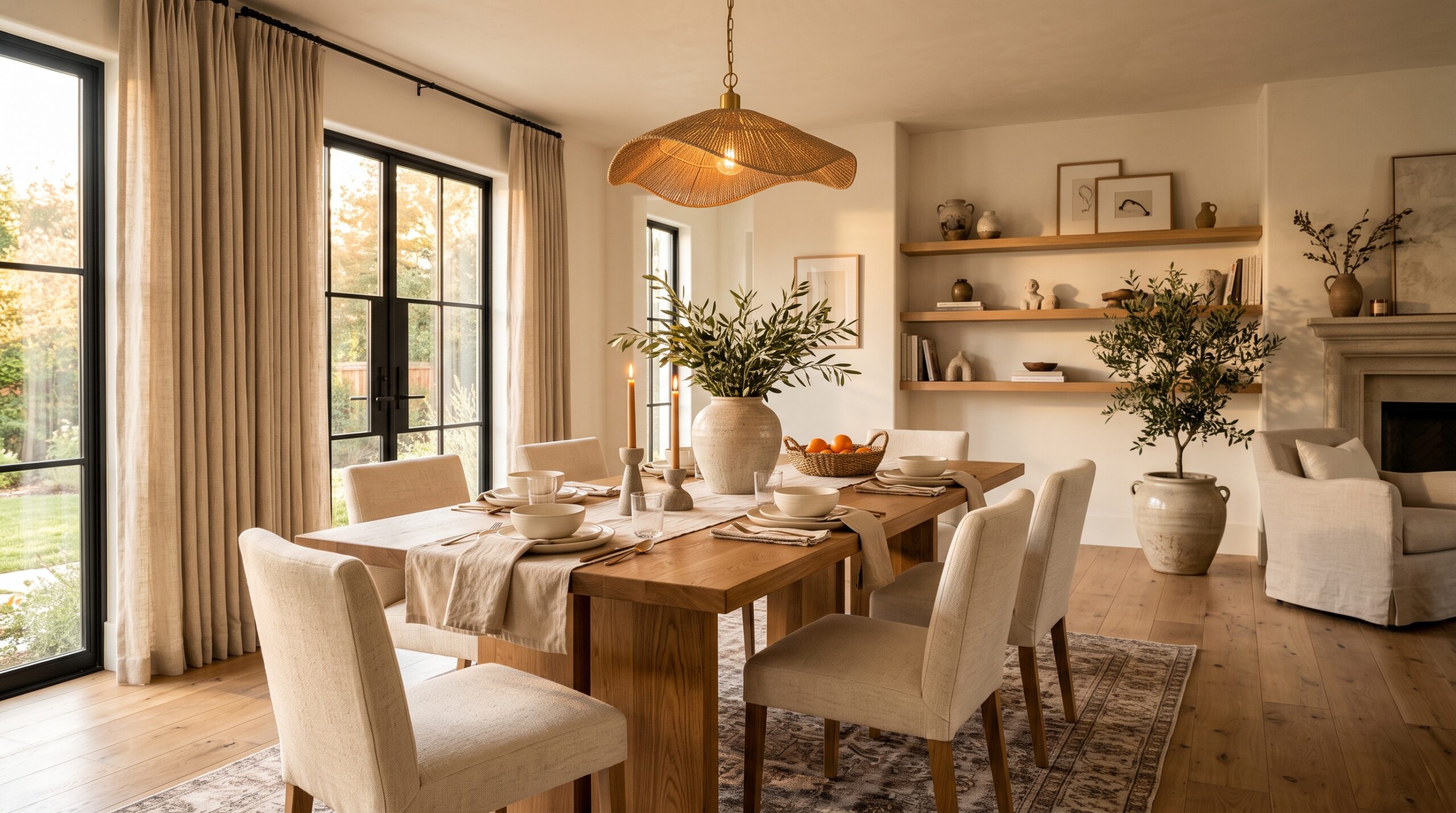
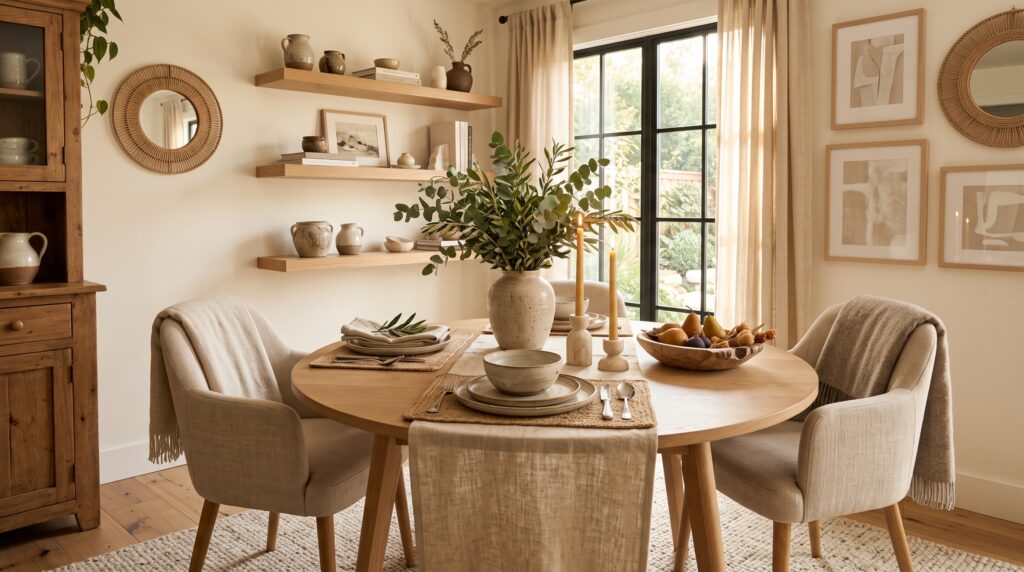
Cozy Dining Room Decor Ideas That Actually Make a Difference
These cozy dining room decor ideas focus on the things that make a dining room feel warm and inviting: layered light, honest materials, texture you can touch, and a table that is easy to sit at. Each idea below includes the measurements, materials and steps to get it right, so you can plan the room once and enjoy it at every meal.
A cozy dining room has almost nothing to do with square footage or how much you spend. It comes from a few choices made well: light that flatters the table, chairs you can sit in for an hour, and surfaces that are easy to keep clear.
Table of Contents
Why Most Dining Rooms Feel Cold (Even When They Shouldn’t)
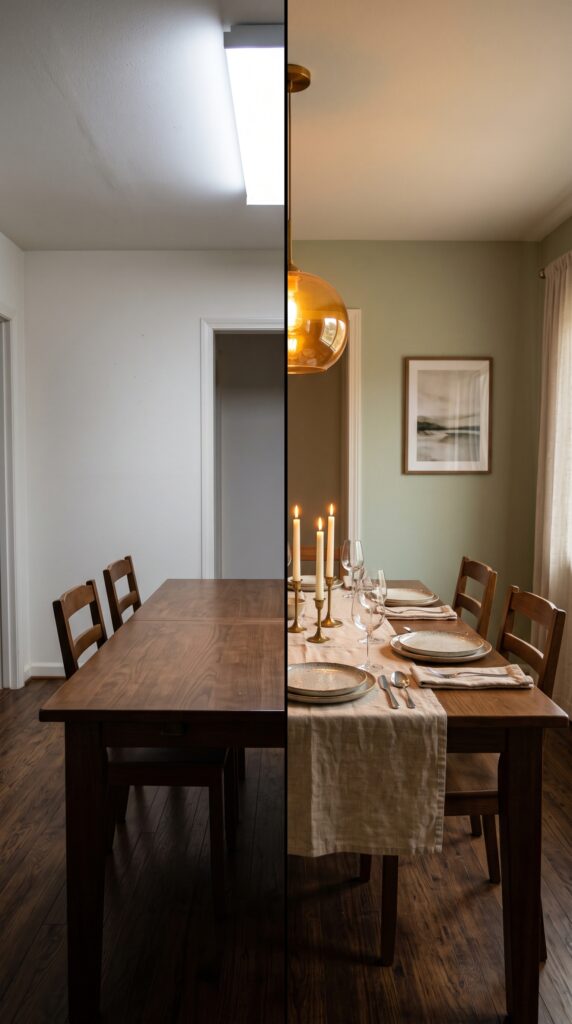
Most dining rooms default to one overhead light and a plain table. That combination almost always reads as harsh and utilitarian — functional, yes, but far from inviting. The overhead fixture blasts everything with flat light, and without any texture or layering on the table itself, the whole space feels like it’s waiting to be used rather than welcoming you in.
The fix is not complicated, but it does require thinking in layers. Cosy rooms work because they combine different kinds of light, a mix of textures, and a table that is set at the right height for the people using it.
Start with Lighting — It Changes Everything
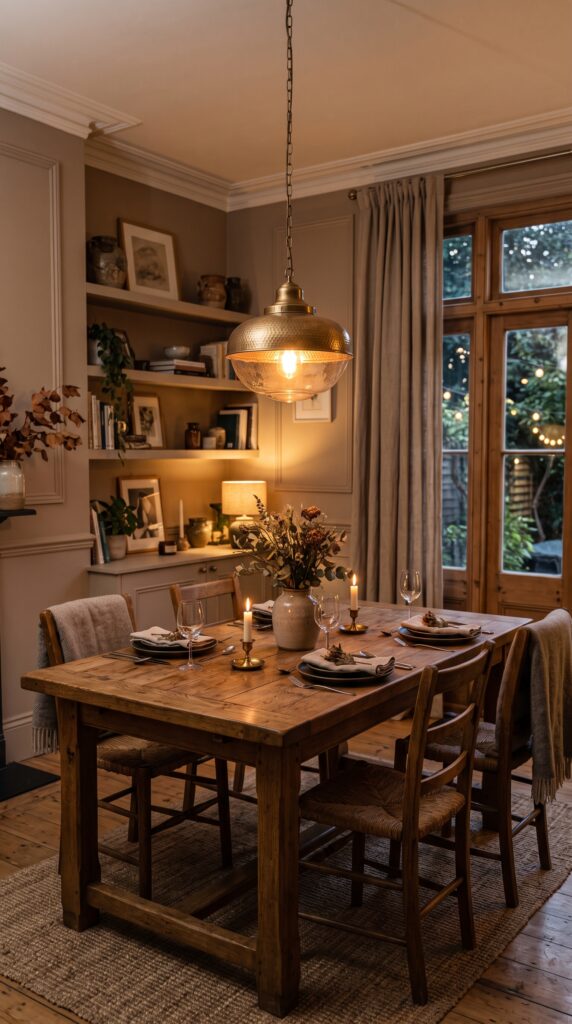
If you change one thing in a dining room, change the lighting. A single overhead bulb makes a table look flat and a room feel unfinished, while light layered at different heights makes the same table look inviting.
The ideal hang height for a pendant over a dining table is around 30 to 36 inches above the tabletop. That keeps it visually connected to the table without feeling intrusive. For a round or square table, one centered pendant works beautifully. For a longer rectangular table, two smaller pendants spaced evenly feel more balanced and intentional.
Keep a few candles on the table for evening meals. They add a low, warm light that flatters faces and food, and they cost very little. Use sturdy holders, keep them at least 30 cm from curtains, paper and fabric, and never leave them burning in an empty room.
Once the overhead light is sorted, consider adding a floor lamp or a sideboard lamp in a corner. It fills an empty corner, softens the room’s edges, and gives the wall behind the table a warm glow in the evening.
Build a Neutral Foundation Before You Layer
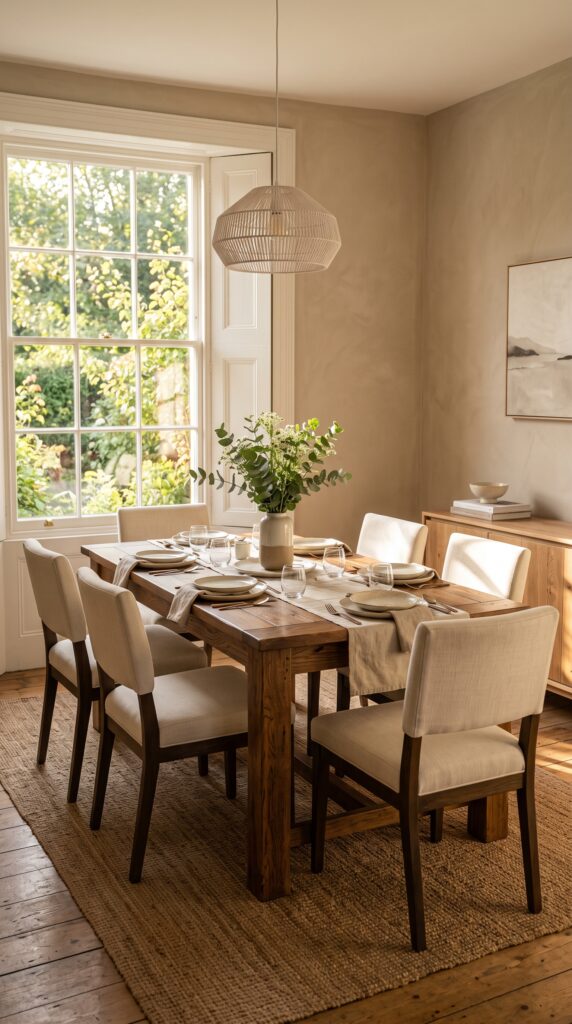
Cozy interiors tend to share a quiet, neutral base. That doesn’t mean boring — it means intentional. Earthy tones like warm white, oat, sage, terracotta, and soft brown give you a visual calm that lets your layered decor do the work without competing for attention.
If your dining room walls are already a cool grey or stark white, don’t panic. You can warm up the space significantly through the furniture and table styling alone. A wooden table, warm-toned upholstered chairs, and a few natural materials on the table surface are usually enough to shift the room’s feeling without touching the walls.
The goal here is to create a foundation that feels cohesive. Once that’s in place, every decor detail you add — a runner, some candles, a small vase — will land better because it’s working within a unified palette rather than fighting against it.
Add Texture to Make the Space Feel Alive
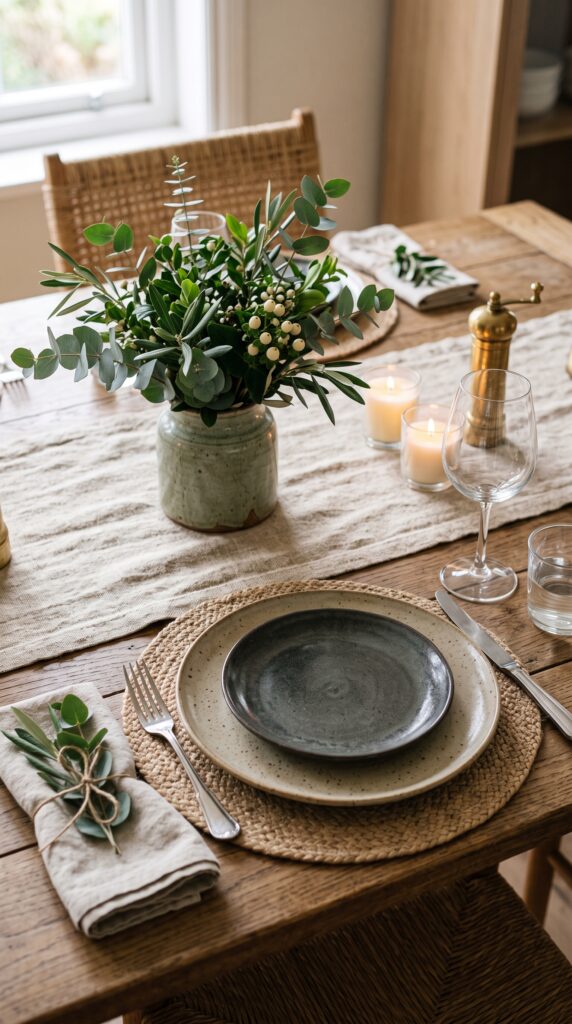
Texture is the single most underused tool in home decor, and dining rooms suffer most from its absence. When every surface is smooth — a glass vase, polished plates, a lacquered table — the room looks clean but feels sterile. Introduce some roughness, some weave, some irregularity, and the space immediately feels warmer and more human.
A linen table runner is one of the fastest ways to add that texture. Linen has a natural, slightly uneven weave that photographs beautifully and feels genuinely organic in person. I layer mine over a bare wood table so the grain of the table shows on either side — that layering is what makes the setup feel styled rather than just covered.
Choose a runner about 30–40 cm wide and long enough to hang 15–20 cm over each end of the table. Linen and cotton wash well; press the runner while it is slightly damp, and store it flat so it does not crease at the fold.
Ceramic dinnerware plays a similar role. Handmade-style ceramics with slightly irregular shapes and matte glazes bring warmth that mass-produced white plates simply don’t. A Minimal Ceramic Dinnerware Set with earthy tones can do more for your table’s visual warmth than almost any other single purchase.
Layer natural materials rather than matching sets: linen, wood, ceramic and glass each add a different surface, and together they make a table feel collected rather than bought in one go. Wash linen runners and cotton napkins before first use, and stack ceramics with a cloth between them to reduce chips.
Style the Table Without Overcrowding It
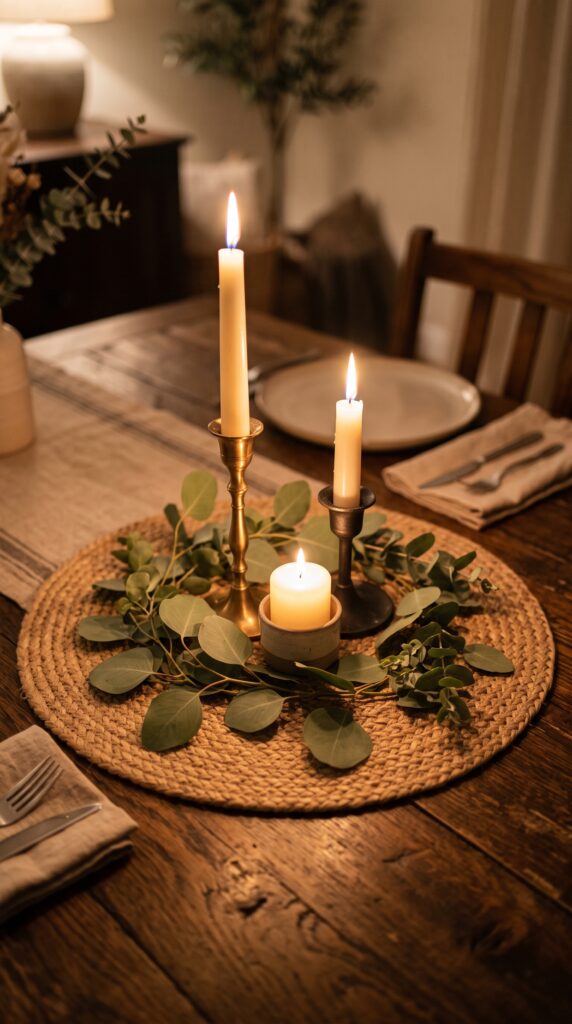
A well-styled table follows a simple formula: one centrepiece, two or three smaller items, and clear space around them. Start with the centrepiece — a low vase, a bowl of fruit or a few candles — then add placemats and a runner, and leave at least 30 cm of clear table in front of each chair for plates and glasses.
For the centrepiece, candles work well in a grouping of two or three at varying heights — 15, 20 and 25 cm, for example — in simple glass or ceramic holders that do not block sightlines across the table.
Negative space is part of the design. Leaving the centre of a large table partly clear, or one side of a sideboard empty, makes the items you do place stand out, and leaves room for dishes when food arrives.
how to style a minimalist dining table for everyday use
Choose Seating That Earns Its Place
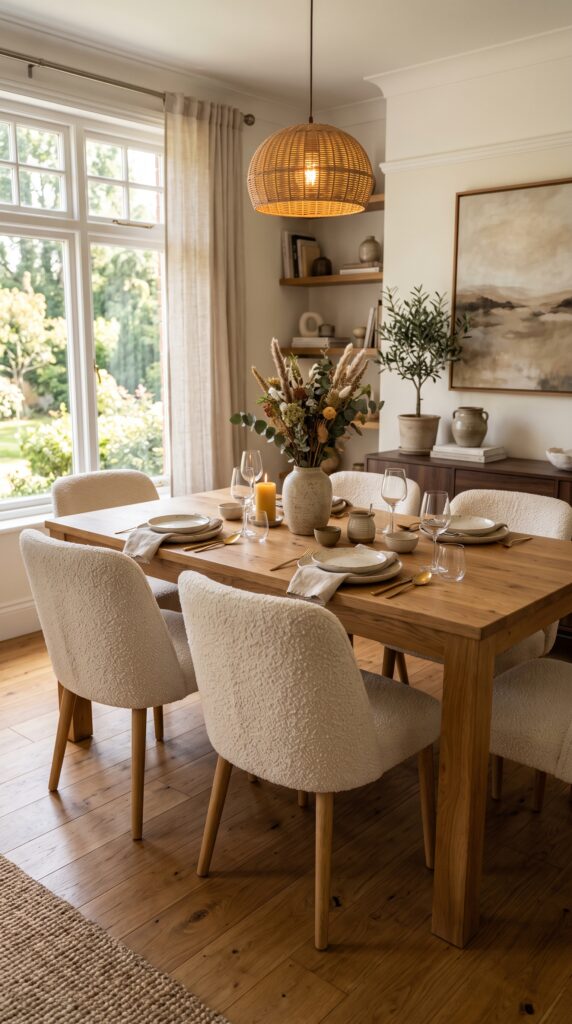
Dining chairs are one of those purchases that people often make purely based on how chairs look in a product photo, then regret once they’re actually sitting in them for a two-hour dinner party. The best dining chairs do both — they look beautiful and they’re genuinely comfortable to sit in.
Bouclé and other textured fabrics look soft and add warmth, but they need care: a fabric protector helps, vacuuming with a brush attachment removes crumbs, and they are best kept away from pets that scratch. If you have young children, a wipeable leather or a washable slipcover is the more practical choice.
Upholstered chairs also soften a room with hard floors and a large table. Fabric absorbs some of the everyday sound of chairs moving and plates being set down, so the room feels calmer at the table — and a dining chair must be comfortable enough to sit in for a full meal, so try one with a plate and a glass in front of you before you buy.
Create One Anchor That Pulls the Room Together
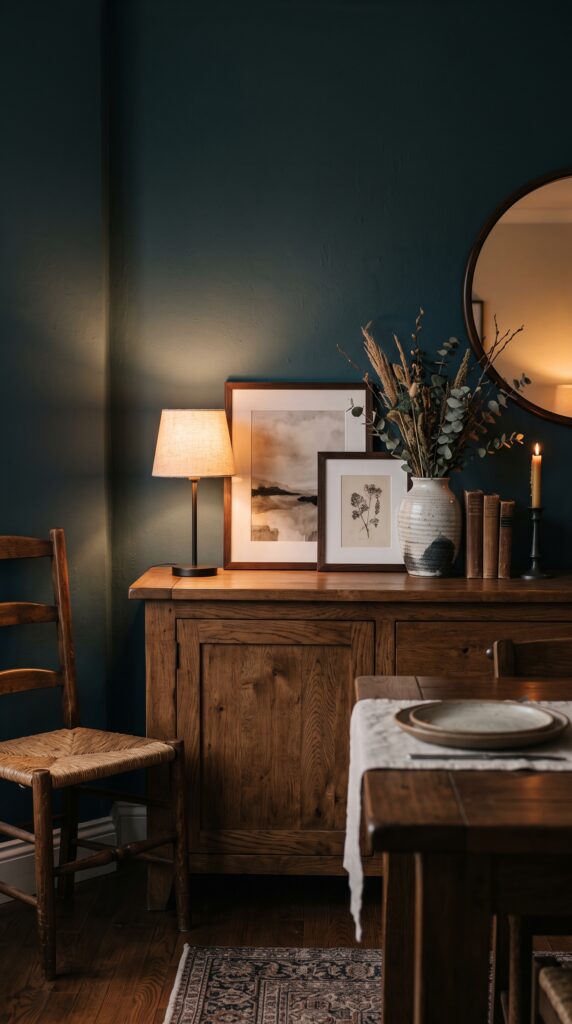
Every room that feels intentionally designed has at least one anchor — a piece or area that your eye naturally moves to and rests on. In a dining room, that’s usually the lighting fixture above the table, a styled sideboard along a wall, or a statement bench along one side of the table. For rooms with an awkward shape, see our bold dining room ideas that transform any awkward space.
A pendant is often the most impactful anchor for this role because it sits at eye level when you are seated. If you already have a pendant you love, let it be the anchor and build everything else around it, rather than adding a competing centrepiece.
If you already have a pendant you love, consider a sideboard as your anchor instead. Style it with a small lamp, a framed piece of art, and a ceramic bowl or vase — three items of different heights, with one taller piece at the back, is usually enough to make the sideboard feel finished without making it crowded. A sideboard can also hold a coffee bar — see our coffee bar ideas for home for a compact setup that suits a dining room.
Small Touches That Make a Big Difference
The details that make a dining room feel cared for are rarely the expensive ones. A small posy in a jar, a bowl that is always on the table, a cloth napkin at each place — they show the room is used and looked after, not just decorated.
If you’re just getting started and can only do one thing, change your lighting. If you can do two things, add a linen runner. From there, layer in texture with ceramics and candles, and let the room build itself around those foundations.
Warmth in a dining room does not come from one expensive piece. It comes from materials that are pleasant to touch, light that is warm rather than harsh, and a room that is easy to use every day, not just on special occasions.
A cozy dining room does not need a new table or a bigger room. Start with the lighting, choose chairs you can sit in, and add texture one layer at a time. It just requires a little intention — and the willingness to use the room every day, not only when guests come.
How to Plan a Cozy Dining Room: Measurements to Check First
Before you buy anything, take four measurements. They take ten minutes and stop the most common mistakes — a table that blocks the door, chairs that cannot pull out, and a pendant that hangs too low. Work through these cozy dining room decor ideas in order — lighting first, then the table, rug and chairs — so each purchase builds on the last.
- Table: allow 60 cm of width and 40 cm of depth per person, with 90 cm of clear space behind each chair so it can pull out.
- Pendant: hang it 76–91 cm (30–36 inches) above the table surface, and choose a pendant 15–30 cm narrower than the table on each side.
- Rug: choose one large enough for the table and chairs, with at least 60 cm of rug beyond the table edge on each side so chairs stay on it when pulled out.
- Light: use warm-white bulbs at 2,700–3,000K, and put the pendant on a dimmer so you can lower it in the evening.
- Art and sideboard: hang framed art with its centre at about 145 cm from the floor, and keep a sideboard at least 90 cm from the table edge.
Mistakes to Avoid in a Cozy Dining Room
The most common mistakes in a cozy dining room are easy to avoid once you know them. Measure first, test the chairs before you buy them, and keep the table surface for daily use, not just for display.
- Hanging the pendant too high, so the light spreads across the ceiling instead of pooling on the table, or too low, so it blocks sightlines across the table.
- Choosing a rug that is too small, so chairs slide half on and half off it every time someone sits down.
- Filling the table with a large centrepiece that leaves no room for plates, glasses and dishes.
- Choosing chairs for how they look in a showroom, without sitting in them at a table of the right height.
Frequently Asked Questions
What colour temperature should dining room lighting be?
Warm white bulbs at 2,700–3,000K give a cozy dining room its warmth, especially in the evening. Hang the pendant 76–91 cm above the table, put it on a dimmer, and avoid cool-white bulbs above 4,000K for the main lights.
How high should a pendant hang over a dining table?
Hang a pendant 76–91 cm (30–36 inches) above the table surface, and choose a pendant about 15–30 cm narrower than the table on each side. If it blocks sightlines when you are seated, it is too low.
How much space do I need per person at a dining table?
Allow about 60 cm of table width and 40 cm of depth per person, and 90 cm of clear space behind each chair so it can pull out. For four people, that usually means a table of at least 120 × 80 cm.
What size rug should I use under a dining table?
Choose a rug large enough for the table and chairs, with at least 60 cm of rug beyond the table edge on each side so chairs stay on the rug when pulled out. A low-pile or flat-weave rug is easiest to clean, and a washable rug is the practical choice for everyday meals.
How can I make a small dining room feel cozy?
These cozy dining room decor ideas work in a small room too: define the space with a rug, hang one warm pendant low over the table, and keep the table clear except for one centrepiece. A round table, a bench on one side and a mirror or art on one wall can make a small dining room feel larger and warmer at the same time.